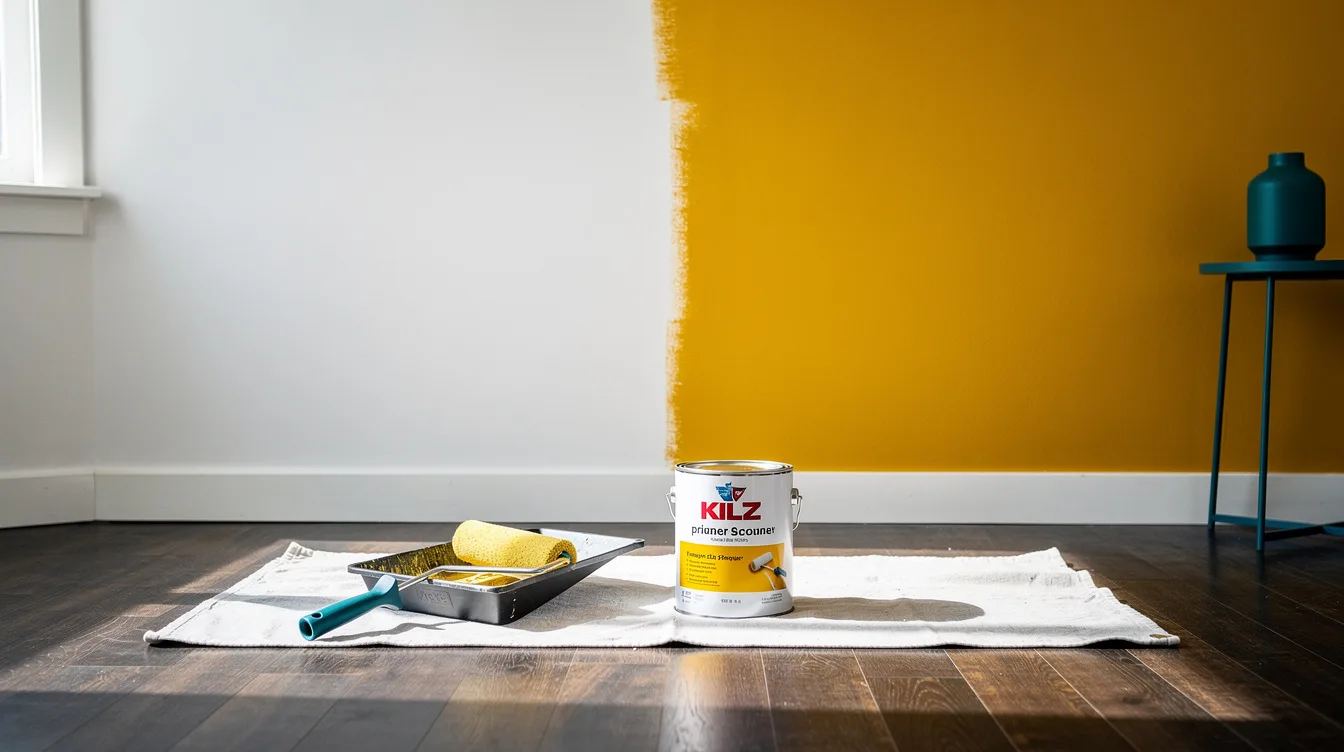
Primer is the step everyone wants to skip, and the one pros refuse to. On my last apartment repaint, a $22 gallon of primer saved me from a third coat of $48 finish paint on about 350 square feet of patched, thirsty walls.
Here is the thing most tutorials skip: primer is not one product, it is a matching game. These are the six mistakes designers and painters wish homeowners would retire for good.
Treat Fresh Drywall and Patches Like Sponges
New drywall and spackled patches drink paint unevenly. The result is those dull, blotchy spots you only notice once the afternoon light hits the wall.
A dedicated drywall primer like KILZ PVA, around $20 a gallon at Home Depot, seals the surface so your topcoat dries to one even sheen.
Pros are blunt about this: fresh joint compound without primer will flash through two coats of even premium paint. One cheap coat of primer saves you a second $45 gallon of finish paint.
Stop Painting Light Over Dark Cold Turkey
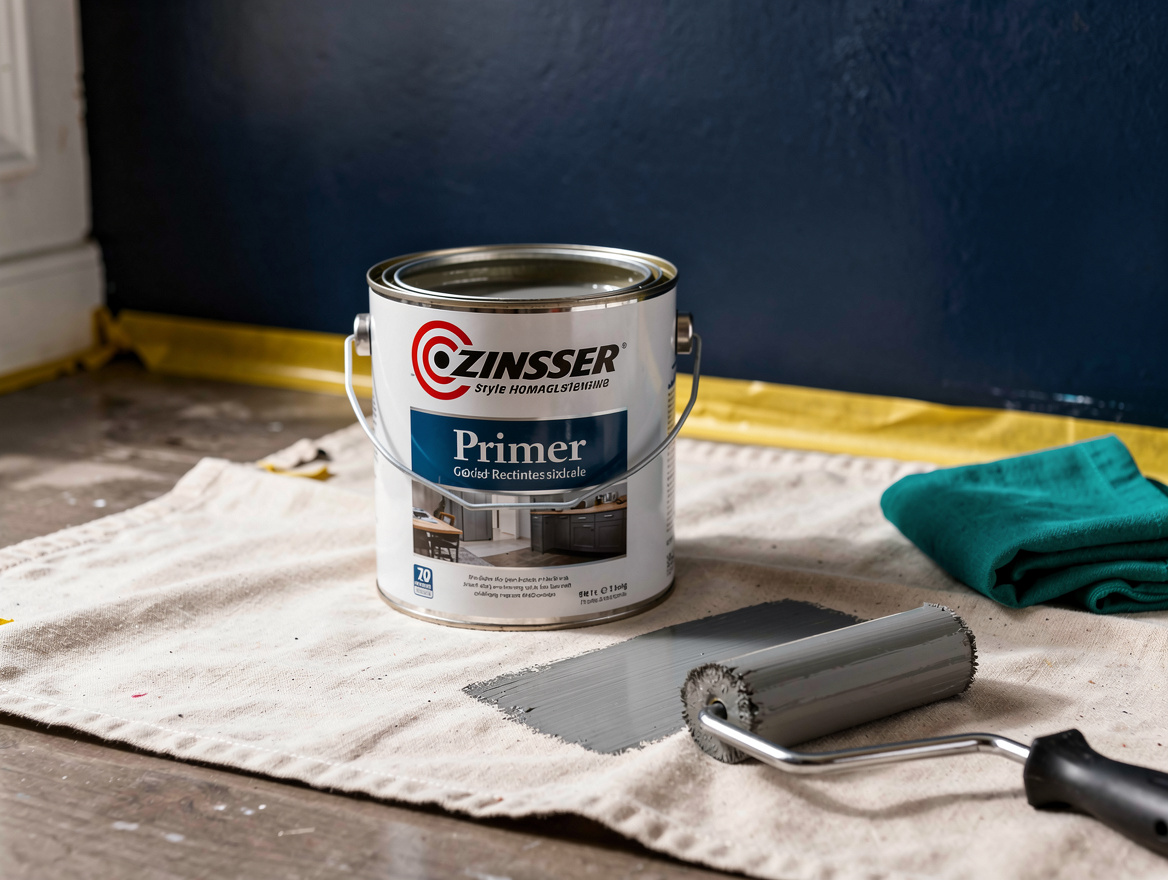
Going from navy to soft white without primer typically means four coats of paint and visible shadowing anyway. That math never works in your favor.
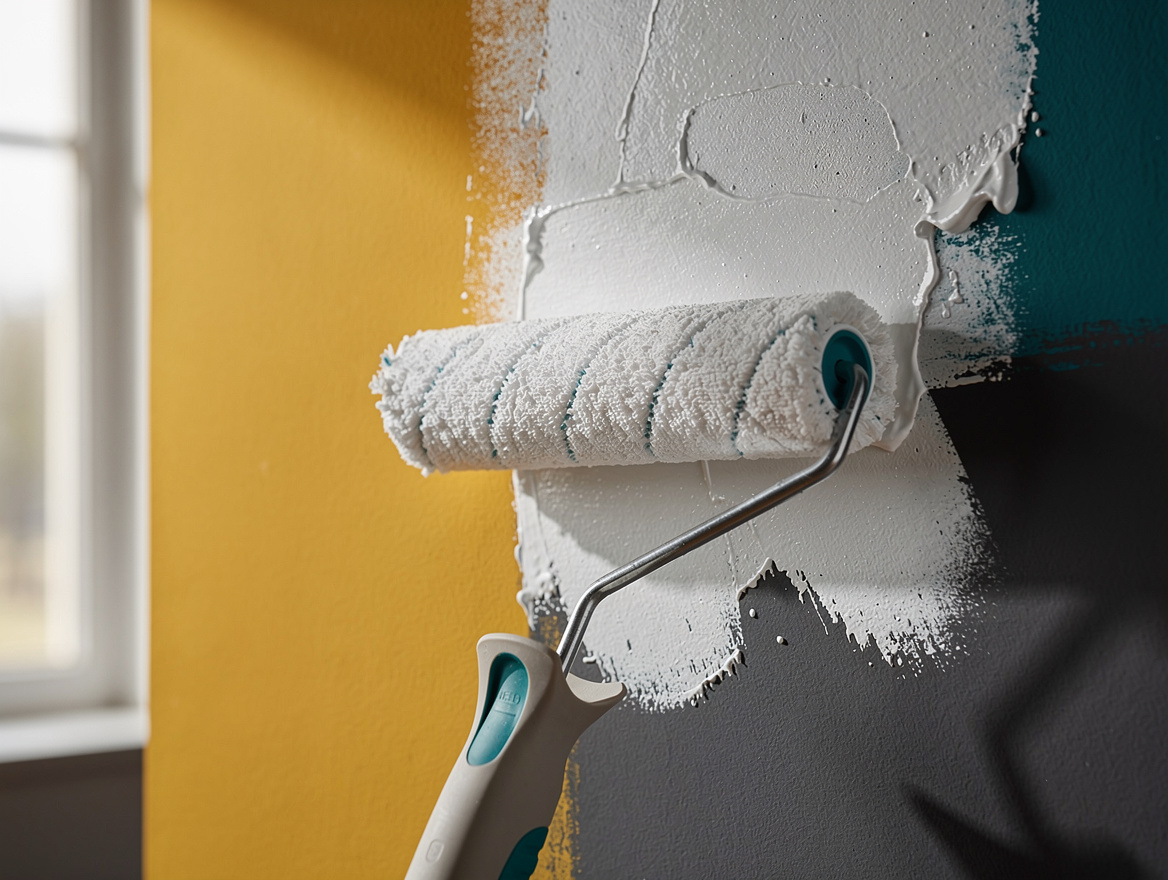
A high-hide primer such as Zinsser Bulls Eye 1-2-3, roughly $23 at Lowe’s, blocks the old color in one pass. Even smarter: ask the paint desk to tint it gray.
A tinted primer under saturated colors like red, orange, or deep green cuts your finish coats roughly in half. This is the single most skipped step I see in rental repaints.
Never Let Stains Touch Regular Paint
Water rings, nicotine, soot, and marker will bleed through ordinary latex paint, sometimes weeks later. Paint is not a barrier, it is a filter.
A shellac-based blocker like Zinsser B-I-N, about $18 a quart at Ace Hardware, locks stains permanently. Yes, it smells strong. Yes, it is worth opening every window for.
Spot-prime the stain, feather the edges, then prime the whole wall if the patch would otherwise absorb differently. Two dabs of effort beats repainting the ceiling twice.
Match the Primer to Slick Surfaces
Melamine cabinets, PVC trim, old glossy tile: regular primer peels off these in sheets within months. Smooth surfaces need a bonding formula, full stop.
INSL-X Stix, around $25 a quart at Walmart, is the adhesion primer pros reach for on laminate and glossy finishes. Scuff-sand first with 120-grit and wipe the dust.
My honest take: if a project involves a slick surface and you skip bonding primer, you have scheduled a redo. The redo always costs more than the primer.
Seal Bare Wood and MDF Before Anything Else
Raw wood and MDF edges soak up paint like a paper towel, and knots bleed tannin straight through pale colors. Neither problem fixes itself with extra coats.
An oil-based wood primer like KILZ Original, typically $22 a gallon, seals knots and raises the grain only once. Sand lightly after, and the finish coat glides on like the surface was factory-prepped.
MDF shelving is the classic trap. Those fuzzy, swollen cut edges after one coat of paint? That is exactly what a dedicated primer prevents.
Do the Coverage Math Before You Shop
Primer is bought by coverage, not vibes. Measure wall perimeter times height, add the ceiling, subtract doors and windows, and you have your real square footage.
A typical gallon covers around 300 to 400 square feet, so a 12-by-12 room with 8-foot ceilings usually needs about 1 to 2 gallons for the walls alone. A typical pro paint job on that same room runs roughly $400 to $800 with prep included.
Buy the primer for the surface you actually have, not a generic all-purpose jug. A $20 drywall primer on rusty metal does nothing; that job wants a rust-inhibiting formula instead.
Start with the worst surface in the room, the stain, the patch, the slick cabinet door, and buy the primer that solves that one problem. Everything else on the wall will behave better because of it.
Mia Carter writes about small-space living and budget home makeovers. She has restyled three rentals and tests most ideas in her own 45 sqm flat.