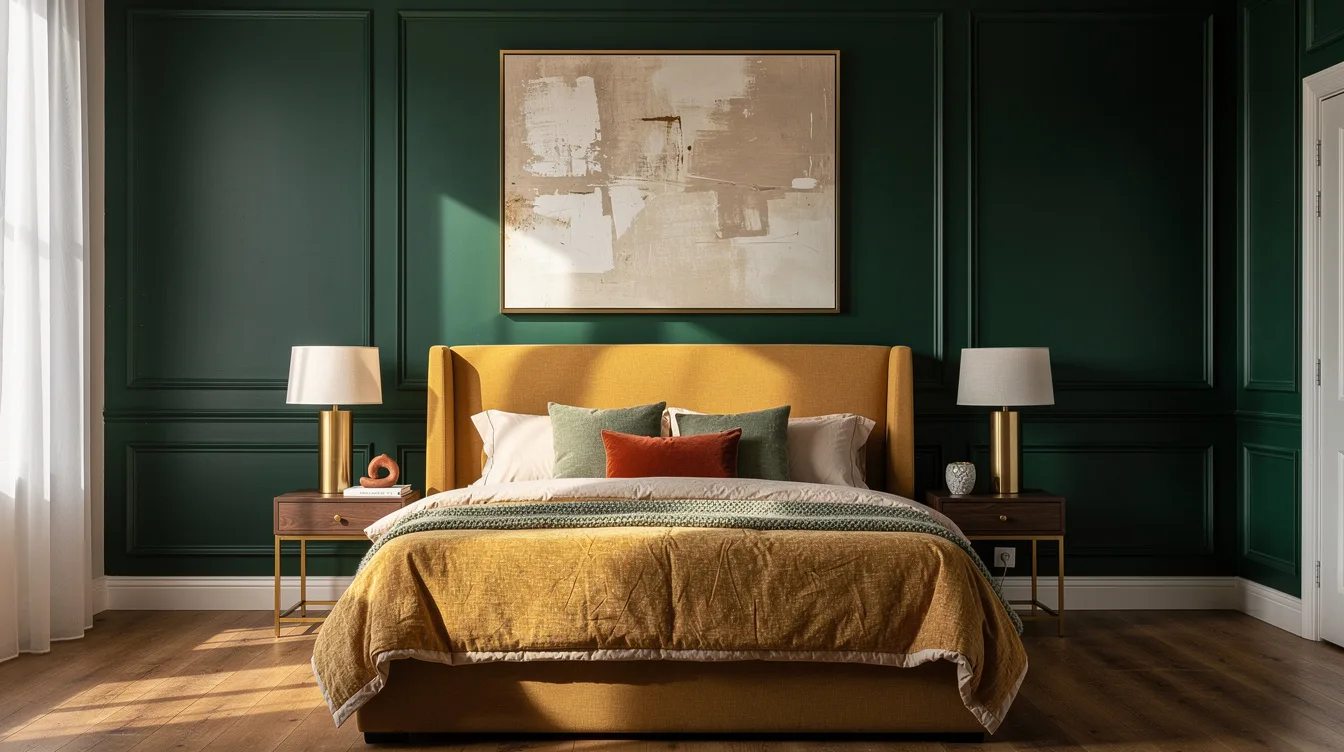
The bed wall can feel flat even when every surface is carefully decorated. For a queen bed, a focal composition roughly 80 to 100 inches wide and 60 to 84 inches high usually gives the room enough visual weight.
The reliable formula is simple: one large anchor, one layer that creates depth, and a restrained finish of textured bedding, art, and warm light. The strongest rooms build upward instead of filling every open inch.
Anchor the Wall With Soft Scale
A tall linen headboard gives the bed a clear visual center and replaces the enclosing feeling of a canopy with a broad, comfortable surface. For a queen bed, aim for a headboard around 62 to 66 inches wide; a king usually needs roughly 78 to 86 inches.
Choose a height between about 46 and 58 inches so the headboard can hold the wall without swallowing the room. A typical tall upholstered setup costs around $650 to $1,300, while oversized art above it may add about $150 to $600.
Keep the artwork simple. One large textile, landscape, or abstract canvas creates more authority than a crowded gallery wall, especially when the bed already has patterned pillows.
Build Depth With Upholstered Panels
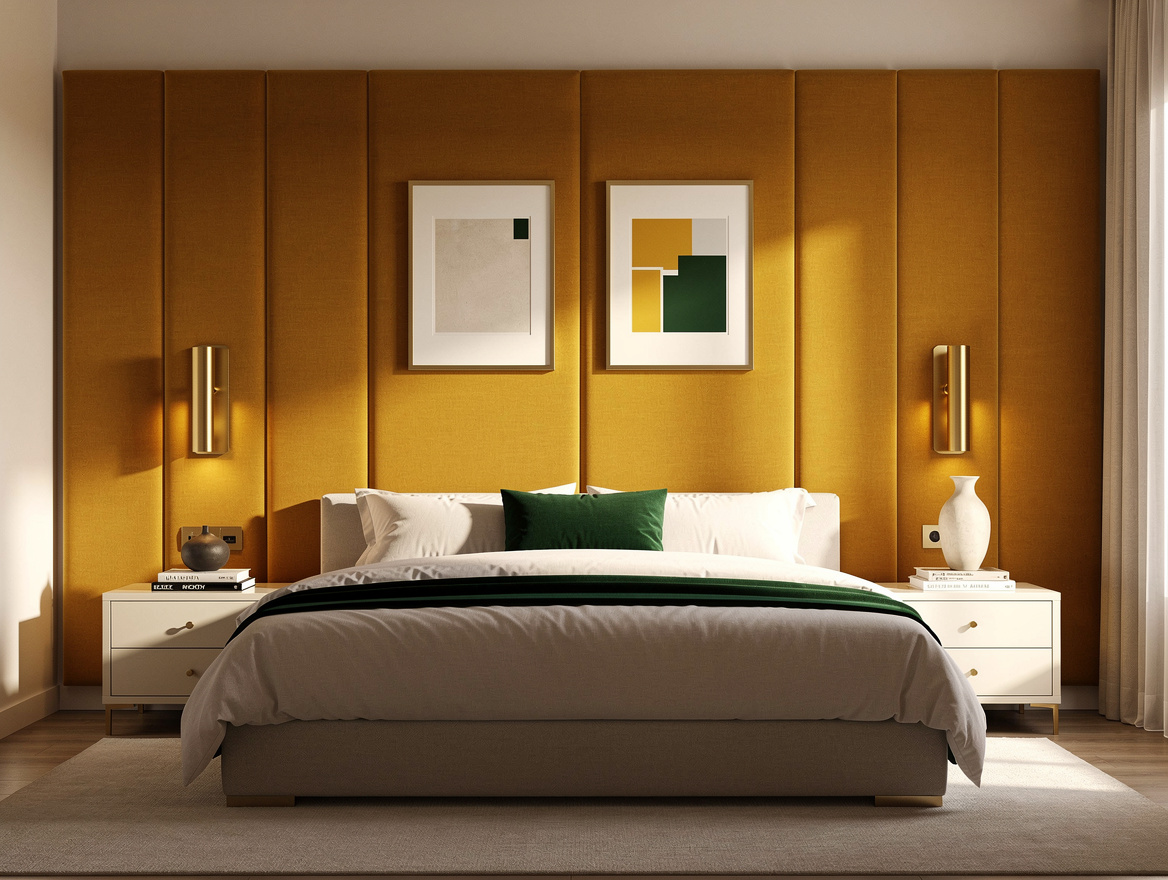
Upholstered wall panels create a soft architectural backdrop with strong vertical rhythm. Cover roughly 80 to 96 inches behind a queen bed, or about 96 to 120 inches behind a king, so the treatment extends beyond the mattress.
Use plywood, one to two inches of foam, batting, and cotton-linen fabric for a practical custom project. Budget panels can run around $80 to $350, while a larger DIY or custom installation often lands near $500 to $1,800.
Panel width changes the mood. Narrow vertical sections make a low ceiling feel taller, while wider horizontal sections give a long wall a calmer, more grounded finish.
Paint the Atmosphere Behind the Bed
A mural or wallpaper field supplies height, color, and pattern in one decisive move. A full-wall treatment works well, but a centered field about 8 to 10 feet wide can frame the bed while leaving breathing room at the sides.
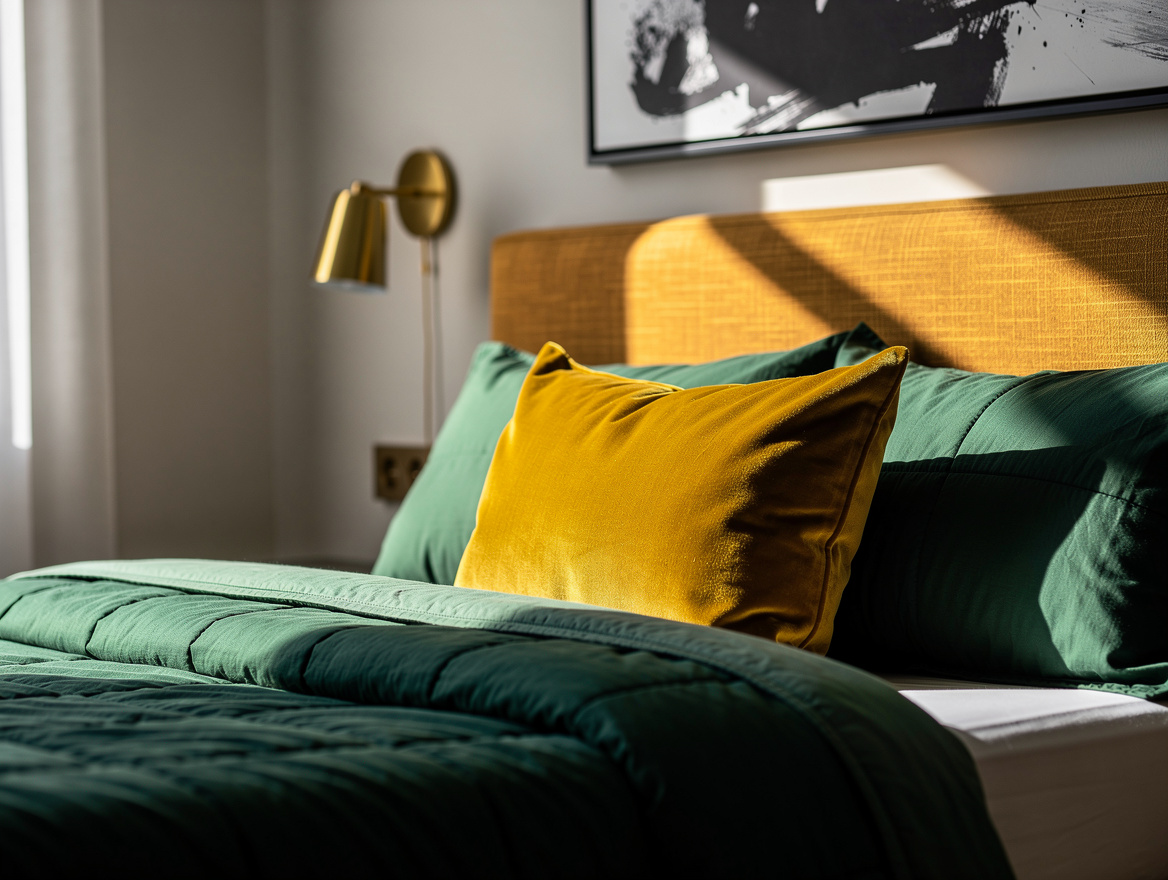
Choose a quiet botanical mural with a matte surface, or use a deep paint color from Home Depot behind a lighter headboard. Typical materials cost about $150 to $700 for the bed wall, before professional installation.
Let the pattern determine the bedding palette. Pull one muted shade from the wallpaper into the quilt, then add a contrasting material such as washed cotton or velvet for depth.
Hang Fabric From Ceiling Height
Full-width linen-look curtains soften the wall and create the vertical sweep people often want from a canopy. Mount the track about 6 to 12 inches below the ceiling and extend it roughly 8 to 12 inches past each side of the bed.
An IKEA track system keeps the structure visually light, while cotton-linen or blackout-lined panels add useful weight. A typical DIY treatment costs around $250 to $900; custom drapery can exceed $1,200.
Use two panels that meet behind the headboard instead of leaving a large gap in the center. The result feels intentional, especially when the fabric reaches the floor without pooling heavily.
Stack Art on a Shallow Ledge
A solid wood picture ledge makes layering literal: place one oversized print against the wall, then lean a smaller frame or ceramic object in front. Keep the ledge about 4 to 5 inches deep and roughly 10 to 16 inches above the headboard.
The IKEA MOSSLANDA is a useful reference for this arrangement, with a shape that works above a queen bed or across part of a king bed. A typical ledge setup costs around $20 to $150, while framed art can bring the total closer to $150 to $800.
Limit the display to a few pieces with different heights. Add a small ceramic vase or a single book, then stop before the shelf becomes another storage zone.
Start by measuring the wall, then mark a composition that extends at least about 10 to 20 inches beyond each side of the bed. Choose the anchor first, because every later decision should support its scale, texture, and color.
Once that foundation is in place, add one depth-producing layer and one personal object. The room will feel finished long before the wall becomes crowded.
Mia Carter writes about small-space living and budget home makeovers. She has restyled three rentals and tests most ideas in her own 45 sqm flat.