The short answer for 11 Winter Bedroom Ideas for a Warm and Restful Space is layered bedding, low amber light, and a wall color with warmth underneath. I learned that after piling blankets onto a room that still felt sharp and chilly. The blankets weren’t the problem. The order was.
- Layer the Thermal Bed Stack for a Cozy Winter Bedroom
- Can a Dark Wall Make Your Bedroom Feel Warmer?
- Swap Cold White for Setting Plaster in Your Winter Bedroom Decor
- Float the Nightstand With the Floating Nightstand Rule
- Hang Linen Drapes for a Softer Winter Bedroom
- Anchor the Bed With the Three-Texture Rug Rule
- Choose Wool Over Shag for Warm Bedroom Ideas That Last
- Frame the Bed With a Padded Headboard
- Paint One Warm Zone Instead of the Whole Room
- Build the Budget Bedroom Layer by Layer
- Mix the Three-Source Light Stack for Winter Bedding Ideas
1Layer the Thermal Bed Stack for a Cozy Winter Bedroom
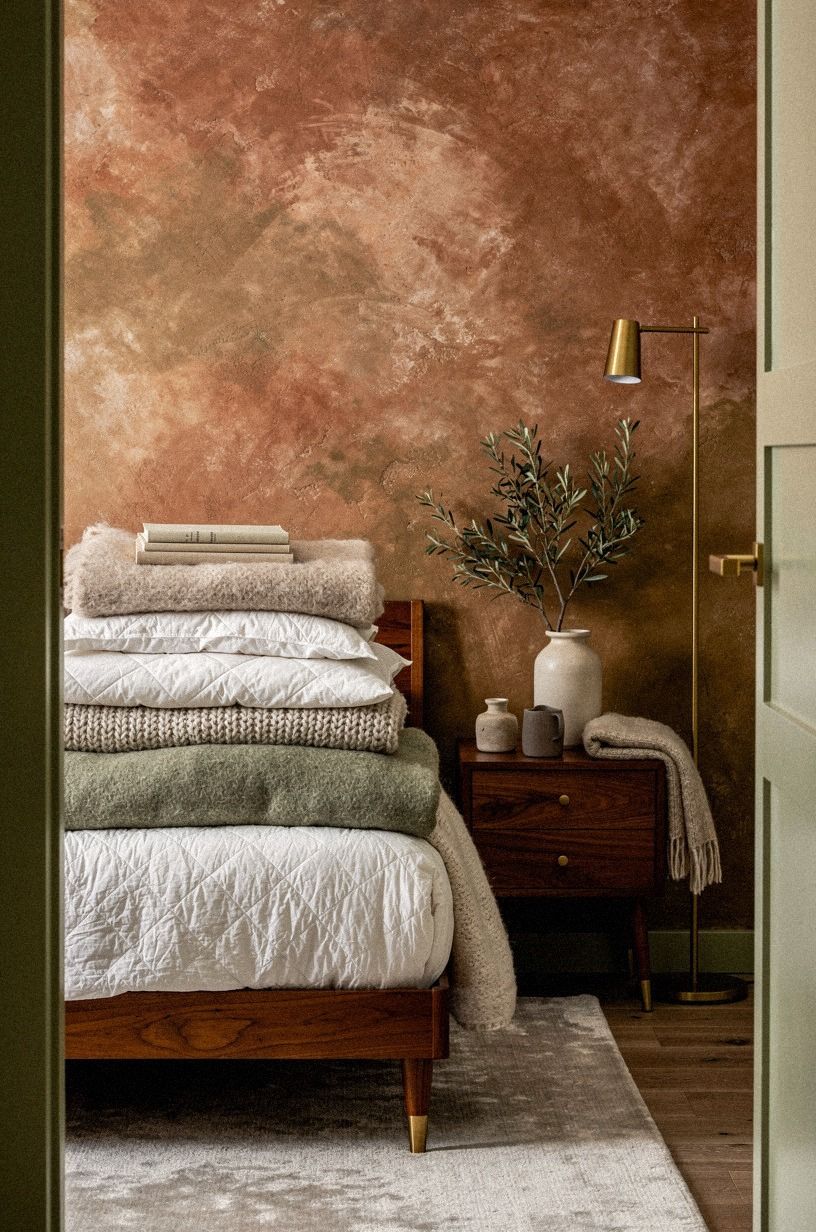
A warm bed needs layers with different jobs, not one enormous comforter swallowing the mattress. Start with washed-linen sheets, add a merino wool blanket across the lower third, then finish with a quilt that gives your body room to breathe. You’ll feel warmer without turning your bed into a bulky island.
I like washed-linen bedding because it starts crisp and softens with use. Your skin gets texture, while a merino wool throw adds real insulation without the slick, sweaty feel of synthetic fleece. If you’re styling a queen bed, remember that a 60×80-inch mattress needs a top layer wide enough to drape rather than barely cover the corners.
But don’t buy a matching bedding bundle and call the job done. Matching pieces flatten the room, and you’ll lose the collected feeling that makes winter bedrooms inviting. Try this instead: stone sheets, a terracotta quilt, and an olive blanket folded at the foot.
The order matters, too. Put the smoother layer closest to your skin, the insulating layer in the middle, and the decorative layer on top.
That way, your bed feels comfortable before it looks styled. You won’t have to wrestle with a heavy duvet every night.
For a fuller seasonal formula, compare your bed with these cozy bedroom ideas for winter. You’ll notice the best rooms use contrast in texture before they add more color.
Typical cost by tier:
Start with the layer touching your body. If the sheets feel scratchy or clammy, a prettier throw won’t solve the real problem. That’s the kind of upgrade you notice before breakfast!
2Can a Dark Wall Make Your Bedroom Feel Warmer?
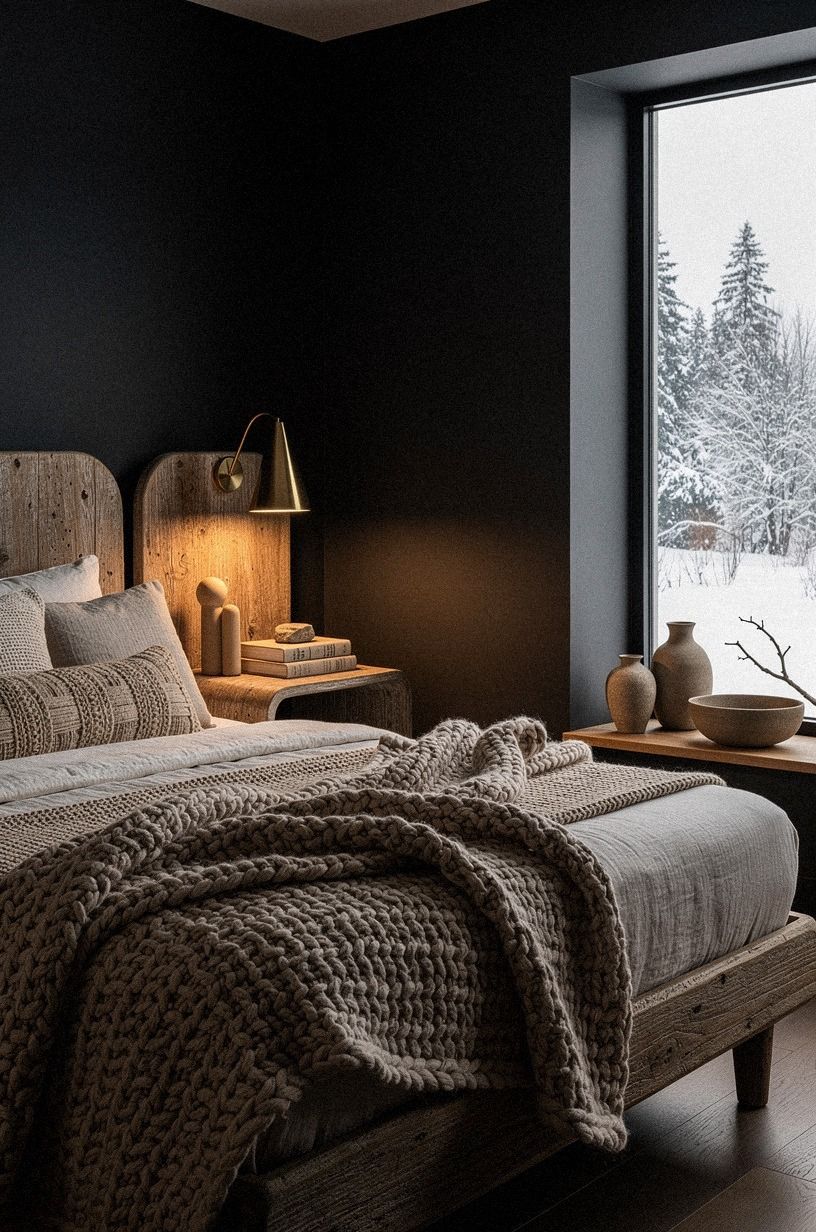
Yes, a dark wall can make your winter bedroom feel warmer when the color has a soft undertone and the room still gets layered light. A pale clay tone is gentle, while a single clay wall gives a small room more depth without making every surface feel heavy.
I’ve tried painting all four walls dark, and it wasn’t my favorite result. Your room may look dramatic at noon, but at night the corners can disappear unless you’ve planned bedside lamps, wall sconces, or reflected light. One wall behind the bed gives you the mood without demanding a complete lighting redesign.
A clay backdrop works especially well with reclaimed weathered teak because the grain looks warmer against the softened color. You’ll also get a better setting for cream linen, aged brass, and warm art. If your room faces north, skip blue-black paint.
It can turn flat and cold by late afternoon.
If you’re tempted to repaint before testing, tape a sample beside your headboard for a full day. The color you love at 10 a.m. might feel entirely different after sunset. This charcoal bedroom makeover shows why one strong wall can carry the whole scheme.
Don’t let a clay wall become an isolated statement. Repeat the color in a small cushion, a ceramic lamp base, or a clay-toned wool throw. The room will feel edited rather than themed.
A clay wall can also make pale bedding look warmer. Oatmeal, putty, and mushroom tones gain depth against it, while bright white can look too sharp. That contrast is useful when you want a bedroom to feel restful without becoming beige from floor to ceiling.
3Swap Cold White for Setting Plaster in Your Winter Bedroom Decor
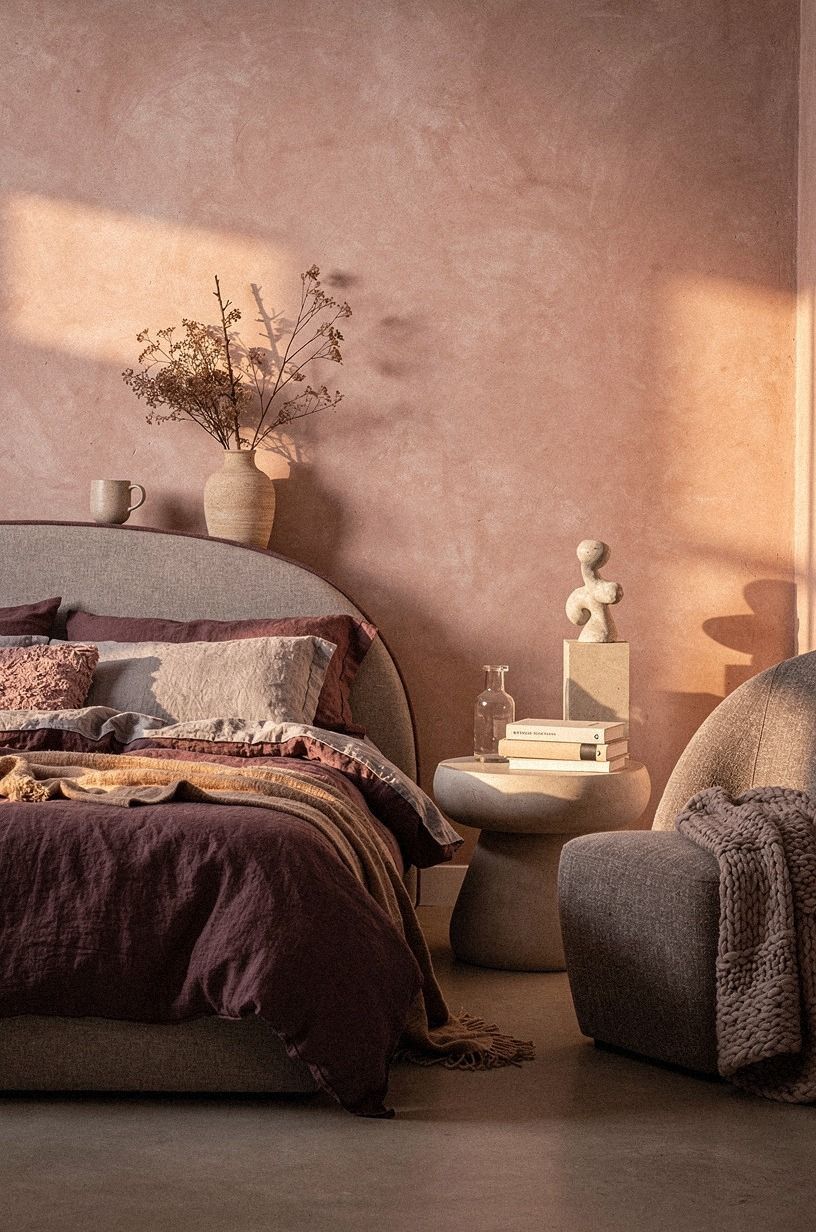
Cold white paint reflects every blue cast from a winter sky, which can make an otherwise comfortable bedroom feel unfinished.

4Float the Nightstand With the Floating Nightstand Rule
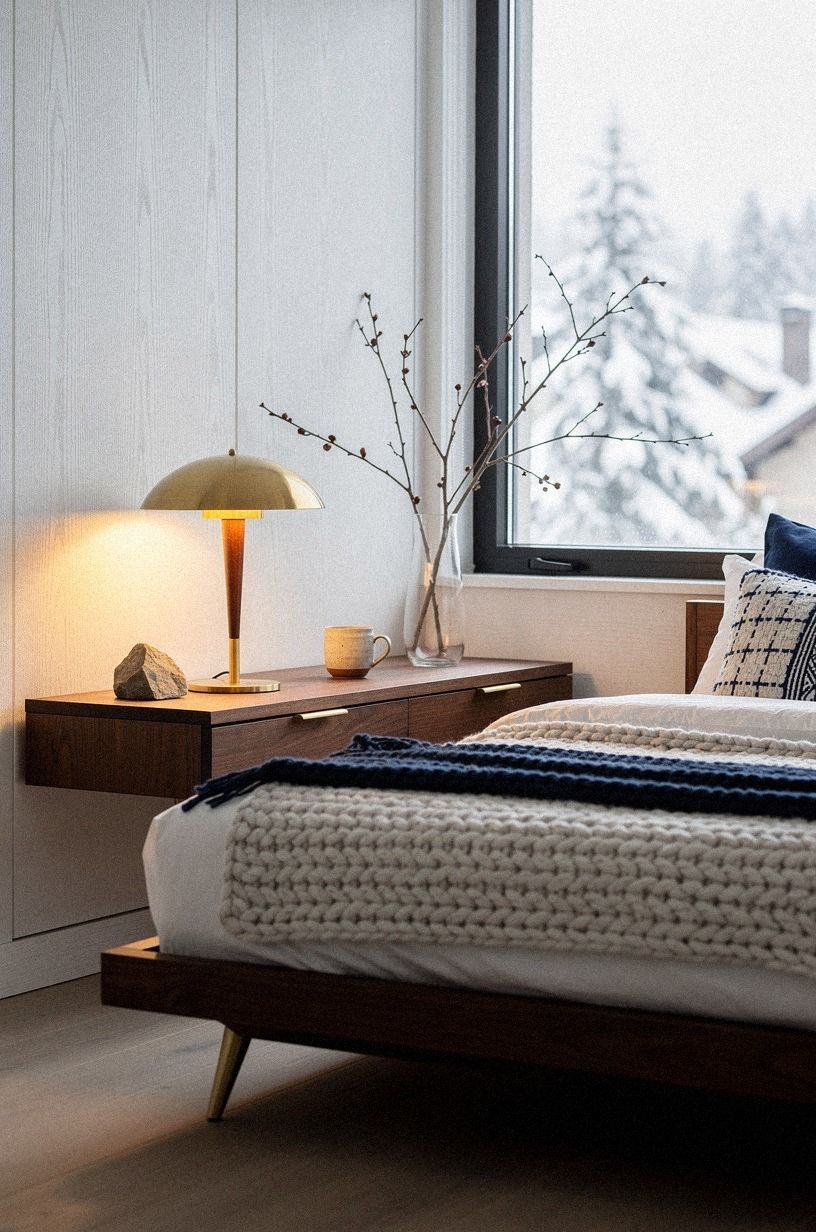
A wall-mounted nightstand frees the floor and makes your bed feel lighter, which matters in a small bedroom. The best version is a simple cerused white oak shelf with a shallow drawer, mounted close to mattress height. You’ll gain a landing spot for your book without adding another heavy cabinet.
Your nightstand should hold only what you use at bedtime. A linen-shaded lamp, water glass, book, and small dish are enough. I’ve kept too much on mine before, and the clutter made the room feel restless even after the rest of the space was tidy.
Choose a shelf with a visible grain and a finish that isn’t too orange. IKEA KALLAX birch-effect storage can work nearby for folded blankets, but I wouldn’t use it as the nightstand itself. Its open cubbies collect visual noise right beside your pillow.
And don’t mount it too high. A nightstand usually looks most natural when it sits near the mattress top, around 24 to 28 inches tall if you’re using a freestanding version. Your hand should reach the lamp without leaving the bed, which is the whole point.
A floating piece also makes cleaning easier. You’ll be able to run a vacuum beneath it, and the exposed floor gives a narrow room more breathing space. If you’re renting, look for a freestanding floating-style table or a slim console instead of drilling into the wall.
Keep the surface calm. A small stone dish, one paperback book, and a warm ceramic lamp create a useful arrangement without turning the bedside into a display shelf. This dim-to-warm bedroom lighting guide explains why a smaller lamp can have more impact than several decorative objects.
5Hang Linen Drapes for a Softer Winter Bedroom
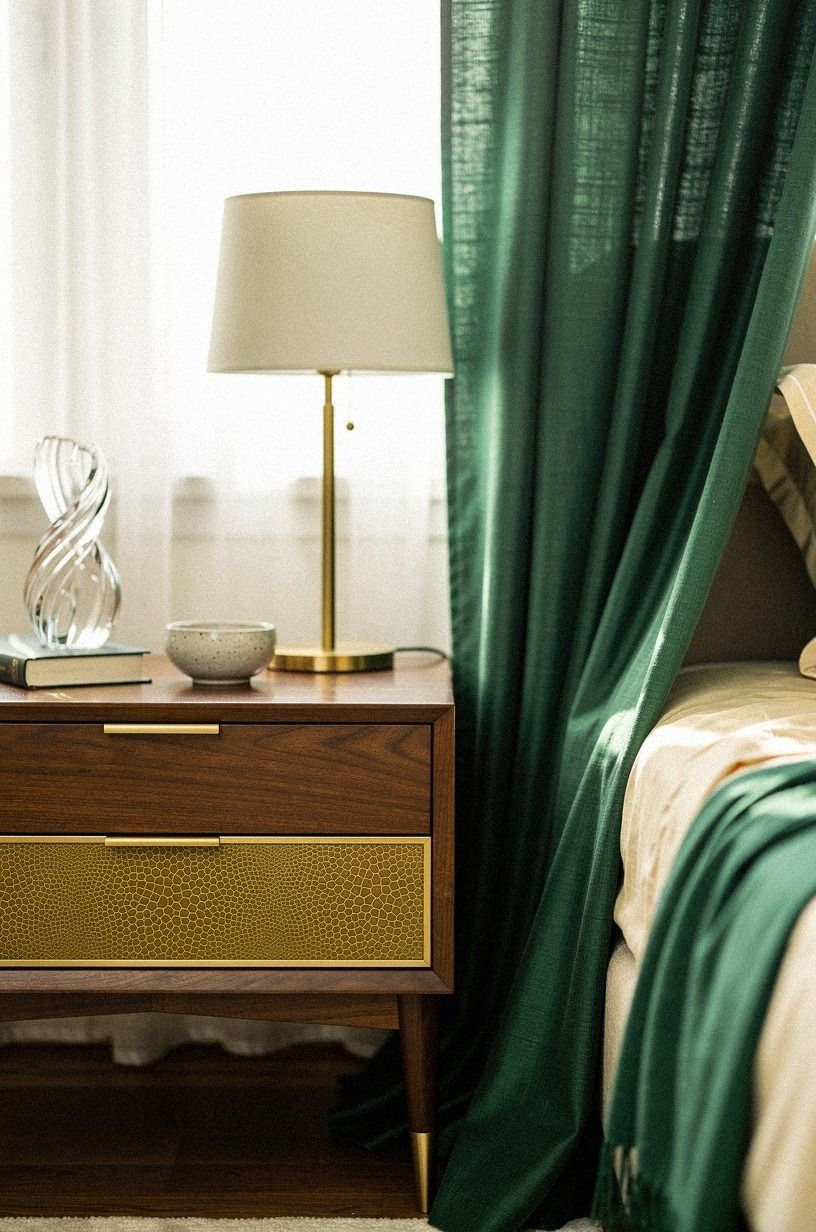
Heavy curtains can make a bedroom warmer, but dense fabric isn’t the only route. Washed Belgian flax linen gives you privacy, movement, and a soft filter for pale winter light. Hang the rod wider than the window so the panels frame the glass instead of covering it all day.
You’ll want the fabric to kiss the floor, not stop several inches above it. That small gap makes the room look unfinished and lets cold-looking wall space show beneath the window. Your drapes should feel relaxed, with enough fullness to form gentle folds when they’re closed.
I’d pass on stark white curtains in a room with warm accents. They often read gray in the morning and blue at night. A cream, soft gold, or muted emerald tone will sit better beside shagreen accent pillows and warm wood.
If the window is drafty, use a thermal lining behind the linen rather than replacing the visible fabric with thick blackout panels. You’ll get better insulation while keeping the relaxed look. A shagreen-trimmed shade can add another layer where privacy matters during the day.
For a bedroom that needs more evening glow, pair the drapes with a low lamp rather than a brighter ceiling fixture. This dim-to-warm bedroom lighting guide explains why the right light temperature can change the room more than another decorative object.
The best curtain color usually repeats something already in the room. Match the drapes loosely to the rug undertone, the headboard fabric, or the lighter thread in the bedding. Exact matching can look stiff, while a related shade feels intentional.
6Anchor the Bed With the Three-Texture Rug Rule
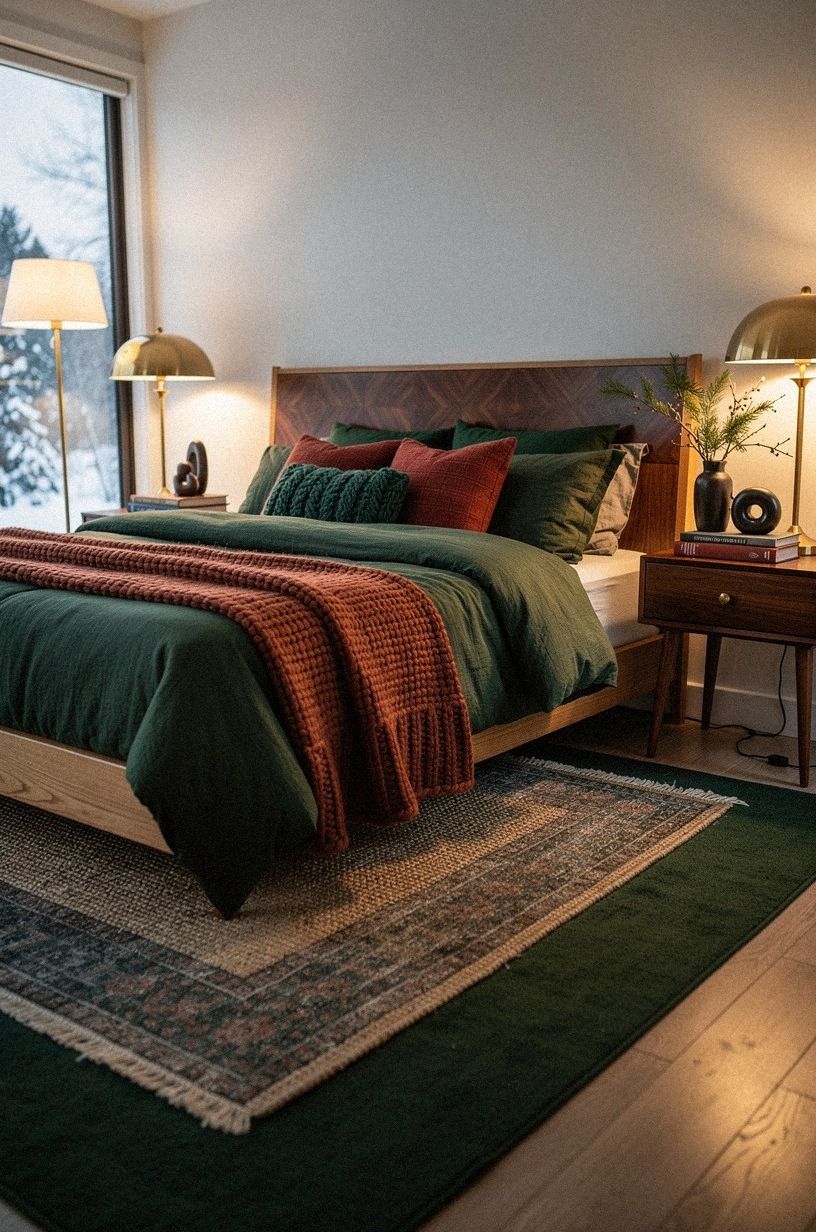
A rug under the bed should make your first step feel soft, not force the entire room into a matching pattern. I use three textures: a low-pile base, one nubby accent, and a smoother textile on the bed. You’ll get warmth underfoot without turning the room into a fuzzy showroom.
For a queen bed, let the rug extend 18 to 24 inches past the sides and foot whenever your layout allows. Your feet will land on the rug instead of cold flooring, and the bed will look visually grounded. An 8×10 wool rug typically costs $400-$1,500, so measure twice before you commit.
A hand-knotted wool rug is my first choice because it has enough variation to hide ordinary life. I’d skip a high-shag rug in a bedroom with pets or rolling storage. It catches dust, drags under furniture, and can feel less restful after a few weeks.
But a rug doesn’t need to cover the whole floor to help. If your room is tight, place two flatweave runners on each side of the bed. You’ll save space and still create that warm landing zone in the morning.
Pay attention to the rug’s undertone. A rust-based neutral will flatter book-matched walnut, while a gray-beige wool may work better with natural oak and cooler walls. The rug doesn’t need to repeat every color, but it should make the bed look as though it belongs in the room.
A small rug can also work beneath a reading chair or at the foot of the bed. Just avoid scattering several unrelated shapes. One strong wool foundation usually feels calmer than a collection of tiny mats.
7Choose Wool Over Shag for Warm Bedroom Ideas That Last
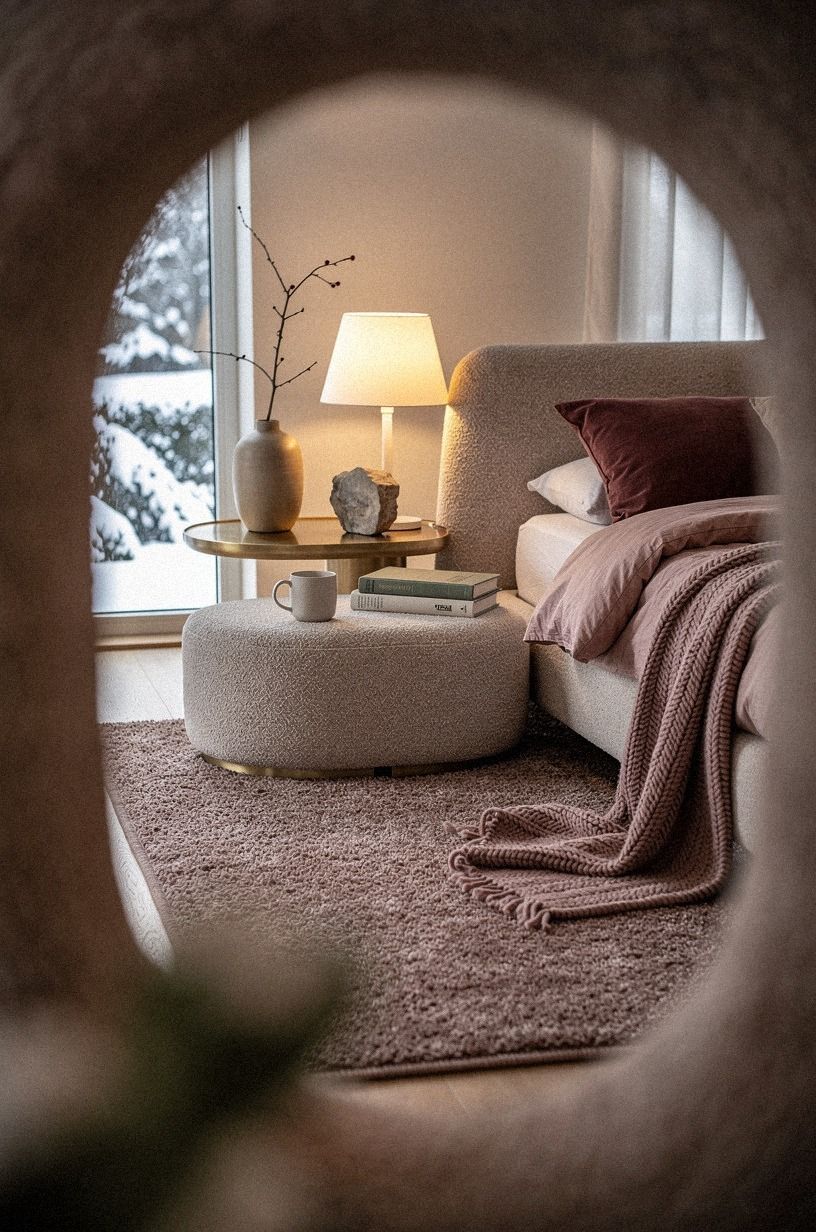
Wool brings quiet insulation and a slightly dry texture that works beautifully in a winter bedroom. A natural wool-bouclé blanket folded across the foot of the bed can carry more visual weight than a pile of small throws. Your room will feel layered, but it won’t look busy.
I’d choose wool over shag every time for a bed or reading chair. Shag looks plush at first, yet the long fibers can mat, trap lint, and make your bedroom feel less clean. You’ll appreciate wool more once the novelty of the fluffy surface fades.
Try a simple palette: dusty rose wool, charcoal cotton, and a small brass accent. Your eye gets contrast without having to process five different colors. The organic bouclé adds touchable texture, while the wool keeps the composition grounded.
If you’re styling a reading corner, add a low organic-bouclé chair rather than another upholstered piece. Its rounded texture gives the soft textiles a little structure, and you’ll have a practical place to sit while your bed remains visually calm.
Wool doesn’t have to look rustic. A finely woven merino blanket feels polished, while a chunky lambswool throw brings more visible texture. Choose the weave according to the room’s other surfaces.
If your headboard is heavily textured, keep the blanket quieter.
You can also use a wool lumbar pillow instead of another square cushion. It gives the bed a finished shape without creating a pile you’ll have to move every night. That small restraint matters in a room meant for sleep!
For another direction, look at the relationship between a wool rug, linen bedding, and low light in these warm bedroom examples. The common thread is texture with room to breathe.
8Frame the Bed With a Padded Headboard
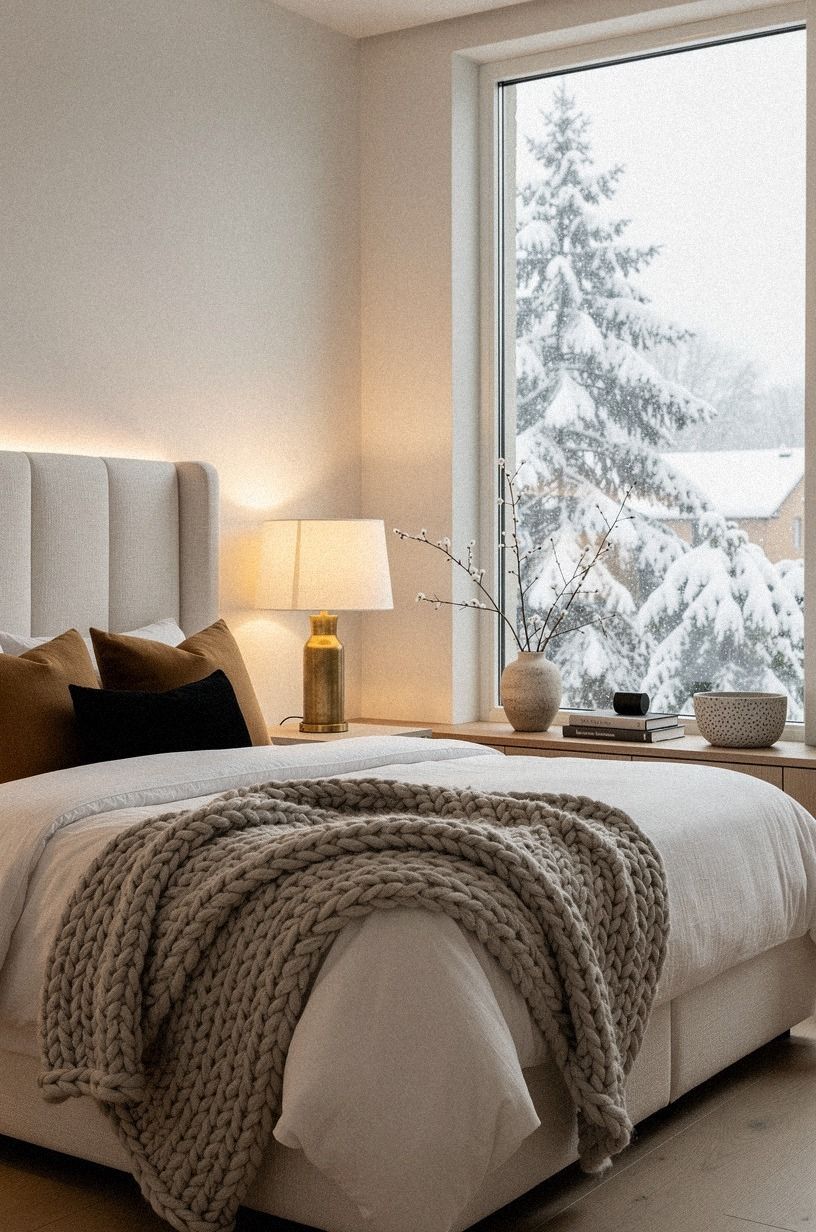
A padded headboard makes a bedroom feel warmer because it softens the largest vertical surface beside your body. Choose warm-white performance linen or a tightly woven cotton blend, especially if you read in bed or lean against it often. You’ll get comfort without the preciousness of delicate fabric.
The headboard should be wide enough to relate to the nightstands, but it shouldn’t swallow them. Your queen bed is 60 inches wide, so a headboard that extends beyond that line can create a more finished frame. Keep the shape simple if your bedding already has visible texture.
I’d avoid a deeply tufted headboard in a small room. It adds shadows and visual buttons where you probably need clarity. A gently curved profile or a clean rectangular panel will feel more restful, especially against a warm white wall with camel accents.
And if you’re renting, a freestanding headboard can still create the same effect. Place it behind the bed, secure the furniture safely, and let your bedding cover the lower gap. You’ll change the room’s posture without drilling into the wall.
A headboard can also solve a scale problem. If your bed looks lost beneath a tall ceiling, choose a taller vertical upholstered panel. If the room is narrow, a lower profile may keep the wall from feeling crowded.
Think about the fabric in relation to touch. Performance linen is forgiving and relaxed, while camel cotton velvet feels richer but shows pressure marks more easily.
Neither is automatically better. The right choice depends on how you actually use the bed.
Keep the surrounding wall quiet. One framed print, a narrow unlacquered-brass sconce, or a small painted zone can support the headboard.
You don’t need a full gallery wall competing with it. This charcoal bedroom reference shows how a restrained backdrop can make the bed feel anchored.
9Paint One Warm Zone Instead of the Whole Room
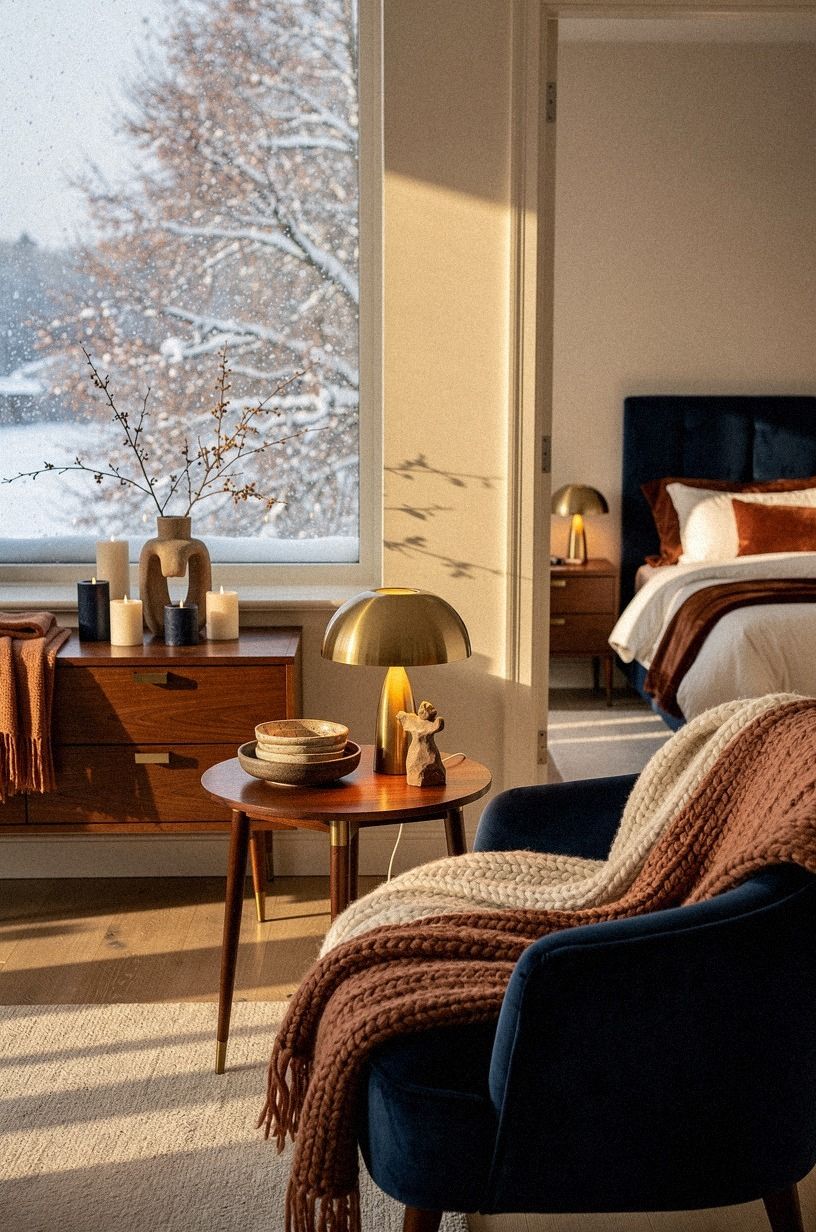
A winter bedroom doesn’t need a full repaint to feel inviting. Paint the wall behind the bed, the ceiling, or the inside of a shallow alcove, then let the rest of the room stay quiet. Your eye will read the color as an intentional zone instead of a flat box.
Midnight blue works well when your flooring is pale and your furnishings are warm. It has enough depth to support linen and wood, but it won’t make a narrow room feel enclosed when balanced with ivory. For a slightly softer scheme, use ivory walls and add copper textiles.
Instead of painting every surface, I’d spend the effort on preparation. Fill nail holes, sand rough spots, and use painter’s tape that won’t pull the existing finish. You’ll notice the clean edge every time the lamp turns on, and your room will feel more considered for the same paint amount.
The other smart move is to match the zone to your bed position. A color behind the headboard feels purposeful; a random side wall can look accidental. If you’re working with an alcove, carry the color across the ceiling to make the nook feel deliberate.
You can create a warm zone without using a deep shade. A midnight blue, copper, or ivory surface can shift the mood while preserving daylight. Add a deep-pile mohair velvet cushion or throw if you want the room to feel softer without repainting every wall.
If your room has dated trim, don’t automatically paint it bright white. A softened trim color can make the wall feel more enveloping, while stark white may emphasize every cool cast. Test both together before you decide.
This charcoal wall story is a useful reference if you’re deciding how much contrast your room can handle. A single strong zone can be enough to make the entire bedroom feel designed.
10Build the Budget Bedroom Layer by Layer
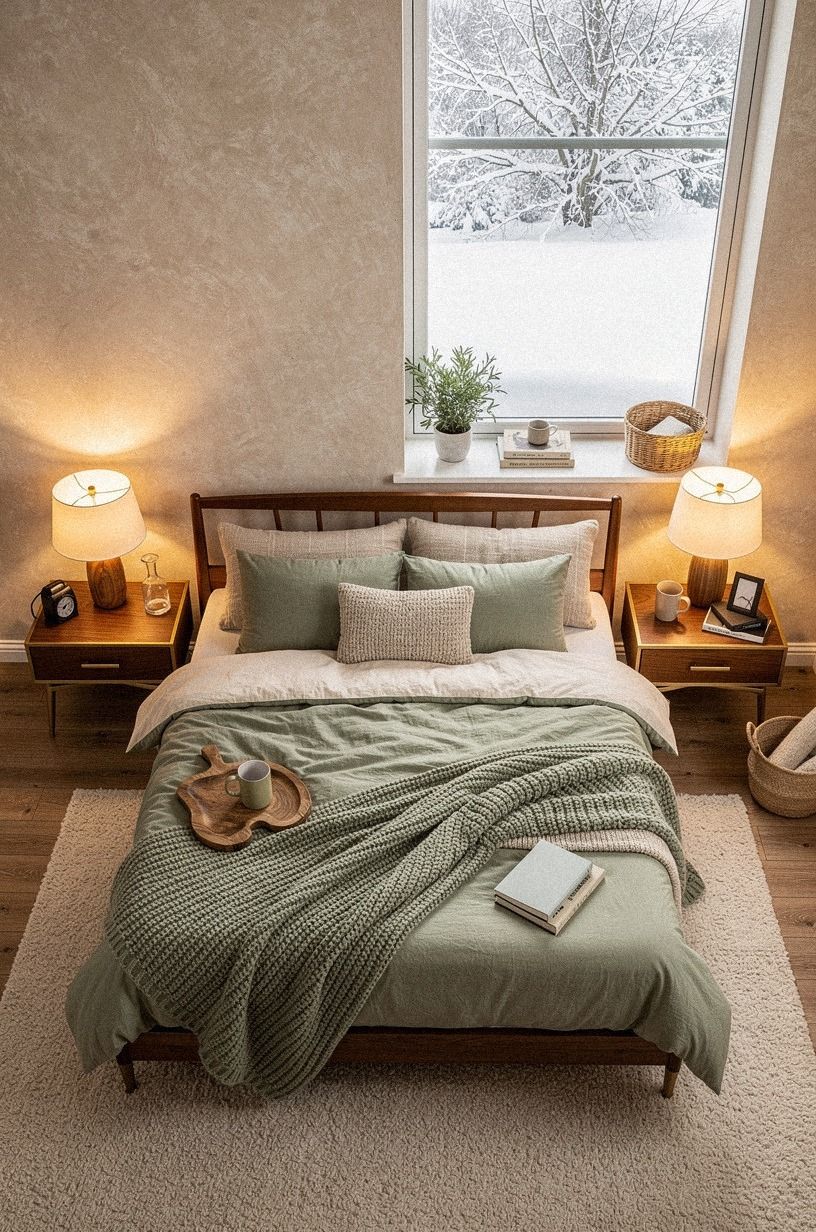
You don’t need a full furniture replacement to create a warm winter bedroom.
11Mix the Three-Source Light Stack for Winter Bedding Ideas
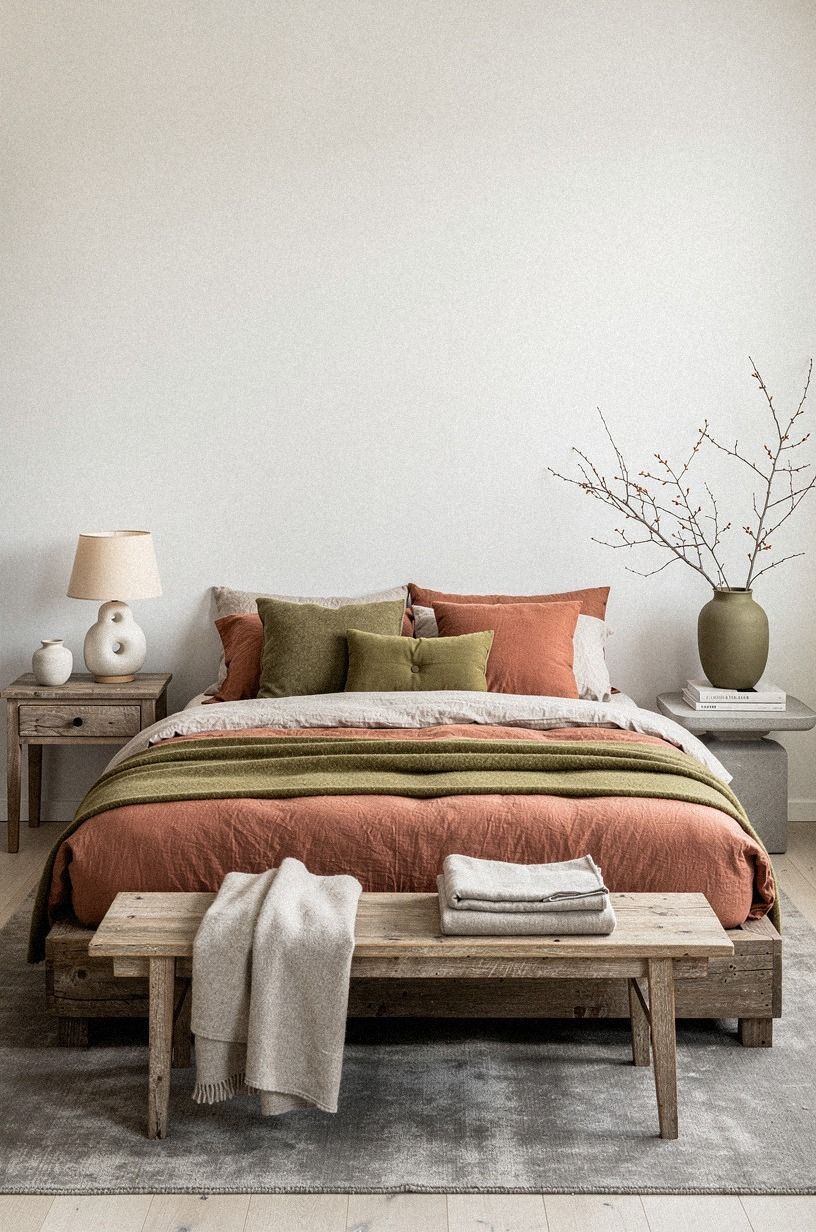
A restful bedroom needs at least three kinds of light: general, bedside, and low ambient glow. Your ceiling fixture handles movement around the room, bedside lamps help you read, and a small shaded lamp or wall light keeps the corners from going black after sunset.
Choose bulbs warm enough to reveal the grain of reclaimed weathered teak rather than flattening it. A linen shade will diffuse the glow, while a terracotta base adds a little weight. You’ll want the bedside light low enough to reach, but high enough that the shade doesn’t block your face when you’re reading.
I’d skip bright exposed bulbs beside the bed. They create glare, make the room feel alert, and flatten the textures you worked to build. A dimmable lamp with a warm shade gives your eyes a gentler transition toward sleep.
For a practical setup, use one lamp on each side if your layout allows it, then add one low source across the room. This warm bedroom lighting guide pairs well with the idea because you’ll see how small pools of light can make a room feel intimate without making it dark.
The ceiling fixture doesn’t have to disappear. Choose a paper lantern, frosted globe, or fixture with a fabric diffuser so the general light feels soft. A bare clear bulb overhead can undo the comfort created by every other layer.
Use the bedside lights for function, not symmetry alone. If one side of the bed is a reading spot, give that side a slightly stronger lamp. The room can still look balanced without pretending both sides are used in exactly the same way.
A low lamp on a dresser or shelf should sit below eye level. Its job is to create a glow across the room, not another bright point in your line of sight. Amber glass, matte ceramic, and pleated fabric all soften the effect.
Try the room with only the bedside lamps and low ambient source switched on. If the bed still feels inviting, you’ve built the right mood. If the corners vanish completely, add reflected light instead of simply increasing brightness.
The Winter Bedroom Choice I’d Make With My Own Money
I’ve changed enough bedrooms to know that warmth rarely comes from one dramatic purchase. It comes from decisions that agree with one another: a wall color that supports the wood, bedding that feels good against your skin, and light that lets the room soften at night. You can buy all three slowly, and your bedroom will still improve after each change.
My biggest mistake was treating comfort as a visual problem. I bought a thick blanket before fixing the cold white lamp and the bare floor.
The blanket looked inviting in daylight, but the room still felt hard after dark. Once I added a wool rug and replaced the overhead glare with a shaded lamp, the same bed felt entirely different.
You’ll also save money by deciding what your room shouldn’t hold. I don’t think every bedroom needs a bench, a gallery wall, three baskets, and a full set of decorative pillows.
Your eyes need somewhere to rest. A simple walnut nightstand, one framed print, and a folded blanket can feel richer than a crowded arrangement.
And there’s a seasonal reason this approach works. Winter bedrooms are experienced mostly in low light, under textiles, and during the quiet minutes before sleep. That means touch, scale, and glow matter more than a trend label.
If your room supports those moments, it’s doing its job.
If you’re unsure where to begin, make the bed first, then stand in the doorway after sunset. Notice what feels hard, bright, empty, or cluttered.
The answer will usually point to your next layer. A room can be quiet and still feel alive!
For more inspiration, compare that evening view with these cozy bedroom ideas. The strongest spaces aren’t overloaded. They simply make warmth visible through texture, proportion, and light.
The Questions Worth Answering First
What are the best winter bedroom ideas for a small bedroom?
The best small-room choices are a wall-mounted nightstand and layered bedding because they create more floor space and softer comfort. Try IKEA KALLAX birch-effect storage nearby for blankets, but keep the area beside your pillow visually light. You’ll get warmth without blocking movement.
Where can I find winter bedroom pieces on a budget?
Look at IKEA, Wayfair, and Target for bedding, lamps, and small storage. You can also check Facebook Marketplace or a local thrift shop for solid wood nightstands. I’d spend first on a wool throw, warm bulb, or secondhand rug rather than decorative clutter.
How much does a winter bedroom makeover cost?
A small refresh can stay near $200-$800 when you keep the bed and focus on bedding, paint, shades, and art. Your existing lamps, books, and furniture may already cover the styling layer, so start by changing what feels cold or uncomfortable.
Can I create a warm winter bedroom on a budget?
Yes, and you can begin without buying anything. Rearrange the bed for better balance, layer blankets you already own, and move a lamp closer to the reading side. Then add one warm textile, such as a cotton quilt, before replacing furniture.
Is a winter bedroom refresh worth it in a small space?
Yes, because a small bedroom needs fewer pieces and benefits quickly from better scale. Keep a rug 18-24 inches beyond the bed where possible, use a narrow nightstand, and choose one strong wall color. You’ll notice the room feels calmer without adding more objects.
Is this approach suitable for a rental?
Yes. Use removable hooks, a tension rod, peel-and-stick wallpaper in a contained zone, and freestanding furniture.
Your landlord’s walls stay protected while your room gains texture. A removable linen panel can also soften a window without permanent hardware.
For paint and lighting decisions, these charcoal wall ideas and this dim-to-warm guide offer useful directions without requiring a complete renovation.
Where I’d Start First
If I had to pick one, I’d start with the layered bed. Your body notices wool, linen, and a good quilt before your eye notices another accessory. Pin the layered bedding idea for later and build the rest of your room around how well you sleep.
Then check the light. A warm bulb and one shaded lamp can change the mood before you paint a single wall. This warm bedroom lighting guide is a good next reference if your room feels colder at night than it does during the day.
Finally, remove one thing that doesn’t earn its place. The calmer the room becomes, the more clearly you’ll see which texture, color, or light source deserves to stay.