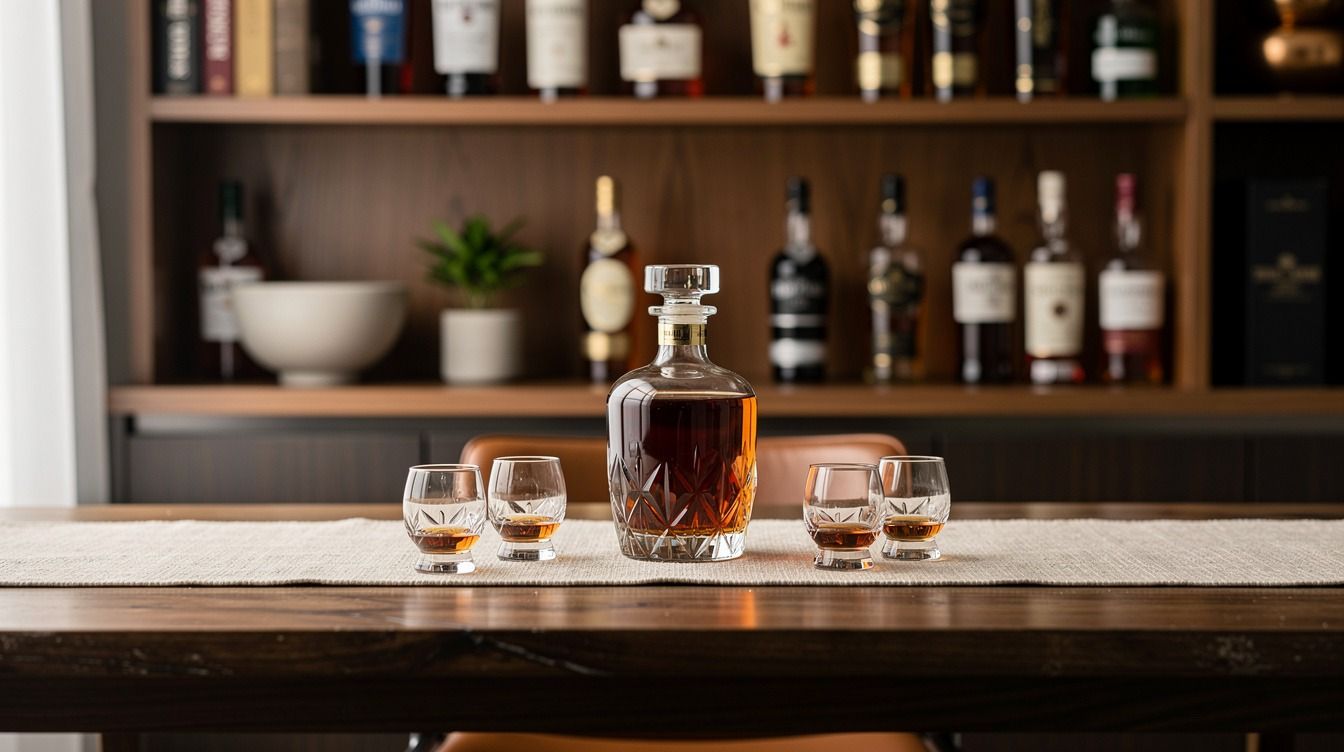
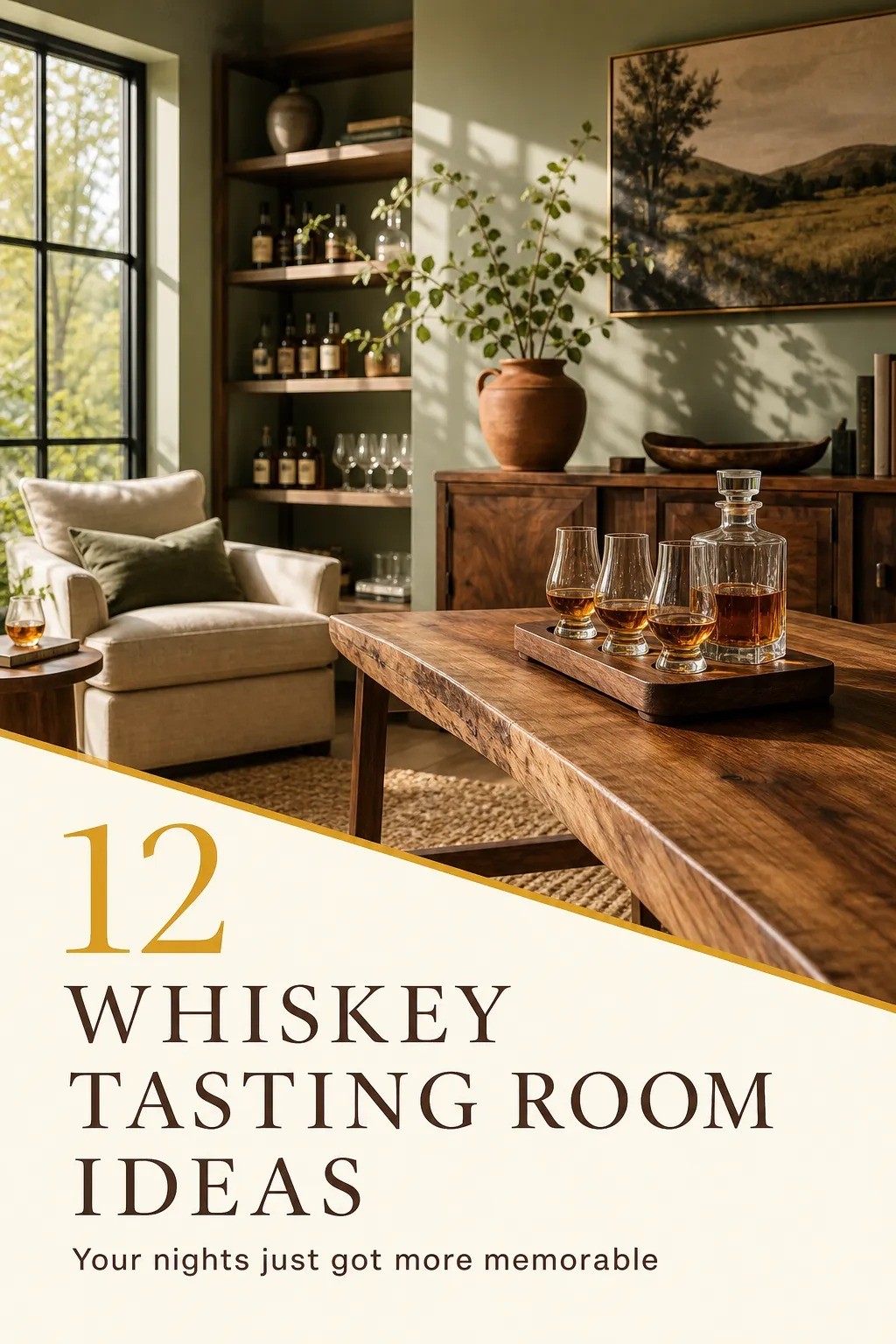
Whiskey tasting room ideas for at-home connoisseurs can start at $200 to $800 if you focus on paint, textiles, art, and organization. I once tried to buy my way out of a bland corner with a huge bottle display. Wrong move. You need atmosphere first, then the bottles earn their place.
- Paint a moody backdrop with the Bottle-Glow Rule
- Build the Three-Height Light Stack
- Float a tasting table instead of buying a full bar
- Why should your bottles sit below eye level?
- Layer a wool rug under the conversation zone
- Hang art with the Slow-Pour Gallery Method
- Mix leather and linen through the Two-Wood Rule
- Frame the shelf with curtains, not more cabinetry
- Paint a moody backdrop with the Bottle-Glow Rule
- Build the Three-Height Light Stack
- Float a tasting table instead of buying a full bar
- Why should your bottles sit below eye level?
- Layer a wool rug under the conversation zone
- Hang art with the Slow-Pour Gallery Method
- Mix leather and linen through the Two-Wood Rule
- Frame the shelf with curtains, not more cabinetry
- Skip the bar cart for a low cabinet that hides the clutter
- Create a $200-to-$800 plan before you shop
- Add a speakeasy note without making it theatrical
- Make the room useful beyond tasting night
1Paint a moody backdrop with the Bottle-Glow Rule
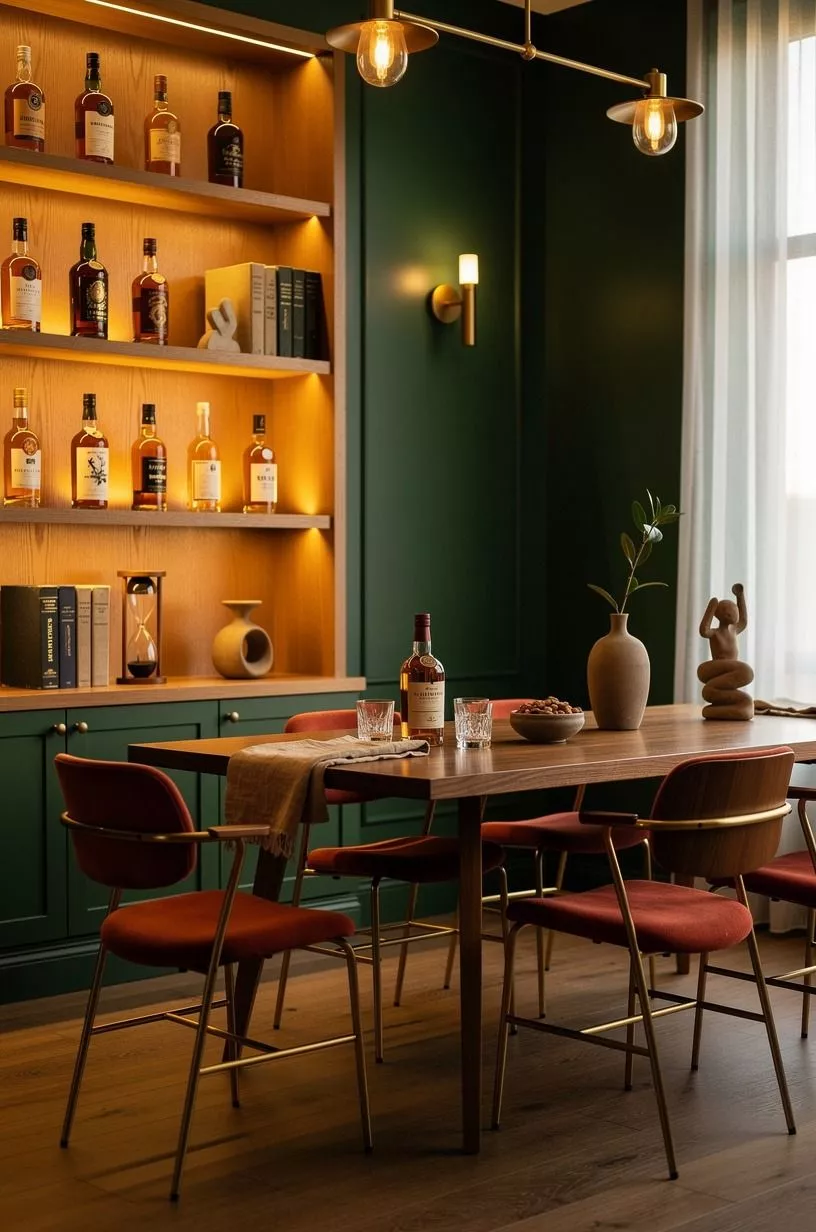
Start with the wall behind your collection, because you’ll see it before you notice any decanter. Farrow & Ball Studio Green gives your room a deep forest green that feels refined beside rust tones, natural oak, and amber light; I’d skip cool charcoal here because it can make a small room look like a basement bar.
You don’t need every wall dark. Paint one focal wall, then let Benjamin Moore White Dove OC-17 handle adjacent trim or shelving. Your bottles will read warmer against that contrast, and you’ll get a more intimate room without buying custom cabinetry.
A framed print, a low lamp, and one unlacquered brass picture light. That’s enough. For more autumn layers, borrow ideas from this fall home decor checklist.
2Build the Three-Height Light Stack
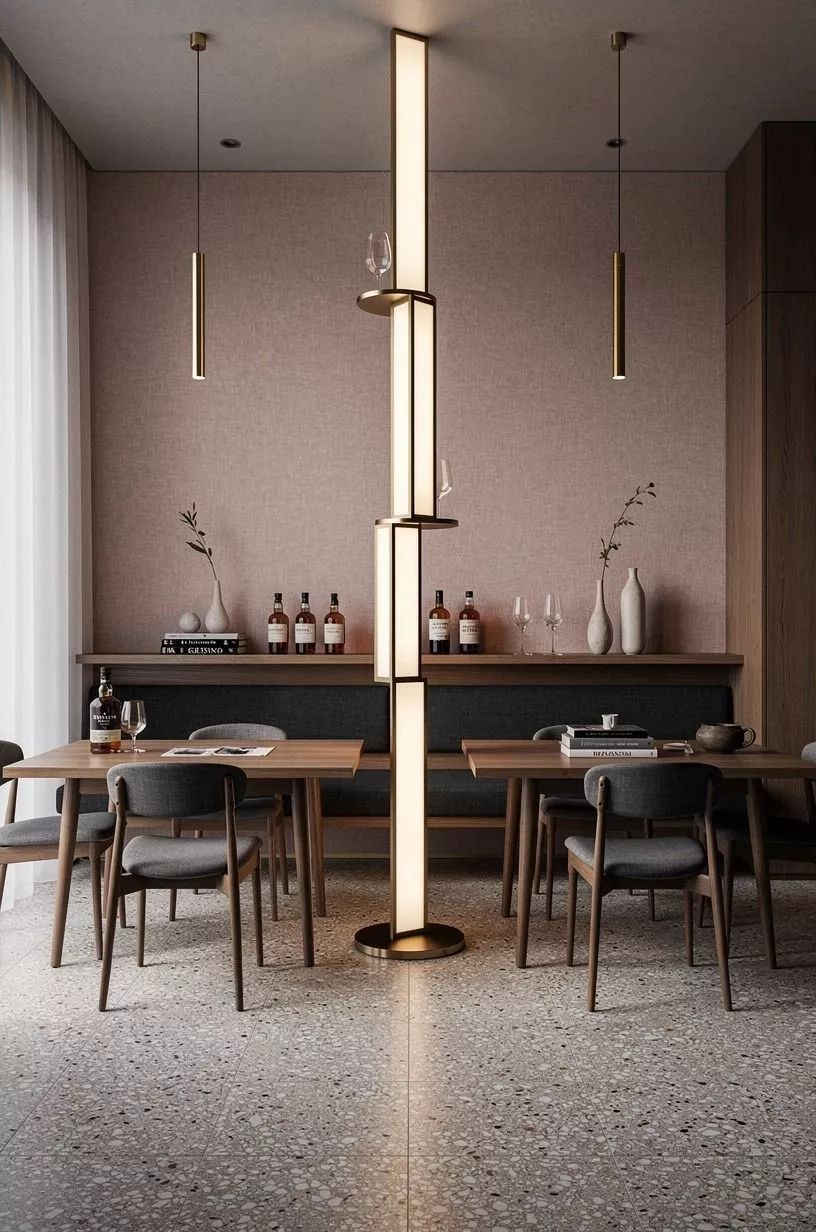
Use three sources of light: overhead, task, and ambient. Your tasting room doesn’t need a dramatic chandelier if you can’t control its glare, and I’ve learned that one bright ceiling fixture makes good whiskey look oddly flat.
Try a terrazzo table lamp beside your chair, a dimmable aged brass sconce near the shelf, and a modest overhead fixture. Dusty rose and charcoal can keep the light stack feeling warm without washing across every bottle. You’ll want warm bulbs, not blue-white office lighting.
And yes, lamps count as decor. They also make your room feel inviting at 9 p.m. when you’re pouring one ounce, not hosting a nightclub.
3Float a tasting table instead of buying a full bar
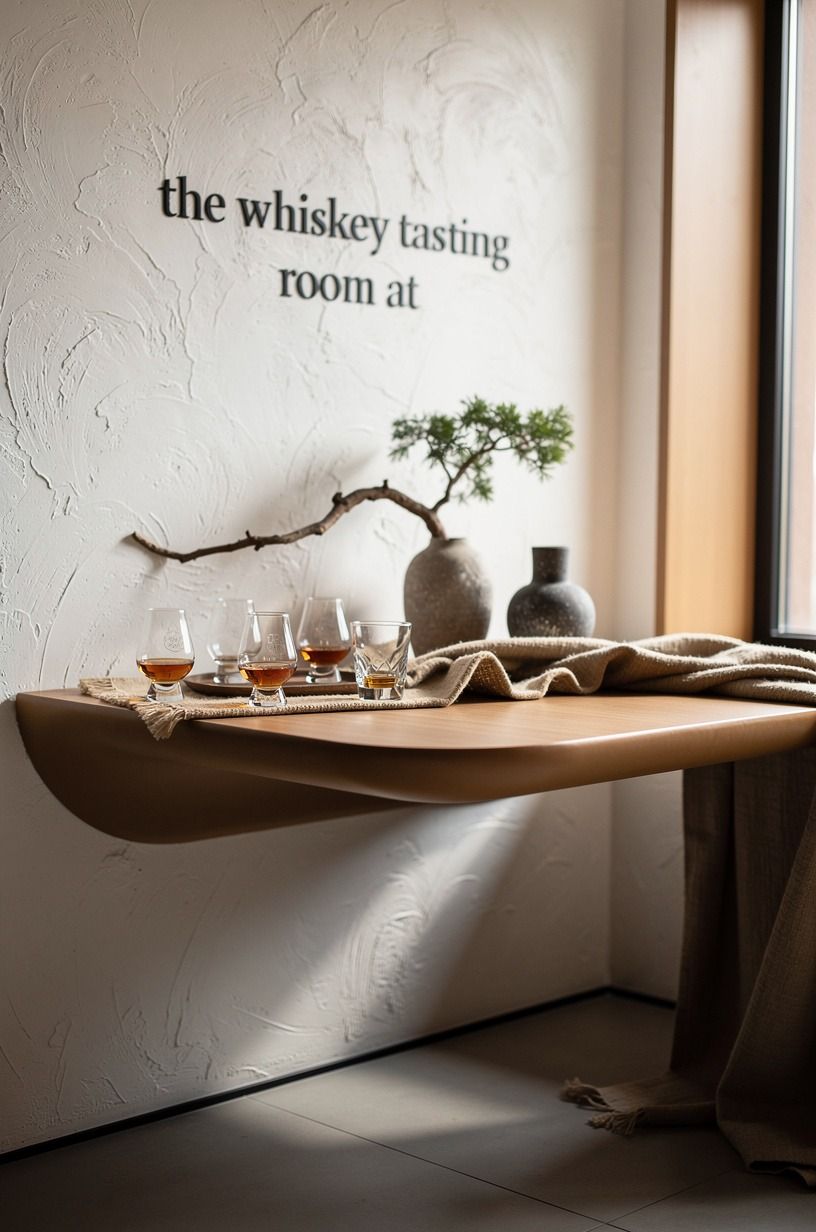
A tiny round table beats a bulky bar cart for most whiskey tasting room decor ideas.
4Why should your bottles sit below eye level?
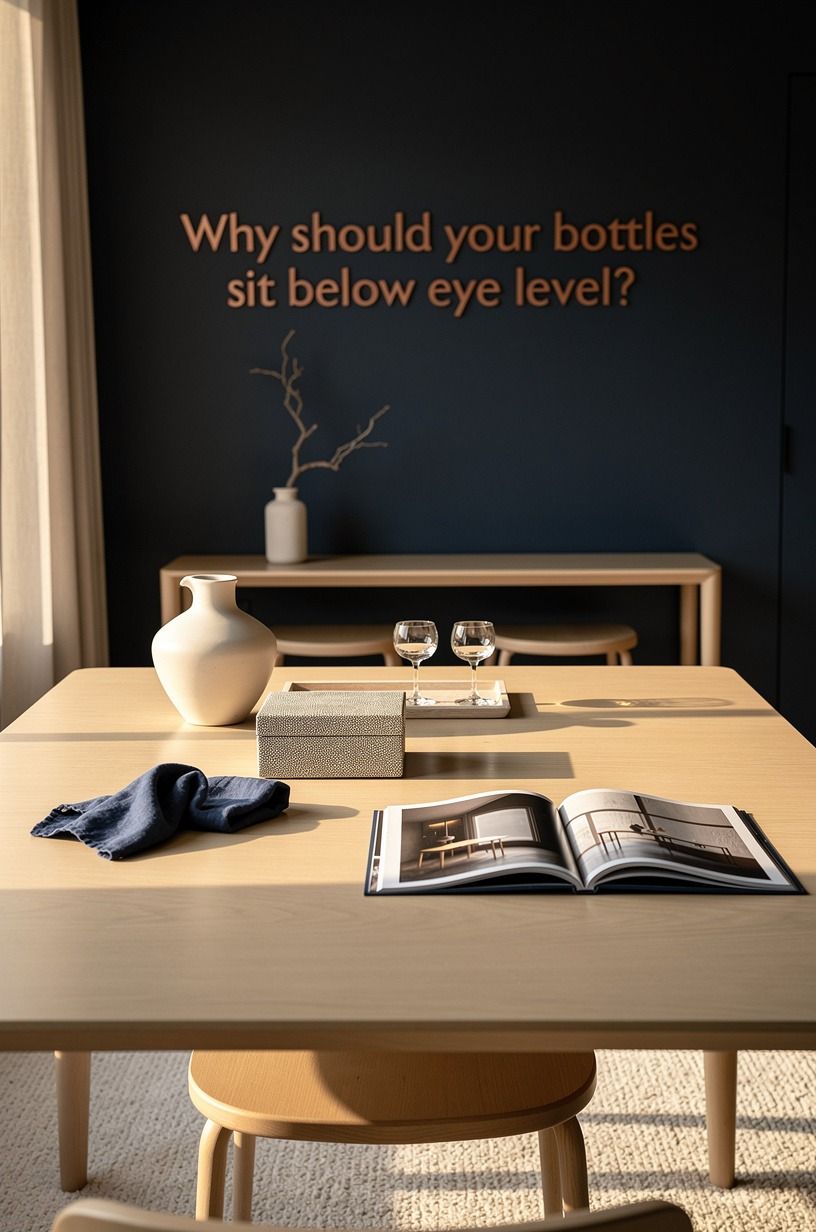
Because your face, not your inventory, should be the first thing people notice. Mount your main shelf so the visual center lands around 57 to 60 inches from the floor, then keep the highest bottles below the art line.
A midnight-blue shelf with concealed brackets looks warmer than a wire rack when paired with copper and ivory, especially against deep paint. You can use a smaller shelf in a rental, too, if you anchor it correctly and keep your collection edited.
But don’t line up every bottle by height. Group your favorites in loose clusters, leave breathing room, and let one shagreen tray break the straight line. That little bit of disorder feels lived-in.
5Layer a wool rug under the conversation zone
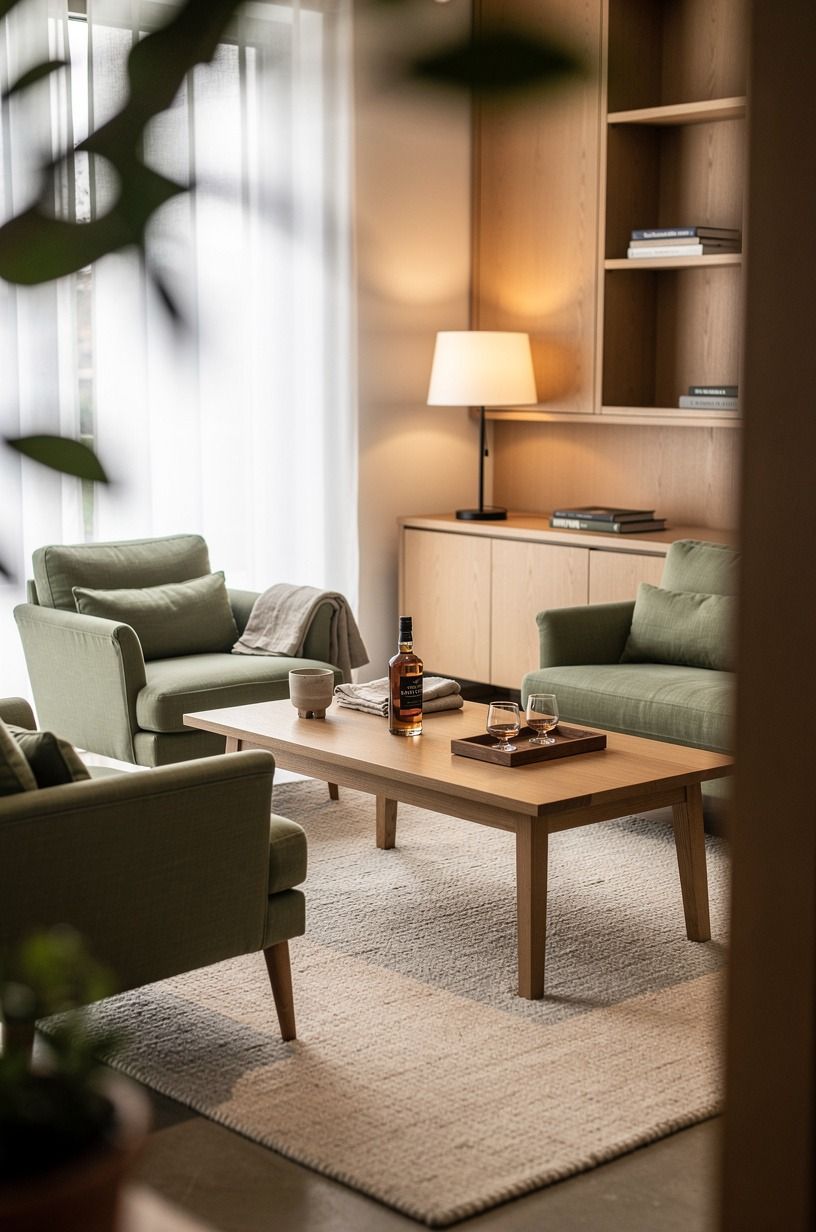
Your rug needs to catch the front feet of every chair. If it doesn’t, the furniture floats apart and your home wine tasting room ideas start looking like separate purchases that happened to meet.
A wool rug typically runs $400 to $1,500, so it’s an investment piece. I’d rather buy a smaller vintage-style wool rug than a giant plastic-feeling one, because the wool softens footsteps and holds a little warmth after the room cools down.
For a budget version, look for a muted Target Threshold washable rug and add washed Belgian linen at the windows. You’ll get texture without pretending a thin rug is heirloom quality.
It isn’t. Still, it can look charming for now!
6Hang art with the Slow-Pour Gallery Method
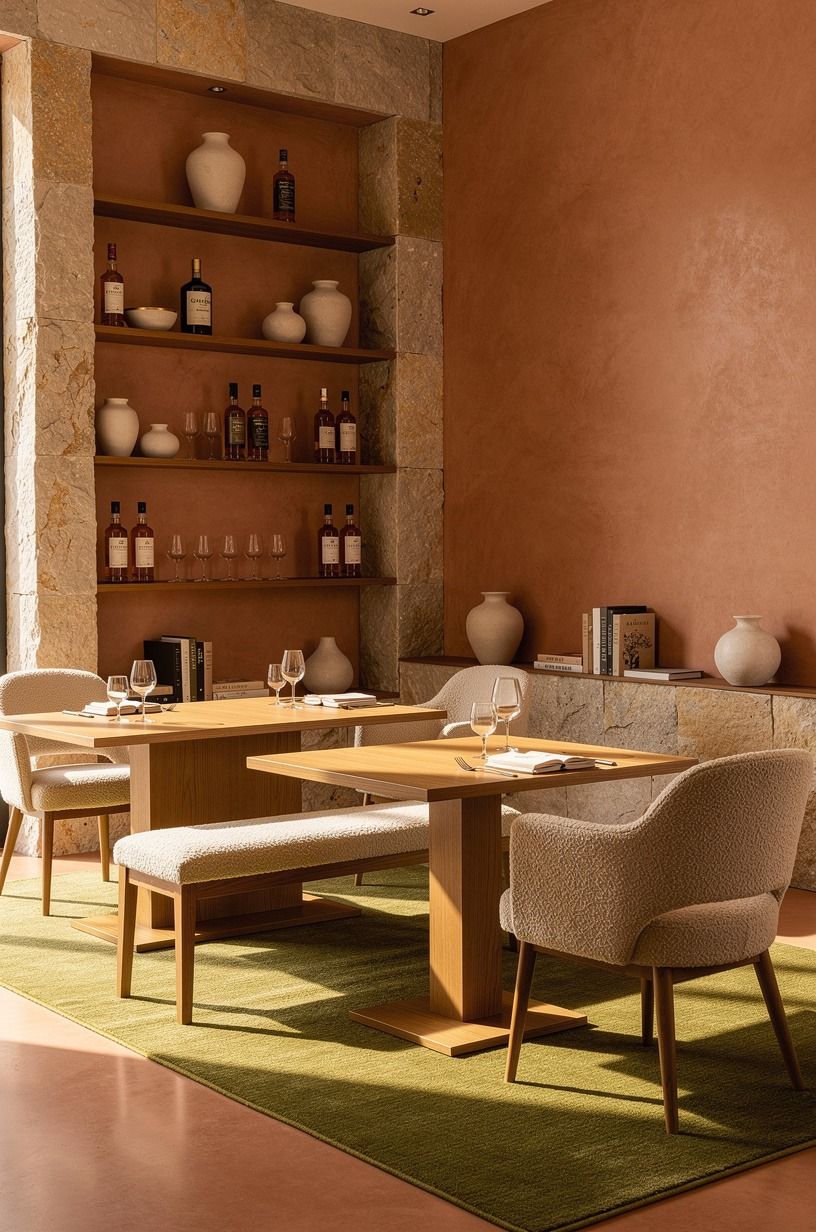
Treat your wall art like a tasting flight: three or four pieces with different notes, not twelve frames shouting at once. Hang the center of your main piece 57 to 60 inches from the floor, then build outward with smaller works.
I like old botanical prints, a local map, and one black-and-white photo in walnut gallery frames. Add an organic bouclé ottoman nearby instead of more wall decor. Skip generic whiskey quotes.
They’re the fastest route to a room that feels staged, and your space deserves more personality than “Whiskey Business.”
If you’re mixing a lounge with another hobby space, this home music studio room guide has useful lessons about making walls feel personal without making them busy.
7Mix leather and linen through the Two-Wood Rule
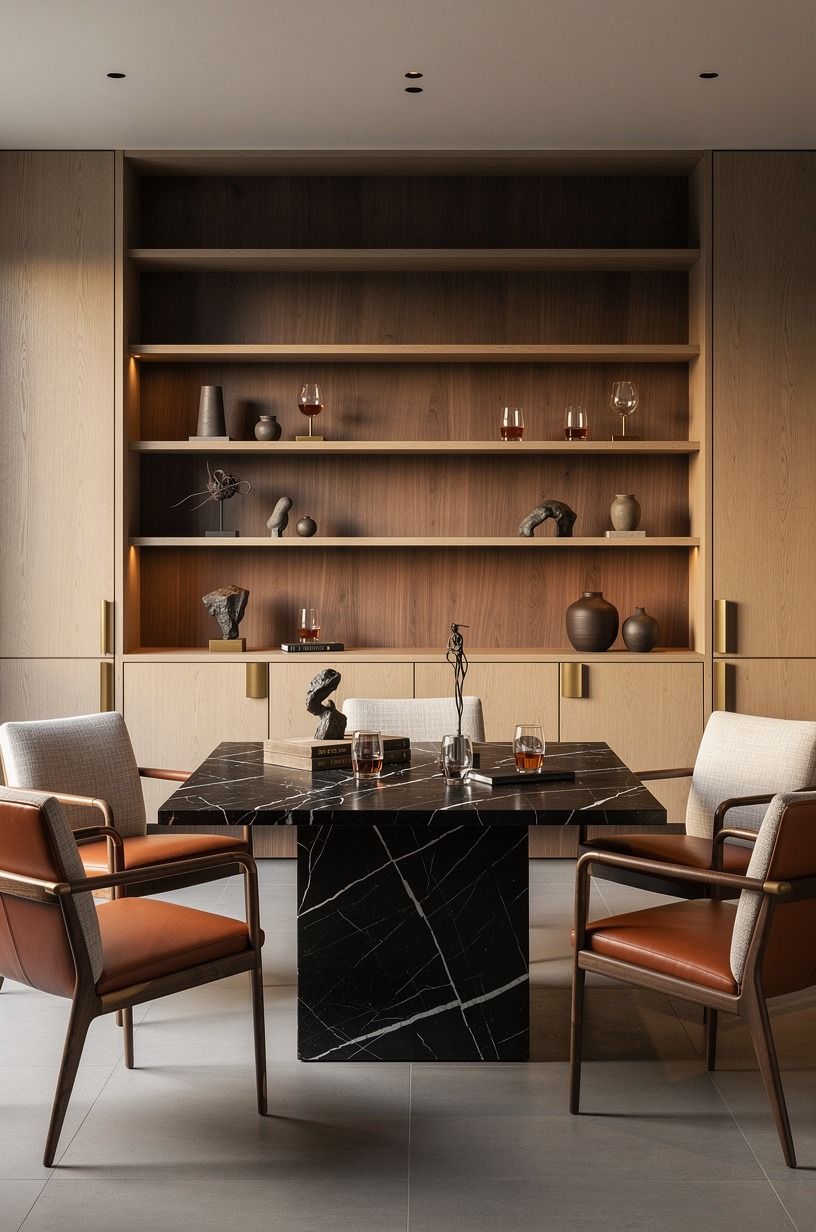
Choose two wood tones, then stop. A Nero Marquina marble side table with a clay-toned cabinet works because the contrast is clear; walnut, oak, espresso, gray wash, and cherry all together looks accidental.
For seating, a Article Sven tan leather chair brings weight, while a Belgian flax lumbar pillow keeps it from feeling like a cigar lounge parody. You’ll want one material that catches light and one that absorbs it.
Aged brass reflects. Linen softens.
I went back and forth on velvet here. It’s elegant, but I’d skip it for the main chair unless your room gets little direct sun, because it shows every brushed mark and can feel precious beside a casual pour.
8Frame the shelf with curtains, not more cabinetry
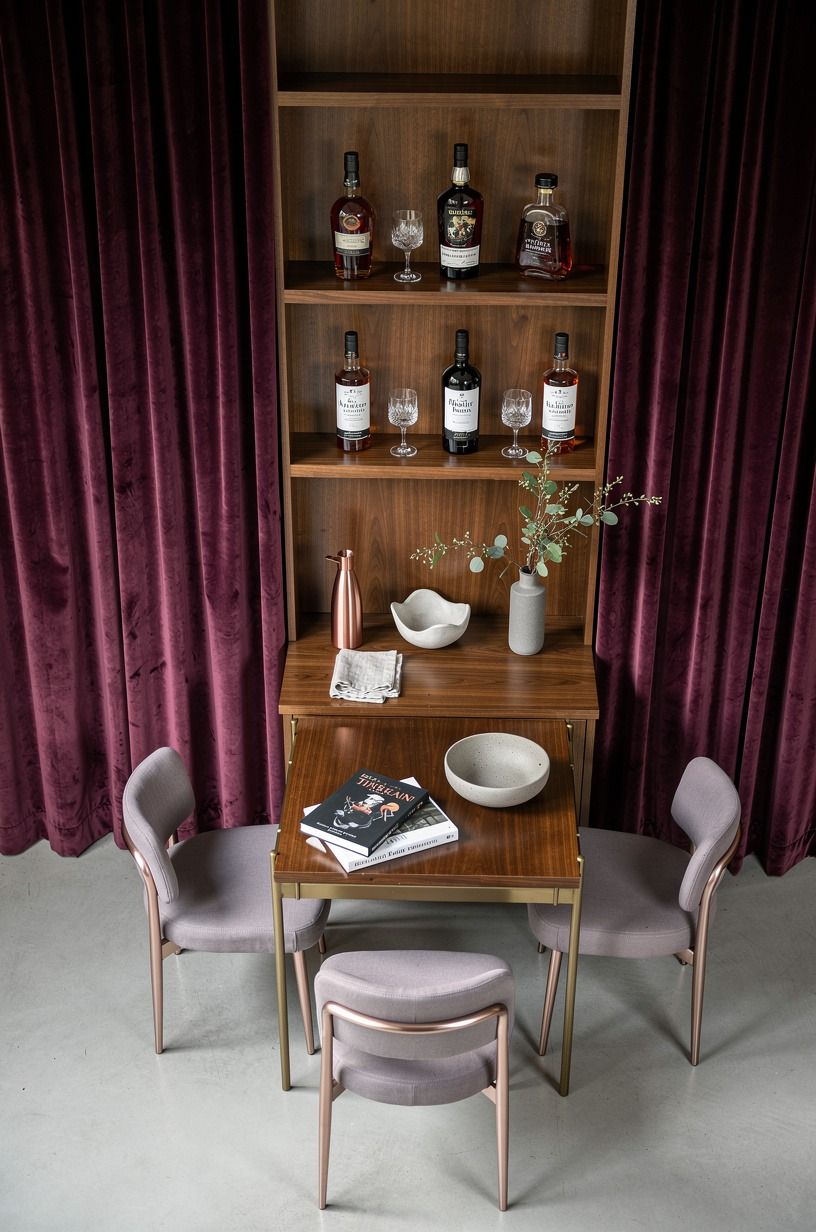
Curtains can make a bottle wall feel intentional, especially in a spare bedroom or dining-room alcove. Deep-pile mohair velvet in plum gives grey shelving and rose-gold details a softer, more settled finish.
9Skip the bar cart for a low cabinet that hides the clutter
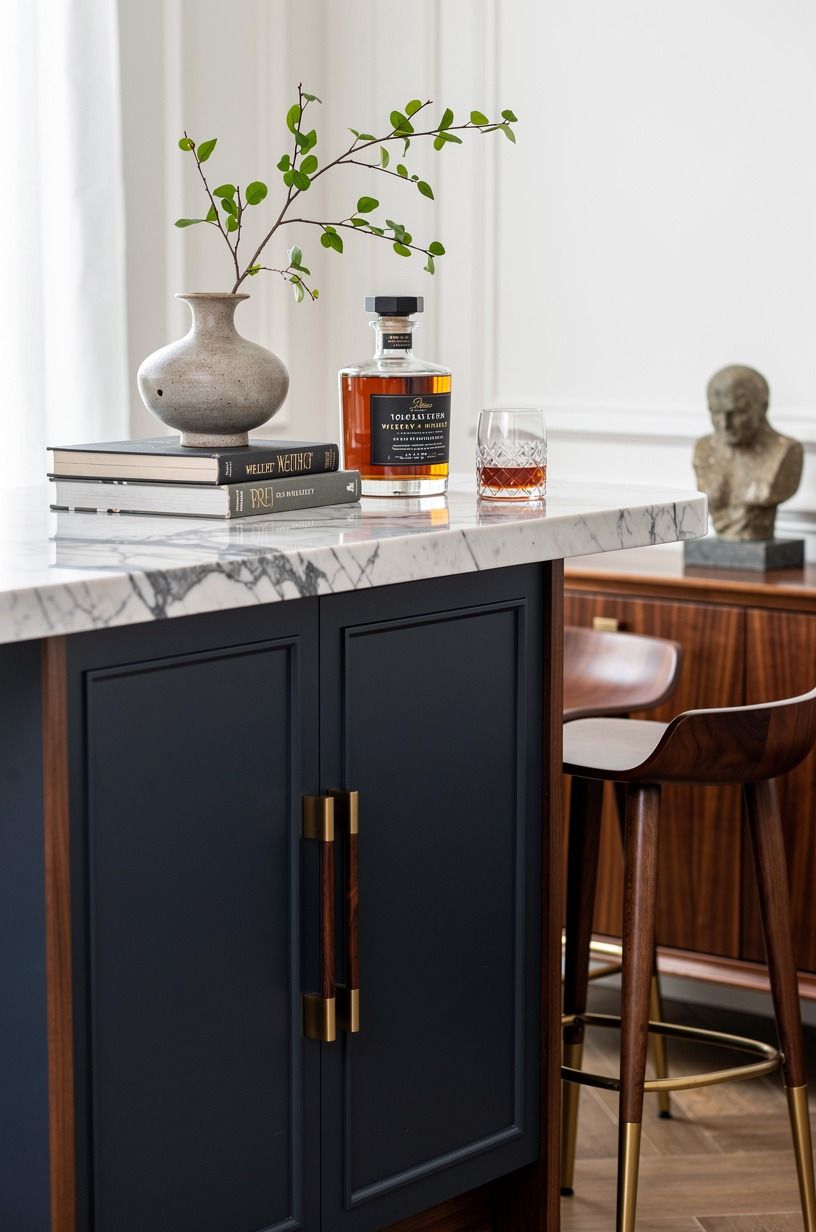
Bar carts photograph well, but they’re bad at hiding water pitchers, spare coasters, tasting notes, and the less glamorous bottles you don’t want on display. A low walnut cabinet with a Carrara marble top gives your room a calm surface and lets you keep the useful mess out of sight.
The IKEA HEMNES sideboard is a sensible budget starting point, especially if you paint it in a soft navy and add simple white hardware. I’d avoid glossy black paint because fingerprints show immediately, and you’ll spend more time wiping than pouring.
Inside: extra glassware, a small tray, bottle stoppers, and your notebook. On top: one lamp, one framed print, one bowl.
Your shelf can be generous. Your surface shouldn’t be.
10Create a $200-to-$800 plan before you shop
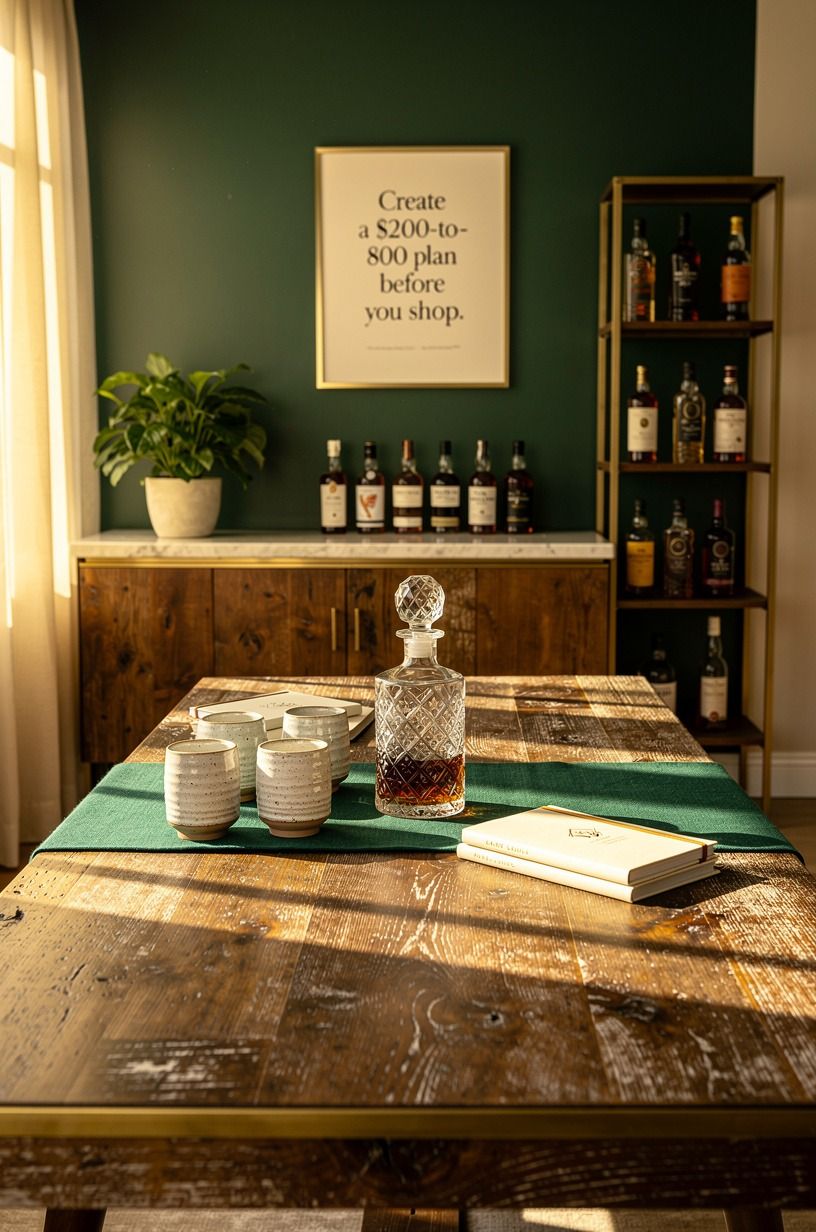
You can build a warm, comfortable whiskey room in phases. The first dollars should go toward the part you touch or see every night: paint, lighting, a rug, or seating. Don’t start with custom millwork unless the rest of your room already works.
At the budget tier, you can paint, add a reclaimed weathered teak table, organize bottles, and find secondhand art. Mid-range is where a quality rug and a statement fixture enter the picture. High-end custom cabinetry is lovely, sure, but it won’t rescue bad lighting.
Your free moves matter, too: edit the shelf, move the lamp lower, and pull chairs closer. That’s the part people rush past. It changes the whole read of the room!
11Add a speakeasy note without making it theatrical
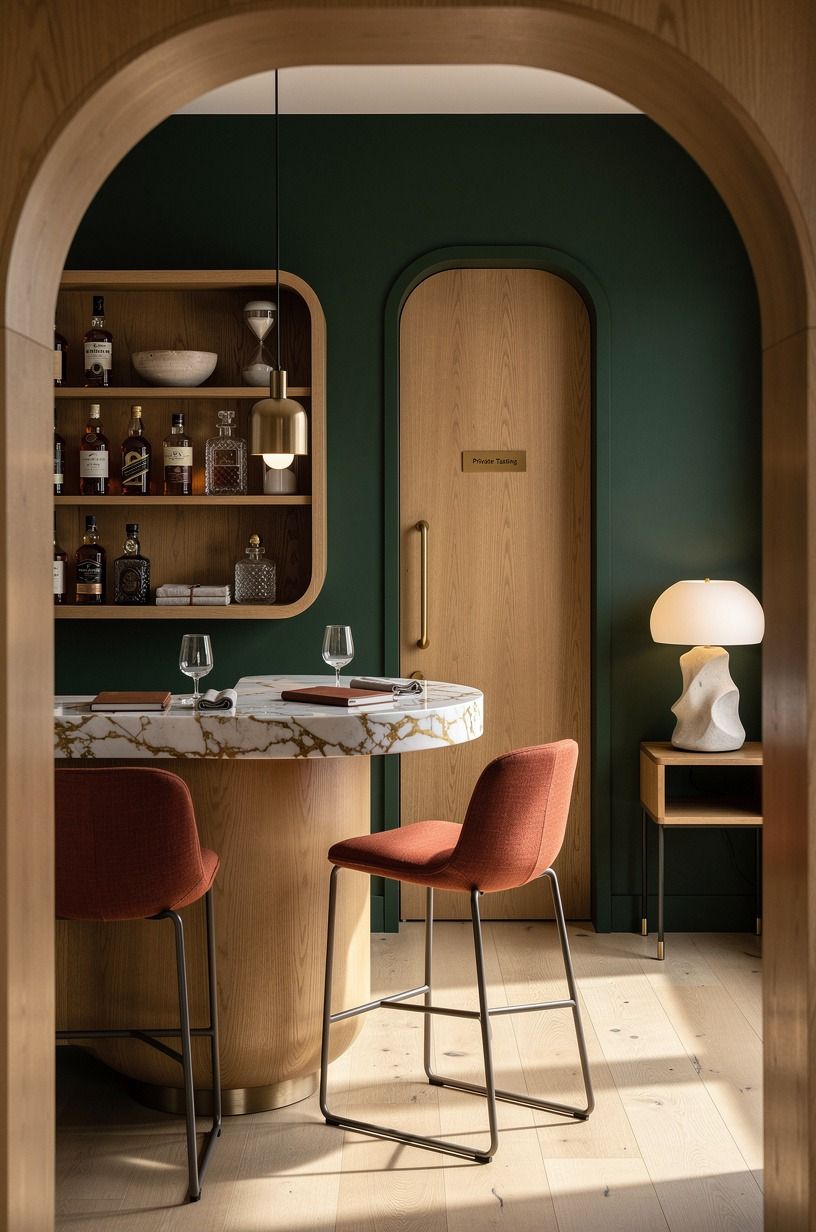
A little shadow is good. A fake prohibition set is not. Use one or two references, such as a Calacatta marble tray or unlacquered brass cabinet pull, then keep the rest of your room modern and relaxed.
You can borrow the mood from these speakeasy whiskey room ideas without copying every dark wall and leather tuft. I’d skip oversized wall lettering because it tells guests what they’re already standing in.
Try a small tray with a rust-toned ice bucket, a match striker, and a book on regional distilleries. Quiet details. The ice clinks, the lamp glows, and the room does the talking.
12Make the room useful beyond tasting night
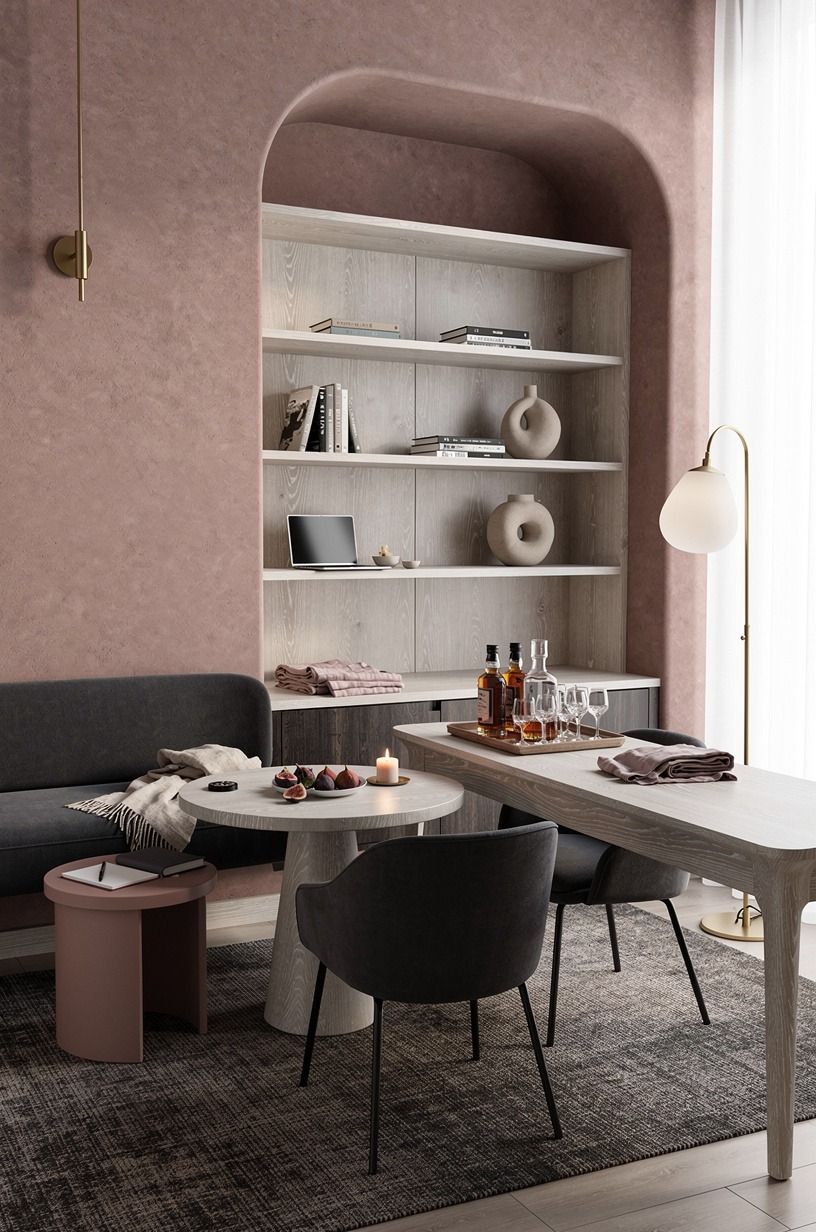
The best whiskey room ideas work on a Tuesday afternoon, too. Give yourself a reading chair, a place for a record, or a table where you can write a few tasting notes. Otherwise, you’ve built a handsome room that waits for company.
A cerused white oak chair is a splurge, but a secondhand club chair with a washable throw can do the same job. You’ll use the room more if your seat is comfortable enough for an hour, not just impressive for a photo.
Could your whiskey corner also be your quiet reset spot? It should be. For more lounge-focused layouts, see these home whiskey lounge ideas.
My honest rule for making a tasting room feel grown-up
I’ve made the mistake of treating a whiskey room as a collection display first and a room second. It looked impressive for about five minutes.
Then someone came over, had nowhere to set a glass, and the only decent light was directly above their head. That’s when I realized the bottles weren’t the point.
They were the excuse to make a corner of the house feel slower.
The room works when you can sit down without arranging yourself around it. Your chair needs an arm for a glass.
Your table needs room for water. Your rug needs enough reach that people don’t feel like they’re balancing on islands.
These aren’t glamorous choices, but they’re what make guests stay for another conversation.
I also think people overdo darkness. A moody room can be gorgeous, but only if you give it somewhere to breathe.
A pale ceiling, warm trim, a linen curtain, or one lighter painting keeps the color from closing in. I’d choose Farrow & Ball Studio Green over near-black navy for most homes because it holds depth without making the room feel sealed off. You still get drama, but you can find your coat on the way out.
And honestly, I’d spend less on bottle storage than you think. Keep only what you’re excited to pour visible. The rest can live behind a cabinet door.
Your room doesn’t need to prove anything. It needs to make you want to sit down.
A Few Things Worth Answering
What is the best whiskey tasting room idea for a small whiskey tasting room?
A compact table and one good chair are the best start for a small room. IKEA HEMNES storage keeps bottles and tools hidden, while a narrow wall shelf preserves floor space. Your room will feel more open if you keep the center clear.
Where can I buy whiskey tasting room pieces on a budget?
Start with IKEA, Target, Wayfair, and Facebook Marketplace for used wood furniture. Secondhand lighting and frames usually offer the best value, especially if you’re willing to replace a shade or paint a frame. You don’t need matching pieces.
How much does a whiskey tasting room makeover cost?
A basic refresh typically costs about $200 to $800. Paint and organization deliver the most visible change for less, while used seating and thrifted art can keep your total low. Moving furniture and editing your bottles are free.
Can I create a whiskey tasting room on a budget?
Yes, and you can begin without buying a bar cart. Free layout changes include pulling chairs onto one rug, grouping bottles, and lowering your lamp. Add paint, a pillow, and one secondhand table when your budget allows.
Is a whiskey tasting room worth it in a small space?
Yes, because a small room can feel intimate with less furniture. One defined seating zone makes the space useful instead of crowded. Keep your cabinet low, use wall shelves, and let the rug overlap the chair feet.
Is a whiskey tasting room a good idea for a rental?
Yes, if you choose reversible layers. Removable wallpaper, tension-rod curtains, and plug-in sconces add personality without permanent changes. You can also use a freestanding cabinet instead of drilling for a full bottle wall.
Where I’d Start First
If I had to pick one, I’d start with the lighting. You can’t make a cold overhead bulb feel intimate by adding more bottles. Pin this lighting plan for later and browse these whiskey room ideas when you’re ready to build it out.