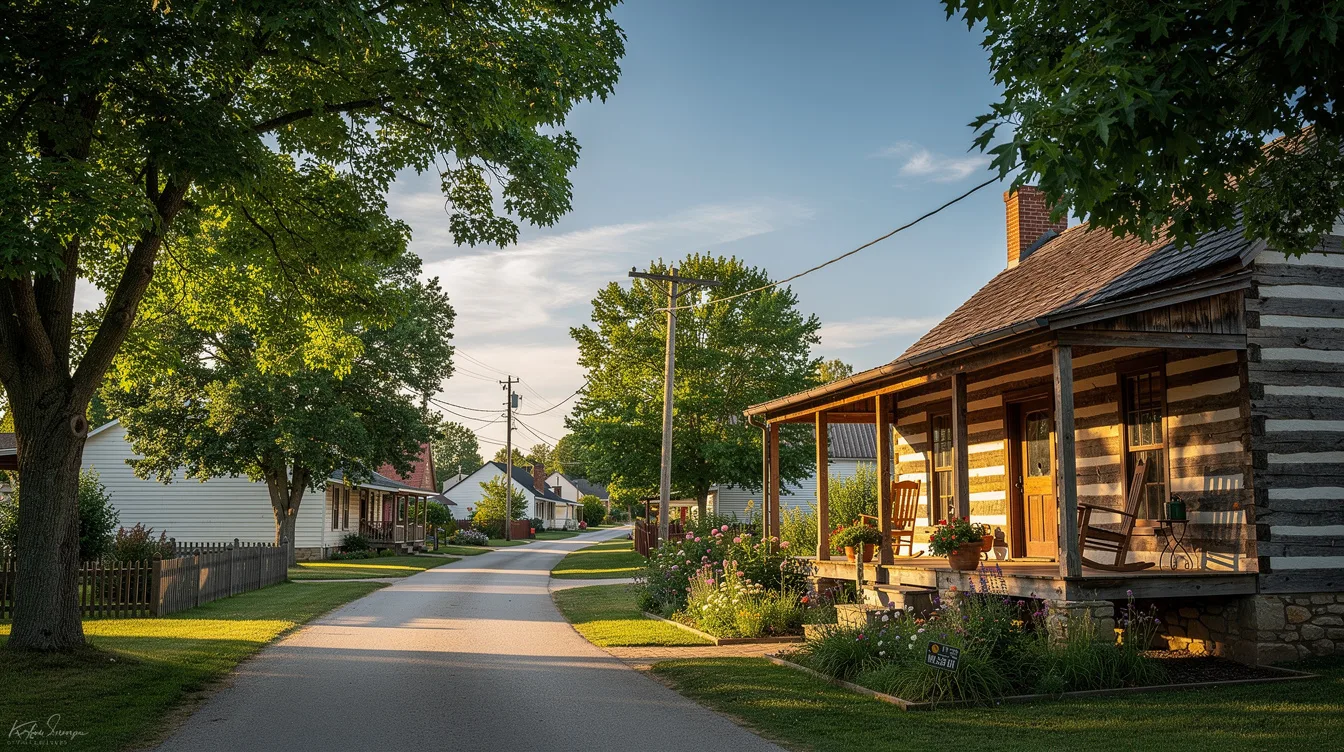
Ste. Genevieve began around 1735, when French Canadian settlers established what is now recognized as Missouri’s oldest permanent European settlement. That history is the reason to come, but the pace is the reason you may linger: this Mississippi River town still feels removed from the rush.
It sits in eastern Missouri, roughly 60 miles south of St. Louis. You can reach it by I-55, US Route 61, or Missouri Route 32, then trade highway noise for streets made for walking and looking closely.
A French colonial town that asks you to slow down
Ste. Genevieve’s French Creole past isn’t confined to a plaque or a single museum room. It remains visible in its historic district, where preserved buildings give the town a texture that feels unusually intact for a small Midwestern river stop.
And that’s the appeal. You’re not rushing between giant attractions here. You’re noticing doors, rooflines, shop windows, and the way an older street can make an ordinary afternoon feel more deliberate.
The town holds one of North America’s largest surviving concentrations of French vernacular vertical-log houses. That detail matters because it gives the architecture real weight, not just period charm. But don’t expect a polished theme park.
The experience is quieter and more lived-in.
With 4,999 residents in the 2020 census, Ste. Genevieve has the scale of a place where downtown doesn’t overwhelm you. It is small, but it isn’t empty of things to do.
Local shops, museums, inns, and places to eat break up a walk without turning it into an itinerary marathon.
Start on Main Street, then let the town set the tempo
Your best first stop is Ste. Geneviève National Historical Park, where the National Park Service interprets the town’s French colonial past. The visitor center is at 99 S.
Main Street, putting you directly where a first-time visitor should begin.
But use it as an orientation point, not your whole day. Once you understand why the town matters, walk historic downtown at your own pace. The reward is less about checking sites off a list and more about seeing how the French Creole story carries across the district.
Is Ste. Genevieve good for a walking visit?
Yes, because historic downtown is walkable and concentrates museums, shops, inns, and several rare colonial buildings. You won’t need a complicated plan to get the point. A slow circuit works better than a rushed one.
And there’s a useful contrast here. The town’s history is nationally significant, yet the visit can feel pleasantly low-key. If you like destinations that leave room for your own curiosity, that restraint is a strength.
The limitation is equally clear: this isn’t a place built around nonstop activity. You should come ready to browse, pause, and follow your interest. If you need a packed schedule, the surrounding countryside gives you more range.
The Mississippi is nearby, but don’t make it the only reason
Ste. Genevieve lies on the Mississippi River, and the setting adds a river-town edge to the historic core. The wider area is also known for wineries and outdoor exploration, so you can widen the day once you’ve spent time among the older buildings.
That said, the town itself is the stronger argument. Plenty of places have wine nearby. Far fewer combine it with a French Canadian founding story that reaches back to around 1735 and remains so visible in the built environment.
You can use the countryside as a change of scene, then return downtown when you want things closer together. The shift works because Ste. Genevieve doesn’t demand that you choose between history and an unhurried afternoon.
And the distance from St. Louis makes the contrast sharper. After a drive of about 60 miles, you’re in a city where the main pleasure is not speed.
It’s the small decisions: which doorway to study, which shop to enter, how long to stay out walking.
Come for the oldest settlement claim, stay for the absence of hurry
Ste. Genevieve is widely recognized as Missouri’s oldest permanent European settlement, and that is no minor distinction. It gives the town a clear place in the state’s story.
But history alone doesn’t make a destination worth your time.
What makes this one work is its scale. You can arrive with the central fact in mind, then find that the day becomes about a historic downtown, a few quiet detours, and the pleasure of not being pushed along.
Before you go, check Visit Ste. Gen for current local events, wineries, lodging, and ferry-status information. Plans can change, and the town’s practical details are best handled close to departure.
By late afternoon, the older streets hold onto their calm. The Mississippi is nearby, the shops begin to settle, and Ste. Genevieve feels most convincing when you stop trying to hurry through it.