Skagway became Alaska’s largest city in June 1898, with between 8,000 and 10,000 residents. They were not there for a leisurely frontier town. They came to begin a punishing 497.1-mile journey toward Canadian goldfields.
That scale is hard to picture in today’s small port. But the rush made sense at the time: ships could land prospectors, then the White Pass rose directly toward the Yukon.
In 1898, the road north began at the dock
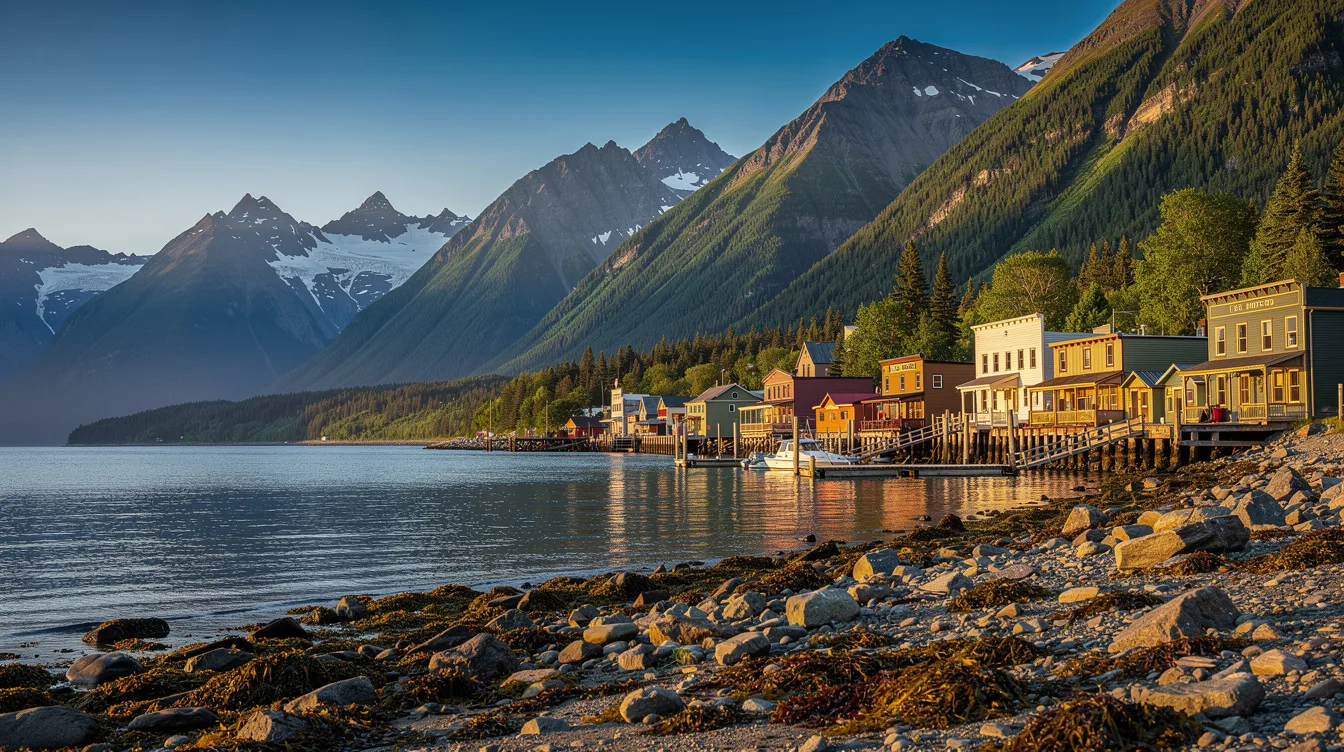
Skagway sits at the head of the Taiya Inlet, on the northern end of Lynn Canal in Alaska’s panhandle. Steep mountains make the harbor feel like a gate that has nearly swung shut.
More than 40,000 prospectors passed through Skagway and nearby Dyea during the Klondike rush. You can still understand the town’s logic by standing near the waterfront, where salt air, ship noise, and hard slopes all meet within a few blocks.
And the trek was not a casual gamble. Canadian officials required each person crossing north of White Pass to carry one ton of supplies, or 909 kg, to guard against winter starvation.
That requirement turned every decision into labor. Prospectors hauled provisions over steep ground, often in repeated loads, before they could continue toward lakes and the Yukon River route to the goldfields around Dawson City.
White Pass explains why Skagway won
The route over White Pass started above Skagway and crossed the Canada-US border toward Bennett Lake. Nearby Dyea offered the Chilkoot Pass route, but its shallow harbor could not handle larger ships except at high tide.
Skagway had an advantage when arrivals surged. By June 1898, the town had outgrown every other Alaska settlement, even though much of that population was moving through rather than settling down.
A steam-operated aerial tramway climbed the Skagway side of White Pass in 1898. It eased the burden for travelers who could pay, though there was no easy version of carrying enough food and equipment for a northern winter.
The railroad changed the balance between the two gold-rush gateways.
Can you still take the train?
Yes. The White Pass & Yukon Route now operates for tourist travel through the summer months, departing from Skagway’s port. It is the best choice if you want mountain terrain without driving or attempting a serious trail.
And it is a practical splurge for cruise passengers, who often have limited hours ashore. The line passes bridges, tunnels, ravines, waterfalls, and mountain views, so you get the dramatic geography without shouldering a miner’s load.
Broadway is lively, but the crowd changes everything
Downtown Skagway preserves wooden sidewalks, colorful historic facades, former commercial buildings, and saloon-era streets. Part of it belongs to Klondike Gold Rush National Historical Park, where the story is more useful than a generic frontier costume show.
You can visit the park visitor center and Skagway Museum to put the streets in context. The town’s gold-rush years included commerce and ambition, but also fraud, violence, liquor, and a lot of people trying to leave with more money than they arrived with.
That history gives the compact center some bite. But when several cruise ships are docked, the town can receive more than 8,000 visitors in a day, far beyond its year-round population.
Go early if you want Broadway before it fills. The clap of shoes on boardwalks and the harbor’s low industrial hum work better before excursion groups turn each storefront into a bottleneck.
The Yukon road is the quieter modern escape
Skagway is one of the few places in southeast Alaska with a road link to the North American mainland. The Klondike Highway crosses into Yukon toward Carcross and Whitehorse, and the drive to Whitehorse is about 110 miles.
You will need a passport for Canada, and rental-car cross-border terms need checking before you book. Still, this is the move if you want to leave the cruise flow behind and see White Pass on your own schedule.
For walking, Dyea and the Chilkoot Trail connect directly to the town’s larger story. The full trail is a multi-day undertaking with logistics and possible permits, while Reid Falls rises about 295 feet near town.
Visit from late May through early September, when trains, excursions, and visitor services run. It is busy, and rooms and outings can be limited and expensive, so book early if you can.
By the time the summer train pulls back toward the harbor, the mountains still look like a difficult answer to an old question: how far would you go for gold?