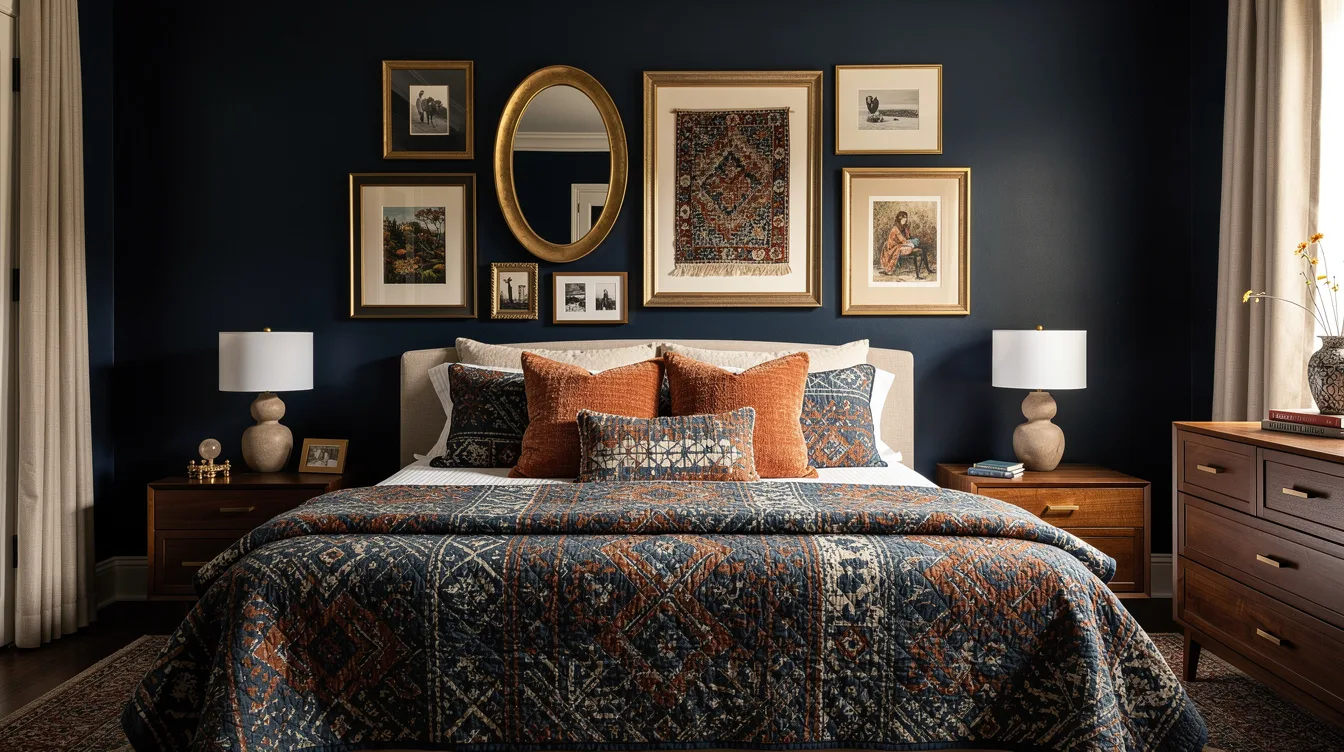
I used to think a queen-bed wall needed one large, polite print centered over the headboard. On a wall roughly 70 to 86 inches wide, that approach can make a maximalist bedroom feel strangely unfinished.
The better move is controlled abundance: layered prints, small objects, and enough repeated color to make the whole arrangement feel like a personal archive.
Build Around One Oversized Anchor
Start with one 24 x 36-inch framed print or a 20 x 28-inch piece above the bed. That larger anchor gives the eye a place to land before it travels through the rest of the wall.
For a wall roughly 63 to 79 inches wide, a 20 x 28-inch center print plus four 8 x 12-inch companions is a practical scale. Skip the tiny-art swarm with no focal point, it reads more craft fair than bedroom.
A vintage landscape, a moody portrait, or an abstract with saturated color all work. I prefer an image with shadow or a dark background because it holds its own against patterned bedding.
Create a Deliberate Size Ladder
Use several formats instead of buying a matching print bundle: 8 x 10-inch frames for collectible accents, 11 x 14 inches for supporting art, and 16 x 20 inches when the composition needs weight.
Place the biggest piece first, then add medium work near its edges and smaller pieces in the gaps. The spacing can be uneven, but it should look intentional, usually around 2 to 4 inches between neighboring frames.
A small framed postcard. A painted ceramic flower. One oval mirror.
Those interruptions keep a gallery wall from becoming a grid of identical rectangles.
Mix Frames Like They Were Found Over Time
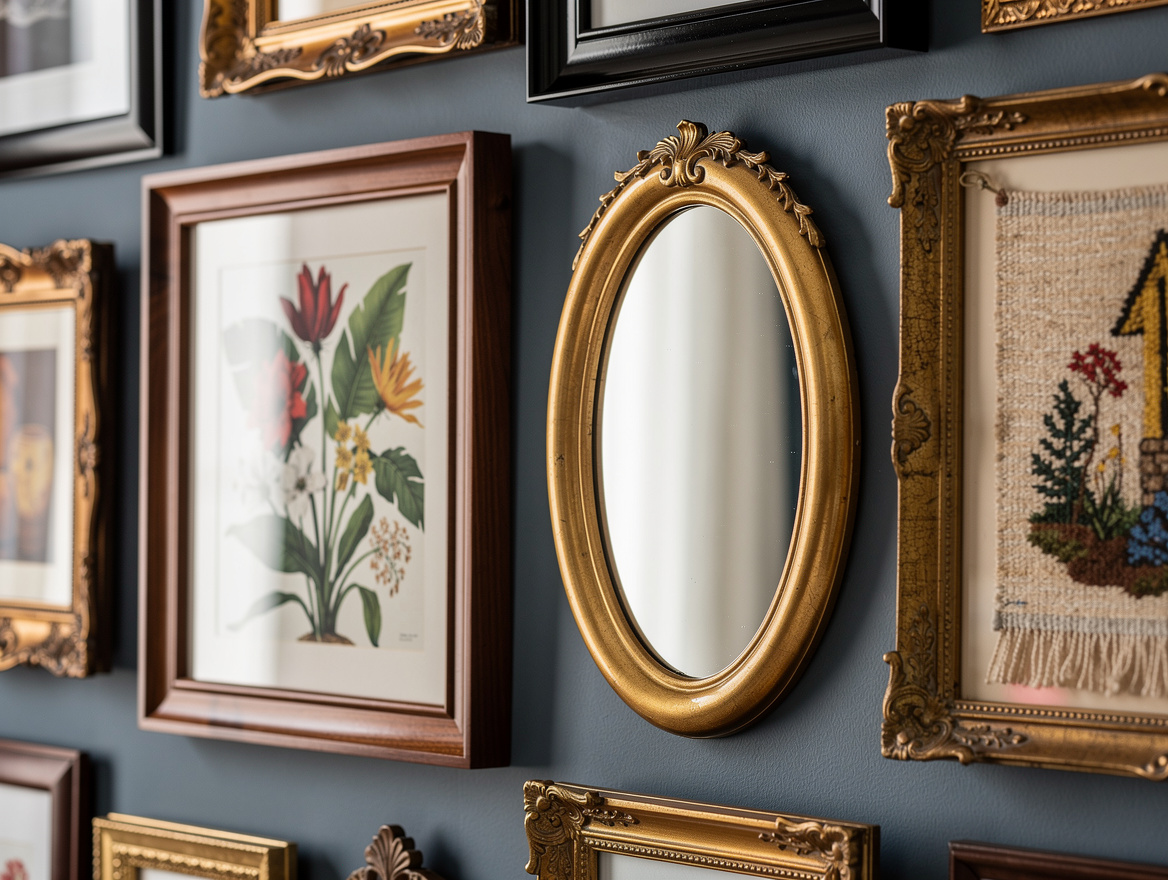
Perfectly identical frames can flatten a maximalist wall, even when the artwork is strong. Combine dark walnut frames, black lacquer, and a few antique-gold finishes, then repeat each finish at least twice.
IKEA RIBBA frames, typically priced around $10 to $25 depending on size, are useful basics for black or white pieces. Add warmer character with thrifted wood frames or a brass-tone option from Target.
Keep one unifying detail. It might be off-white mats, slim black borders, or the same warm brass finish appearing in a mirror and bedside lamp. That repeat is what turns visual noise into a point of view.
Bring in Texture Between the Prints
A maximalist bedroom gallery wall needs some depth, especially if most of the art is on paper. Hang a small brass oval mirror, a framed textile remnant, or a shallow woven fan among the prints.
Use one to three dimensional pieces, not a whole row of them. A wall full of baskets can pull attention away from the bed and make the room feel themed.
A Wayfair picture ledge, often around $30 to $60, can sit below the main cluster for a leaning 11 x 14-inch print and a tiny framed sketch. It gives you an easy place to change the story without filling the wall with more nails.
Repeat Color Across Art and Bedding
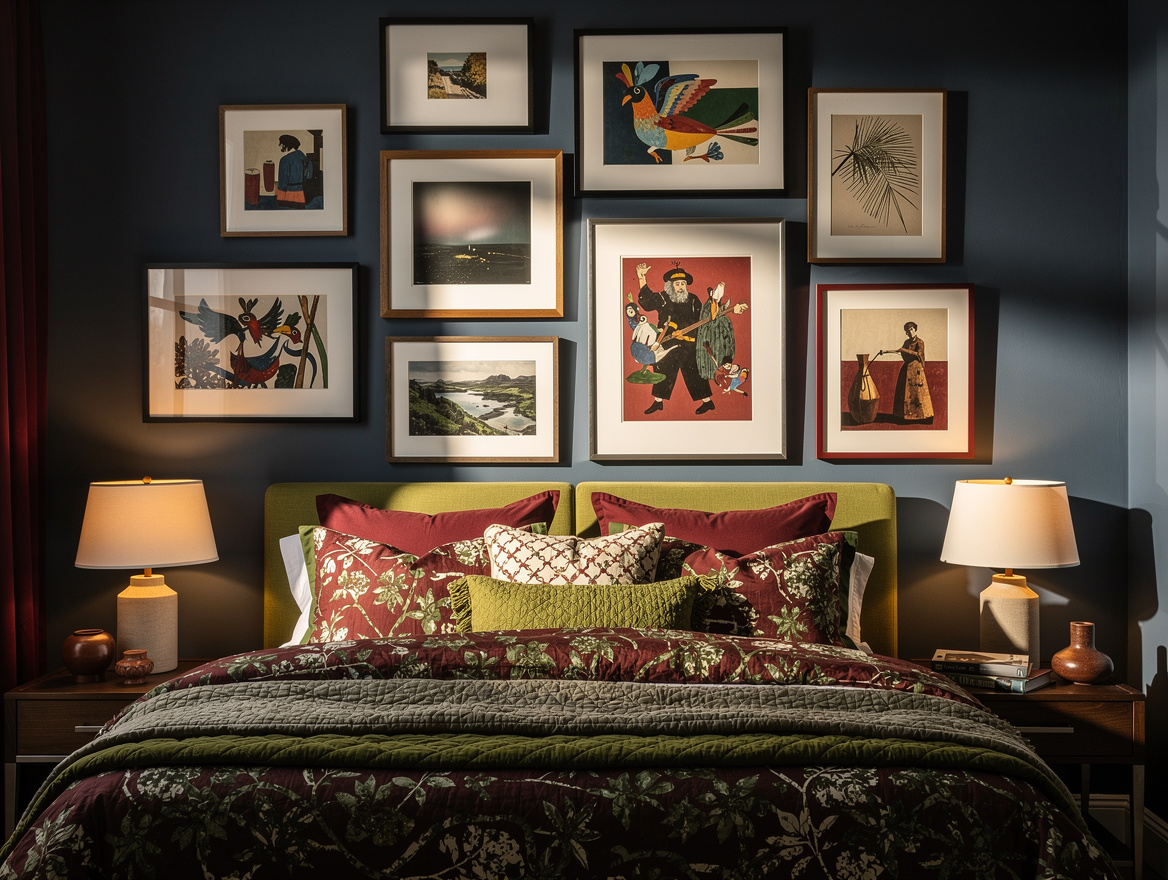
Choose two recurring colors before you hang anything. Burgundy and moss green feel rich against an inky navy wall; cobalt and tomato red create a sharper, graphic version of maximalism.
The prints do not need to match subjects. A botanical, fashion photograph, travel poster, and abstract can share a wall when they each carry a little of the same color family.
Pull one of those tones into the bed with a velvet lumbar pillow or patterned quilt. Designers are moving away from overly symmetrical print sets, and this looser color connection feels far more current in 2026.
Let the Bed Join the Composition
The gallery wall should not float above a bare bed. Give it company with a striped coverlet, floral pillowcases, or a pair of patterned lampshades from Home Depot or Amazon.
Leave roughly 6 to 10 inches between the headboard and the lowest artwork, depending on ceiling height and frame depth. Art hung too high has the familiar waiting-room effect, even when every individual piece is good.
For a jewel-box look, pair forest green paint with a rust quilt and warm lamps. For a color-pop version, use black frames against tomato or butter-yellow walls, then let one chrome detail cut through the warmth.
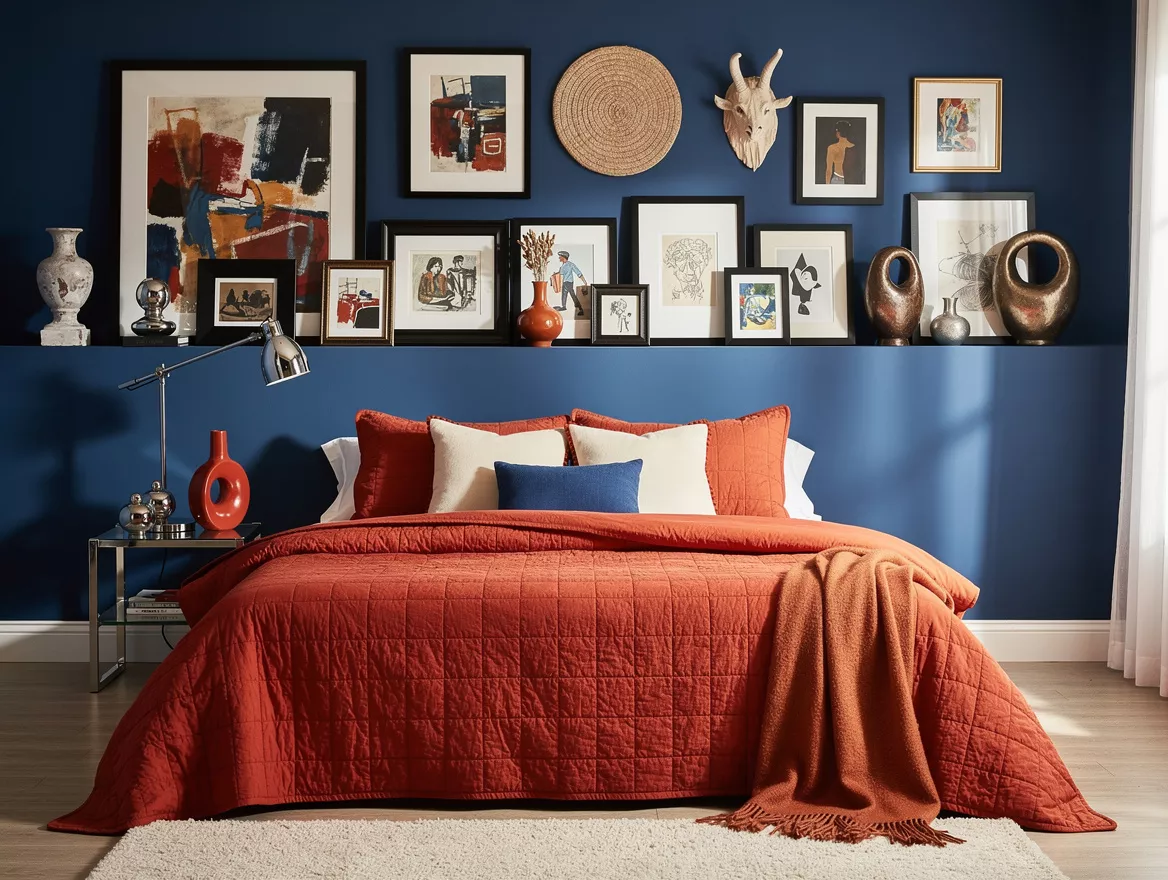
Begin with the largest print and one color pulled from your bedding, then add outward in uneven layers. Stop when the wall feels full enough to tell a story but still leaves a little room for the next thing you find.
Mia Carter writes about small-space living and budget home makeovers. She has restyled three rentals and tests most ideas in her own 45 sqm flat.