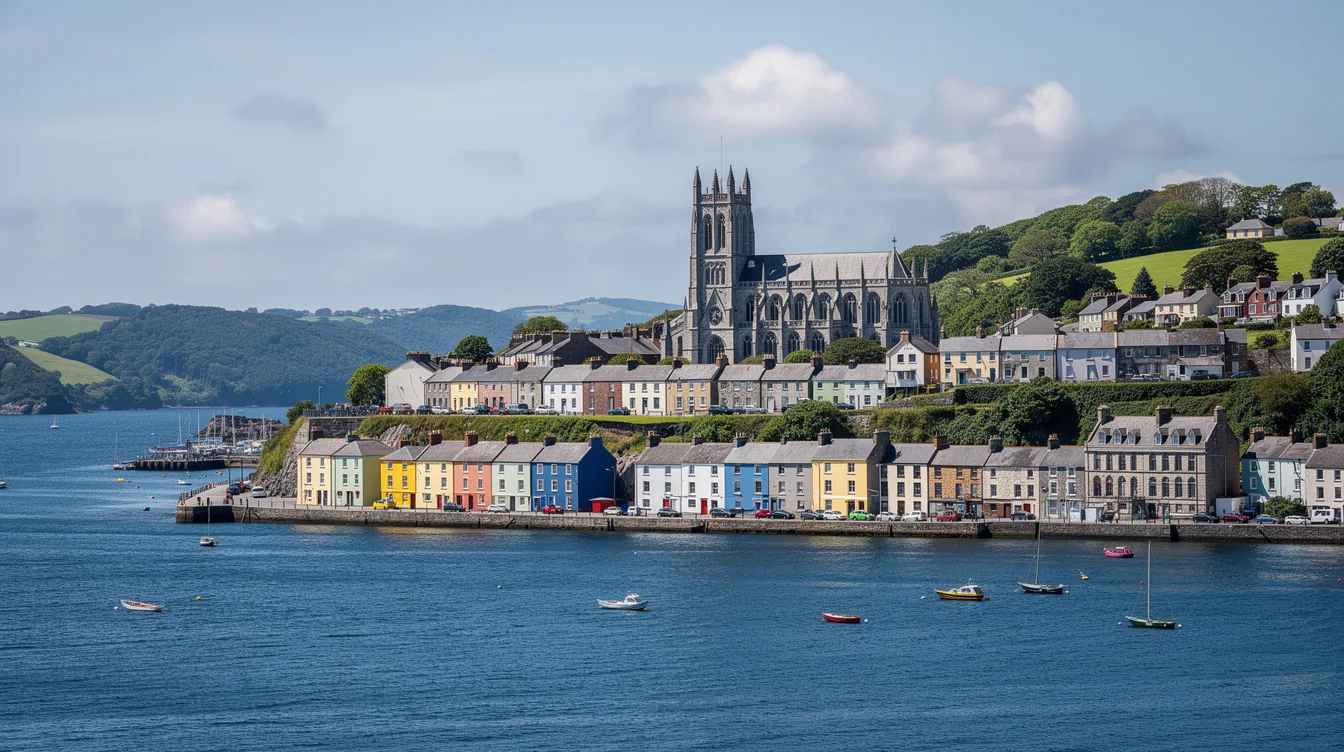
Cobh, pronounced “Cove,” was Titanic’s last stop before the Atlantic. On April 11, 1912, when this Cork Harbor town was still called Queenstown, 123 passengers boarded the ship for New York. Only 44 survived the sinking.
That fact gives the waterfront a different weight. You arrive at the station beside the harbor, hear the gulls over the rails, and realize this was the final view of Ireland for people whose plans were much bigger than a crossing.
Titanic’s final Irish stop is still easy to read
The old White Star Line ticket office now holds Titanic Experience Cobh, focused on the passengers who boarded here. Go early if the ship’s story is your reason for coming. The town’s compact size makes the history feel close, not museum-bound.
But Cobh is not frozen in 1912. Cruise ships still berth in town, mainly in summer, so a busy pier can interrupt the mood. The trade-off is useful: this is Ireland’s only dedicated cruise terminal, which explains why the harbor still feels like a working arrival point.
You’ll also find the Cobh Heritage Centre in the former railway station. Its Queenstown Story follows emigration, the Great Famine, deportations, Titanic, and Lusitania. More than 2.5 million Irish people left from this port between the mid-19th century and 1950.
The climb to St Colman’s earns its view
From the waterfront, the streets rise toward St Colman’s Cathedral. Its 300-foot spire dominates the town, so you don’t need a map to know which direction is uphill. Bring shoes with grip because Cobh is small, walkable, and decidedly steep.
And the climb pays off in color. The tightly packed houses below the cathedral form the Deck of Cards, a row of bright facades facing Cork Harbour. It’s heavily photographed, but the harbor air and sloping lanes keep it from feeling staged.
Spend a few minutes looking outward, too. Spike Island and Haulbowline Island sit across the water, and their presence makes the harbor seem broad even from the town center. Cobh feels sheltered, but never shut in.
Can you visit more than the Titanic sites?
Yes. Take a boat trip to Spike Island, an old fortress-prison in the harbor, if the schedule fits your day. Or stay on shore and find the Annie Moore statue, honoring the first immigrant registered at Ellis Island, who departed Cobh with her brothers.
The town’s maritime history has another hard chapter. Survivors of the Lusitania were brought to Queenstown after the ship sank in 1915. You can find the Lusitania Peace Memorial in Casement Square, a quieter stop that makes the Titanic story feel less isolated.
Getting here from Cork is the easy part
Under 25 minutes by train from Cork City gets you to Cobh, with the station right on the waterfront. That’s why the train is the best choice for most visitors: you can see the center, museums, cathedral, and harbor without dealing with a car.
But don’t rush the return. The bus from St Patrick’s Quay takes about 40 minutes, while driving can take around 30 minutes depending on traffic. A taxi is quicker than either in some moments, though it costs far more than rail or bus.
You can make Cobh a half-day outing, but it works better as a full, unhurried day. Start with the Heritage Centre for context, then choose Titanic Experience, the cathedral, and a harbor walk. Add Spike Island only if you’re willing to follow its timetable.
When should you go?
Summer brings most cruise visits, so expect more people along the waterfront then. Visit earlier in the day if you want the streets and museum entrances to feel calmer. It’s lively when ships are in, but the slopes above the pier still offer breathing room.
And say the town’s name correctly before you leave: Cobh sounds like “Cove.” By late afternoon, the train tracks shine beside the water, the cathedral holds the hill above them, and the harbor keeps moving toward the sea.