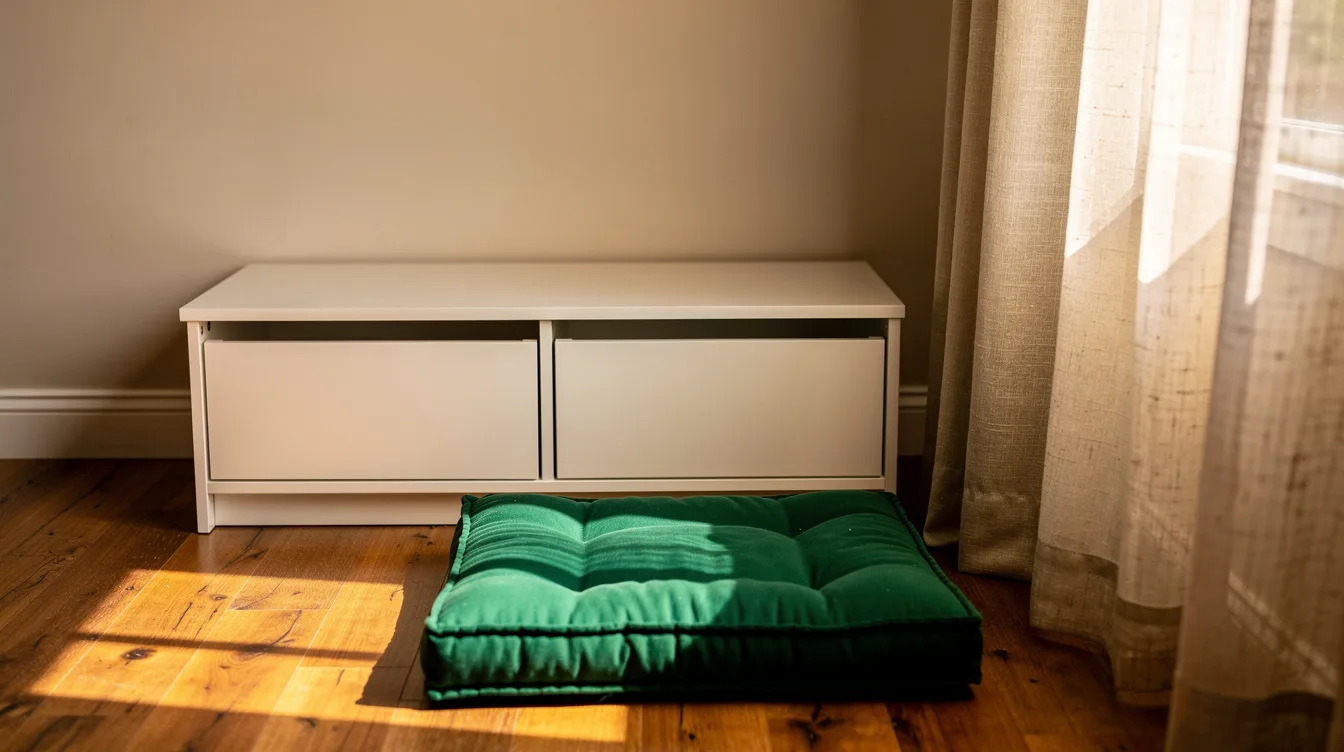
The round meditation cushion is easy to hide. The real problem is the larger floor pad: a Hugger Mugger zabuton measures 24 × 34 × 3 inches, and many ordinary shallow cabinets cannot store it flat.
A bedroom-adjacent alcove solves the problem with a storage bench along one wall and a clear floor area in front. The best layouts size every drawer around the largest cushion, then keep the rest of the room deliberately spare.
Measure the Pad Before Framing the Alcove
Start with the largest item, not the round seat. A Hugger Mugger zabuton measures 24 × 34 × 3 inches, or approximately 61 × 86 × 8 centimeters, so it needs more room than a typical shallow cabinet offers.
Draw the cushion at full size on the floor, then mark the storage depth around it. This simple test prevents a polished bench from becoming a place where the largest pad must stay leaning against the wall.
The round meditation cushion can fit almost anywhere, but the zabuton sets the real clearance requirement. That distinction is the difference between concealed storage that works daily and storage that only looks tidy in photographs.
Set a Pull-Out Bench Against the Back Wall
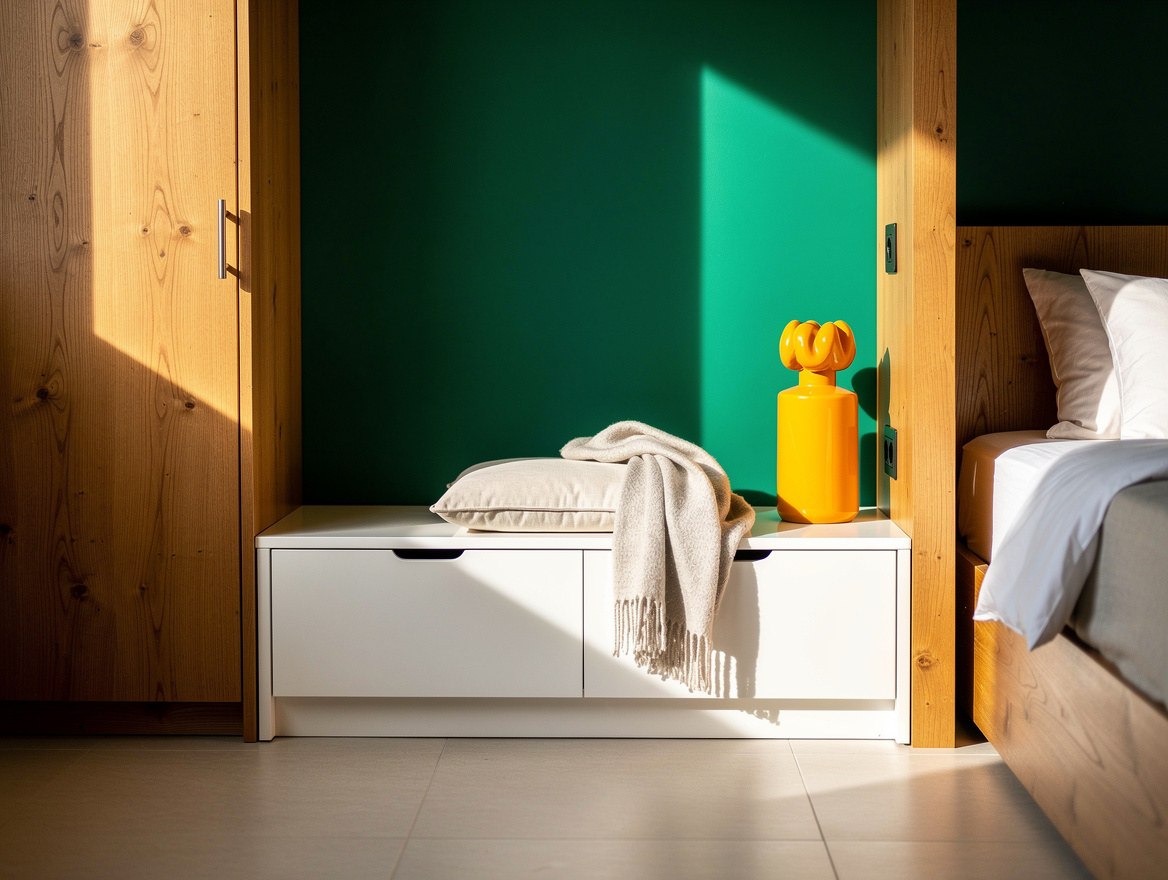
For a small dressing alcove or former wardrobe opening, place an IKEA SMÅSTAD bench across the back wall. The white combination is listed at $99.99 and measures 35⅜ × 20½ × 18⅞ inches, or approximately 90 × 52 × 48 centimeters.
A room measuring approximately 150 × 210 centimeters, or 4 feet 11 inches by 6 feet 11 inches, can hold the bench along the 150-centimeter wall while preserving roughly 150 × 150 centimeters of clear floor in front.
Use the storage for a compact cushion, folded blanket, and smaller floor pads. A Retrospec Sedona crescent measures 17 × 10.5 × 5.5 inches and is listed around $26.99, putting the verified bench-and-cushion starting point at about $127.
Plan around a suggested shopping allowance of approximately $200 to $450 for the bench, cushion, simple lighting, and a small floor covering, excluding building work. The bench’s outside measurements do not prove that a full-size zabuton will fit flat inside, so check the usable interior first.
Build Drawers Wide Enough for Flat Storage
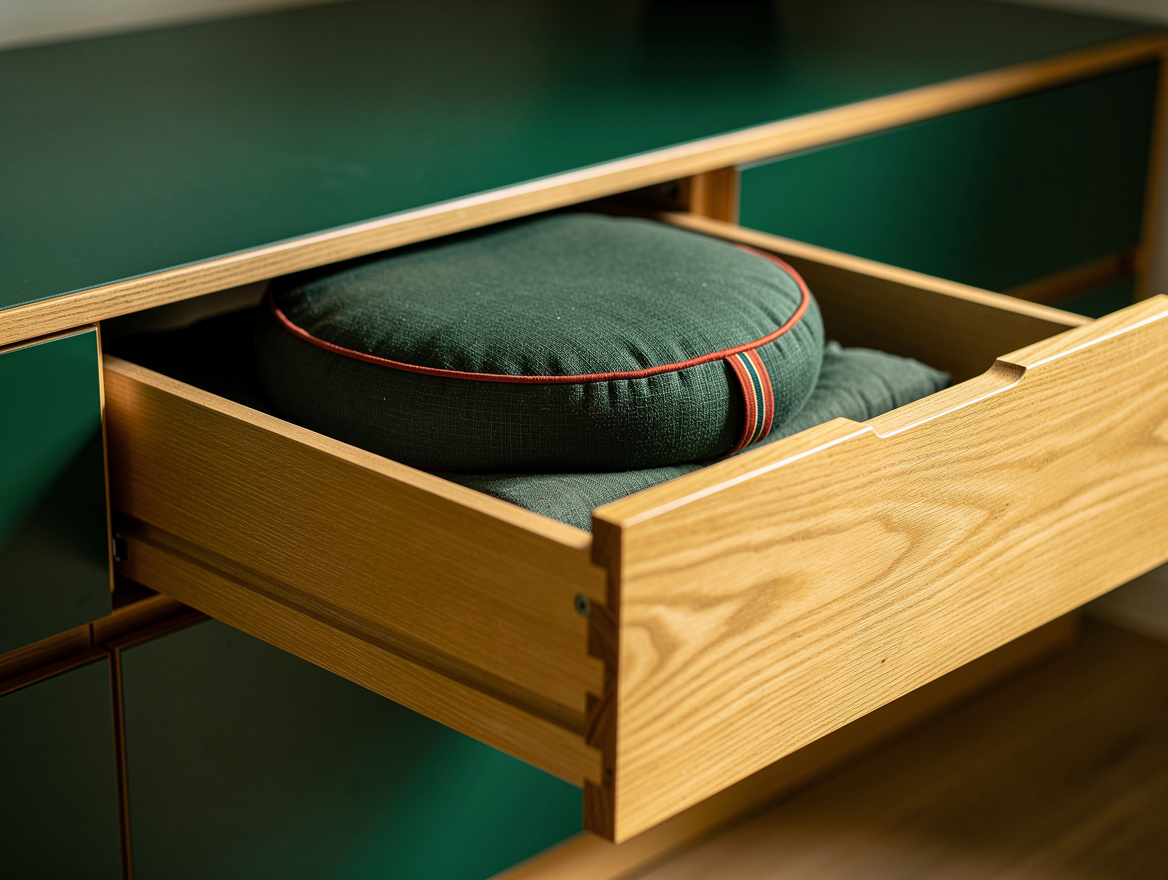
When the adjoining room has a window, specify a window seat with two broad drawers instead of several narrow compartments. An oak-veneered plywood carcass with solid-oak edging gives the built-in a calm, furniture-like finish.
Make the proposed seat approximately 180 to 240 centimeters wide and 65 to 70 centimeters deep. The finished seat height, including its pad, can be approximately 43 to 48 centimeters, leaving the area below visually quiet.
Each cushion drawer should have a clear internal size of at least 92 × 66 × 25 centimeters. That exceeds the 61 × 86 × 8 centimeter zabuton footprint and leaves room for fabric loft, but the opening still needs to clear the folded pad.
Choose full-extension drawer runners for the finished load and confirm their capacity before ordering hardware. Two zabutons stack to roughly 16 centimeters before compression and fabric bulk, so a generous drawer is worth more than a row of decorative cubbies.
Protect a Clear Floor Area for Practice
Keep the center of the room open enough for sitting, kneeling, and placing the larger pad without shifting furniture. An oak-toned floor works well with a white bench because it adds warmth while keeping the small footprint visually simple.
In the compact alcove layout, reserve approximately 150 × 150 centimeters in front of the bench. A floor covering can soften the area, but it should not be so thick that the cushion rocks or the drawer cannot open fully.
Use cotton cushion covers in an unbleached or muted tone, then let the storage do the visual work. Too many accessories make a narrow meditation room feel like a display shelf, while one folded blanket and the cushion are enough to signal its purpose.
Screen the Bedroom Opening With Soft Texture
A bedroom-adjacent meditation room needs a gentle boundary, especially when the alcove has no door. Hang an unbleached curtain at the opening so the practice area can disappear from view without requiring a new wall or complicated construction.
Keep the curtain outside the drawer swing and allow enough clearance for it to move freely. Its job is to soften the transition between rooms, not to block ventilation or crowd the bench.
For a more architectural result, use a purpose-built platform with drawers sized around the actual cushions. Specify the storage after measuring the zabuton, then choose the finish, seat cover, and curtain so the concealment feels intentional rather than improvised.
Begin with a full-size cardboard template of the zabuton and place it inside the proposed drawer before buying hardware. That one test will tell you whether the meditation room is ready for daily use or only ready for a photograph.
Mia Carter writes about small-space living and budget home makeovers. She has restyled three rentals and tests most ideas in her own 45 sqm flat.