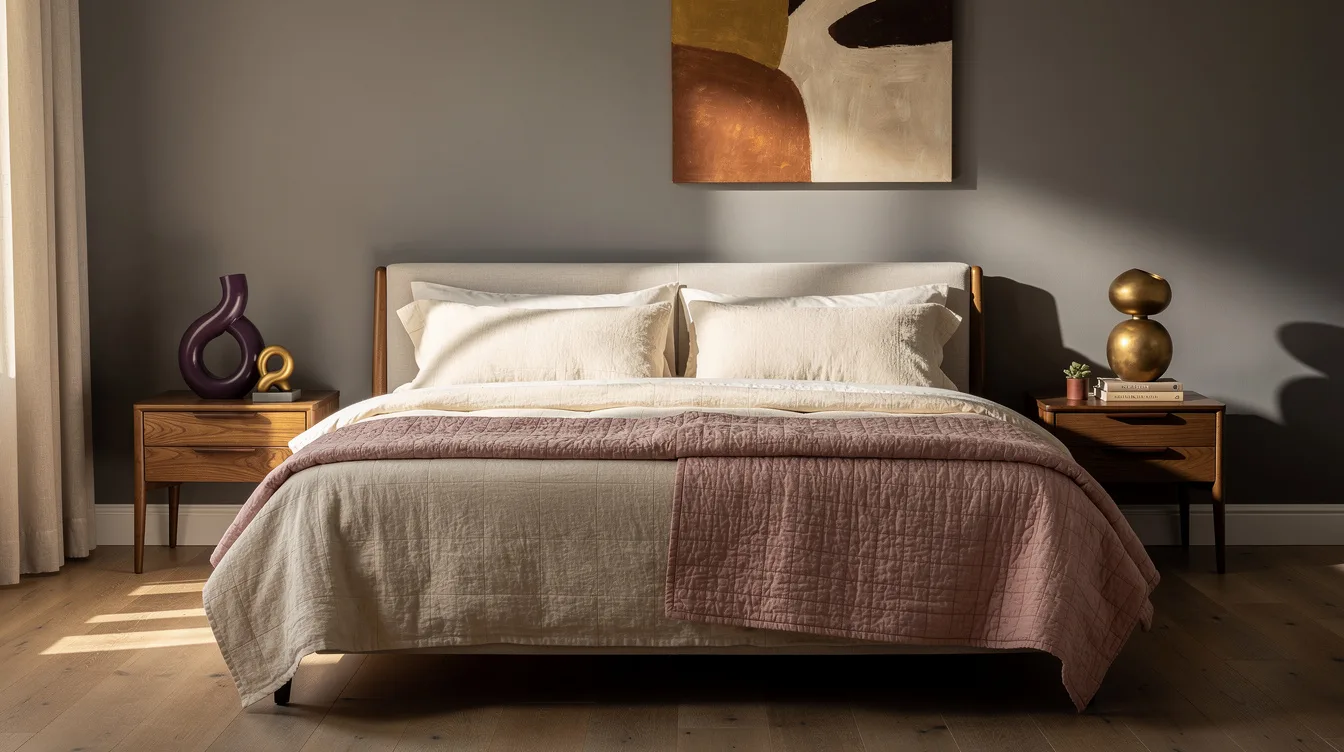
Warm gray bedroom walls can look polished or strangely cold, depending on what touches the bed. Begin with an ivory base, add blush in one substantial layer, and test the palette on a sample board about 20 by 28 inches before buying the full set.
The goal is a room with warmth and contrast, not pink on every surface. Oak or walnut and varied fabrics will do more for the finish than another decorative cushion.
Test the Wall Color Beside the Bedding
Start with the paint, then judge every pink textile against it. Warm gray walls with a beige undertone keep blush soft and grown-up, while a blue-gray wall can make the same bedding look candy-colored.
Paint a movable sample board approximately 20 by 28 inches and place it beside the bed, near the window, and behind the headboard. Check it in daylight and lamplight before committing, because screen swatches rarely show the full shift between gray and beige.
Build an Ivory Bedding Base
Use ivory cotton sheets and a soft-white duvet as the largest color field on the bed. IKEA ÄNGSLILJA in white is a practical reference, with a Full/Queen duvet cover measuring about 86 by 86 inches and two pillowcases included.
The set typically lists for about $40, giving the room a clean foundation without making it feel stark. Fold the duvet slightly at the top so the ivory layer remains visible behind the blush accent.
Give Blush One Substantial Role
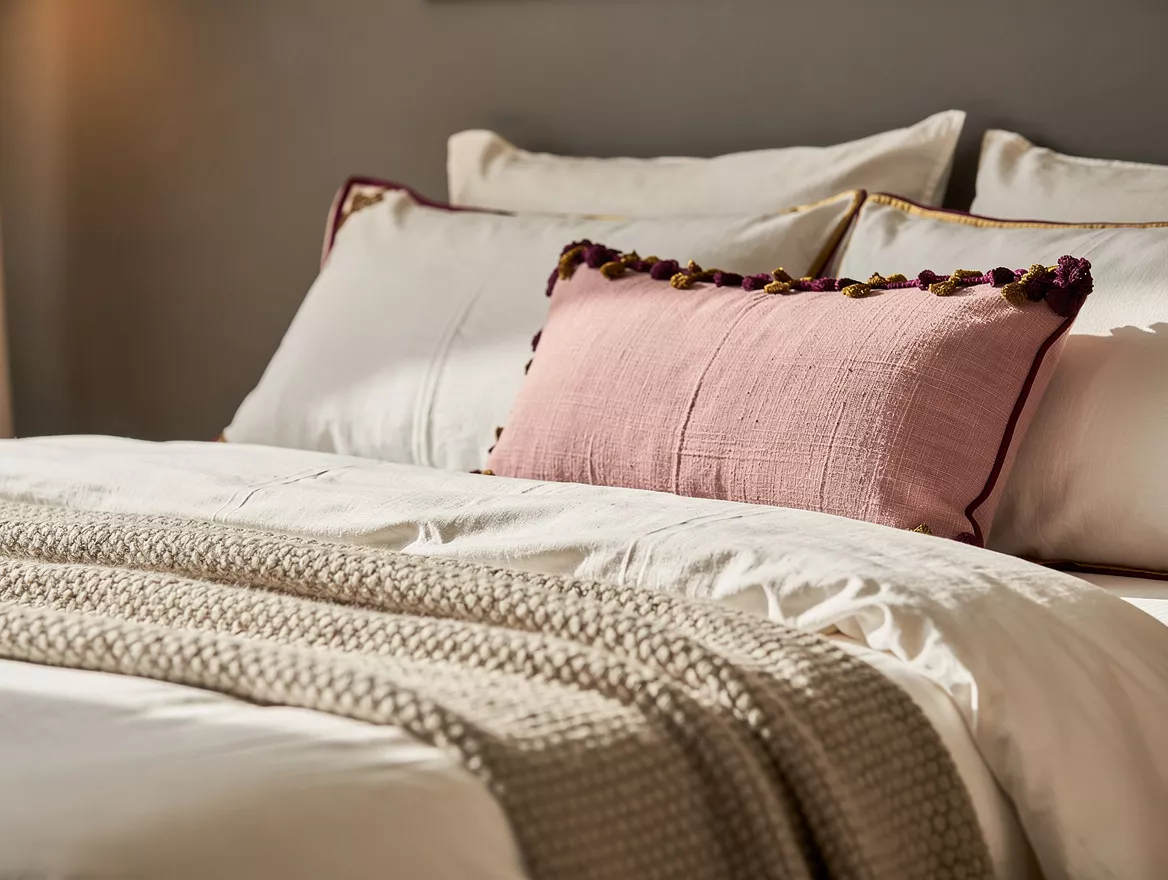
Let blush appear in one meaningful layer instead of scattering pink across the whole room. A dusty blush duvet, quilt, or generously folded coverlet has more authority than several tiny pink accessories.
For a smaller accent, IKEA DYTÅG pink linen cushion covers measure about 20 by 20 inches and list around $20 each before inserts. Two covers can supply the color in an otherwise ivory bed, while the walls, curtains, and rug stay quiet.
Warm the Gray With Oak or Walnut
Repeat the warmth of the wall color through natural oak nightstands, a wood bed frame, or a pale oak bench. The light grain keeps the bedroom airy and gives blush a natural partner.
Choose walnut furniture when the room needs stronger contrast. A walnut nightstand beside a blush duvet makes the palette feel tailored, while a few dark-brown details keep the gray from drifting toward cold silver.
Layer Texture Before Adding More Color
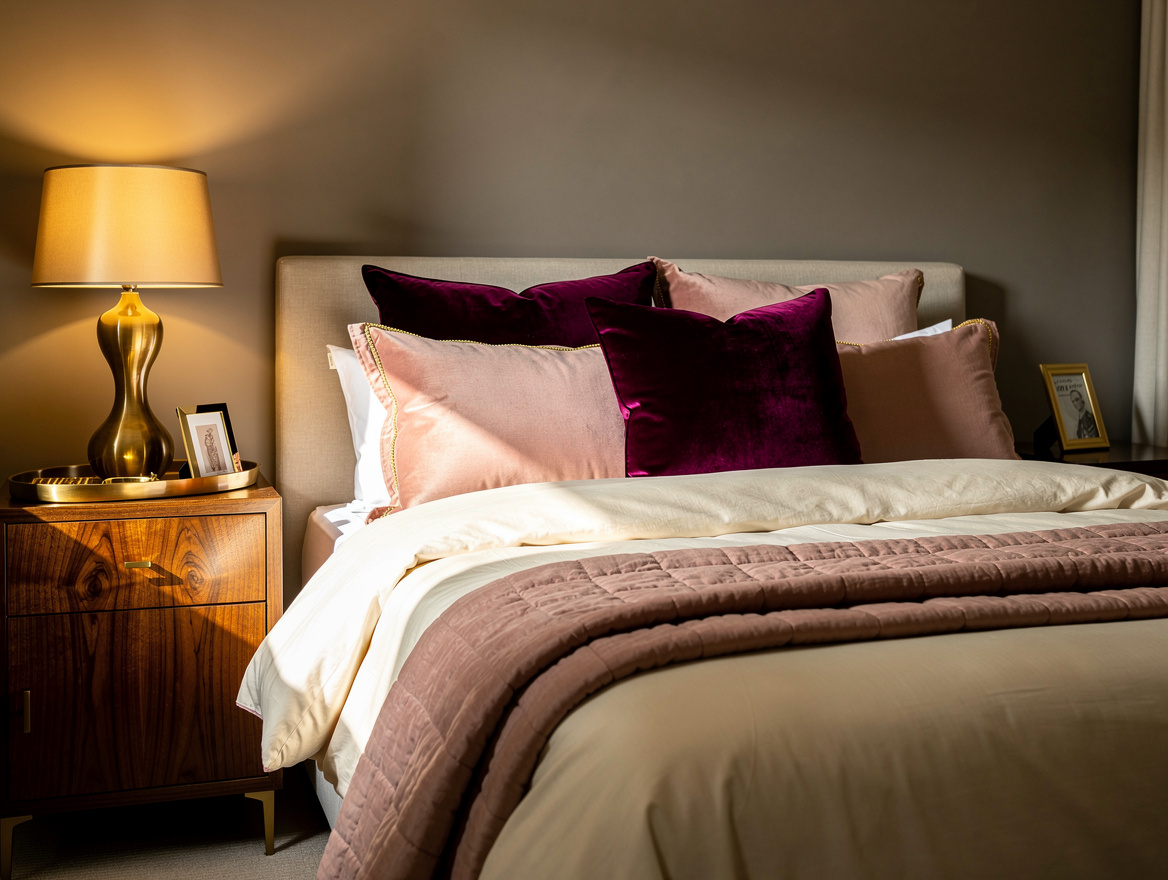
Different surfaces will make a restrained palette feel finished. Pair a smooth cotton duvet with a linen cushion, an oatmeal coverlet, or a nubby wool throw so the bed has depth even when the color count stays low.
Repeat each warm material at least once elsewhere, such as a woven basket or a brass bedside lamp. Skip shiny silver hardware and overly slick polyester, which can make warm gray look flatter and more formal than intended.
Match the Layers to Your Bedroom Style
For a quiet hotel look, use an ivory duvet, blush linen cushions, an oatmeal coverlet folded across the lower third, and oak tables. A visible styling budget of roughly $150 to $250 is reasonable when sheets, pillows, and the duvet insert are already on hand.
For a softer contemporary room, make the blush layer a dusty-rose duvet over ivory sheets and add walnut furniture. This version lets pink register from the doorway without turning every surface into a matching set.
For the most restrained option, keep the duvet ivory and add one substantial blush quilt at the foot of the bed. Finish with warm wood, one dark accent, and mixed fabrics rather than another pink object.
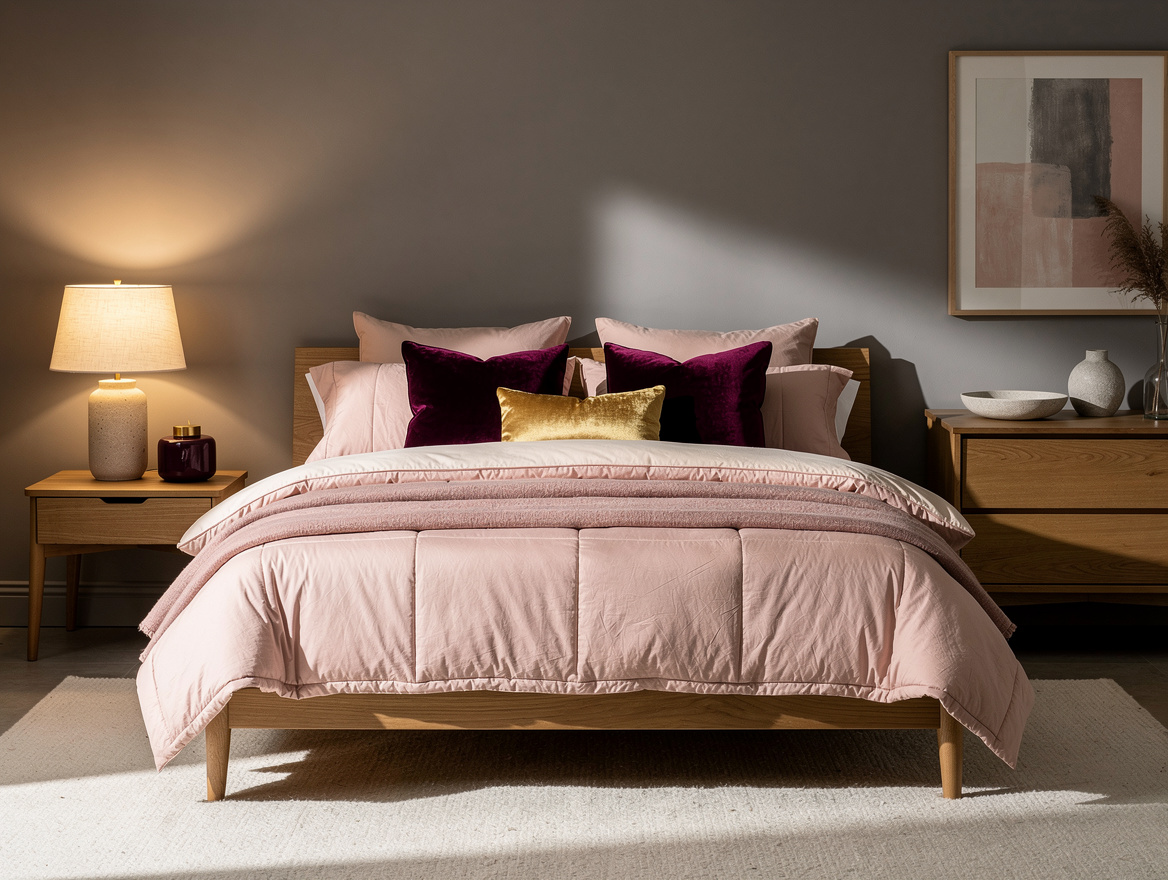
Start by placing the ivory duvet and your chosen blush layer against the actual wall color. Once that relationship feels right, bring in wood and texture slowly, keeping the strongest pink moment on the bed.
Mia Carter writes about small-space living and budget home makeovers. She has restyled three rentals and tests most ideas in her own 45 sqm flat.