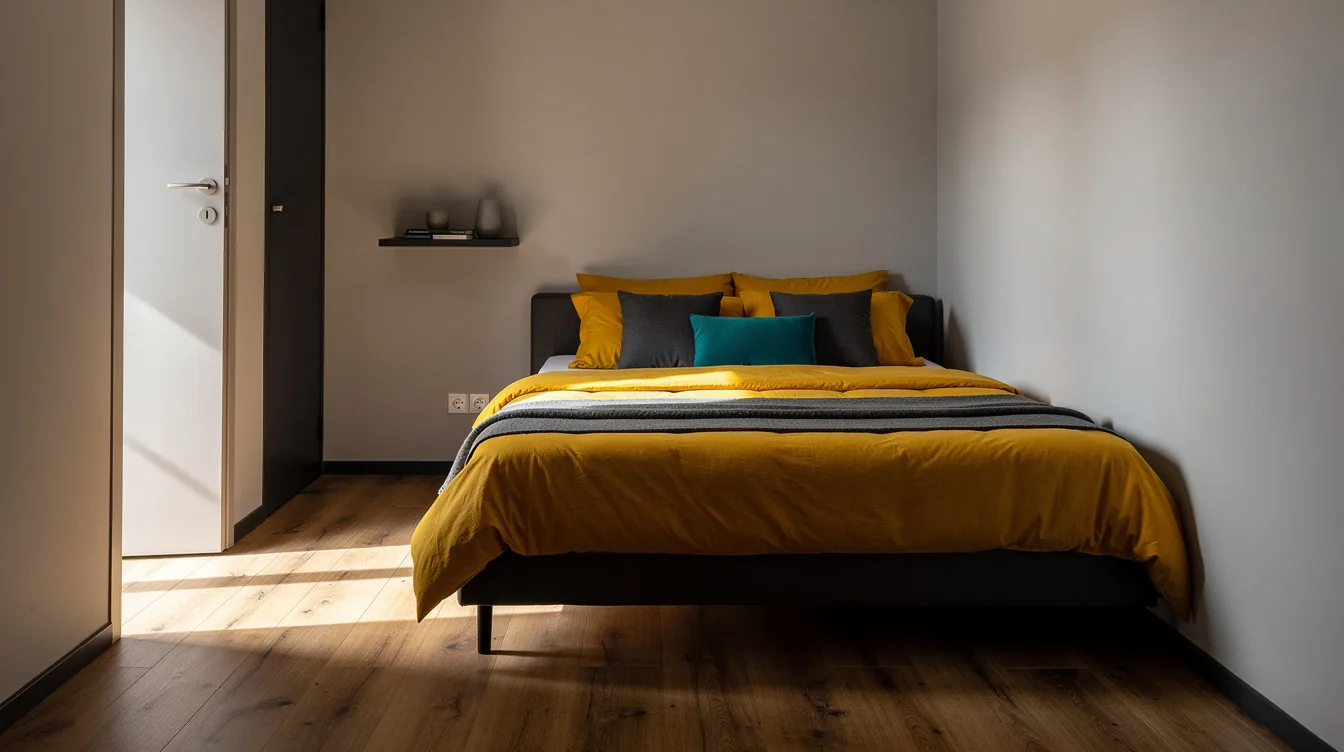
A bedroom can fit a double bed and still feel maddening to use at 7 a.m. The problem usually appears in the narrow strip between the mattress and furniture, where a typical 76 cm clear passage makes daily movement feel normal.
In a compact room, I’d protect walking space before adding a second bulky nightstand. Your knees, laundry basket, and open closet doors will notice the difference every day.
Protect the 90 cm Route First
Give the route from the door to the bed, wardrobe, or bathroom roughly 90 cm whenever the floor plan permits. Designers consistently favor this lane over a larger dresser because it prevents the awkward side-on shuffle that makes a bedroom feel undersized.
Mark the route with painter’s tape before buying anything. A typical compact bedroom around 2.7 to 3.0 meters wide needs one protected lane, not equal clearance on every wall.
A slim IKEA wall shelf beats a deep bedside cabinet when it keeps that route intact. The floor space is more useful than extra tabletop surface.
Treat 76 cm as the Everyday Target
For the side of the bed you use daily, aim for about 76 cm of actual open floor. That gives enough room to get dressed, change sheets, and reach a bedside surface without bumping a bed frame.
Measure from the wall or furniture edge to the furthest projection opposite it. Drawer pulls, bed corners, radiator valves, and angled legs all shrink the usable gap.
A Target table with a narrow round base often works better than a rectangular nightstand in this zone. Square corners consume precious passing room.
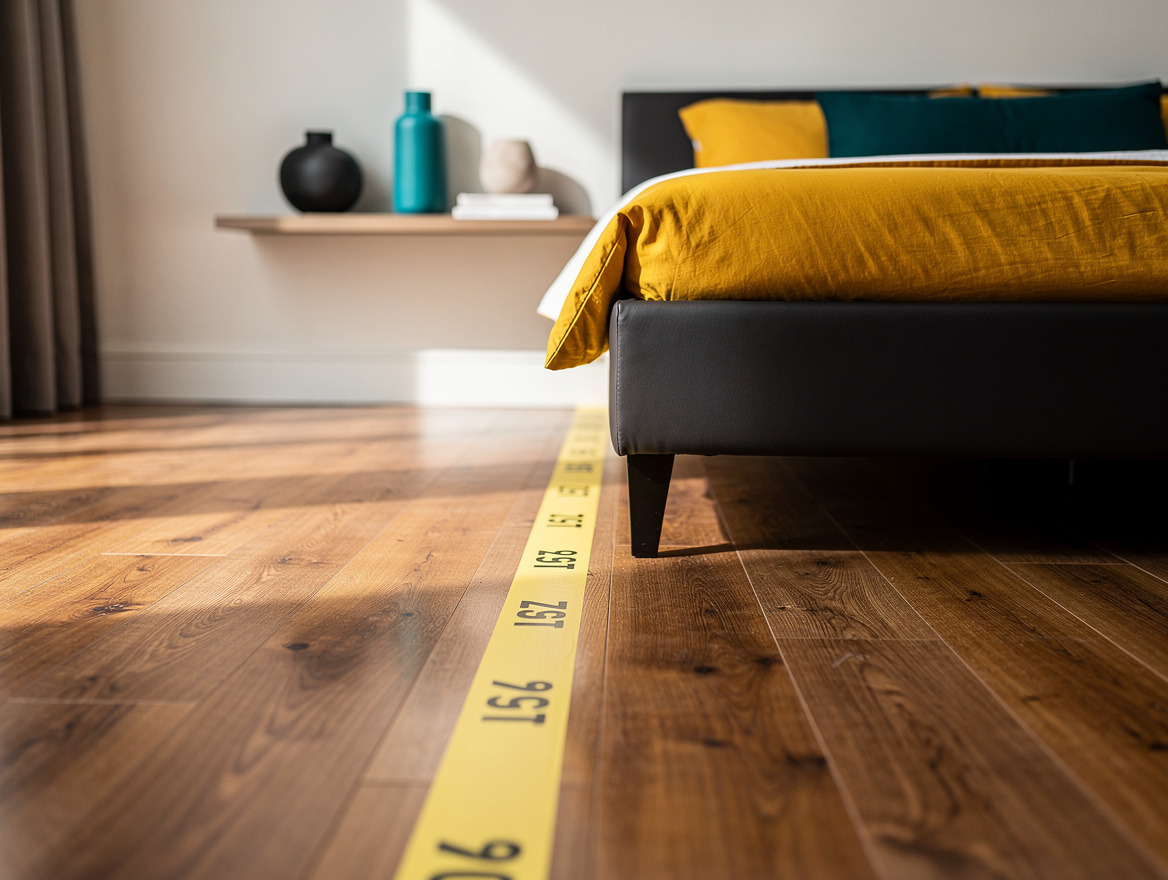
Accept 61 cm on the Sacrificed Side
About 61 cm is a workable tight minimum beside a bed, especially on the side used by one person or visited only for sheet changes. Don’t pretend it is generous, but it can make a realistic small-room plan possible.
Keep that tighter side calm and nearly empty. A floating ledge, a plug-in wall sconce, and no floor lamp will feel far better than forcing in matching furniture.
A shallow Amazon floating shelf at mattress height gives a phone and water glass somewhere to land. Skip the matching-nightstand rule, it is one of the fastest ways to ruin a compact layout.
Keep the Foot of the Bed Clear
Leave roughly 76 cm or more between the foot of the bed and a plain wall when that area is a dead end. A tighter gap around 61 cm can work, though it will make bed-making less pleasant.
A dresser changes the calculation because its drawers need open space and a person needs room to stand there. Plan for about 91 to 107 cm in front of it, or choose storage with doors rather than deep drawers.
A low Wayfair storage bench may look tempting, but it often creates a permanent shin-bumping obstacle. In a small bedroom, an open foot zone looks intentional and feels expensive.
Measure Doors at Their Open Position
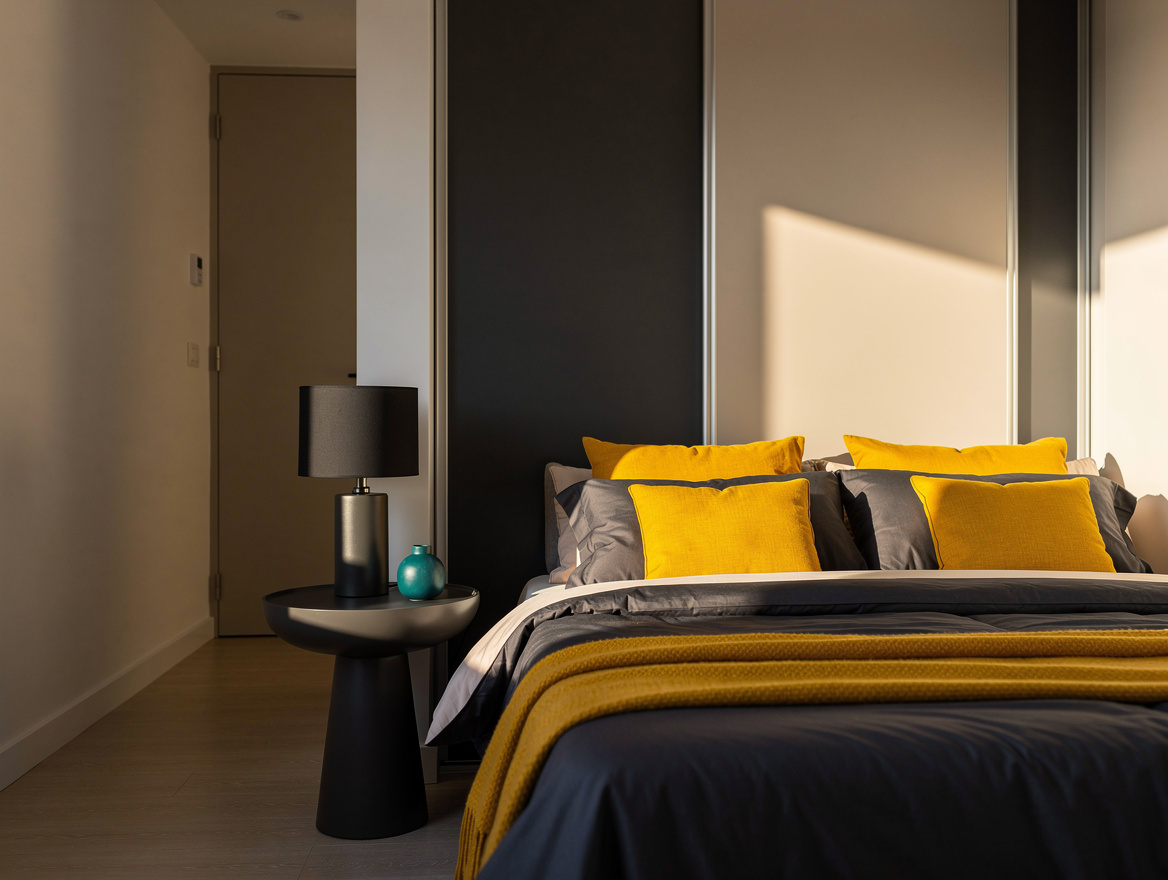
Wardrobe doors are the clearance thieves most people miss. For hinged doors, measure the door depth after it opens, then add roughly 10 cm before judging whether the standing space still works.
Sliding wardrobe doors are usually more efficient because they avoid a swing zone. Keep about 76 to 90 cm in front of them for comfortable daily access, with roughly 61 cm as a tight minimum.
Before ordering a Home Depot closet system, open a cardboard mockup to the door’s full depth. A layout that works on paper can fail the moment a door blocks the only walkway.
Choose Furniture That Gives Space Back
In a 280 by 330 cm room, a 140 by 200 cm double bed placed lengthwise on the longer wall leaves around 80 cm across the remaining width. That is a solid single-side lane until a conventional 40 cm-deep nightstand cuts it down to an irritating 40 cm.
Use a 15 to 25 cm deep wall-mounted shelf, an integrated headboard shelf, or a roughly 20 to 30 cm-wide pedestal table instead. One substantial nightstand on the accessible side is usually the smarter choice.
Look for a small Acacia wood pedestal from Walmart or a simple brass wall light from Lowe’s. Compact pieces should earn their footprint, not merely fill an expected spot.
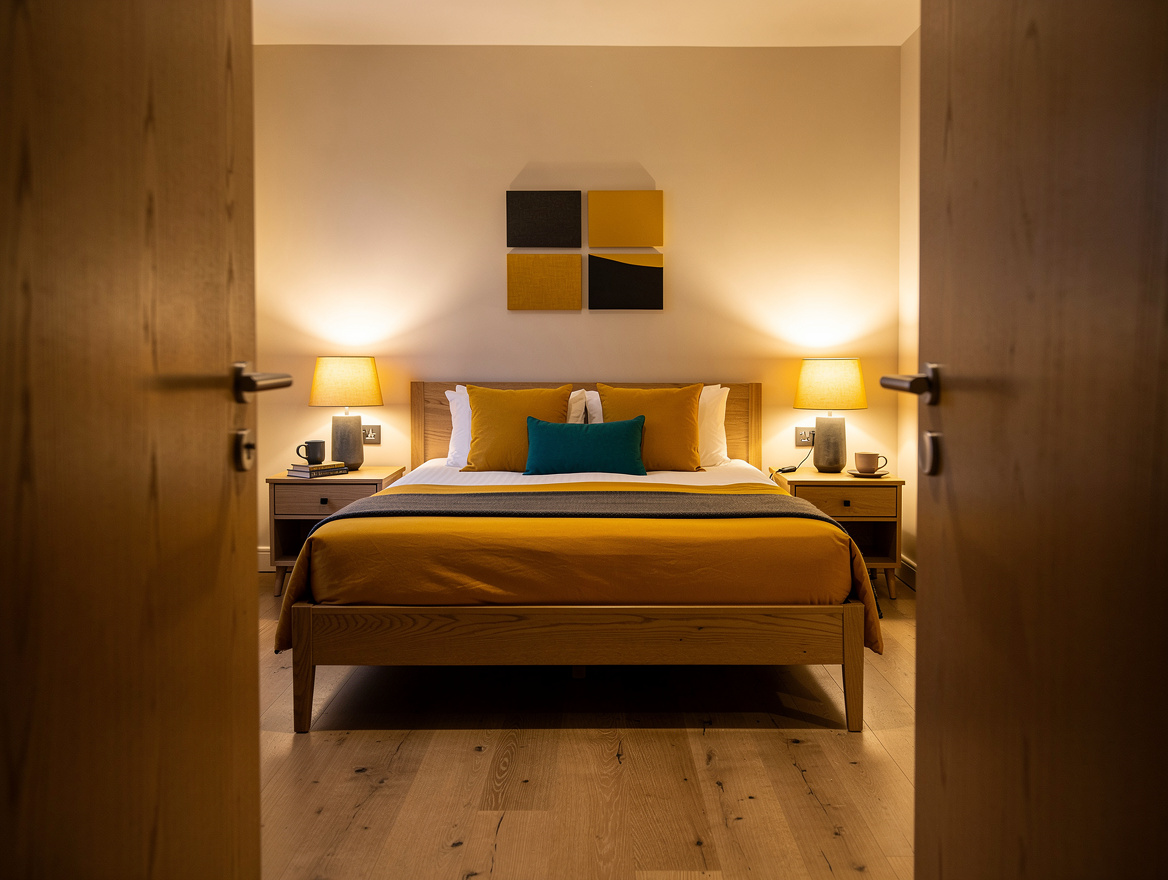
Start by taping out a 90 cm route from your bedroom door, then place the bed around that decision. Once circulation works, every remaining purchase becomes easier to judge.
Mia Carter writes about small-space living and budget home makeovers. She has restyled three rentals and tests most ideas in her own 45 sqm flat.