
A shared bedroom can feel crowded before anyone even puts down a phone. On a 54-inch double bed, a headboard that projects too far turns the walk-around zone into a daily negotiation.
The better answer is a shallow, wall-secured storage headboard with a clearly claimed spot for each sleeper. Aim for roughly 8 to 11 inches deep, enough for bedtime essentials without letting the bed take over the room.
Divide the Headboard Into Two Territories
Give each person a separate cubby, even when the bed is shared. A book, glasses, charging cable, and small water bottle fit comfortably on a birch plywood shelf around 8 to 10 inches deep.
For a 55-inch double bed, make the headboard roughly 55 to 59 inches wide; for a 63-inch queen, roughly 63 to 67 inches works well. A center divider keeps late-night belongings from migrating across the mattress.
Keep the Shelf Deliberately Shallow
Depth is the make-or-break measurement in a tight room. Once a storage headboard reaches about 12 inches, it starts taking clearance that the shared room needs for dressing, opening drawers, and making the bed.
Choose a slim melamine-faced particleboard unit with sealed edges if budget matters. It wipes clean, looks tidy from across the room, and costs far less than solid wood without asking the space to give up extra inches.
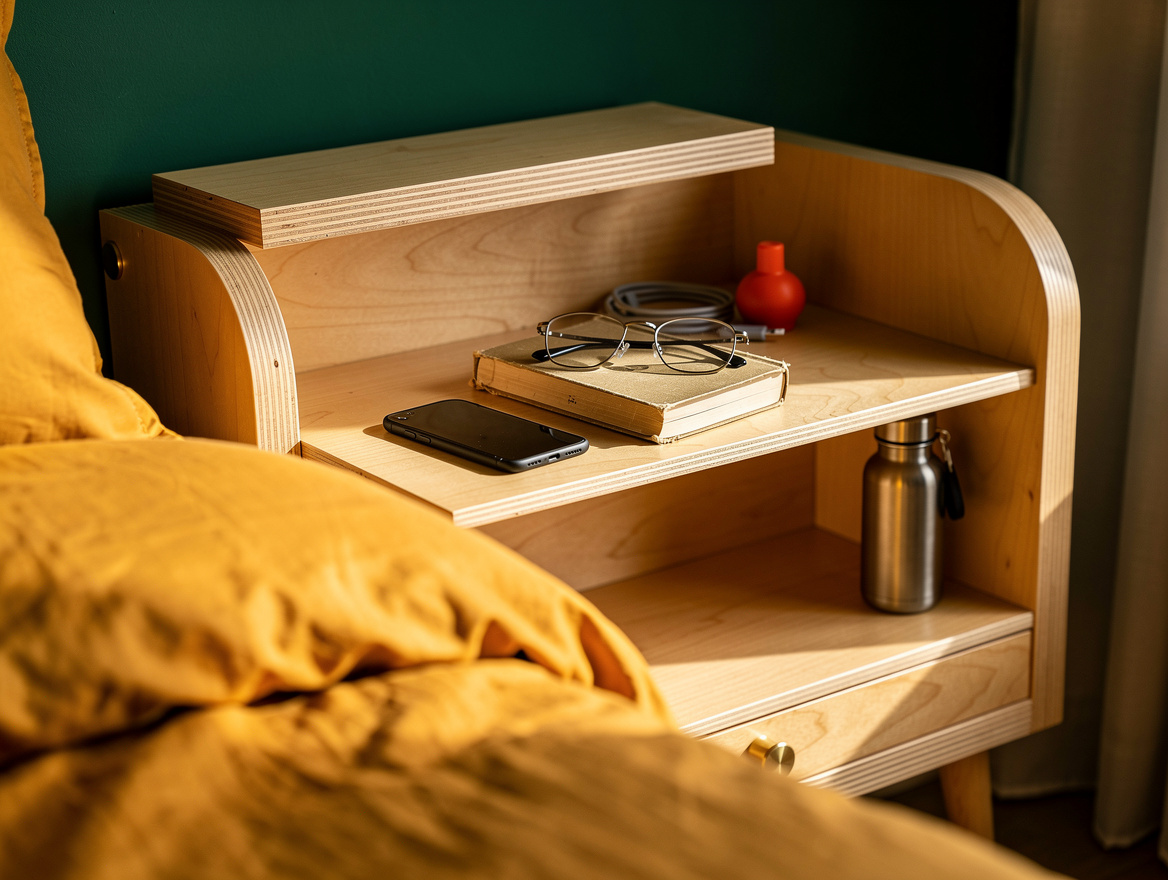
Use BRIMNES for Hidden Everyday Clutter
The IKEA BRIMNES headboard remains a practical off-the-shelf choice because its hidden compartments calm the visual noise that comes with two people sharing one room. Its roughly 11-inch depth is close to the upper limit I’d accept in a compact layout.
Typical U.S. Pricing is about $130 for Full/Double, $150 for Queen, and $180 for King, depending on local availability. The white engineered-board finish is plain, which is exactly why it can disappear behind good bedding and one strong wall color.
Build Upward Along a Narrow Wall
When the bed sits against a narrow wall, skip the bulky bookcase look and use height. A 6- to 8-inch wall-mounted oak shelf above the pillows, paired with slim vertical side storage, keeps the floor from feeling pinched.
Use matching baskets for cords, sleep masks, and chargers. One labeled compartment per sleeper, one reading light each, and no open pile of paperbacks are enough to make a small shared setup feel intentional.

Bridge Two Twin Beds With One Rail
Two twin beds with a center gap need connection without erasing personal space. Install a shallow bridge shelf behind or above both beds, then assign a reading light and cubby on each side.
A continuous matte white MDF rail around 8 to 10 inches deep makes the room read as one composition. Keep the center section simple: a shared outlet zone and perhaps one small framed print, not a crowded display shelf.
Anchor Every Storage Unit to the Wall
A storage headboard has to be secured, especially in a room used by children or active sleepers. Use the supplied anti-tip hardware on an engineered wood unit, or fasten a DIY build into studs with hardware rated for the load.
Skip deep bookcase headboards unless the room has generous clearance. The Coaster Fine Furniture Westpark style, at roughly 11.5 inches deep, can work for visible shelves, but it sits near the limit in a narrow shared room.
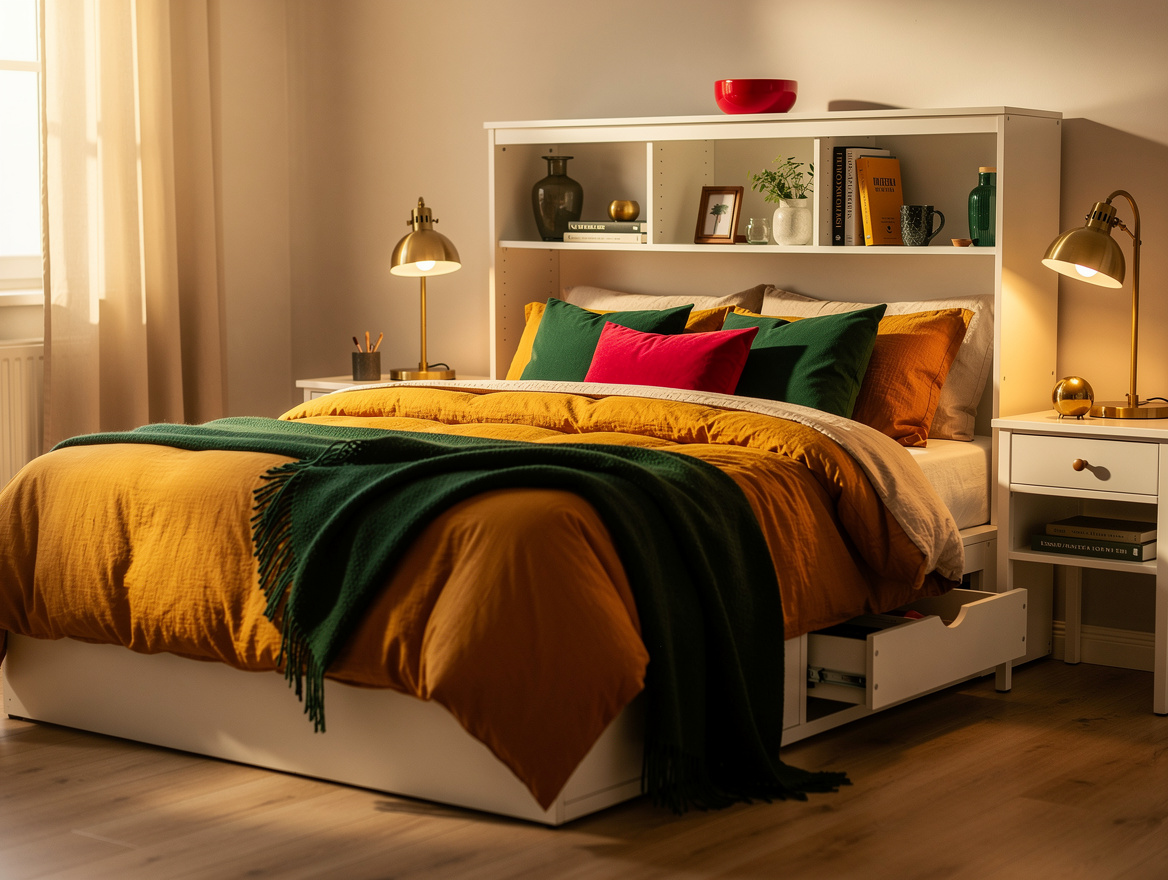
Start by measuring the clearance behind and beside the bed, then cap the headboard depth before choosing a finish. A shallow divided shelf will make both sleepers feel considered long after the room is made up.
Mia Carter writes about small-space living and budget home makeovers. She has restyled three rentals and tests most ideas in her own 45 sqm flat.