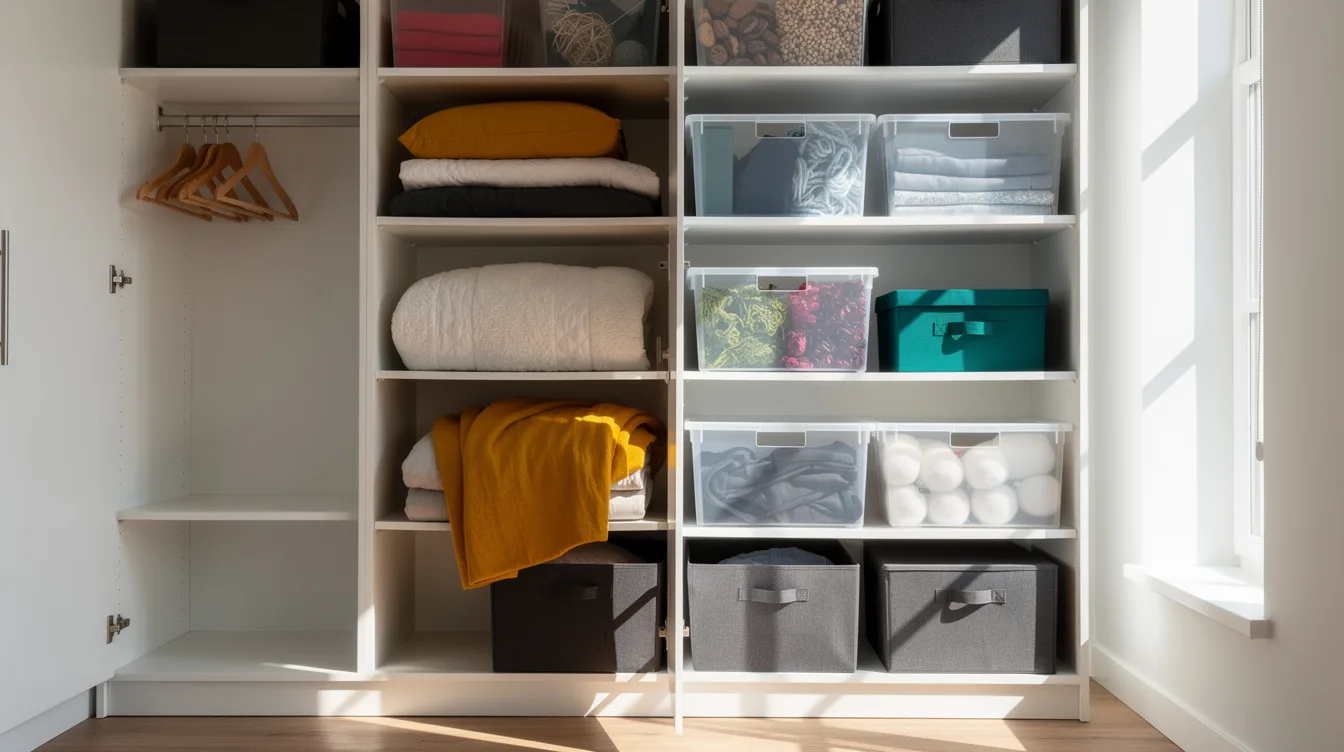
A guest room closet about 48 inches wide can look perfectly tidy while hiding a frustrating problem: there is nowhere for a visitor to hang a jacket. The fix is a two-zone system, with guest-ready storage at eye level and sealed long-term storage above or below.
For months or years of use, a roughly 23-inch-deep modular wardrobe, two or three shelves of lidded bins, and a small open section for hangers create the right balance. The closet should feel available, not packed.
Every item needs a clear time horizon. If nobody will touch it for six months, it belongs in a labeled container rather than on a hanger, in an open basket, or inside a loose cardboard box.
Split the Closet Before You Buy Bins
A guest closet has two jobs, and they should never compete. Reserve eye level for visitors, then push anything untouched for six months or longer into sealed storage above, below, or behind a cabinet door.
In a typical reach-in closet about 48 to 72 inches wide, keep the hanging rail open enough for coats, shirts, and luggage. A two-zone closet layout makes the room feel ready even when the upper shelves hold years of household overflow.
Use a roughly 23-inch-deep modular wardrobe or closet system when the room allows it. That depth matches the practical footprint for folded bedding while leaving a small open section for guest hangers.
My firm rule is simple: the guest rail is for guests. A winter duvet that will sit untouched until next year belongs in a lidded, labeled container instead.
Build Upward With a Modular Frame
Vertical storage gives a short reach-in closet far more capacity without stealing floor space. An IKEA PAX frame is about 29 1/2 inches wide, 22 7/8 inches deep, and 92 7/8 inches high, with a typical starting price of about $180 for the 75-centimeter-wide frame.
Anchor the frame securely, then divide its height between a guest-friendly middle and less frequently used upper shelves. A 64- to 68-inch hanging rod height keeps everyday garments reachable for most adults.
Add a KOMPLEMENT shelf measuring about 39 3/8 by 22 7/8 inches, typically around $25. Two or three shelves create a clean home for folded sheets, towels, spare blankets, and bins without turning the floor into a storage zone.
Leave a little breathing room between containers. Packed shelves look efficient in a catalog, but a few inches of clearance makes heavy boxes safer to pull down.
Seal Bedding Against Long Storage
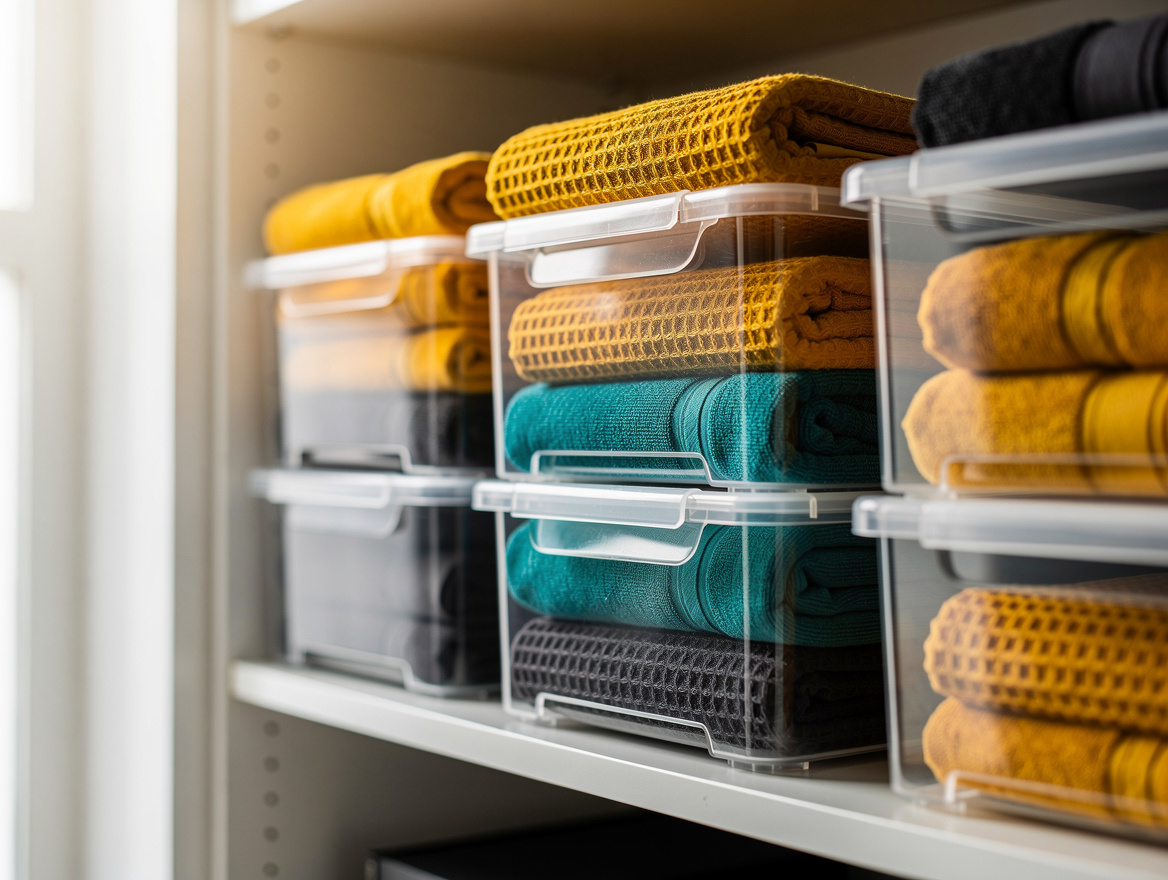
Textiles absorb closet odors, dust, and seasonal humidity when they sit in open baskets. Choose a clear polypropylene gasketed bin for sheets, pillow covers, and folded cotton blankets, then close the lid before placing it on a shelf.
A 32-quart box is typically about 18.5 by 14.8 by 11.1 inches and roughly $9 to $18 when purchased in a multipack. That size works well for one sheet set or several lightweight blankets.
For low shelves, use a thinner bin around 22.5 by 16 by 12.75 inches, with a typical multipack price of roughly $10 to $18. The lower profile slides under a shelf more easily and keeps the closet from feeling top-heavy.
Bulky comforters need more air space. An 80-quart gasket box is typically about 24 by 18 by 15.25 inches and roughly $20 to $35, making it better for the closet floor or a sturdy top shelf than a narrow middle shelf.
Keep the Guest Rail Ready
Visitors should be able to open the closet and know where their clothes belong immediately. Keep the guest hanging rail mostly empty, with only a few matching hangers and enough space for a weekender bag or jacket.
A shallow shelf above the rail can hold spare toiletries, a folded robe, or an empty fabric bin. Avoid filling this shelf with items that require a step stool, especially if the guest room serves older visitors.
Use one IKEA KOMPLEMENT drawer for guest towels, chargers, and travel-size supplies; its typical price is about $50. The drawer hides visual clutter while keeping small necessities easier to find than they would be inside a deep box.
The most useful closet feels slightly underfilled. That open space is a real amenity, not wasted capacity.
Protect the Floor and Door Zones
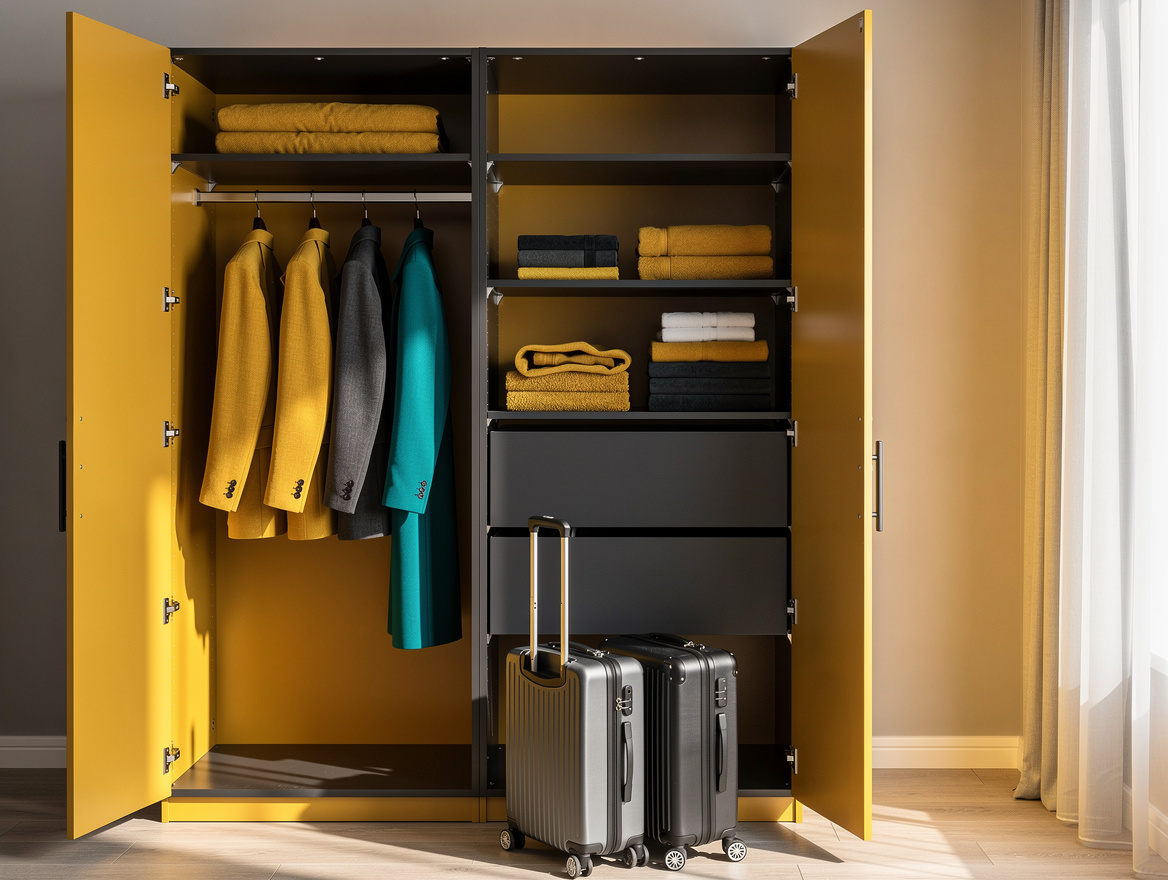
The floor should hold the pieces that are awkward to lift. Keep roughly 24 to 30 inches of height available for luggage, a compact hamper, or a spare duvet bag instead of stacking boxes so high that the rail becomes difficult to use.
A soft-sided luggage bag can slide beneath the hanging clothes and flex around the closet wall. Hard cases may protect better, but they consume valuable clearance and often make the room feel crowded.
The back of the door is useful for small grab-and-go supplies. An over-door pocket rack should project only about 4 to 6 inches, enough for eye masks, adapters, tissues, or unopened toiletries without blocking the door.
Keep the door rack shallow and quiet-looking. A bulky organizer turns every entry into a collision, especially in a compact guest room.
Label Every Container for Retrieval
Long-term storage fails when nobody remembers what went inside. Label each container by contents and season, such as “queen sheets, cool weather” or “guest pillows, spare,” rather than using vague words like extras.
Clear plastic helps with quick checks, but a large printed storage label still matters when bins are stacked two or three high. Put one label on the front and another on the lid so the contents remain identifiable after rearranging.
Small supplies need their own compartment. IKEA KOMPLEMENT small boxes measure about 9 3/4 by 10 1/2 by 4 3/4 inches and cost $12.99 per two-pack, a practical size for adapters, eye masks, and spare toiletry items.
Leave a little empty capacity in every container for future additions. A closet that can accept one new blanket without a full reshuffle will stay organized much longer.
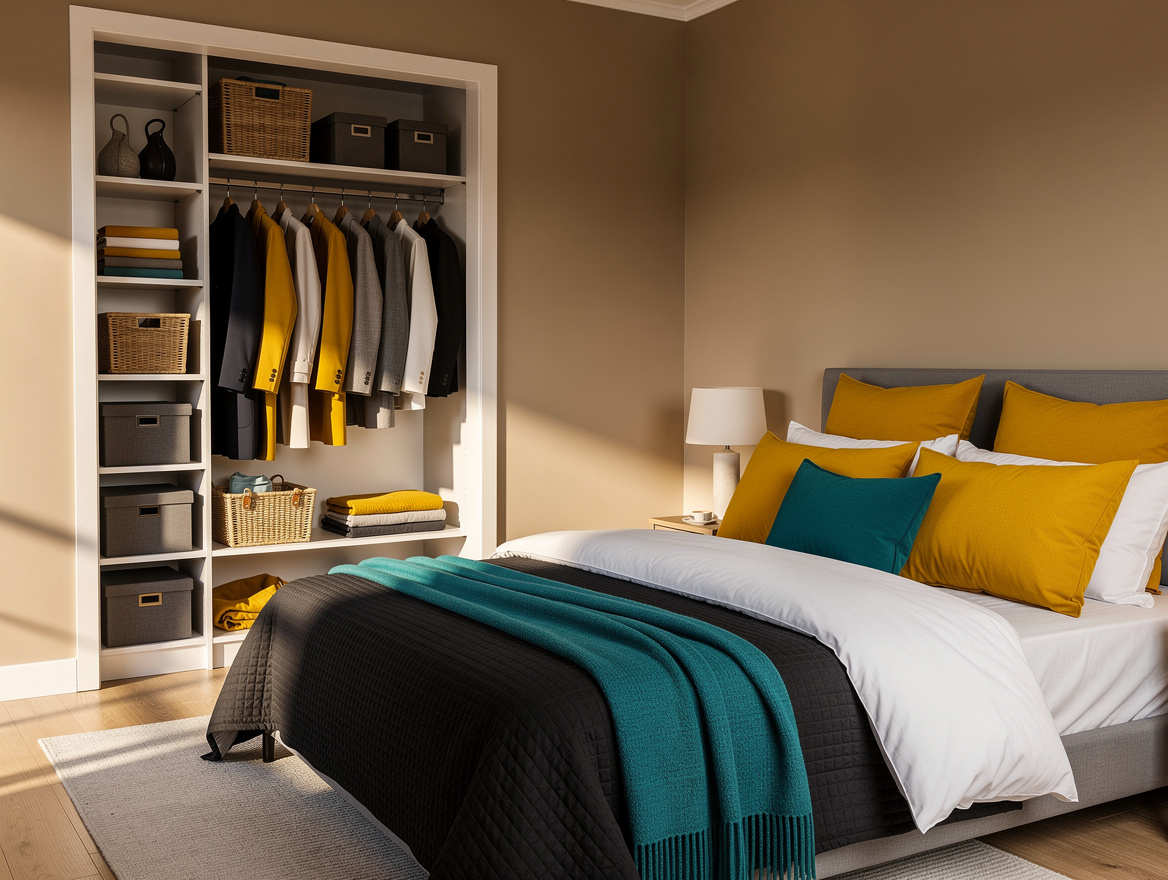
Start by clearing the hanging rail, then measure the shelves and floor before buying storage. Once guests have a visible landing zone, seal the bedding and label the rest by retrieval order.
That small pause at the beginning prevents the closet from becoming a forgotten attic with a door.
Mia Carter writes about small-space living and budget home makeovers. She has restyled three rentals and tests most ideas in her own 45 sqm flat.