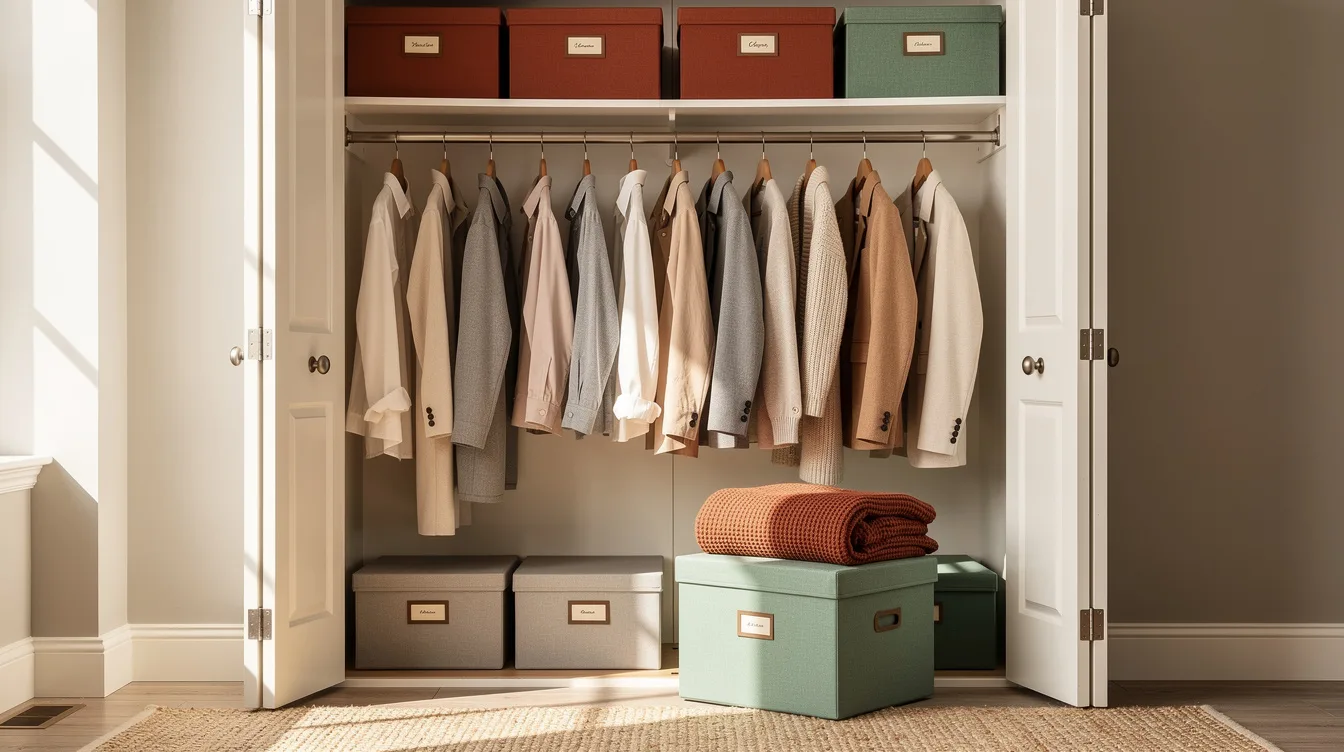
A one-closet rotation can feel impossible when a roughly 24-inch-deep reach-in has to hold work clothes, bulky sweaters, shoes, and a future trip wardrobe. The answer is visibility, not ruthless purging.
Designers treat one closet as a two-zone system: current clothes stay within reach, while off-season pieces live in contained storage at the top, bottom, or back.
Build a Four-Category Rotation
Stop dividing everything into summer and winter. Keep daily current-season clothes and transitional pieces accessible, then contain most special-occasion and opposite-season items.
Merino wool sweaters, jeans, neutral blazers, rain layers, and long-sleeve tees earn year-round access because weather rarely follows a clean calendar. That small flexible group prevents a miserable full-closet reset after every temperature swing.
If you have not worn something during its relevant season in the last 12 months, put it in a labeled review bag. It has not earned prime real estate yet.
Protect the Prime Hanging Zone
Place active shirts, trousers, dresses, and light jackets between roughly 35 and 70 inches from the floor. Your most-worn pieces should land between shoulder and waist height, where getting dressed takes almost no effort.
Give adult hangers about 22 to 24 inches of depth, then check the actual clear interior width before ordering organizers. A closet can look generous from the doorway and still crush a linen blazer against a sliding door.
Keep hangers consistent if you can. A row of slim velvet hangers creates a calmer sightline and stops delicate straps from drifting onto the floor.
Contain the Top Shelf
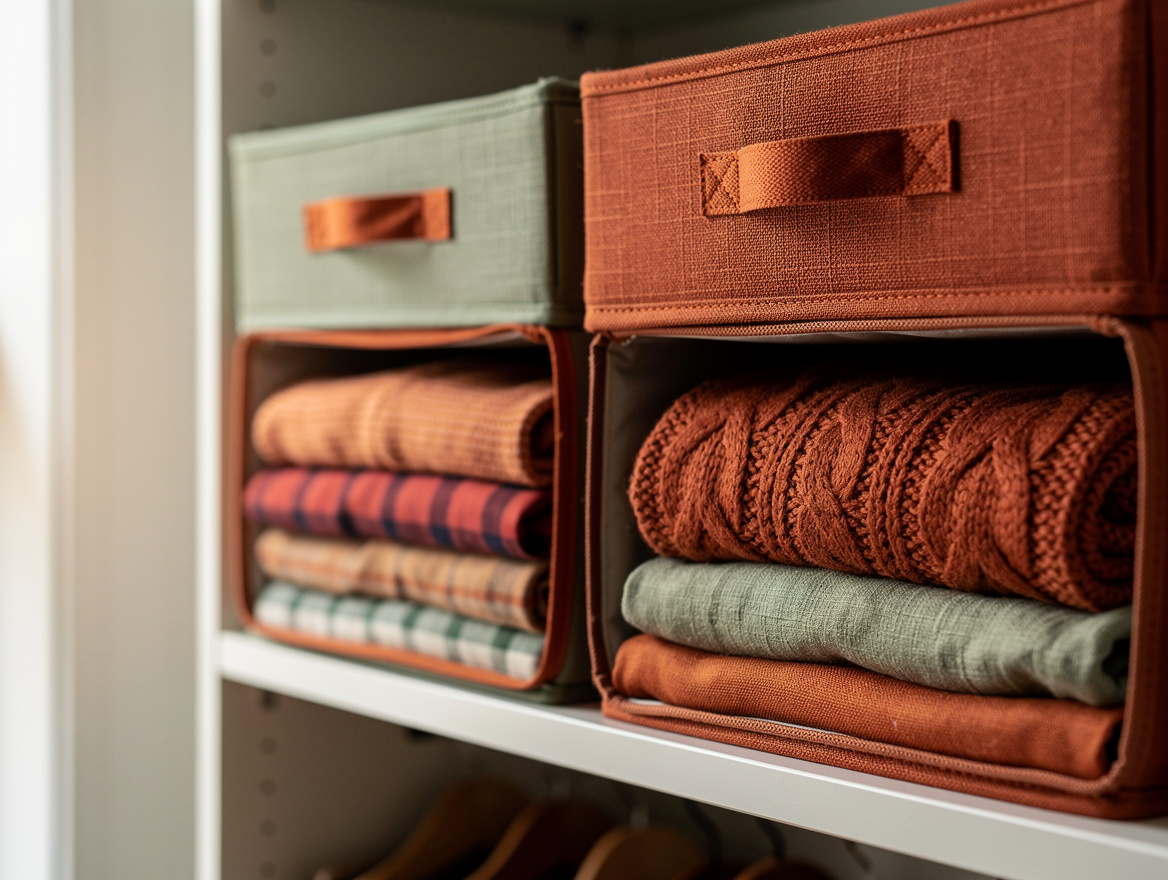
The top shelf, roughly 70 to 84 inches high, is for off-season folded clothing, not loose stacks that slump into each other. Use shallow zippered cases so each category keeps a fixed footprint.
An IKEA SKUBB storage case measuring 35 1/2 by 20 3/4 by 7 1/2 inches typically costs about $12.99 and works well for folded warm-weather clothes. Leave roughly 1 to 2 inches above it so you can slide it out without a fight.
Label the front by category, not by vague intentions. “Swimwear and linen” tells you far more than “summer.”
Use the Floor Without Making a Pile
The lower roughly 6 to 12 inches suit dense folded clothes, spare footwear, and heavy knits. Choose lidded bins or low rolling containers instead of dropping a loose textile bag onto carpet.
A plastic lidded bin protects fibers from dust and keeps the floor zone visually firm, especially in a rental closet with uneven baseboards. Measure door tracks and the swing of sliding doors before buying anything wide.
Store the bulkiest category here, not the items you need every morning. Wrestling boots out from under hanging dresses is bad closet planning.
Assign the Back Wall a Job
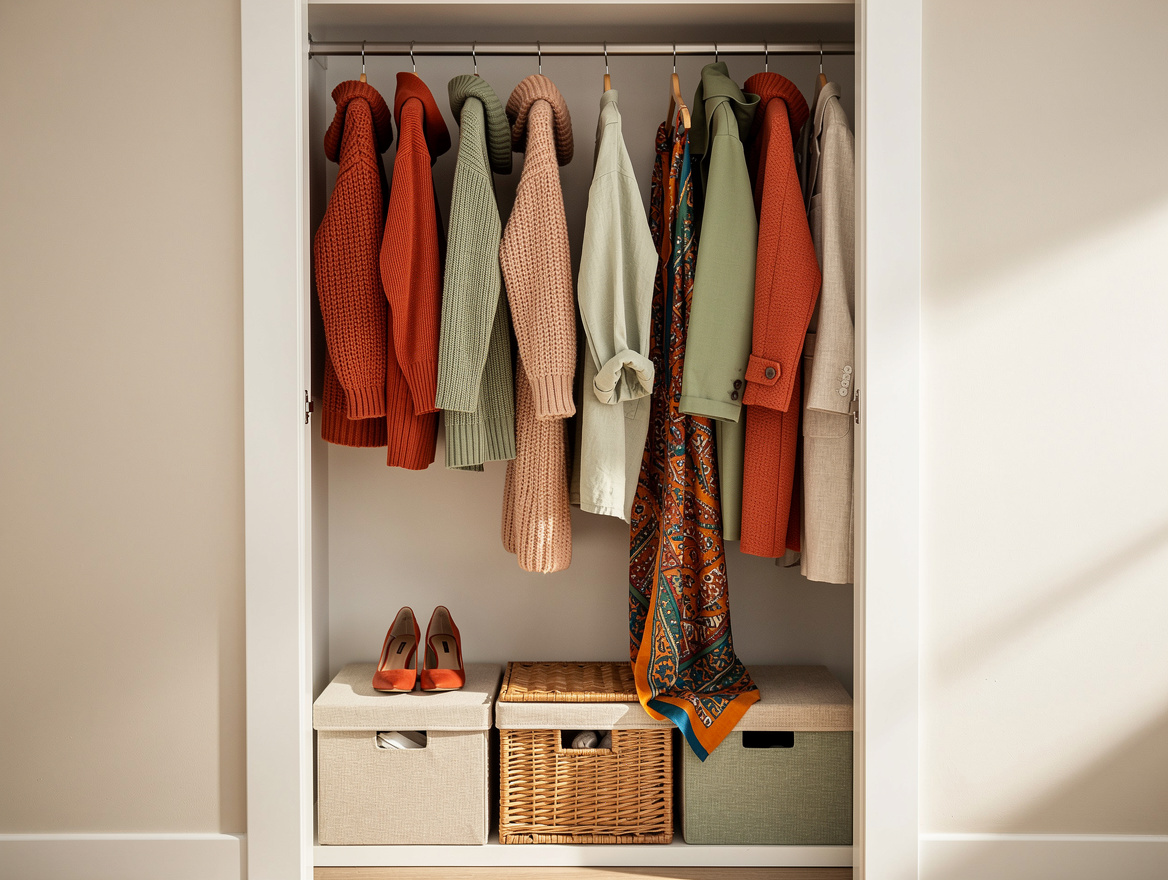
The deepest or narrowest section should hold accessories, gymwear, scarves, sandals, or a small next-season capsule. This is where a hanging organizer or garment bag earns its keep.
A canvas garment bag is a smart home for a rarely worn coat or formal dress because it separates the piece without asking for a full shelf. Keep this zone limited, since hidden storage can become a permanent forgetting place.
Use one narrow category per organizer pocket. Mixed accessories are clutter with better packaging.
Make Every Swap Deliberate
When the season shifts, move only the pieces that no longer work for your actual week. Keep transitional layers out, then trade one labeled case at a time instead of emptying the entire closet onto the bed.
The narrower IKEA SKUBB storage case, roughly 25 1/2 by 20 3/4 by 7 1/2 inches and typically about $9.99, is useful for sweaters, tees, or accessories. It makes a rotation feel finite, which is the whole point.
Before returning anything to storage, check for stains, missing buttons, and shoes that need repair. Seasonal storage should préservé clothes, not postpone decisions.
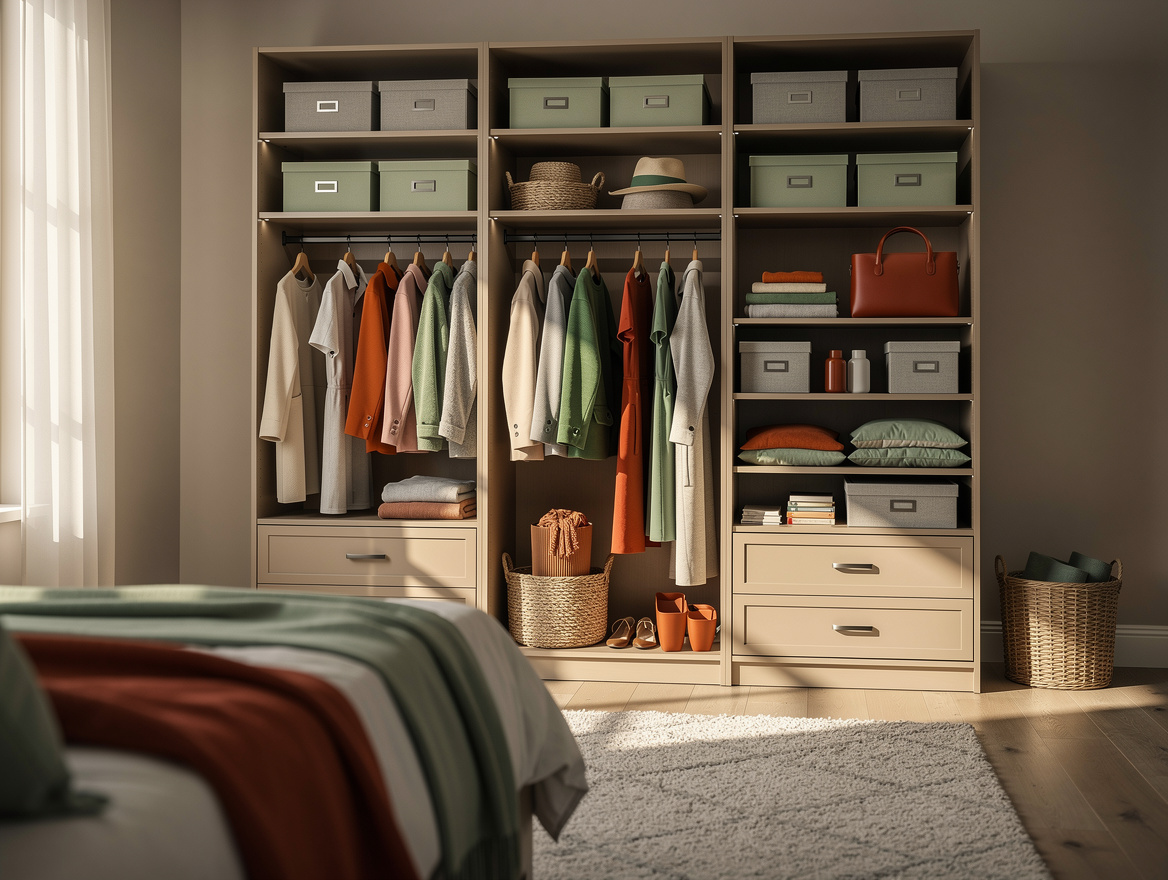
Start by clearing the shoulder-to-waist hanging zone for what you will wear this week. Once that space feels easy to scan, the rest of the closet can finally work around your life.
Mia Carter writes about small-space living and budget home makeovers. She has restyled three rentals and tests most ideas in her own 45 sqm flat.