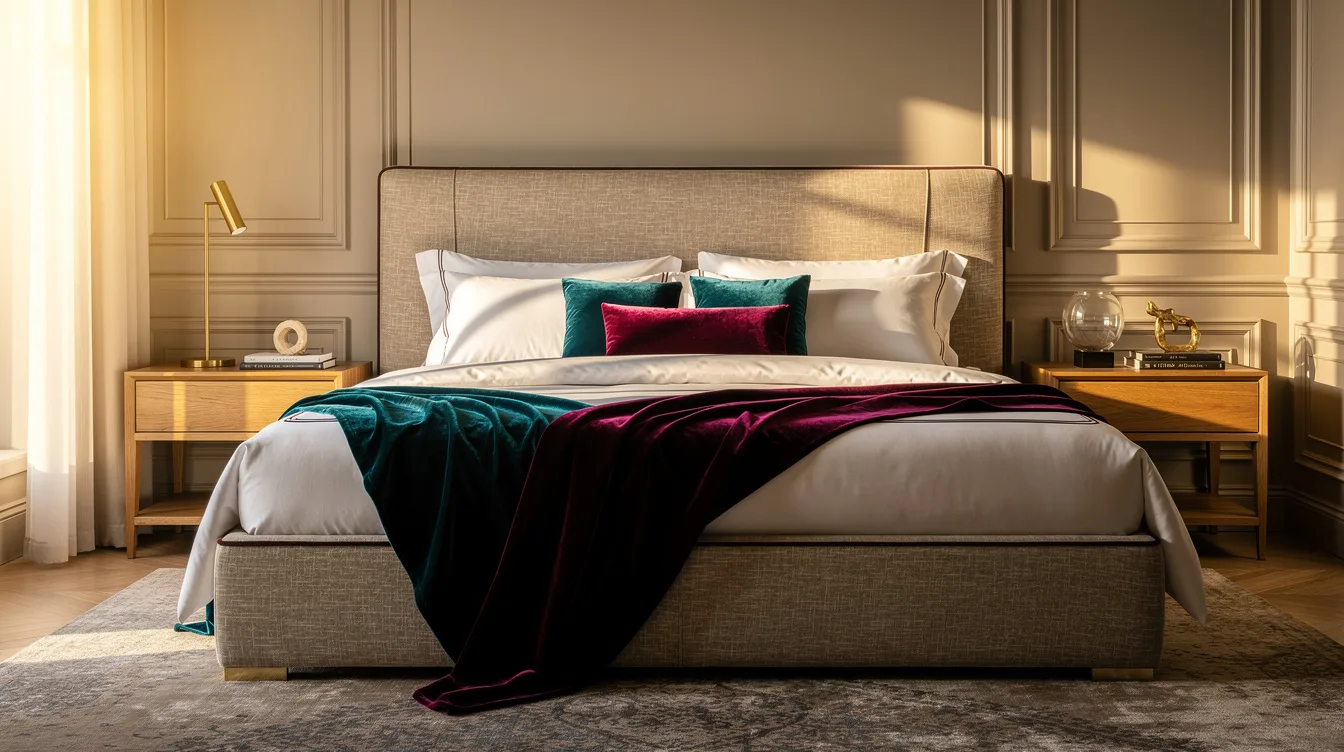
The quickest way to make a bedroom feel finished may be the panel most people overlook: the footboard. A low upholstered version around 42 cm high can give a bed the complete silhouette of a grand hotel without enclosing the room.
IKEA’s listed IDANÄS example pairs that restrained end with a headboard about 121 cm high and a 160 × 200 cm mattress area. The useful distinction is simple: repeat the headboard’s material or shape, then keep the footboard low enough to préservé air.
That balance separates a tailored detail from an oversized bed frame. It also makes the idea adaptable to painted timber, soft fabric, curved profiles, or channel stitching.
Choose a Low End That Completes the Silhouette
A decorative footboard should finish the bed’s outline without turning it into a barrier. For a grand-hotel effect, I prefer a low upholstered end that lets the eye travel across the room.
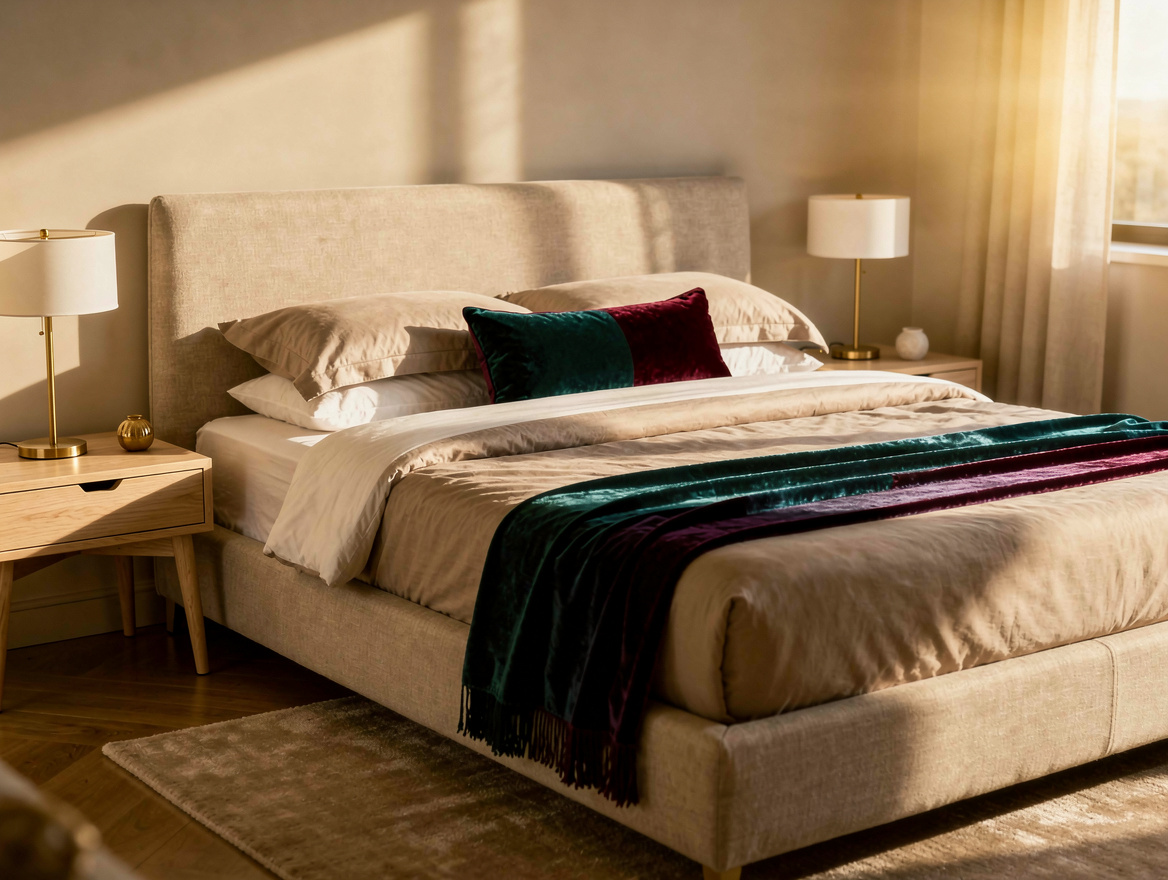
The listed IKEA IDANÄS upholstered frame in Naggen beige shows the proportion well: its footboard is about 42 cm high, while the headboard reaches roughly 121 cm. That contrast gives the bed presence while keeping the sleeping area visually open.
Its 160 × 200 cm configuration is a European size, so American shoppers should verify mattress compatibility before copying the setup. The silhouette matters more than the exact footprint.
Echo the Headboard With Channel Stitching
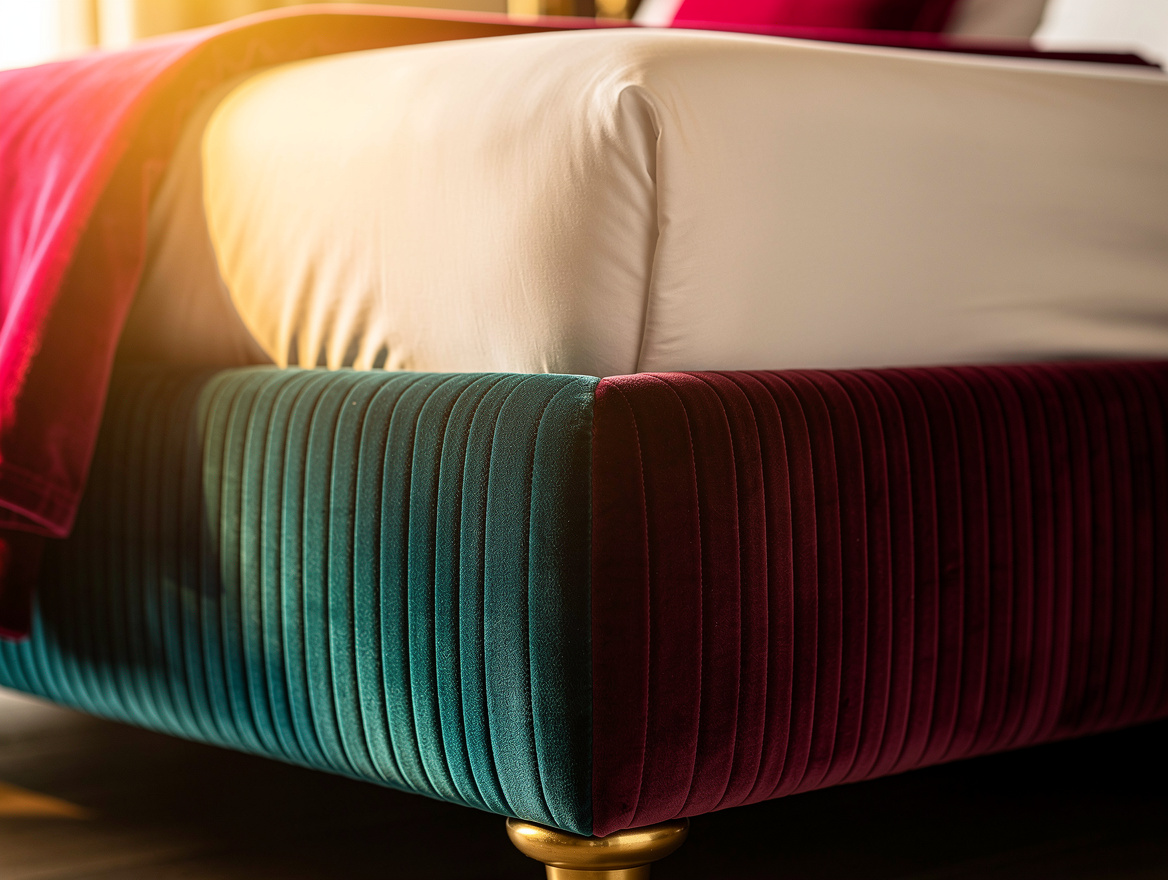
Matching the upholstery at both ends creates the expensive-looking detail. Vertical channel stitching works especially well because it adds rhythm without requiring ornate trim or heavy decoration.
Keep the rest of the bed quiet: smooth sheets, one folded coverlet, and pillows that sit below the top edge of the footboard. A crowded pattern mix competes with the craftsmanship and makes the detail look ordinary.
For a softer room, use a warm beige fabric; for a sharper room, choose charcoal or deep navy. The color should repeat once elsewhere, perhaps in a wool throw or a small upholstered bench.
Measure the Bed Before You Style It
Measure the full frame, not only the mattress. The IKEA IDANÄS upholstered version measures about 222 cm long and 167 cm wide in the listed 160 × 200 cm configuration, which can change how much walking space remains around the bed.
Before buying, mark the footprint on the floor with painter’s tape. Open drawers, walk past the footboard, and check that a bedside table doesn’t pinch the route into the room.
This is where many grand-hotel references fail at home: the bed looks impressive in a large photograph, then overwhelms a compact bedroom. A restrained footboard is only restrained when the surrounding clearance supports it.
Use Height to Set the Room’s Tone
A raised footboard gives the bedroom a more traditional, framed appearance. The white IKEA IDANÄS frame has a listed footboard height of about 63 cm and a headboard around 112 cm, so it reads more like a classic painted bed than a low hotel platform.
That proportion suits rooms with generous ceiling height, substantial curtains, or architectural molding. In a small room, the same white painted frame can feel visually dense, especially when paired with dark bedding.
The listed configuration is about €449, with the slatted base and mattress sold separately. Treat that figure as a product reference rather than a complete bedroom budget.
Add Storage Without Losing Air
Storage can make a decorative footboard more useful, but it also adds weight. The storage version of the IKEA IDANÄS upholstered bed is listed at about €649, with an overall size near 223 × 170 cm and a footboard around 49 cm high.
That extra height still feels approachable beside a 121 cm headboard, yet the base has more visual mass than the simpler version. I’d choose it for a bedroom that needs hidden bedding storage, not for a room already crowded with cabinets.
Pay attention to maintenance before committing. The Naggen beige cover is listed as non-washable, so a pale finish works best when the room has clean traffic patterns and the footboard won’t be used as a daily seat.
Let the Bedding Frame the Woodwork
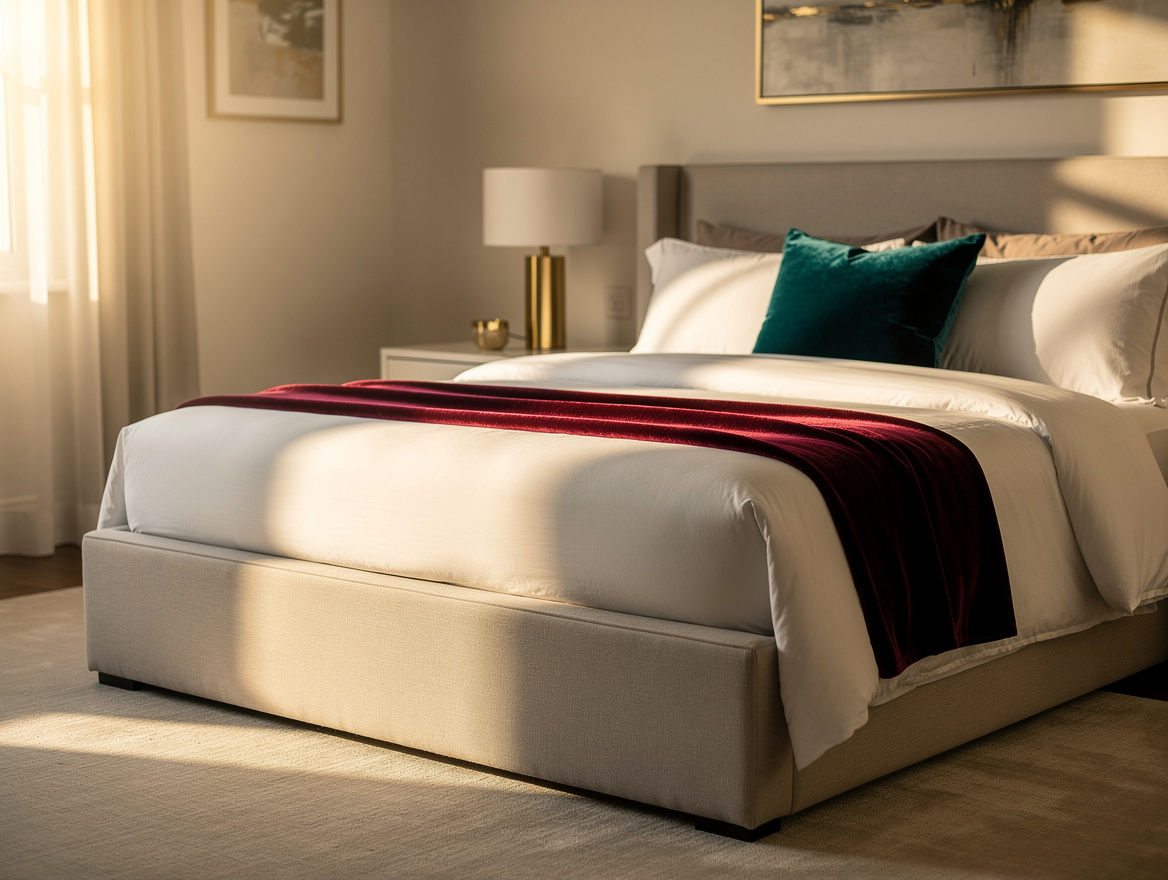
The footboard should remain visible from across the room. A cotton percale sheet tucked neatly beneath the mattress gives the panel a clean edge, while an oversized comforter spilling over the front hides the very detail you paid for.
Use one substantial layer at the foot, such as a folded quilt or a textured linen-blend coverlet. Leave a narrow section of upholstery or timber exposed so the bed reads as furniture rather than a pile of bedding.
Finish with a small material echo nearby: a wood nightstand, a muted ceramic lamp, or a brass frame. The room feels polished when the footboard has one clear supporting note, not a matching set repeated everywhere.
Start by taping the bed’s full footprint on the floor, then choose the lowest footboard that still echoes your headboard. Once the proportions work, keep the bedding low and let that finished panel carry the room.
Mia Carter writes about small-space living and budget home makeovers. She has restyled three rentals and tests most ideas in her own 45 sqm flat.