
The first measurement I check beside a bed is the switch footprint, not the finish. An approximately 81 × 81 mm plate can feel perfectly balanced on a narrow wall, while a larger arrangement may crowd the nightstand and lamp.
The right bedside switch has two jobs: it should be easy to find in the dark and fit the room’s visual language. Brass or bronze toggles bring a hotel-style detail, while broad rockers keep the wall quiet.
Set the Switch at Elbow Reach
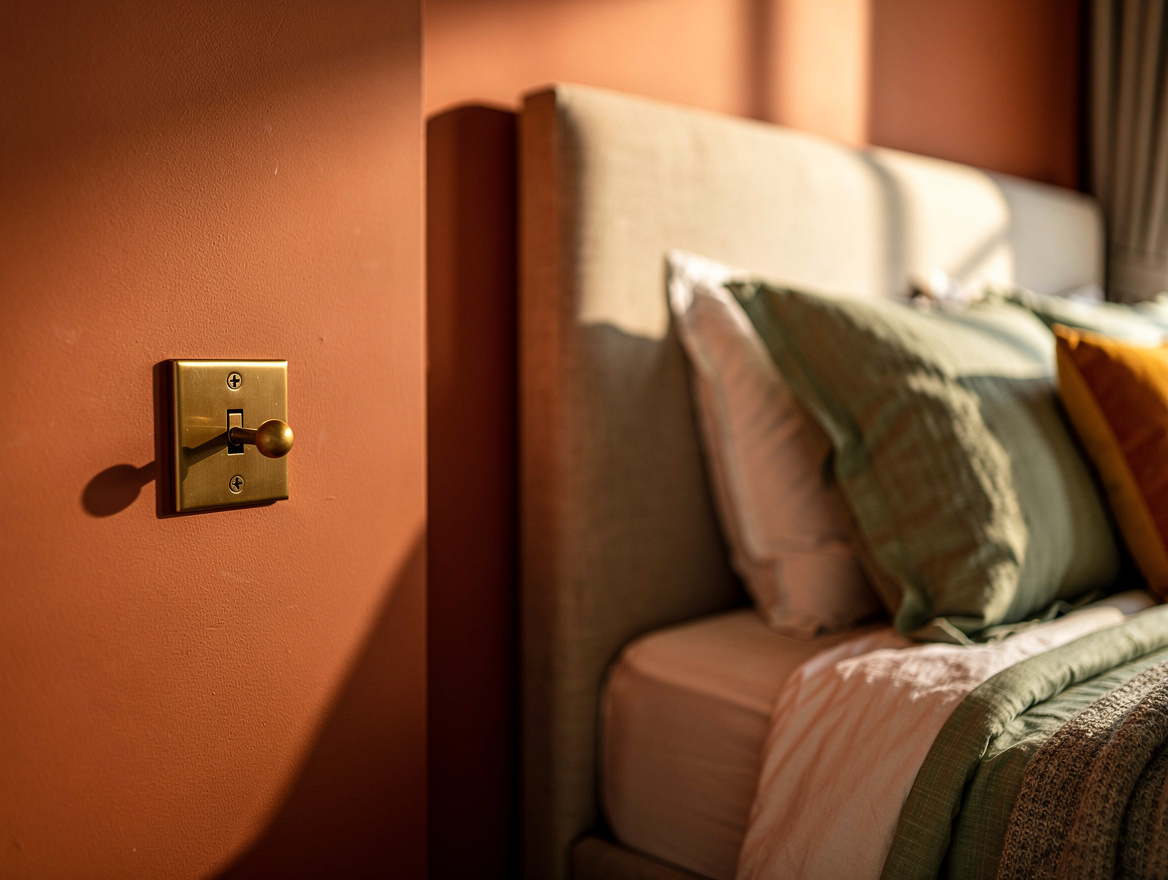
I place the bedside control where my elbow naturally lands, usually just above the mattress line and close enough to reach without sitting up. A solid-brass toggle feels especially natural in this position because its lever gives clear tactile feedback in the dark.
For a softer bedroom, I like a bronze finish beside an upholstered headboard or warm wood nightstand. It has the decorative presence of a boutique hotel detail without demanding attention from the rest of the room.
At Home Depot or Lowe’s, I would compare the full plate dimensions before choosing a finish. The switch should look intentional beside the bed, not like an afterthought placed wherever the wiring happened to land.
Pair Bronze With Quiet Textures
A bronze toggle works best when the surrounding materials stay restrained. Combine it with a linen headboard, medium-tone oak, or a simple painted wall so the metal becomes one deliberate accent.
I would keep the nightstand hardware in the same family, but I would not force every metal in the room to match. One bronze toggle beside a ceramic lamp can look more polished than a room filled with identical finishes.
The supplied product examples begin at about £28 for a complete white switch, about €45 for a bronze toggle, and about €73 for a brass model. Those are product-only reference prices, so check the local-market version, tax, delivery, and installation before ordering.
Use Rockers When Walls Need Calm
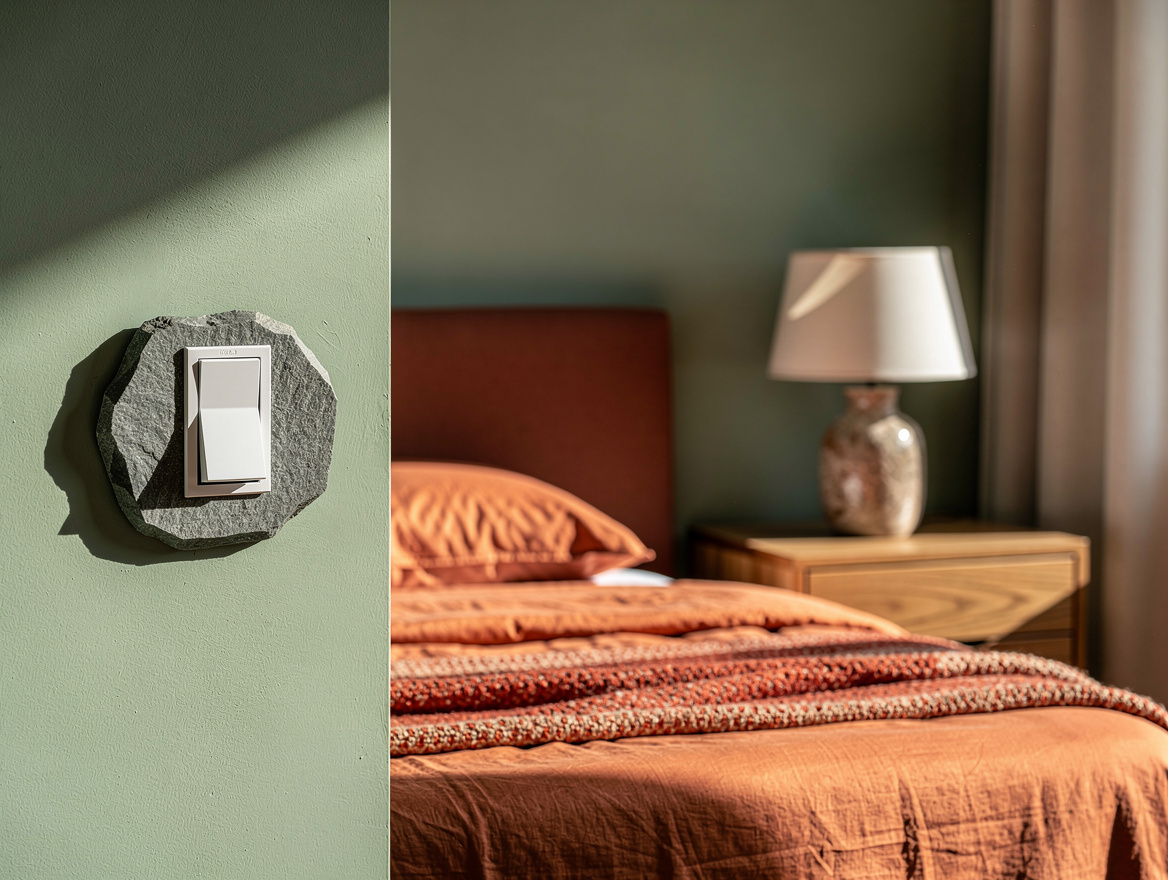
Large flat rockers suit bedrooms where the switch should recede into the architecture. A flat rocker has a quieter profile than a lever and works particularly well beside flush cabinetry, plaster walls, or a clean-lined upholstered bed.
An example with an approximately 81 × 81 mm frame and a 70 × 70 mm rocker gives the wall a broad, orderly shape. I prefer this look in matte white or matte black, depending on whether the switch should blend in or create a graphic mark.
Rockers also make sense when several controls sit together. Their broad surfaces are easy to identify by touch, while their simple geometry keeps a crowded bedside wall from feeling visually busy.
Split Reading Light From Room Light
The most useful bedside arrangement gives each side of the bed control over both the reading light and the main room light. A separate reading-light circuit prevents one person from turning on the ceiling fixture while the other is still asleep.
I like a wall-mounted fixture with a focused beam near the pillow and a second control for the overhead fixture. Pairing that setup with a warm-white LED bulb keeps the room comfortable during late-night reading.
Keep the controls in a consistent vertical order on both sides of the bed. That small decision matters at night, when muscle memory is more useful than searching for a tiny label.
Measure the Box Before Ordering
Before choosing a decorative plate, inspect the existing electrical box and wiring depth. Some supplied examples recommend a 35 to 47 mm back box, so a shallow box can create a fit problem even when the faceplate looks correct.
One antique-brass toggle example lists an overall depth of about 42 mm and a lever length of about 17 mm. Another brass plate measures roughly 88 × 88 mm, with listed internal and external depths of about 22 and 24 mm.
These specifications describe particular formats, not universal US replacements. Ask an electrician to confirm the box, mechanism, grounding, and local code before buying from Amazon, Ace Hardware, or another retailer.
Finish the Plate Like Furniture
A screwless plate gives a bedside switch a cleaner relationship with the wall. I especially like a clip-on plate against painted drywall because the uninterrupted surface feels closer to furniture hardware than ordinary electrical trim.
Choose a hand-aged brass finish only if you like visible change over time. Handling, air, and moisture can deepen the color, which gives the switch character but makes it less uniform than a clear-coated finish.
For a more industrial bedroom, a knurled lever adds texture under the fingertips. For a calmer architectural room, a smooth rocker in the wall color is the stronger decision.

Start with the electrical box, then choose the control style that matches the headboard and lighting plan. A well-placed switch should disappear during the day and feel obvious the moment you reach for it at night.
Mia Carter writes about small-space living and budget home makeovers. She has restyled three rentals and tests most ideas in her own 45 sqm flat.