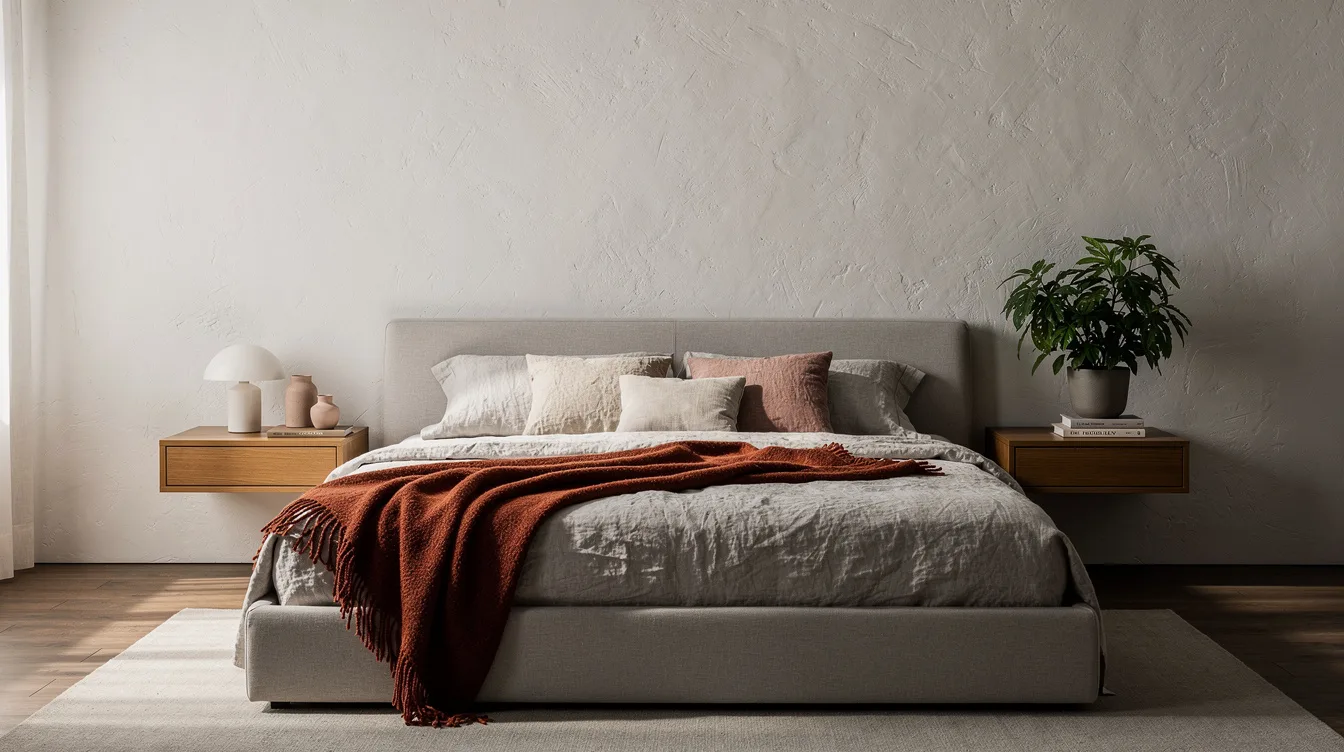
The fastest way to make a minimalist bedroom feel unsettled is to hang a floating nightstand at the wrong height, then let its cord fall into view beside the pillow. A compact unit around 40 by 30 by 20 centimeters, or roughly 16 by 12 by 8 inches, can still hold a phone, a book, water, and a small lamp without crowding the sleeping area or interrupting the clean wall.
I like the look when the bedside units read as part of the wall: a low bed, warm oak or matte white, and one disciplined lighting scheme. The gap beneath does the visual work, but only when the pieces are sturdy, aligned, and useful, with enough room for the floor to show from the doorway.
Set the Nightstands to the Mattress Line
Start with the mattress line, then work outward to the wall and lamp. Set the usable top of each floating nightstand level with the mattress top, or roughly 1 to 2 inches lower, so a glass and book stay within reach without a raised box cutting across the bed or making you reach down into a dark corner.
Wall mounting lets you correct for a low platform bed, a thick mattress topper, or a deep upholstered frame, which is why this format feels more considered than a random side table. With matte white cabinetry, that precise line looks crisp against pale plaster, while warm oak softens a room with a white upholstered bed; my opinion is firm: a high-mounted box makes even good materials look accidental.
Scale the Units to the Headboard
Keep each floating nightstand roughly one-third of the headboard’s visual width, with the surrounding wall left open. A typical starting point is about 16 to 20 inches wide and 12 to 15 inches deep, while a compact room can use roughly 14 to 16.5 inches of width; in either case, the unit should frame the bed and leave the wall visually open.
Depth matters more than people expect. About 12 inches holds a phone, water, paperback, and small lamp, while around 14 to 15 inches lets a white oak veneer surface carry glasses, chargers, medication, and bedtime clutter without making the bed feel boxed in; a full cabinet is the wrong move beside a low bed because it visually anchors the room and crowds the walkway.
Préservé the Floating Gap
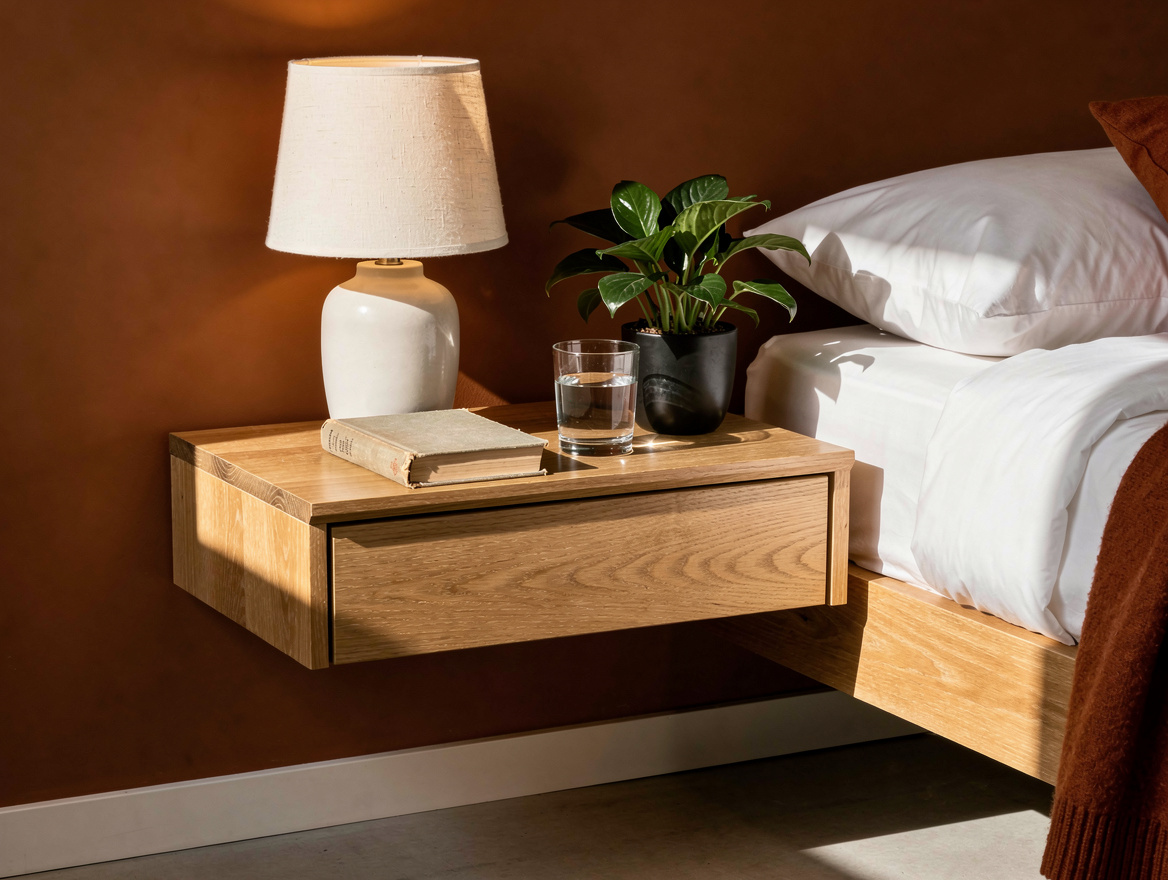
Protect the gap beneath the unit as carefully as the top, because that empty strip is what tells the eye the cabinet is floating, especially with a low bed where every solid block is easy to see. Keep an open floor gap visible beneath it and align the front edge with the bed, leaving roughly 2 to 5 inches between the nightstand and bed.
Before drilling, locate studs or choose a properly rated anchor for the wall surface and the load you plan to store; a lamp, water glass, book, and charger add up quickly, so I would never trust a decorative anchor just to préservé the look.
The IKEA GRÅFJÄLLET measures 42 by 29 by 31 centimeters, or about 16.5 by 11.4 by 12.25 inches, and its U.S. Listed price is $29.99, with mounting screws sold separately; its particleboard-and-paper-foil top and powder-coated steel structure make it a practical low-cost industrial-minimal choice.
Give Every Inch a Job
Give every inch a job before choosing drawers, especially when the bed sits close to a side wall. An open niche keeps a book visible, while a drawer hides medication, glasses, chargers, and spare cables, so the unit supports bedtime instead of becoming a blank dust shelf and keeps the top calm.
For a tight bedroom, a unit around 40 by 30 by 20 centimeters, or roughly 16 by 12 by 8 inches, covers the basics; for daily use, move up to about 18 to 20 inches wide and 14 to 16 inches deep if the wall and bed leave room, with enough clearance for the drawer to open without hitting the bed or a nearby door.
IKEA STOMSÖ is about 36 by 29 by 20 centimeters, or roughly 14.1 by 11.4 by 7.9 inches, with open storage, a shallow drawer, a cable cutout, and a powder-coated steel structure, making it ideal beside a small bed but too compact for a primary bedroom that needs a deeper surface around 15 to 18 inches.
Build One Material Story
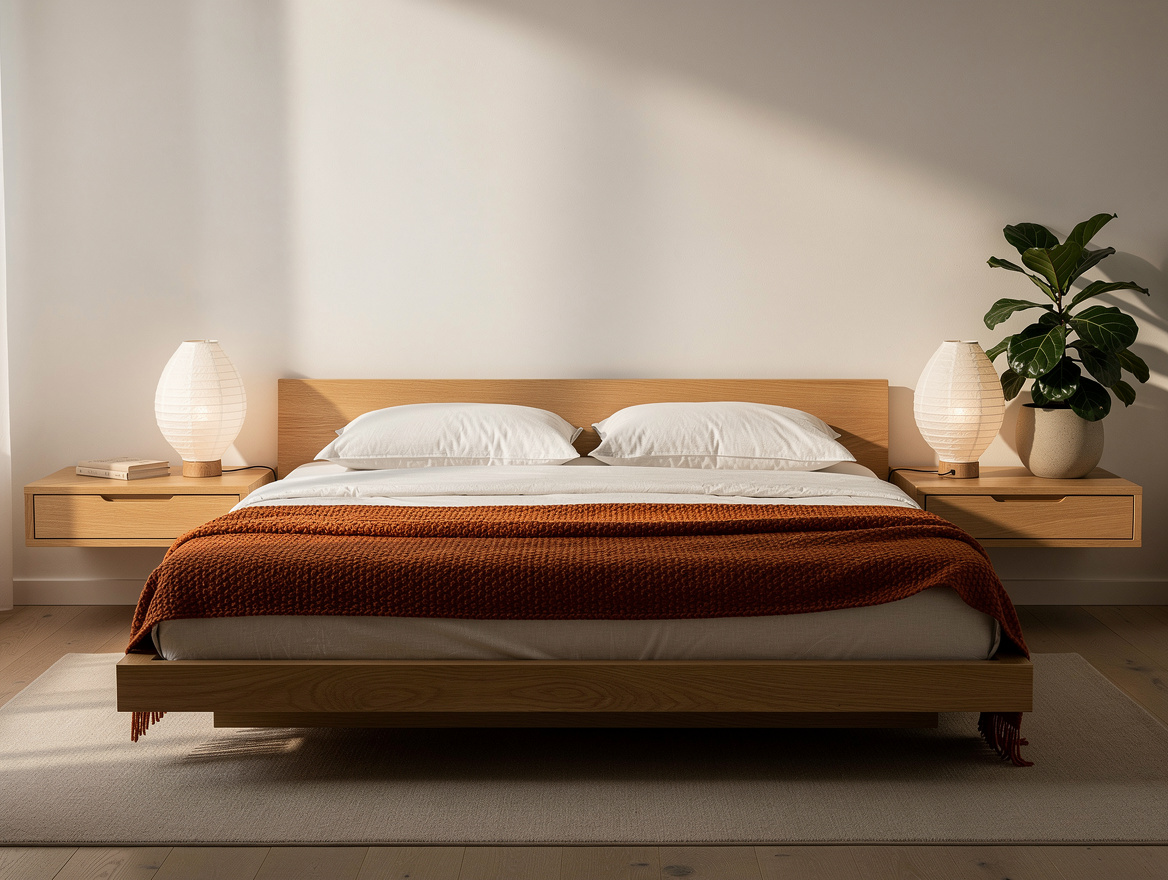
Pick one finish for the bed, wall unit, and lamp base, then let texture create the variation. A low oak platform bed with linen bedding and floating oak boxes is the most reliable warm Japandi direction, while pale plaster and a paper shade keep the palette from feeling flat or overly matched; the bed should be the largest visual block, with the nightstands repeating its tone at a smaller scale.
For a hotel-minimal room, walnut veneer or smoked oak works against a fabric headboard and darker bedding, especially when the wall behind the bed carries the same finish; the repeated material makes a wide headboard feel intentional. I would skip mixing several wood tones just to make the room feel designed; warm wood plus matte white is enough contrast, and the restraint reads more expensive than a busy collection of finishes.
Plan the Light Before Drilling
Plan the lighting before you drill, because a wall-mounted unit cannot fix a lamp that shines into your eyes. One small paper lamp per side suits the warm Japandi look, while concealed reading lights keep a hotel-minimal headboard clear and tailored without consuming the usable top; an opaque shade is kinder at eye level than a bare bulb.
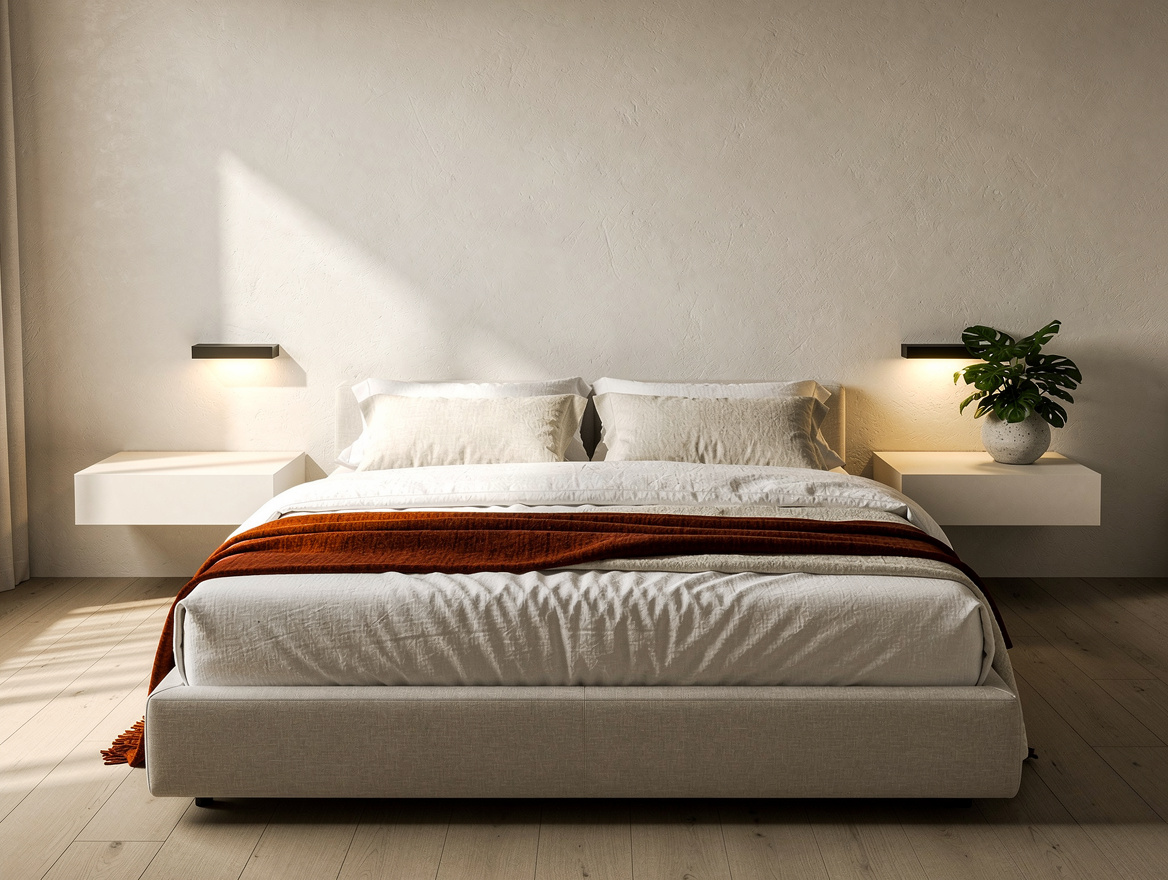
In a bright room, a matte white nightstand with a single sculptural pendant per side keeps a soft-modern scheme visually light and gives pale oak or beige upholstery room to breathe. Run cords through the wall when possible, or use a built-in cutout, because visible wires make the installation look temporary and pull attention away from the calm geometry; the light should land on the book, not the wall behind your head.
Begin with a paper template taped to the wall, then test the mattress height and lamp reach before making a hole. That simple check protects the calm effect better than an expensive finish ever will.
Mia Carter writes about small-space living and budget home makeovers. She has restyled three rentals and tests most ideas in her own 45 sqm flat.