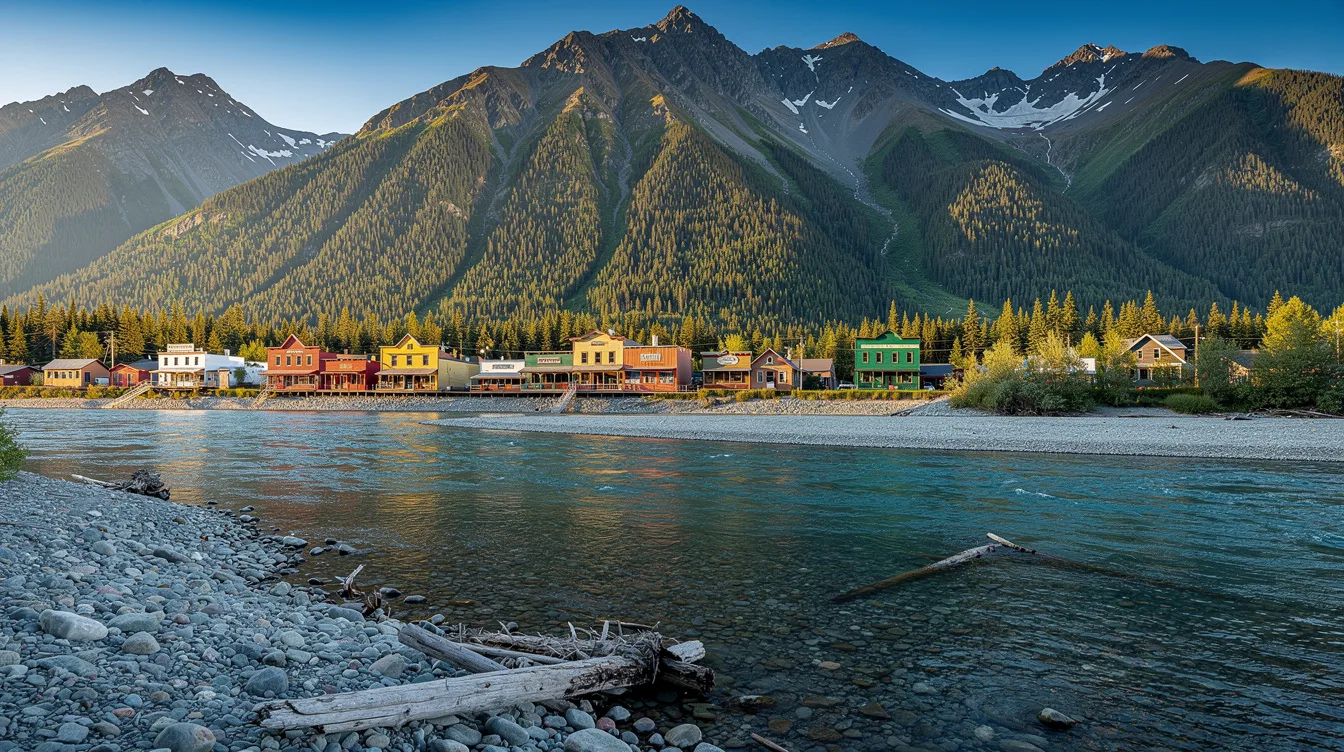
But Skagway was Alaska’s largest city by June 1898. The Klondike Gold Rush pushed its population to between 8,000 and 10,000 people. And the boom lasted while prospectors believed the road north might make them rich, giving today’s port a temporary feeling.
It sits at the head of Taiya Inlet on Lynn Canal, roughly 110 road miles south of Whitehorse, Yukon. But ships could reach the port while prospectors headed inland toward Yukon goldfields. You can still trace that split by rail or road.
From a muddy port to Alaska’s largest city
And the first wave came by ship. On July 29, 1897, a steamer brought the first boatload of prospectors, and shops soon lined the muddy streets. Businesses sold goods and arranged transport for people heading north.
But by spring 1898, about 1,000 prospective miners passed through each week. Others stayed to sell goods and services. If you walk the town today, you can still sense its restless purpose.
And in June 1898, the population stood between 8,000 and 10,000, making Skagway Alaska’s largest city. But by 1899, gold seekers had thinned, and by 1900 the gold rush was nearly over. The Klondike Gold Rush National Historical Park preserves that fast-changing story.
The railway gives the Gold Rush its physical scale
And the White Pass & Yukon Route Railway is the clearest way to understand why Skagway mattered. The narrow-gauge train climbs toward White Pass through steep coastal mountains, gorges, bridges, and Gold Rush terrain. You sit still while the route does the hard work.
But the ride carries history as much as scenery. It follows the corridor prospectors used toward the Yukon. I’d choose it over a rushed checklist because its motion gives the Gold Rush physical scale.
Can you see the old routes without a long expedition?
Yes, you can walk historic Broadway and visit park sites before heading toward Dyea or the Chilkoot Trail area. And if you’re arriving by ship, early or later is usually more pleasant because vessels can crowd the central district.
Summer crowds change the scale of this small town
And today’s Skagway is small enough to feel personal between ship arrivals. Roughly 1,100 year-round residents live here, while tourism drives the local economy. But summer changes the scale, with more than 400 annual cruise-ship calls and a central district that can fill quickly.
And the best strategy is simple: start early or stay later. When several ships are in port, Broadway can feel crowded. You can still find the town’s older character in its wooden sidewalks and restored false fronts, but timing shapes the experience.
But a ship isn’t your only arrival. You can come by cruise ship, Alaska Marine Highway ferry, flight from Juneau, or the Klondike Highway from the Yukon. The Klondike Highway gives independent travelers a slower, more flexible visit.
Beyond Broadway, the Yukon starts close by
And beyond the port, routes toward the Yukon feel bigger than Skagway’s footprint. The road gives you mountain viewpoints, while Dyea and the Chilkoot Trail area connect the visit to prospectors’ routes. I prefer this side because it slows the story down.
But the setting demands humility. Skagway sits at the northern end of the Inside Passage, at the head of Taiya Inlet on Lynn Canal, with routes rising toward steep coastal mountains. You don’t need to reenact a gold rush, but leave room for distance and a slower pace.
And if you have only a few hours, walk Broadway first, then choose one direction. Head toward park sites for history, or take the railway for the classic excursion. The town rewards focus because every route can turn a stop into a rushed one.
Choose the season before you choose the excursion
And the practical answer is late spring through early fall, when visitors can use rail, road, hiking, and sightseeing options. Summer brings the biggest cruise crowds, so access comes with Skagway’s main inconvenience.
How should you arrive?
You can arrive by cruise ship, ferry, flight connection, or road from the Yukon. But the choice changes the visit: a ship gives you a fast introduction, while an independent road trip lets you linger and use Skagway as a base. For wider planning, this Alaska travel guide is a useful starting point.
But Skagway works best when you hold both versions at once: the 1898 city that swelled to 10,000 and the small port that manages today’s crowds. And when the ships pull away, the wooden sidewalks have room again, with mountains beyond Broadway.