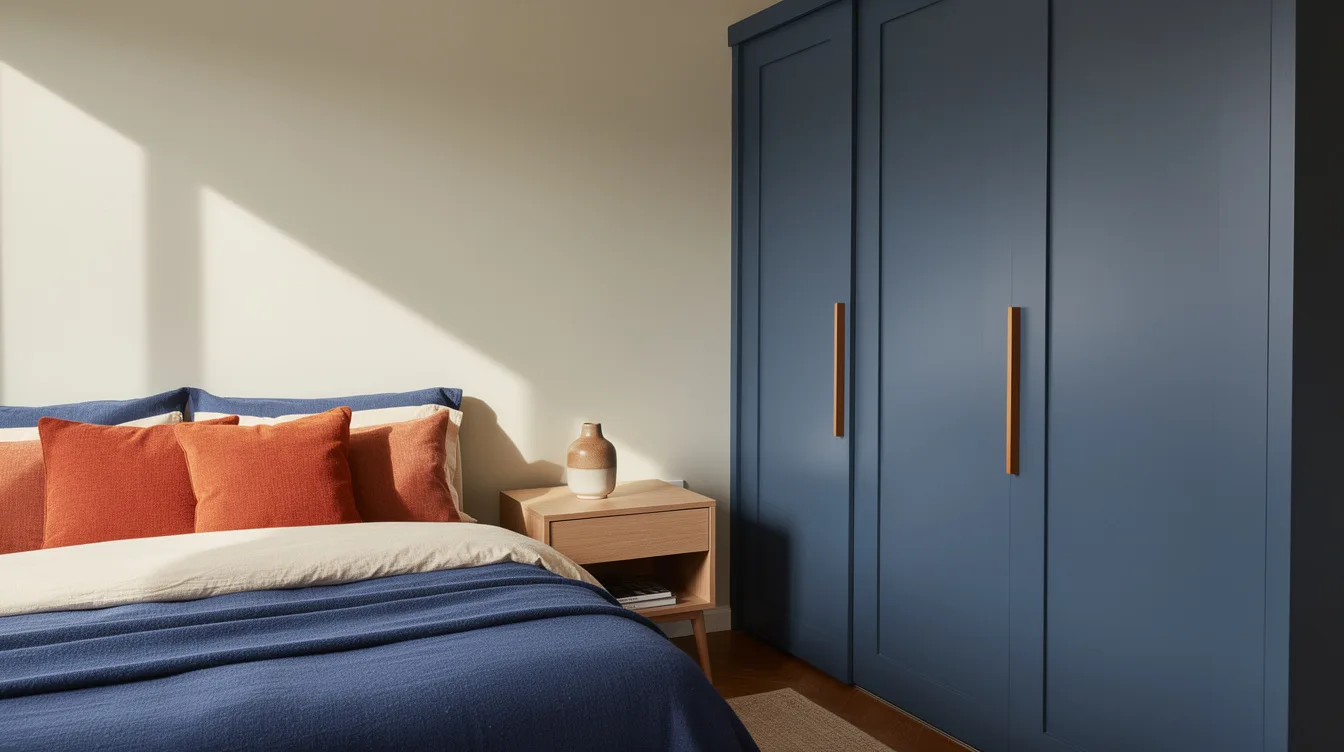
The closet door beside your bed can open perfectly and still ruin the room. With a conventional two-leaf, 30-inch bifold, roughly 15 inches disappear into the opening sweep before you have even found a place to stand.
These six small-bedroom layouts focus on the real pressure points: the bed frame, nightstand, folding leaves, hardware, and the aisle you need to get dressed.
Map the Door Swing Before Moving the Bed
A conventional two-leaf 30-inch bifold door needs roughly 15 inches for its opening sweep alone. Mark that arc on the floor with painter’s tape before choosing a bed position, because a gap that lets the leaves fold is not automatically a usable dressing aisle.
Include the outside edge of the bed frame and the full footprint of the nightstand in your test. A mattress can clear the door while the nightstand blocks the first few inches of movement, forcing you to open the closet from an awkward angle.
My favorite small-room starting point is a bed parallel to the closet wall, with the bifold opening beside the bed’s middle or lower third. That arrangement keeps the pillow zone calmer and gives you a better chance of standing in front of the opening.
Build the Aisle Around the Bed Frame
For the first layout, place the bed frame parallel to the closet and préservé a continuous strip between the frame and the finished closet face. Measure from furniture edge to wall, not from mattress edge to wall, then walk the path while carrying a sweater or laundry basket.
Keep the bedside table outside the door’s sweep whenever the room allows. A compact Home Depot nightstand or a narrow wall-mounted shelf can protect the opening while still giving the bed a landing spot for a lamp and phone.
This plan works best when the closet is used every day and the bed can shift toward the opposite wall. If the remaining passage becomes a shoulder-width squeeze, move the bed first, then reconsider the closet treatment instead of accepting a frustrating aisle.
Split Wide Openings Into Smaller Leaves
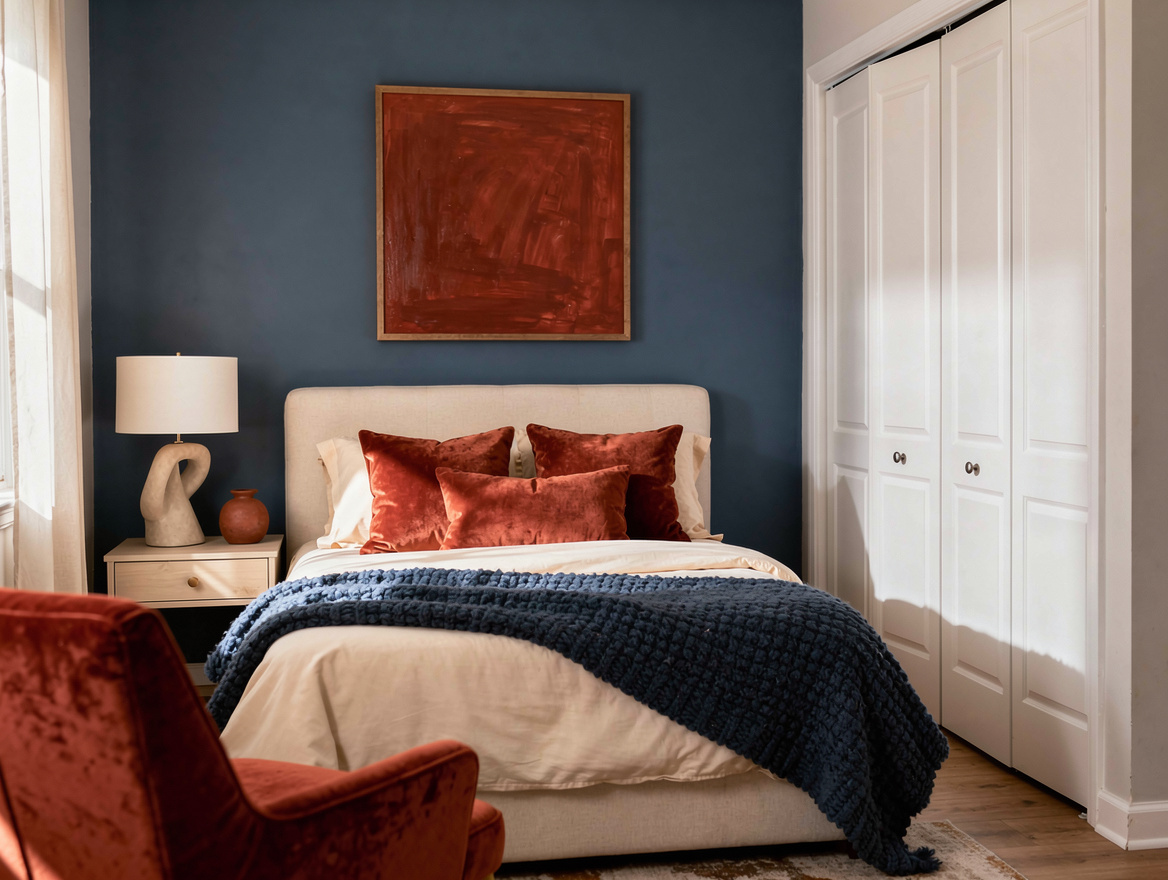
One documented bedroom makeover solved the nightstand problem with two bifold assemblies per closet, creating four individual leaves rather than one broad pair. The owners also moved the bed beneath the chandelier, a useful reminder that the bed’s focal position and closet mechanics should be planned together.
Four painted bifold leaves can reduce the visual weight beside a bed and give you more flexibility when only one side of the closet is needed. Confirm that the opening, track, and hinge layout support the change before ordering materials.
Leave the upper hardware unobstructed when adding trim. A strip of MDF molding can conceal the track area, but the published project used trim about 1 1/2 inches wide and 3/4 inch deep for its own construction, so treat those measurements as a reference rather than a universal allowance.
Dress the Bifolds Like Furniture
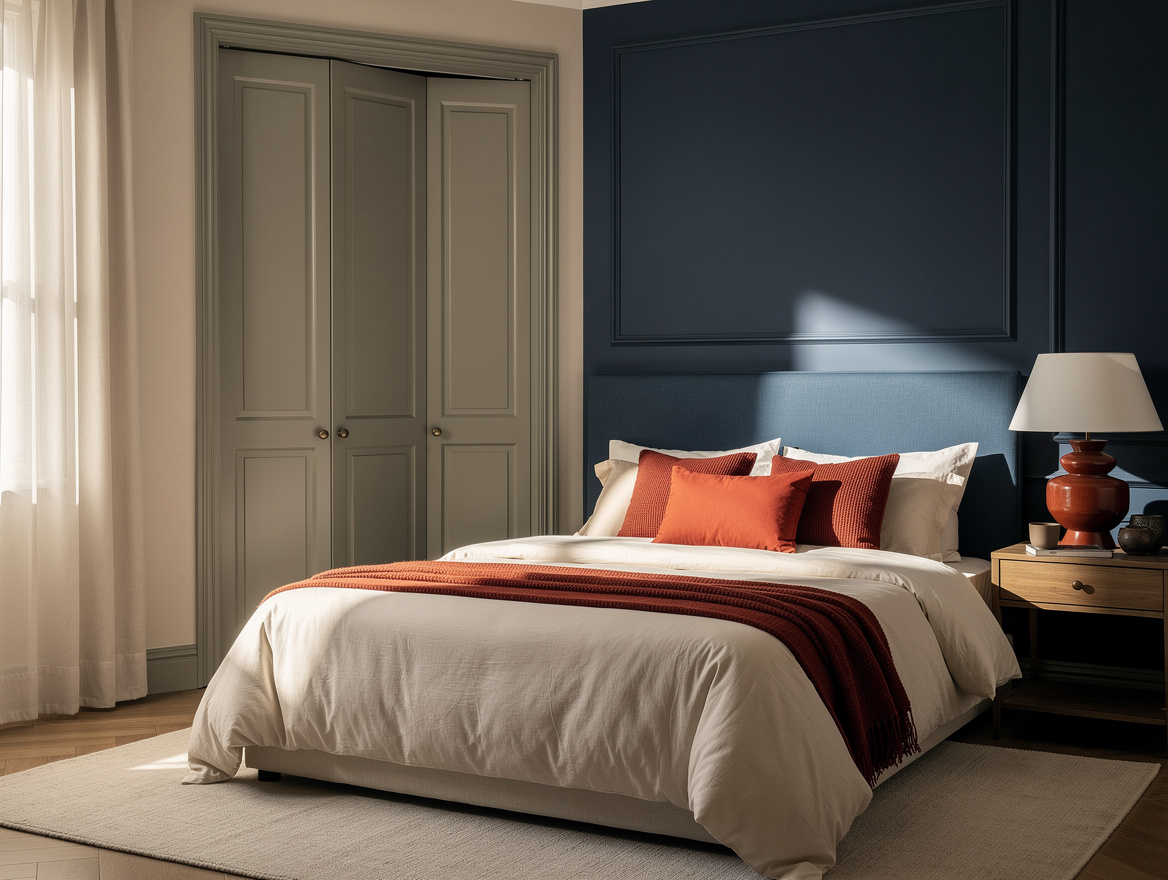
When the closet sits beside the bed, the door becomes part of the bedside composition. Decorative panel molding on a Home Depot bifold can make the opening read more like a wardrobe, especially when the door color relates to the wall or nearby trim.
A documented Ojai bedroom project used decorative molding on bifolds, with a reported cost below about $500 compared with custom designs around $10,000. Those figures are project-specific, but they show why a sound existing track can be worth keeping when appearance is the main complaint.
Use shallow painted trim and keep every added edge clear of the folding joints. A heavy profile near the hinges can reduce the opening angle, catch on the neighboring leaf, or make a narrow closet feel even busier.
Use Handles as the One Strong Accent
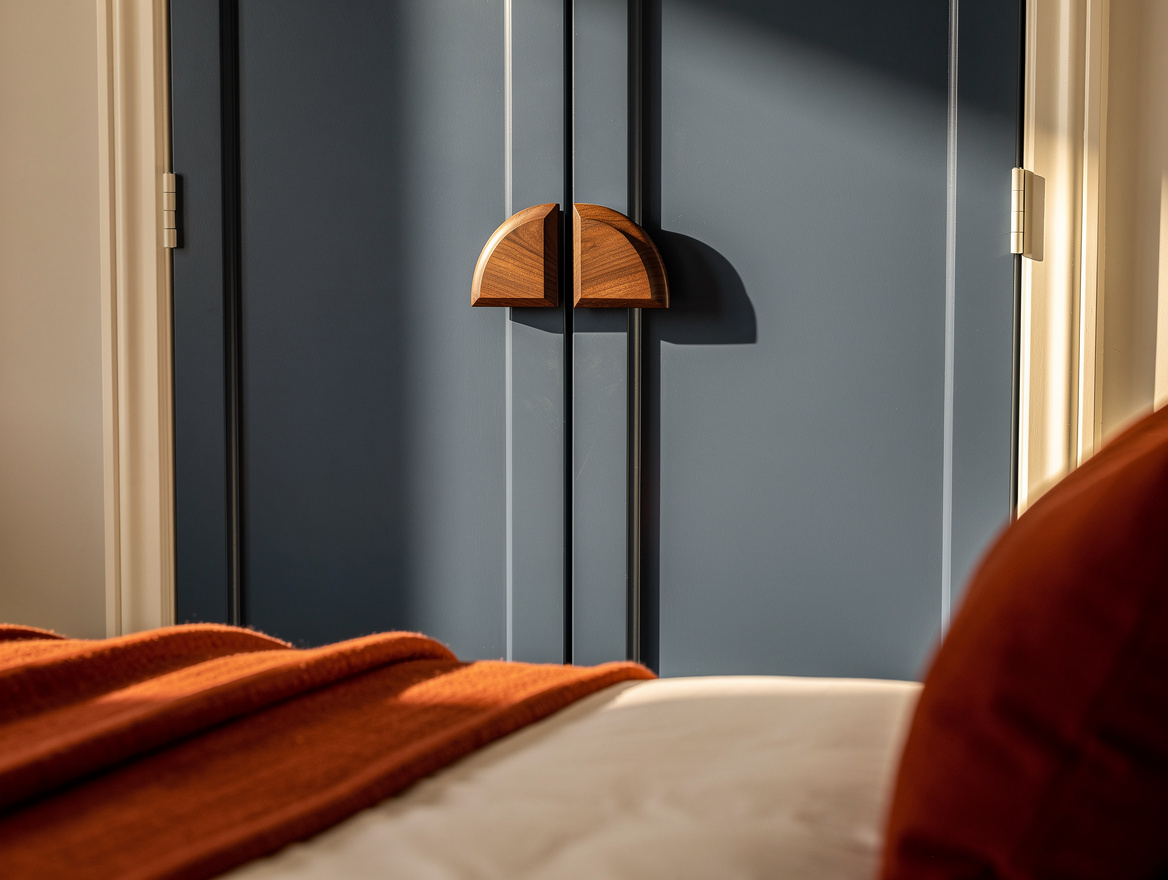
Wall-colored doors are often the quietest choice beside a bed, so the hardware can carry the personality. One Georgia renovation paired walnut half-moon handles with bifolds painted close to the surrounding wall, a smart approach for a small room that needs one deliberate detail.
Position the pull where your hand naturally lands, then open the door repeatedly with the bed made and the nightstand in place. An oversized wood handle can strike the adjacent leaf, wall, or lamp even when the door itself clears the mattress.
For a guest bedroom, fluted wood inserts offer another route. Tambour panels bring texture without demanding a larger piece of furniture, but keep the pattern restrained if the room already has a busy quilt, rug, or wallpaper.
Test the Layout Through a Full Morning
Before committing to a final arrangement, tape the closet face, bed frame, and nightstand on the floor for a full day. Open both leaves, reach for hanging clothes, bend toward a lower shelf, and stand in the aisle while another person passes behind you.
Try the layout with a slim Home Depot bifold sample or the actual door hardware if you are replacing the doors. Check the top track, hinge clearance, baseboard, and lamp cord together, because small conflicts appear when the room is used rather than photographed.
Start with the clearest walking path, then style the doors. A quiet wall color, modest pulls, and carefully limited molding will make the closet feel intentional, while a blocked opening will remain inconvenient no matter how polished the panels look.
Put painter’s tape on the floor tonight and mark the door’s roughly 15-inch sweep before buying trim or moving furniture. That simple test will tell you whether the closet needs a new layout, a split opening, or only a better-looking face.
Mia Carter writes about small-space living and budget home makeovers. She has restyled three rentals and tests most ideas in her own 45 sqm flat.