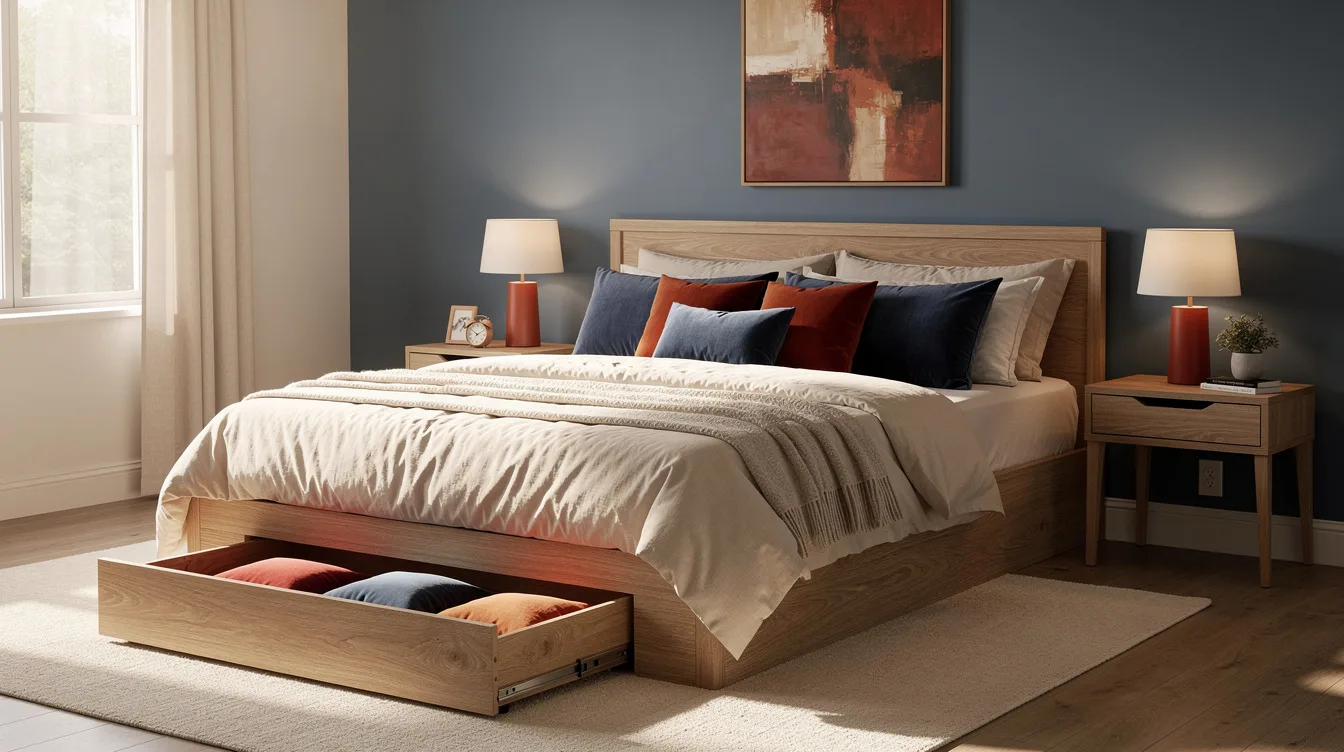
The drawer at the foot of a bed can solve a small-bedroom problem or create a new one. With a listed bed length of 82.5 inches, the furniture may fit on paper while the storage remains blocked by a dresser, door, or rug.
The smarter approach treats the footboard as part of the circulation plan. Measure the open floor at the bed’s end first, then choose the bed and nearby furniture around that clearance.
Measure the End Aisle Before You Buy
Start with painter’s tape for the bed and the drawer’s full travel. The listed 82.5-inch length matters because a bed can fit between two walls while leaving too little usable floor at the foot for the storage to open comfortably.
On the Twin version, the footboard is listed at about 20 inches high and the drawer is about 17 inches deep, so measure from the furniture edge rather than the mattress. A solid rubberwood frame may feel compact, but its drawer still needs a clear path across the floor.
Place the Bed Along the Longest Clear Wall
For a narrow bedroom, put the headboard on the short wall and run the bed along the longest uninterrupted wall, with the drawer opening into the end aisle. This lets one side sit near the wall while the storage uses the room’s most valuable open strip.
A white Twin platform bed listed at about 44.75 inches wide can suit a single sleeper when the room cannot spare a broad center path. Real 2026 examples begin around $695 for a Twin and $750 for a Full, before tax, delivery, or mattress costs.
Make the Footboard the Storage Zone
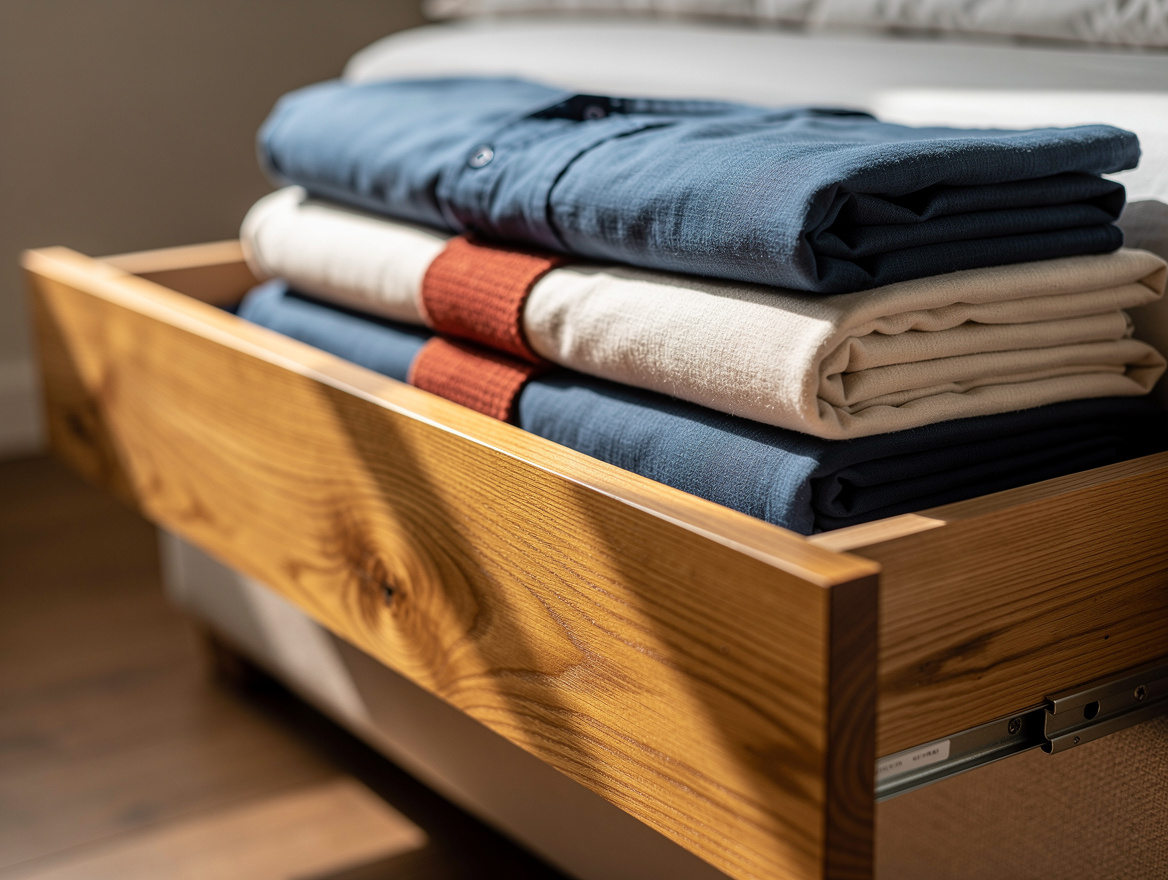
Treat the footboard as the boundary between sleep and circulation: the bed stays on one side, a narrow passage stays beyond it, and no permanent furniture blocks the drawer. A footboard-storage bed is most space-efficient when it replaces the separate bench you might otherwise add.
Reserve the drawer for folded sheets, spare blankets, or off-season clothing instead of daily shoes. A white oak dresser can sit on a side wall only when its drawers open without competing with the bed, closet, or entry door.
Keep the Drawer Path Free of Furniture
If the room has an inward-swinging door, plan the bed from the door’s closed position and keep the drawer’s opening zone outside that arc. Check the same path against a closet door, radiator cover, or window that must remain reachable.
A flat-weave rug should stop short of the drawer travel, because even a thin edge can catch wheels or make the front of the room feel crowded. Put the hamper beside the closet instead of at the foot, where it turns storage access into a daily obstacle.
Use Full Storage Only With Clear Access
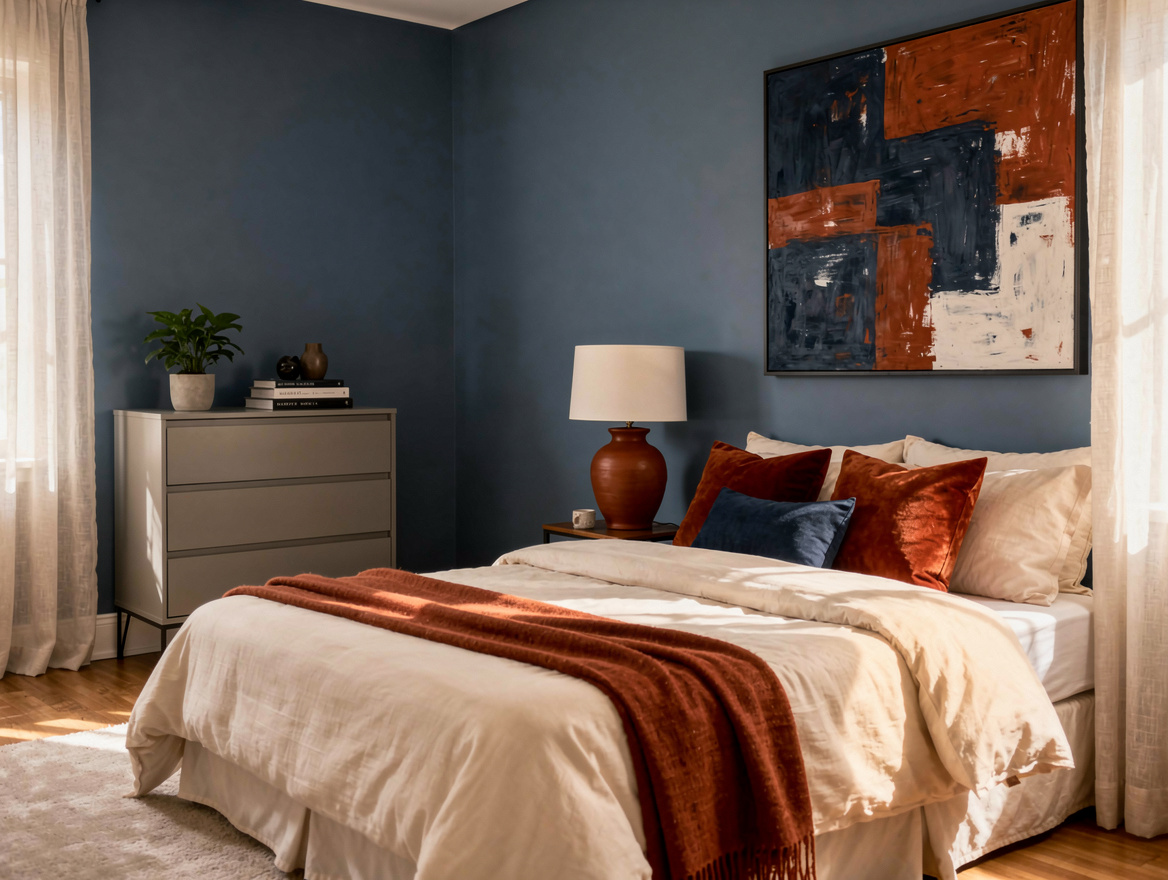
Choose a Full only when the room can support both the mattress width and the end clearance, not because a larger mattress sounds more practical. The listed Full mattress footprint is about 59.75 inches wide by 82.5 inches long, so it claims a noticeable share of a small room before a dresser enters.
A version with side-and-footboard storage is listed around $1,050, but those extra compartments help only when both access directions remain clear. In many tight layouts, the simpler one-drawer design is the sharper choice because it gives you one dependable opening zone.
Check the Load Rating Before Styling
Confirm the bed’s recommended load capacity in writing, including whether the figure covers the mattress. Both listed Twin and Full examples carry a 200-pound load rating, and their kids-and-teens positioning makes that detail impossible to overlook.
A Full mattress footprint does not automatically make a frame suitable for two adults, so ask about slats, center support, and warranty before paying. Higher-end options with an upholstered footboard can cost around $1,800 or more, and the exact storage configuration may change the usable layout.
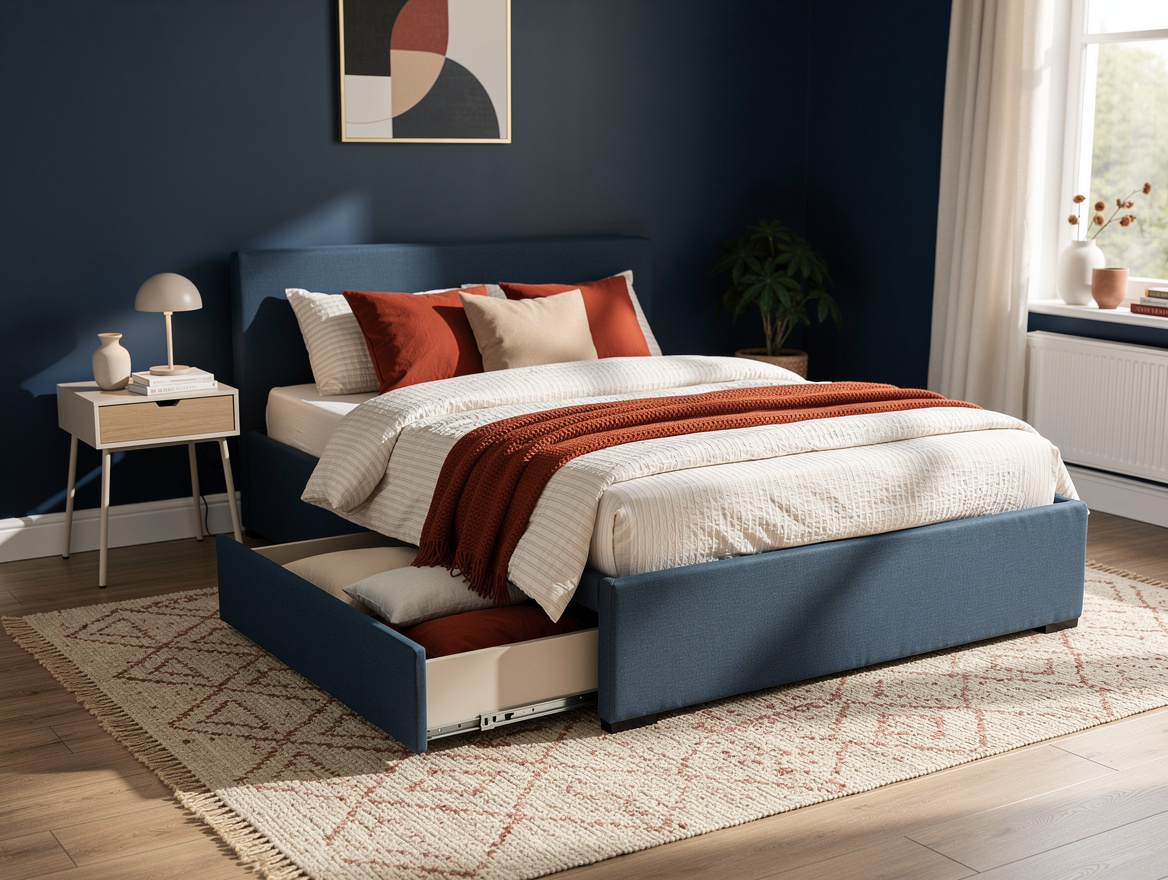
Before shopping, tape the bed footprint and drawer depth onto the floor for one full day. If the path stays clear during normal movement, the layout is ready for a storage bed.
Mia Carter writes about small-space living and budget home makeovers. She has restyled three rentals and tests most ideas in her own 45 sqm flat.