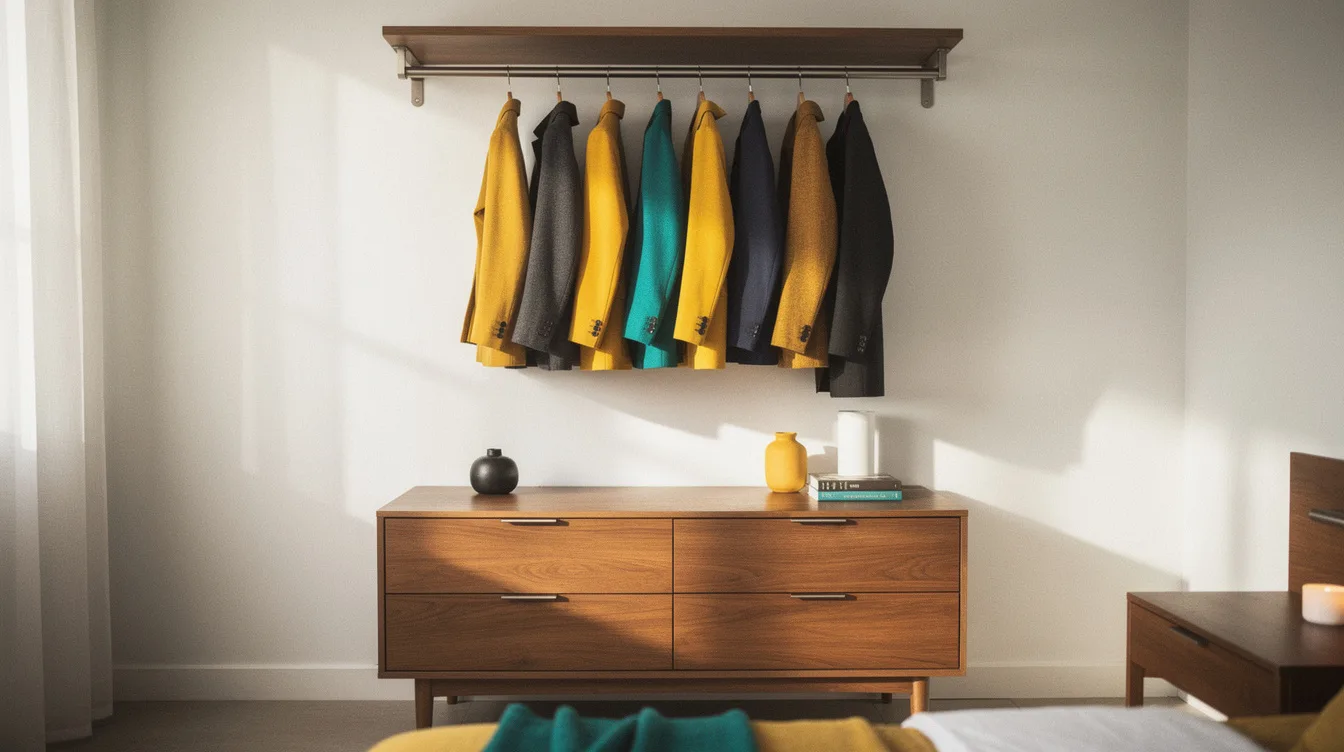
In a small bedroom, the rack itself is rarely the problem. The trouble begins when a ceiling rail takes the place of a closet without accounting for the clothes hanging from it.
A rail about 90 to 120 cm wide can replace a surprising amount of wardrobe space, especially when low storage sits underneath. The most workable layouts run along one wall, leaving the bed and walking path clear.
Designers favor this arrangement over a rack suspended above the bed because it keeps the visual weight to one side of the room. The ceiling should free the floor, not make the sleeping area feel boxed in.
Run the Rail Along One Wall
The strongest layout places a ceiling-mounted clothes rack along one wall, with folded-clothes storage below. Basic ceiling rails start around €55, while heavier suspended systems can cost about CAD 230 to CAD 270.
Plan around the garments first. A slim bar removes legs and uprights, yet hanging shirts and jackets still need roughly 55 to 60 cm of depth.
An oiled Canadian ash rail gives the arrangement a warmer bedroom feel than shiny metal. Keep the wall beneath visually calm so the clothes read as an organized wardrobe rather than a display pile.
Mount the rack beside the bed or on the wall opposite it. Hanging clothes directly over the bed creates visual weight and makes every bedtime movement feel crowded.
Fit the Rail Over Low Storage
A rail above a low dresser creates the most complete wardrobe replacement for a small room. Choose a low dresser about 80 to 120 cm wide, 40 to 45 cm deep, and 70 to 80 cm high.
Place the bar around 175 to 185 cm above the floor, then test the longest shirt you own. A bar near 180 cm above an 80 cm dresser leaves about 100 cm between the two, which may be tight for long tops.
An IKEA pine dresser keeps the lower zone light and affordable, while closed drawers hide folded clothes, socks, and sleepwear. Leave the top nearly empty so the hanging section remains easy to use.
Set the rail centerline roughly 30 cm from the wall, then adjust it for your widest hanger and bulkiest jacket. The useful measurement is the outer edge of the clothing, not the edge of the metal bar.
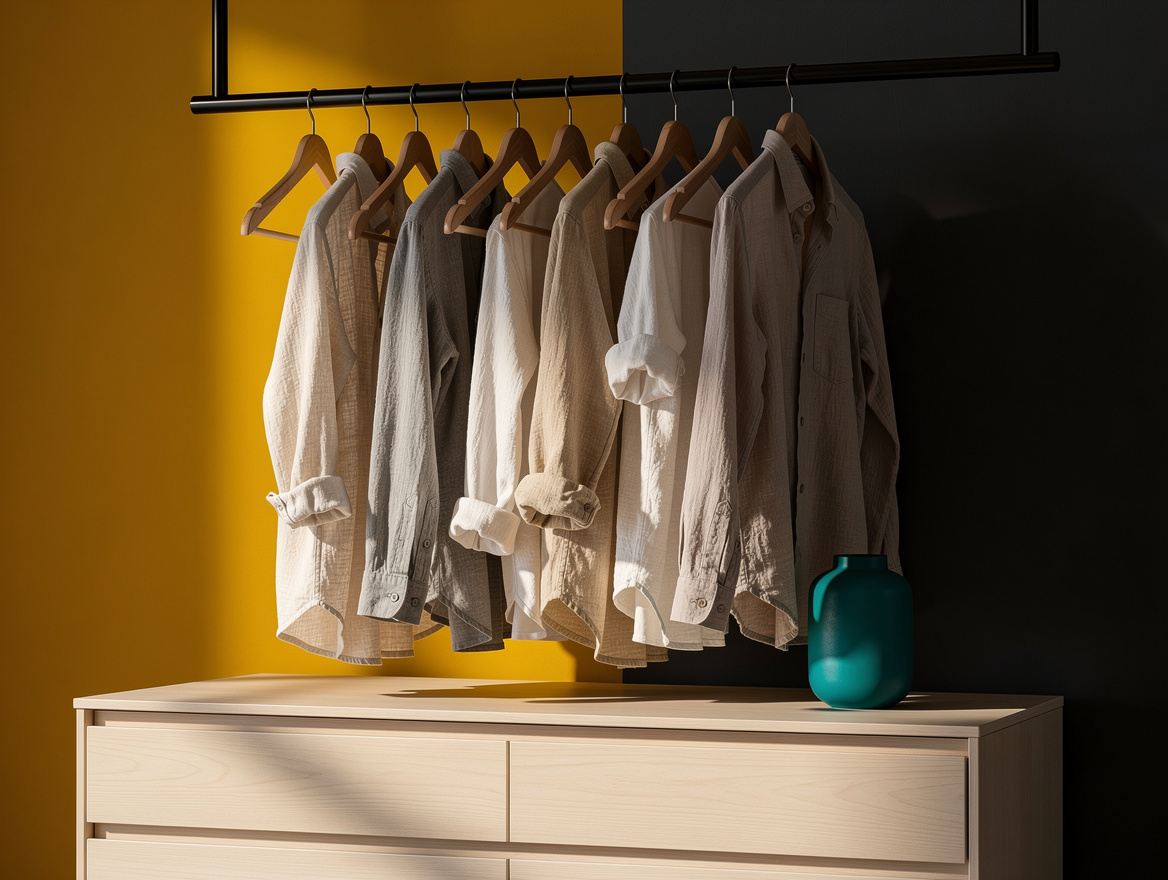
Protect the Foot Passage
For a longer bedroom, put the hanging zone on the wall facing the foot of the bed. A proposed room around 300 by 340 cm can hold a bed footprint near 150 by 210 cm, a clothing zone about 60 cm deep, and a remaining passage near 70 cm.
Measure the actual bed frame, not only the mattress. A projecting footboard or thick frame can remove several valuable inches from the walking route.
Keep the lower area open when dresses or coats hang above it. A narrow shoe tray or two soft baskets work better here than another chest of drawers.
For ceiling heights near 260 cm, a rail with an approximate 95 cm drop may place the bar around 165 cm above the floor. Check the supplied suspension length before drilling, because the ceiling height changes the whole composition.
Build a Compact Dressing Bay
A short rail beside the bed or near the door works well for a capsule wardrobe. Reserve about 75 to 100 cm of rail length and roughly 60 cm of depth for the hanging garments.
Below it, use a Walmart woven basket or a low shoe tray instead of a full-height cabinet. The open floor keeps the entry side of the room easier to navigate.
Place a full-length mirror on the opposite wall so the storage bay also becomes a dressing area. A mirror facing the clothes makes the setup feel intentional and helps you edit what remains on the rail.
Keep everyday pieces closest to the door and occasional items toward the bed. That small shift reduces reaching, dragging, and the habit of dropping clothes on a chair.
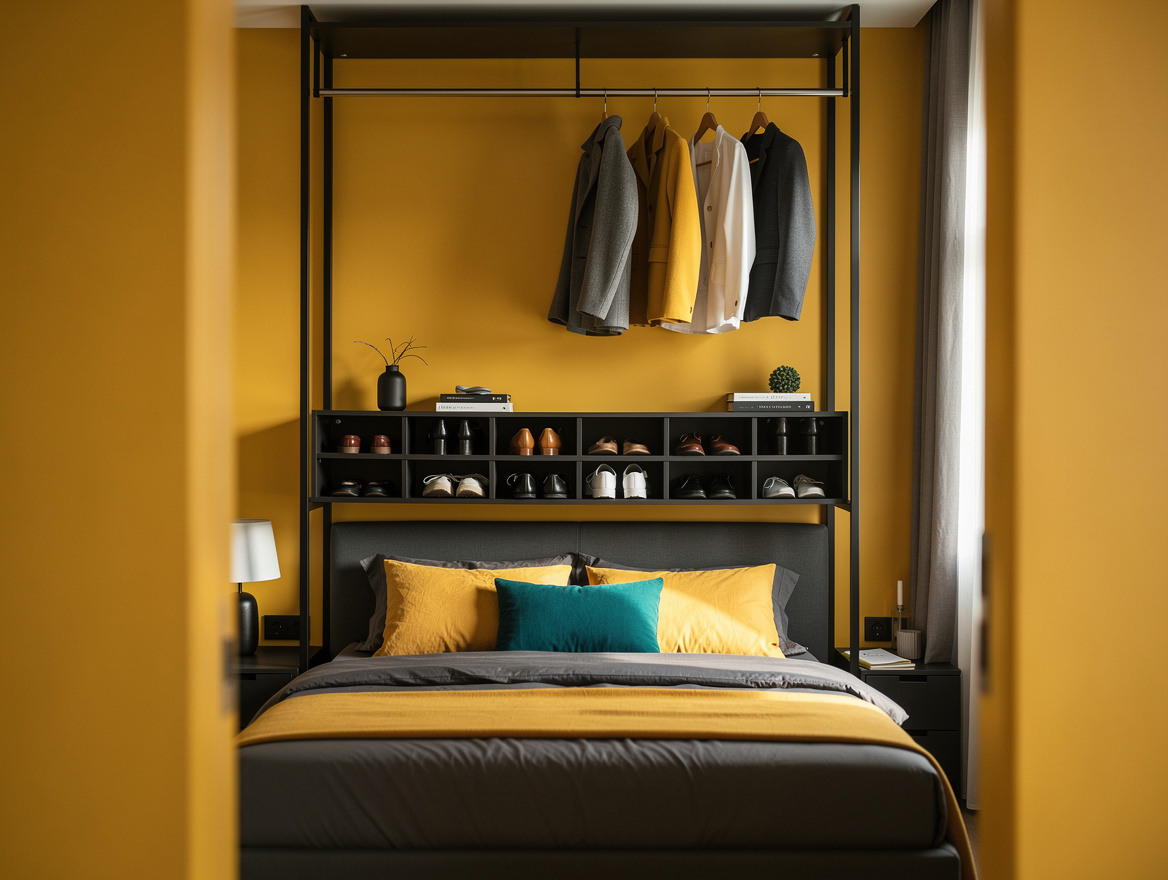
Choose Hardware for the Ceiling
Use a ceiling support system rated for the combined weight of garments, hangers, and seasonal outerwear. A powder-coated steel rail suits heavier coats, while a wood rail gives lighter clothing a softer bedroom presence.
Install into a joist whenever the layout allows it, then use the correct anchors for the ceiling material. Home Depot and Lowe’s carry several hardware types, but the fastener must match the structure above the finish surface.
Keep the suspension cords or brackets visually simple. A black metal hanger can make an industrial rail look deliberate, while mismatched plastic hangers add clutter even when the clothes are arranged well.
Leave enough clearance above the rail for hands to lift garments on and off. A rack that technically fits but forces you to work at shoulder height will become storage you avoid.
Edit the Storage Underneath
The lower zone should support the hanging clothes instead of competing with them. Choose a Wayfair drawer unit, slim baskets, or a narrow shelf according to whether you fold, stack, or store accessories.
Keep folded clothing below the categories that hang above it. Shirts can sit under shirts, trousers under trousers, and shoes at the lowest point, creating a simple vertical routine.
Amazon listings for basic ceiling rails often show the bar alone, so check whether brackets, cords, anchors, and end caps are included. Around €90 is a useful reference for an industrial-style system, while adjustable suspended rails may reach CAD 230 to CAD 270.
Finish with one material repeated elsewhere in the room, such as a light oak shelf beside a wood rail or a black shelf beneath steel. That connection makes the storage feel designed from the start.
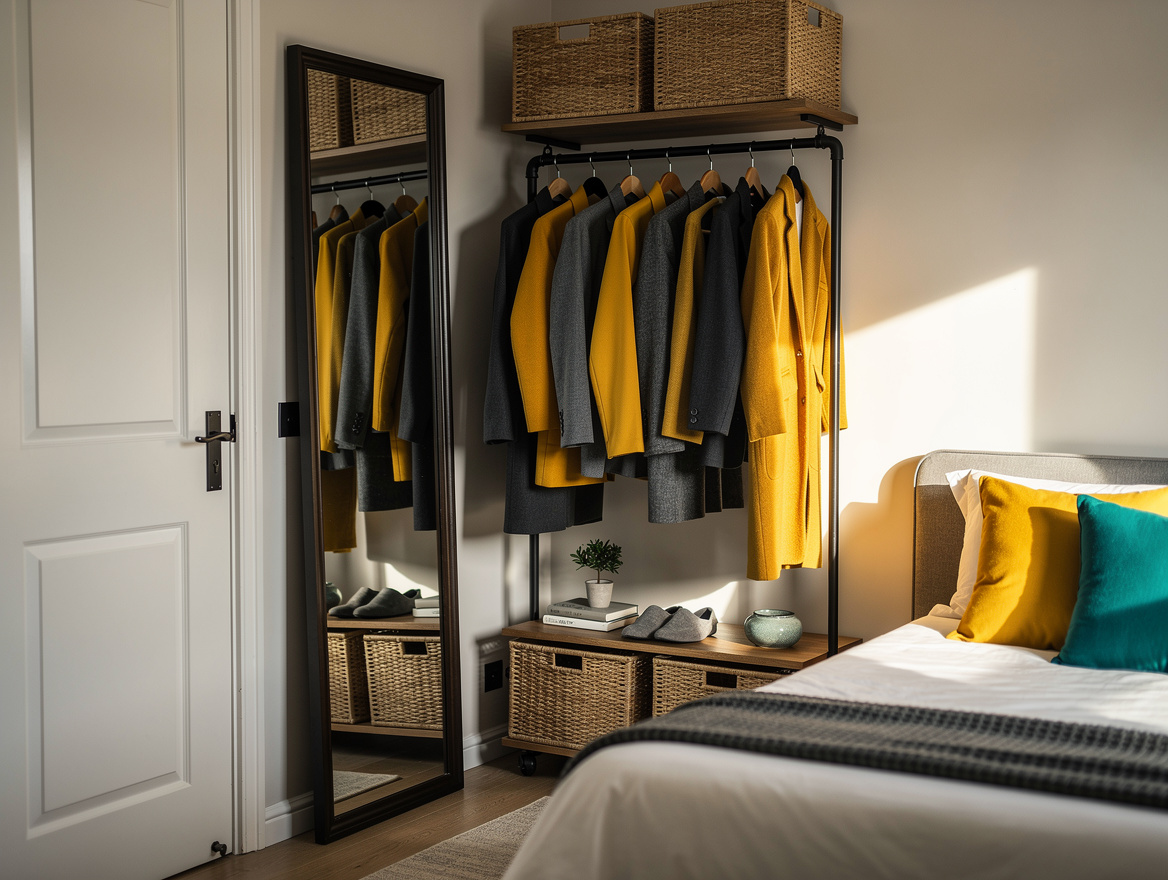
Start with painter’s tape on the floor to mark the full hanging depth, then walk around the bed with a jacket on a hanger. If the passage still feels easy, mount the rail and size the storage below it to the clothes you actually wear.
Mia Carter writes about small-space living and budget home makeovers. She has restyled three rentals and tests most ideas in her own 45 sqm flat.