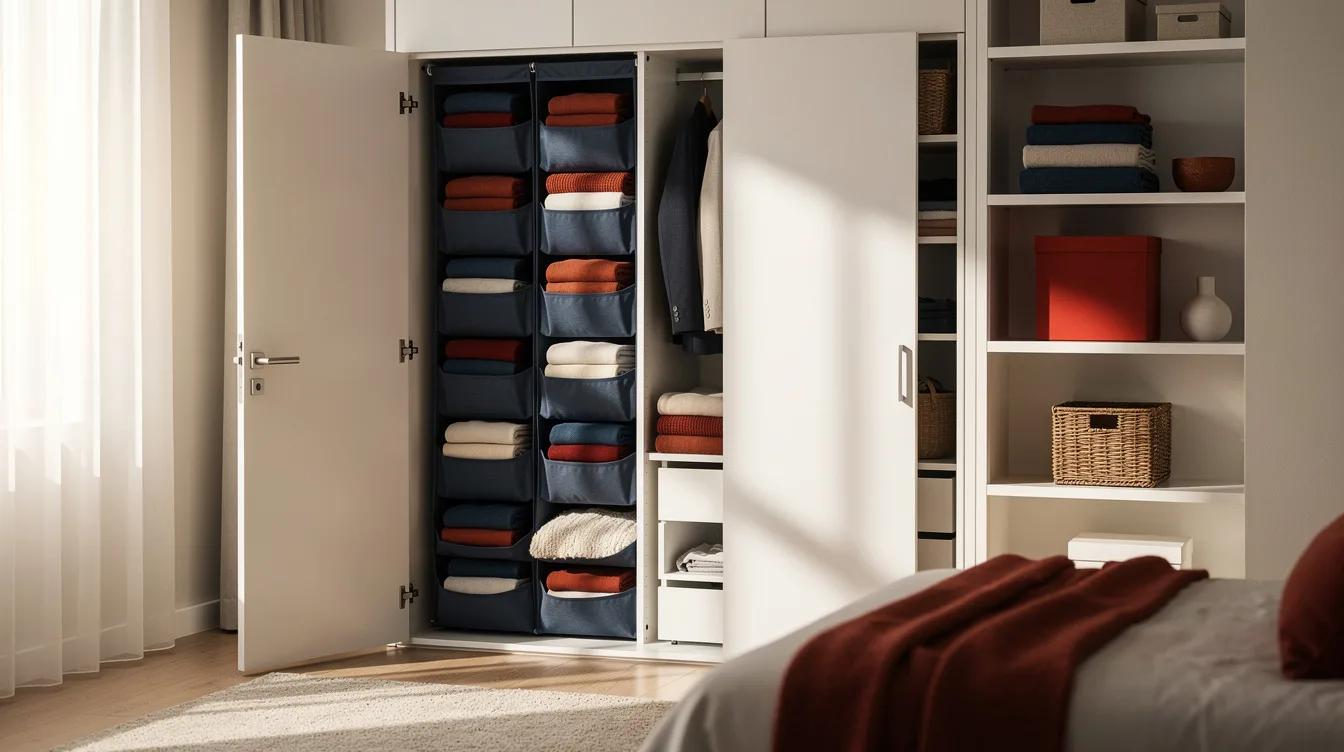
The space behind a bedroom door looked too narrow for a dresser, but it still had room for useful storage. I found that a roughly 22-inch-wide panel could handle folded underwear and thin clothing, while deeper shelves required a much closer look at the door swing.
The best setup depends on clearance, not the amount of empty wall you can see. Here is how I would match each option to the clothes it can realistically hold.
Measure the Door Swing Before Buying
I started with a tape measure, checking the open door from hinge to handle and then measuring the clear wall behind it. The deciding factor is the door’s full swing, because a panel that fits an empty wall can still block the handle, trim, or closing path.
Write down the usable width, depth, and height before shopping. A narrow door may accept a 22-inch-wide organizer, while a deeper cabinet or 11-inch shelf could stop the door from closing cleanly.
Start with a 2¼-Inch Pocket Panel
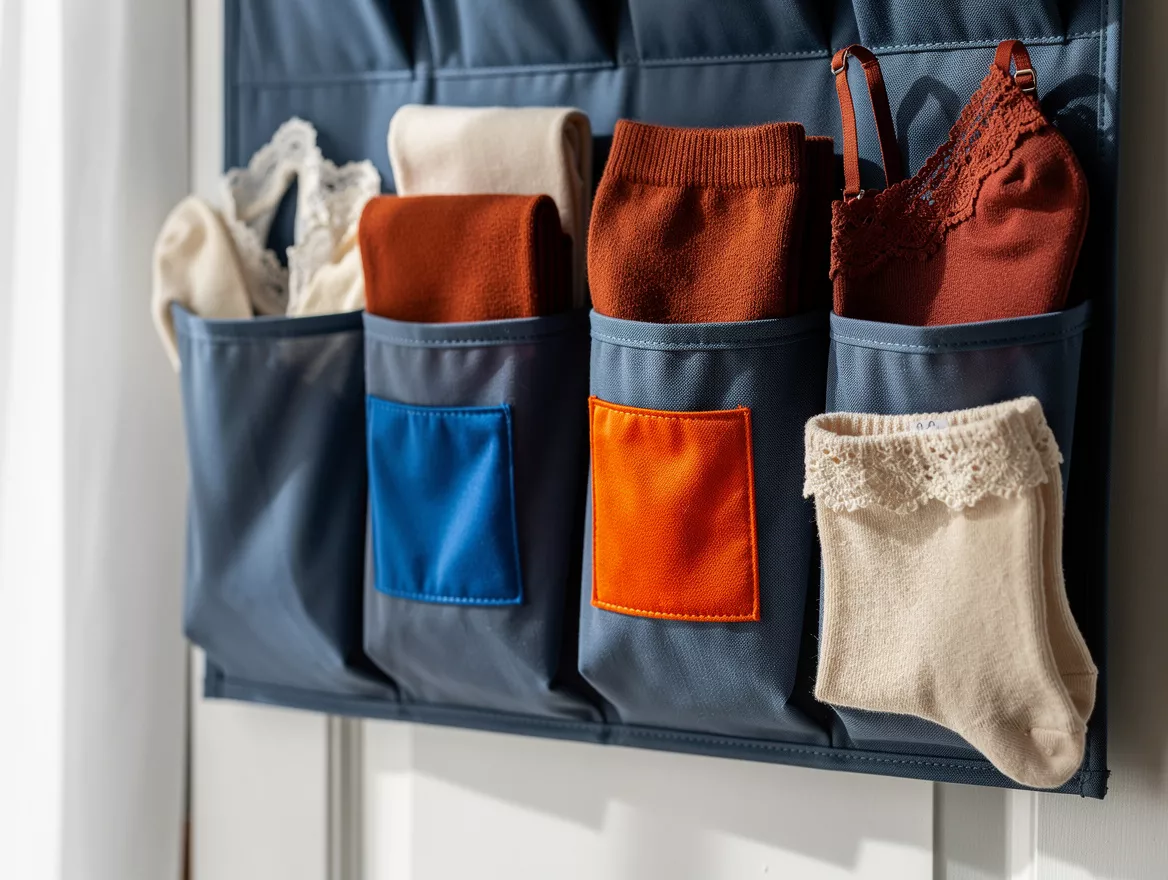
For underwear and other small pieces, I would begin with the Target Brightroom 24-Pocket Mesh Shoe Organizer. It costs about $19 and measures roughly 22 inches wide, 2¼ inches deep, and 64 inches tall.
The shallow profile makes it the safest choice for a tight gap, though a stuffed pocket can project farther than its listed depth. Use the upper pockets for swimwear, the middle row for underwear and socks, and the lower pockets for camisoles or thin leggings.
The canvas frame keeps the panel light enough for small garments, but I would not use it for adult sweaters or heavy denim. Target lists a 25-pound overall limit for this type of organizer, yet the door hardware and closing clearance still deserve their own check.
Give T-Shirts Structured Cubbies
When folded shirts need more shape, the Target Brightroom 26-Shelf Mesh Shoe Organizer is a stronger fit. Its reference price is about $26, and its roughly 22-by-6-by-67-inch profile creates compartments for rolled T-shirts, gym shorts, leggings, and compact sleepwear.
The extra depth gives clothing a more stable home than a flat pocket panel, but it also makes clearance more demanding. Check the handle position and the full door height before installing it, especially on a short closet door.
I like the mesh fronts because they keep each compartment visible, which makes outfit pieces easier to find. Keep each cubby lightly filled so the organizer stays orderly and the door does not develop a heavy, sagging feel.
Hide Small Clothes in Tilt-Out Cabinets
For a cleaner view, I would use IKEA TRONES cabinets as concealed storage for socks, underwear, swimwear, and compact pajamas. A two-pack costs about $40, and each cabinet measures roughly 20½ inches wide, 7⅛ inches deep, and 15⅜ inches high.
The deeper footprint makes this option more demanding than a pocket panel, so open the door fully before committing to the location. Stack soft items loosely inside rather than forcing bulky clothing into the tilt-out compartment.
Made from polypropylene, the cabinets have a practical, wipeable surface and a simple front. They must be secured to the wall, and I would treat that installation step as essential rather than optional when the units sit behind a moving door.
Build Proper Stacks with Narrow Shelves
For real folded piles, the IKEA BILLY bookcase is the most capable choice in this group. The white version costs about $59 and measures roughly 15¾ inches wide, 11 inches deep, and 79½ inches high, with one fixed shelf and four adjustable shelves.
That depth can hold T-shirts, jeans, lightweight sweaters, and pajamas in a way pocket organizers cannot. It also creates the greatest clearance risk, so the door should open across the full shelf depth without pressing into the bookcase.
The particleboard construction keeps the price accessible, while the adjustable shelves let you give taller stacks more room. Anchor the bookcase to the wall, then leave enough space around each pile to remove clothing without dragging neighboring stacks forward.
Keep the Handle and Hinges Fully Clear
After choosing the storage type, I would close the door slowly several times and watch every contact point. A door handle can collide with a cabinet front, while hinges and trim can reduce the usable width by more than the empty wall suggests.
Use the shallowest solution that handles your actual clothing category. Pocket panels suit small garments, cubbies suit rolled casual clothes, tilt-out cabinets hide compact pieces, and narrow shelving earns its space only when proper stacks are the priority.
For a final test, place a few representative items inside before filling the organizer. One pair of jeans, a folded sweater, and a bundle of socks will reveal more about the setup than an empty frame ever can.
Begin by measuring the open door, then test the shallowest organizer with a few everyday garments. That small trial will tell you whether the room needs a $19 pocket panel or the sturdier footprint of shelving.
Mia Carter writes about small-space living and budget home makeovers. She has restyled three rentals and tests most ideas in her own 45 sqm flat.