A small front porch column and post makeover with cedar wraps can stay inside the typical $200-$900 budget tier, and mine changed the whole entry without a full rebuild. I started with one narrow post, a rough sketch, and a porch that felt chilly even in daylight. The cedar made it warm, earthy, and welcoming.
Here’s what it looked like before:
The before photo says most of it. My porch had a plain square post, a thin concrete step, and a front door that looked disconnected from the rest of the house.
The column wasn’t damaged, but it had no weight or texture. You could walk past it without noticing anything.
I didn’t want a bulky boxed column or a glossy faux finish. I wanted something charming that would make your eye pause at the entry, then move naturally toward the door. The porch also had a narrow walkway, so I had to protect at least 36 in of clearance.
That measurement decided almost every later choice.
- Wrap the post with the Two-Wood Rule
- Paint the base before you add cedar
- How wide should a cedar wrap be?
- Swap bulk for a slim shadow line
- Anchor the door with the Threshold Frame
- Build the Three-Height Light Stack
- Layer a rug under the first step
- Choose cedar grain over glossy vinyl
- Frame the threshold with warm metal
- Use the Small Porch Pause
- Let the grain lead the color palette
- Mix one soft textile into the hard surfaces
- Hang planters where the post can carry them
- Add a weathered base cap
- Why does a small porch feel bigger with contrast?
- Build the wrap around the weather
- Paint the ceiling soft blue instead of white
- Style cedar over a busy seasonal display
- Finish with the Three-Second Welcome
1Wrap the post with the Two-Wood Rule
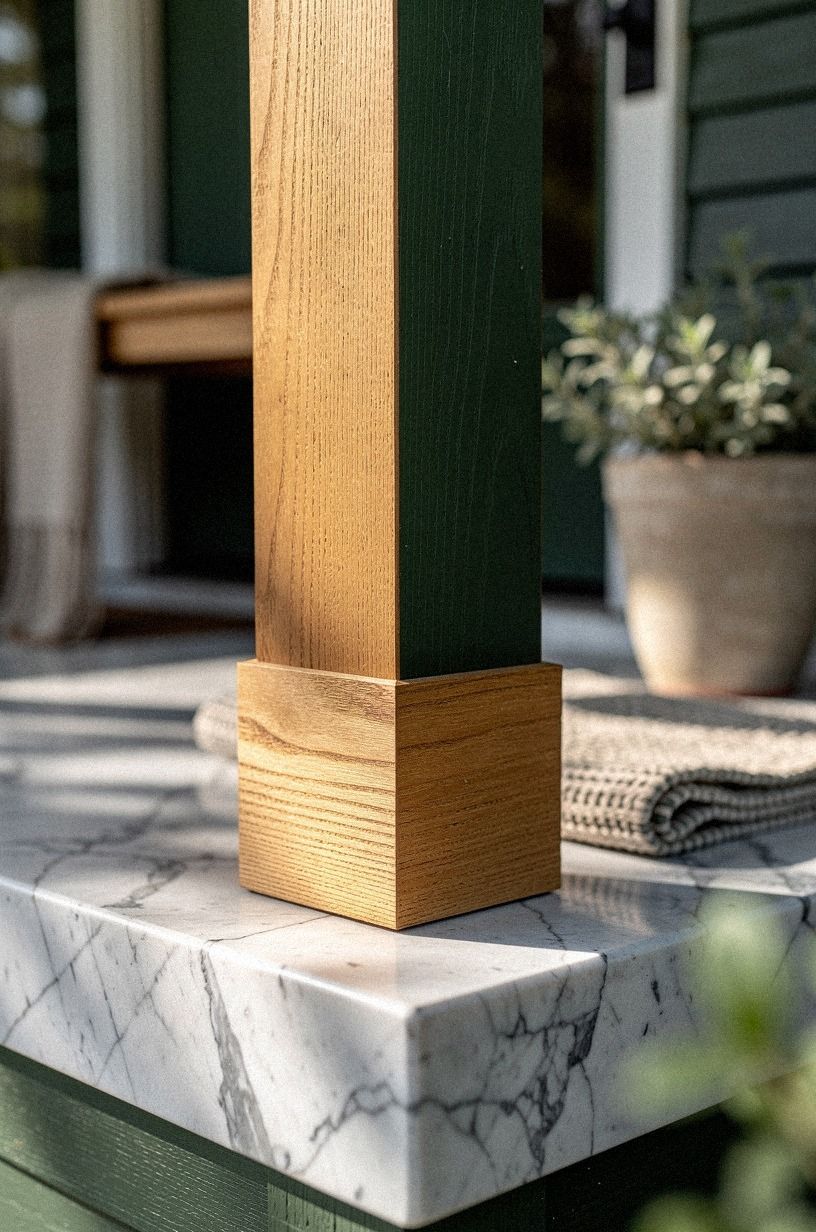
I began with the Two-Wood Rule: one main wood tone on the post, one quieter wood tone nearby. For my cedar wrap, I chose warm western red cedar and set it against a small Carrara marble threshold with subtle grey veining.
Your porch doesn’t need five competing grains. Two will make the space feel layered, while more than that can look busy.
The cedar boards brought an earthy, calming texture that the painted post never had. I kept the boards narrow enough to preserve the original footprint, then sealed the surface with an exterior finish.
You’ll want to sample the stain outdoors because cedar can turn orange in direct sun. I’d skip a red-toned stain here.
It fights the soft golden grain.
2Paint the base before you add cedar
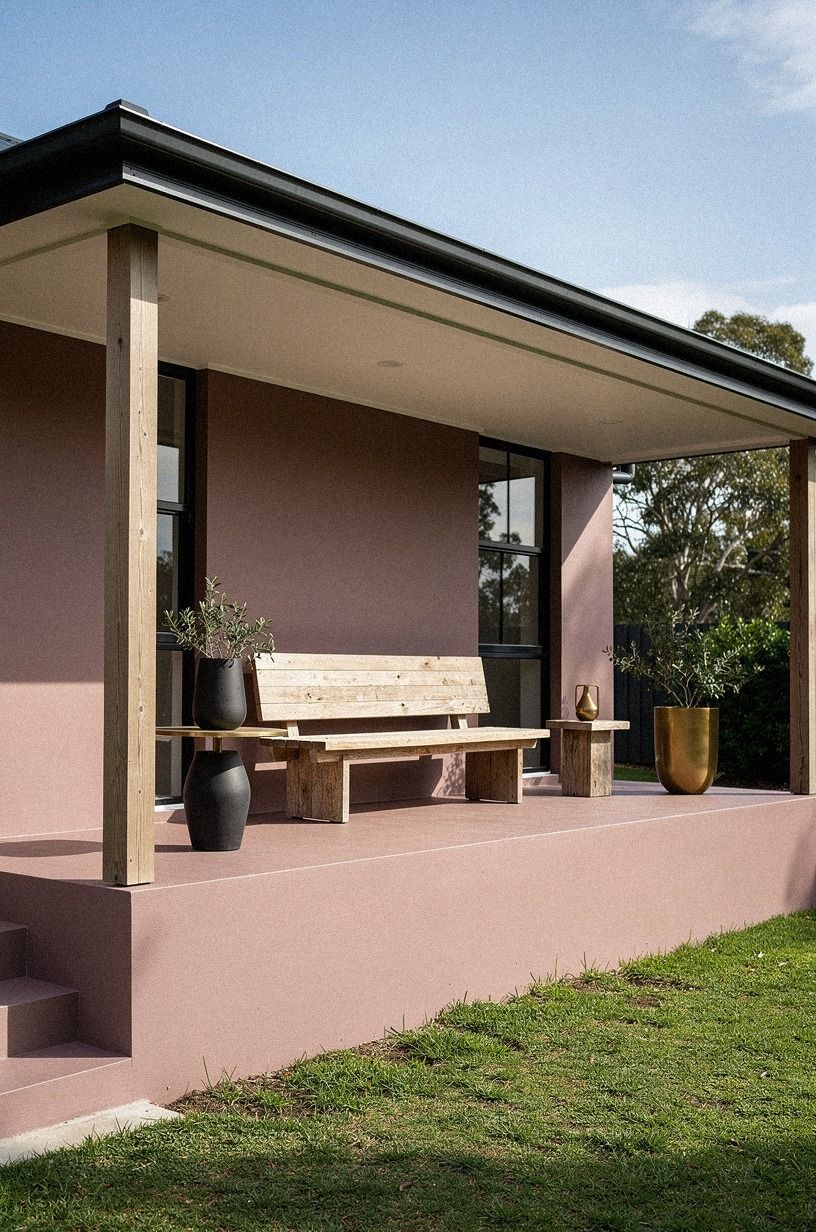
Before covering the post, I painted the visible base with Benjamin Moore Aura Exterior in charcoal. That small step mattered because tiny gaps between boards show the background color. You’ll want the base to disappear behind the cedar instead of flashing white every time the afternoon light shifts.
I chose a dark, sophisticated color because the porch needed contrast, not more brightness. Benjamin Moore Aura Exterior gave me a durable starting point, while reclaimed weathered teak nearby supplied another layer of warm texture.
If your porch is more exposed, Sherwin-Williams Emerald Exterior is another practical option. And if you’re keeping the original post visible, Farrow & Ball Exterior Eggshell gives a softer finish, though I’d reserve it for a protected entry.
3How wide should a cedar wrap be?
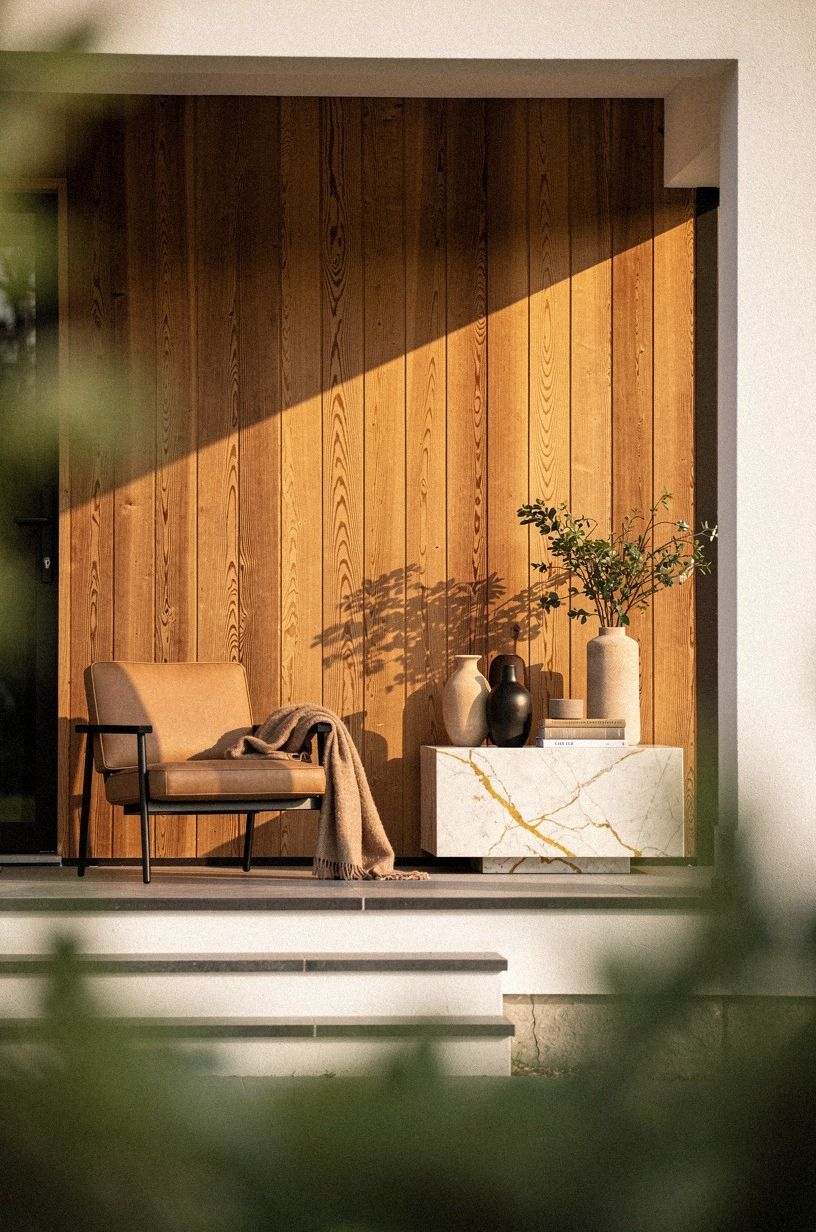
The right wrap width depends on your existing post and your walkway.
4Swap bulk for a slim shadow line
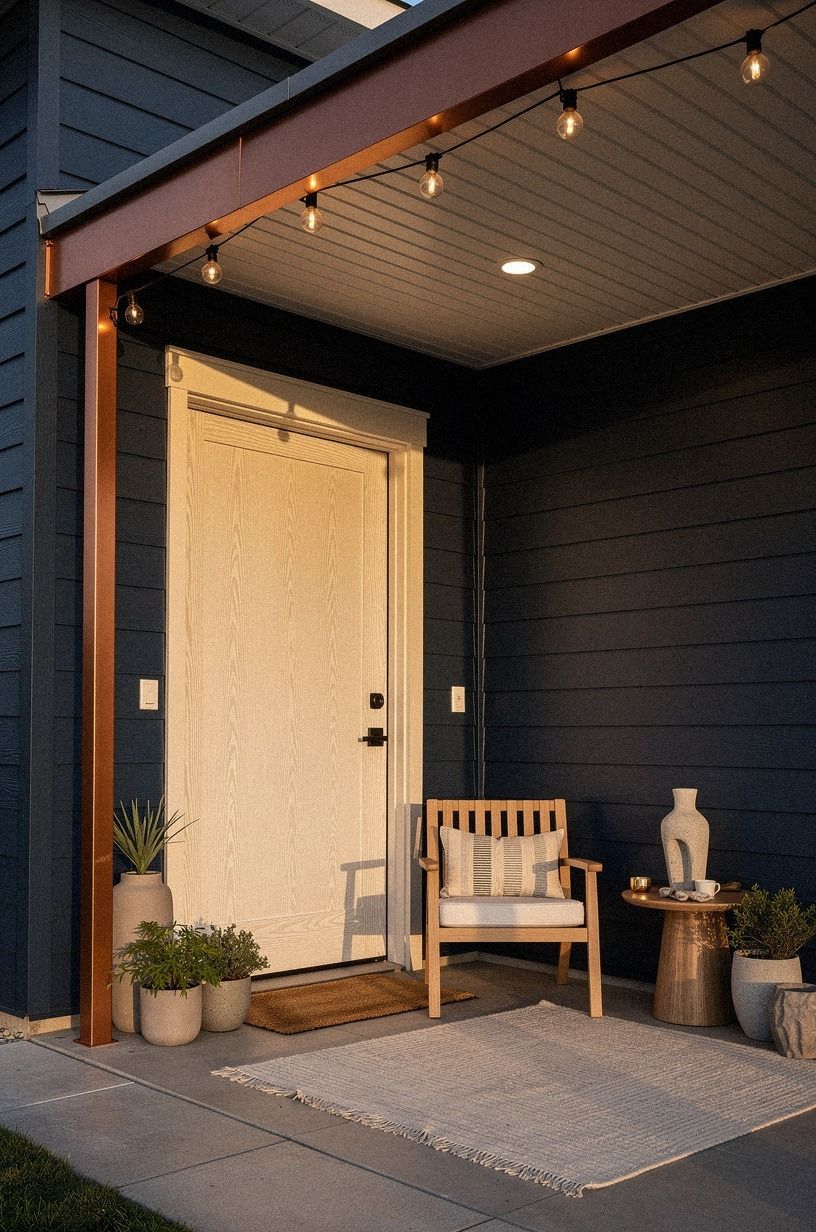
I tested a thick corner trim first, and it was the wrong choice. The porch immediately felt heavier, and your eye landed on the corners before the door.
I replaced it with 3/4-inch cerused white oak, leaving a slim recessed seam where the boards met. The change was gentle, but it made the whole post feel more modern.
That little recess also catches evening light in a peaceful way. You’ll see a thin line of darkness instead of a wide strip of ornament. For your own wrap, keep the corner detail consistent from bottom to top.
I’d skip decorative brackets on a narrow porch because they steal walkway space and make the column look shorter.
5Anchor the door with the Threshold Frame
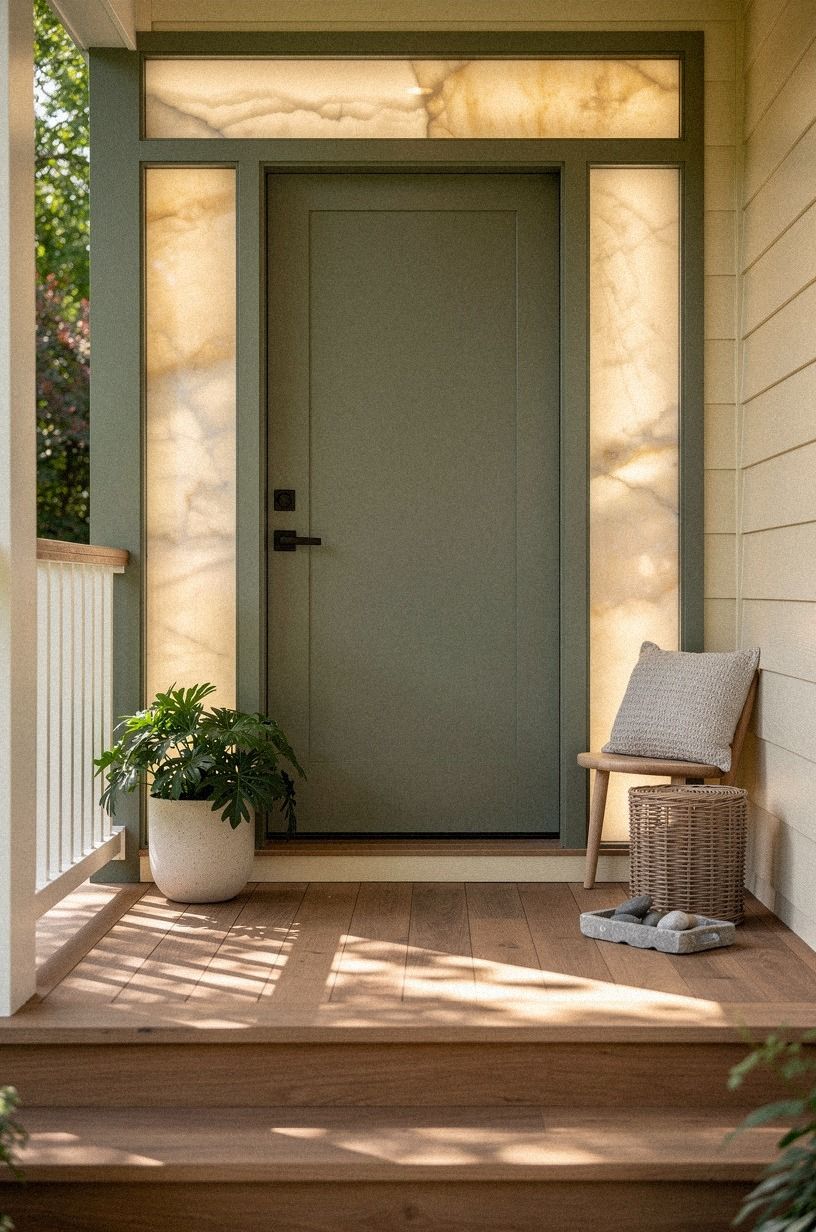
The cedar wrap looked unfinished until I repeated its shape around the entry. I built a simple Threshold Frame using matching cedar tones at the top and bottom of the door surround, with a slim backlit translucent onyx accent at the threshold.
You don’t need to cover every inch. A small echo is enough to make the post feel connected to the house.
I used cedar trim with a slightly smoother finish than the boards, so the grain would read as a border rather than a second focal point. Your door should still lead the composition.
If you’re styling a small entry, my guide to small front porch sign welcome decor ideas has useful proportion cues. I’d avoid a large sign here because the cedar already creates vertical drama.
6Build the Three-Height Light Stack
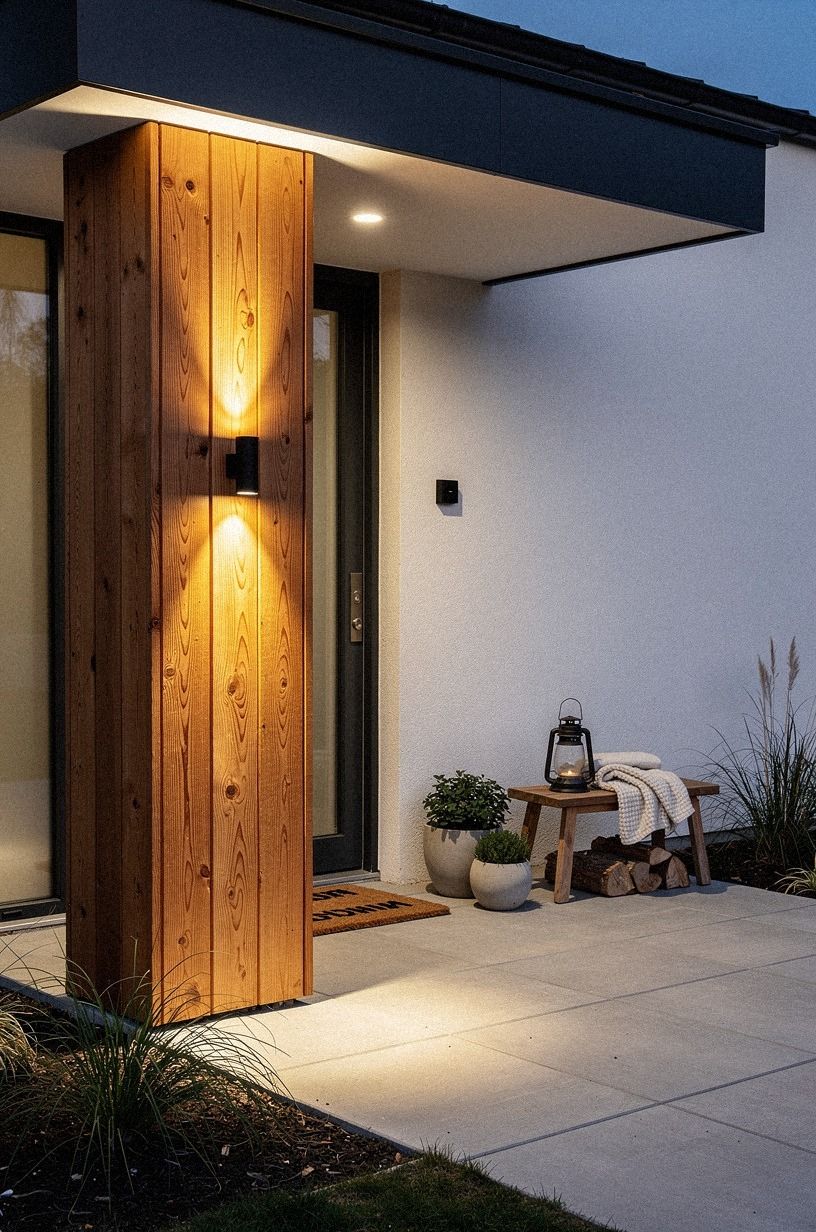
The porch became more welcoming after I added three light heights: the wall fixture, a low lantern, and a small glow near the floor.
7Layer a rug under the first step
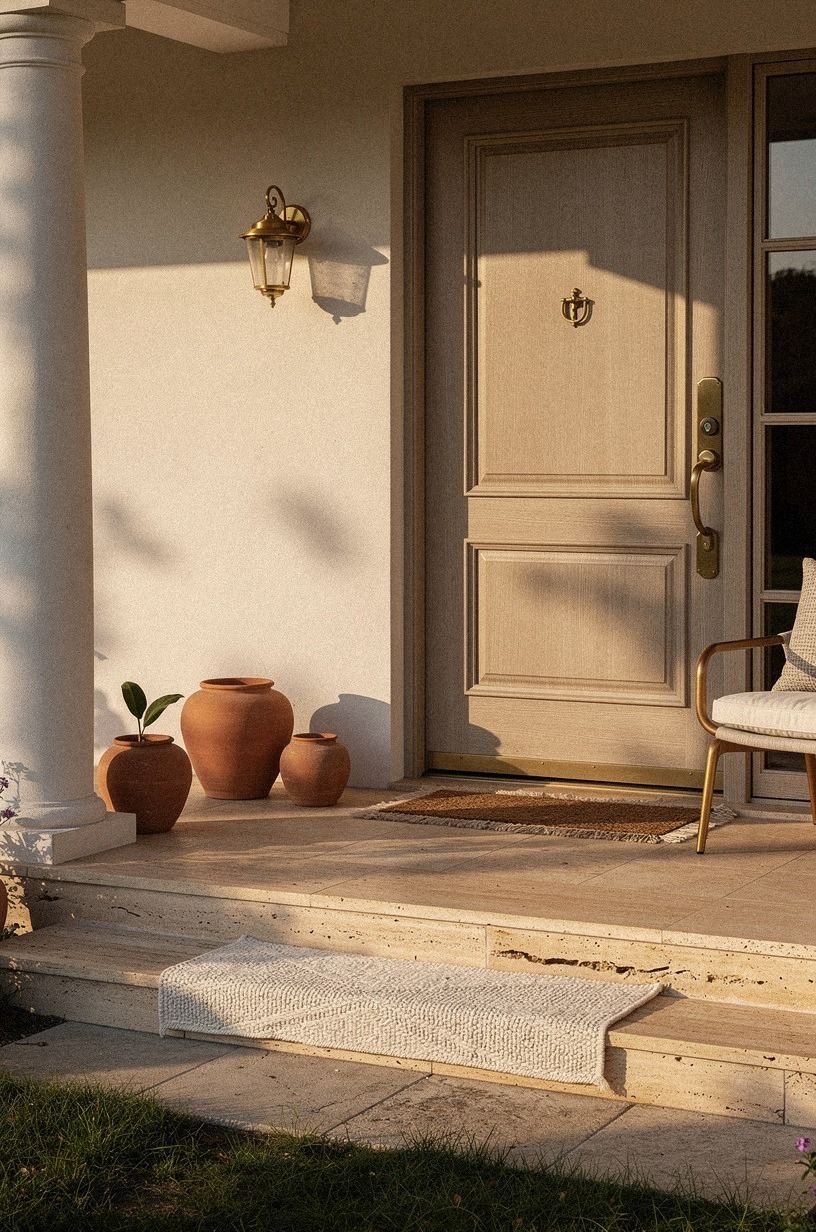
The cedar needed something horizontal to keep the porch from feeling tall and narrow. I added a low-profile outdoor rug in clay and linen tones over the warm travertine, stopping short of the walkway. That placement gave your eye a resting point without blocking movement.
Outdoor rugs typically run $80-$400, but you don’t need the largest size for a compact porch. I chose a muted pattern with aged brass and soft clay notes so the cedar could remain the star.
You’ll want a rug that dries quickly and doesn’t trap leaves against the threshold. For more layout ideas, see these small front porch seating ideas for cozy conversation.
A thick indoor rug would feel soft, but it won’t survive the weather.
8Choose cedar grain over glossy vinyl
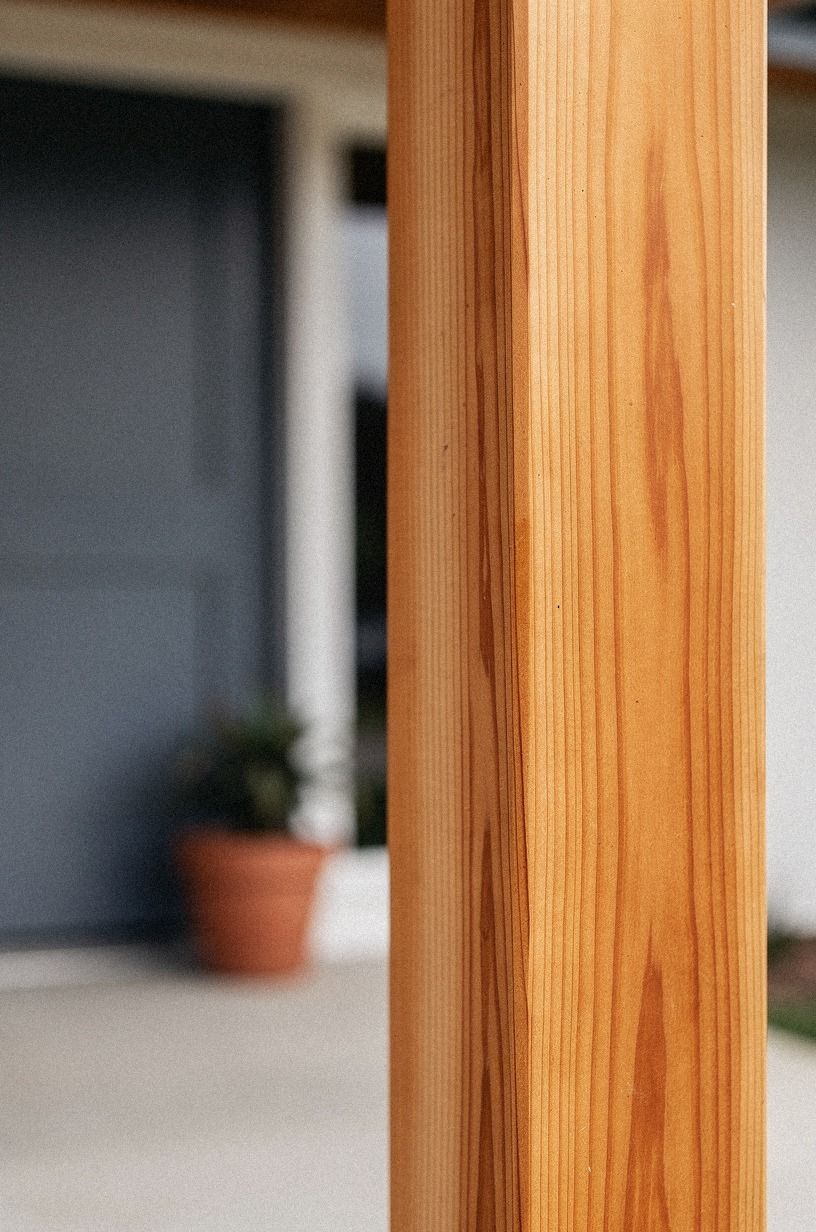
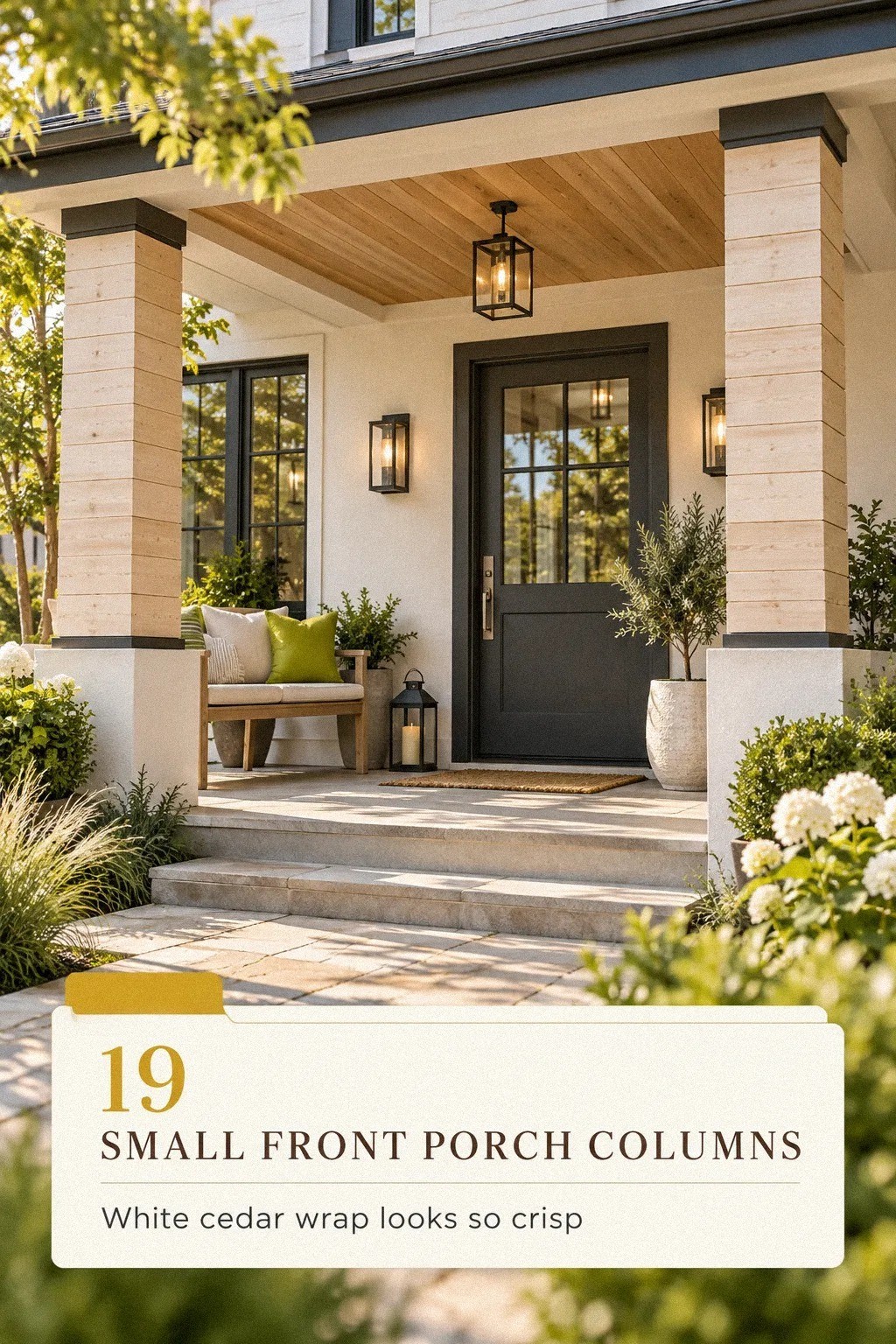
I considered faux wood porch column wraps because they’re quick and uniform. Then I held a glossy sample beside the real cedar, and the decision was easy.
The vinyl looked tidy, but it reflected the light in a flat strip. The cedar showed knots, shifting color, and a slightly rough edge that felt more organic.
If you’re covering porch columns in a rental or a short-term project, composite can still be sensible. Your choice depends on exposure, maintenance, and how close visitors will stand.
I’d choose cedar when the post is beside the front door because people will see it at arm’s length. The real grain makes the porch feel intimate instead of manufactured.
9Frame the threshold with warm metal
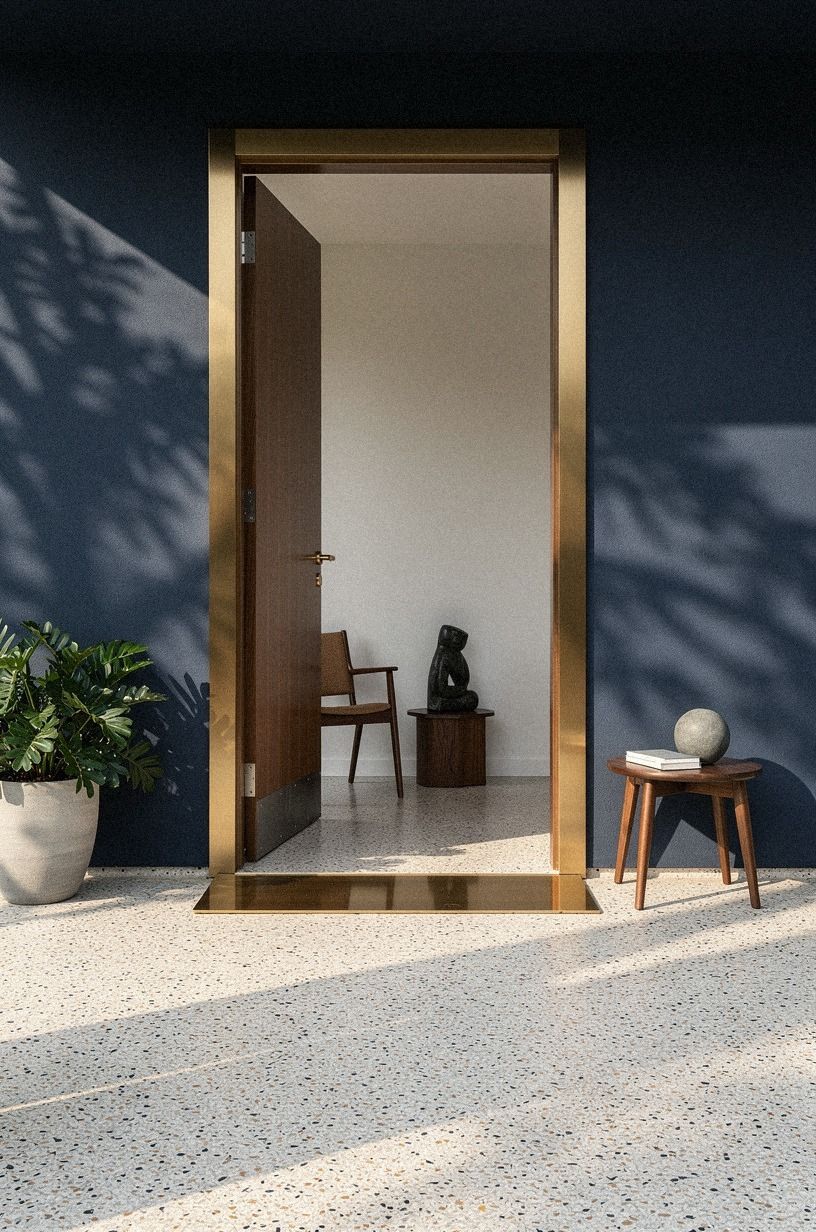
Once the wood was in place, the door hardware looked too cold against the oversized-chip terrazzo.
10Use the Small Porch Pause
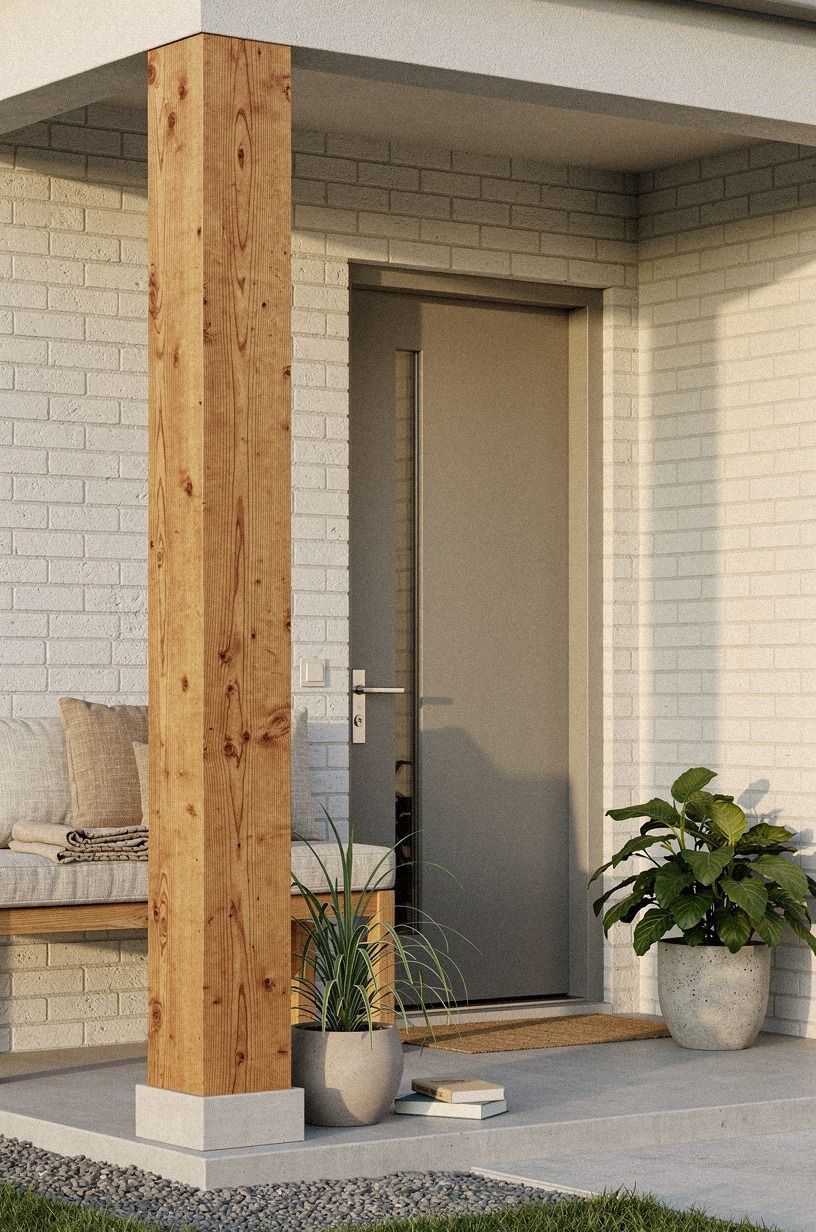
I wanted a place for one person to stop without filling the porch with furniture. The Small Porch Pause became a narrow bench beside the wrapped post, with just enough room for a parcel or a morning coffee. You’ll want to preserve the walkway, so keep at least 36 in of clear passage from the step to the door.
I chose an IKEA KALLAX birch-effect cube as a temporary test, then replaced it with a slimmer outdoor bench. The cube showed me the right height, but it looked too indoor beside the hand-applied Venetian plaster.
For more seating arrangements, I’d borrow proportions from these small front porch swing ideas for a charming perch. Your porch needs breathing room more than another chair.
11Let the grain lead the color palette
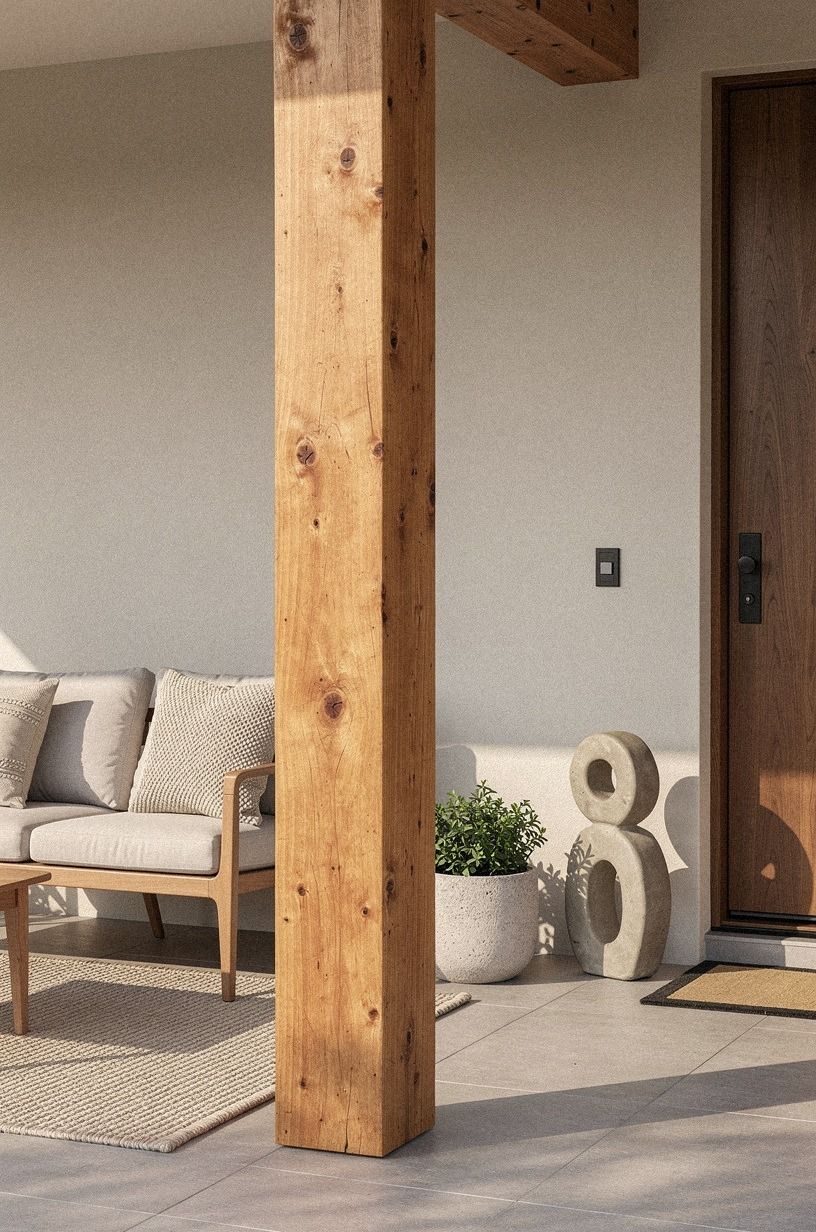
The forest green, rust, and natural oak palette had enough visual movement, so I kept the rest of the porch quiet and used only a small shagreen accent.
12Mix one soft textile into the hard surfaces
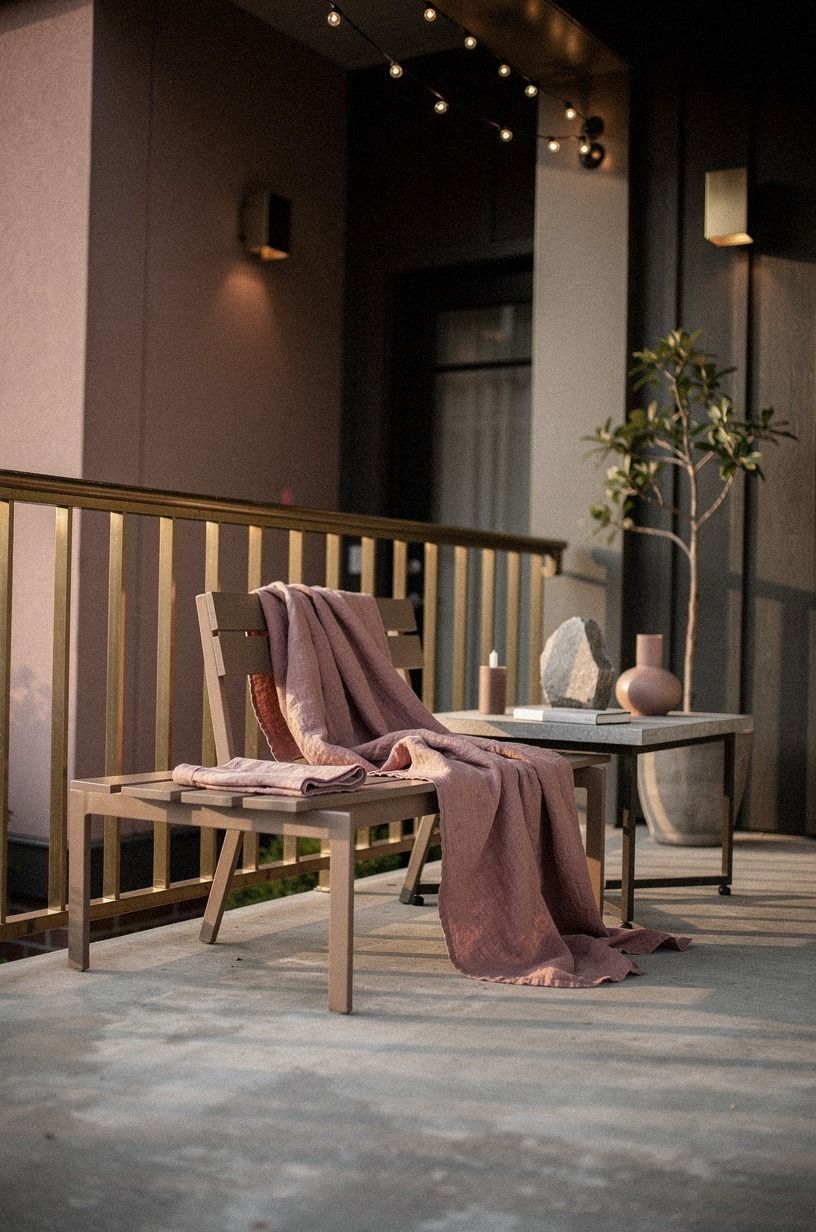
Cedar, concrete, glass, and metal can make a porch feel polished but chilly. I added one washed Belgian linen cushion in a muted dusty rose color to soften the bench. You’ll want the textile to repeat one shade from the wood or rug, rather than introduce a completely new color.
The cushion made the porch feel more comfortable without adding clutter. It also gave me a place to sit while unloading groceries, which is the kind of practical change that lasts. And if you’re working with a very small entry, one cushion is enough.
I’d skip a matching collection of pillows. Your porch should feel lived-in, not staged for a catalog.
13Hang planters where the post can carry them
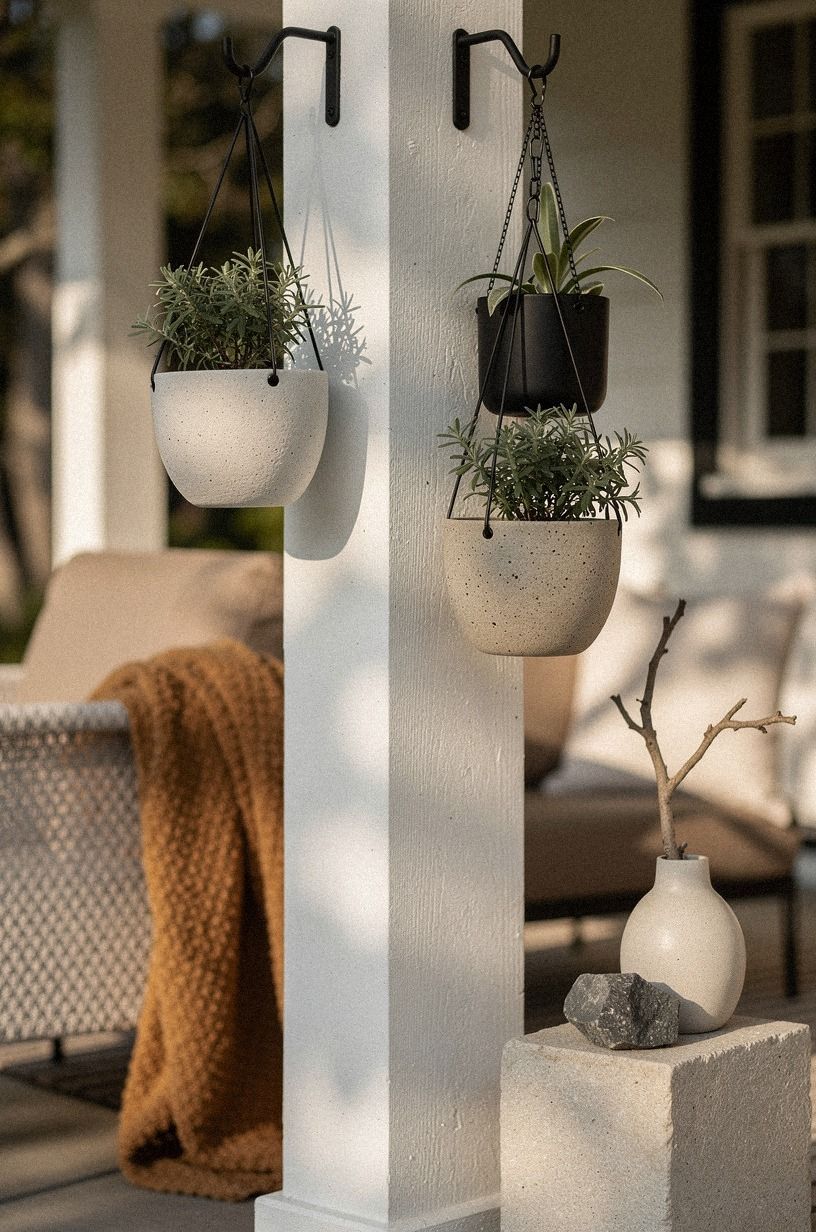
The wrapped post became a natural support for a narrow hanging planter. I used a simple planter beside an organic bouclé cushion, placing it high enough to avoid shoulder contact but low enough to see from the walk. You’ll want to check the planter after rain because wet soil adds weight quickly.
The plant softened the hard vertical edge and made the cedar feel more organic. A single planter looked better than three small pots scattered around the step.
For plant shapes and scale, these small front porch planter ideas for instant greenery are helpful. I’d avoid a heavy ceramic pot on a narrow bracket.
It’s a safety concern, and the visual weight will pull your eye down.
14Add a weathered base cap
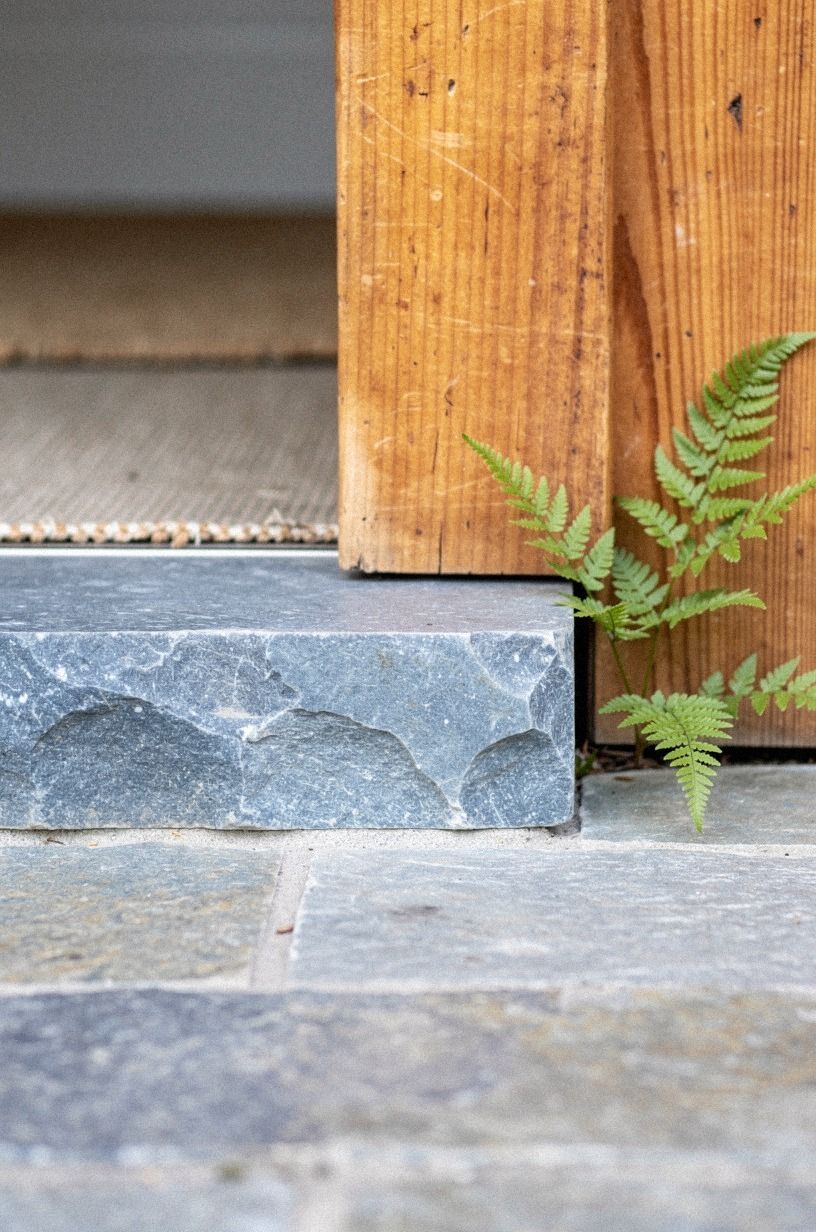
The bottom of the post needed protection from splashing rain and muddy shoes. I added a simple base cap in Nero Marquina black marble with white veins, which brought a dramatic note beneath the cedar. You’ll want the cap to project only slightly, so it protects the boards without becoming a ledge.
That stone looked subtle in daylight, then picked up the warm porch light at night. It was a small, refined finish that made the wrap feel built into the house. If your budget is tighter, a sealed concrete cap can do the same practical job.
I’d skip untreated stone in a wet climate. Your base needs a surface that won’t hold dark marks after every storm.
15Why does a small porch feel bigger with contrast?
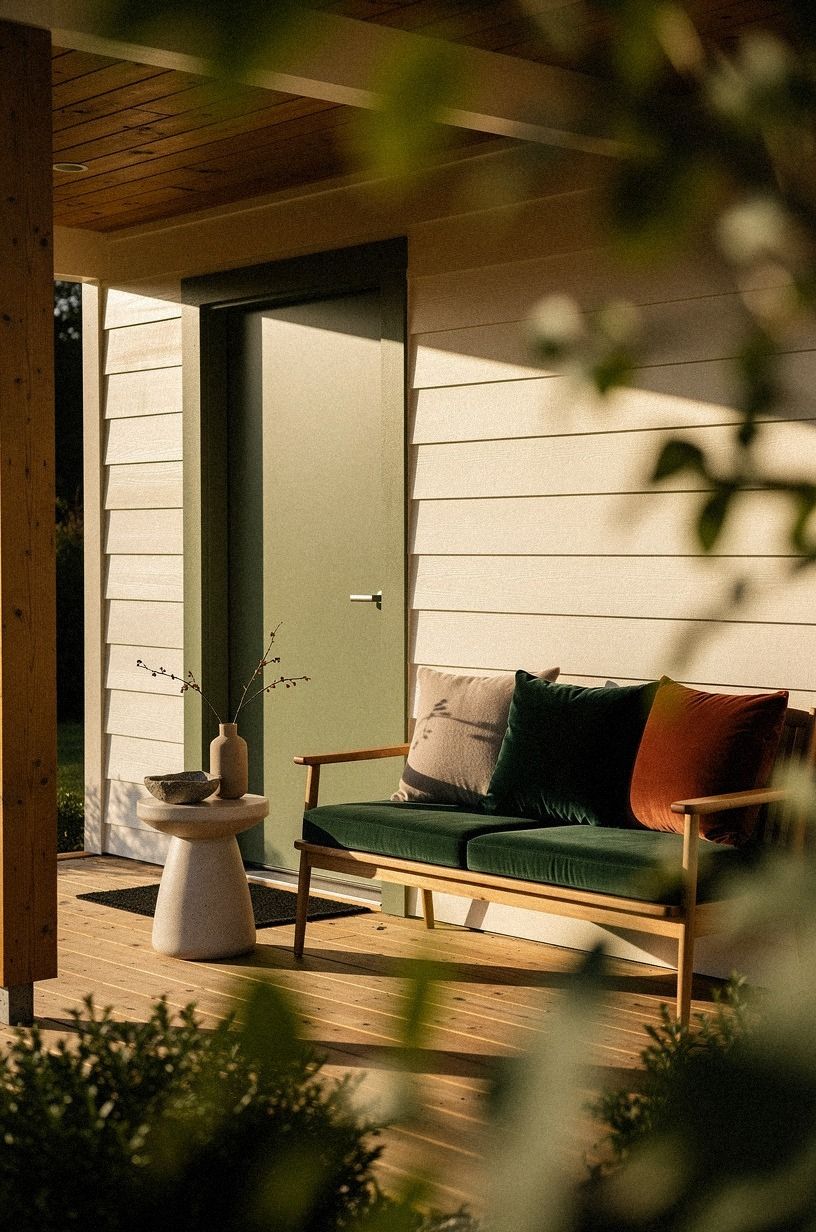
A small porch feels larger when the eye can read a clear foreground, middle ground, and background.
16Build the wrap around the weather
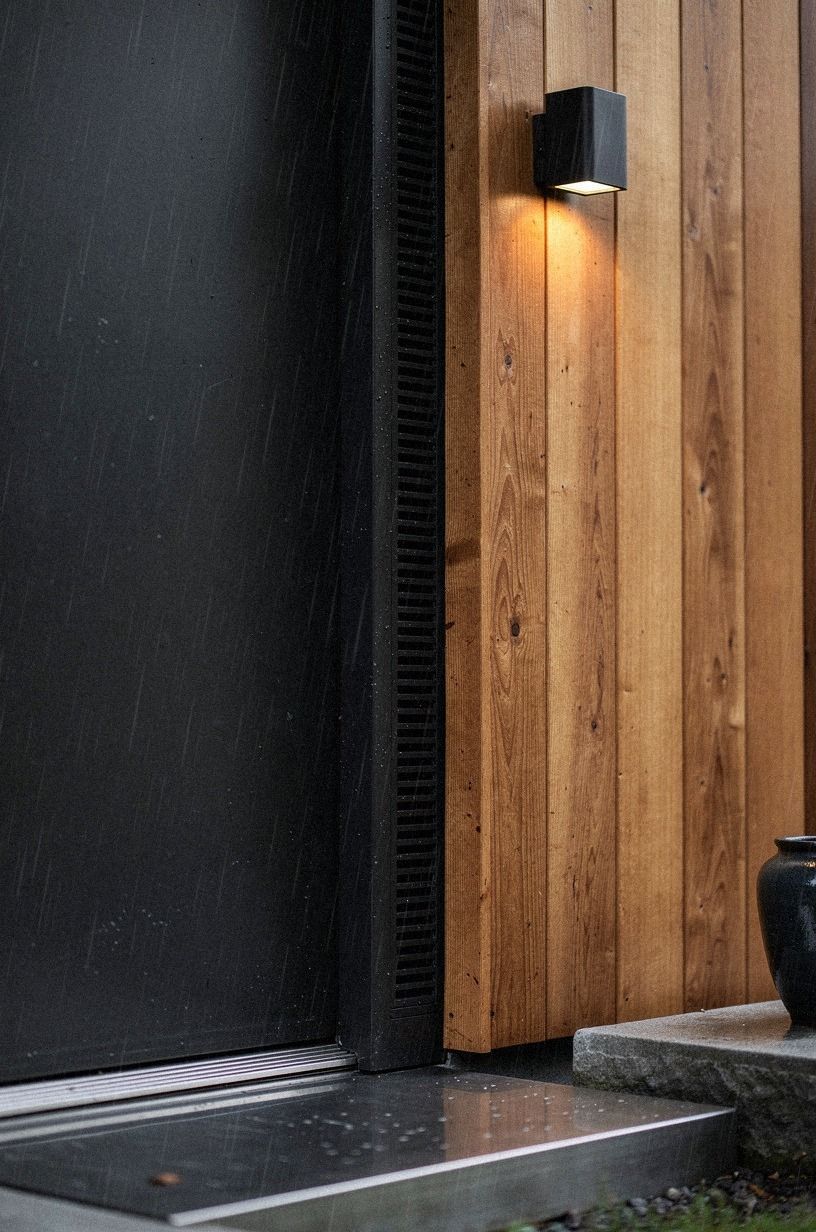
Cedar is attractive, but your porch has to handle water, heat, and dirt. I sealed every exposed edge, especially the lower cuts, before installation. You’ll want to give the finish time to cure according to the product instructions, then inspect the joints after the first wet week.
I also left a small gap above the base cap so water could escape instead of sitting behind the boards. That detail kept the project practical and gave the cedar a longer life. For your own material plan, these small front porch railing ideas for style and safety show how safety details can stay visually light.
I’d skip wrapping over a damp or damaged post. Covering a problem won’t solve it.
17Paint the ceiling soft blue instead of white
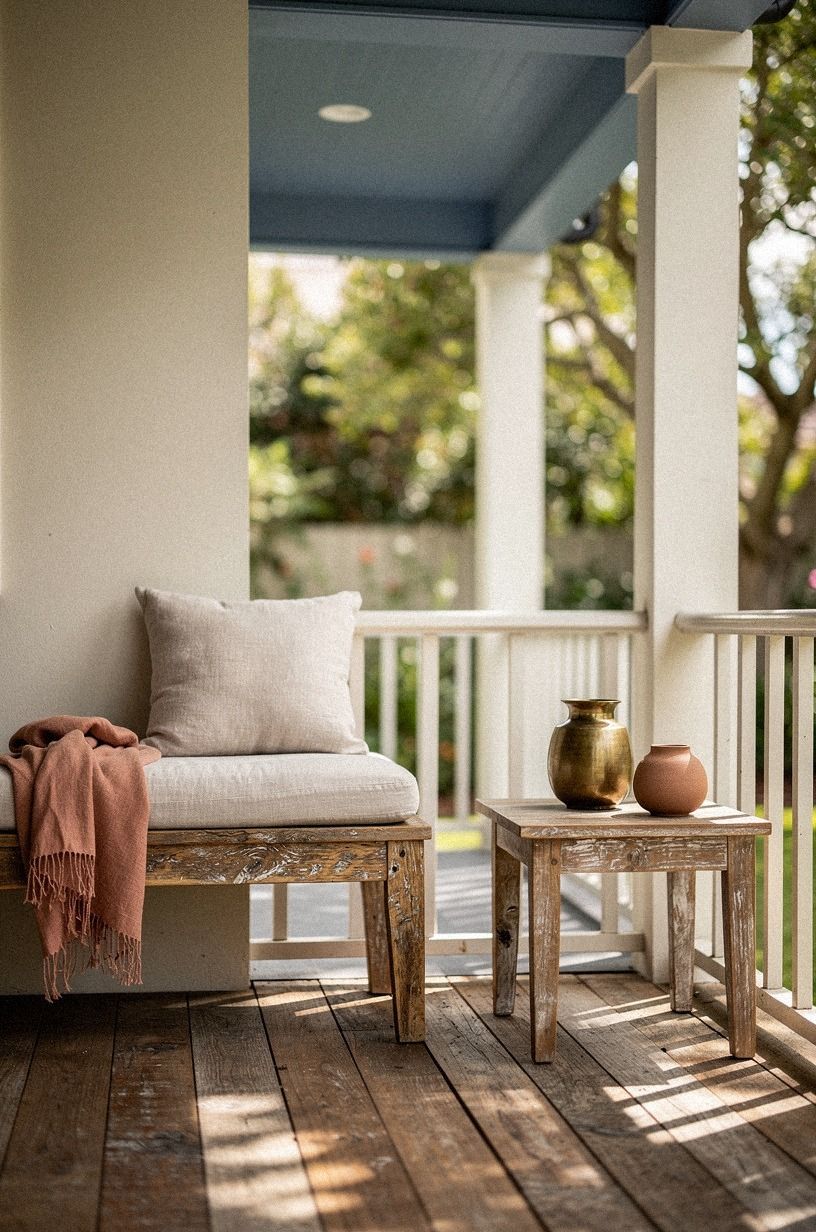
The porch ceiling was an easy place to add color without crowding the floor.
18Style cedar over a busy seasonal display
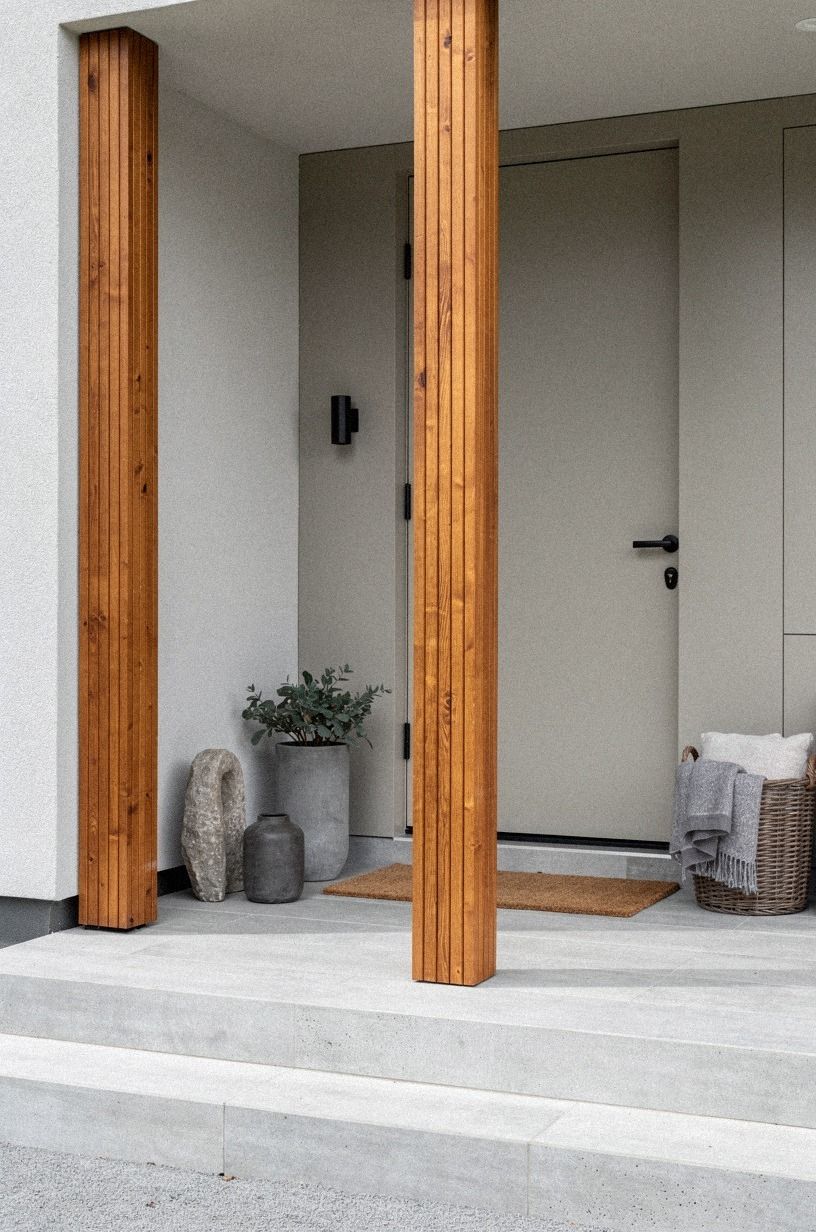
The easiest way to lose the point of the wrap is to cover it with seasonal objects. I tested pumpkins, signs, lanterns, and baskets together, then removed half of them. Your eye needs to see the cedar grain, especially after you’ve spent time sealing and fitting each board.
For fall, I kept one woven seagrass basket on the Calacatta marble base, a low plant, and a single amber lantern. That combination felt charming without becoming cluttered.
If you’re refreshing for summer, these small front porch summer decor ideas for bright breezy vibes can help you keep the palette light. I’d skip a large seasonal sign because the post already supplies the vertical statement.
19Finish with the Three-Second Welcome
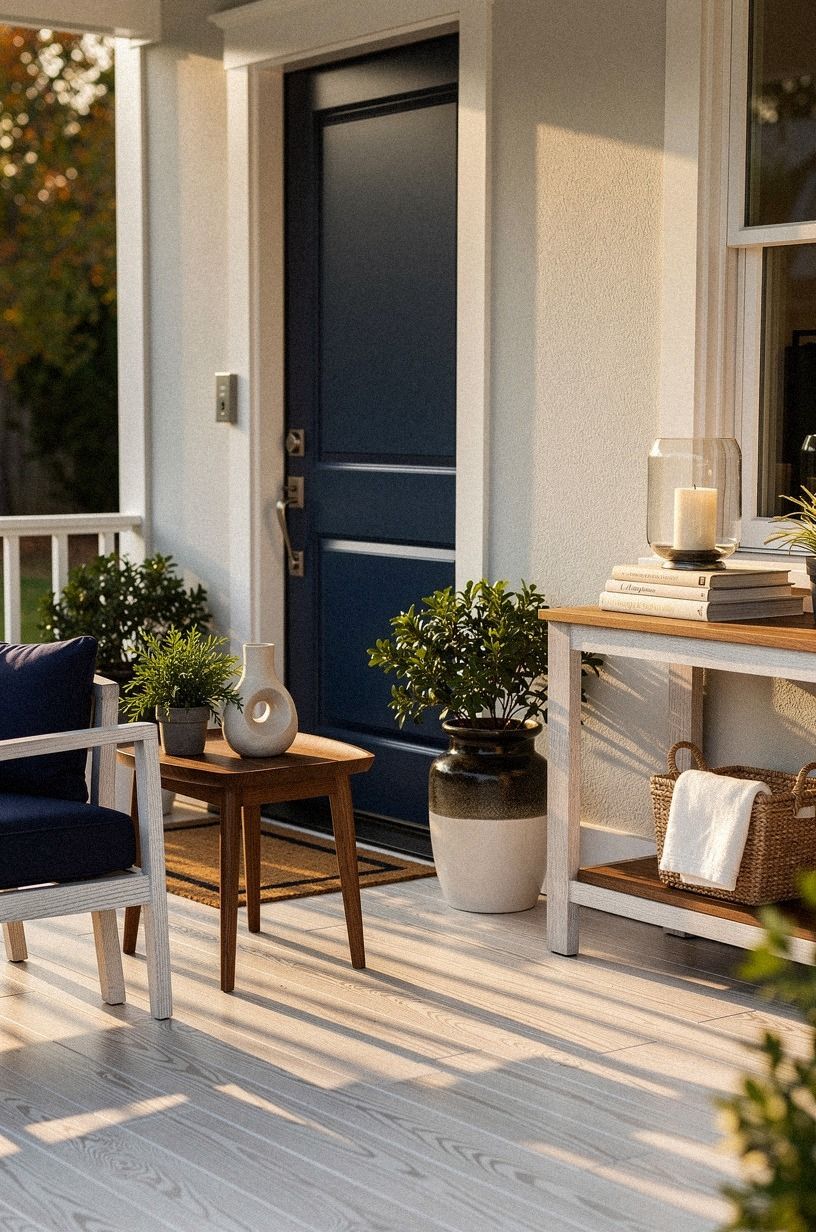
The last test was simple: I stood at the sidewalk and looked at the porch for three seconds. The cedar wrap caught my eye first, the door came second, and the path stayed open.
That sequence told me the makeover worked. You’ll want to make the same test before buying more decor.
I finished with a small aged bronze lantern beside the cerused white oak trim and a clean step. The porch felt warm, modern, and lived-in, but it still had room for a visitor to turn, pause, and open the door.
And if your space needs a little seasonal lift, these small front porch spring decor ideas for a fresh welcome keep the changes gentle. I’d stop here rather than keep adding.
How much it cost
I kept the project within the budget tier by wrapping one post instead of rebuilding the porch. The typical US ranges below are useful planning markers, not a receipt for every house. Your final amount will depend on the post size, labor, weather exposure, and whether you already own the lighting and planters.
For the material choices I compared, the typical ranges were also wide. A teak set can run $1,000-$4,000, while a polypropylene rug is usually $80-$400.
LED string lights often land around $30-$120, and Sunbrella cushions can cost $40-$150 each. You don’t need every category for a cedar wrap, so your smartest savings will come from keeping the furniture simple.
Why the Cedar Changed the Porch
I thought the porch needed more decor. It didn’t.
It needed one material with enough presence to give the space a center. Before the wrap, I kept moving planters, signs, and lanterns around because nothing held the composition together. The cedar became that anchor.
It was warm without being rustic in a heavy way, and it made the plain post feel intentional.
The most useful lesson was that small porches reward restraint. You can’t hide a weak proportion with extra accessories, and you shouldn’t try.
The 36 in walkway clearance mattered more than a larger bench. The narrow shadow lines mattered more than ornate trim. A single warm light mattered more than a row of bright fixtures.
Those choices made the entry feel peaceful because each object had a job.
I also learned that real wood asks for patience. I wanted to rush the sealing step, especially once the boards were cut and ready.
I didn’t. I had already made the mistake of treating an outdoor finish like an indoor paint job on another project, and the first wet week exposed every shortcut.
This time, I sealed the edges, checked the drainage, and let the cedar keep its natural variation.
That’s why I’d choose cedar over a glossy faux wrap when your post sits close to the front door. You’ll see it every time you arrive. The grain catches the low light, the color changes with the weather, and the porch feels more welcoming without needing a full renovation.
It’s a modest update, but it gives the house a stronger first breath.
A Few Things Worth Answering
What is the best Small Front Porch Column & Post Ideas (Plus Cedar Wraps) for a small front porch?
A slim cedar wrap with a simple bench is the strongest choice because it adds warm texture without stealing walkway space. IKEA’s KALLAX birch-effect pieces can help you test scale, while a narrow outdoor bench gives your porch a more finished seat.
Where can I buy Small Front Porch Column & Post Ideas (Plus Cedar Wraps) pieces on a budget?
Look at IKEA, Wayfair, and Target for outdoor textiles, lighting, and small furniture. You’ll often find good secondhand value through Facebook Marketplace or a local thrift shop. Check cedar boards, planters, and rugs for water damage before buying.
How much does a Small Front Porch Column & Post Ideas (Plus Cedar Wraps) makeover cost?
A small refresh usually fits within the $200-$900 budget tier, depending on cedar, paint, lighting, and textiles. Free changes include rearranging furniture, cleaning the step, and reusing planters. Your biggest cost will usually be materials or labor for the wrap.
Can I create a Small Front Porch Column & Post Ideas (Plus Cedar Wraps) on a budget?
Yes, and you can start with three low-cost changes: clean and seal the existing post, add one warm LED light, and use a secondhand planter. Reusing your rug or bench will keep the project inside the lower budget range while still adding texture.
Is a Small Front Porch Column & Post Ideas (Plus Cedar Wraps) worth it in a small space?
Yes, because a small porch benefits from one clear vertical feature. A cedar wrap can make the entry feel more grounded and welcoming without filling the floor. Keep at least 36 in of walkway clearance and choose one slim piece of furniture.
Is Small Front Porch Column & Post Ideas (Plus Cedar Wraps) a good idea for a rental?
Yes, if you use removable changes such as a peel-and-stick accent, a tension rod planter, or a freestanding cedar-look screen. You’ll want to avoid permanent fasteners. A rug, lantern, and removable planter can still create a warm rental entry.
Where I’d Start First
If I had to pick one, I’d start with the cedar wrap. Real grain changes in the light, so your porch feels warmer at dusk without extra decor. Keep the walkway clear, seal every edge, and let the post carry the design.