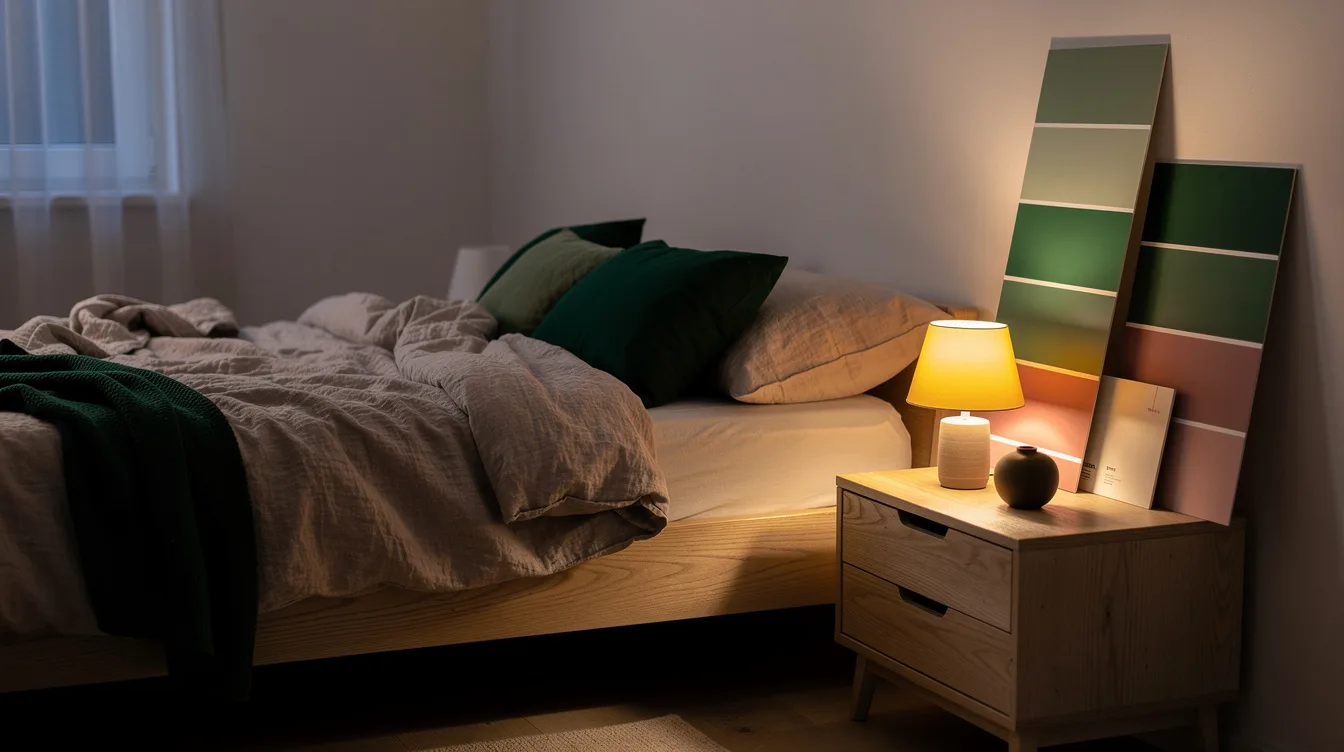
When I choose bedroom colors, I start after dark, with a 2700K bedside bulb switched on and the curtains closed. Warm light can turn cream yellower, green more olive, and pink more peachy before a paint sample even reaches the wall.
That is why I test the lighting first, then the color. Large samples, high color rendering, and the room’s real fabrics tell me far more than a bedroom trend list.
Standardize the Bulbs Before Sampling
I start with 2700K bulbs for a cozy bedroom, then compare them with 3000K bulbs when I want evening light to feel less amber. The color temperature changes the mood, while CRI tells me whether the bedding, wood, and paint still look believable.
My baseline is CRI 90 or higher. A warm bulb with weak color rendering can make every wall look dull, so I would rather fix the lamp first than blame the paint.
Check the Lamp Fit and Color Rendering
A practical option is the IKEA SOLHETTA E27, rated at 806 lumens with 2700K light, CRI 90, and dimming capability. A French listing placed the pair at about €6.99 during the October 2026 research, though delivery and local pricing can change.
Each bulb measures 60 millimeters across by 110 millimeters high, so I check the shade opening before buying. I also confirm that the dimmer works with the bulb, because flicker can make late-night color comparisons unreliable.
Read Warm Light Through Real Materials
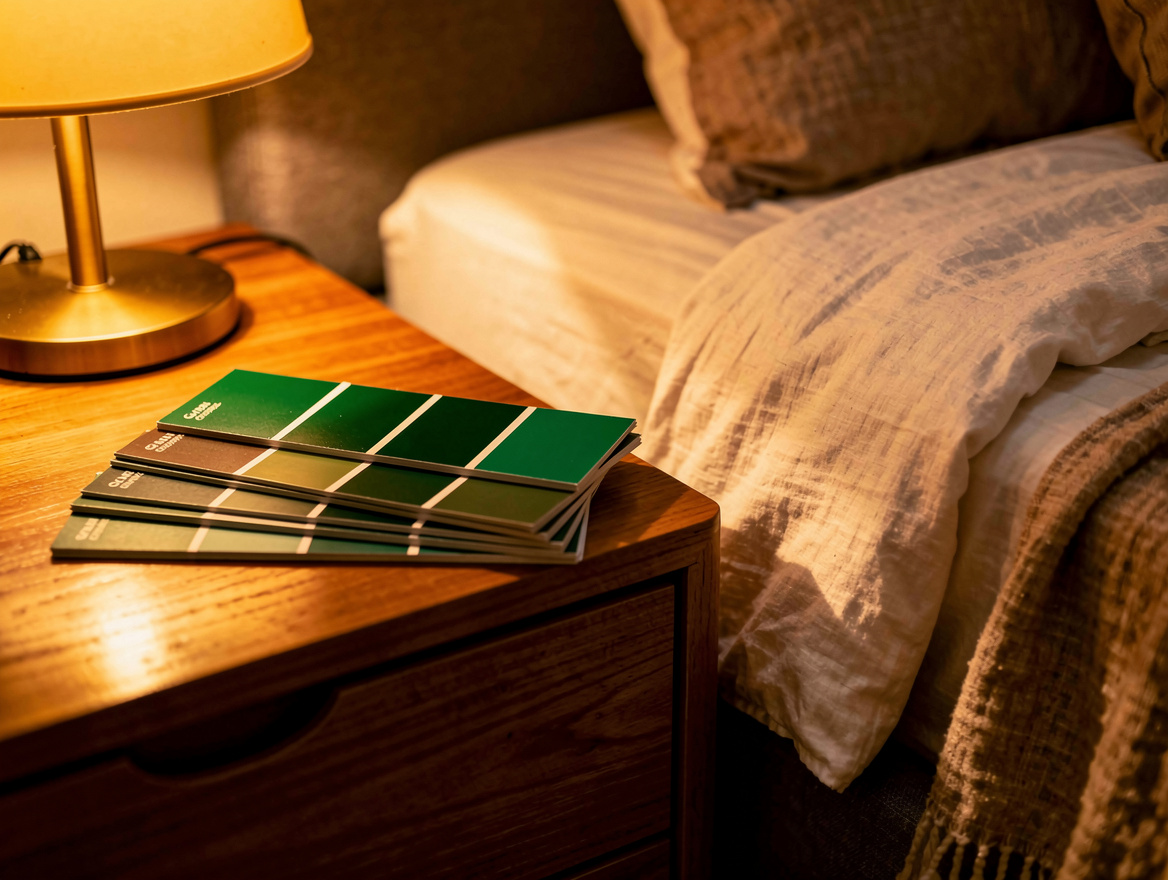
Warm light shifts color in predictable but sometimes unwelcome ways: warm off-white paint can turn yellower, muted green can lean olive, and dusty rose can look peachier. I place every sample beside the actual floor, headboard, and bedding before deciding.
Natural linen, pale oak, and chalky cotton usually soften a warm palette, while orange-toned wood can push cream and pink too far. A small black-metal lamp from Target can add useful contrast, but I keep the rest of the room visible during the test.
Paint Large Samples for Night Testing
I use sample boards from Home Depot rather than judging a tiny swatch against a white wall. A board roughly the size of a large sheet of paper gives me enough surface to see undertones near the bed, window, and lamp.
I move the board around the room at morning, late afternoon, and bedtime. The night view matters most in a bedroom, especially when the main light comes from a bedside lamp rather than daylight.
Build a Warm-Neutral Starting Point
My first sample is usually a stone neutral with a warm gray base, because it gives the room softness without forcing a beige direction. I pair it with ivory cotton, pale oak, oatmeal curtains, and a small amount of aged brass.
A warm-neutral wall can become too beige beside honey-colored flooring, so I compare it with the floor under the same lamp. I also place a cool white pillow nearby, since a stark textile can make a gentle wall color look more yellow than it feels in the full room.
Test Green Against the Evening Glow
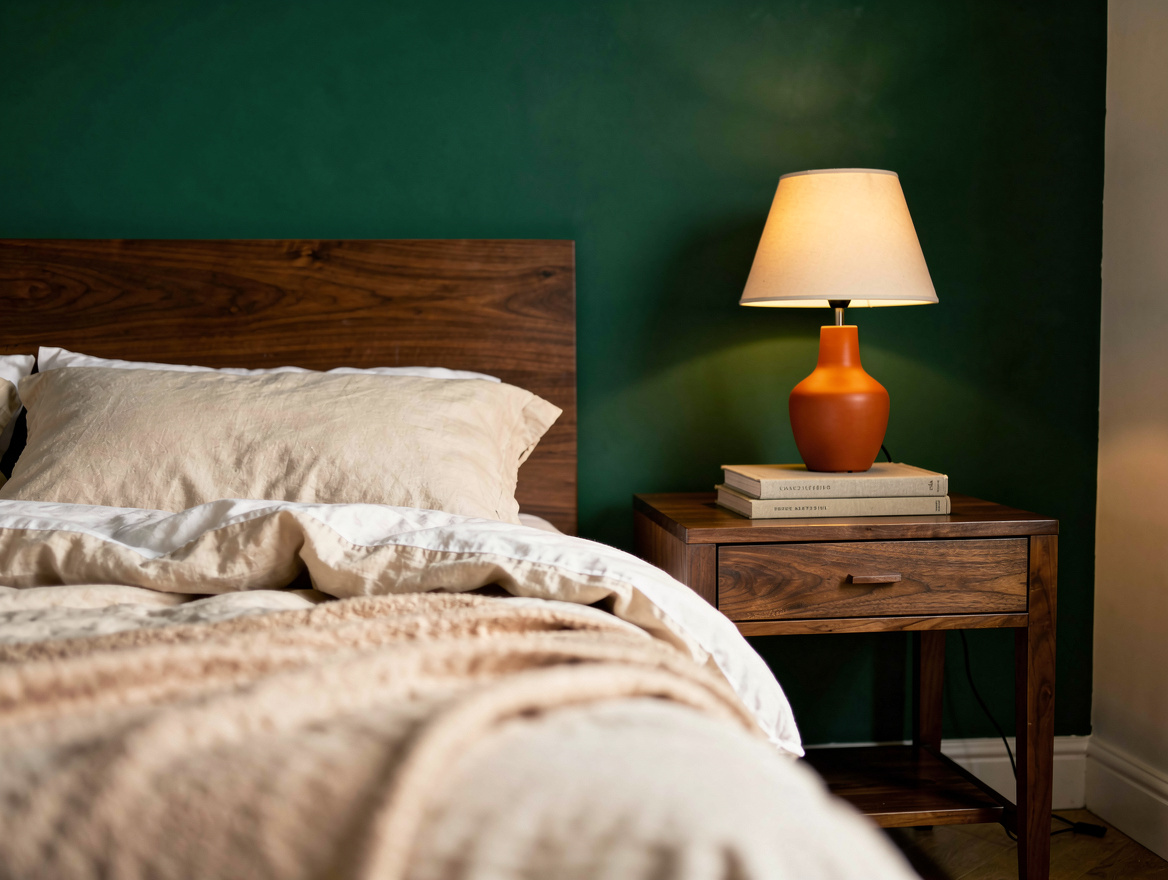
For a stronger option, I sample a muted green with gray in its base and pair it with walnut, ivory cotton, and oatmeal fabric. Under 2700K light, this family can move toward sage, khaki, or olive depending on the room’s wood and bulb quality.
I prefer the green when the bedroom has enough pale fabric to keep it from feeling heavy. A Wayfair linen-look curtain can help me judge that balance, but I test the actual curtain color because warm light can make beige fabric look more yellow.
Keep Dusty Rose From Turning Peach
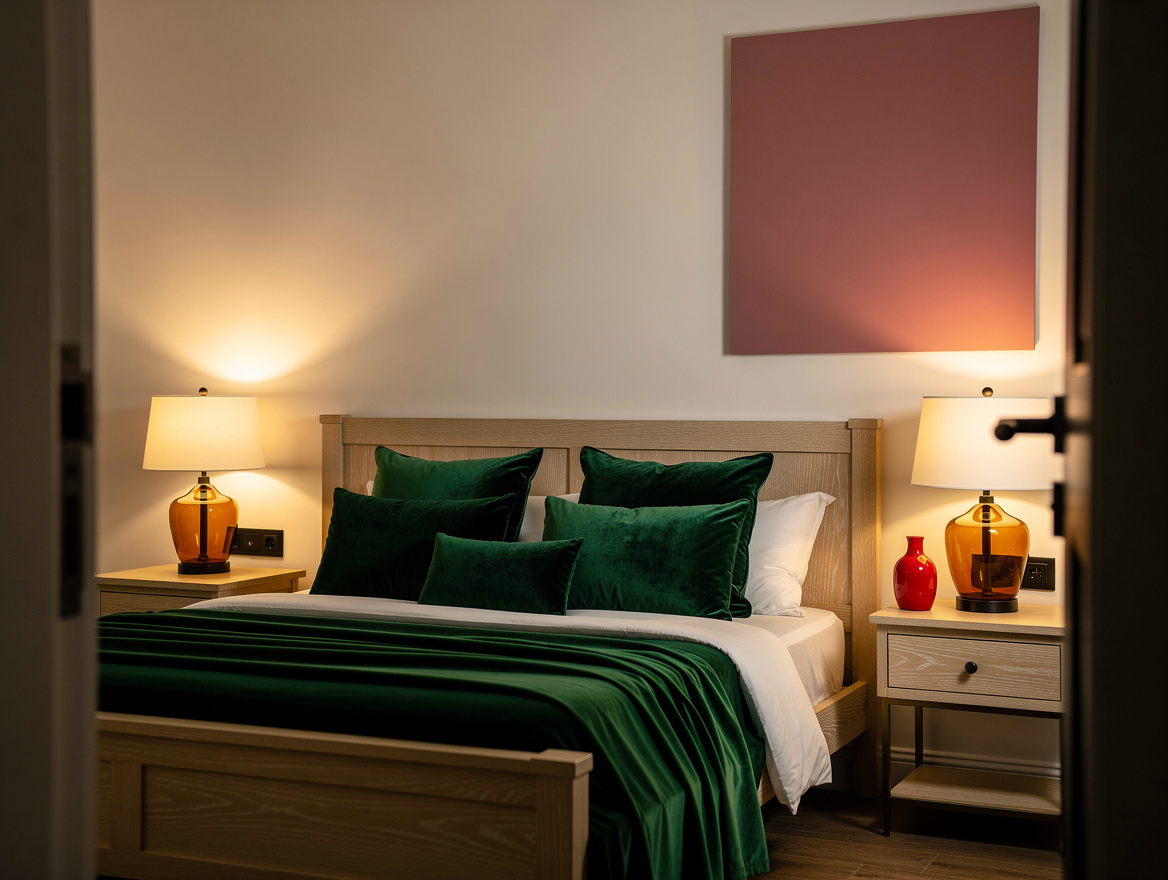
Dusty rose paint works best for me when the room already has walnut, mushroom upholstery, or dark bronze accents. Its muted quality keeps the bedroom grounded, while warm lamps bring out the color’s softer side.
I watch for a peach or brown cast after dark, particularly beside cream bedding. A simple Walmart white cotton sheet is useful here because its clean surface reveals whether the wall still looks dusty and restrained.
Set the main lamps to the light you will actually use, then place large samples beside the floor and bedding for one full evening. That short test usually reveals the right direction before a gallon of paint becomes an expensive mistake.
Mia Carter writes about small-space living and budget home makeovers. She has restyled three rentals and tests most ideas in her own 45 sqm flat.