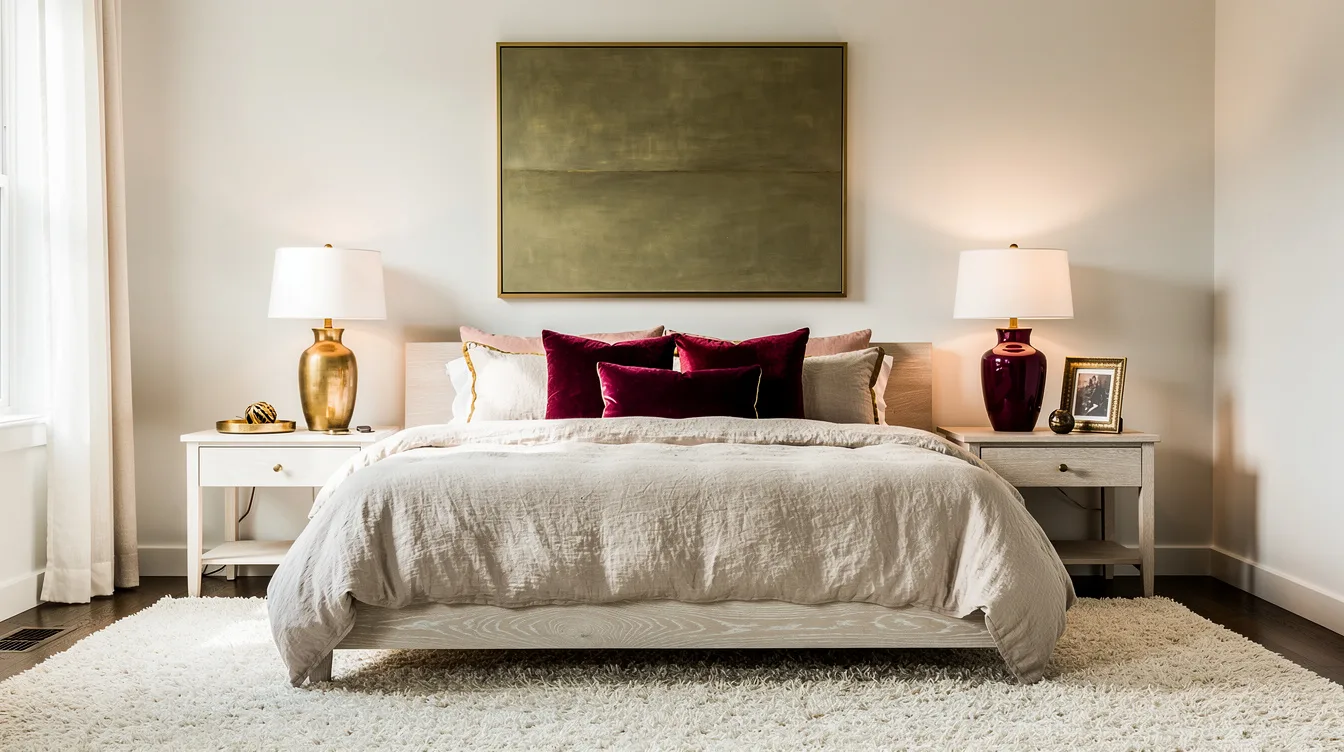
I learned this after living with a 10-by-12-foot bedroom that looked creamy at noon and oddly gray by dinner. A warm white needs more than a good paint chip, especially when roughly 352 to 384 square feet of wall surface is catching changing light.
The consensus among designers is clear: use warm white as a soft backdrop, then give it texture, weight, and lighting that support it. A bare warm-white room can feel unfinished fast.
Test Undertones on More Than One Wall
Paint Sherwin-Williams Alabaster SW 7008, Benjamin Moore White Dove OC-17, or Sherwin-Williams Creamy SW 7012 in at least 2-by-2-foot patches before committing. One wall may read buttery while another pulls gray, especially across a bedroom with mixed daylight.
Check each sample in morning light, late afternoon, and under lamps at night. North-facing rooms usually need the warmer pull of Alabaster or Creamy, while White Dove is a flexible choice when daylight shifts through the day.
Carry One White Across the Whole Envelope
Stop pairing warm-white walls with sharp, blue-white trim. Put the same White Dove or Swiss Coffee OC-45 on walls, ceiling, and trim, then let sheen do the separating.
Use flat or matte on the ceiling, eggshell or matte on walls, and satin on trim. That quiet change catches light at the edges and looks intentional without turning the room into a paint comparison chart.
Anchor the Paint With Real Wood
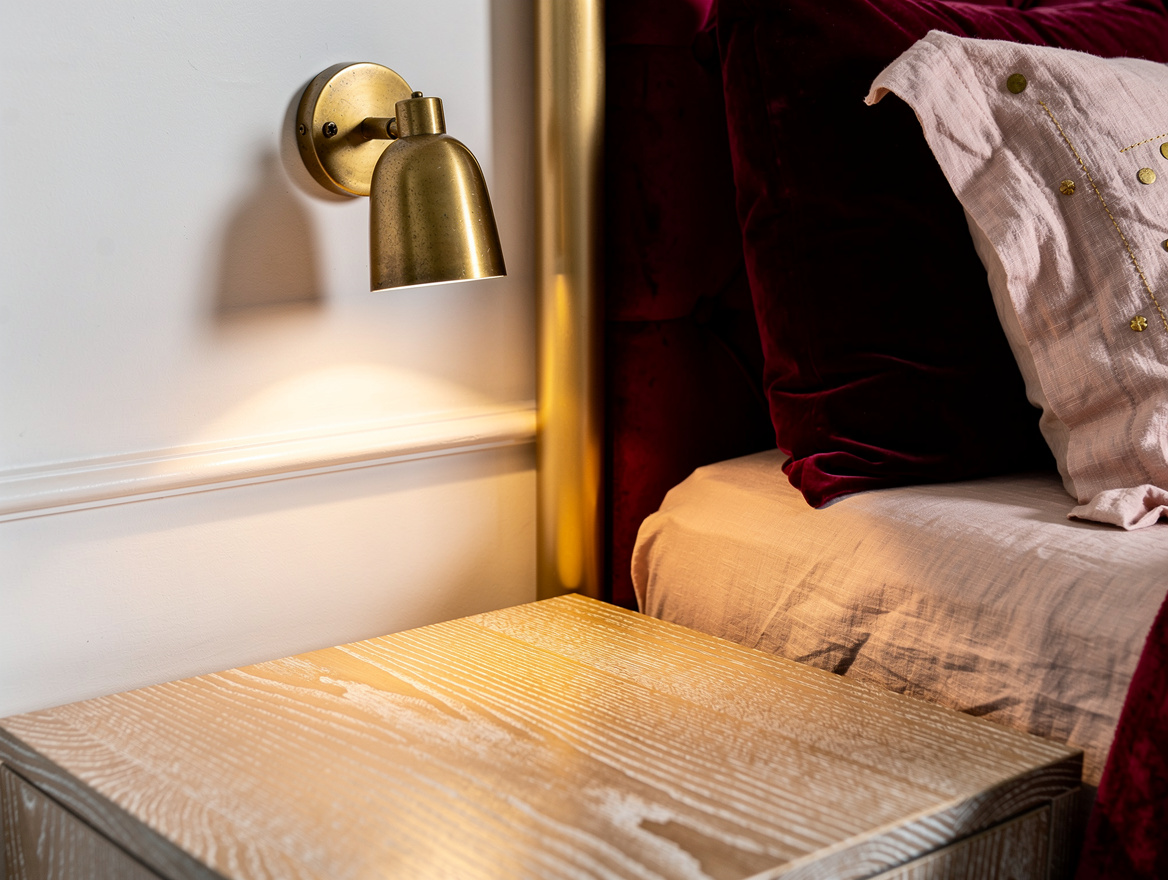
Warm white needs a material with visual gravity, and white oak is the easiest answer. A white-oak bed with oatmeal linen gives White Dove a soft-hotel feel that works in both traditional and newer homes.
For a cleaner, earthier scheme, bring in walnut nightstands beside Sherwin-Williams Shoji White SW 7042. Walnut prevents a pale room from feeling sugary, and its darker grain gives the paint something substantial to sit beside.
Build Texture Before Adding Accent Color
A warm-white bedroom does not need a bold feature color to avoid looking flat. Start with an ivory wool rug, flax-toned duvet, and one small checked pillow or lumbar, then pause before buying more.
For a queen bed, an 8-by-10-foot rug is the dependable scale, extending roughly 24 to 36 inches beyond both accessible sides. A king bed usually needs a 9-by-12-foot rug in a normal-to-large primary bedroom, because a too-small rug makes even expensive bedding look temporary.
Light the Room at a Cozy 2700K
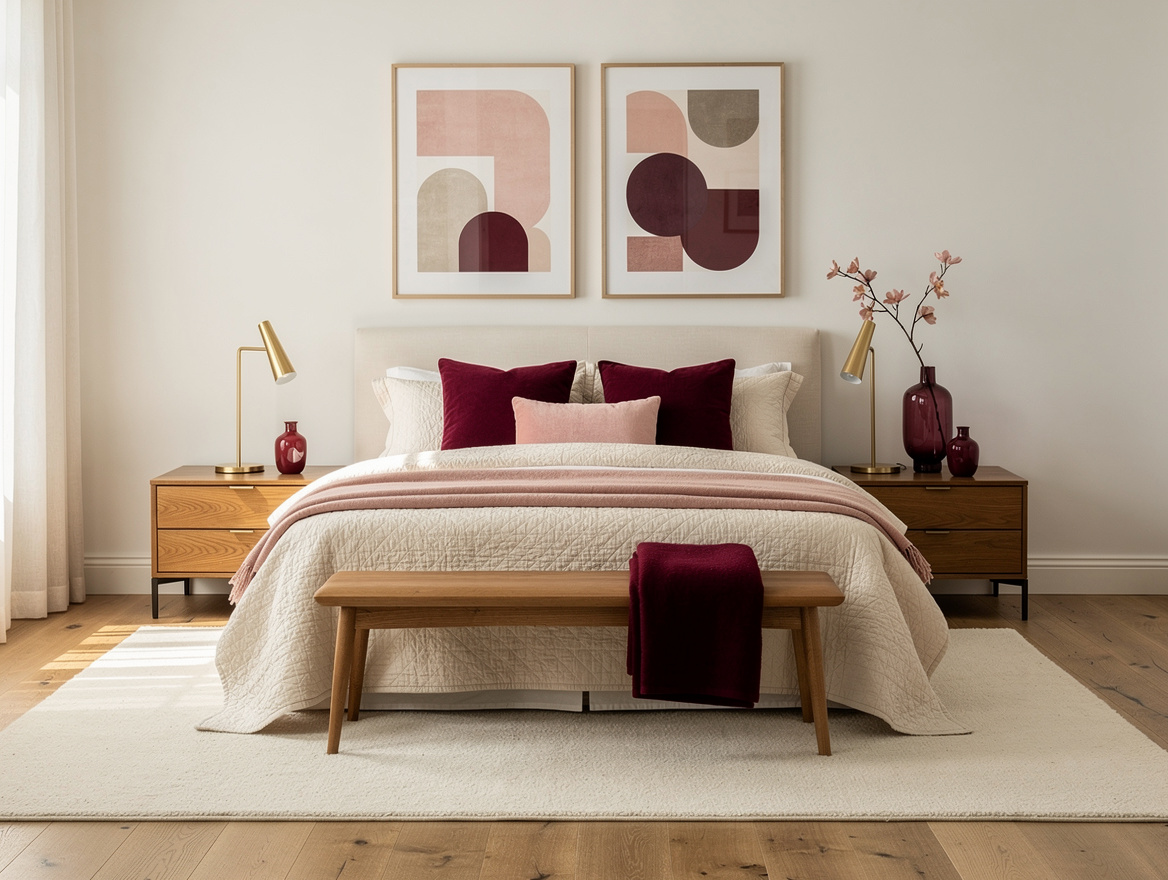
Cool bulbs can make a carefully chosen cream paint look dull and vaguely green after sunset. Choose 2700K LED bulbs in bedside lamps so the room keeps the cozy read you liked during the day.
A pair of aged-brass lamps is better than one overhead fixture doing all the work. Warm metal repeats the paint’s undertone and gives nighttime shadows a softer, more flattering finish.
Spend on Prep, Then Keep the Palette Tight
Do not burn the budget on decorative extras before the walls are properly patched and primed. Mid- to premium-grade Sherwin-Williams paint or Benjamin Moore Regal Select typically costs about $35 to $100 per gallon, and a typical 12-by-12-foot bedroom commonly needs roughly 2 to 3 gallons for two coats.
Plan roughly $150 to $300 for DIY paint and basic consumables, depending on wall condition and tools. Skip the impulse gallery wall at first: muted olive artwork, sand bedding, or a single blackened-bronze hardware finish is plenty beside a warm-white field.
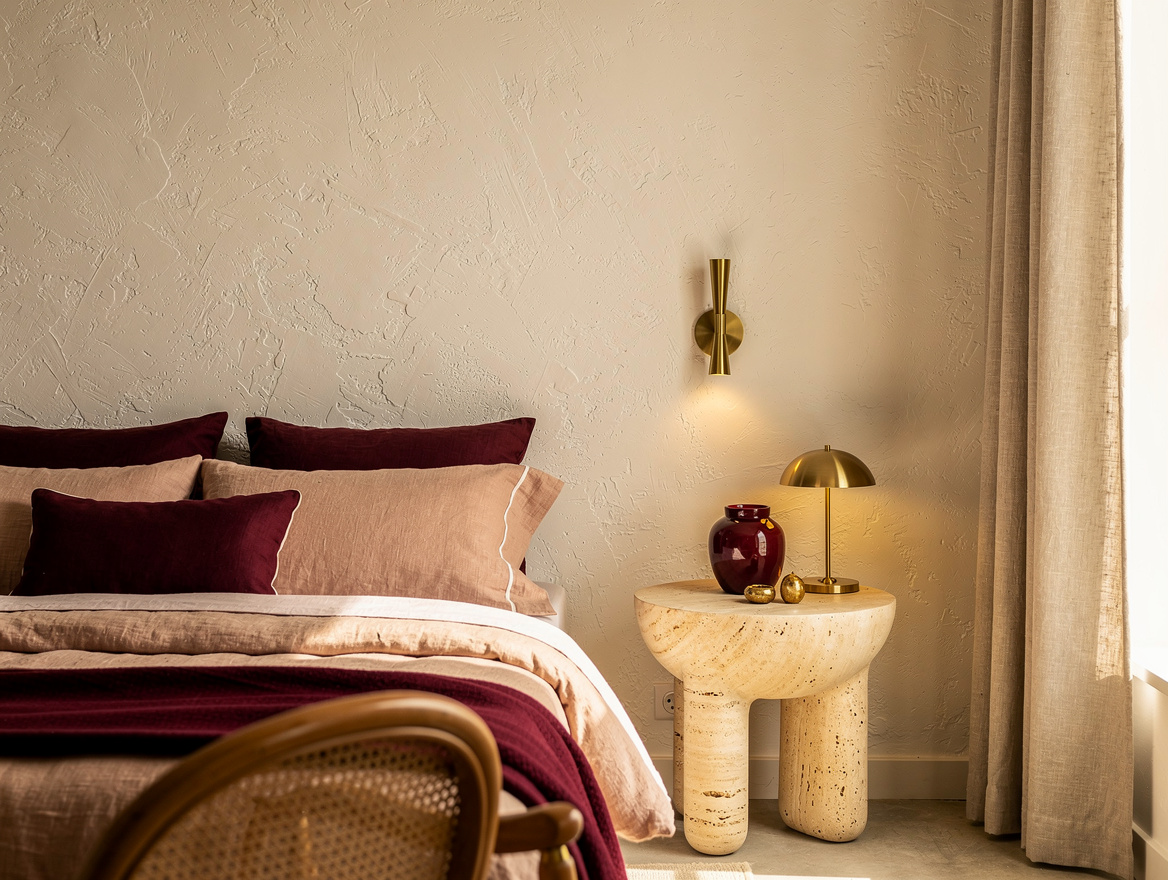
Begin with one 2-by-2-foot test of Alabaster or White Dove beside your existing headboard, then view it under a 2700K lamp tonight. The right warm white should make your wood, linen, and rug look richer before you add a single new accessory.
Mia Carter writes about small-space living and budget home makeovers. She has restyled three rentals and tests most ideas in her own 45 sqm flat.