
I‘ve lived with a clunky closet door for three years, and the day I swapped it for a flush shaker panel that disappeared into the wall was the day the whole bedroom stopped fighting me. Modern hidden door ideas aren’t about speakeasy drama or Harry Potter bookcases (though we’ll get to those). They’re about quiet architecture: doors that vanish so the wall can breathe, the room can read as larger, and your eye stops tripping on hinges. Below are seventeen modern hidden door ideas for sleek, seamless interiors that range from a $40 paint-and-trim fix to a full murphy-style pivot system. Most of these work in rentals. None of them scream “I’m hiding something!” which is the entire point. (And if you want the full deep-dive on the broader category, our modern hidden door ideas for sleek seamless interiors gallery is the place to start!)
- Paint the Door the Exact Same Color as the Wall
- Run a Continuous Baseboard Across the Door
- Flush-Mount the Hinges (The No-Seam Pivot)
- Install a Magnetic Touch Latch
- Match the Wall Texture (The Drywall-Door Move)
- Add a Slab Wood Veneer to Match Surrounding Paneling
- Float a Flush Pivot Hinge System
- Use a Continuous Grain Across Paneled Sections
- Recess the Door Pull Into a Finger Slot
- Wrap the Door in Wallpaper That Matches the Room
- Hide It Behind a Bookcase (The Classic Move)
- Use a Mirror to Camouflage a Full-Length Door
- Run a Sliding Panel That Parks Inside the Wall
- Conceal It Inside a TV Wall
- Add a Wood-Veneered Door That Disappears Into Paneling
- Hide It Behind a Sliding Barn-Style Panel (Without the Barn Look)
- Use a Pantry Door That Matches the Cabinetry
1Paint the Door the Exact Same Color as the Wall
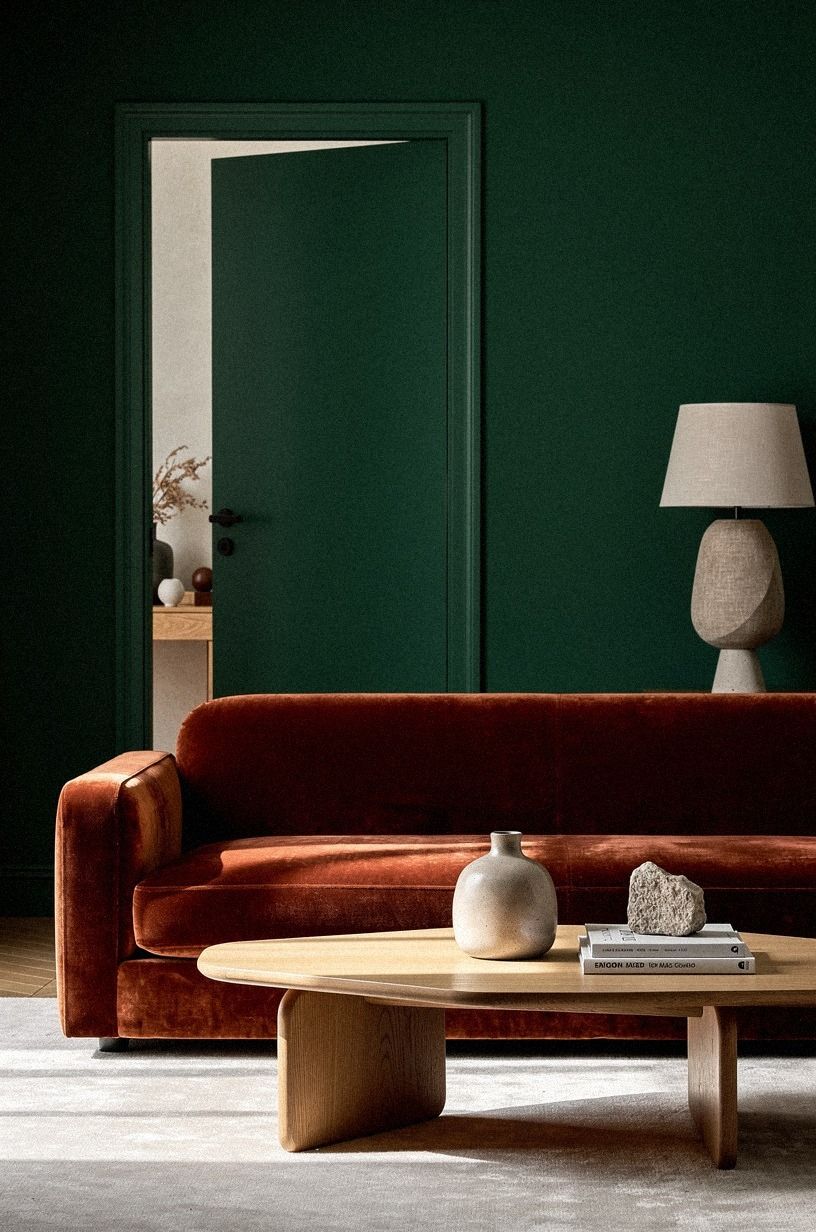
The single most effective modern hidden door idea is also the cheapest. You paint the door, the casing, and the wall in the same Benjamin Moore White Dove and the whole assembly recedes about two feet visually.
I’ve done this in three apartments now and every guest walks past the door the first time. Use a satin finish on the door and eggshell on the wall: the tiny sheen shift catches light and tells your hand where the handle is, even though your eye can’t find the seam.
Skip the trend of painting doors black for contrast here. Contrast is the opposite of hidden. If you want warmth without visual weight, Farrow & Ball Drop Cloth or Sherwin-Williams Accessible Beige SW 7036 both sit in that quiet zone where trim and wall become one.
And honestly? Most “designer doors” you admire in photos start with this single move.
2Run a Continuous Baseboard Across the Door
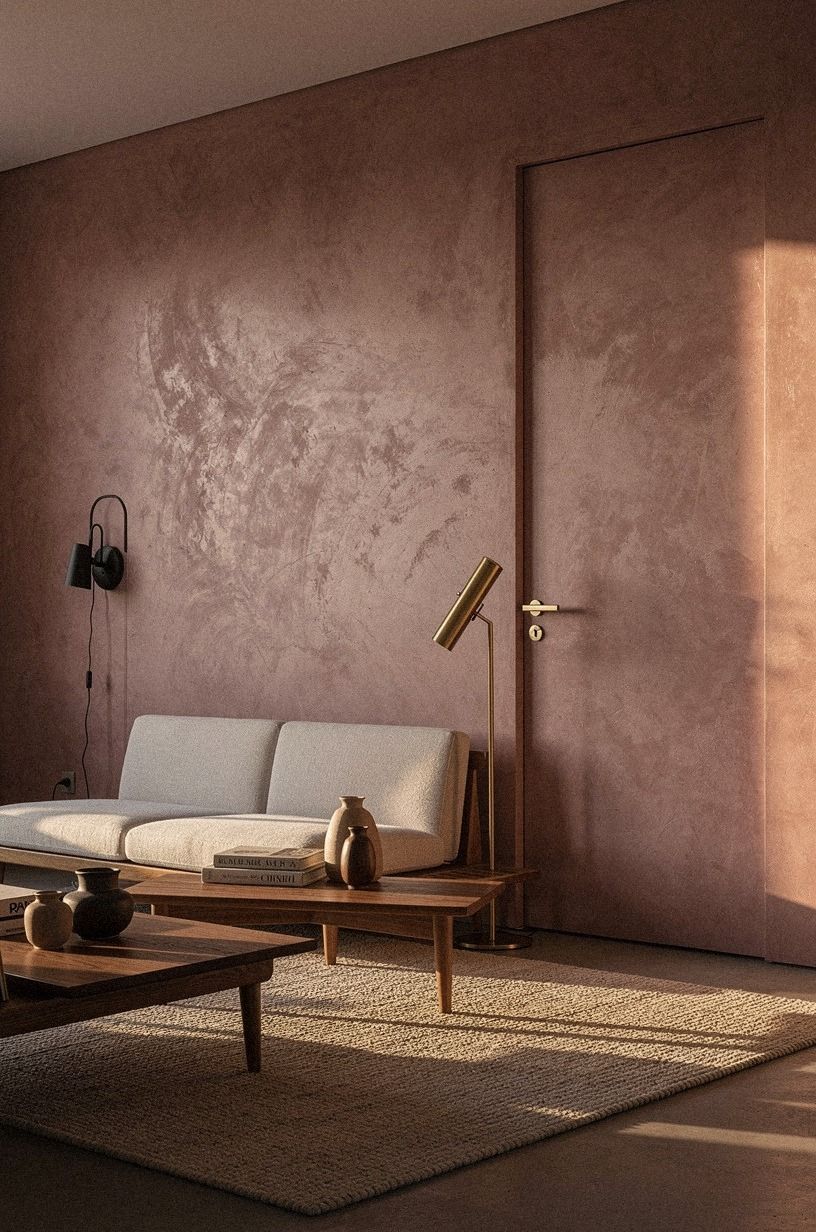
Baseboards are a seam-locator. When the baseboard stops at the door frame, your eye knows exactly where the wall ends and the door begins.
Continue the same baseboard profile across the door face at the same height and your eye reads the whole thing as one unbroken line. This single move is what separates a $200 flip from a custom build.
Use MDF primed baseboards in 5-1/4 inch colonial profile or 5-inch modern craftsman for a contemporary read. A table saw with a 45-degree miter box does the corners; a brad nailer and wood filler finish the seams. The total cost on a single door is under $40 in materials and most people finish the install on a Saturday morning before lunch.
3Flush-Mount the Hinges (The No-Seam Pivot)
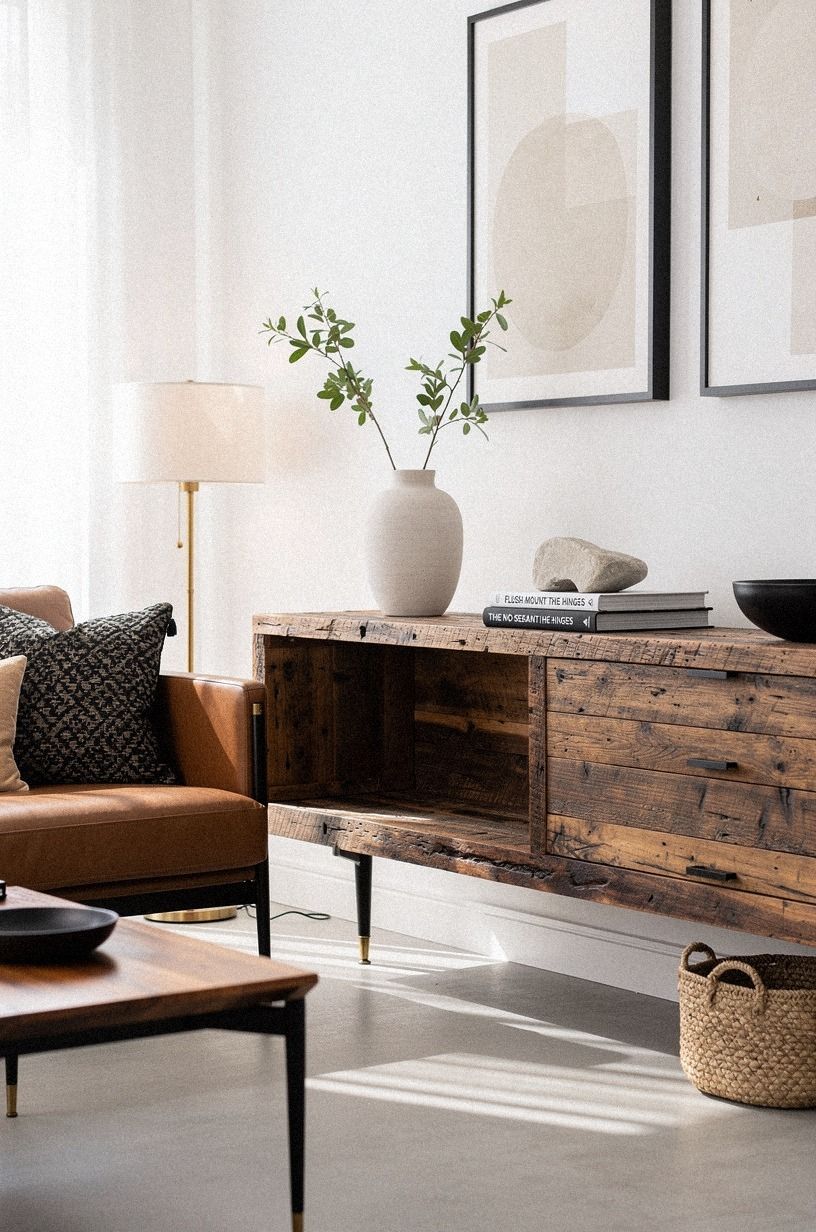
Standard hinges sit proud of the door jamb by about 1/8 inch. That tiny lip catches light and screams “door here.” Soss invisible hinges or Sugatsune 3-way adjustable concealed hinges sit flush inside the jamb so the closed door reads as a single plane with the wall. Pair them with a finger pull routed into the edge (a 3/4-inch roundover with a router) and the door has no visible hardware at all.
This is the move you’ll see in any modern hidden door design pinned in 2026. The hinge set runs about $30-$50 per door, the routing takes maybe twenty minutes per side, and the visual payoff is enormous! Honestly, this is the one upgrade I’d push anyone toward first.
4Install a Magnetic Touch Latch
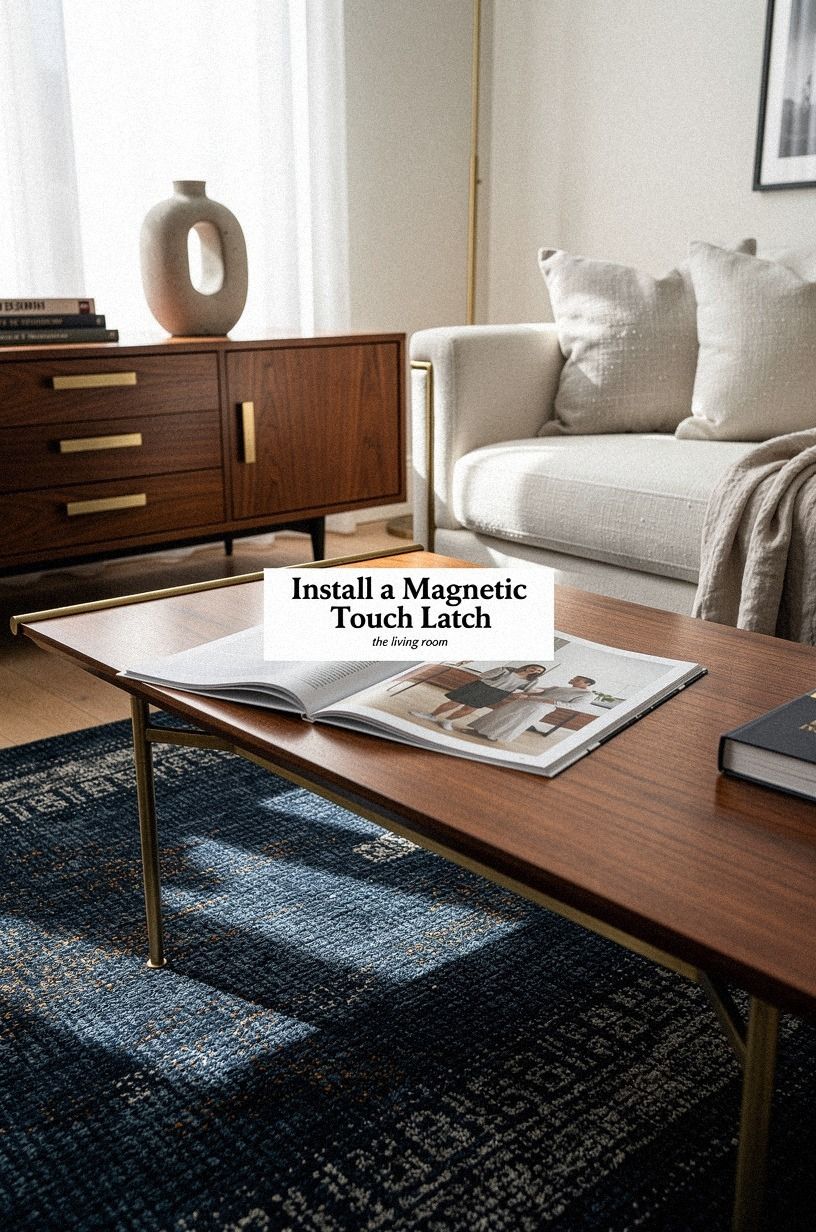
If the door has a knob or lever, it’s not hidden. Sugatsune magnetic touch latches (or the cheaper IKEA KOMPLEMENT push-openers built for cabinets but adaptable to doors) let you push the door and it releases, then pops closed with a soft click. No hardware visible, no knobs breaking the plane.
For a heavier door, Roller catches with a magnetic strip at the top work, though the click is louder. If you’re renting, look into double-sided adhesive touch latches that mount inside the frame and require no drilling at all.
Worth the experimentation! And don’t forget to add a rubber bumper on the strike plate so the close isn’t a slam.
5Match the Wall Texture (The Drywall-Door Move)
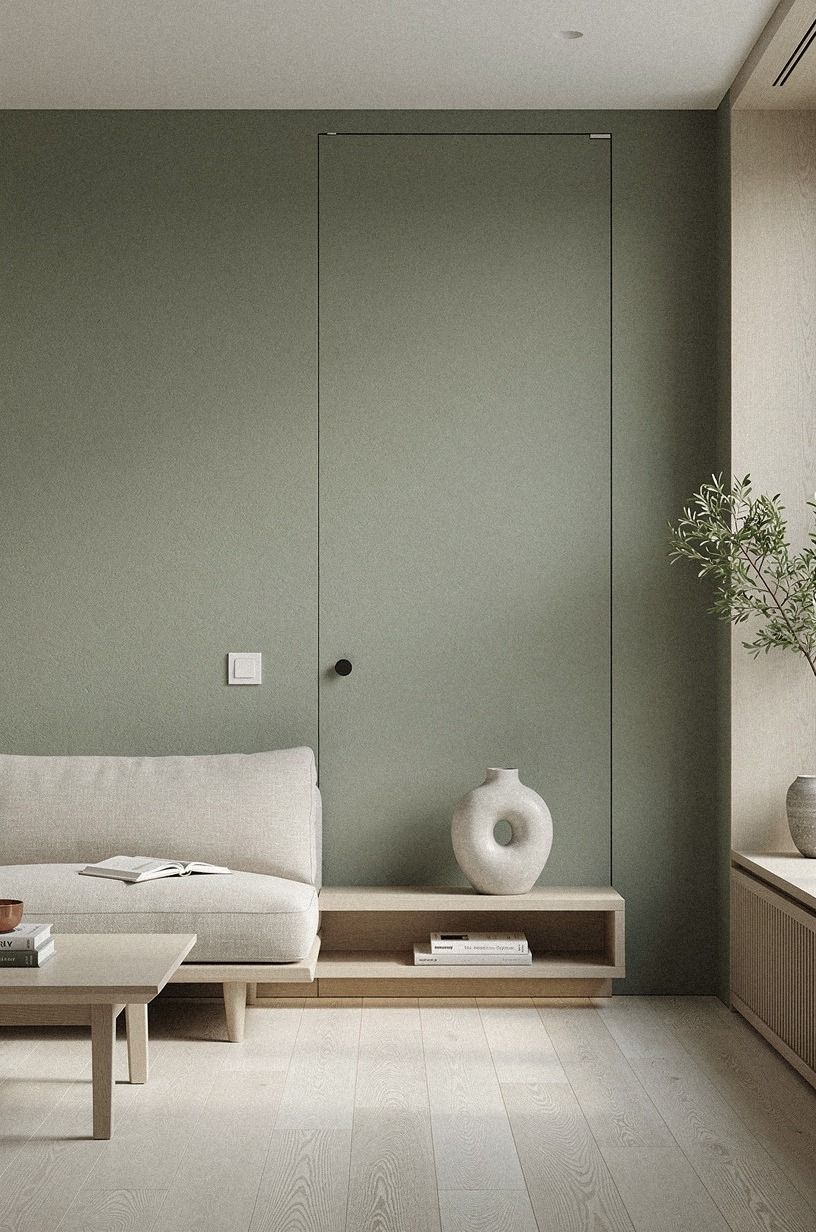
A door slab can be clad in the same 1/2-inch drywall as the surrounding wall, taped, mudded, and painted to fully disappear. This is the move behind any seamless door design you see in an architectural magazine. The result reads as a flat wall until a hand presses and the whole panel swings inward.
The key here is using a hollow-core door as the substrate (cheap, light, around $60 at Home Depot) and laminating drywall to the face with construction adhesive. Mud the seams just like a regular wall patch, prime with Zinsser 123 Bulls Eye, and finish in the wall color. Weight-wise, a 30×80 door runs about 35 lbs after cladding, so use two Soss hinges to share the load.
6Add a Slab Wood Veneer to Match Surrounding Paneling
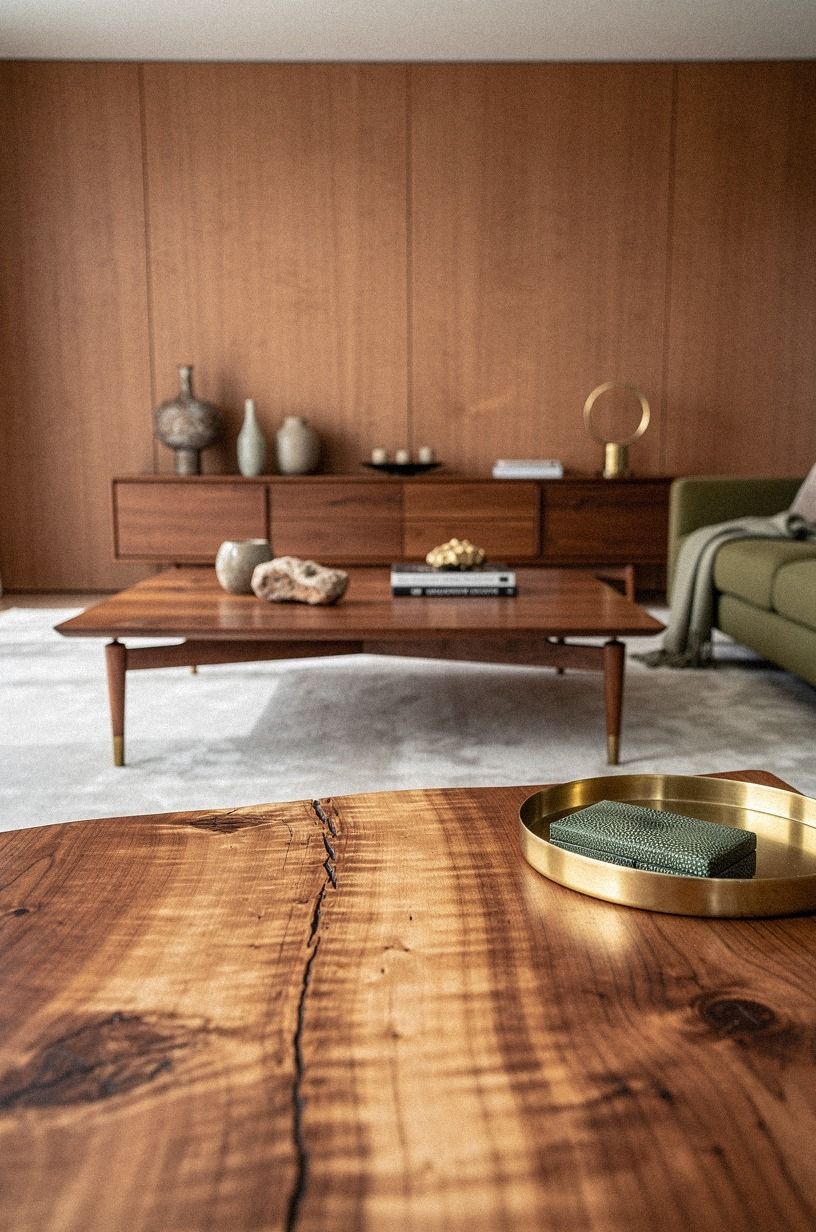
If your room has white oak wall paneling, vertical shiplap, or slat walls, take the same material across the door face. The grain keeps running and the door literally disappears into the rhythm of the wall. I did this in a hallway with 1×4 poplar boards stained F&B Pitch Black and the door is now invisible except for a tiny finger-pull channel routed into the edge.
For warmth without going full custom, Faux Wood Beadboard from Home Depot in a walnut tone reads convincingly. Use 18-gauge brad nails at 16-inch spacing to hold the boards flat, and pre-finish every board before install so you don’t get lap marks at the seams. This is one of those modern hidden door ideas that delivers the magazine look for a few hundred bucks!
7Float a Flush Pivot Hinge System
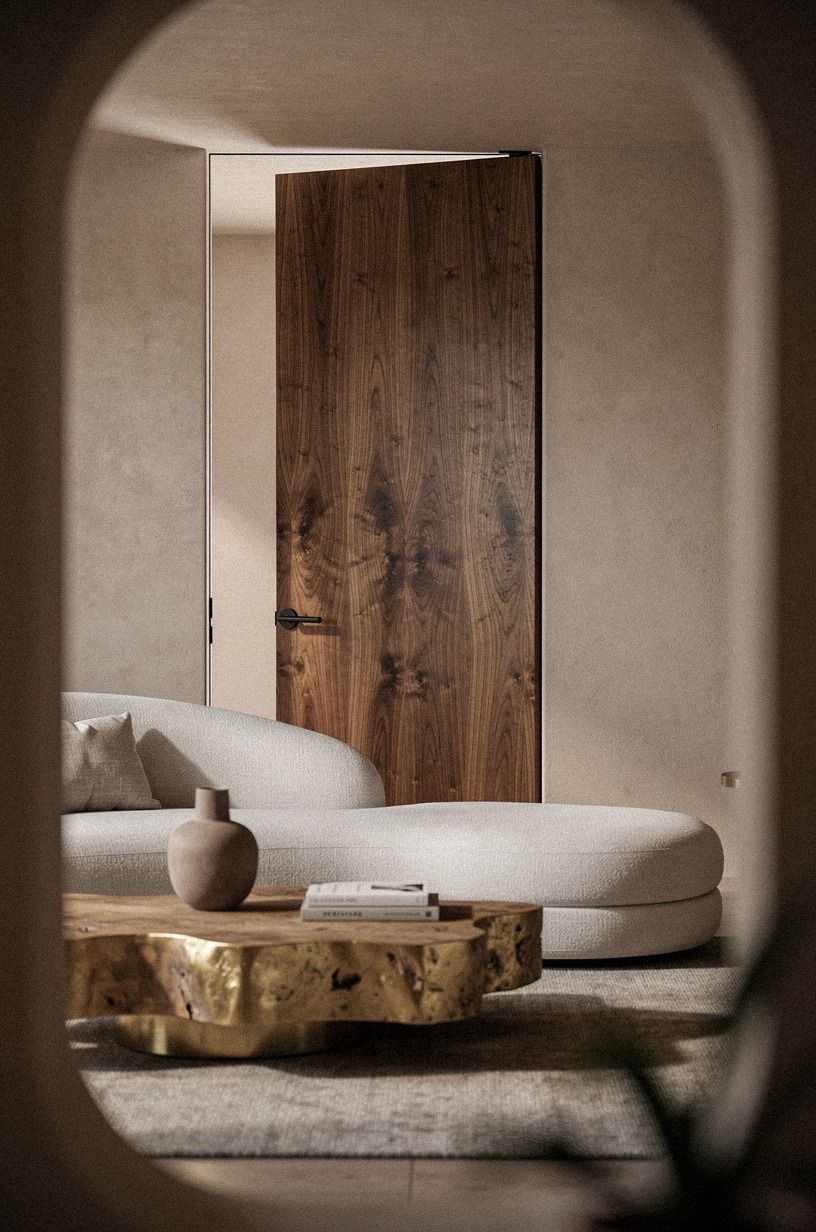
Traditional butt hinges force the door to swing into the room. Pivot hinges (like the Sugatsune HES3D-E90 3-Way Adjustable Pivot or the Tectus TE 240 3D by Simonswerk) let the door pivot from the top and bottom of the jamb with zero visible hardware. Tall, heavy doors stay perfectly aligned and the closed panel reads as a single architectural plane.
This is the system behind most high-end modern hidden door design in new builds. The hardware runs $80-$150 per door and you do need to router the jamb top and bottom precisely, but the result is expensive-looking without the custom-millwork price tag. For a 8-foot-tall door, expect to spend an afternoon on install with a helper holding the door vertical.
8Use a Continuous Grain Across Paneled Sections
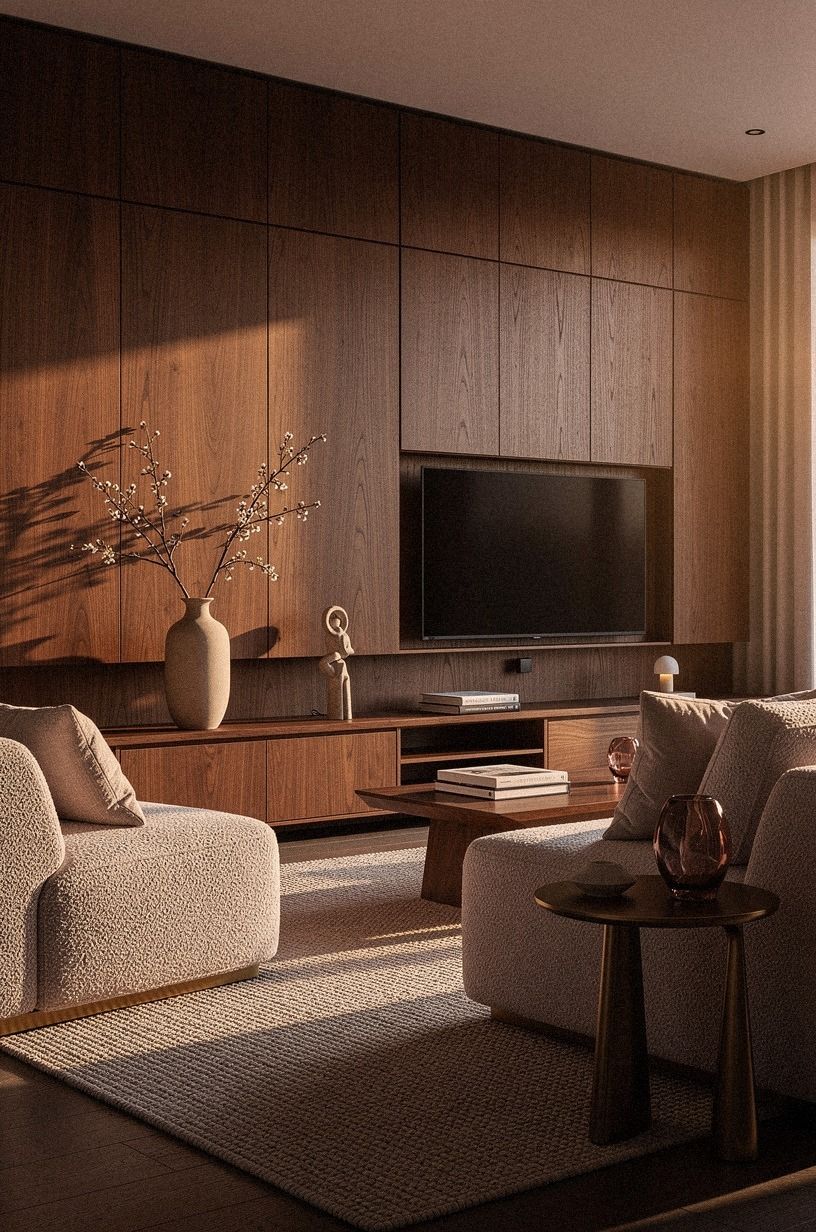
If your room has board-and-batten, picture-frame molding, or applied wall trim, take the same pattern across the door and you erase the seam. The eye reads the entire wall as one decorated plane. Run the vertical battens at 16-inch on center, hit the door the same way, and add a matching horizontal rail at the same height as the rest of the room.
Honestly, this is the easiest modern hidden door design to execute if your room is already paneled. The door becomes one more bay in the rhythm. You can see the same effect in any slat wall hidden door gallery (here’s a great walkthrough if you want the full look: slat wall hidden door ideas).
Mismatched spacing is the only way this fails.

9Recess the Door Pull Into a Finger Slot
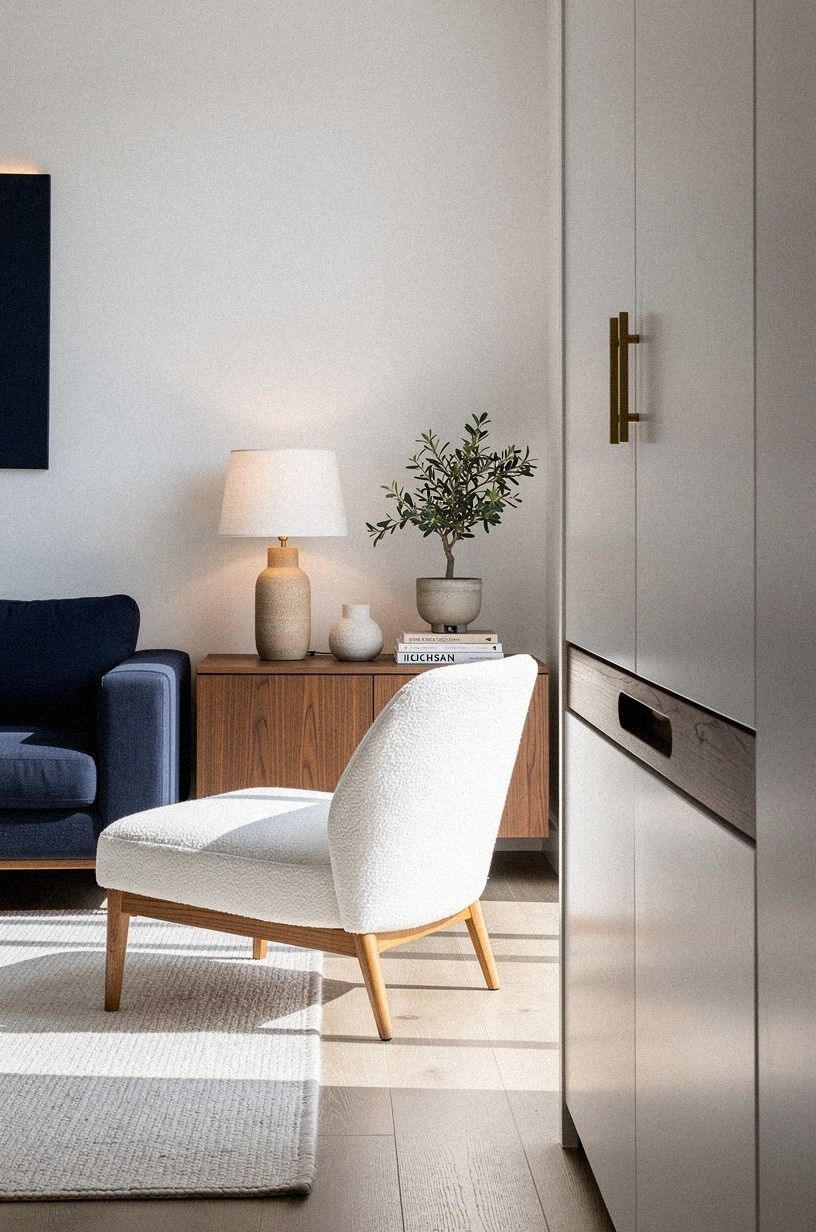
A handle is a door’s confession. Route a 3/4-inch-wide by 2-inch-deep finger slot into the leading edge of the door at 36 inches from the floor, and the door has nothing on its face. I prefer the slot routed vertically into the edge so it doesn’t interrupt the panel rhythm on the front.
For thinner doors, a 3/8-inch round-over routed along the edge is enough for fingertips. The IKEA HÄGRI cabinet pulls are an inexpensive template to copy if you’re not confident sketching your own. And pro tip: the slot should be on the pull side of the door, not the push side, so it tells your hand where the action is.
10Wrap the Door in Wallpaper That Matches the Room
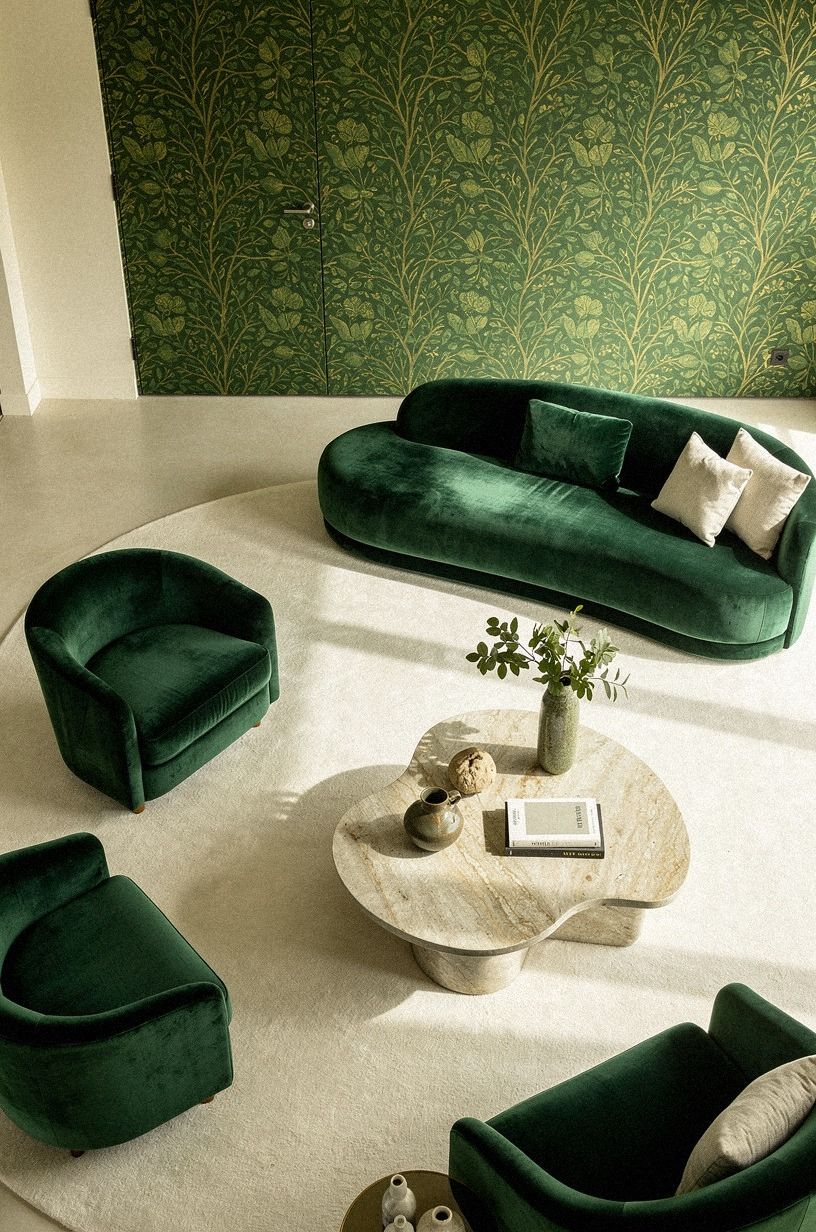
If painting isn’t enough drama, wallpaper the door face to match the wall.
11Hide It Behind a Bookcase (The Classic Move)
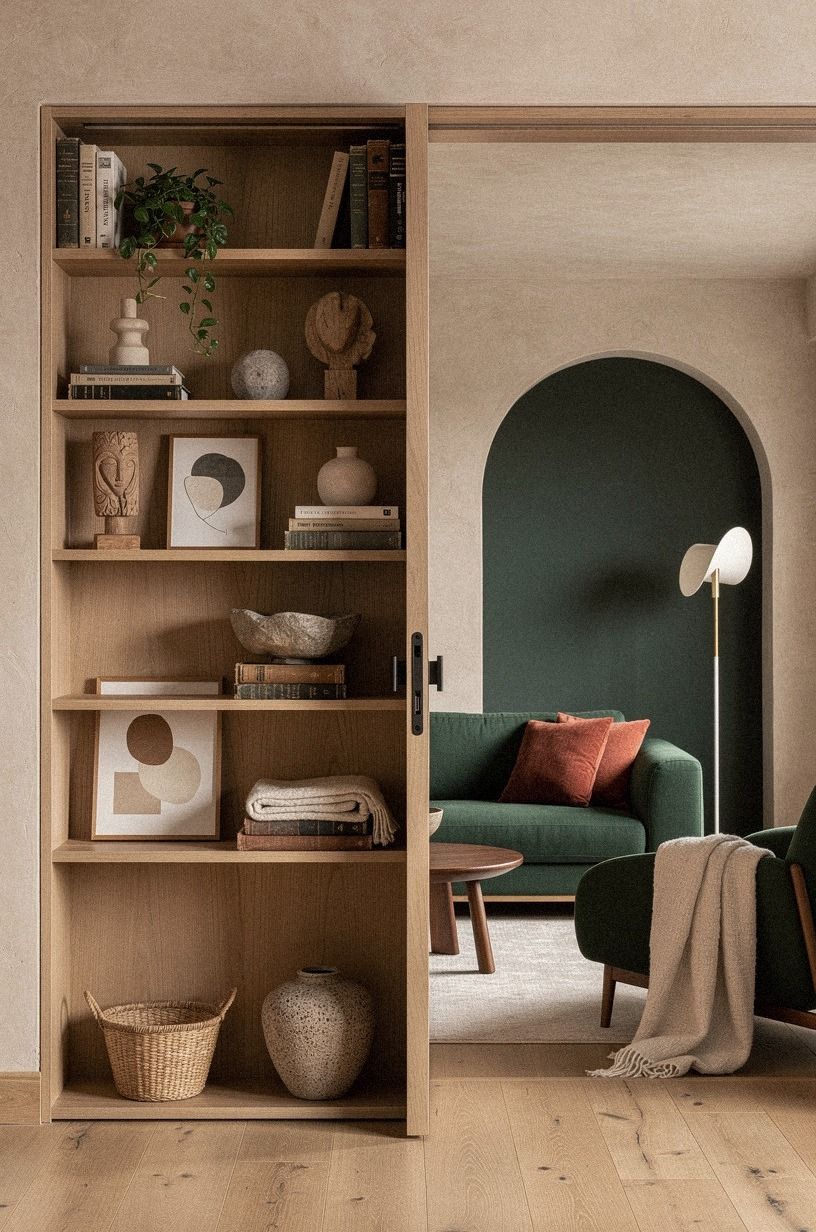
A floor-to-ceiling bookcase on pivot hardware that swings open to reveal a hidden room is the move that made modern hidden door design famous in residential spaces. The classic install is a Billy bookcase from IKEA anchored to a steel angle frame in the wall, then hinged to swing inward. The whole thing reads as a built-in library until the room beyond calls.
For a sturdier build, Pottery Barn’s Tate bookcase or a CB2 Stairway White Bookcase gives you the tall, slim profile that hides a standard 32-inch door behind it. The hinge system matters: use Soss 218 invisible hinges or a pivot set rated for at least 80 lbs.
For more on the classic version of this move, detail bookshelf door ideas is worth a deep read. If you’re going big, here’s how to plan the room behind it: detail room door ideas hidden entrances that actually work.
12Use a Mirror to Camouflage a Full-Length Door
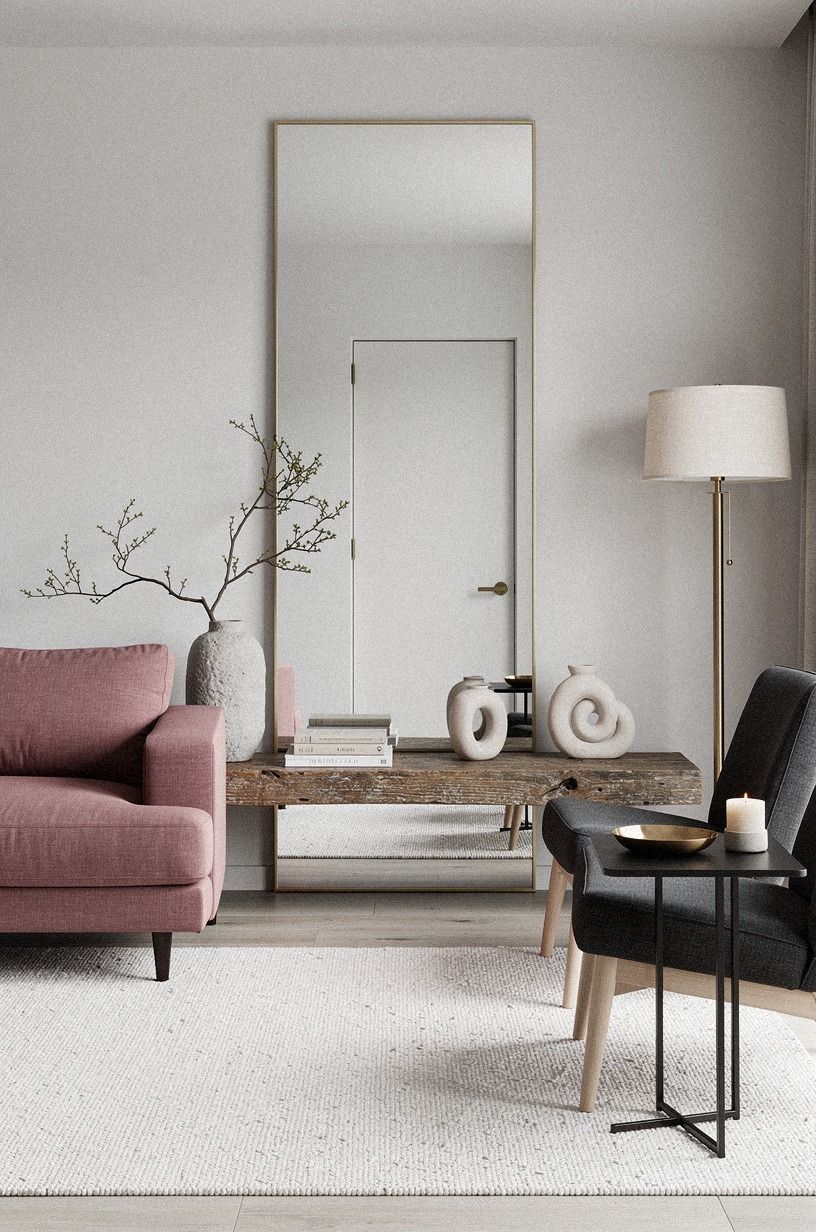
A floor-to-ceiling mirror door that runs wall-to-wall is invisible in a different way: it reflects the room back so you don’t even register the door as a door. The key here is matching the mirror frame to the wall trim so the edges disappear, and using a pivot hinge so there’s no visible knob. This is one of the strongest hidden door ideas for the bedroom because it doubles the visual square footage in the reflection.
Use 1/4-inch low-iron mirror (the kind at IKEA HÖGBO or custom-cut from a local glass shop) for the cleanest reflection without green tint. The door face should be MDF-backed to keep the mirror flat, and clear silicone at the perimeter holds everything in place without visible clips. For the whole mirror-door walkthrough, hidden mirror door ideas a full length mirror that opens covers the install detail.
Worth it.
13Run a Sliding Panel That Parks Inside the Wall
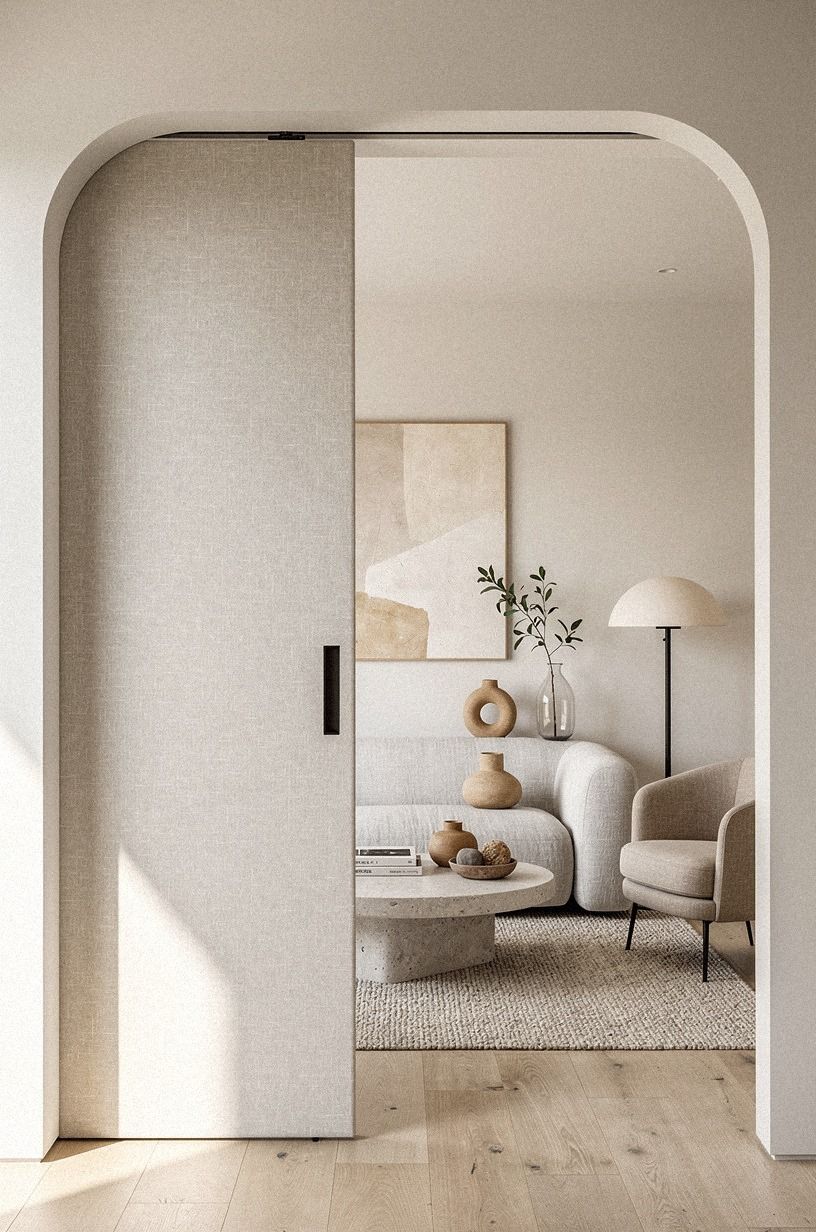
A pocket door is the original modern hidden door. The panel slides into a cavity in the wall and disappears entirely. Johnson Hardware 1500 Series pocket door frames run $80-$150 and install inside a standard 2×4 wall with a header above.
The result is a doorway you can walk past with no door visible at all.
For a contemporary take, use a slab door with no panel detail (a Masonite smooth hardboard door in primed finish, about $70) and finish it in the same wall color. The edge pull is a 3/4-inch finger hole drilled through the leading edge.
For more sliding options that work in tight spaces, see hidden sliding door ideas for seamless space saving style. One of those modern hidden door ideas for sleek, seamless interiors that solves real layout problems.
14Conceal It Inside a TV Wall
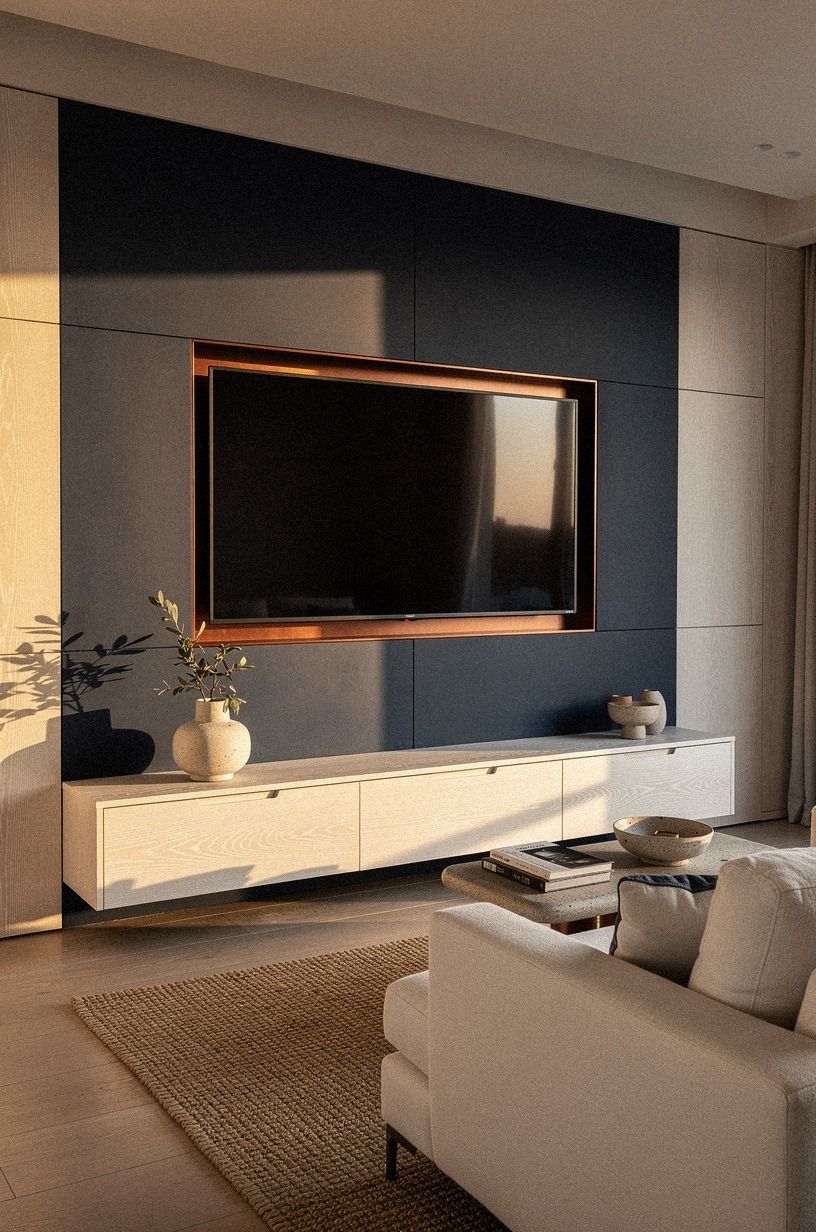
A TV wall with a hidden door behind it is the most ambitious version of this list, but it solves two problems at once: where to put the screen and how to hide the door to a powder room or back hallway. The door sits behind a floor-to-ceiling panel clad in the same material as the wall (slat wood, plaster, or Benjamin Moore Black Iron 2128-20 painted MDF) and opens on a pivot system that swings the entire wall section outward.
Use a 60-inch TV mounted on a full-motion articulating arm so the screen can pull forward and rotate away from the door. The wall panel rides on the same Sugatsune pivot hardware from Section 7.
For a complete walkthrough of the wall framing and the TV-mounting sequence, tv wall with hidden door ideas conceal a whole room is the article I wish I’d had when I planned mine. It’s a project, not a weekend job.
Budget $1,500-$4,000 if you hire the framing out.
15Add a Wood-Veneered Door That Disappears Into Paneling
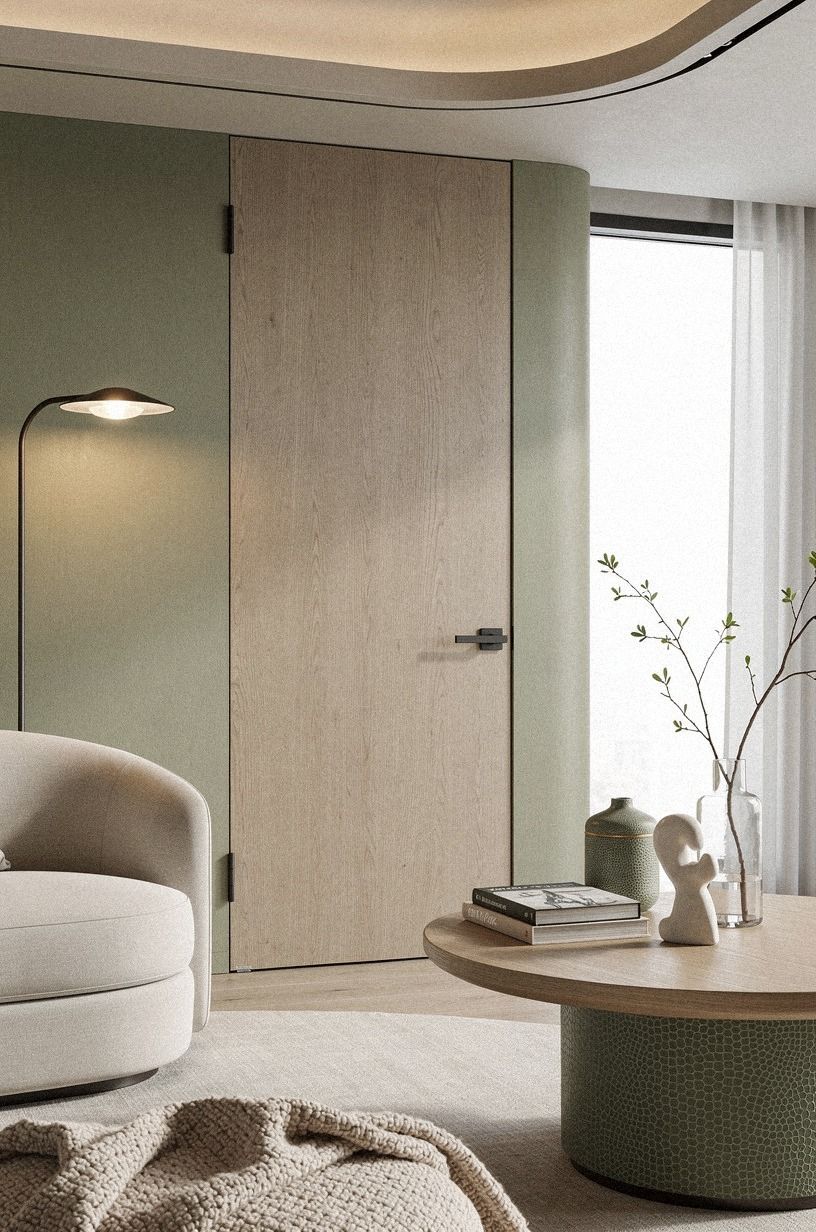
For a warm, architectural version of the painted flush door, take a flat-slab hardboard door and apply self-adhesive wood veneer (the Peel-and-Stick Walnut Veneer from WoodWall or a real 10-mil paper-backed veneer applied with contact cement) so the door reads as the same white oak or walnut as the surrounding paneling.
This is one of my favorite modern hidden door ideas for sleek, seamless interiors because it adds warmth instead of disappearing into paint. The veneer cost runs $80-$150 per door, contact cement is $15, and a laminate roller ensures adhesion without bubbles.
For more on this warm approach, wood hidden door ideas for warm seamless walls goes deeper. Honestly, this one feels expensive even though it isn’t.
16Hide It Behind a Sliding Barn-Style Panel (Without the Barn Look)
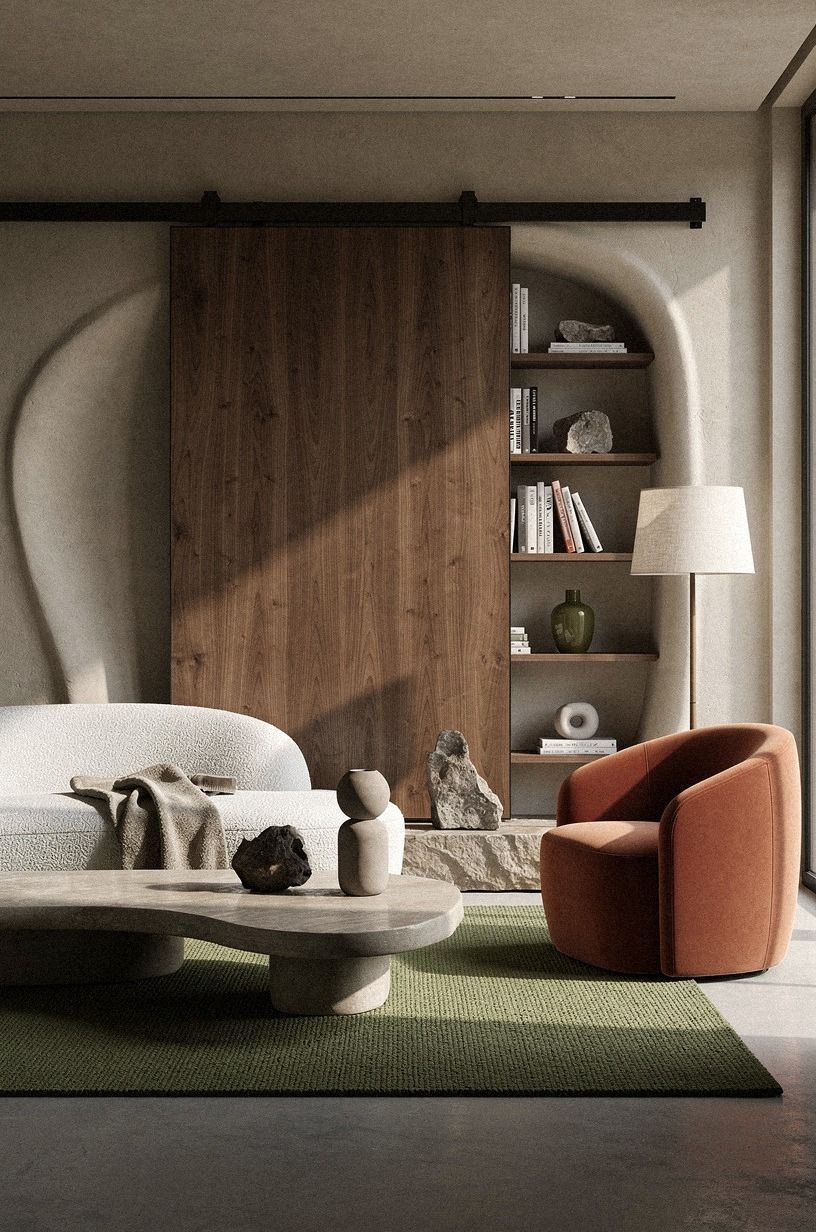
A barn door is loud by definition: the track, the rollers, the strap hinges.
17Use a Pantry Door That Matches the Cabinetry
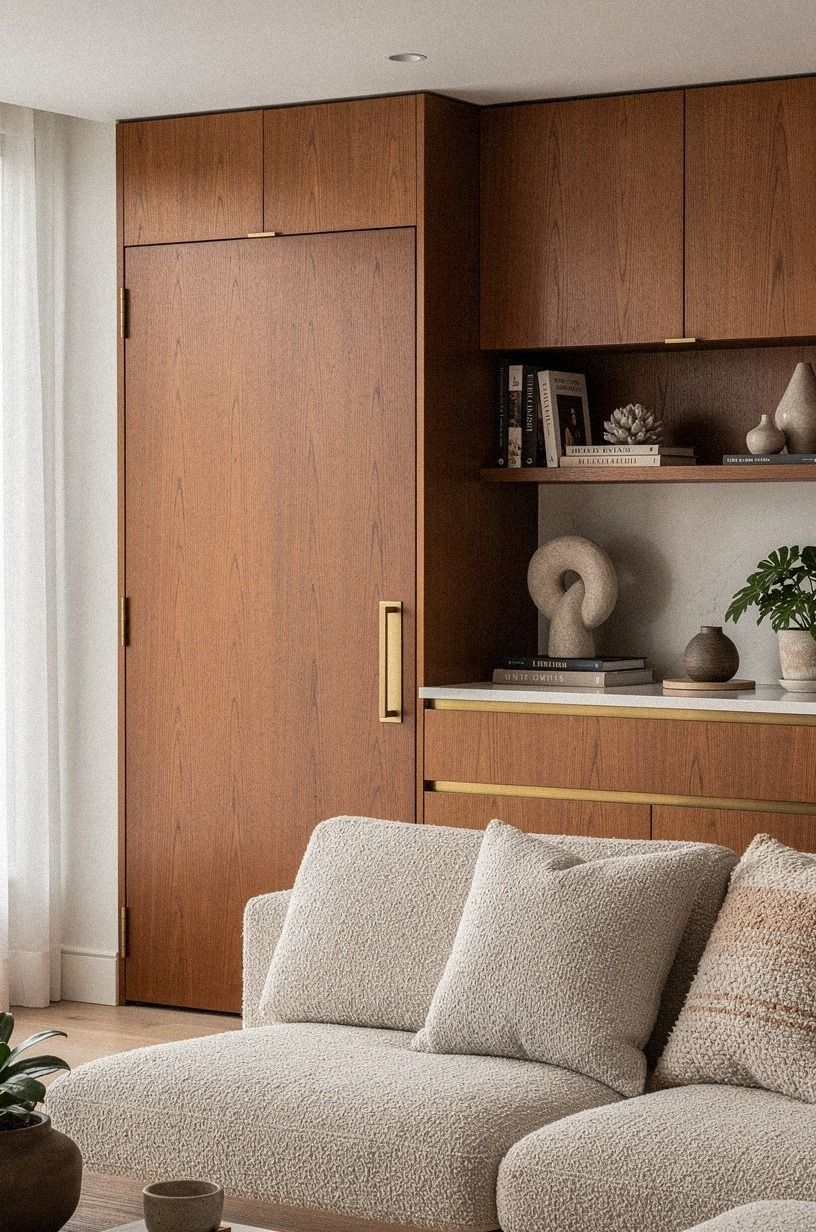
In a kitchen, a hidden pantry door clad in the same cabinetry as the surrounding wall of cabinets reads as one more cabinet front. Use flat-panel shaker doors in the same finish as the run (IKEA’s SEKTION or Hampton Bay Shaker from Home Depot), match the pull hardware exactly, and the door vanishes into the kitchen architecture.
The hinges here are the same Soss invisible hinges from Section 3, and a push-to-open magnetic latch from Sugatsune keeps the front clean. For the full pantry-door sequence, hidden pantry door ideas for a seamless kitchen is the complete walkthrough!
And for the wider world of these moves, the main modern hidden door ideas for sleek, seamless interiors gallery is where I started. If you want to keep the seamless thread going into the kitchen itself, our slat wall hidden door ideas walkthrough doubles as a pantry-front option too!
What Does This Actually Cost?
Let’s put real numbers on it because “it depends” is the worst answer in home design. Here’s the typical US cost for a single modern hidden door project, broken down by tier:
The budget tier is where most of the visual magic happens. A $60 door slab plus $40 in paint and trim plus $30 in Soss hinges is a $130 door that reads as a $3,000 install when you’re done. The mid tier is where you’re paying for ease and adjustability (the 3-way pivot hinges that let you align a heavy door in five minutes instead of an hour).
The high tier is real renovation: framing a pocket-door cavity, reframing a TV wall, building a hidden library wall behind a pivot.
If you’re working with Farrow & Ball paint or Sherwin-Williams Designer Series, add about 30% to the budget tier for finish materials. The wood, the hinges, and the labor stay roughly the same.
The Real Reason Designers Reach for Hidden Doors
Here’s what nobody tells you when they talk about modern hidden door ideas for sleek, seamless interiors: it’s not about the door. It’s about the wall.
Every visible door in a room is a seam the eye registers. Doors interrupt sightlines, break up furniture placement, and quietly make a 12×14 bedroom feel like a 10×12.
When the door disappears, the room grows.
The best modern hidden door design is the one you don’t notice on the second visit. (That’s the test, by the way. If your mother-in-law walks past it twice, you nailed it.) And the broader principle, quiet architecture beats loud architecture in small rooms, is why these moves keep showing up in tight-space design: apartments, urban condos, narrow bedrooms, anywhere square footage is precious.
The other reason: doors are visual debt. A 32-inch doorway cuts a hole in your furniture layout.
A 24-inch door between a bedroom and a closet takes a chunk out of where your dresser could go. Hide the door and the wall becomes a place where furniture can sit flush.
Your room reads larger, your layout breathes, and the whole space feels considered instead of compartmentalized.
The trap to avoid is going too hidden. A door that genuinely disappears is also a door guests walk into face-first.
The rule you want is keeping just enough hint, a finger pull, a 1/8-inch reveal, a subtle sheen shift in the paint, so the eye learns where the door is without the door announcing itself. Modern hidden door design is really modern hidden door courtesy: visible enough to use, quiet enough to forget.
And when you’re ready to take it a step further and hide an entire room behind the door, the broader playbook lives at detail room door ideas hidden entrances that actually work!
What People Always Want to Know
What is the best modern hidden door idea for a small living room?
A paint-and-pull-slot combo on a flush hollow-core door clad in the same Benjamin Moore White Dove as the surrounding wall. It costs under $200, takes a Saturday, and disappears so completely that visitors walk past it twice. Pair it with a Sugatsune magnetic touch latch and there’s no hardware at all.
Where can I buy modern hidden door hardware on a budget?
Home Depot and Amazon carry Soss invisible hinges and Sugatsune latches at retail. IKEA’s KOMPLEMENT push-openers work on lighter doors.
For the heavier pivot hardware, Rockler and Woodcraft stock the Tectus TE 240 system. Check Facebook Marketplace for surplus contractor pulls (a single kitchen reno can leave you with three sets of cabinet pulls nobody wants).
How much does a modern hidden door cost to install?
A DIY paint-and-hinge swap runs about $130 to $300. A mid-range veneer-and-pivot door lands around $800 to $2,500 with hardware. A full custom millwork install with framing changes starts near $5,000 and climbs fast if a wall has to be reframed or rewired.
Can I install a modern hidden door on a budget?
Yes, and the cheapest version is also the most effective. Paint the existing door the same color as the wall, swap the hinges for Soss 216 invisibles, and add a finger pull routed into the edge.
Total: about $80 in materials. Farrow & Ball Drop Cloth or Sherwin-Williams Accessible Beige give you that warm, design-magazine tone without spending a fortune on the paint itself.
Is a modern hidden door worth it in a small space?
Worth it, especially in a small space. Hidden doors remove visual seams, let furniture sit flush to the wall, and make a 10×10 room read as a 12×12. The best modern hidden door ideas for sleek, seamless interiors aren’t about concealed rooms behind them.
They’re about giving the wall back. For more layout moves that make small rooms feel bigger, our tiny bedroom ideas roundup covers similar moves!
Is a modern hidden door a good idea for a rental?
Yes, with no-damage swaps. Use peel-and-stick wallpaper or removable vinyl in the wall color on the door face, swap to command-strip touch latches for the release mechanism, and skip the routed finger pulls entirely. A hinge-mounted finger pull like the Prime-Line H 3589 slips over the existing knob shaft without drilling.
You get most of the effect, none of the security-deposit damage.
Where I’d Start First
If I had to pick one, I’d start with the paint-and-baseboard move from sections 1 and 2 together. Most of the magic is in the wall, not the door. Get the wall finished and trimmed the way you want first, then upgrade the door.
You can’t layer seamlessness on top of a sloppy wall. Every other choice will fight the architecture instead of building on it.
Start with the wall, then layer the door.