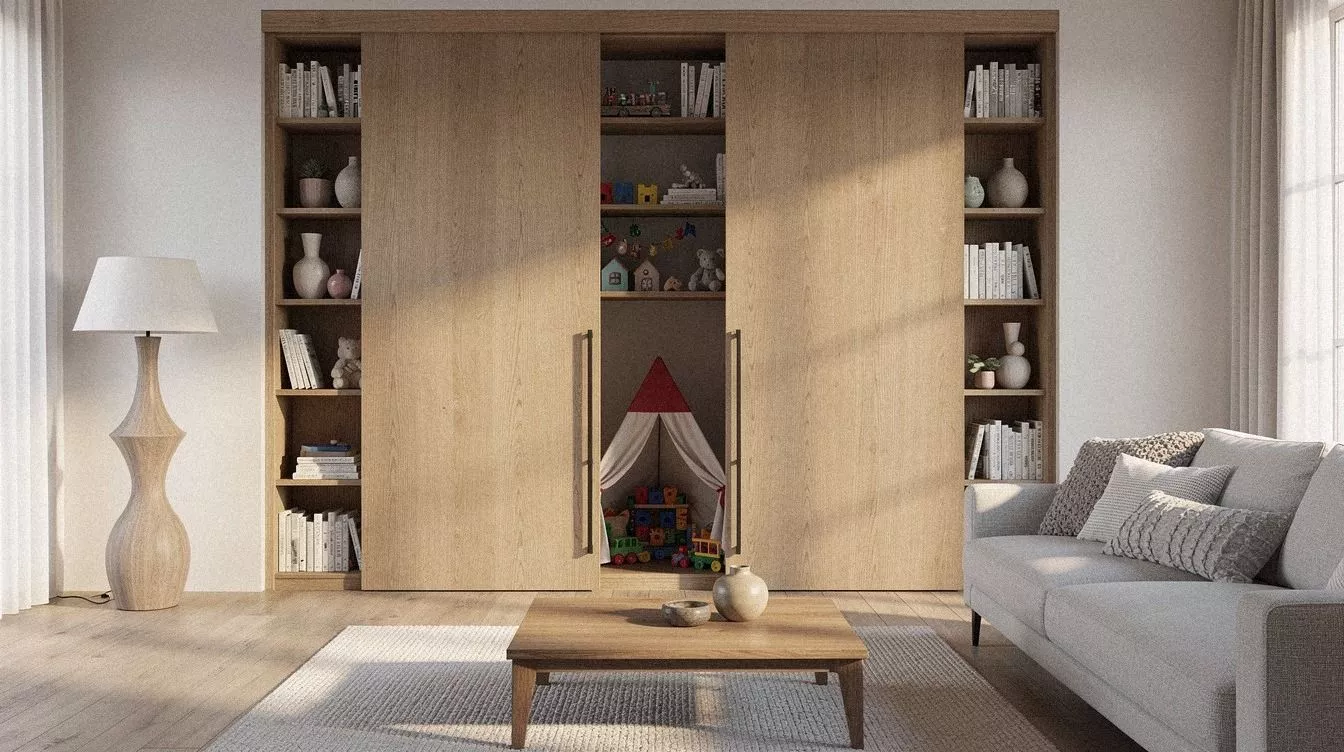
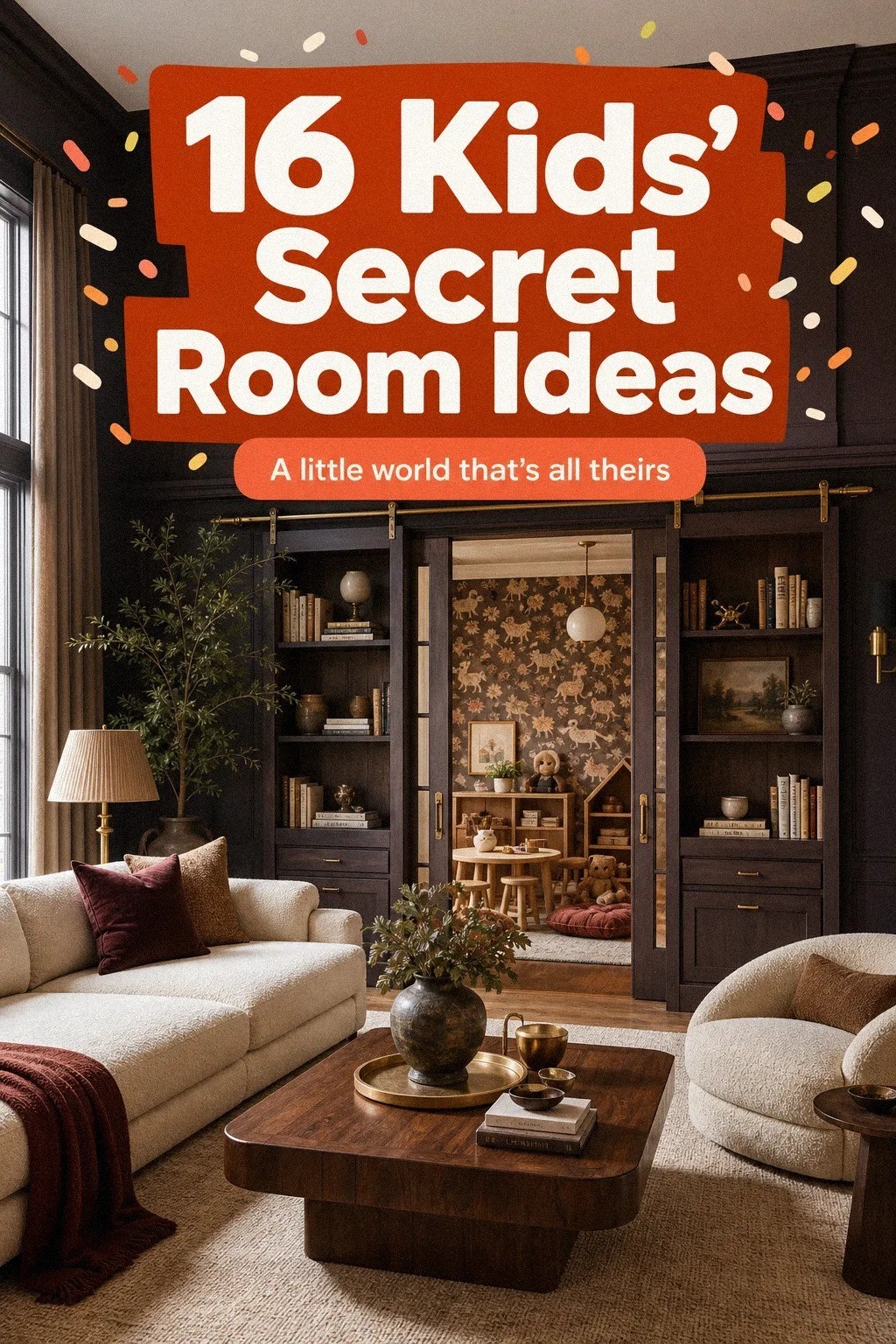
Kids’ secret room ideas for magical hidden hangouts do not need a contractor-sized budget. I learned that the hard way after overbuilding one little reading alcove, only to watch the kids ignore the fancy trim and crawl straight behind the sofa instead. What they wanted was not bigger. It was more tucked away, softer, and easier to claim as their own.
- Hide a playroom behind sliding bookcase panels
- Build a sofa-back tunnel, not a play tent
- Disguise a crawl-in nook under window seating
- Hide a playroom behind sliding bookcase panels
- Build a sofa-back tunnel, not a play tent
- Disguise a crawl-in nook under window seating
- Frame a tiny door inside built-in cabinets
- Curtain off a corner with velvet drapes
- Carve a clubhouse behind the media wall
- Paint a mural door into the paneling
- Frame an IKEA KALLAX entrance in reclaimed white oak
- Tuck floor cushions inside a fireplace alcove
- Camouflage a ladder behind open shelving
- Choose a tented den, or skip the joinery entirely
- Light the hidden nook with starry sconces
- Add a low doorway with an arched top
- Hide a reading nook behind a sliding chalkboard
- Use IKEA HEMNES as a fake wall
- What about safety in a hidden kid’s room?
1Hide a playroom behind sliding bookcase panels
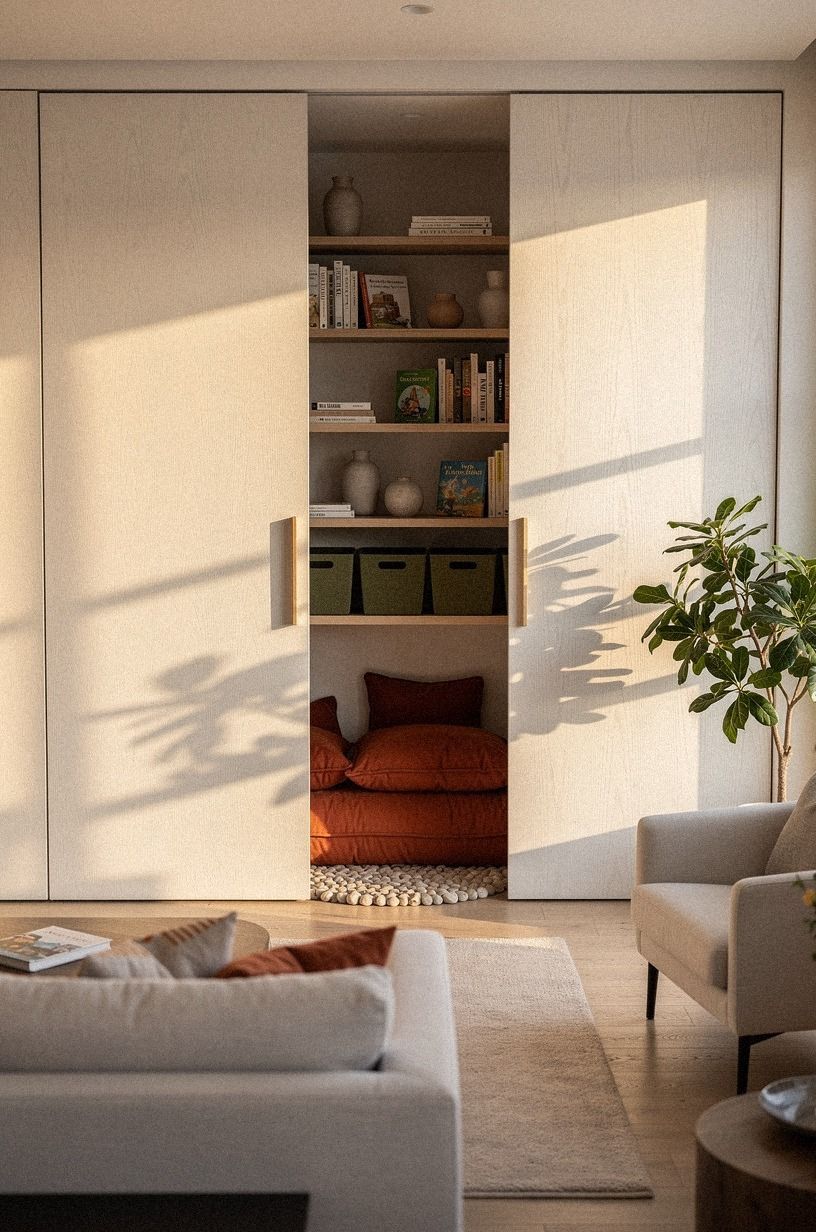
Start with the panels, not the toys. If you want this kind of hideaway to feel believable in a family room, you need the front view to read like real storage first, and that is why cerused white oak works so well.
The pale grain keeps the bookcase calm, while the slight texture stops it from looking like flat builder-grade melamine. I like two partly open panels instead of one big moving wall because you get that little reveal moment the second your kids slide them apart.
Keep the lower shelves at child height, around 36 to 48 in, so your kids can reach board books, bins, and puzzles without asking you every time. A 5×7 play rug inside is enough for a small table, floor cushions, and you do not need more than that.
But skip deep shelves full of random plastic. They make the entrance look busy, and busy ruins the illusion.
If you want more hidden-entry inspiration, my favorite move is a bookshelf entrance that feels built in. Worth it!
2Build a sofa-back tunnel, not a play tent
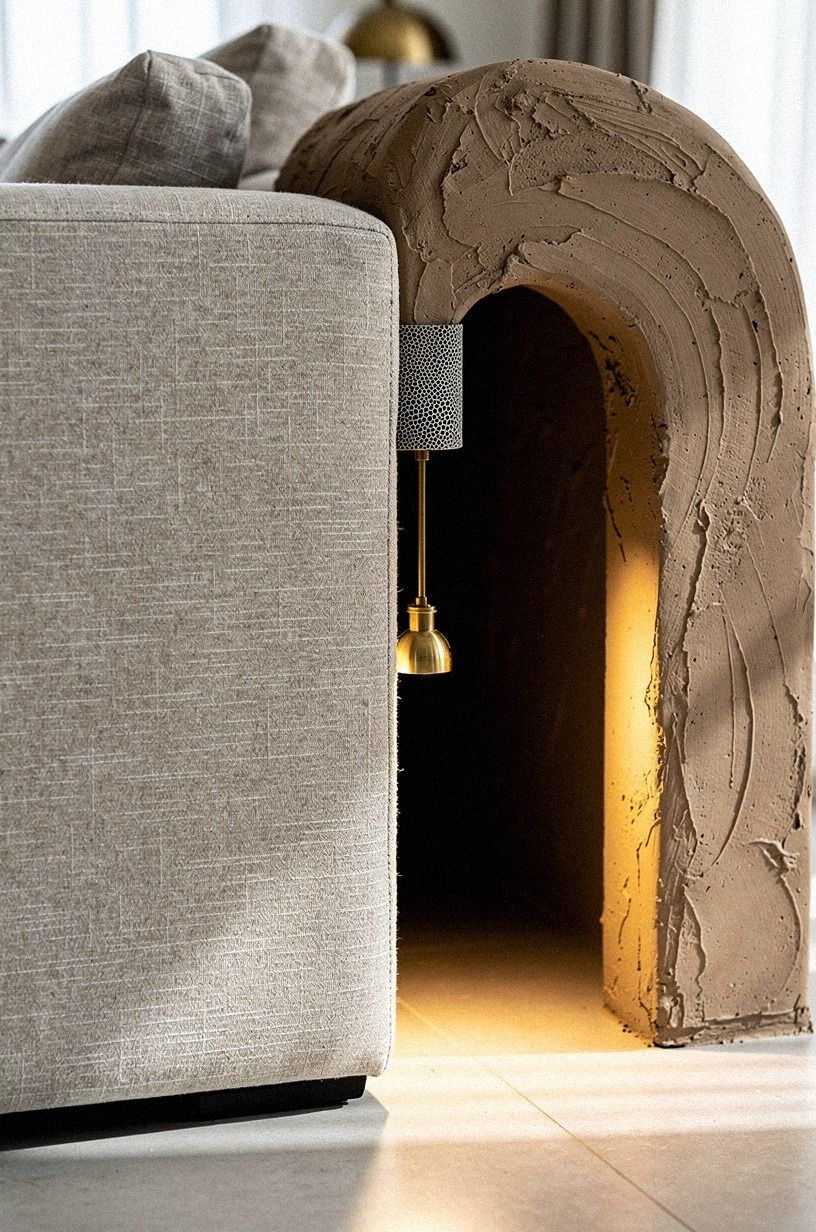
A passage behind the sofa feels thrilling to kids because it is ordinary space turned private, and the arched opening makes it feel intentional instead of accidental. The difference between a sofa-back tunnel and a play tent reads loud and clear: the tunnel borrows furniture you already own, while a tent adds a bright nylon island that fights the rest of the room. Match the tunnel edge to your linen sofa on one side and a light clay plaster wall on the other, and the whole thing settles into the room instead of shouting for attention.
You do not need a long tunnel. Even 30 to 42 in of pass-through space is enough if the opening is trimmed cleanly and the floor stays soft underfoot. I like a quilted runner, one low shelf for paperbooks, and a tiny puck light near the back.
And yes, you should keep the arch a little wider than you think, because kids grow fast and narrow openings start feeling mean by next year. For more hidden-entry planning, this door guide with swing and slide ideas helps you think through clearance, and our family-room layout ideas covers the sofa placement side of things.
3Disguise a crawl-in nook under window seating
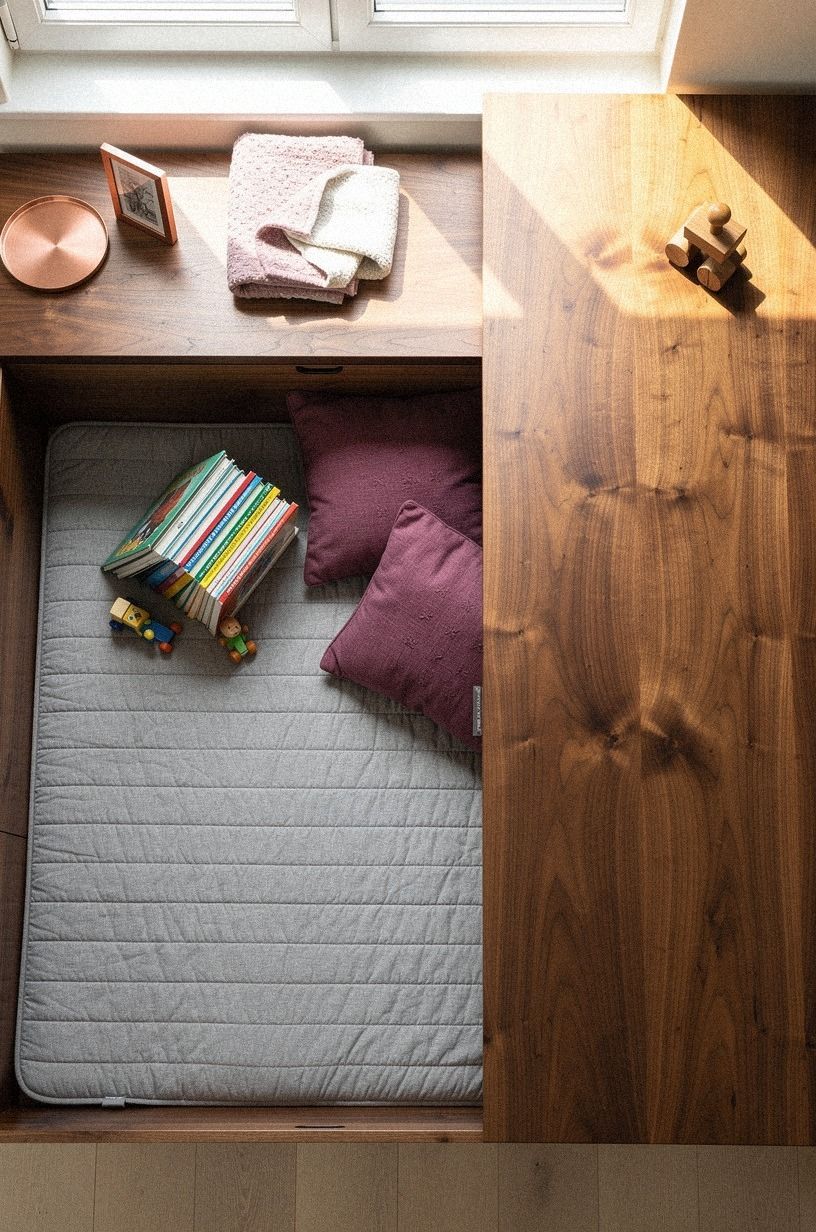
Lift-up bench seating is such a smart move for tucked-away hideouts because the top reads like normal window storage, while the lower cavity becomes a private little den.
4Frame a tiny door inside built-in cabinets
Symmetry saves this idea. When you build a small door into full-height cabinets, the cabinet rhythm has to stay believable from across the room, or the whole thing starts looking like a theme-park prop.
Navy doors, white trim, and a few open walnut cubbies do that job beautifully because the contrast gives the eye structure. I also think a child-scale door looks better when the reveal line sits inside real cabinet framing instead of being painted on later.
Use the shelves around it like normal family storage. Games. Picture books. A woven bin.
One framed drawing. That is enough.
You don’t need to stage every inch. And please skip shiny pulls on the hidden panel if you’re trying to sell the illusion. A push catch or touch latch is the better call, especially when the rest of the built-in uses discreet matte brass hardware. If you’re sketching layouts, I keep coming back to this hidden doorway collection for cabinet walls.
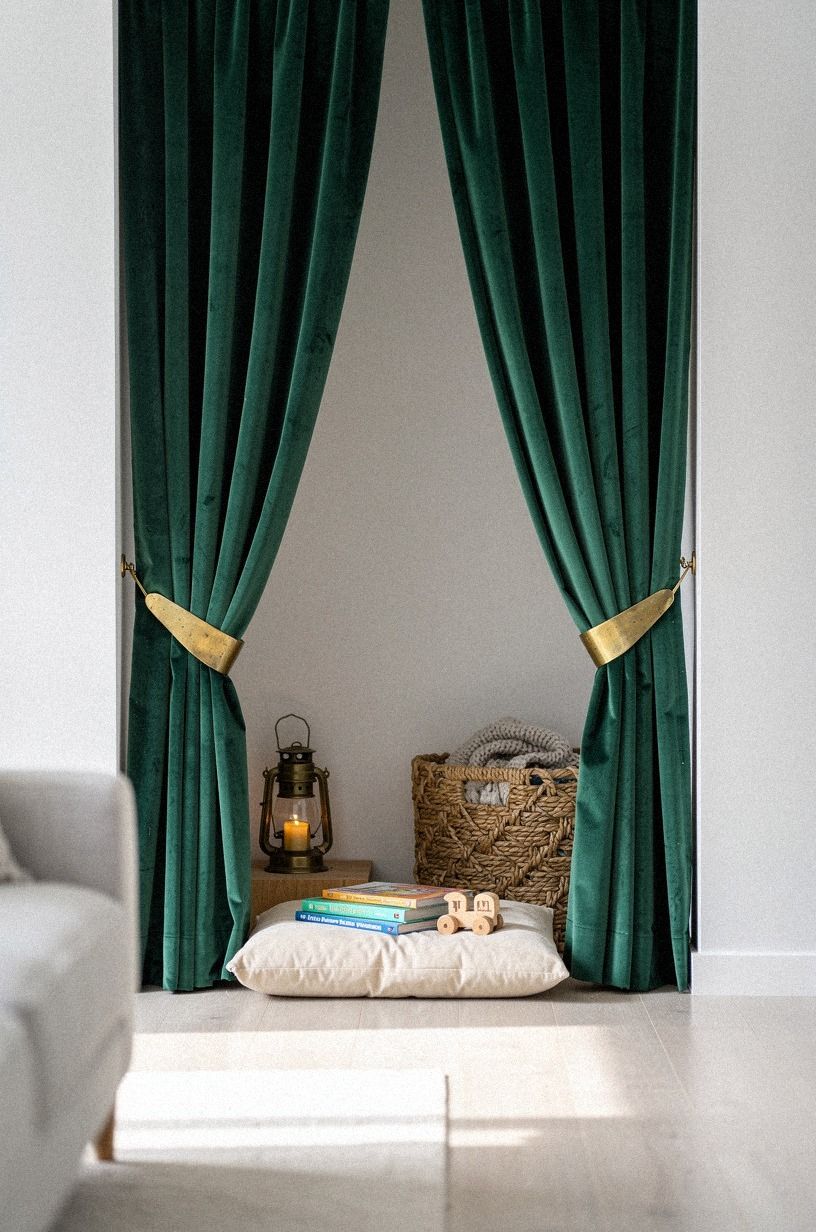
5Curtain off a corner with velvet drapes
If you rent, start here. A tension rod, a ceiling track, or even a clean wall-mounted rod can turn one dead corner into a hideout without a single permanent change, and emerald cotton velvet gives you the mood right away.
Kids don’t need a complicated footprint. They need a threshold.
Once those drapes part just enough to reveal floor cushions and one lamp, the corner starts feeling like its own little world.
I like this move beside a bookshelf or next to a window because the fabric brings softness to all the straight lines living rooms already have. Use blackout lining if the nook faces bright afternoon sun, and keep the inside simple: one mat, two pillows, one basket, maybe a stack of drawing pads. But do not buy slippery polyester curtains for this.
They look cheap in one week and they don’t hold that gathered shape you want. For more conceal-and-reveal ideas, this bookshelf and hidden-entry guide pairs nicely with drapery plans, and our living room curtain ideas walks through the rod-to-ceiling clean mount that makes a curtain wall feel intentional.
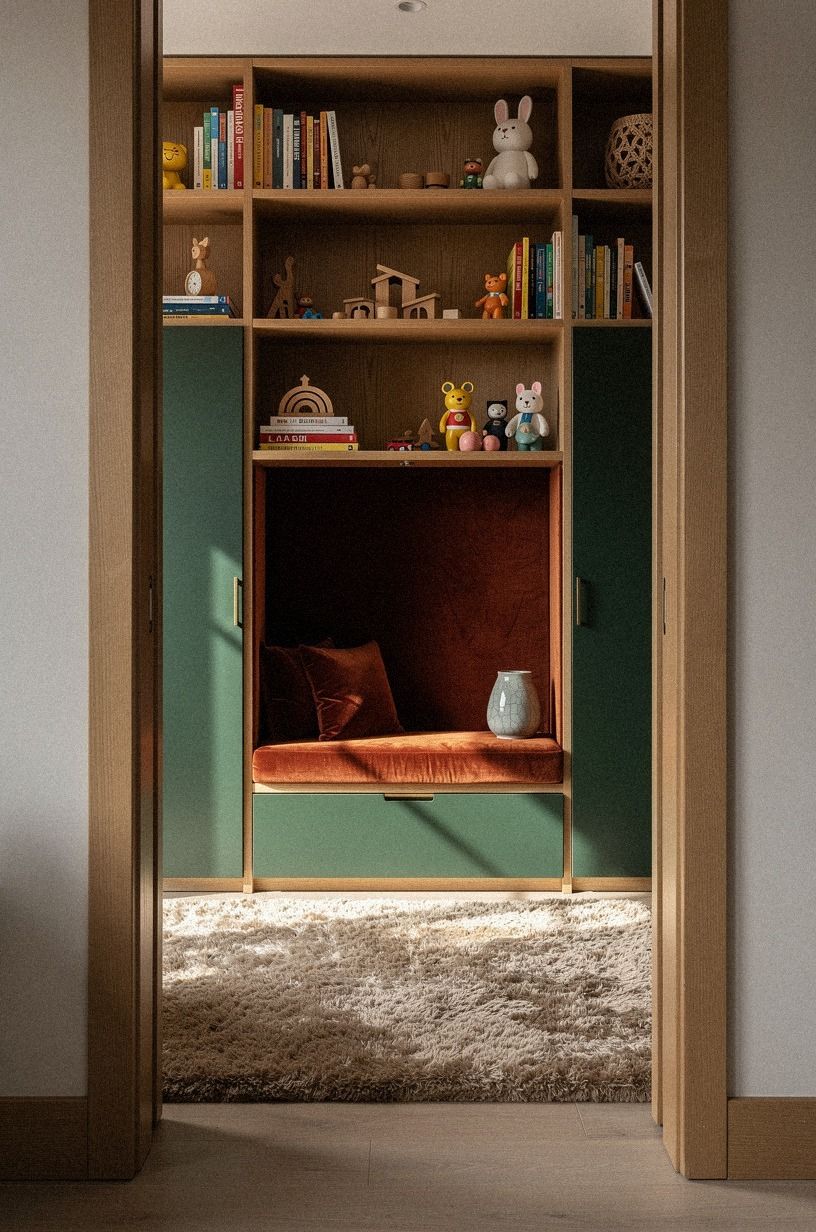
6Carve a clubhouse behind the media wall
This one only works if the outer wall still looks calm. Forest-green media panels are great for that because they already read as architectural, especially with warm wood around the opening and rust cushions tucked behind.
I would paint the visible wall in Sherwin-Williams Open Air SW 6491 only if the room needs lift. Otherwise, I prefer deeper panel color so the hideout feels like a discovery instead of the main event.
And you should plan the hideout around what kids will do there for twenty minutes, not two. A narrow bench, a charging spot for an audiobook player, and a low ledge for sketchbooks go a lot farther than extra decor.
Keep the entry wide enough that you can still vacuum it without swearing, too. That’s my rule for any living-room hideout.
If it can’t be cleaned fast, it won’t stay charming for long. This hidden room doorway roundup is helpful if you want panel hardware ideas.
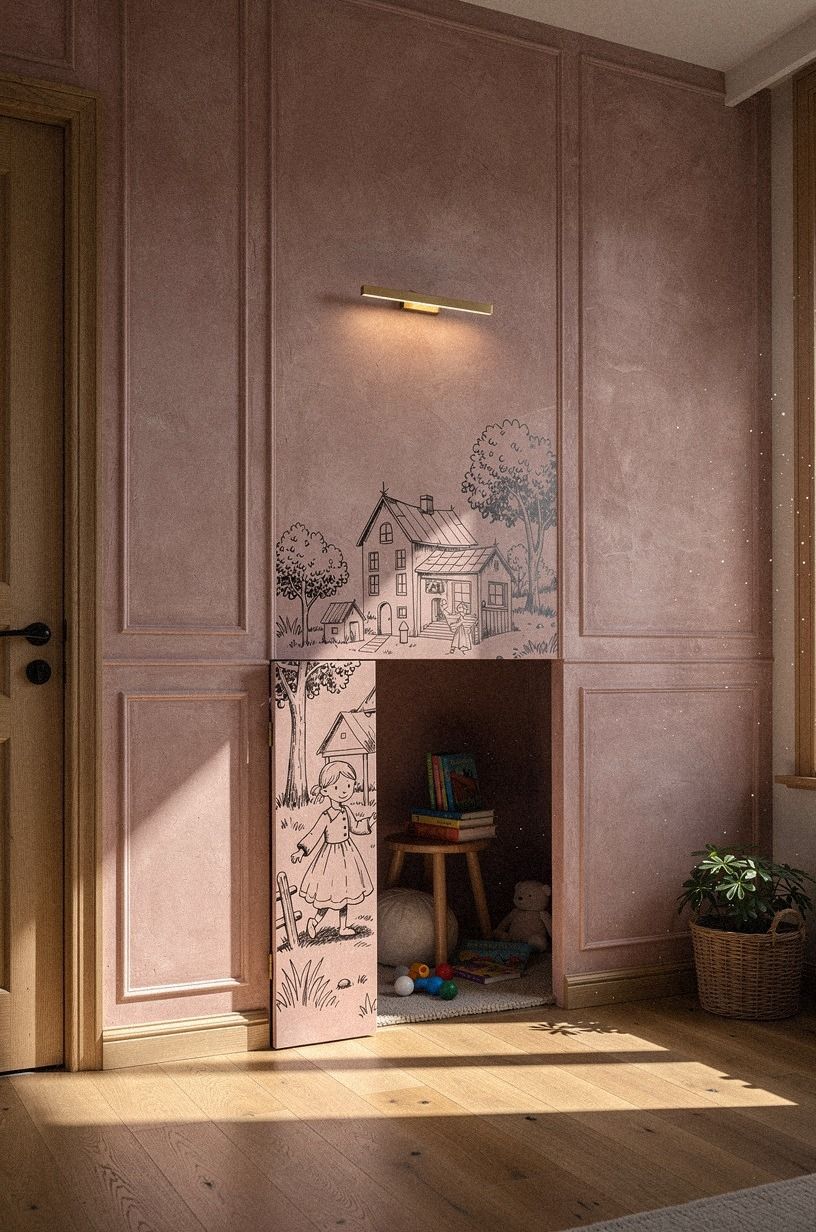
7Paint a mural door into the paneling
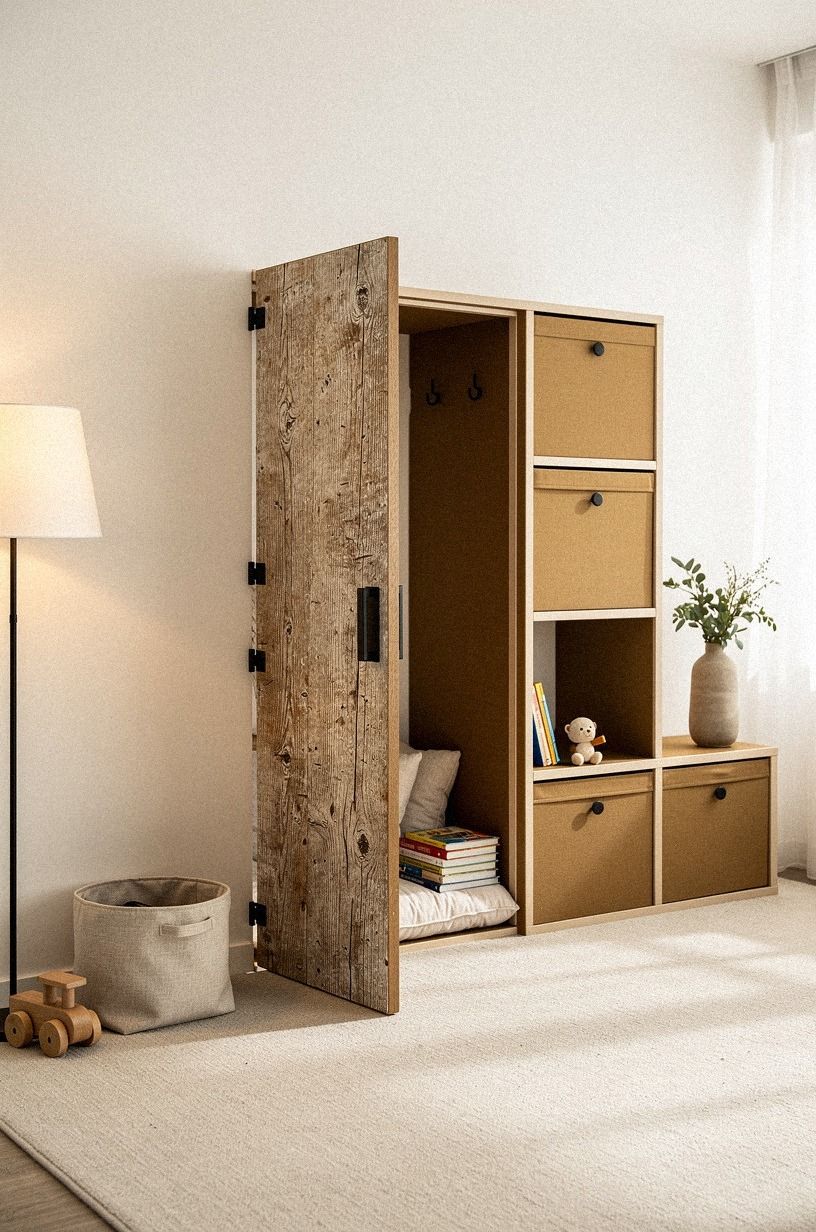
This is where the room can turn magical without turning childish, and it’s a move I come back to again and again.
8Frame an IKEA KALLAX entrance in reclaimed white oak
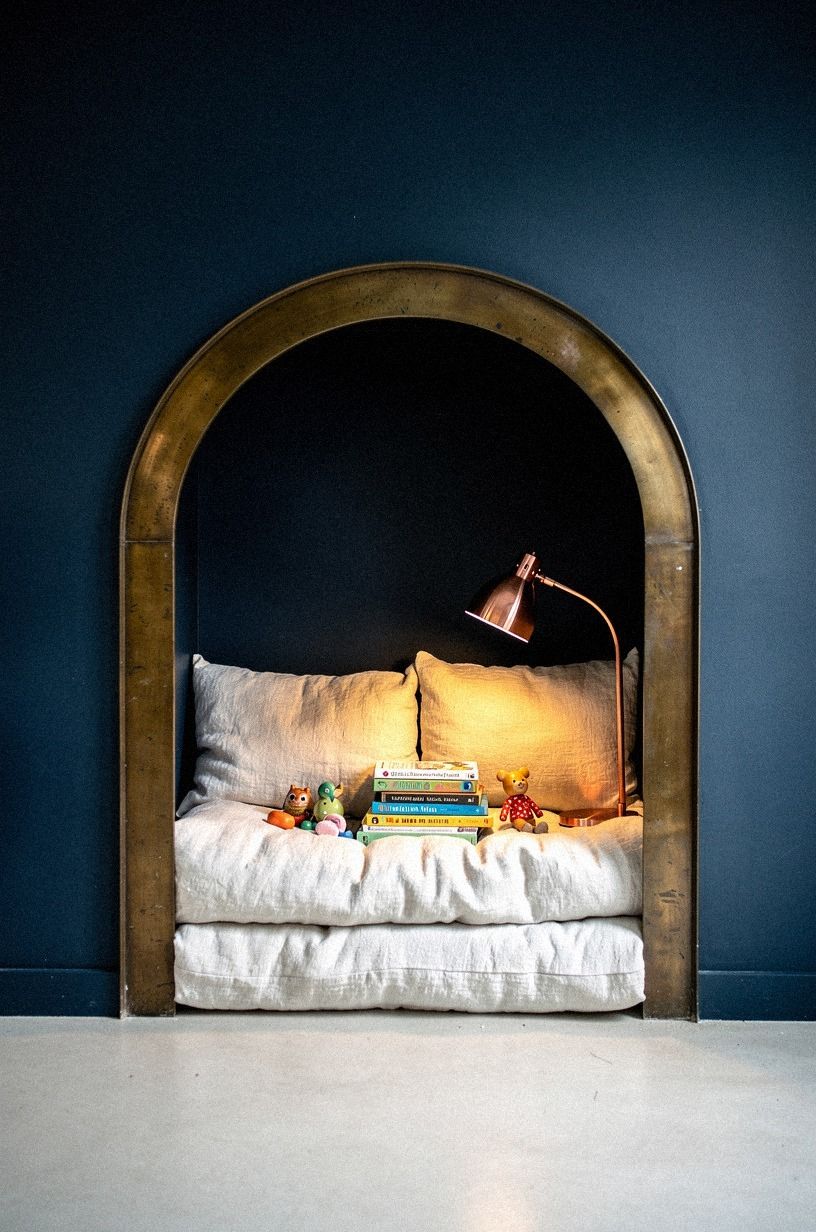
Toy storage can do more than swallow clutter. Two IKEA KALLAX cubes on their sides, joined with a face frame in reclaimed white oak and fitted with soft-close touch latches, give you a real doorway disguised as built-in storage. The room still reads organized, but one press opens a whole tucked-away zone.
That’s the part families miss. The storage doesn’t have to sit beside the entrance.
It can be the entrance. I like the warm white birch finish for the cube bodies, camel bins inside the open cubbies, and one touch panel in reclaimed white oak so the hidden section looks intentional from every angle.
This is also the easiest place to be honest about budget, because you can scale it up or keep it simple. Two KALLAX 2×2 units run about $180 new and a Saturday for assembly, while a millwork shop charges 4x that for a custom version that often looks the same.
If you have $150, start with bins, paint, and a clean latch panel. If you have more, add built-ins later.
But I’d skip fancy custom millwork before you know your kids will use the nook daily. For visual planning, this bookshelf-door article is worth saving.
9Tuck floor cushions inside a fireplace alcove
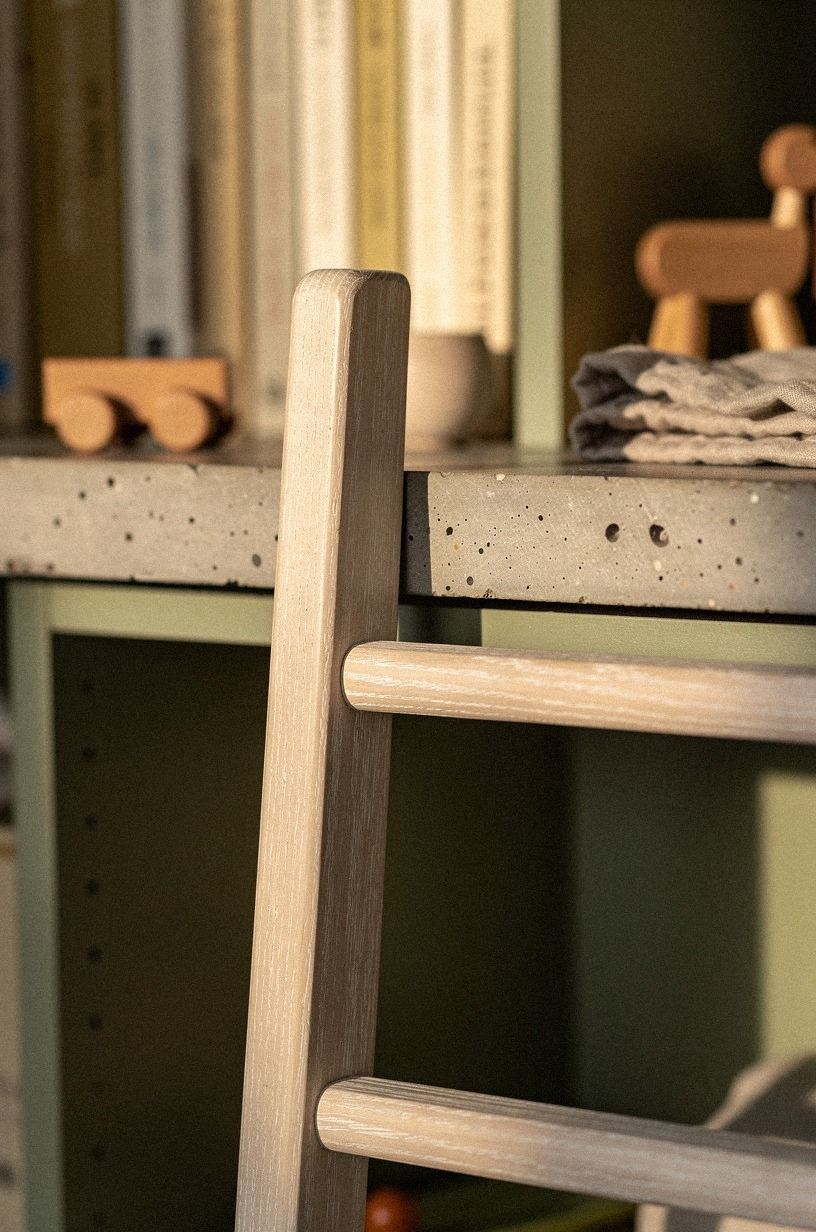
A disused fireplace alcove is practically begging to become a child hideout.
10Camouflage a ladder behind open shelving
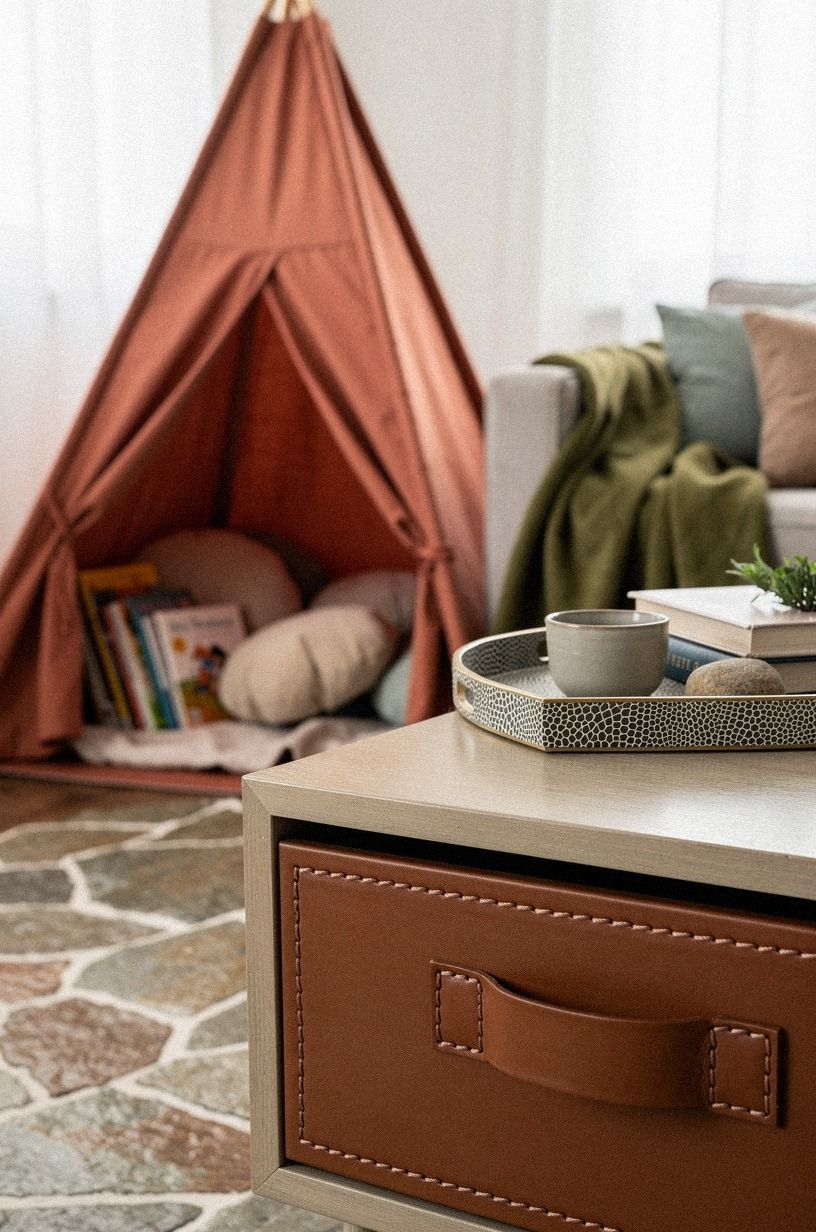
This is a detail move, and detail moves matter. A little ladder rail tucked behind sage shelving works because it doesn’t announce itself from the doorway, especially when the shelf styling stays warm and simple: cream books, soft toys, maybe a basket with cards. The best version uses 3/4-inch solid white oak for the rail so it feels like part of the millwork, not a random add-on from the hardware aisle.
And keep the adjacent shelves shallow and edited, or the ladder becomes one more visual line in an already fussy wall. Don’t put the rungs too close together just because the users are small, either.
Kids still need a comfortable climb. I think this idea shines when it leads to a lofted reading perch, but you need that top clearance handled well, around 33 in below the ceiling at minimum, or the destination stops being fun fast. For more hidden access ideas, this bookshelf entrance guide is the page I’d keep open.
11Choose a tented den, or skip the joinery entirely
Not every hidden hangout needs joinery. Sometimes the right answer is canvas, floor space, and a corner nobody was using well anyway.
The honest call: a tented den works when your kids love a quick in-and-out hideaway, and joinery works when they want a destination they can dress up. A terracotta tent beside an olive throw and a soft stone-toned rug feels grounded enough for a living room, especially if the fabric reads matte instead of shiny.
I made the mistake once of choosing a bright nylon play tent, and it looked out of place by dinner.
Go for a low-profile tent that opens wide so your kids don’t fight the flap every time they crawl in. A lamp nearby helps, but keep the den itself simple: quilt, pillow, one favorite bin, maybe a clip-on pocket for books.
But here’s the thing, if the tent is too small for you to reach in and reset it quickly, you won’t keep it tidy. Why make the hideout harder than it needs to be? If you’d rather skip the fabric entirely, our doorway entrance guide walks through permanent doorway options, and the bedroom hideaway roundup has the same low-commitment spirit for rooms without joinery room.
12Light the hidden nook with starry sconces
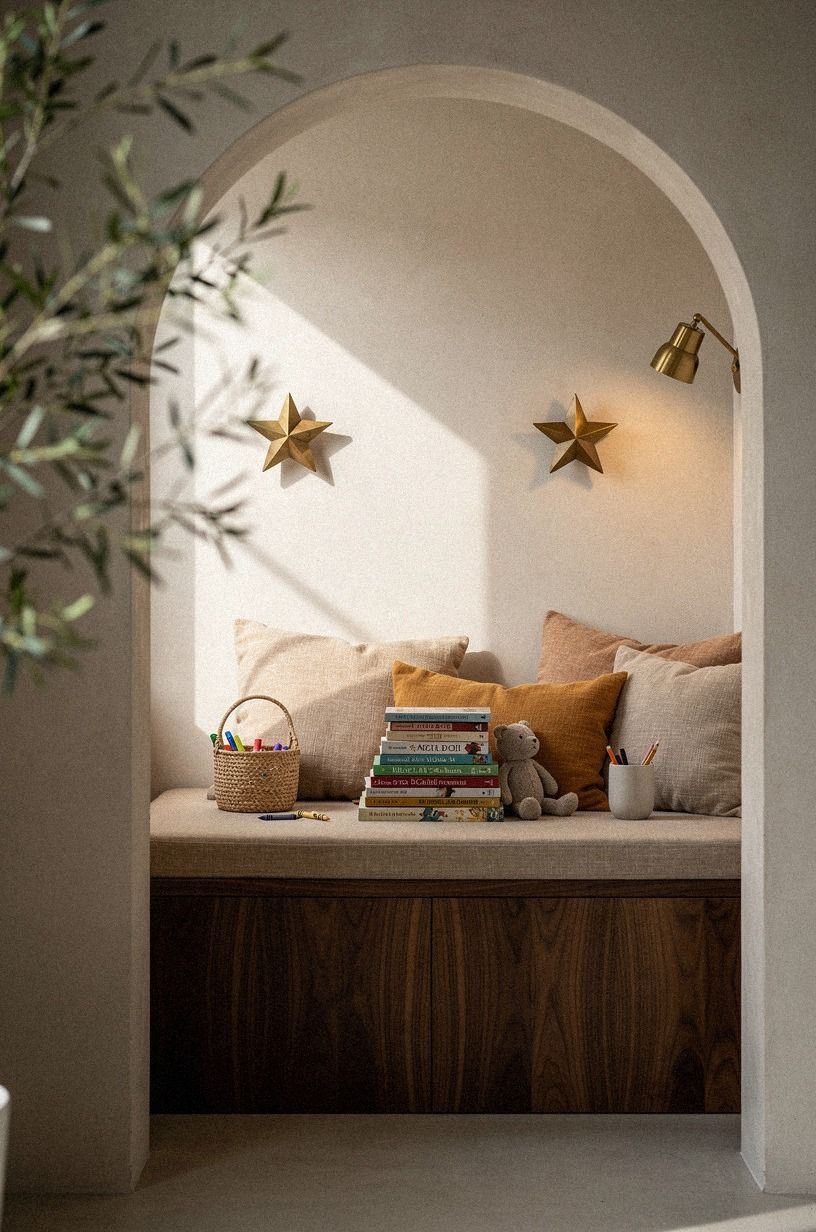
Lighting is the part nobody respects enough. You can have the best nook in the room, but if the bulb feels cold or the fixture glares straight into a kid’s face, the whole setup dies.
Star-cut sconces or perforated shades fix that because they throw little pools of light across clay walls, linen cushions, and nearby foliage instead of blasting the whole corner flat. That’s what makes the alcove feel soft at night.
I like warm LED bulbs only, and I keep them low enough that a child can use the switch without climbing. Pair the light with Benjamin Moore Wickham Gray HC-171 or a warm clay textile so the glow reads calm, not sugary.
And yes, one tiny lamp inside a hideout can change everything. Pick a shade, dim the fixture, and the nook suddenly feels like theirs. If you’re planning the entry and the glow together, this hidden doorway guide for family rooms helps you think through both layers, and our layered lighting guide goes deeper on the three-source rule for hidden zones.
13Add a low doorway with an arched top
Most stock interior doors are 80 in tall, which feels adult-sized and grim in a kid hideout. Cut the opening down to around 60 in and top it with a soft arch, and suddenly the entire corner stops being a doorway and starts being a destination.
You can fake the arch with a $40 piece of bending laminated beech from any home center, screwed into a hidden plywood header. Paint the whole frame in the same color as the wall behind it, and you get a doorway that reads architectural, not theatrical. I’d avoid contrasting paint here; the trick is the shape, not the color.
Add a single antique brass knob at kid height (around 36 in) and the door feels like a real piece of the house.
This is also the move that travels best to rentals, because the arched head can be a removable panel screwed into the existing frame with three hidden bolts. When you leave, you patch two screw holes and a little paint touch-up.
The kids will miss it, sure. But you’ll keep your deposit.
14Hide a reading nook behind a sliding chalkboard
This is the move that pulls double duty: art wall in the morning, hidden reading nook by evening. Mount a sliding chalkboard panel on a ceiling track (the same hardware used for barn doors) and paint the back side in Farrow & Ball Pink Ground No. 202 for warmth when it’s parked open.
When the chalkboard is closed, kids draw on it like any other surface. Slide it sideways after dinner, and there’s the entrance to a tucked-away reading spot, all from the same square footage. I’d size the panel around 36 in wide by 72 in tall, big enough to cover a standard closet opening but small enough for a single kid to push.
The track hardware runs about $80 at any home center, and the chalkboard itself you can pick up pre-made from IKEA or build from a sheet of MDF and chalkboard paint for under $40.
Worth it if your living room already has a closet you rarely open. If it doesn’t, swap the chalkboard for a sliding mirror panel and you’ve still got the same hide-and-reveal feeling without losing the wall art.
15Use IKEA HEMNES as a fake wall
The IKEA HEMNES bookcase is taller than the KALLAX, deeper, and looks more grown-up in a living room.
16What about safety in a hidden kid’s room?
Here’s the part most decor roundups skip, and it matters. A hidden kid’s room needs three honest safety moves before you call it done.
First, ventilation. A curtain-walled corner reads as “cozy” but can feel stale in fifteen minutes.
Add a small USB clip fan to a shelf, or crack a window nearby. Second, fire awareness. If the hideout sits behind a bookshelf door, make sure the adult in the house can open that door in under five seconds. Push latches are fine; locks are not.
Third, sightlines. Don’t bury the entrance so deep that you can’t hear a kid in distress from the kitchen. A 20-second window into the nook from where you usually stand is plenty.
For more kid-room planning, this family-room layout guide and our layered lighting guide walk through the room-side of these choices.
Skip candles inside. Battery brass lanterns give the same glow without the risk. And please don’t run extension cords into the nook for lamps.
A single USB puck light from a reputable brand is safer and just as warm.
What if none of these ideas fit your living room?
Not every family room has the right bones for a hidden hangout, and forcing one always shows. If your room is wide open with no alcove, no window seat, and no built-in wall to borrow from, a sofa-back tunnel is the most forgiving starting point because it uses furniture you already own. I’d skip the clubhouse and the mural door in a rental until you’ve lived with the space for at least a season.
Pin this list for later and pull it back out the next time you rearrange: a “no” today becomes a “yes” once the layout shifts.
The Soft-Threshold Rule That Makes These Work
Here’s my honest take: kids don’t fall in love with these rooms because they’re hidden. They fall in love with them because the threshold feels different from the rest of the house. That’s a bigger idea, and it’s the one I wish more adults understood before spending thousands on a wall that spins or a cabinet that pops open. The shift can be tiny.
A curtain. A lower light. A warmer fabric.
A bench cushion lifted just enough to reveal a place that’s theirs. And once you feel that soft shift, you’ll never go back to a single-purpose kids’ room again!
I’ve watched this play out over and over. The expensive version gets attention for a week, then the kids drift back to the spot that feels softer, darker, and more forgiving.
That’s why I keep pushing texture first. Belgian flax linen on a cushion. 600gsm Turkish cotton in a quilted mat.
A book ledge low enough that a six-year-old can reset it alone. The room doesn’t need to impress another adult on Instagram.
It needs to feel easy to enter, easy to read in, and easy to own. If your kid’s favorite corner is already an oddly-shaped gap by the bookshelf, lean into it. Our cozy reading nook ideas walks through how to nudge what’s already there into something intentional.
And there’s a real design lesson here for you if the hideout sits in a shared living room. The grown-up palette has to stay intact.
I’d rather see Farrow & Ball Pink Ground No. 202 used in one dusty panel and balanced with walnut, camel, or olive than see a whole corner go bubblegum. Same with blue.
Sherwin-Williams Open Air SW 6491 is lovely in moderation, but if the entire nook turns pastel, the room starts feeling temporary. Kids notice that too.
They want magic, sure, but they also want a space that feels claimed, not borrowed.
What pays off most? Good trim lines, soft light, and one material that feels special under the hand.
Not twelve bins. Not a themed mural on every wall.
Not a bunch of novelty hardware you’ll hate in six months. If I were choosing where to spend and where to save, I’d spend on the surface your child touches most, cushion, rug, curtain, or rail, then save on almost everything decorative.
That’s the difference between a hidden hangout that gets used every day and one that becomes storage by October, and it’s the part I wish someone had told me before I overbuilt my first alcove with custom millwork that the kids walked right past!
The Questions I Get Asked Most
What is the best kids’ hidden hangout setup for a small living room?
A sofa-back tunnel or a curtained corner is the best pick for a small living room. They borrow space you already have instead of asking for new square footage, and an IKEA KALLAX nearby gives you storage without blocking the path. I love that combo.
Where can I buy kids’ hidden hangout pieces on a budget?
Start with IKEA, Target Threshold, and Wayfair for bins, curtains, and small shelves. Secondhand finds stretch the budget furthest too, especially on Facebook Marketplace for bookcases, benches, and washable rugs. I check there before I buy anything bulky.
How much does a kids’ hidden hangout makeover cost?
Most of these makeovers cost about $150 to $600 if you’re painting, adding bins, and soft goods only. The free wins are layout and decluttering. Once you add storage walls, lighting, or a bed, you’re usually in the $1,000 to $3,500 range.
Can I create a kids’ hidden hangout on a budget?
Yes, and you don’t need custom carpentry. Paint, curtains, and floor cushions do a lot of the heavy lifting.
Think secondhand bookcase, removable mural decals, one blackout panel, and a rug you can move later. That’s enough to make the spot feel claimed.
Is a kids’ hidden hangout worth it in a small space?
Yes, it is, because small rooms often have clearer edges and less wasted circulation. A defined hideout can make the whole room work harder if you tuck it under a bench, behind a sofa, or inside shelving. Keep the entry off the main walking path.
Is a kids’ hidden hangout a good idea for a rental?
Yes, especially if you stick to reversible moves. Curtains, peel-and-stick mural panels, and freestanding storage are renter-safe and still give your kids that tucked-away feeling. I’d avoid screwed-in trim unless you know you’ll stay put for years.
The One Move I’d Start With
If I had to pick one, I’d start with the sliding bookcase panels. They hide mess, frame the reveal, and keep the living room looking grown up even when the toys multiply. Pin that idea for later and save this built-in bookshelf entrance guide.