
Secret room ideas for the bedroom can cost as little as $200 to $800 when you keep the move cosmetic and let the architecture do the heavy lifting. I used to think you needed a mansion and a carpenter on speed dial for this kind of drama. You don’t. Most of the magic comes from matching finish, scale, and hardware so well that your eye slides right past the opening.
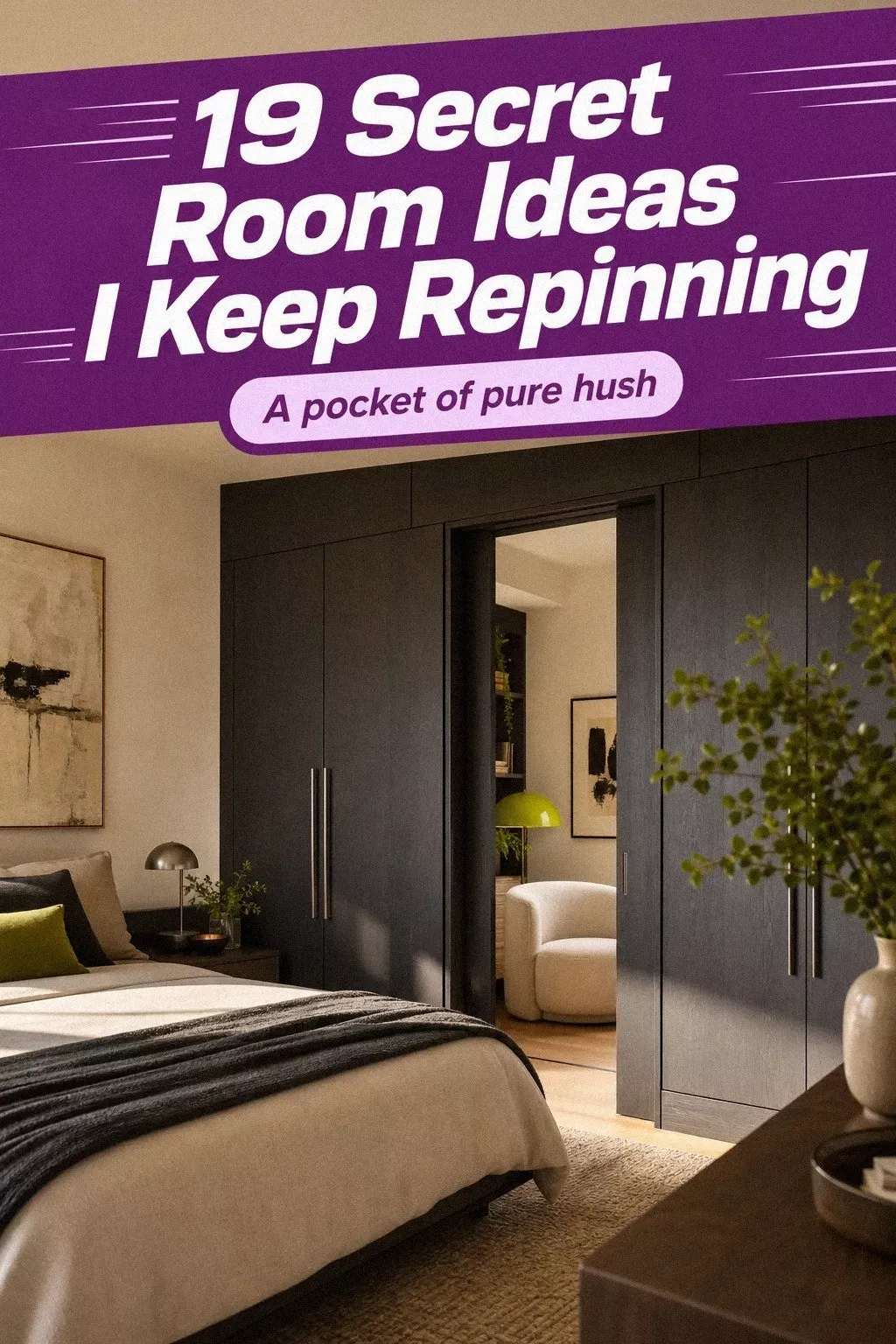
- Build a wardrobe wall with a hidden pocket door
- Disguise the entrance behind full-length mirror panels
- Frame a bookcase door beside the bed
- Build a wardrobe wall with a hidden pocket door
- Disguise the entrance behind full-length mirror panels
- Frame a bookcase door beside the bed
- Why fluted slats work when flat panels don’t
- Paint the secret door into the accent wall
- Install touch-latch panels under a pitched ceiling
- What if your closet fronts disappeared into the wall?
- Conceal a reading nook behind curtain tracks
- Carve a jewel-box room beyond nightstand shelving
- Farrow & Ball behind the headboard: where the seam dies
- Use arched molding for a storybook reveal
- Tuck a vanity room behind sliding wardrobes
- Camouflage the seam with picture-frame trim
- What happens at the threshold if the lighting is wrong?
- Create a speakeasy lounge behind closet doors
- Why does a brass hook sell the illusion?
- Build a loft hideaway above the bed wall
- How to redirect the ensuite into a secret suite
- Finish the inner room with velvet walls
1Build a wardrobe wall with a hidden pocket door
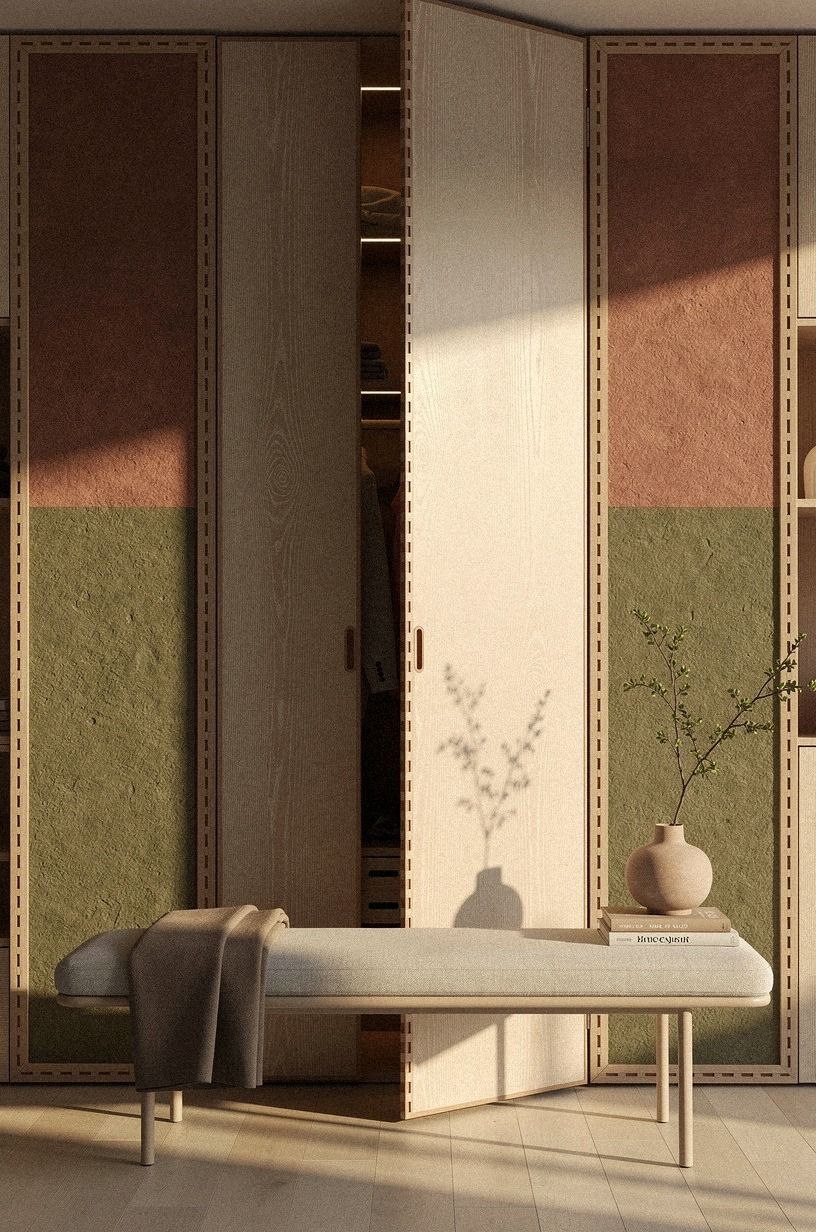
Start with a full wardrobe wall so your eye reads one calm plane instead of one obvious opening. If you’re working with a queen bed at 60×80 in, give the wardrobe enough width that it feels intentional on both sides of the mattress, not squeezed in as an afterthought. I’d use cerused white oak panels with a terracotta, stone, and olive palette because those tones soften the join lines and make the whole wall feel older than it is.
You’ll get the best result when the pocket door sits dead center and the panel rhythm stays even from end to end. Flat-front drawers below.
Slim reveals. One recessed pocket door hardware kit instead of a fussy handle.
If you want more entrance ideas before you commit, look at these hidden room entrances that actually work. I’ve seen people break this move with too many trim profiles, and it always gives the opening away.
The detail I keep getting wrong on the first try is the reveal at the floor. If the pocket-door track sits proud of the baseboard, you can spot the seam at ankle height, which kills the illusion the moment you walk in. Run the track flush to the floor and let the door bottom seal against a hairline felt weatherstripping.
Keep the wall disciplined, and your room will feel custom fast.
2Disguise the entrance behind full-length mirror panels
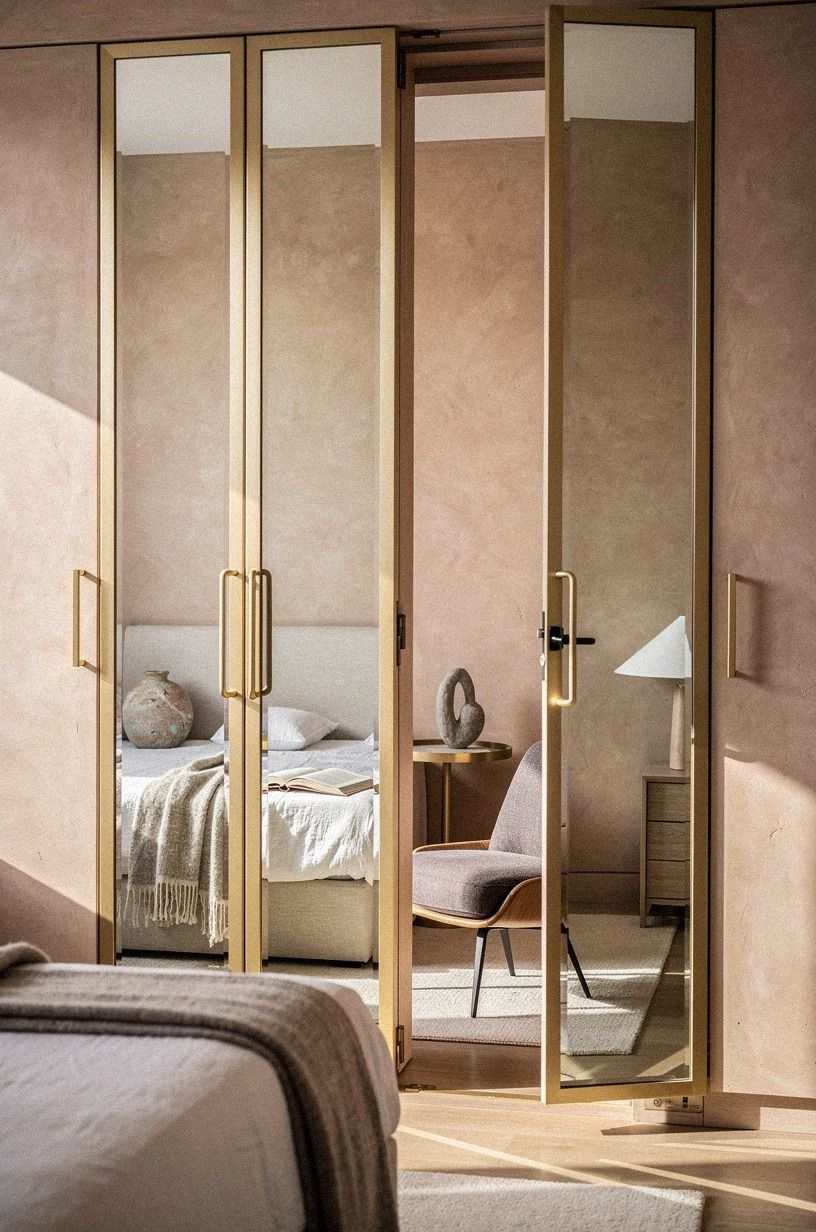
Go tall here, because you want the mirror to behave like architecture, not like decor hung over a door. A floor-to-near-ceiling panel makes your bedroom feel bigger and brighter, and you’ll get that useful bounce of light at the same time. I like antique mirror glass better than perfectly clear mirror for this move, because a little haze is forgiving when two panels need to align.
If you’re placing it beside a bed, keep the nightstand close to mattress height, around 24 to 28 in, so the mirror line doesn’t feel awkward next to the bedding. One panel slightly ajar is enough to show the hideaway without ruining the illusion.
And yes, this is one of the smarter options for secret rooms in bedrooms when you don’t have deep wall thickness to spare. I wouldn’t pair it with shiny chrome.
A softer metal, especially aged brass, gives you warmth and hides fingerprints better.
Two things always give the move away. The first is a thick black gap between the panels, and the second is a frame that sits proud of the wall. Keep the panels butted together with a 1/16-inch gap and set the frame flush to the plaster, then watch the seam disappear.
That’s the whole move.
3Frame a bookcase door beside the bed
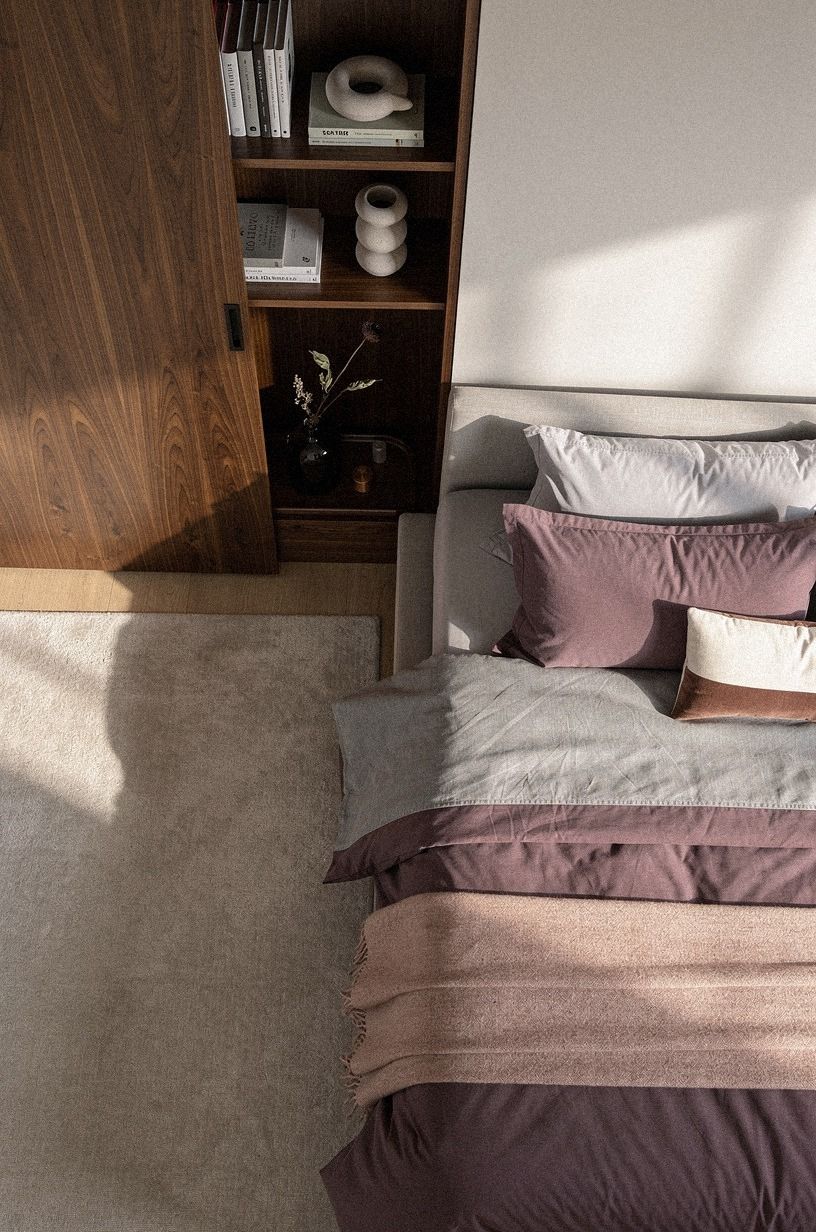
A bookcase door works because it gives the eye a job. You’re reading spines, objects, and shadow lines instead of hunting for a seam.
Beside the bed, that matters even more, since the opening sits close to your daily sightline. I’d frame it in walnut veneer with shelves deep enough for stacked books, a small bowl, and one low lamp, not a clutter parade.
You’ll want the shelf depth to stay believable. Too shallow and it reads fake.
Too deep and it starts bullying the bed zone. Around here, I’d rather see a few heavy hardcovers and one carved box than ten random accessories in Schneider bookends.
For more ways to pull off this classic move, this roundup of bookshelf door ideas is worth your time. But don’t overload the shelves.
Weight changes how the swing feels, and nothing ruins the effect faster than a door that looks elegant and moves like a refrigerator. Aim for 35 pounds loaded, no more.
Use a Sugatsune pivot hinge rated to 70 pounds so the action stays smooth even when the kids pile on board games. That’s the line between charming and clunky.
4Why fluted slats work when flat panels don’t
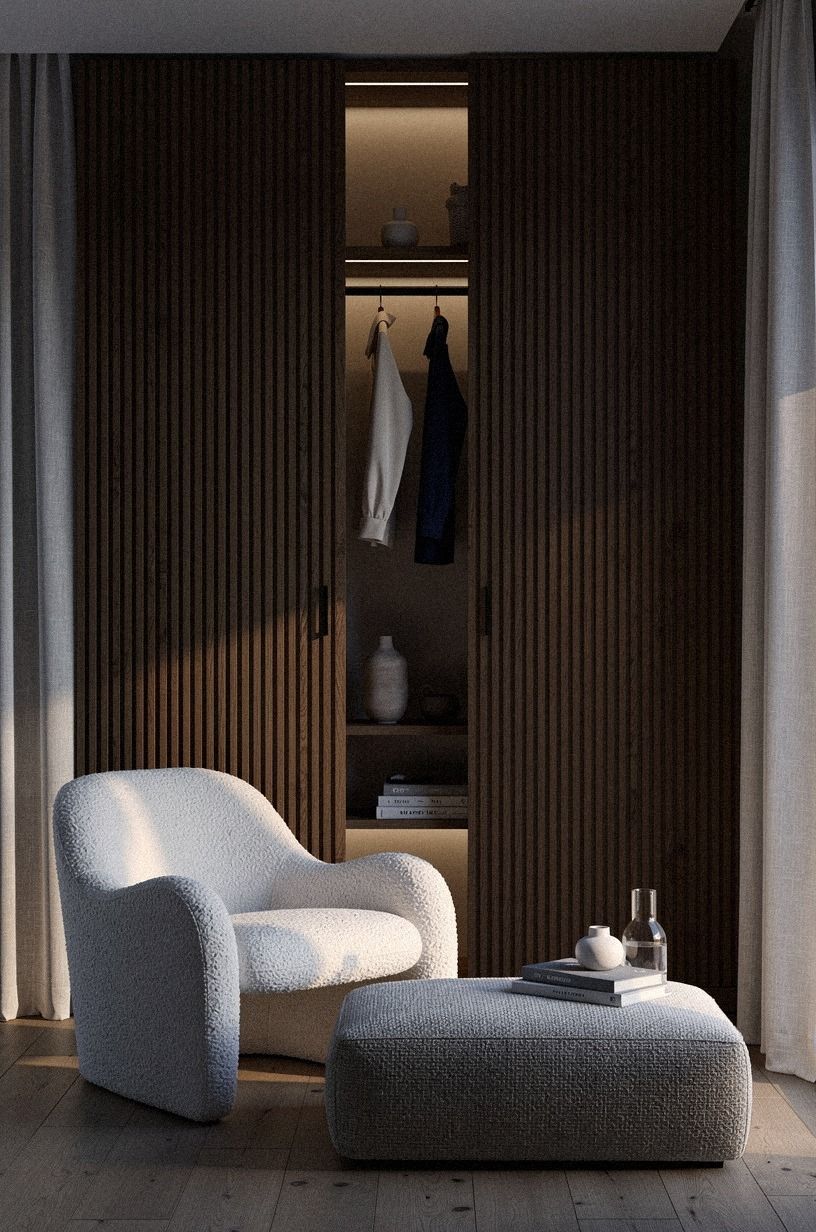
Fluting is doing a lot of work right now, and this is one place where the trend earns it.
5Paint the secret door into the accent wall
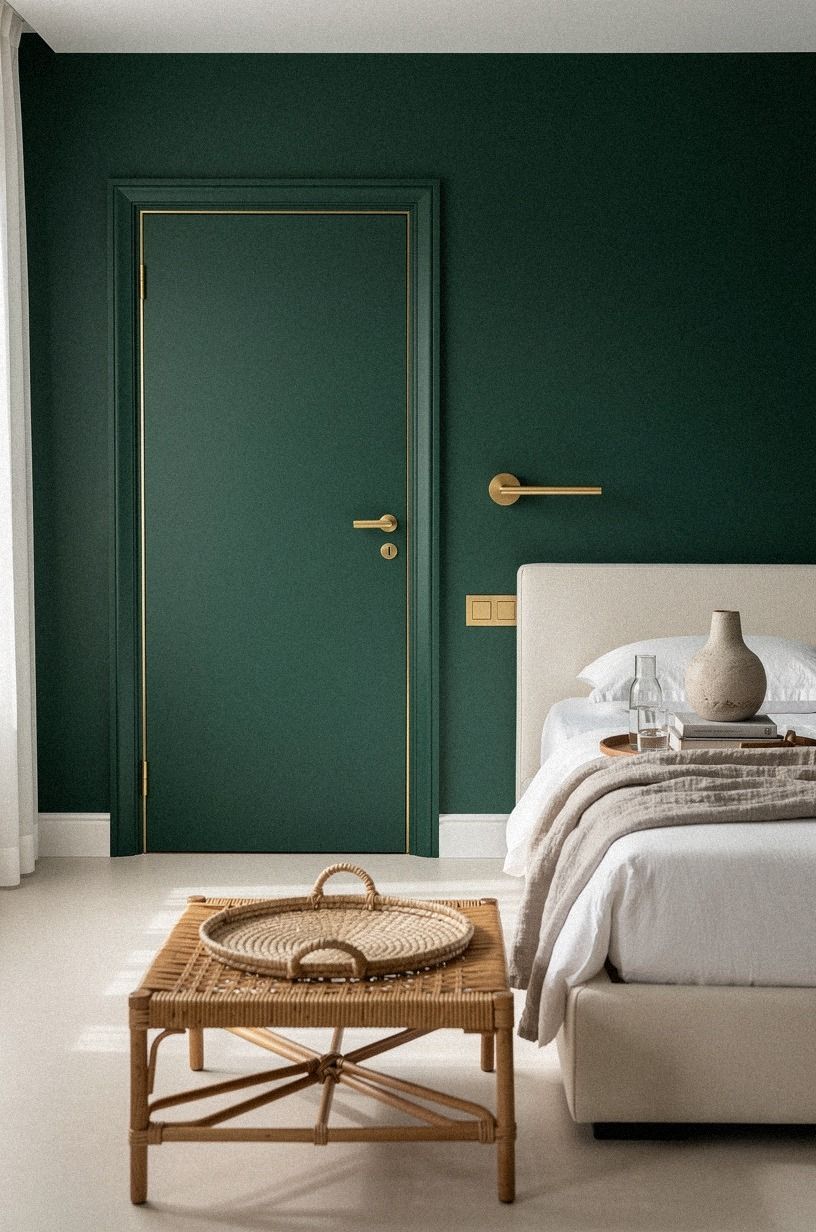
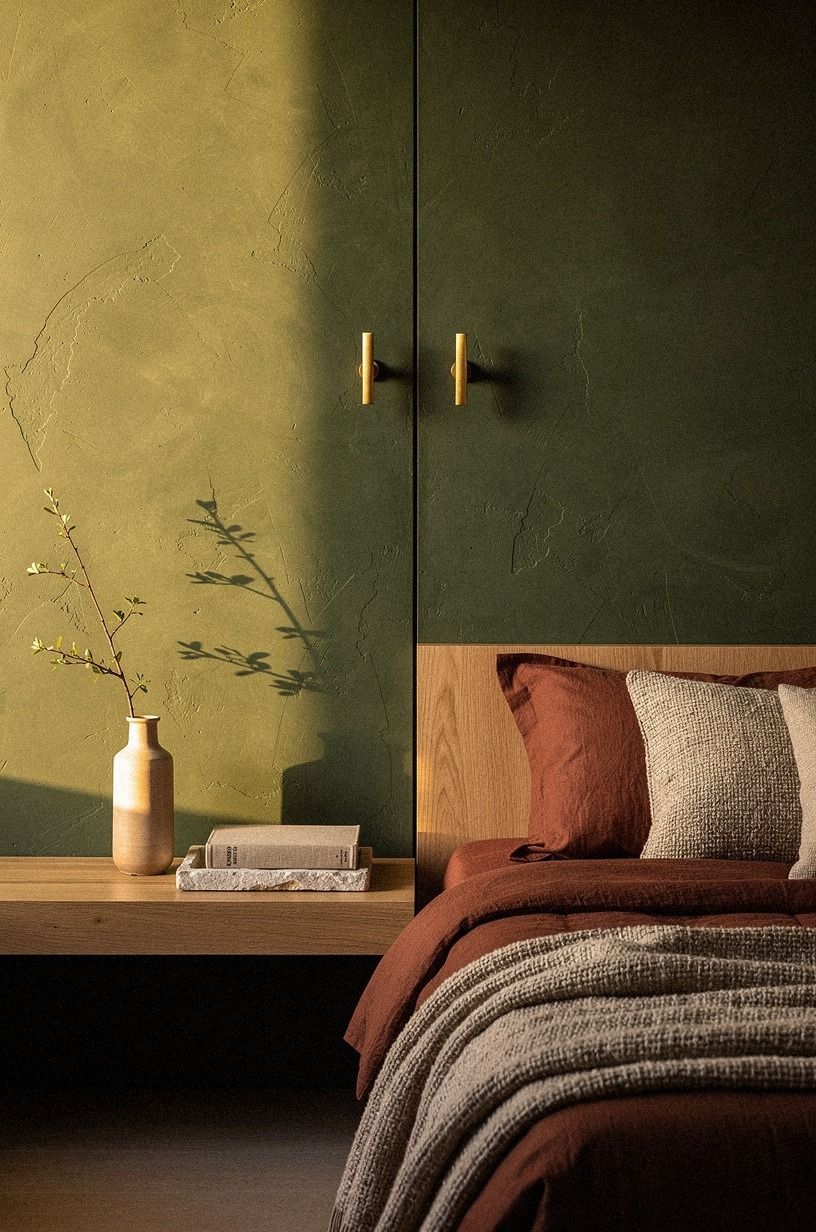
This is the move I’d reach for if you want the easiest visual payoff for the least structural fuss. Paint is cheap compared with millwork, and a color-drenched wall can swallow a door line surprisingly well.
The photo mood here wants a deep green, and Farrow & Ball Studio Green No. 134 is the right call for that. It’s the one paint that reads green at noon and almost black at 7pm, which is the whole reason it sells the concealment.
But what matters is matching the door, trim, and surrounding panel field exactly, right down to sheen. You don’t want eggshell on the wall and satin on the door, because your eye will catch the change even if you can’t explain why.
A fine brass reveal strip can help, but only if it’s hairline thin and aligned with the art. If you’re planning a fuller concealment scheme, these hidden room entrances that actually work are useful to study. And if you’re wondering whether this works in a bedroom with hidden-room ambitions on a budget, yes, it does.
Paint is often the smartest first pass.
6Install touch-latch panels under a pitched ceiling
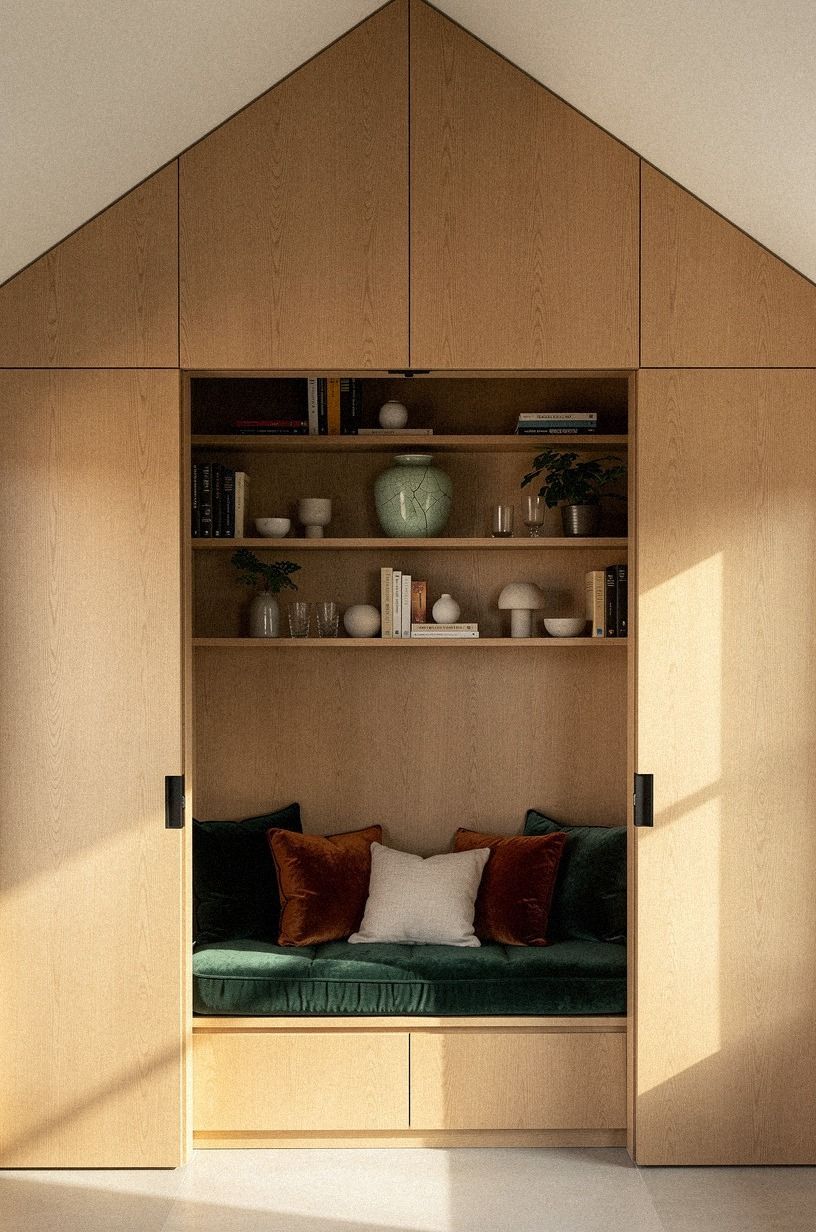
Odd ceiling lines don’t have to kill the idea. In fact, they can make the concealment better because your eye already expects the geometry to shift. Under a pitched ceiling, I’d build flush panels that follow the slope cleanly and let the opening lead to something compact, like a reading alcove with cushions and a sconce.
White oak plywood with a good veneer layup keeps the face stable and the cost saner than solid stock. The panels run about $220 per sheet at 4×8 ft and finish cleanly with one coat of hardwax oil.
Touch latches are worth it here because handles would interrupt the whole move. But don’t buy the flimsy version.
If the panel pops open too hard, the room feels gimmicky instead of refined. Sherwin-Williams Accessible Beige (SW 7036) on the adjacent walls is a good call if you want the oak to stay warm and calm.
And if you’re styling a nook inside, keep the seat depth generous enough that you’ll use it.
Pretty but cramped is still cramped. Aim for at least 22 inches of seat depth so an adult can sit cross-legged with a book, and 18 inches between the seat front and the back wall so a throw blanket has somewhere to land.
Haworth Zody task chair cushions are a soft, sculptural option if you want a seat that disappears. That’s the move nobody talks about.
7What if your closet fronts disappeared into the wall?
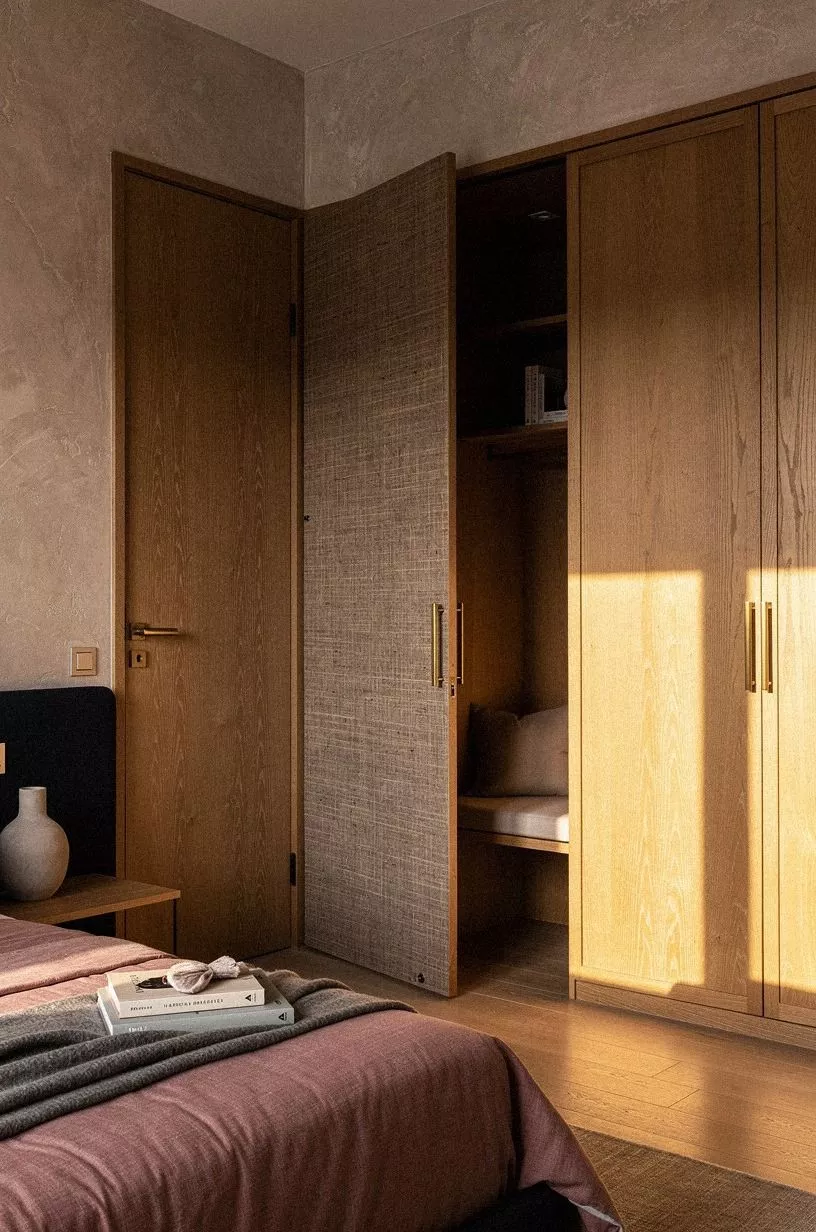
If you want the wall to disappear by texture instead of paint, grasscloth wallpaper is strong.
8Conceal a reading nook behind curtain tracks
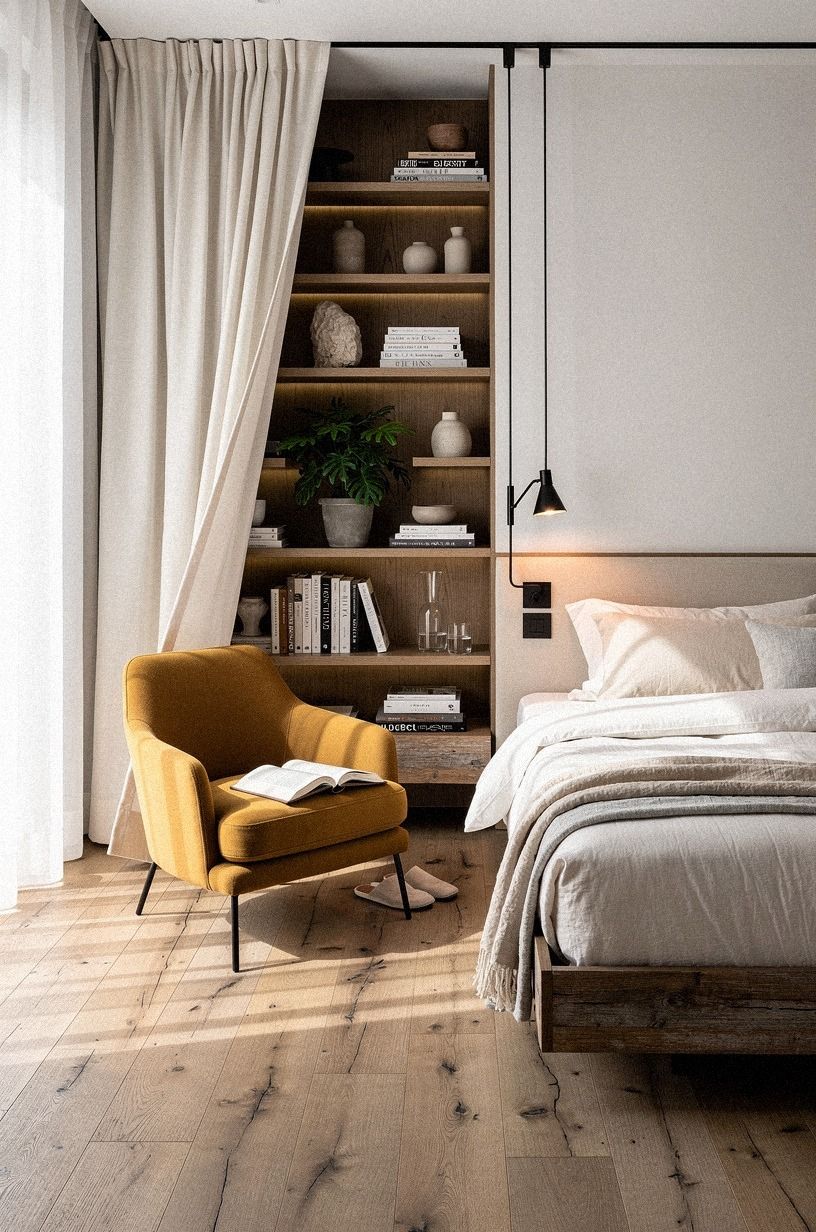
Curtains are one of the easiest ways to make a room feel layered, and they’re also forgiving when the opening isn’t architecturally perfect. A ceiling track lets you draw a soft line across the wall, then pull it back to reveal a lounge chair, ottoman, and shelves when you want the tucked-away corner. Belgian flax linen works better than anything stiff because it hangs with weight and doesn’t look temporary.
Track hardware from IKEA VIDGA runs about $40 per rail and handles the weight fine.
And you don’t need a huge footprint either. Even a small hideaway can feel generous if the chair is scaled right and the drape stack has room to clear.
I’d use a Room & Board Devon camel leather chair, warm white curtains, and one focused reading light. But don’t mount the track too low.
You’ll lose the vertical stretch that makes this move feel elegant. Mount the track 1 inch from the ceiling and let the drapes fall the full distance to the floor, and the eye reads architecture instead of curtain. For renters, this is one of the most forgiving cool secret rooms in bedrooms ideas because a ceiling-mounted track or even a tension setup can change the room without tearing into the wall.
If you want another layered reveal reference, look at these hidden room door ideas.
9Carve a jewel-box room beyond nightstand shelving
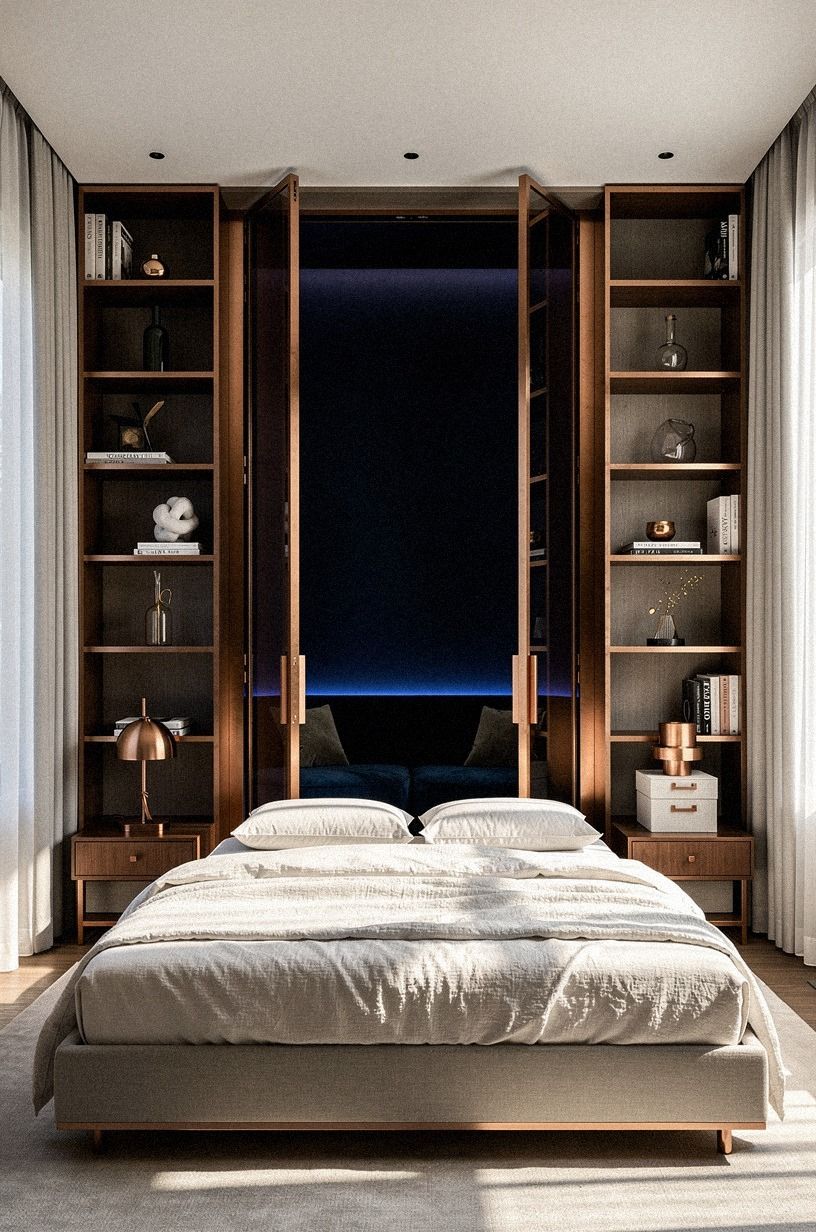
This is where you go bolder. If the main bedroom is quiet, the inner room can hold a little drama without tipping the whole house into theme.
I love the idea of a low pivoting shelf wall that opens into a compact painted hideaway with lacquered depth and one upholstered seat. Mohair velvet is ideal in a small inner room because it catches light and makes the enclosure feel intentional instead of leftover.
Maharam in a midnight or aubergine sourced the mohair that reads cinematic the second the door swings open. Stick to one upholstered piece so the room doesn’t fight itself. Less is more in a small jewel-box space.
The temptation is to make the opening huge. I wouldn’t.
A slightly tighter entry is what gives the reveal its charm. You can keep the outer nightstand shelves useful with books, a tray, and a Anthropologie brass charger pass-through, then let the room beyond do the mood work.
If you like spaces that feel a little transportive, this piece on Proust’s hidden room in a Norman village has that same tucked-away pleasure. Small room, big personality.
Worth it.
If you’re tempted to widen the opening by an extra 4 inches, don’t. Lacanche range doors prove the rule for kitchens, and the same logic applies here.
A tight entry gives your body the cue that the inner room is special, and a wide opening reads like another doorway into the same room. Pin that discipline in your head before the carpenter shows up.
10Farrow & Ball behind the headboard: where the seam dies
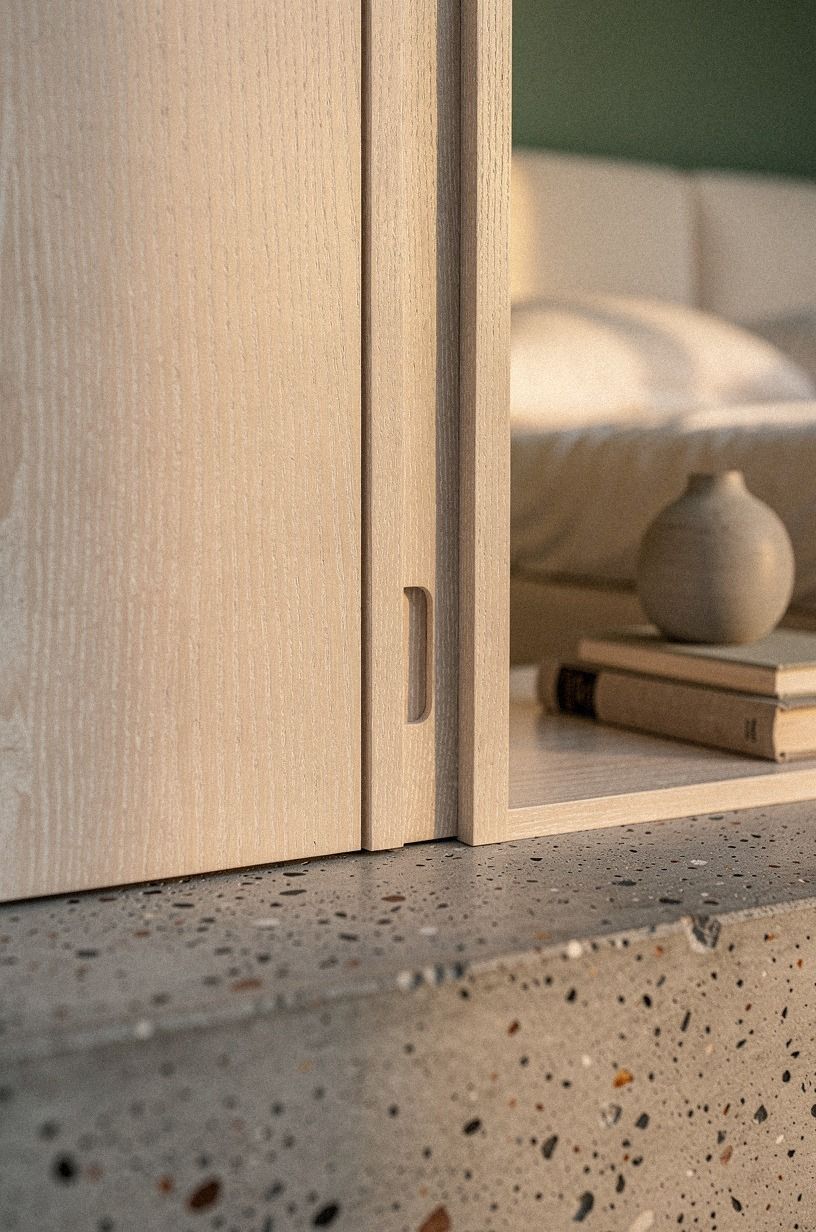
A headboard wall is one of the smartest places to hide an opening because the eye already expects joints, storage seams, and panel rhythm there.
11Use arched molding for a storybook reveal
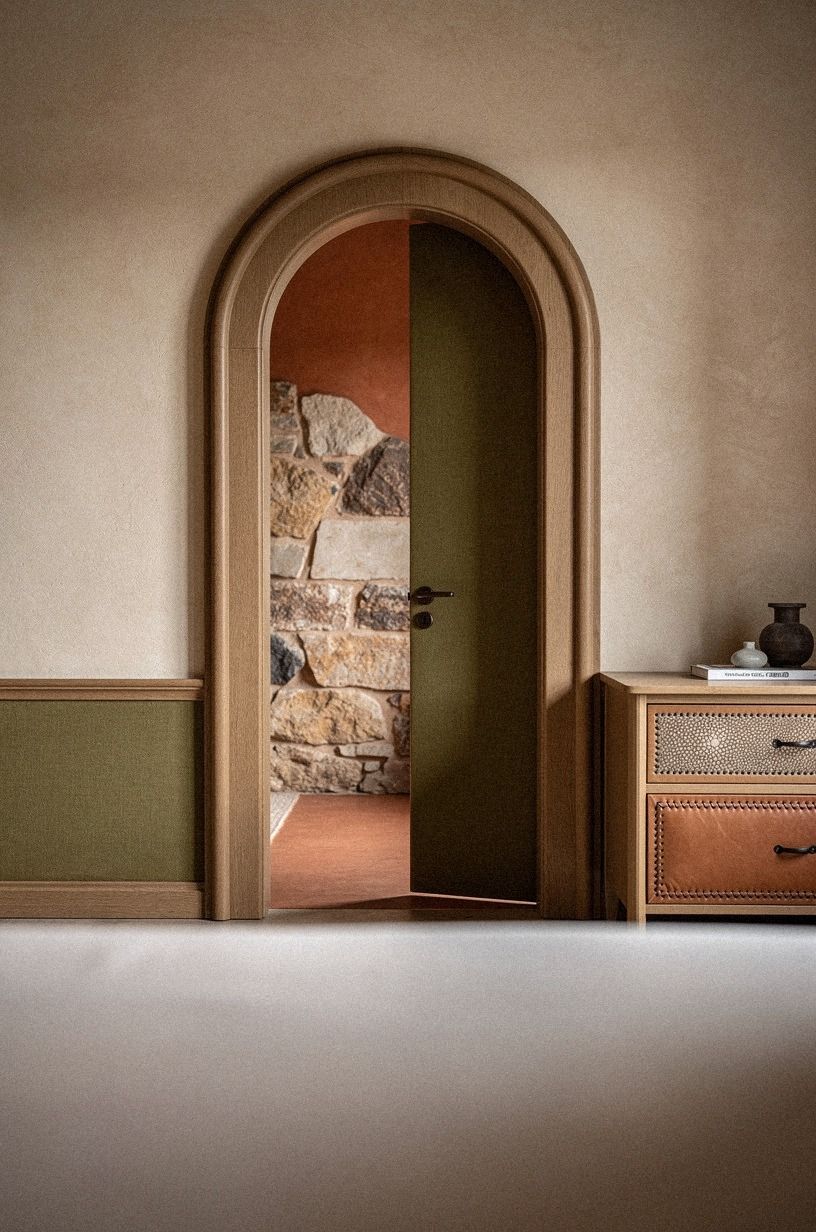
An arch changes the mood immediately. Straight lines feel modern and reserved. An arch says there’s a little romance here, maybe even a bit of whimsy, and in a bedroom that can be lovely when the rest of the room stays grounded.
I’d form the opening with paint-grade poplar and keep the profile slim so it feels tailored rather than theme-park.
Color matters a lot with this one. Benjamin Moore Pale Oak (OC-20) on the outside wall keeps the arch soft, while a deeper tone inside can create that tucked-away pull.
You don’t need a giant reveal either. Even a cracked-open door and one reading lamp like the Schoolhouse Electric Formed Sconce can do the job.
But if you load the opening with too much trim, you’ll cheapen it fast. Think storybook, not stage set.
Why spend time on an arch if it ends up looking like a prop?
12Tuck a vanity room behind sliding wardrobes
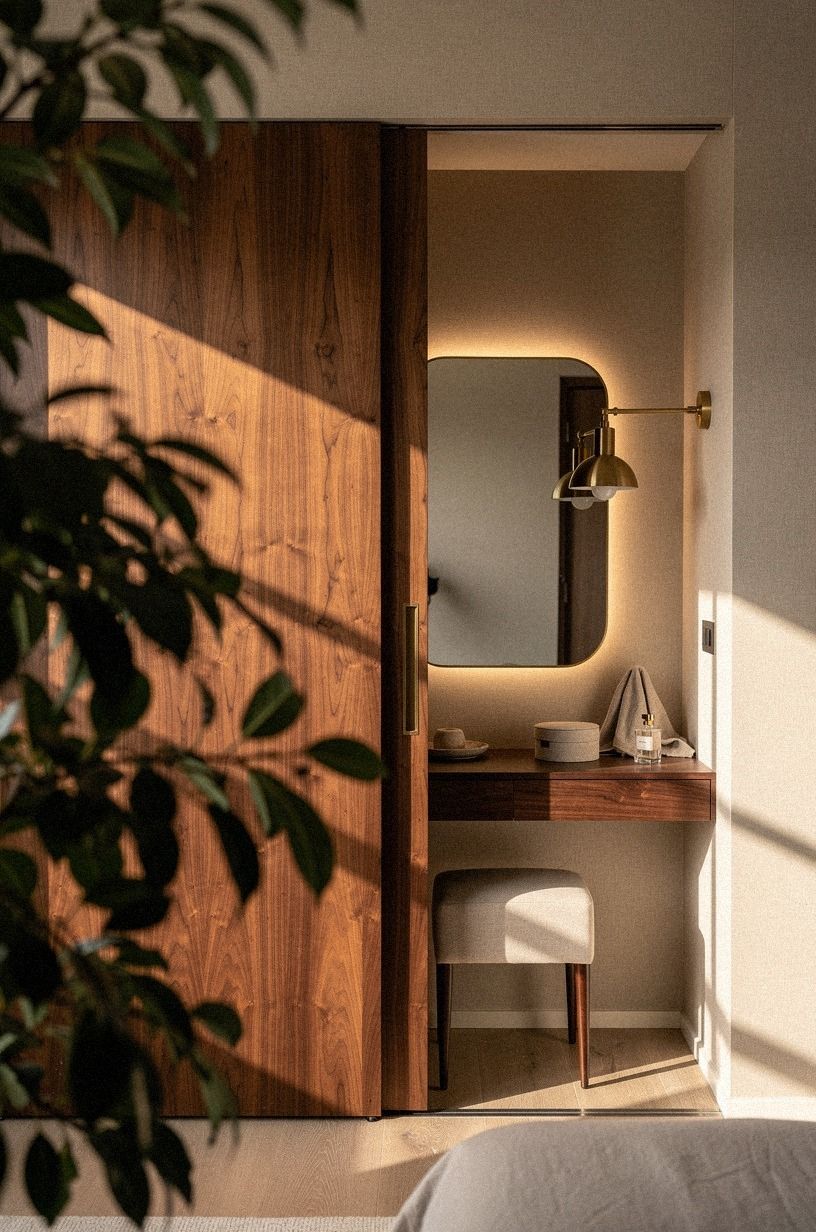
Sliding wardrobe doors are practical, yes, but they also let you reveal only what you want. That controlled opening is exactly why they work so well for a hidden vanity room. I’d go with walnut veneer doors and a softly lit mirror beyond, then keep the vanity itself pale so the inner room glows when the panel slides aside.
This is one of those bedroom with hidden room ideas that earns its keep because it adds function, not just drama. A stool, a mirror, one drawer stack, and a shelf for perfume is enough, and CB2 Della ceramic vessel makes the perfume moment feel considered without spending much. You don’t need a whole glam room for the move to feel finished.
For styling clues on making tucked-away spaces feel intentional, I like the layered mood in these hidden art studio gems and this piece on Proust’s hidden room in Normandy. But keep your hardware slim.
Heavy barn-door gear would flatten the whole effect. Slimline Richelieu barn-door hardware in matte black at 1.5-inch rail height handles a 36-inch walnut door without dominating the wall, and it stays under $200 per opening. That’s the budget tier that still feels custom.
13Camouflage the seam with picture-frame trim
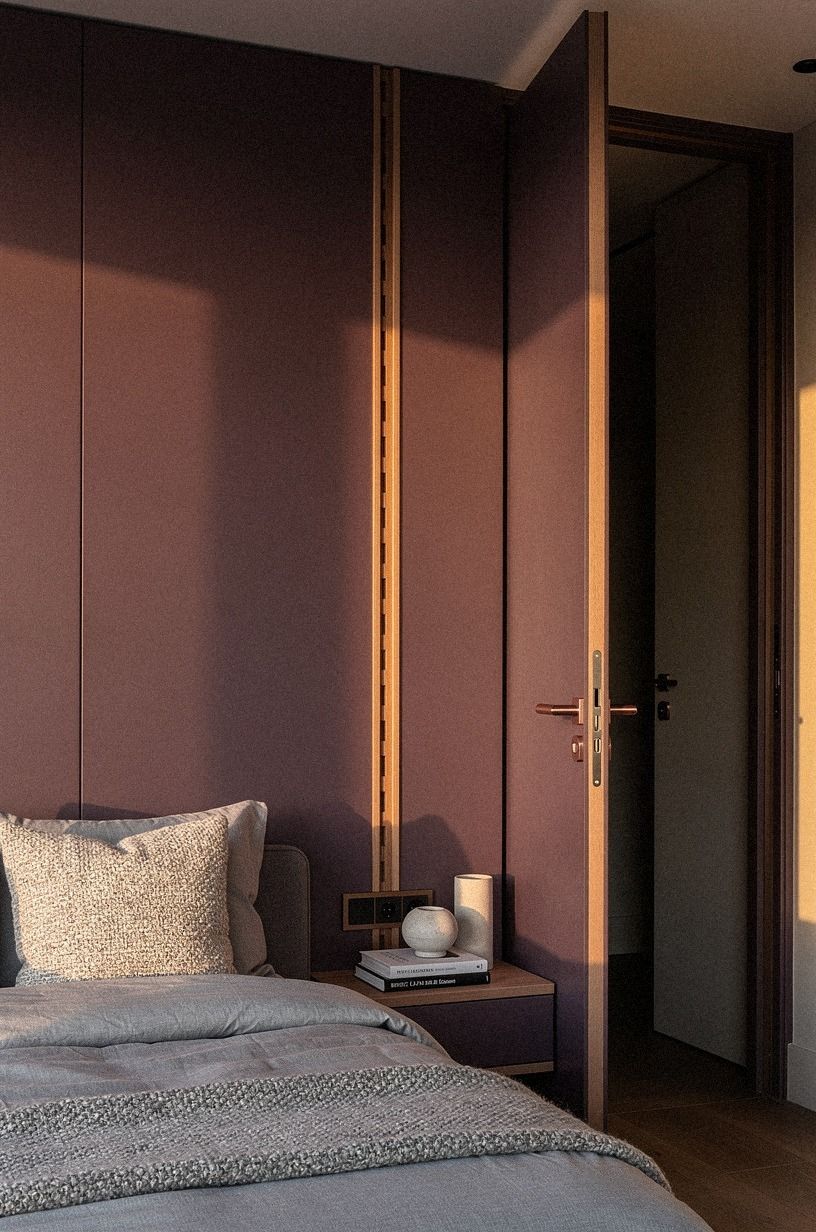
Trim can either expose a door or save it. Here, it saves it because the seam becomes one more line in a larger paneled pattern.
On a plum wall with gray bedding, that extra structure feels rich without getting loud. I’d use picture-frame molding with equal spacing, then place the operating seam where a panel break would naturally sit.
The move is to make every rectangle believable. Don’t cheat the proportions just to force the door in.
If one panel gets noticeably skinny, your eye goes there first, and the illusion is done. Farrow & Ball Setting Plaster No. 231 can be beautiful in adjacent fabrics if you want to soften the palette, but the wall itself needs enough depth to hold the geometry.
Gallery Wall Frames in walnut do the calibrated spacing without shouting on art. Too much visual chatter will make the disguise work harder than it should.
14What happens at the threshold if the lighting is wrong?
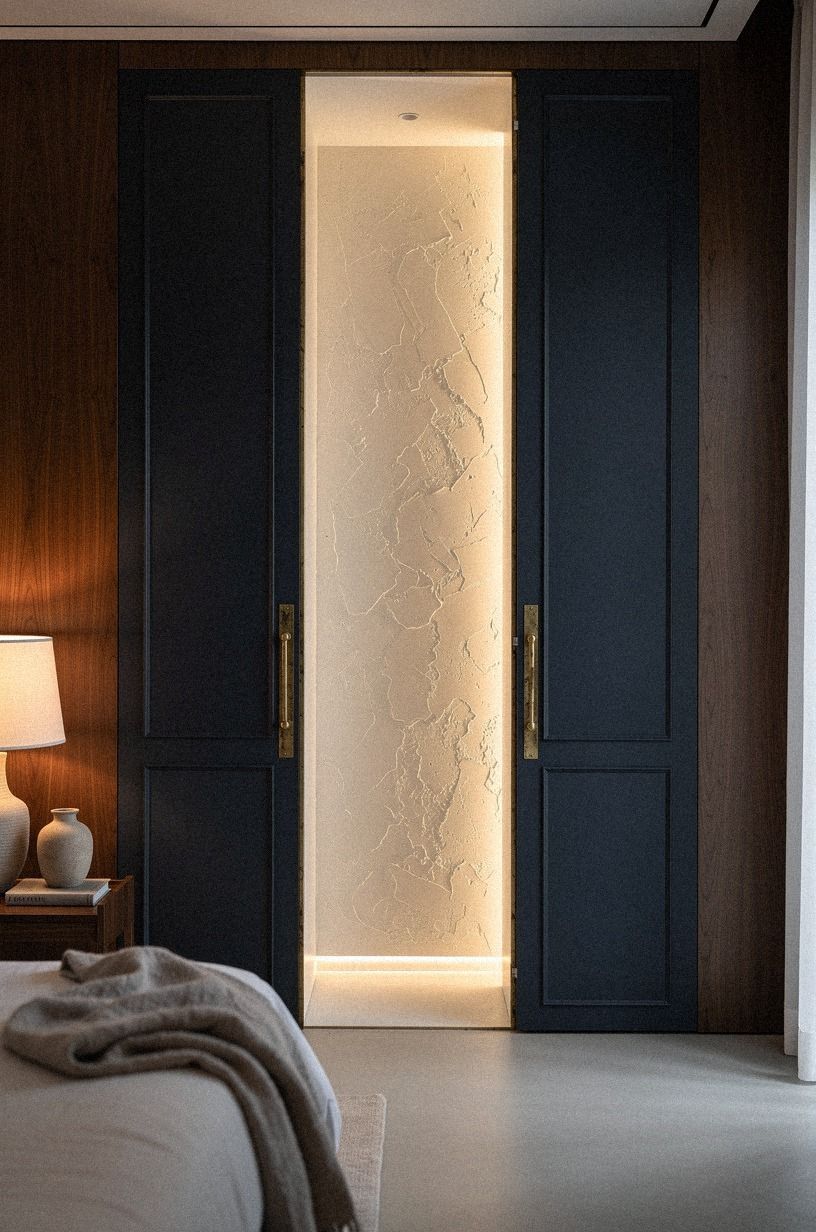
Light can guide you without announcing itself, and that’s what makes recessed LEDs at a threshold the unsung hero of this whole category.
15Create a speakeasy lounge behind closet doors
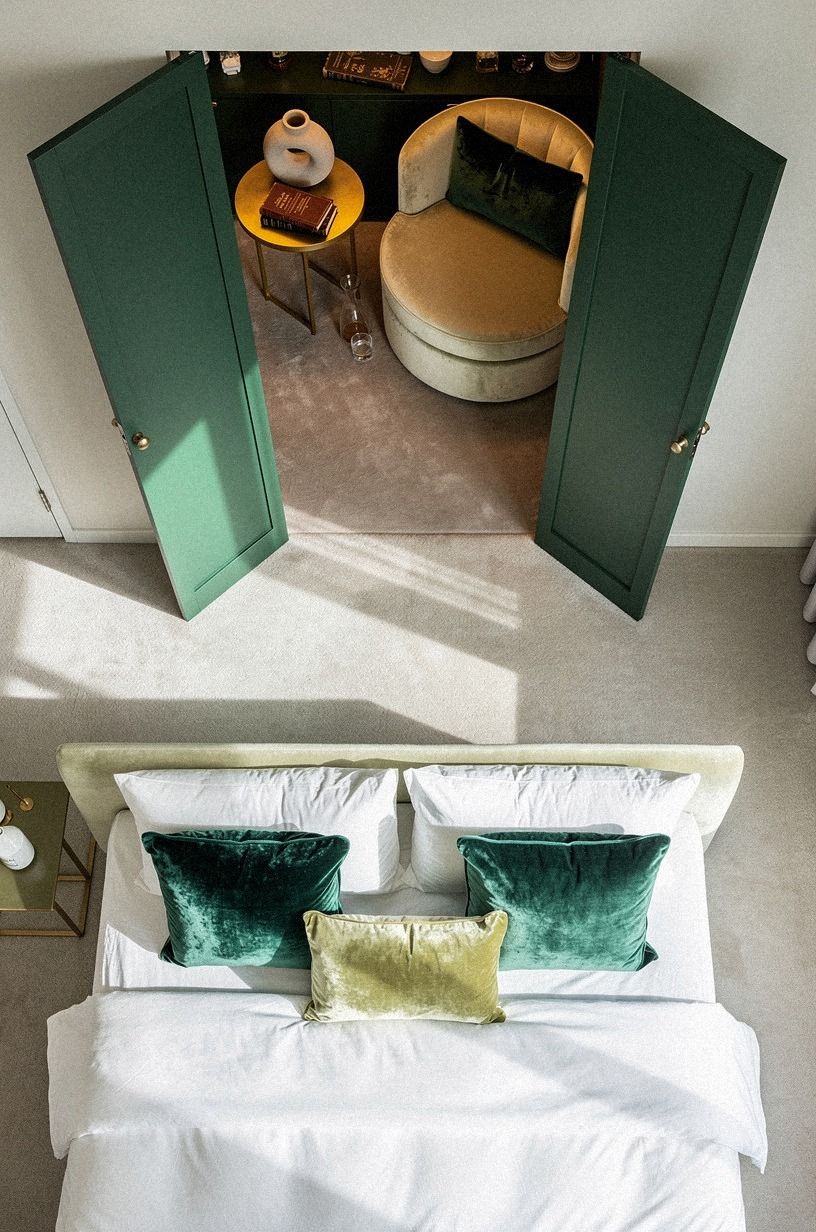
If you’ve got the depth, this might be the most fun version of the idea. Open the closet doors and instead of hangers, you get a compact lounge with emerald panels, a gold side table, and cream seating that feels a little grown-up and a little mischievous.
I’d lean into emerald lacquer outside and a softer boucle or velvet inside so the contrast feels plush, not busy. The gold side table is the part that earns the room.
West Elm’s Modern Sculptural Coffee Table in antique brass does it for $400.
I’d reach for this idea when you want the door to disappear rather than the room to work harder. One low lamp like the Schoolhouse Electric Alma. One drink table.
One art piece with presence. That’s enough.
If you overfill the room, it starts looking like storage with ambition. The mood you want is edited, like the best under-stairs hidden bars.
And honestly, this is one of the few moments when a bedroom can handle a little theater without feeling silly. Just keep the palette disciplined and the door fronts clean.
16Why does a brass hook sell the illusion?
Sometimes the smallest hardware decision saves the whole illusion.
17Build a loft hideaway above the bed wall
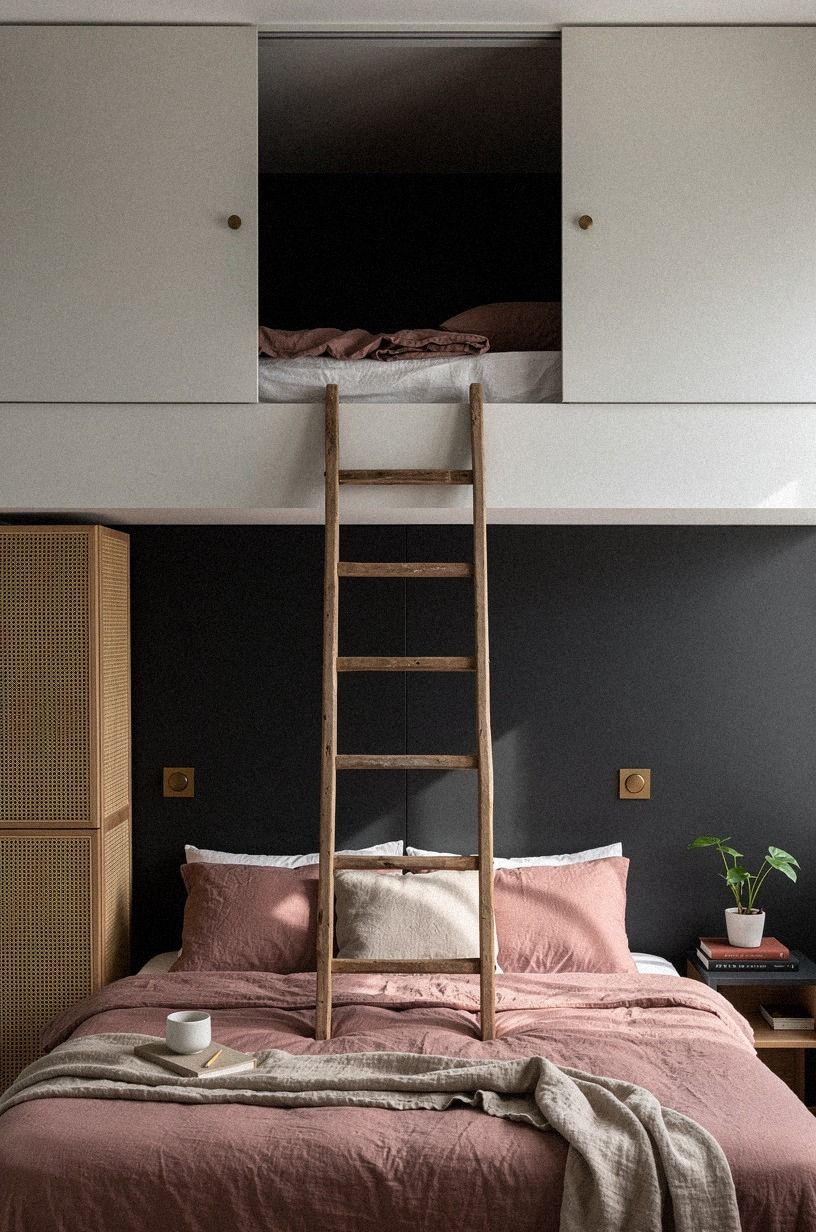
Vertical space is often the missing opportunity in a bedroom, especially if the floor plan is tight but the ceiling has some generosity. A loft hideaway above the bed wall lets you create a raised retreat without eating the room below.
I’d build the ladder in reclaimed teak and keep the panel opening discreet so the upper zone reads architectural, not camp-bunk. The reclaimed teak comes from Olde Good Things in Pennsylvania if you want the look without sourcing it yourself.
Safety and scale matter more than romance here. You need enough head clearance to use the upper space comfortably, and the ladder pitch shouldn’t feel punishing at midnight.
A compact mattress pad, one wall light like the CB2 Blaze brass sconce, and a ledge for a book can be enough. But don’t overbuild it with chunky rails unless you need them visibly for code.
The cleaner you keep the edge, the more this feels like design rather than backup sleeping quarters. If you need more disguised-opening references, these bookshelf door ideas are helpful.
Kids would love it, but adults will too!
18How to redirect the ensuite into a secret suite
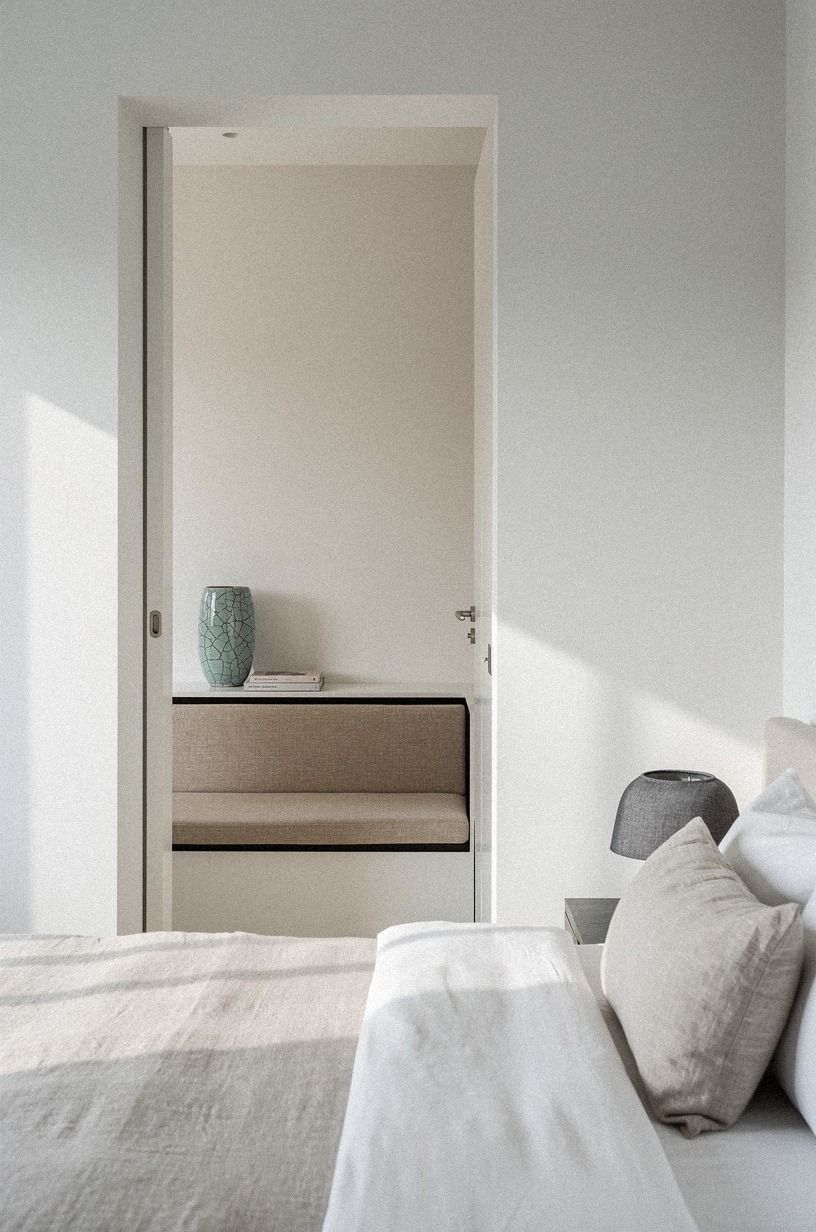
Sometimes the smartest hidden room isn’t a room at all at first.
19Finish the inner room with velvet walls
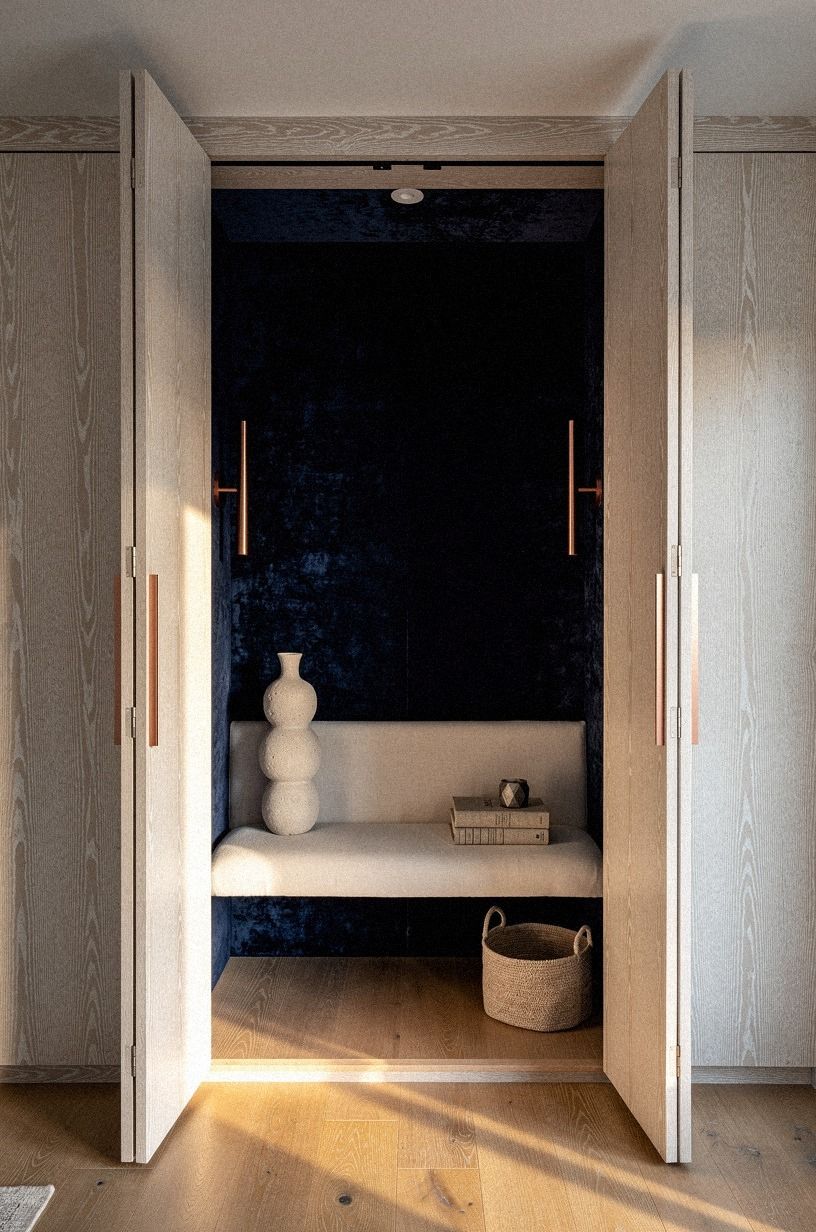
If the outer bedroom is light and relaxed, the inner room can hold the mood. Velvet walls do that fast. They absorb light, soften sound, and make even a small enclosure feel cocooning in the best way.
I’d choose midnight-blue cotton velvet from Pierce & Ward at 18 oz weight and keep the doors opened wide enough that you get the reveal in one glance, not in fragments.
This is one place where less furniture is better. A compact chair like the Article Sven tan leather accent chair, a small table, and one shaded lamp will beat a room full of extras every time.
You can layer in cream upholstery or brass details, but I’d skip glossy black because it gets cold in a hurry. For another angle on atmospheric tucked-away rooms, these hidden room entrance ideas are useful.
Soft walls, low light, quiet palette. That combination hits every single time!
The Three-Surface Disappearing Act
If you’re pricing this out, the smartest way to think about it is in surfaces, not in fantasy reveals. You’re usually paying for three things: the visible bedroom face, the working opening, and the inner room finish.
IKEA PAX fronts and a Farrow & Ball Setting Plaster wall field can carry the bedroom face for under $1,000. That’s why a concealed doorway can stay in the budget tier while built-ins and trim push you up fast.
Lutron Caseta dimmer at the entry switch is the small upgrade that ties the whole budget together, and it costs about $60.
The part I’d prioritize first is the finish that hides the seam best. A mediocre chair can wait.
A bad wall match can’t. And if you only have a few hundred dollars, paint, drapery, and hardware usually give you the biggest visual shift for the least regret.
Benjamin Moore White Dove OC-17 on the trim will quietly unify everything without competing with the accent wall. It costs roughly $75 per gallon and goes on in two thin coats.
The Calm-Shell Rule
The hidden room only works when the main bedroom doesn’t look like it’s trying too hard. That’s the mistake I made the first time I chased this idea.
I kept adding clues because I thought the reveal had to feel dramatic all the time. It doesn’t.
The outer shell should feel composed, almost quiet, so the inner space gets to be the surprise. Once I stopped stuffing the bedroom with “special” details, the opening started to disappear the way I wanted. Washed Belgian linen was the single biggest shift, not any cabinetry.
That moment also taught me to underdo the trim. I had been painting the casing bright white, and the seam between case and wall kept reading louder than the wall itself.
The moment I switched to Benjamin Moore White Dove OC-17 on every piece of trim in the room, the wall took over. Try it on a single doorway first.
You’ll see it.
But here’s how I’d decide where to spend. First, make the bed wall and the concealed opening belong to the same family. Same wood tone, same paint sheen, same hardware language.
Then make the bedding and rug support the architecture instead of competing with it. Washed Belgian linen, a wool rug with enough extension, and one warm lamp do more for the illusion than five decorative objects ever will. I’d also choose one mood shift and stop there.
If the outer room is pale and airy, let the inner room go deeper. If the outer room is moody, let the inner room be softer and lighter.
The biggest surprise is how little square footage you need before this starts feeling luxurious. Not huge.
Just intentional. A compact reading chair, a narrow vanity, a shallow storage passage, even a raised nook can change how you move through the room.
And that change is the point. You’re not chasing novelty for its own sake. You’re creating one private layer inside another, which is why the best versions feel restful instead of theatrical.
Room & Board Devon is the kind of chair that does more for that hush than any new cabinetry will!
I’ve watched friends overbuild these spaces. The one who added a 12-foot sofa into a 9-foot hideaway hated it within a month.
Smaller upholstered pieces from Maiden Home, scaled to the room, beat anything oversized. Choose the piece that fits the body, not the photograph.
I’d also say this: don’t copy every old-money detail you see online. Some of those rooms work because the shell is excellent, not because they piled on more trim.
If your walls are builder-basic and your budget is $200 to $800, start with color, drape height, and one convincing concealment move. If your budget is bigger, spend on joinery quality before you spend on accessories. Nobody remembers the vase.
Everyone notices when the panel line is wrong. Sherwin-Williams Urbane Bronze SW 7048 on the bedroom ceiling is the kind of quiet upgrade that costs $80 in paint and pays back every single night.
The Questions Worth Answering First
What is the best Secret Room Ideas for the Bedroom [Hidden Hideaways] for a small bedroom?
The best option for a small bedroom is a curtain-hidden reading nook or a wardrobe wall with a concealed opening because both keep the floor plan legible. They save visual space while giving you storage or function. Think IKEA PAX fronts, linen panels, one compact chair.
Where can I buy Secret Room Ideas for the Bedroom [Hidden Hideaways] pieces on a budget?
Start with IKEA and Target Threshold, plus Wayfair for wardrobe fronts, mirrors, and lighting. Secondhand finds stretch the look when you need character fast.
Facebook Marketplace. Vintage brass hooks.
One older wood nightstand refinished to match your new panel wall. For more entry formats before you shop, skim these hidden room door ideas.
How much does a Secret Room Ideas for the Bedroom [Hidden Hideaways] makeover cost?
Most bedroom makeovers with a hidden-room feel land around $200 to $800 for paint, bedding, shades, and art, while bigger furniture and trim projects climb from $1,500 to $5,000. Paint is the cheapest visual win.
Built-ins and custom doors are what move the number. The hidden hinge and pivot hardware alone can run $400 to $900, so factor that in early.
Can I create a Secret Room Ideas for the Bedroom [Hidden Hideaways] on a budget?
Yes, and you really can fake a lot of the effect with finish choices. Low-cost changes carry the mood.
Paint the door into the wall. Add a curtain track. Swap in a full-length mirror panel.
Use one brass hook instead of custom hardware. That’s the budget-friendly play.
Is a Secret Room Ideas for the Bedroom [Hidden Hideaways] worth it in a small space?
Yes, especially in a smaller room, because the concealed layer reduces visual clutter and gives the layout more purpose. It adds value in daily use when you hide storage, vanity mess, or a reading corner. Keep circulation clear and don’t oversize the furniture.
This guide to bookshelf door ideas helps if you want one of the most compact versions. A 32-inch opening is the smallest I’d push.
Is Secret Room Ideas for the Bedroom [Hidden Hideaways] a good idea for a rental?
Yes, if you stick to removable moves. Renters can still get the feeling with peel-and-stick wallpaper, tension-mounted curtains, and freestanding wardrobes.
I’d avoid cutting new openings, obviously. But mirrored panels, drapes, and painted furniture can still give you that tucked-away look.
The First-Move Filter
If I had to pick one, I’d start with painting the door into the accent wall. Bad seams show before bad styling does, and color is the cheapest way to quiet them. A single Farrow & Ball Studio Green No. 134 panel can carry the whole illusion for the cost of one gallon, which is why I keep recommending it for first moves.
Pin that move for later and browse these hidden room door ideas when you’re ready to pick up the paint roller.