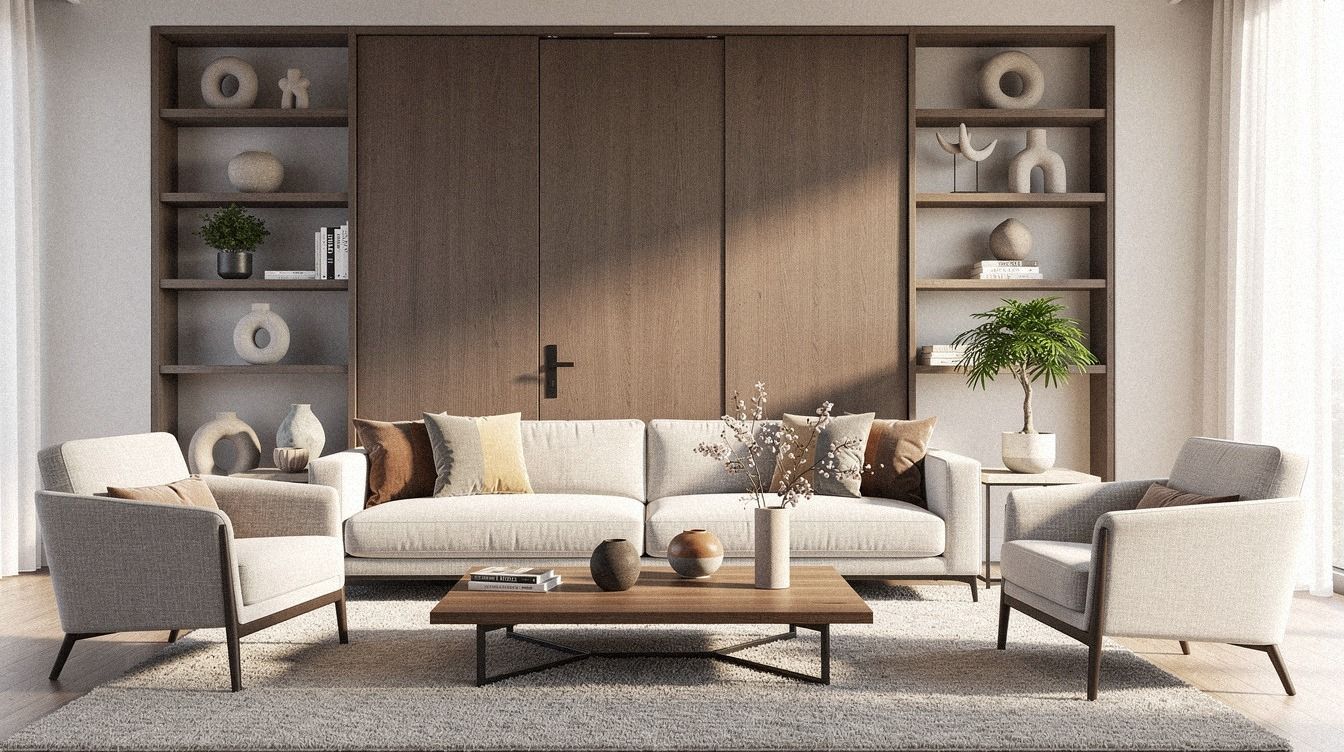
Invisible frameless door ideas work best when you treat the door like part of the wall, and in most living rooms that means paint, panel rhythm, plaster, or slats instead of fussy trim. I used to think this look was only for custom builds with scary invoices. I was wrong. Worth it! Once you stop decorating the door like a door, the wall gets calmer, the room looks bigger, and the whole thing feels far more expensive than it is.
- Align wall paneling across the door reveal
- Paint the slab in the exact wall color
- Wrap the opening with floor-to-ceiling plaster
- Hide the seam inside vertical wood slats
- Use a push-latch door behind gallery art
- Continue picture molding over the frameless edge
- Set a pivot door flush with built-ins
- Blend the doorway into limewash texture
- Frame the panel with shadow-gap trim
- Conceal the handle inside a brass inlay
- Match wallpaper across the hidden door face
- Run baseboards cleanly over the threshold
- Sink hinges into a paneled media wall
- Disguise the passage with mirrored wall panels
- Camouflage the reveal inside fluted oak
- Install a frameless door beside the fireplace
- Mask the joint with oversized abstract art
- Finish the opening with seamless microcement
1Align wall paneling across the door reveal
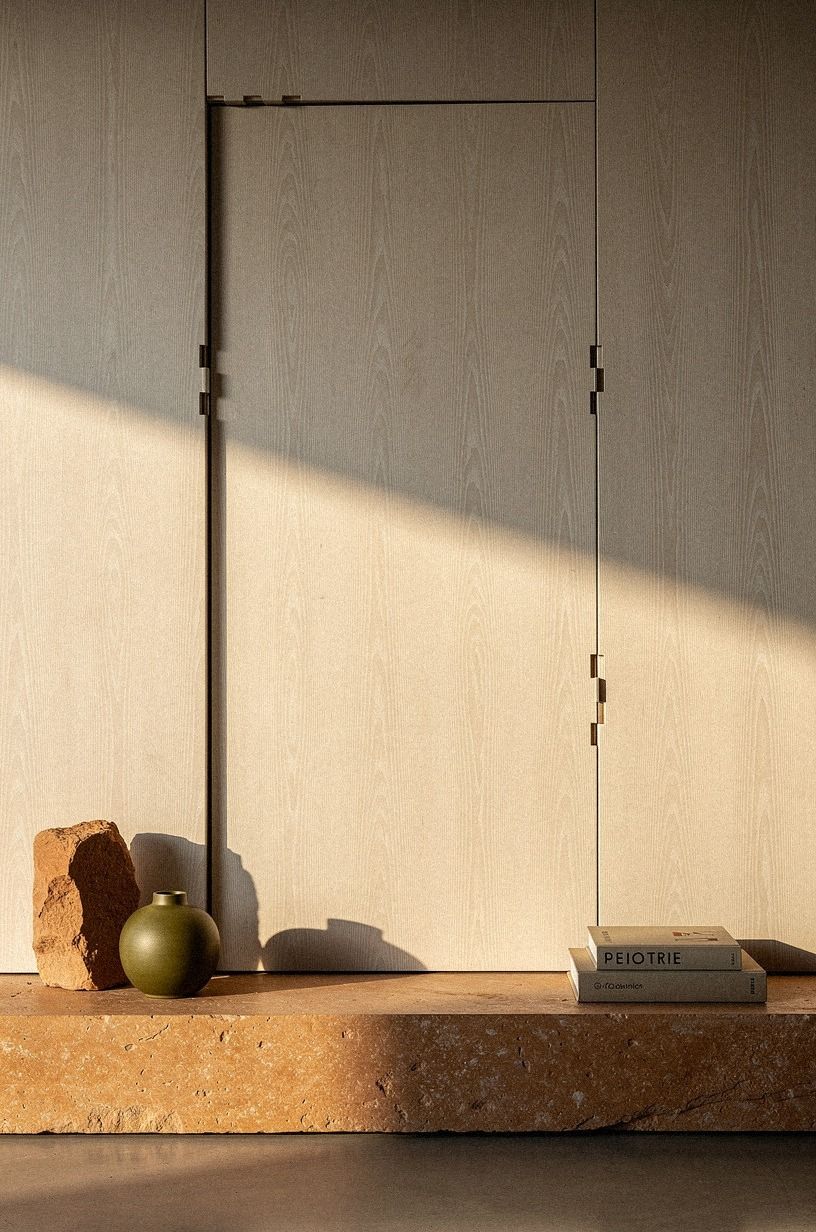
Start with the rhythm, not the hardware. If you want doors that look like walls, you need the panel spacing to cross the slab without a hiccup, especially when you’re working with cerused white oak in a living room where every joint gets seen from the sofa.
I like to lay out the full wall grid first, then drop the door into the panel map instead of centering the map on the door. That one switch keeps the reveal from shouting at you. If your stiles are 3 to 4 inches wide, keep them identical on both sides of the seam so your eye reads one surface, not a patch job.
And don’t skip the edges. Exposed dovetail joinery nearby can make the millwork feel intentional, but only if the door face stays disciplined. If you want more hidden-door layouts that make a small room feel bigger, this roundup on hidden doors in walls for small spaces is a smart place to compare proportions.
2Paint the slab in the exact wall color
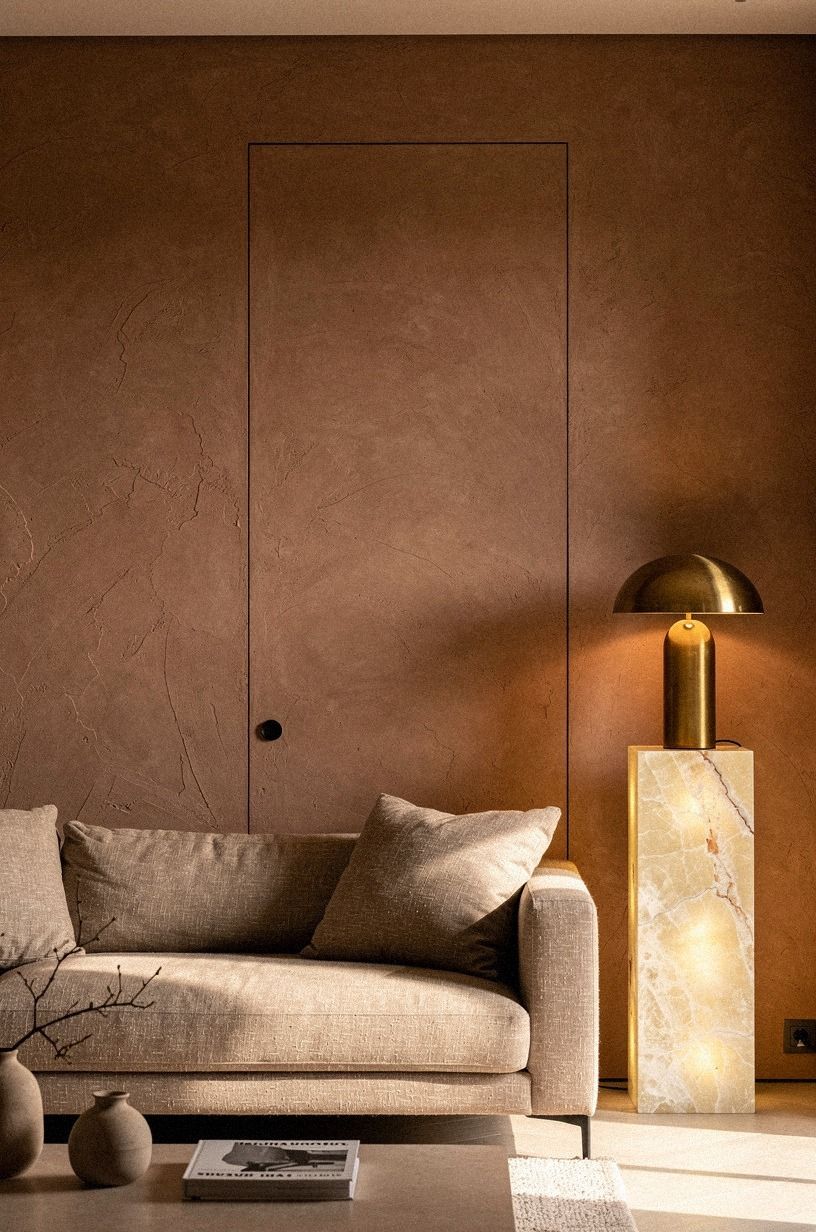
This is the easiest move, and it’s still the one people cheap out on.
3Wrap the opening with floor-to-ceiling plaster
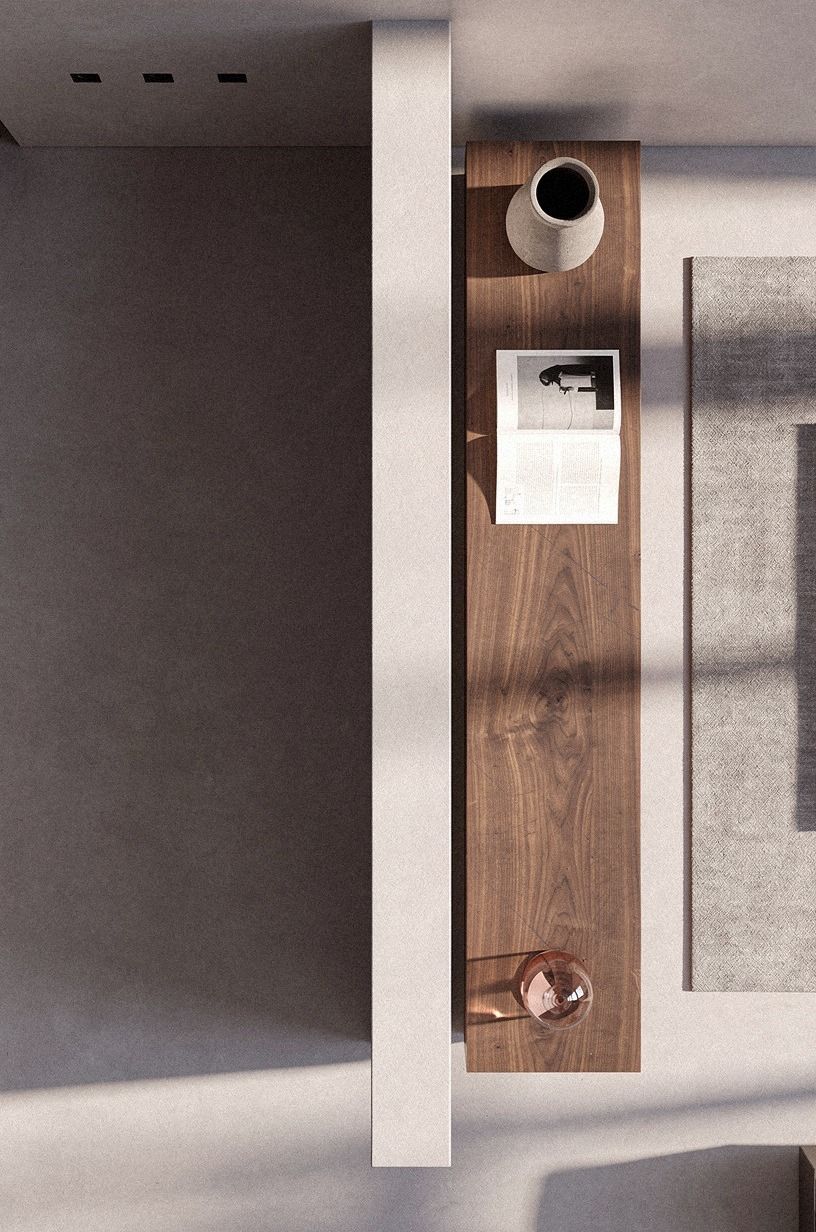
If your room already leans soft and sculptural, plaster is the move. A door edge wrapped in Roman clay plaster reads quieter than painted drywall because the little clouds, drag marks, and tonal shifts give your eye something better to do than hunt for the reveal.
What matters is continuity from floor to ceiling. A broad plaster field helps.
Push the doorway slightly off to one side, then keep the plaster field broad and uninterrupted around it. In a warm white living room, that looks expensive fast. I wouldn’t interrupt this with chunky casing, not even pretty casing, because the whole point is the hush.
Use a firm skim coat at the edge and feather it out so the seam dissolves instead of telegraphing. It doesn’t have to be perfect. It has to be consistent.
If you love finish-driven rooms, the texture lesson in this unglazed ceramic styling piece explains why matte surfaces pull a room together so well.
4Hide the seam inside vertical wood slats
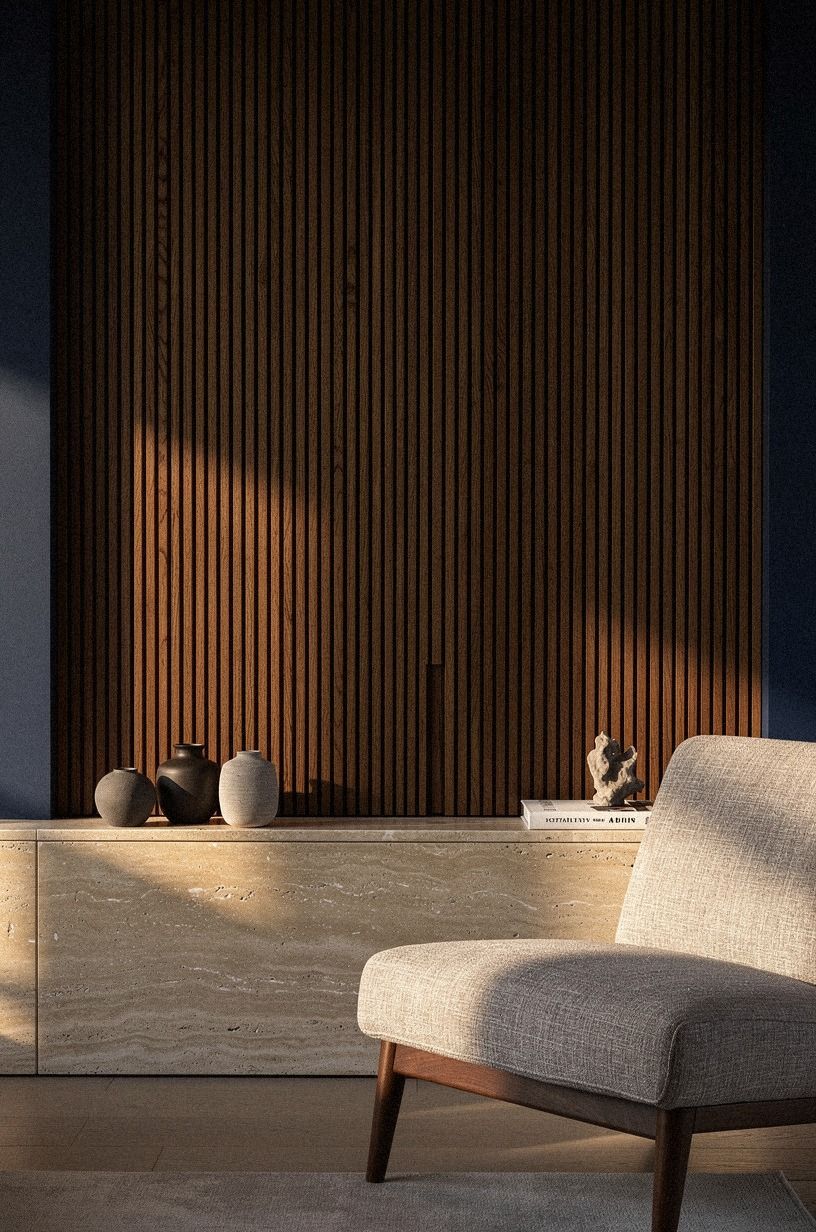
Vertical slats are forgiving in the best way. When the door line disappears inside repeated white oak slats, your eye tracks the rhythm instead of the cut line, which is exactly what you want from invisible doors design in a living room with a fireplace nearby.
Keep the spacing crisp and boring. Really.
If the slats are 1 inch wide with a 1/2-inch gap, repeat that across the door face and the fixed wall so the seam lands inside the cadence. I also think warm stone helps here. A travertine hearth grounds all that linear wood and stops the wall from feeling too skinny.
Would I do this in a tiny room with slatted paneling? Yes, if the slats stay shallow and the finish stays pale.
The depth is where people get into trouble. Too chunky, and the wall starts reading sauna.
For another take on hidden architecture that makes rooms feel larger, see these small-space hidden door ideas.
5Use a push-latch door behind gallery art
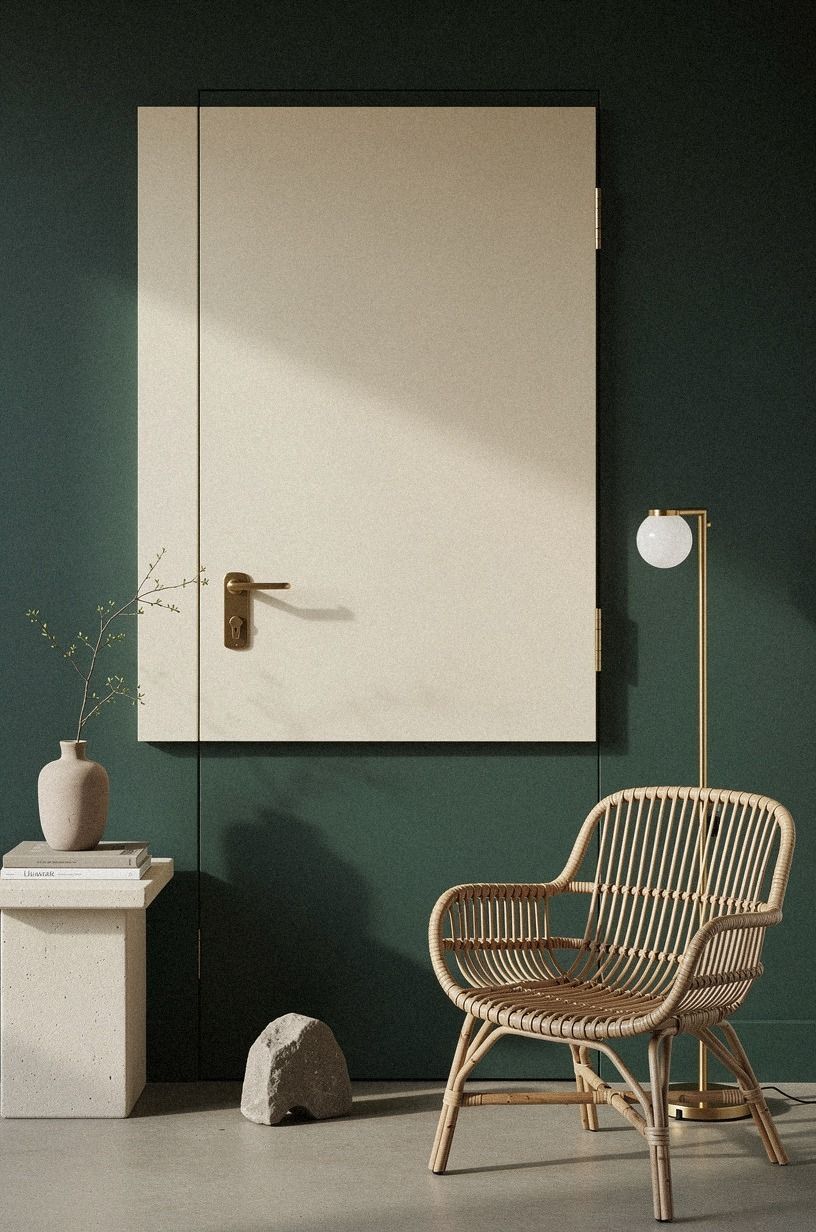
If you hate visible handles, hide the operation behind the styling. A flush panel tucked behind calm cream artwork works because the wall still reads as decoration first, especially when the frames are soft and the metal detail stays to one unlacquered brass picture light.
You do need the right push latch. A strong push system keeps the face clean, but only if the door is adjusted well enough that it doesn’t bounce back at you. I like smaller canvases or a tight cluster instead of one giant frame here, because you want access without wrestling a museum piece every time.
And keep the art low-drama. No lettering, no glossy glass, no black gallery wall moment. Quiet pieces win.
If you need help making a room feel less showroom and more collected, the advice in the overhead lighting mistake that dates a room pairs beautifully with this move.
6Continue picture molding over the frameless edge
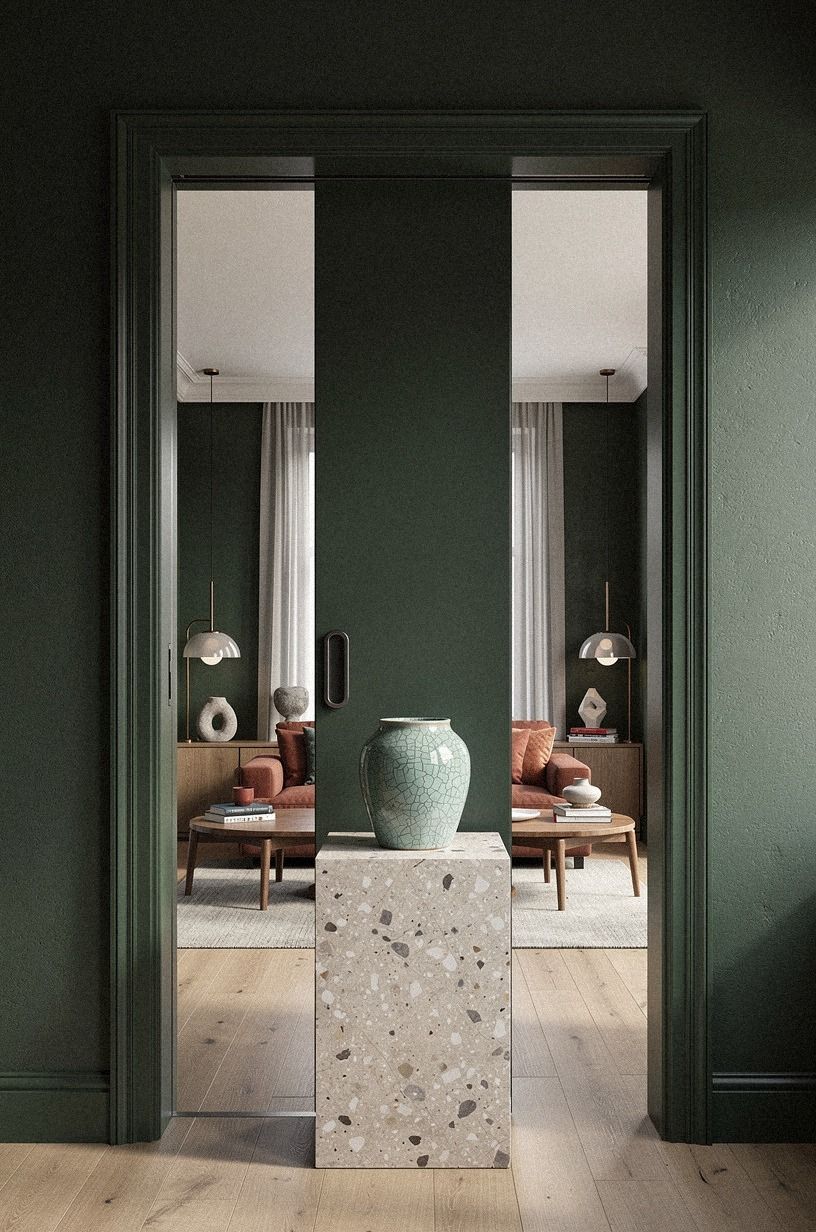
Traditional rooms can hide a door too, and honestly, they often do it better.
7Set a pivot door flush with built-ins
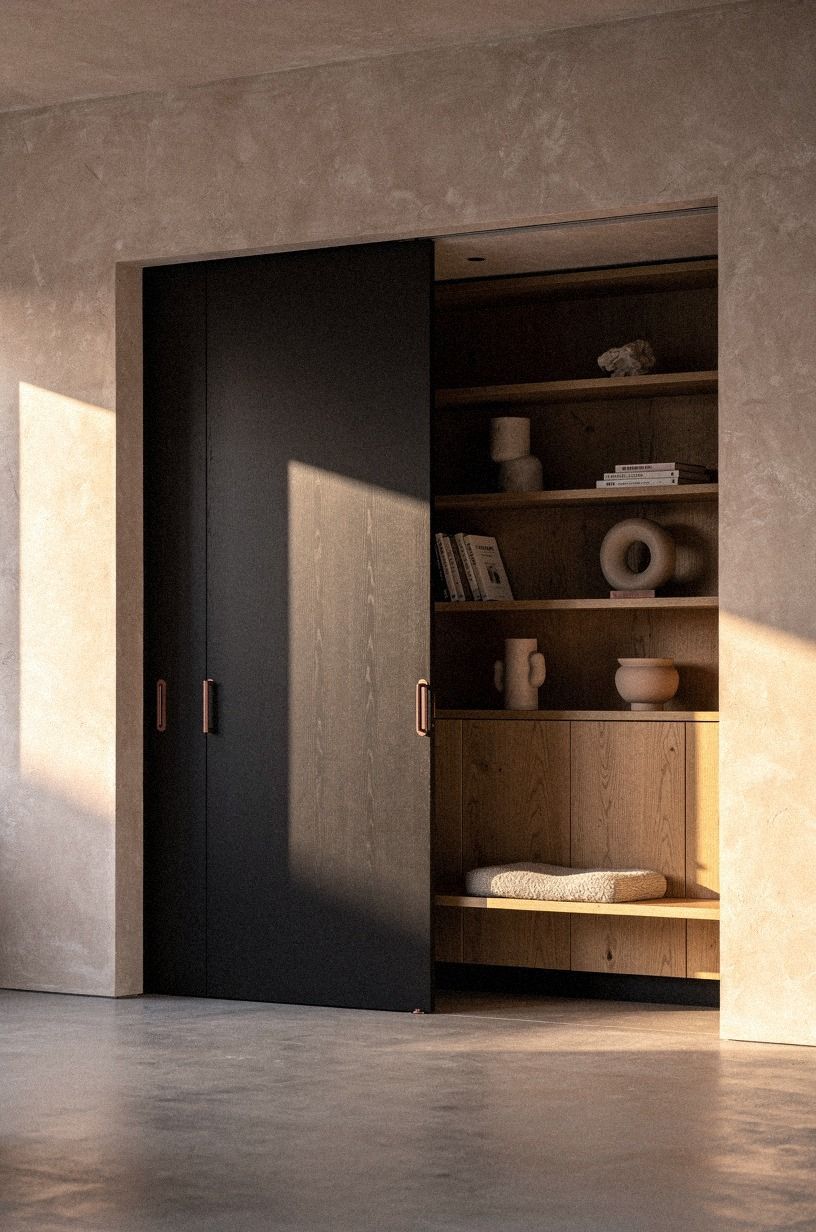
This is where I use what I call the Shelf-Line Rule. If your pivot slab sits inside a charcoal built-in wall, every shelf line, cabinet reveal, and door gap has to align like it was drawn by one stubborn person who hates visual noise.
Pivot doors look slick because the hardware disappears into the architecture, but only when the face stays dead flush with the surrounding shelves. You want one plane.
Not almost one plane. A darker paint like Farrow & Ball Hague Blue No. 30 or deep charcoal helps because shadow falls flatter across the wall.
But don’t cram the shelves. Give the built-ins breathing room so the hidden door has less competition.
A few books, one ceramic bowl, one lamp, done. For more on making money count in custom-looking rooms, I still recommend the 60 25 15 budget rule.
8Blend the doorway into limewash texture
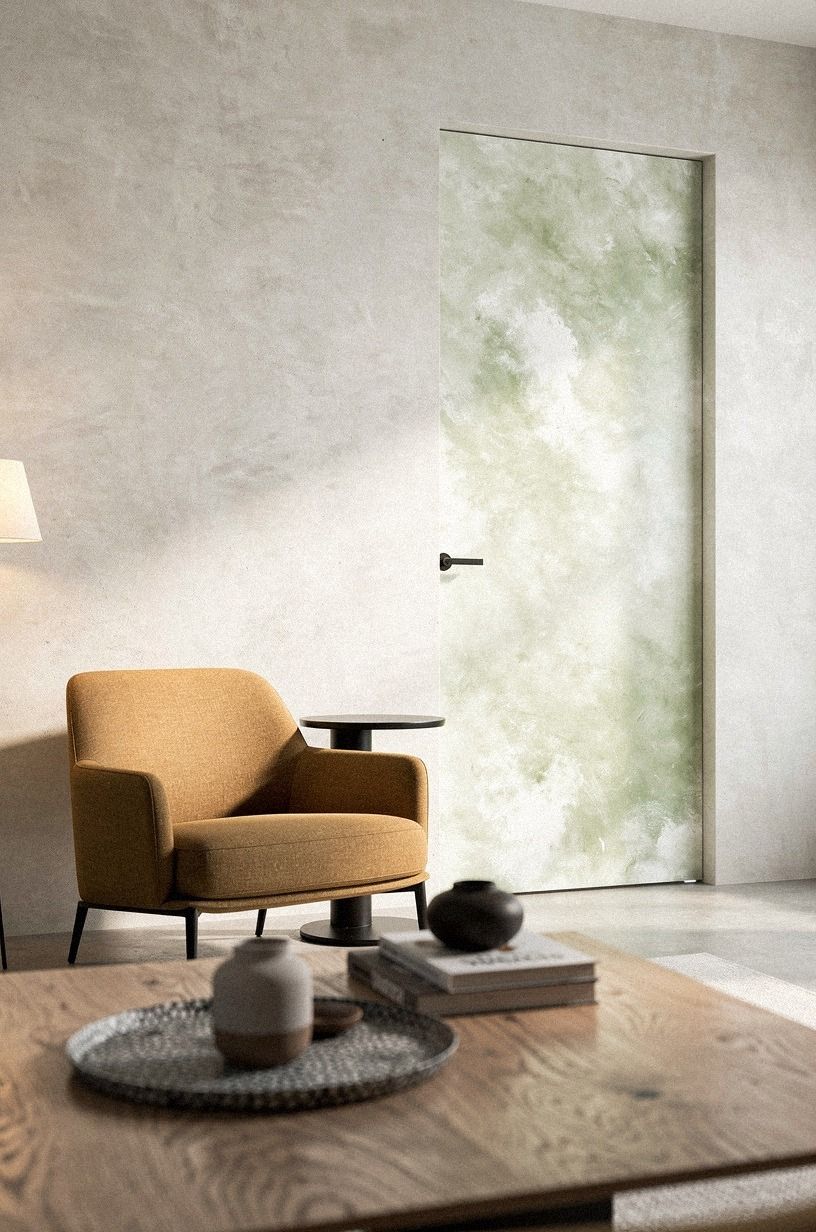
Limewash is forgiving in a way smooth paint never is.
9Frame the panel with shadow-gap trim
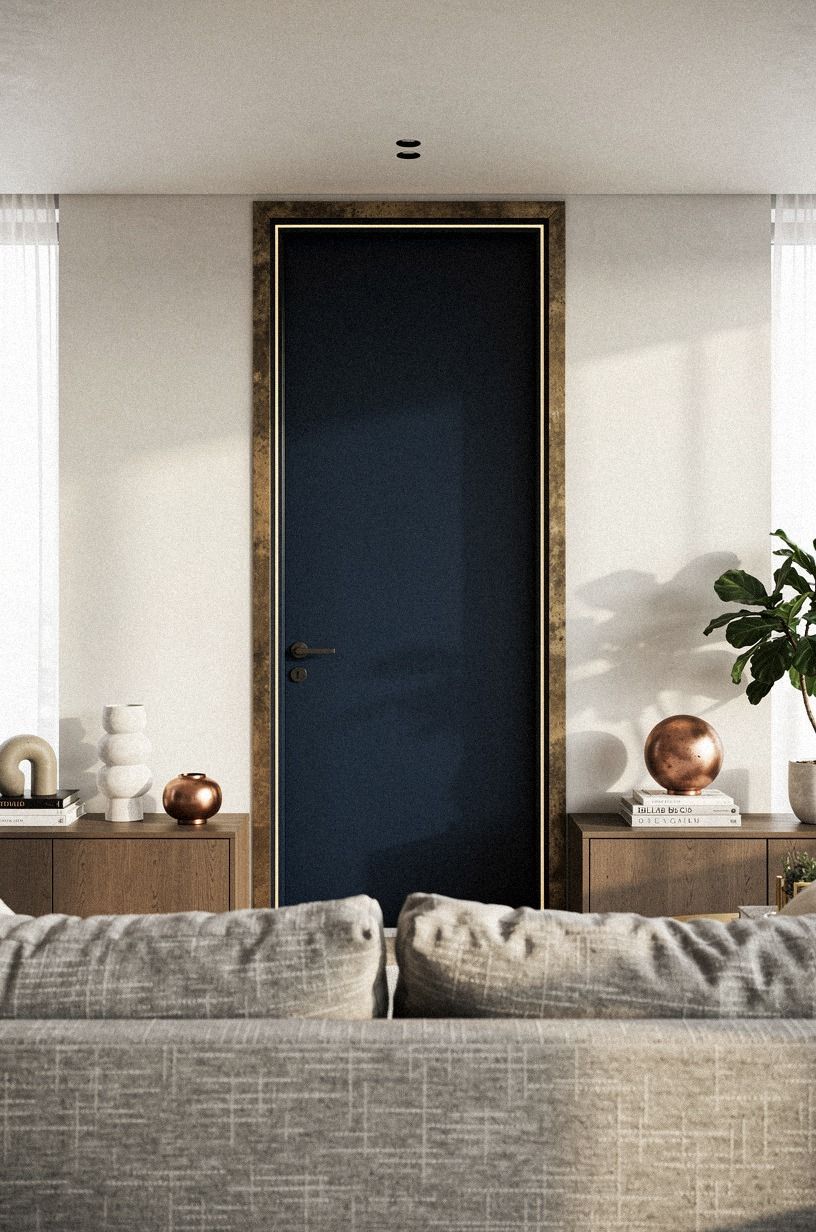
For modern rooms, I love a crisp shadow reveal more than visible casing. A midnight blue slab set inside a fine shadow-gap trim line feels deliberate, architectural, and a little severe in the best possible way.
You do need precision here. Keep the gap narrow and even all around, and make the panel perfectly symmetrical if the wall is symmetrical.
The dramatic effect comes from control. On a darker door, I like Sherwin-Williams Evergreen Fog SW 9130 nearby on adjoining walls or upholstery to soften the edge without turning the room bland.
And watch your floor-level view. This detail gets judged from low angles more than people think, especially if you have kids, pets, or a coffee table that’s only 16 to 18 inches tall.
The space should still feel calm from every seat. For more invisible-tech inspiration, even outside decor, this piece on designer-looking smart glasses with hidden tech nails the same idea.
10Conceal the handle inside a brass inlay
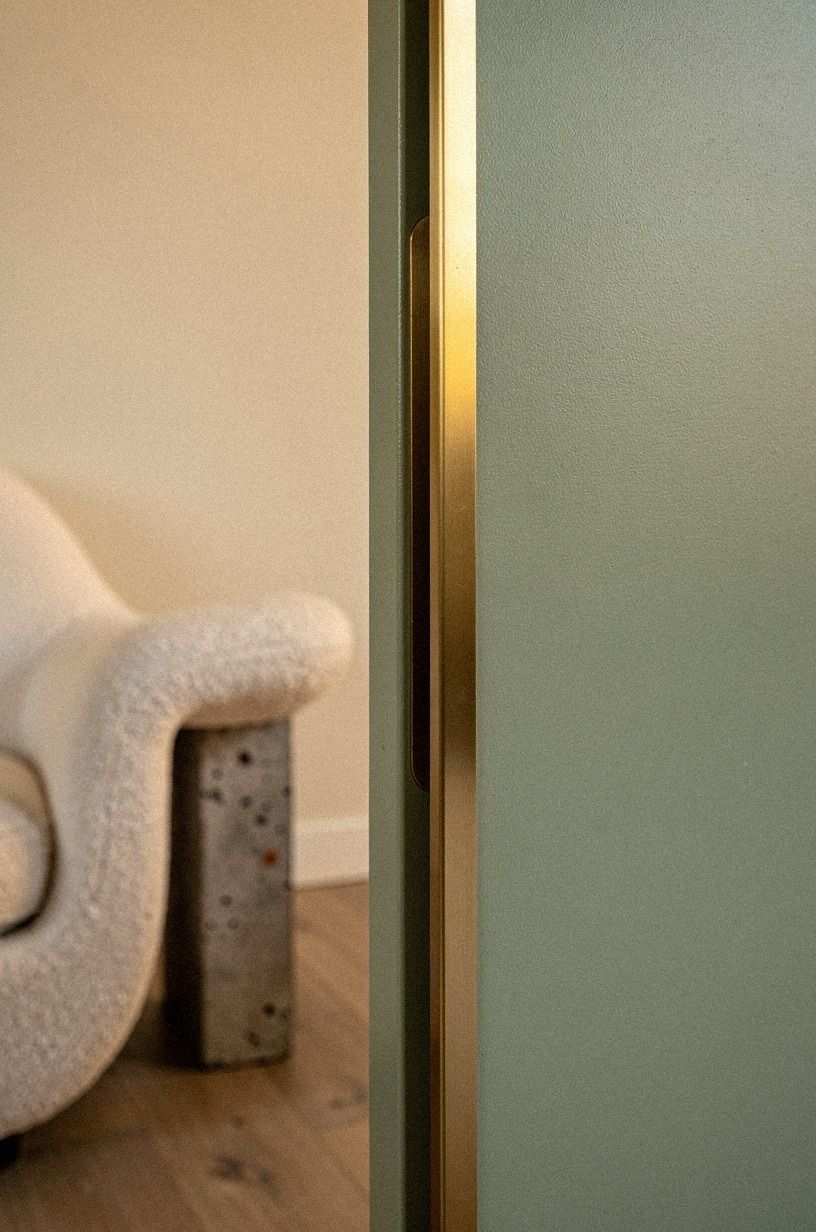
If you need a pull, make it part of the design language. A slim line of warm brass inlay can double as the grip on a sage green door, which means the function stays there without announcing itself like a standard lever.
Keep the brass strip skinny. The more jewelry-like the strip gets, the less hidden the door feels. I prefer a narrow vertical line you can catch with your fingers instead of a big decorative plate.
On a painted slab, a green like muted sage plays well with brass because the metal reads warm, not flashy.
I’ve seen people overdo this with polished gold hardware. It looks expensive for about one day.
Then it looks thirsty. Let the inlay whisper. If you’re weighing where little luxe details do pay off, the 80 20 budget rule for expensive-looking rooms is worth bookmarking.
11Match wallpaper across the hidden door face
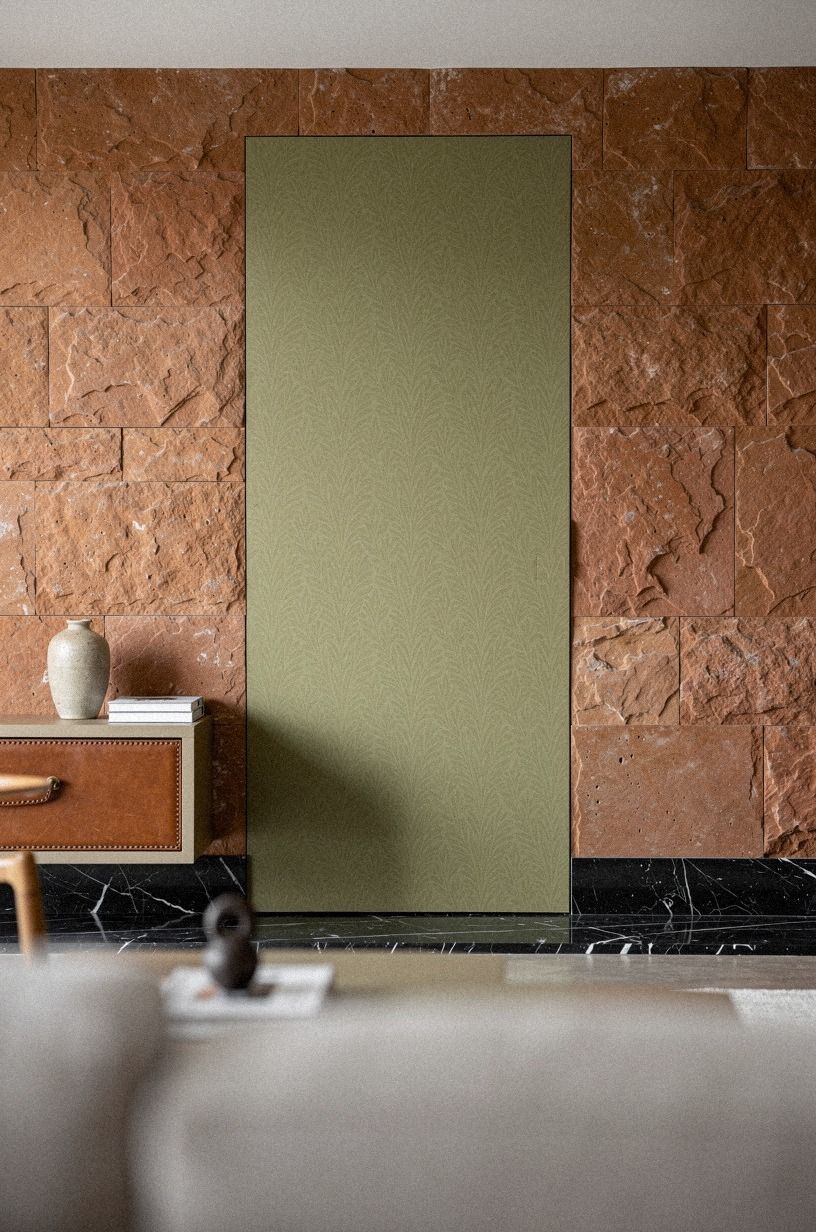
Wallpaper can hide a door beautifully if the pattern keeps moving without a break.
12Run baseboards cleanly over the threshold

This baseboard line sounds minor, and it’s not. When the baseboard line runs cleanly across a flush panel, your brain keeps reading one wall plane, which is why seamless door ideas often fail when the lower detail gets fussy.
Treat the painted profile as part of the architecture, not as trim you tack on later. In a clay and linen room, I like a simple painted profile with the same color wrapped across the door face and the adjoining wall.
Keep the threshold transition tight too. The floor shouldn’t throw a spotlight on the opening.
And if you’re renting, this is one of the renter-safe details you can fake with lightweight applied molding and removable paint-friendly move (check your lease first). Clean lines do more than loud styling every single time! For spending priorities, see the 70 30 split that makes rooms feel custom.
13Sink hinges into a paneled media wall
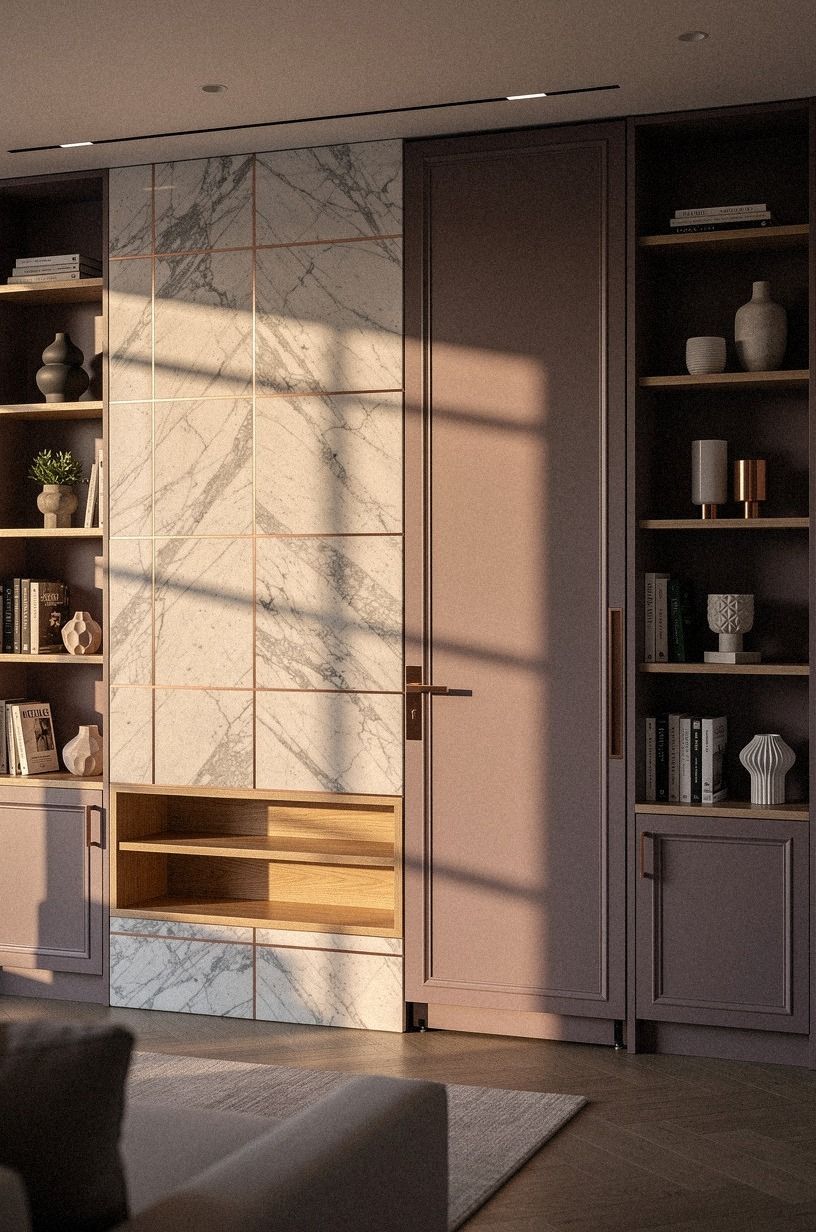
A paneled media wall is excellent camouflage because the eye is already reading frames, reveals, and compartments. If the hidden door disappears inside plum-gray cabinetry, recessed concealed hinges help the whole assembly feel like one solid piece of joinery.
Here I use the One-Plane Media Rule. The screen, cabinets, and the concealed passage all need to sit in a single visual story, with no rogue trim or random hardware finishing one part differently. I especially like this when Carrara marble appears nearby in a hearth or ledge, because the stone adds gravity without competing with the panel pattern.
You should still scale the room correctly, especially the TV distance. Keep your TV distance around 1.5 to 2.5 times the screen diagonal so the wall feels integrated, not like it swallowed a billboard. For more on hidden architectural moves, these hidden doors that make walls work harder are full of smart precedents.
14Disguise the passage with mirrored wall panels
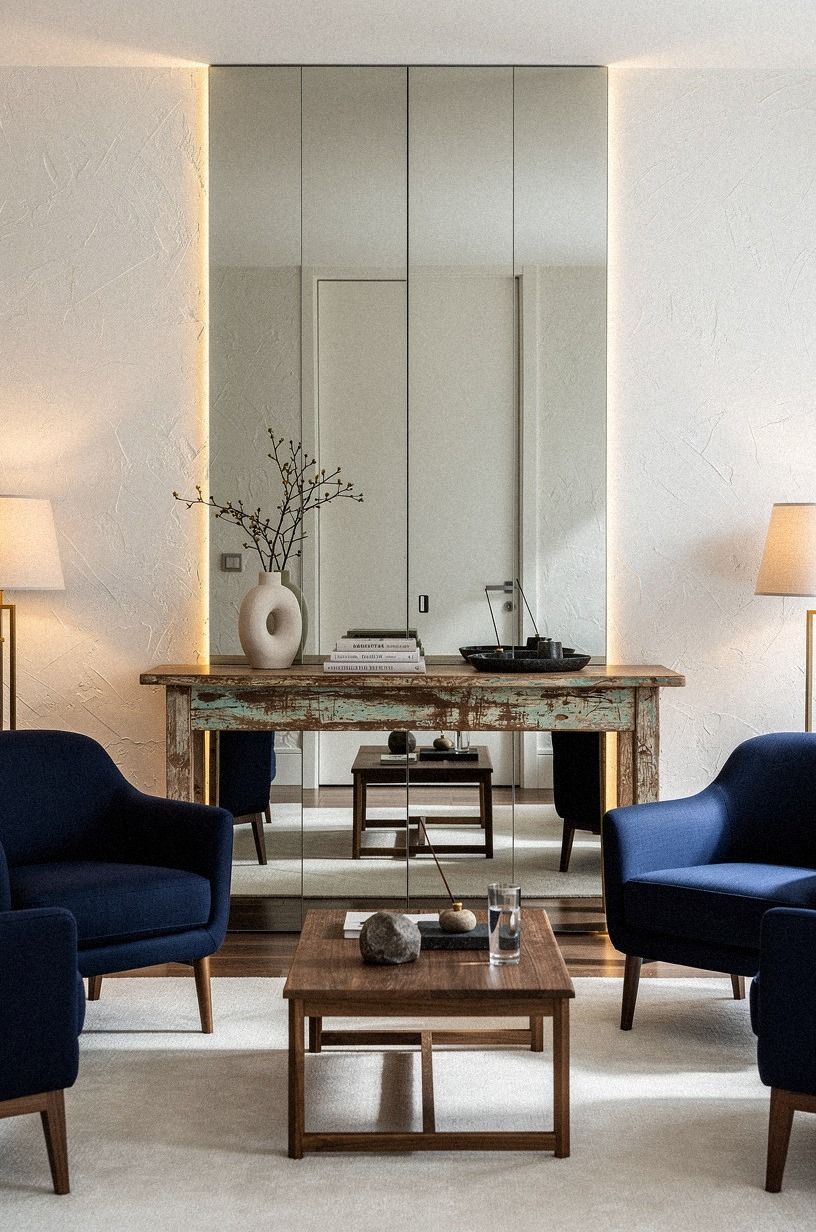
Mirrored panels can hide a door, but only if you use them with restraint. In a navy, white, and walnut room, mirrored panels reflect the seating area and stretch the wall, which makes the passage fade into the composition instead of reading as an obvious exit.
The mirror layout matters most. I prefer panels with very fine divisions or almost invisible seams so the reflection does the work. If the mirror layout gets too busy, your hidden door starts looking like a department store fitting room.
Nobody wants that in their living room.
And place the reflections on purpose. Let them catch a lamp, a tree, or the fireplace, not the TV.
That’s the difference between glow and glare. If you are trying to make a room feel richer without rebuilding it, the 60 25 15 budget rule helps you decide whether this is worth the splurge.
15Camouflage the reveal inside fluted oak
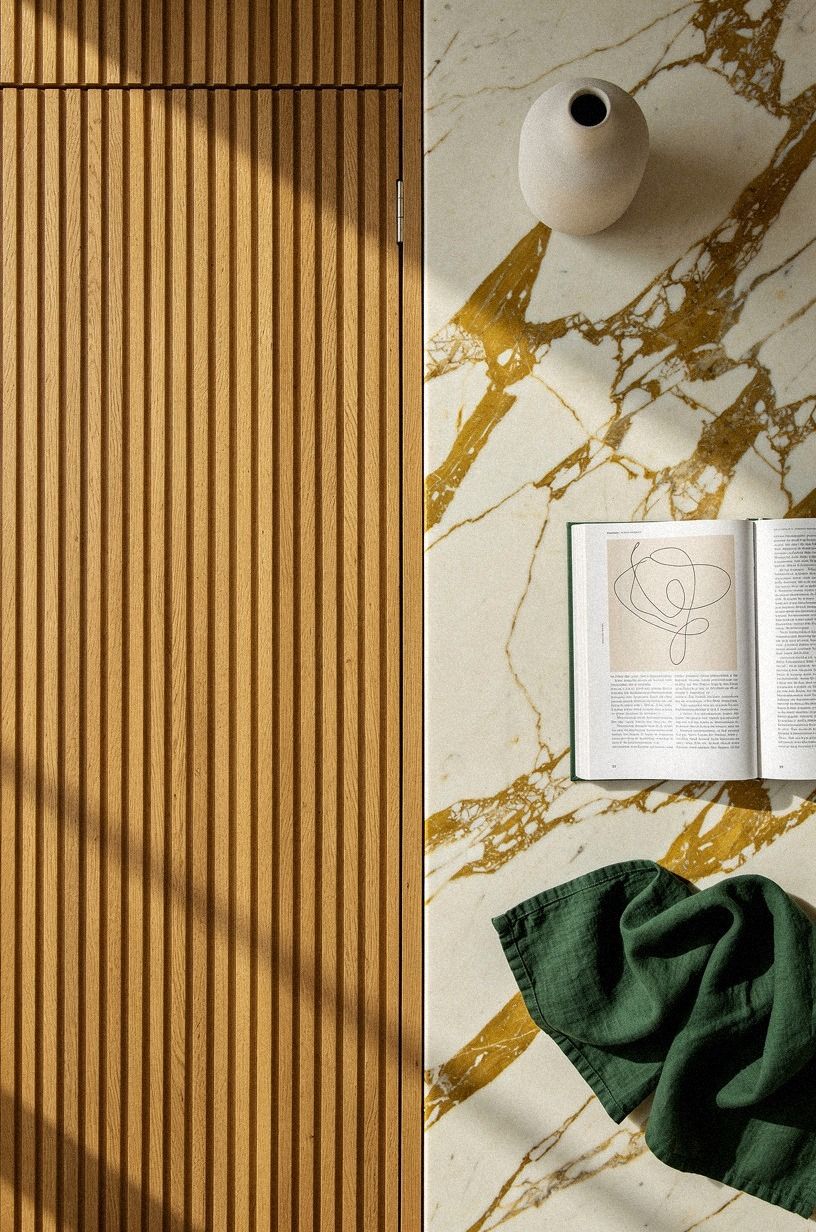
Fluting gives you pattern, shadow, and forgiveness all at once. When narrow ridges of fluted oak cross the hidden reveal, the seam gets lost inside the up-and-down movement, especially from a bird’s-eye view where the wall reads as one textured field.
I like this beside stone with a little warmth, like Calacatta Gold marble with amber veining, because the polished note keeps the oak from turning rustic. If your strips are too deep, though, the wall gets heavy fast. Keep the relief shallow and the stain soft so the room still feels airy.
But don’t pair this with lots of other linear moments. One slatted coffee table, one striped rug, one fluted wall is already plenty.
You want relief, not visual corduroy. For more ideas that make architecture feel bigger, revisit these small-space hidden door solutions.
16Install a frameless door beside the fireplace
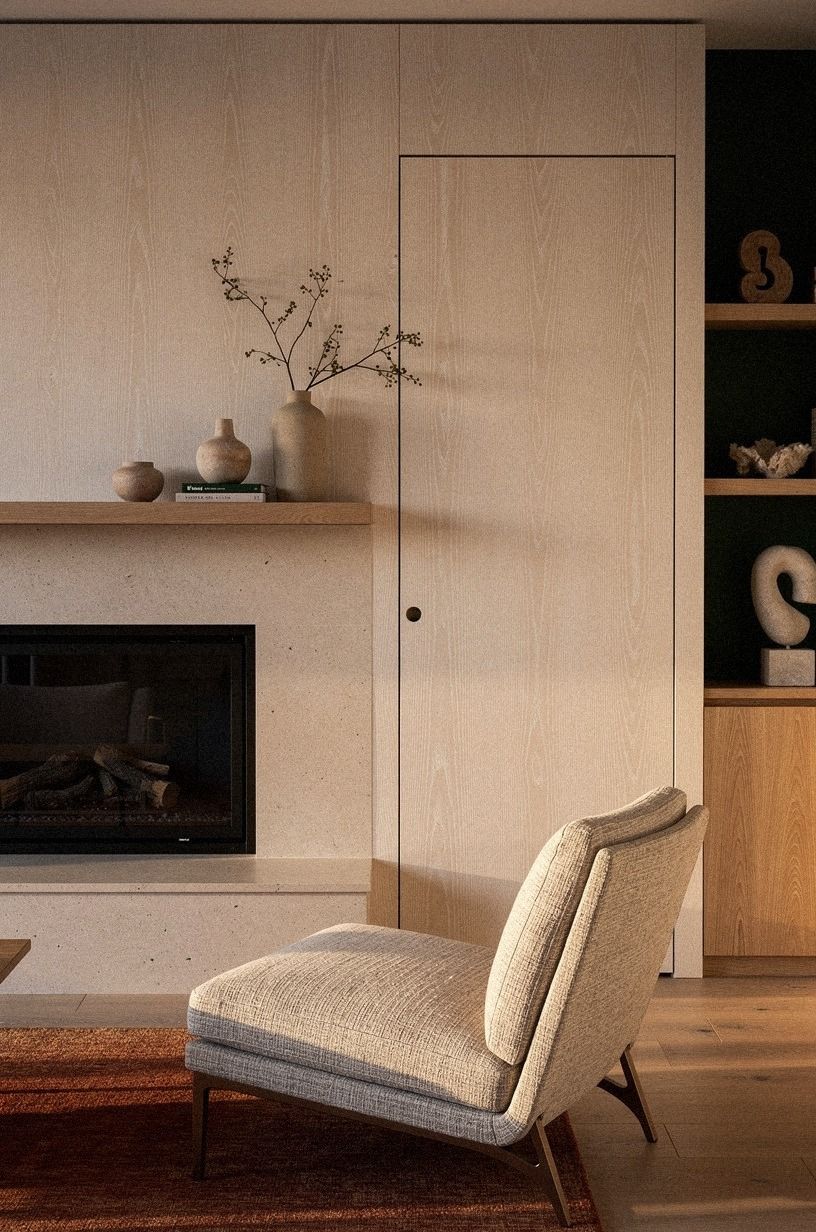
A fireplace wall is where hidden doors can look magical or deeply weird. The win comes when the flush slab respects the hierarchy of the hearth, so the fire stays the star and the side door in cerused white oak behaves like supporting architecture.
This is also the place to be honest about the budget range. A decor-only refresh can still move the room a lot, and these are the ranges I use as a quick reality check before anyone starts ordering custom work.
If your fireplace wall already needs work, combining the hidden door with that project usually makes more sense than treating it alone. The room reads more intentional, and labor overlaps better.
Huge difference! For more on where to spend first, this budget rule for rooms that look far pricier is genuinely useful.
17Mask the joint with oversized abstract art
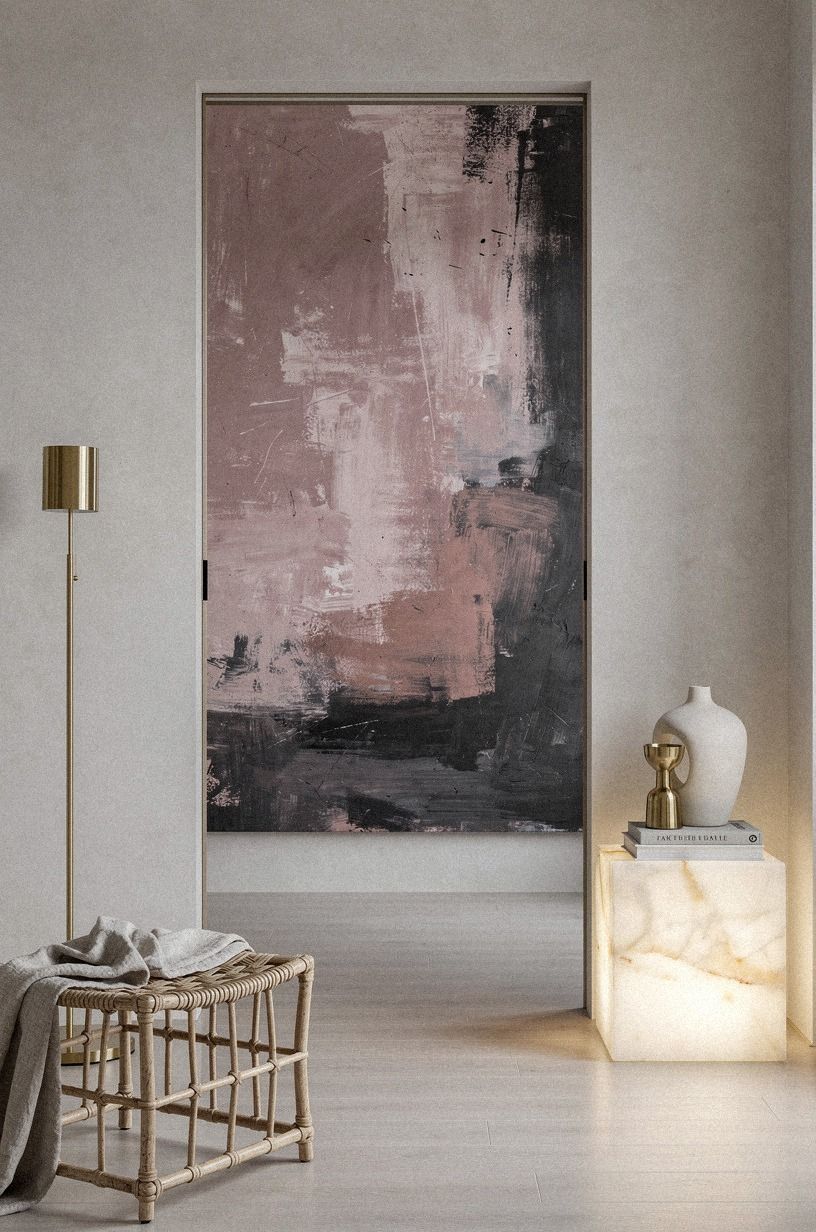
A large abstract canvas is a great distraction when the seam can’t disappear completely.
18Finish the opening with seamless microcement
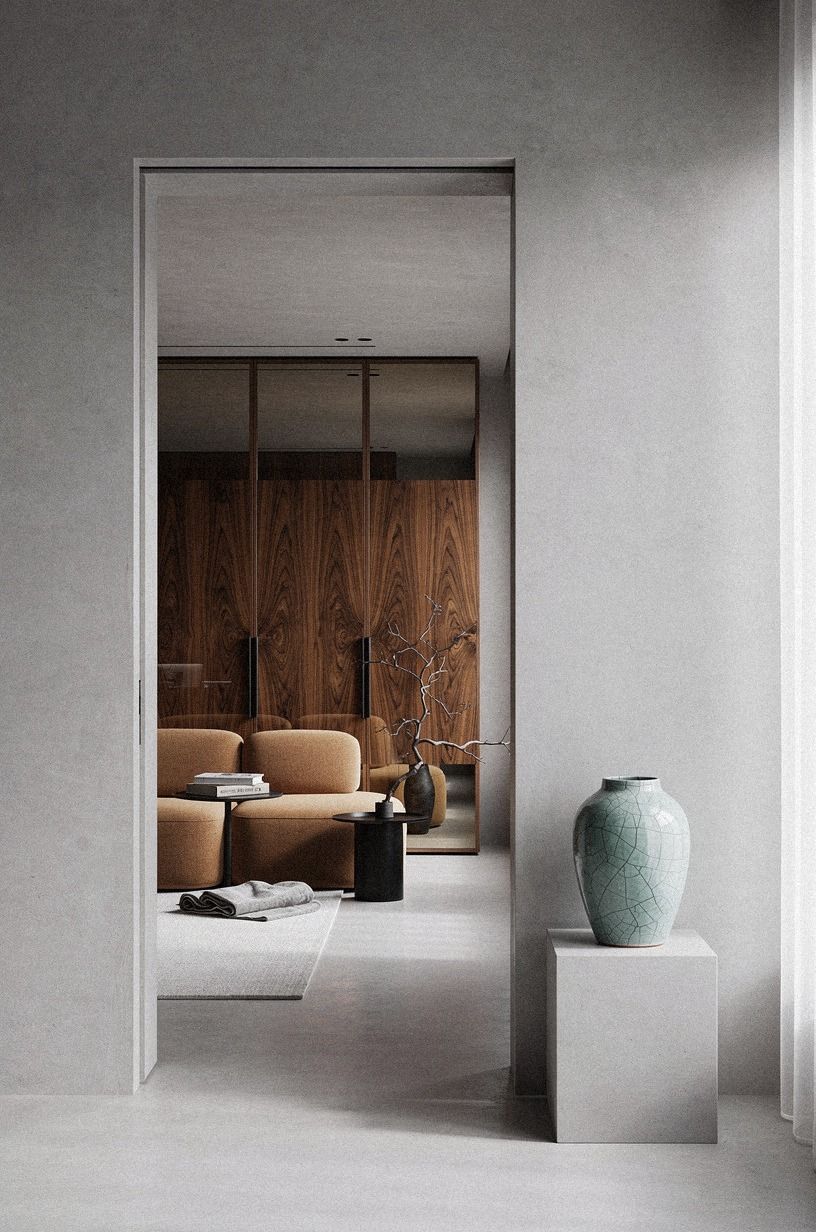
Microcement gives you one of the calmest hidden-door finishes you can get. When the same warm white microcement wraps the wall and the opening, the door edge softens into the surface and the whole room feels monastic in a very livable way.
You do need restraint around microcement. Pair it with natural linen, oak, maybe one low chair with a soft curve, and stop there.
I wouldn’t crowd a microcement wall with lots of little decor because the strength is the continuous skin itself. Let the texture carry the mood.
And keep your lighting warm, layered, and low. Hard overhead light will flatten the finish and reveal every transition.
Soft pools from lamps are what make this feel expensive. So good!
If that part is still off in your room, start with fixing the overhead lighting mistake first.
Why Hidden Doors Feel Better Now
I think hidden doors are back because people are tired of rooms that explain themselves too loudly. For a while, every surface wanted to perform.
Big contrast trim. Black hardware everywhere. Accent walls that practically waved at you from the driveway.
A concealed door does the opposite. It lowers the volume.
It tells your eye to rest. In a living room, that’s not a tiny thing. You spend hours in there, often at the tired end of the day, and your body notices visual static even when you can’t quite name it.
I’ve also learned that the best invisible door isn’t the one with the most engineering flex. It’s the one that disappears into the life of the room.
If the wall has cerused oak, the door wants cerused oak. If the space leans chalky and soft, the door wants plaster or limewash. If the room is traditional, molding is your friend.
The mistake is treating hidden doors like gadgets. They are not gadgets. They are atmosphere tools.
And here’s the money part. You don’t need the highest tier to get the feeling.
What you need is one idea carried all the way through, with enough discipline to stop before the wall gets busy. That’s why I keep coming back to proportion, sheen, and rhythm over expensive hardware.
A door can be flush and still look wrong if the paint sheen breaks, if the panel spacing shifts, or if the baseboard suddenly changes its mind at the threshold. Those are cheap mistakes, but they cost the room a lot.
So if you’re debating whether this hidden door is worth doing, I’d say yes, especially in a small living room where every visual interruption counts. Just don’t chase hidden for hidden’s sake.
Chase calm. Chase one wall that finally shuts up. That’s the part that changes how the room feels when you walk in, and you notice it every single night.
What People Always Want to Know
What is the best Invisible & Frameless Door Ideas (Doors That Look Like Walls) for a small living room?
The best pick is usually paint or panel alignment, because one continuous wall plane makes a small room feel wider without eating floor space. I like a flush painted slab first, then slim oak slats if you want more texture. The scale-friendly examples in this hidden door roundup are worth a look.
Where can I buy Invisible & Frameless Door Ideas (Doors That Look Like Walls) pieces on a budget?
Start with IKEA, Target Threshold, and Wayfair for paintable molding, art, mirrors, and simple lighting. Then check Facebook Marketplace for solid wood frames or vintage art. I save the custom millwork money for when the wall really needs it, not before.
How much does a Invisible & Frameless Door Ideas (Doors That Look Like Walls) makeover cost?
A simple version can land around $300 to $1,200, especially if you’re painting, adding art, and fixing lighting instead of rebuilding the wall. Mid-range living room work often lands around $2,500 to $8,000. The expensive jump is usually millwork, not decor.
Can I create a Invisible & Frameless Door Ideas (Doors That Look Like Walls) on a budget?
Yes, and paint is your cheapest power move. Match the slab to the wall, swap harsh overhead bulbs for warmer lamps, and use oversized art to distract from the seam. Those three changes cost less than custom paneling and still move the room fast.
Is a Invisible & Frameless Door Ideas (Doors That Look Like Walls) worth it in a small space?
Yes, because small rooms benefit most from visual quiet. When you remove one obvious door line, the wall reads longer and the seating zone feels less chopped up. Keep the rug large enough, usually 8×10 or 9×12, so the floor helps the room stay unified too.
Is Invisible & Frameless Door Ideas (Doors That Look Like Walls) a good idea for a rental?
Yes, if you focus on reversible camouflage. Try removable wallpaper across a flush face, oversized art on no-damage hangers, or paint-safe styling around the opening if your lease allows touch-ups. I wouldn’t attempt hinge changes or heavy slat builds in a rental.
Where I’d Start First
If I had to pick one, I’d start with painting the slab to match the wall color. You can’t hide a bad sheen break with styling, and that fix is cheaper than millwork. Pin that move for later and read the 80 20 budget rule before you buy anything.