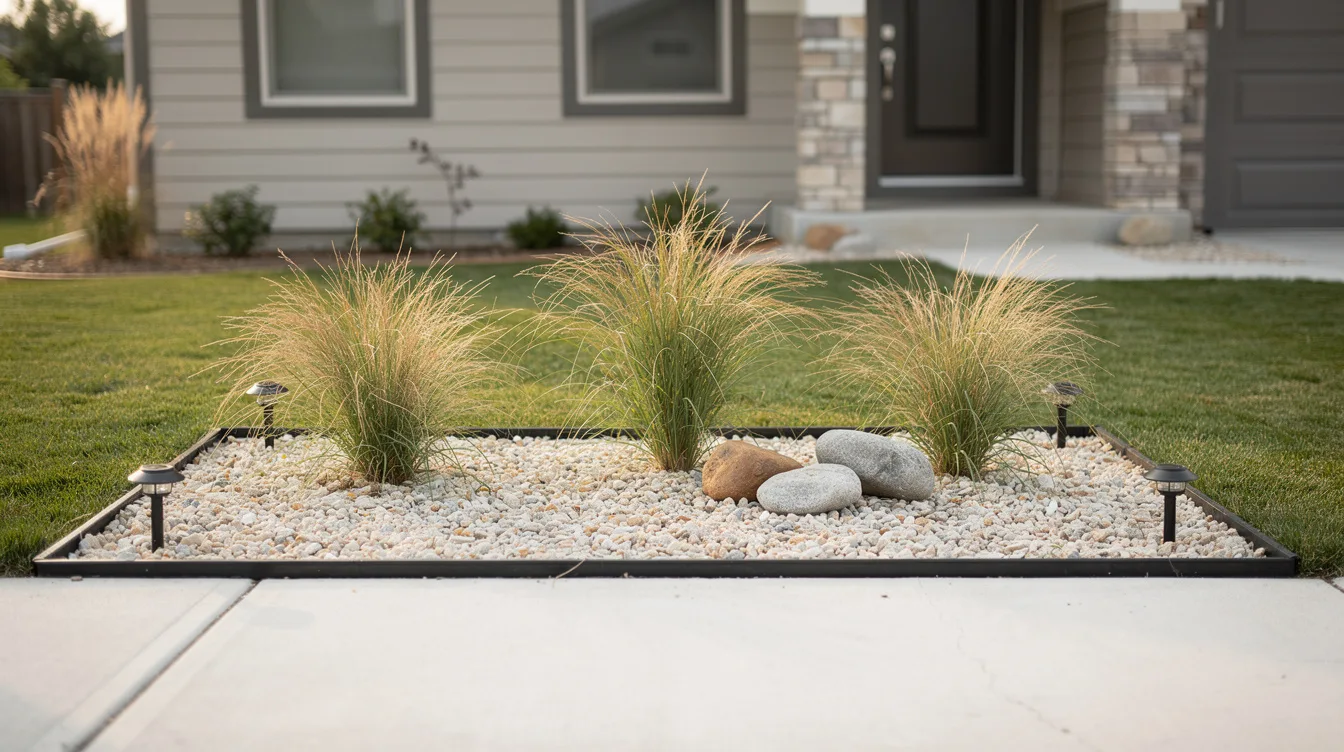
By midafternoon, my front strip was the part of the yard I avoided looking at. The soil baked hard, one corner stayed patchy, and every cheap fix I tried looked even cheaper in full sun.
I stopped chasing lush, thirsty landscaping and went after something sharper. A small layout with clean lines, pale ground cover, and a few tough plants gave me the expensive look I wanted without blowing past a $100 bill.
Pick one hot zone and keep the footprint tight
The smartest way to fake a high-end landscape is to stop spreading the budget around. I like a single 5 ft x 10 ft strip because it is large enough to read as intentional and small enough to finish in one trip.
That size also keeps material costs sane in extreme heat, where bare soil usually turns messy fast. One focused bed beside a fence, wall, or patio edge looks calmer than three scattered mini projects, and calm is what reads expensive.
Lay a mineral base that can handle brutal sun
For the ground layer, I would start with Vigoro Pea Pebbles or Quikrete All-Purpose Gravel in a light color. Typical coverage for a 5 ft x 10 ft area at about 2 to 3 inches deep is around 3 bags of 0.4 cu ft gravel, and at roughly $4 to $5 a bag, that lands near $12 to $15.
This is where cheap landscaping often goes wrong, people pick too many materials and the yard looks busy. One gravel tone across the whole strip feels cleaner, reflects heat better than dark bark, and survives a heat wave with almost no drama.
Cut clean edges before you buy one extra plant
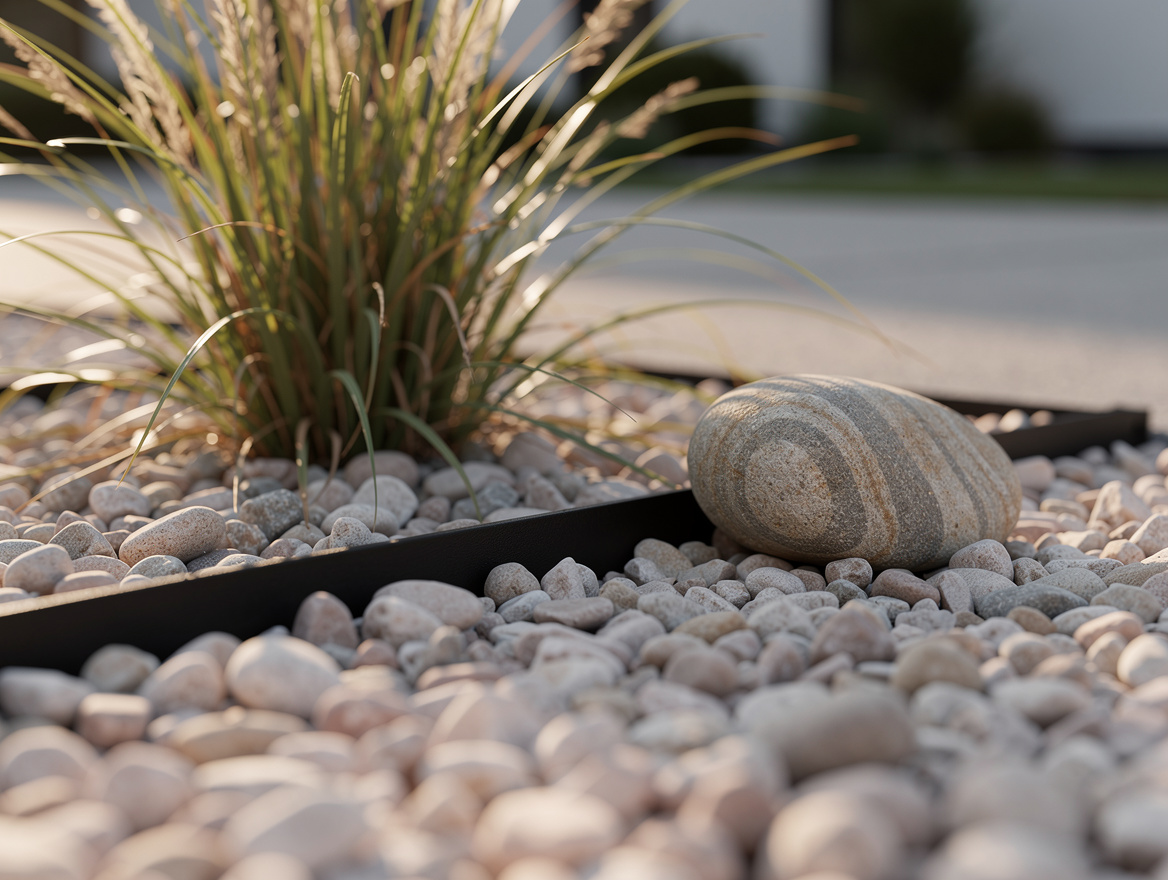
Crisp lines do more for the luxury look than fancy plants ever will. A simple Dimex EasyFlex Landscape Edging Kit or Vigoro No-Dig border gives the bed that finished courtyard shape for about $18 to $22, and a short extra piece usually adds $8 to $10.
I would budget around $26 to $32 total for about 16 feet of edging around a narrow rectangle. That sounds boring, but it is the detail that stops gravel from drifting into the lawn and makes the whole setup look planned instead of improvised.
Use only three to five drought-tough plants
When a yard is fighting heat, restraint looks richer than variety. I would plant 3 ornamental grasses in a straight row, then stop, because a limited palette feels architectural and keeps watering low.
Blue fescue, Mexican feather grass, and purple fountain grass are the kinds of plants that hold up well in punishing sun and still move nicely in a breeze. Typical 1-gallon pots from Home Depot, Monrovia, or Proven Winners run about $7 to $10 each, so 3 plants usually cost $21 to $30.
I would not cram in annual color here. A row of grasses with space around them looks more expensive than ten bargain flowers packed shoulder to shoulder, and it stays presentable when the forecast turns harsh.
Add one hard accent instead of lots of little decor
Expensive outdoor spaces usually have one thing with visual weight, not a pile of small accessories. A bag of larger river rock or 2 to 3 basic stepping stones in front of the grasses is usually enough, and that kind of accent often sits in the $10 to $15 range.
I prefer stones over tiny statues or novelty garden signs every time. The heavier texture works with gravel, handles heat without fading, and gives the bed a quiet focal point that does not beg for attention.
Light it like a courtyard, not a holiday display
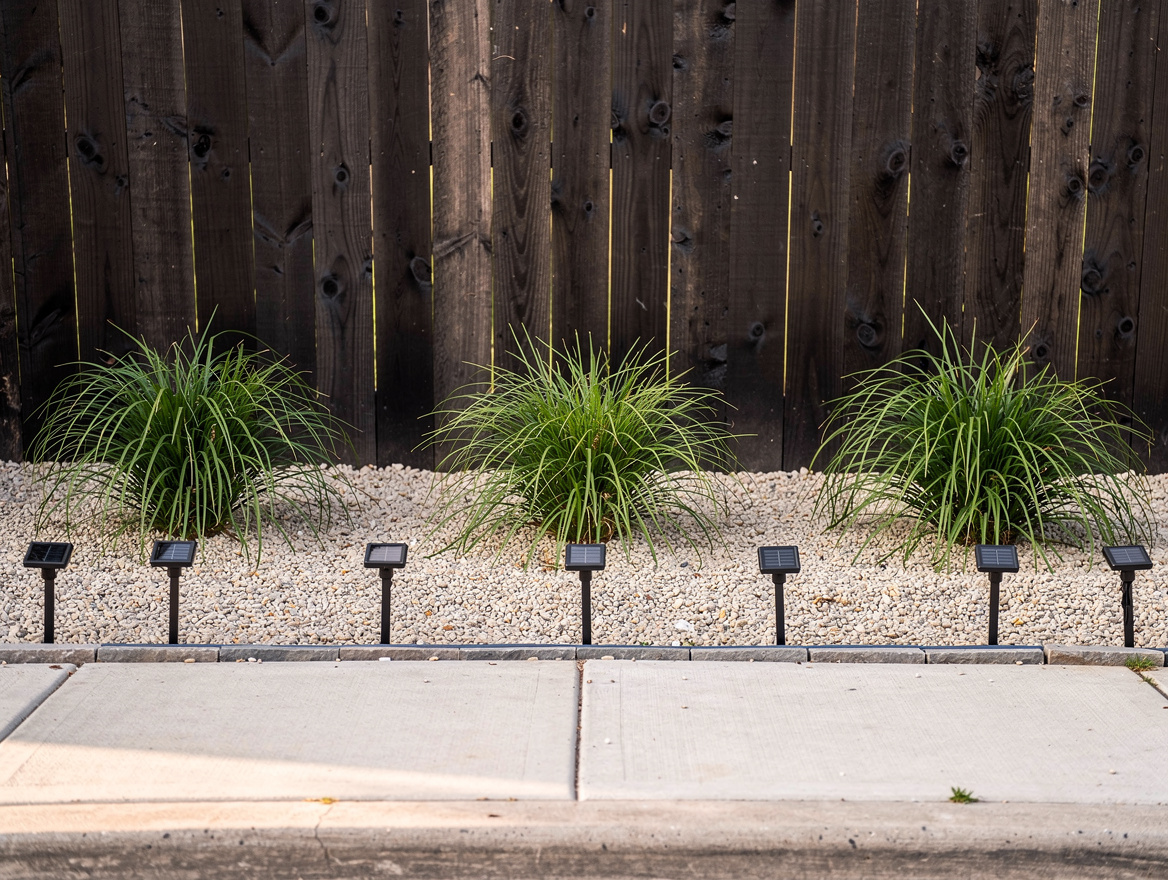
Low lighting is what makes a budget bed look deliberate after sunset. A 4-pack of Hampton Bay or Better Homes & Gardens solar path lights typically costs about $15 to $20, and that is enough for a narrow strip.
Keep the placement sparse and even. Four lights in a straight rhythm look far more polished than eight random stakes, and solar is an easy call in a hot, bright yard because it charges well without adding wiring costs.
Switch to a planter trio when you have more patio than soil
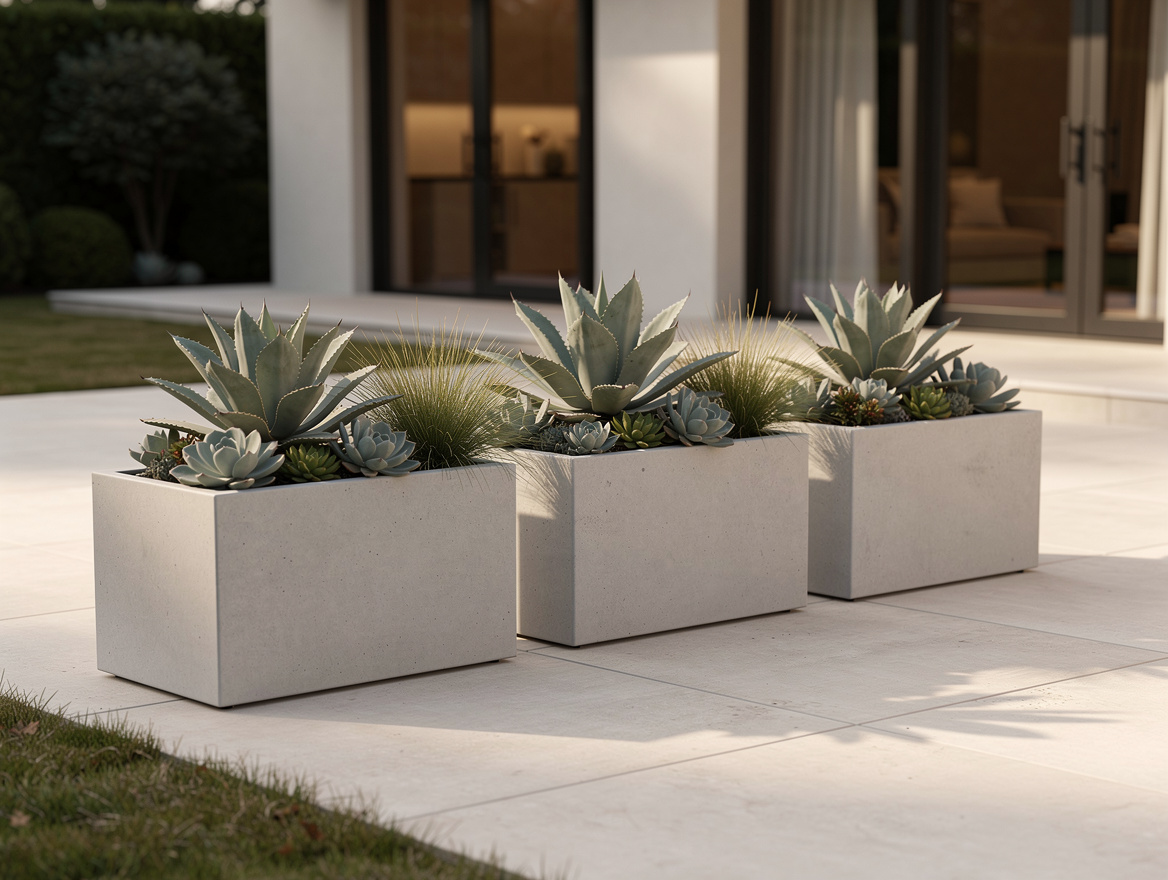
If your outdoor area is mostly concrete, I would skip the gravel bed and put the money into 3 matching pots instead. A trio of 12 to 16 inch Better Homes & Gardens, HDX, Veradek, or Hampton Bay resin planters with a stone or concrete look usually runs $15 to $20 each, so the set lands around $45 to $60.
That size matters because anything smaller can look skimpy in strong sun. I like planters at least 12 inches deep, filled with a simple mix of drought-tolerant plants and a clean potting soil like Miracle-Gro Moisture Control or Vigoro Potting Mix, then grouped in a straight line by the entry.
The same rule applies here, one finish, one plant family, one repeated shape. Three coordinated containers read boutique hotel much faster than a mismatched collection of old pots, even when the plants themselves are modest.
For a true under-$100 start, do the gravel strip first: gravel, edging, 3 grasses, and sparse solar lights usually come in around $80 to $90 at the low end. Buy the edging before anything decorative, because that is the piece that makes every other dollar look smarter.
Mia Carter writes about small-space living and budget home makeovers. She has restyled three rentals and tests most ideas in her own 45 sqm flat.