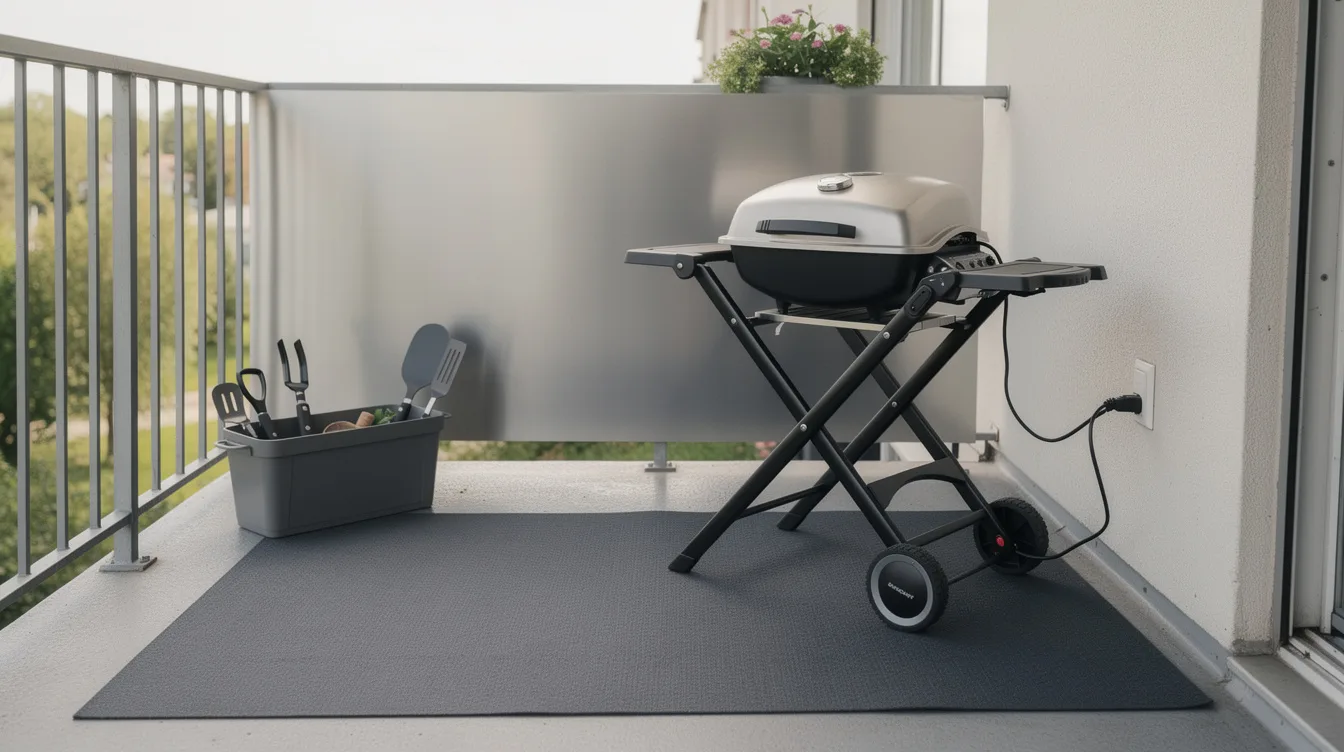
I learned this the hard way after spotting a faint grease halo on a beige balcony tile the morning after burgers. It was tiny, but once you notice a mark in a rental, it becomes the only thing you can see.
A renter-safe BBQ setup has to do two jobs at once: cook well and leave nothing behind on the floor, railing, or wall. The good news is that you can get there with portable pieces from Amazon, Home Depot, and IKEA, without drilling or bolting down a single thing.
Start With the Lowest-Smoke Grill Style
If your neighbors are close and your lease language is vague, I would start with a portable electric grill. It keeps the risk low, cleanup simple, and your move-out day much calmer.
A compact electric unit in the 18 by 23 by 13 inch range typically runs about $399 on Amazon. Smaller tabletop electric models around 18 by 12 by 10 inches usually land closer to $199.99, which is a much easier entry point.
Electric is the least annoying option for rentals because it cuts down soot and keeps grease contained in a tray. I think it is the smartest call for covered balconies, especially when building rules are written to make propane and charcoal a headache.
Put a Full-Size Barrier Under the Grill
The floor mat is the part people skip, then regret. One flare-up or one greasy set of tongs on bare tile, and your security deposit starts feeling personal.
Use a fireproof grill mat or deck mat that fully extends past the grill legs, not one that barely matches the footprint. A 90 by 120 centimeter fireproof mat usually costs about $20 to $40, while a larger 120 by 180 centimeter PVC or recycled rubber mat often sits in the $40 to $80 range at Wayfair or Home Depot.
I prefer going bigger than you think you need. A larger mat catches grease, ash, and the random drip from a sauce brush, which is exactly the mess that sneaks onto grout lines and wood boards.
Lift the Grill Onto a Freestanding Surface
Never let the grill become part of the apartment. The whole setup should be freestanding, easy to wipe, and easy to carry out when your lease is up.
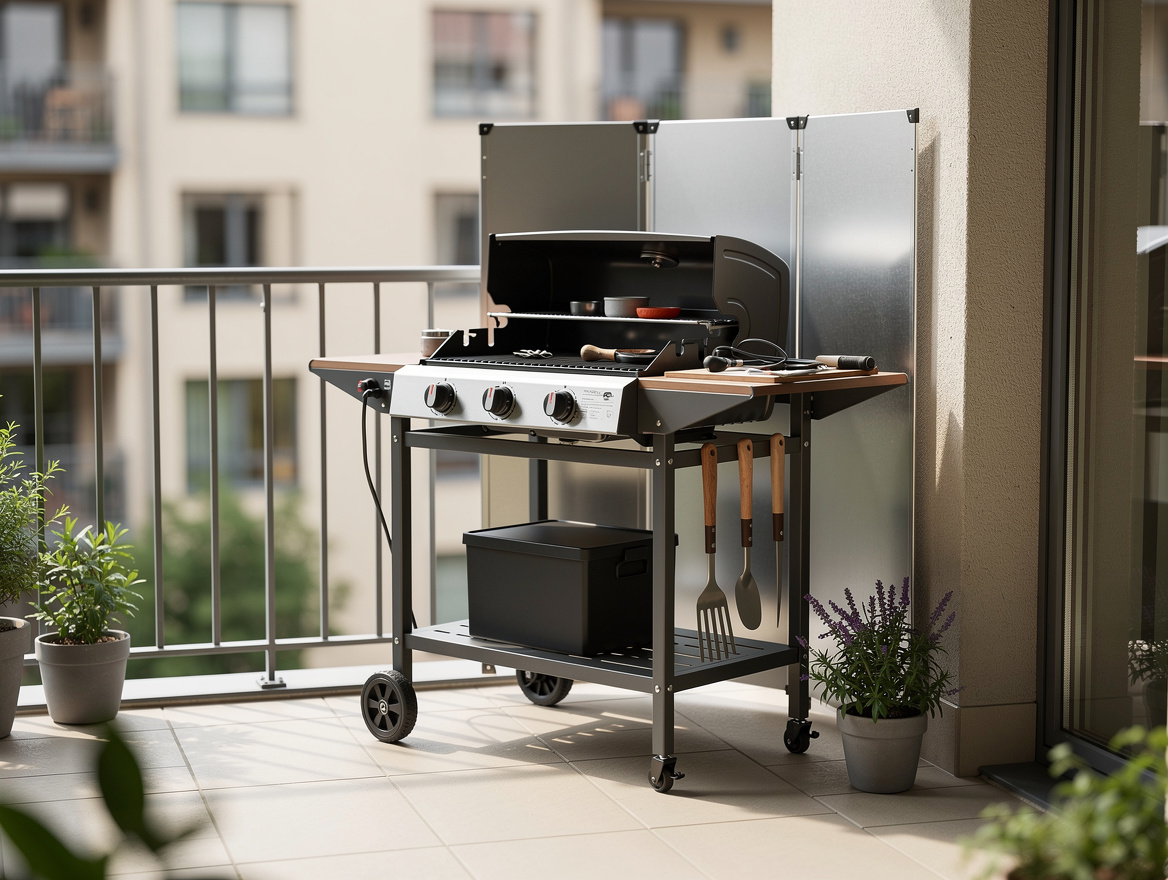
A folding cart or clip-on balcony table with a top around 24 by 16 inches gives you enough room for a compact grill and a tray. At IKEA, Target, and Walmart, this kind of surface usually falls between $25 and $60.
I like a folding cart more than a fixed balcony shelf because it feels less risky and gives you a buffer from railings. If the surface gets messy, you clean your cart, not your landlord’s metalwork.
Block Heat and Splatter Before They Reach the Wall
The back wall and railing are where rental damage gets sneaky. You might not notice a faint grease film or heat discoloration until the light hits it sideways.
Add a folding wind guard or freestanding steel heat shield behind the grill. Aluminum wind screens around 24 to 31 inches long and 8 to 10 inches high usually cost $20 to $30, and larger shield panels around 28 to 40 inches wide and 12 to 16 inches high often cost $30 to $50 on Amazon or at Ace Hardware.
This is one of those pieces that looks a little fussy until you clean it after two weekends of cooking. I would rather scrub a removable shield in the sink than try to explain a smoke haze on painted siding.
Use Drip Control Like You Mean It
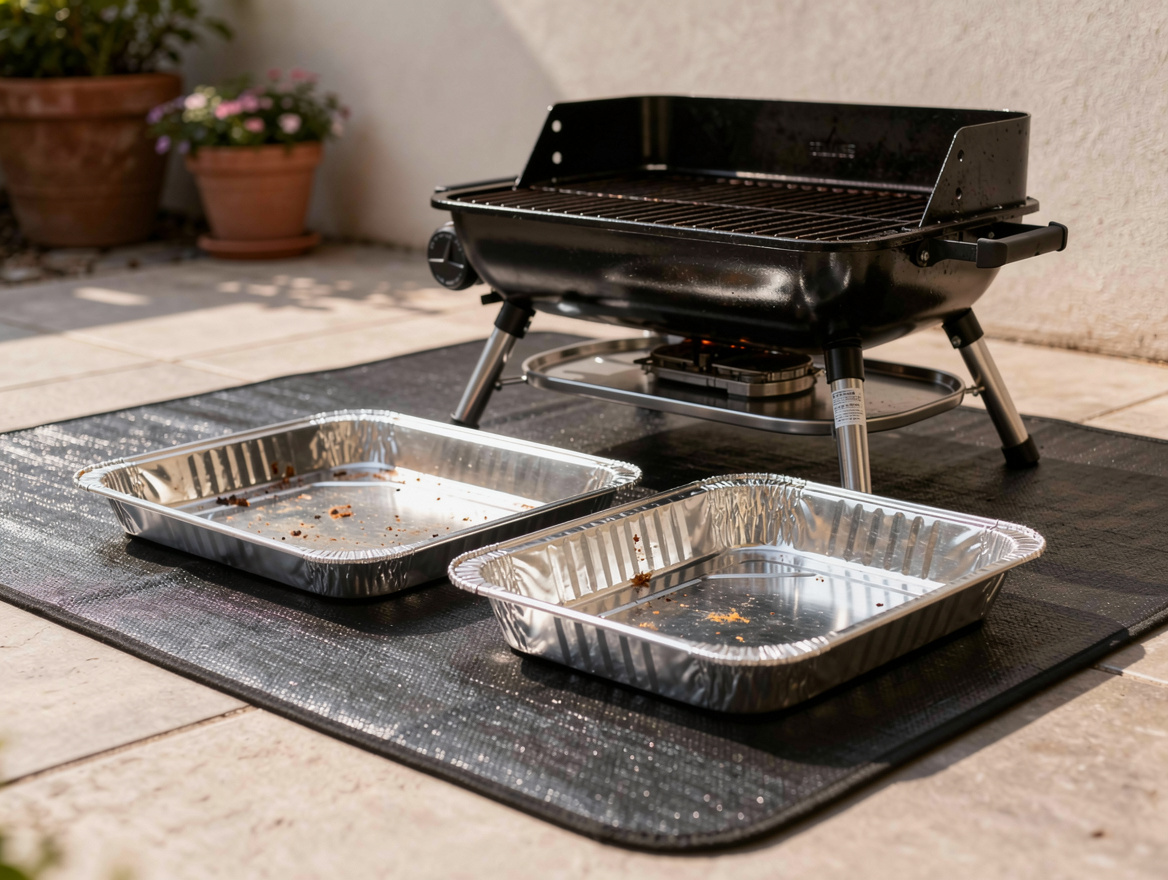
A renter-friendly grill setup lives or dies on grease management. Smoke is annoying, but grease is what actually leaves evidence.
Line the drip area with aluminum tray liners and keep a small metal pan nearby for greasy tools. Packs of 10 to 20 liners usually cost $10 to $15 at Walmart, Lowe’s, or Costco, and they are worth every dollar.
I also keep one roll of paper towels and a spray bottle of warm soapy water outside during the cook. Wiping splatter immediately is far easier than trying to lift an old stain from textured concrete the next morning.
Choose Gas or Charcoal Only With Extra Containment
If you want more heat than electric, a small portable gas grill can still work in a rental, but only with serious protection underneath and behind it. This is where people get casual, and casual is how floors get marked.
Portable gas grills with cook areas around 22 by 13 inches commonly start around $168. Larger folding units with grill bodies near 24 by 15 by 13 inches often run $150 to $200, while roomier traveler-style models can climb to about $450 at Home Depot or Amazon.
Charcoal is the hardest version to keep truly no-trace, so I would only do it with a stainless steel tray under the entire grill and ash zone. If your building rules are strict or the balcony is covered, my blunt opinion is simple: skip charcoal and keep your lease out of the conversation.
Store the Whole Kit So Move-Out Is Easy
The cleanest rental setups work because every piece belongs to a system. Nothing should be loose, improvised, or left outside to stain, rust, or leak.
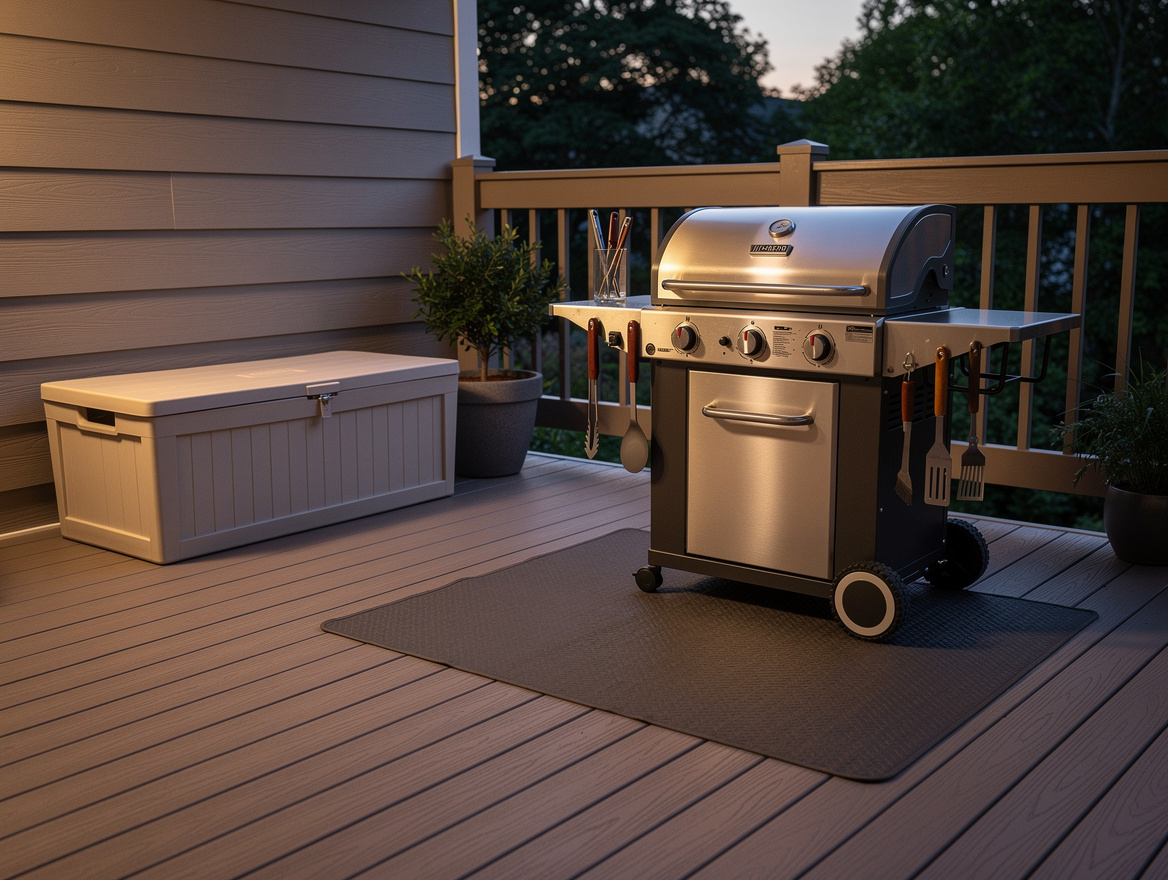
I would keep the mat, liners, shield, brush, and gloves in a lidded storage bin after each use. A medium outdoor-safe bin from Target or Costco is usually cheap, and it stops grease transfer onto balcony corners or indoor floors.
Before moving out, wash the mat, wipe the shield, empty the drip tray, and check the tile joints or deck seams in daylight. A typical no-trace setup is really about one habit: contain the mess before it spreads, not after.
Buy the floor mat first, then pick the grill that fits your building rules. Once the barrier layer is in place, the rest of the setup gets much easier and far less stressful.
Mia Carter writes about small-space living and budget home makeovers. She has restyled three rentals and tests most ideas in her own 45 sqm flat.