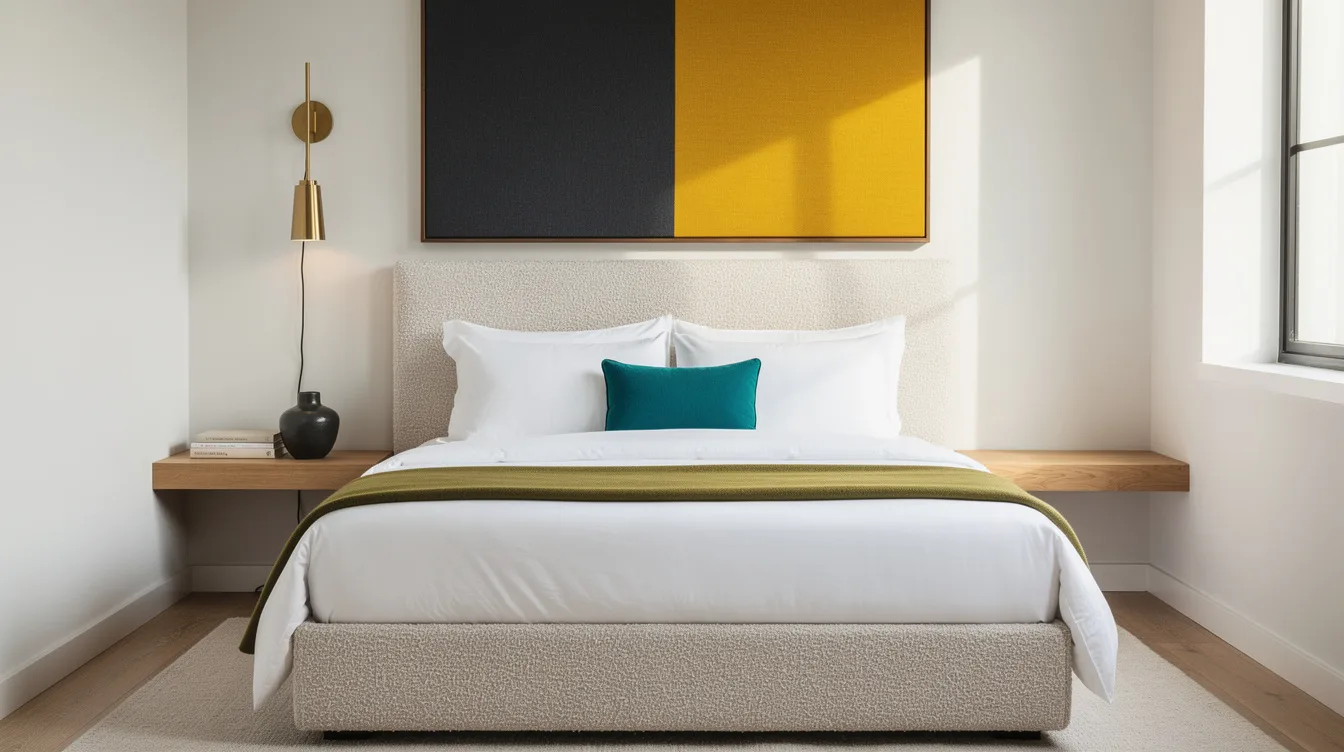
I slept in my own guest room for six nights while the bedroom floors got refinished, and by the second night I knew the mattress wasn’t the problem.
It was the wall. Bare painted drywall behind a 54-inch full bed, cold against my shoulders every time I sat up to read.
Three rentals in, I’ve hung, propped, and rebuilt compact upholstered headboards enough times to know which decisions actually hold up once guests start using the room.
Measure the Wall Before You Fall for a Fabric
The number that drives everything: a standard full bed runs about 54 inches wide. A panel landing between 55 and 59 inches reads deliberate.
Go narrower and it looks like a shipping error. Go much wider and you’ve built a wall feature you didn’t budget for.
Height is where most people slip. Roughly 30 to 37 inches of visible panel above the mattress gives you something real to lean into while reading.
Above that you’re in traditional tufted territory, which typically means 45 inches or more of upholstery looming over a small room.
I stuck a paper rectangle up with painter’s tape and left it for two days. By the second morning I’d trimmed three inches off my plan.
One more thing: measure from the top of the mattress, not the floor. Frame heights vary by several inches, and that gap is where the ordering mistakes happen.
Mount It on the Wall and Reclaim the Floor
Legs are the enemy in a guest room under roughly 120 square feet. They lock the panel to one height and they collect dust you’ll never see until you move the bed.
A wall-mounted padded headboard keeps the floor visually clear. You can vacuum under the bed in one pass, which sounds minor until you’re doing it before every visit.
Mine hangs on a French cleat from Home Depot, about $12 for a four-foot length, anchored into two studs.
That setup gives you exact height control, which matters if the guest bed sits high on a storage base.
Find your studs. Drywall anchors alone will hold a light panel on paper, but somebody is going to throw their full weight back on it at eleven at night.
Keep the Depth Under Four Inches
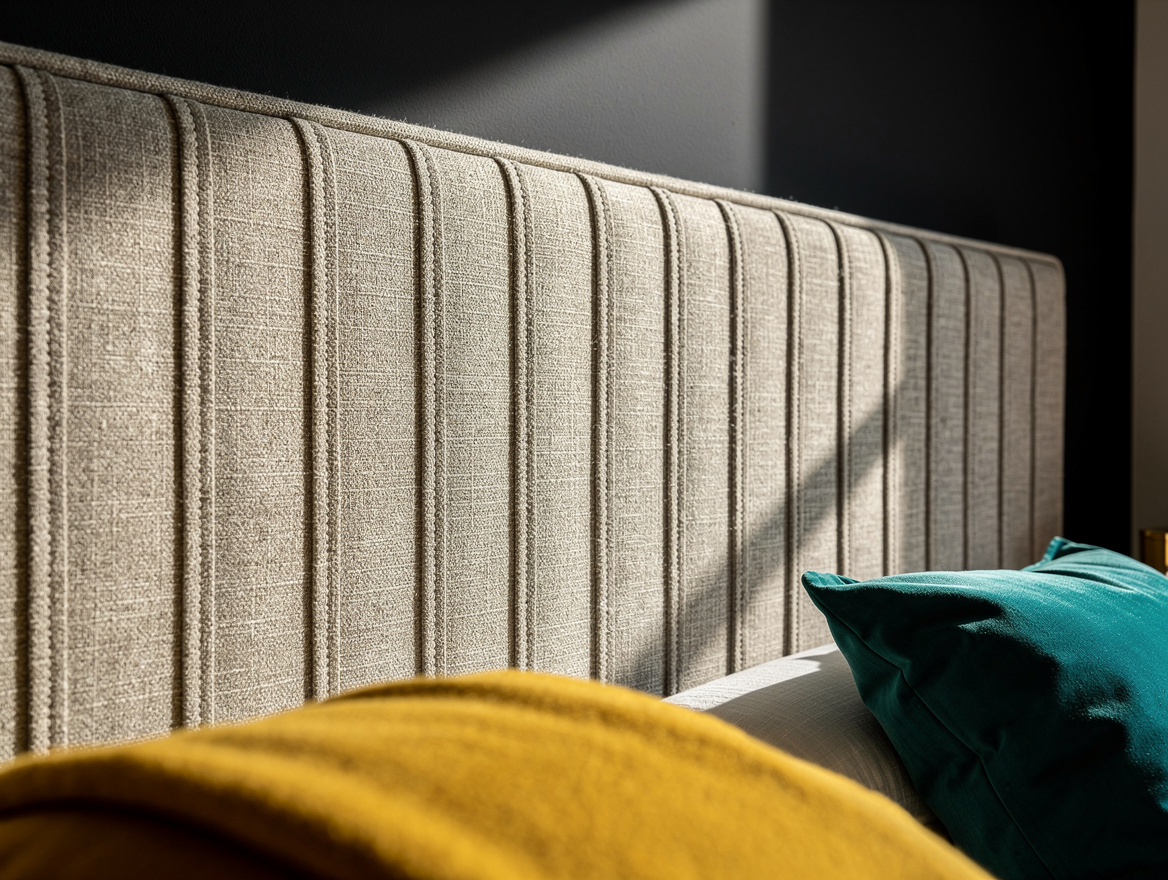
Depth is the quiet space thief. A compact upholstered panel typically runs about 2 to 4 inches deep, and that difference shows up in the walkway.
Common layout guidance suggests leaving roughly 24 to 30 inches of clearance around a bed. A bulky headboard pushes the mattress forward and steals that clearance from the foot of the bed, which is exactly where you walk.
My cutoff is unscientific and it works: deeper than the width of my hand, and it’s wrong for a small room.
Slim doesn’t mean hard, either. Two inches of high-density foam over plywood is genuinely comfortable to sit against.
The deep, overstuffed look photographs well in big master suites. In a guest room it just makes the ceiling feel lower.
Choose Fabric That Survives Other People’s Heads
Guest heads bring hair oil, sunscreen, dry shampoo. Ask me how I know.
I’d go with performance fabric or a tight polyester-linen weave you can actually scrub without leaving a water ring.
Full-size upholstered panels at Wayfair and Target typically land somewhere around $200 to $450, and the wipe-clean versions sit near the top of that range. Pay it.
Keep the color quiet: oatmeal, greige, warm gray, olive, muted blue. A neutral panel stops fighting with whatever bedding you already own.
My oatmeal bouclé panel gets more compliments than anything else in that room, and it also grabs every piece of lint in the apartment. A lint roller in the closet handles it.
Skip the Deep Button Tufting in a Tight Room
Deep diamond tufting belongs in a larger bedroom. Every dimple holds dust, and it piles visual weight exactly where you want the room to feel light.
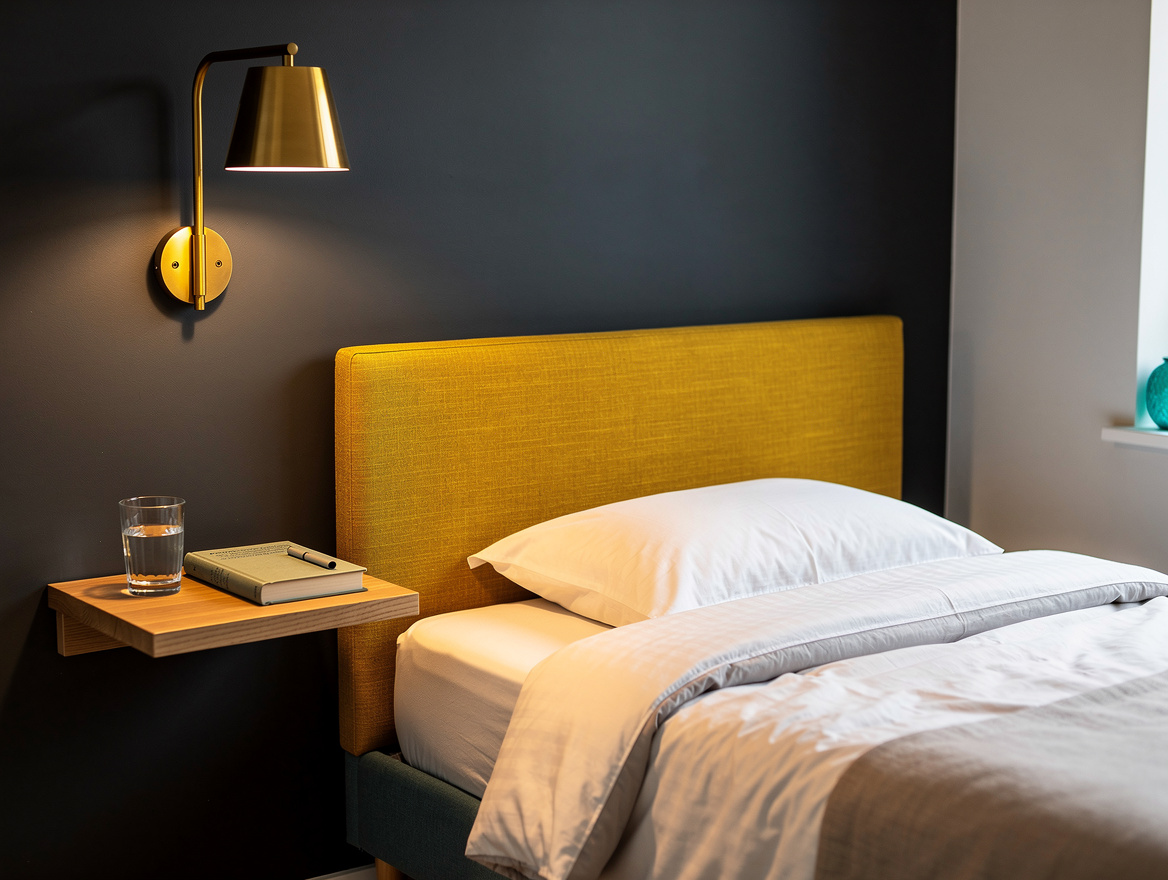
Vertical channel tufting does the same softening work with far less noise. The lines run up, so the panel reads taller than it measures.
That vertical pull also means you can skip hanging art above the bed. Real relief in a room where the wall already has a light switch and a closet door competing for attention.
The slim padded options at IKEA and the channel panels on Amazon both get you this look for a fraction of a custom upholstery quote.
If you genuinely love tufting, go small buttons and shallow dimples. Nothing deeper than a fingertip.
Build the Panel Yourself If You’re Renting
My first version cost about $70 and took a single afternoon.
Half-inch plywood cut to 56 by 34 inches at the Lowe’s panel saw, a two-inch foam sheet, a roll of batting, three yards of fabric.
A staple gun from Ace Hardware does the rest. Pull from the center of each side outward and work toward the corners.
Start at the corners instead and you’ll get pucker lines along the edges that you will notice every single time you walk into the room.
Split the whole thing into two or three removable cushions hung on a cleat if you want to wash them separately. That’s the version I’d build again tomorrow.
Light the Panel, Not the Ceiling
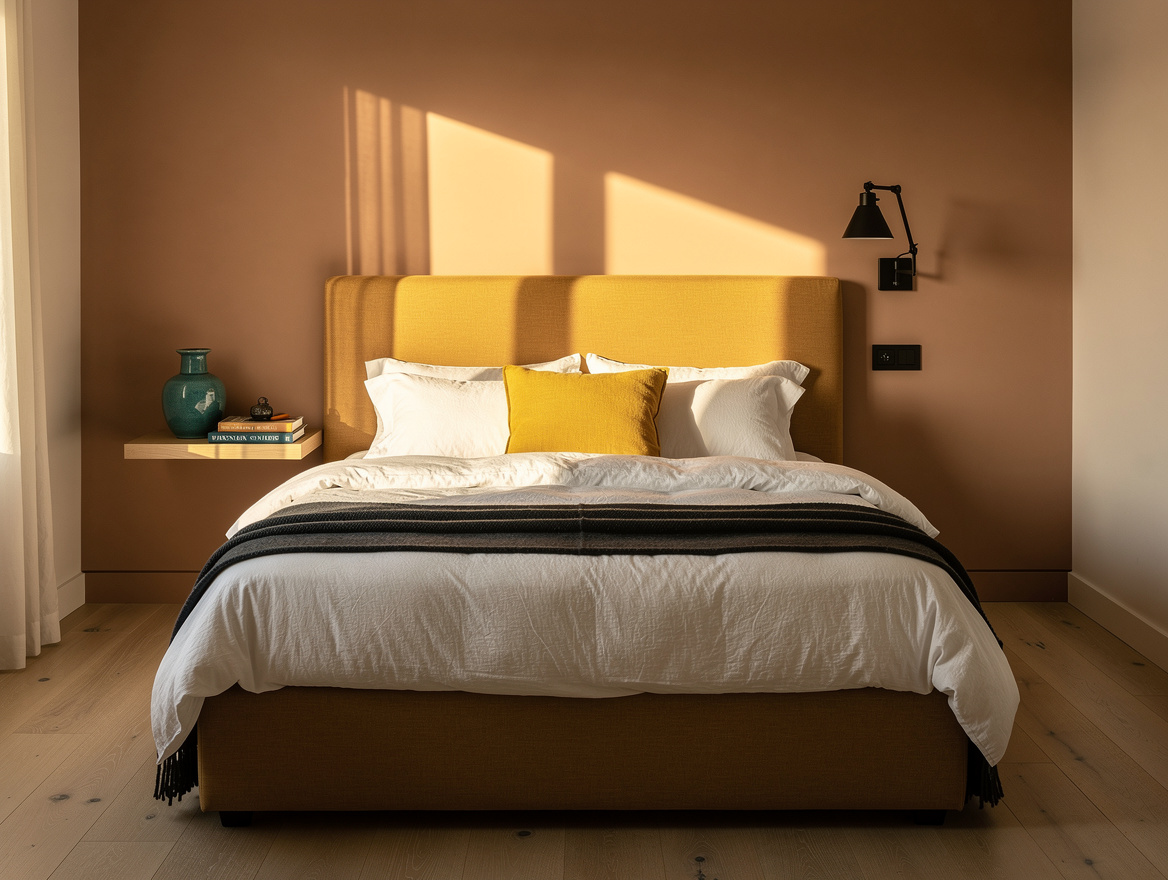
Upholstery goes flat under an overhead fixture. Raking light from the side is what makes the weave actually read as texture.
I use plug-in brass sconces set about 30 inches above the mattress, with the cords run down inside a paintable cord channel.
Wall lamps free up the nightstands too, which in a guest room mostly need to hold a phone and a water glass.
Stick to warm bulbs around 2700K. Cooler light turns nice fabric into waiting-room upholstery instantly.
Put them on a switch or a smart plug your guest can find without a tour. Nobody should be crawling behind a bed at midnight looking for a cord.
Altogether, a compact panel plus the lighting typically runs somewhere around $300 to $600, which is a fraction of what a new bed frame costs.
Start with the paper rectangle taped to the wall. Every decision after that gets easier once you can see the actual shape you’re committing to.
Mia Carter writes about small-space living and budget home makeovers. She has restyled three rentals and tests most ideas in her own 45 sqm flat.