
I used to leave my phone, water glass, and paperback on a 10-inch strip of mattress because a bulky bedside table crowded a narrow rental bedroom. A floating nightstand mounted around 26 inches from the floor gave the room breathing room without giving up a drawer.
The appeal is obvious, but the wrong placement or finish can make this compact piece look like an afterthought. These six choices make wall-mounted storage feel intentional.
Mount the Drawer at Mattress Height
Set the top of a wall-mounted nightstand level with, or just below, the mattress top. Around 24 to 30 inches from the floor is typical, and it makes a glass of water easy to reach without an awkward stretch.
Measure from the finished floor, not from the baseboard, then mark both sides of the bed before drilling. A low-profile drawer placed too high looks stranded on the wall, while one mounted too low turns bedtime reading into a shoulder workout.
Keep the Depth Comfortable
A floating drawer needs enough depth for a phone and a book, but it should not jut into the walking path. Roughly 9 to 15 inches deep is the sweet spot for most bedrooms, especially beside a queen bed.
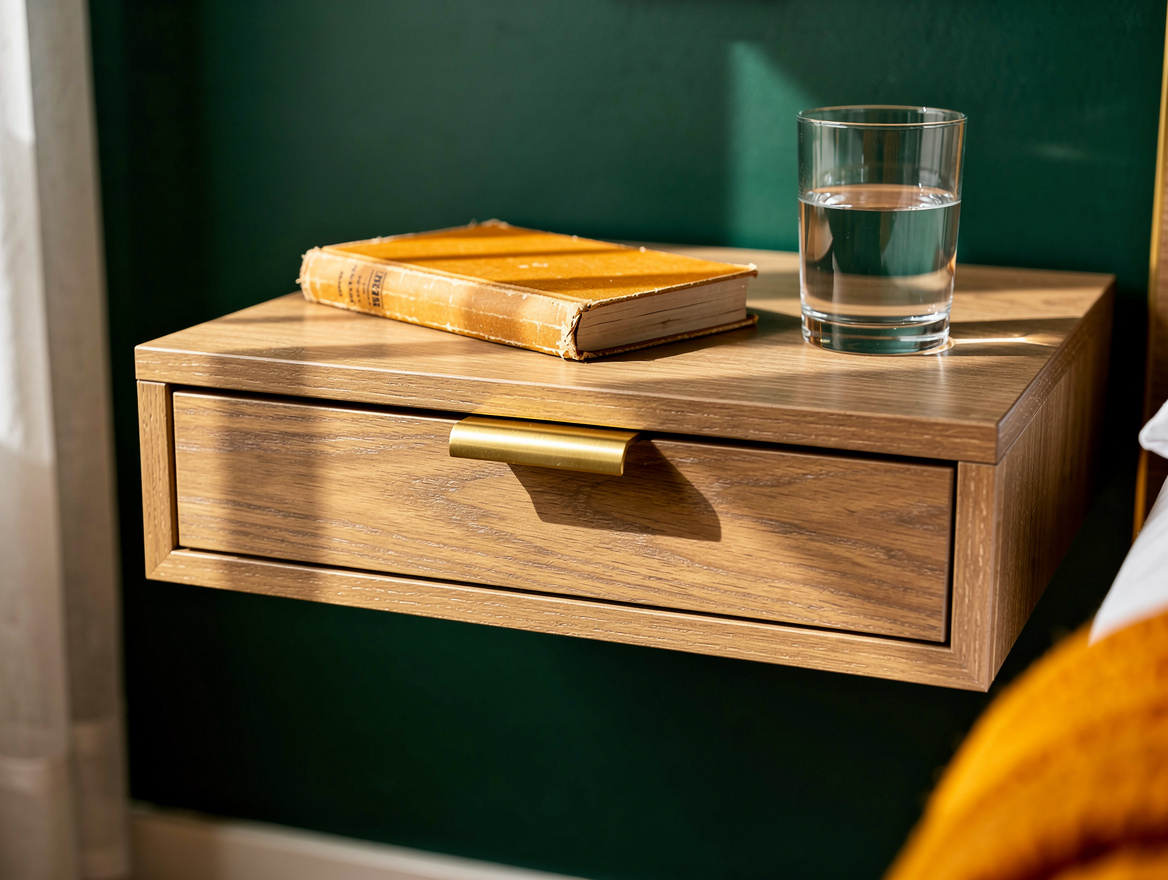
I’d skip the ultra-shallow 6.6-inch styles unless they are strictly for glasses and a charging cable. Look for an engineered-wood drawer with a clean closed front, then leave the floor below it bare so the space-saving point remains visible.
Choose One Drawer Before Adding Features
A single drawer plus an open cubby usually gives a small bedroom the most useful mix of hidden and grab-and-go storage. Budget options in MDF or particle board can run under about $50 at Amazon, which is a fair entry point for a guest room or first apartment.
Charging stations, LED strips, wireless pads, and extra ports can push a compact nightstand into the roughly $150 to $395 range. Buy those additions only if the outlet placement truly demands them, because visible cords can ruin the crisp effect faster than a plain drawer ever will.
Anchor Into Studs, Not Hope
A drawer full of books creates real pull on a wall, so secure the unit into studs whenever the mounting design allows it. Smaller floating drawers may hold around 15 pounds inside and roughly 38 pounds on top when properly anchored, but follow the specific hardware instructions over any general number.
For drywall locations without a stud, use the approved anchors and keep the load light. A powder-coated steel bracket can look sleek, yet even handsome hardware needs a solid wall connection to stay safe beside a bed.

Use Wood Tone to Ground the Bed
Floating pieces can feel visually cold when they are bright white against a pale wall. A warm oak veneer or walnut-look finish gives the bed a grounding note while the open floor keeps the room airy.
IKEA bedroom storage is a useful reference for choosing a restrained wood tone, with pieces typically priced from about $59.99 to $149.99 across its bedside assortment. Match the nightstand to one wood note in the room, such as the bed frame or a picture frame, rather than trying to match every surface exactly.
Leave Air Around the Floating Shape
Give the nightstand a little wall space instead of squeezing it against a headboard, curtain, or outlet cover. Most models run roughly 15.75 to 29.5 inches wide, and the narrower end of that range often looks better in a compact room.
Style the top with restraint: a small lamp, one brass candle, or a short stack of books. A premium solid oak drawer can cost over about $500, but even a modest unit looks more expensive when its top is not buried under bedside debris.
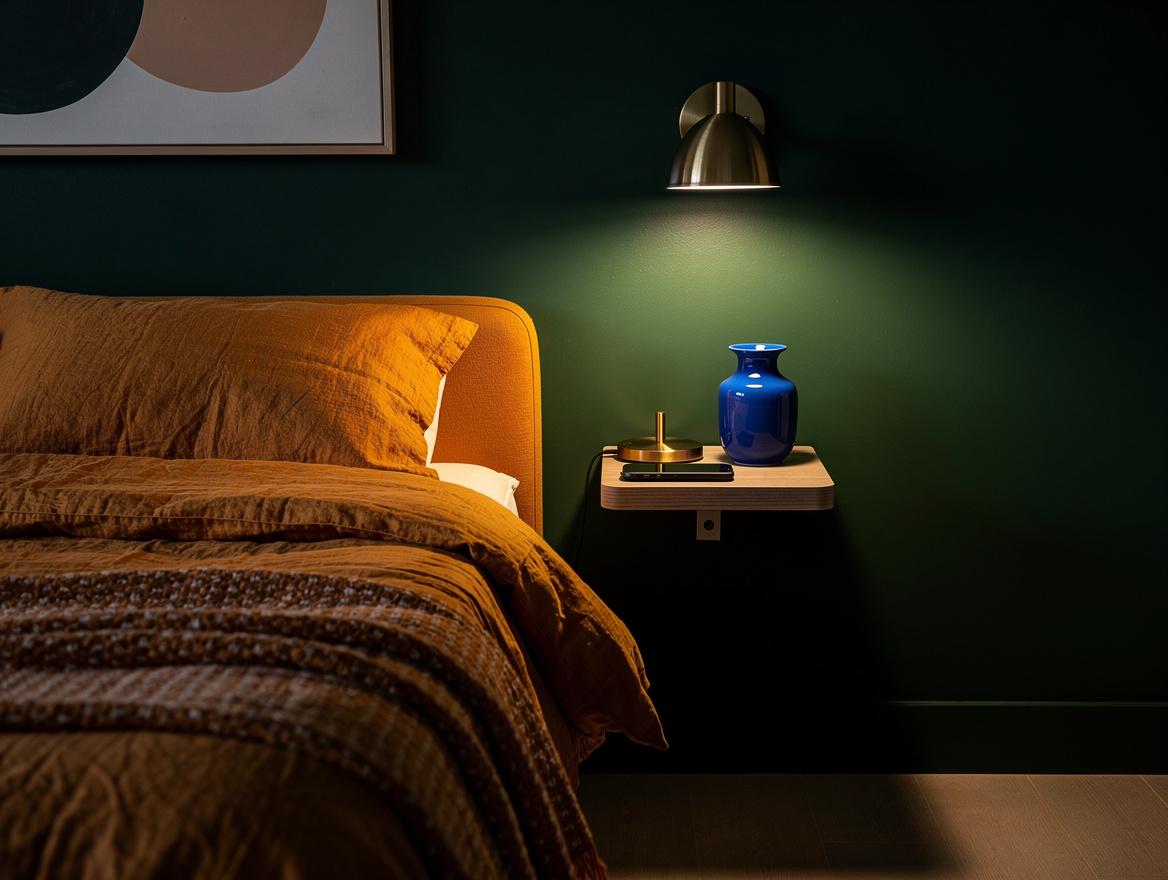
Start by measuring mattress height and the clear walking space beside the bed, then choose the narrowest drawer that handles your nightly essentials. The empty floor underneath is the feature worth protecting.
Mia Carter writes about small-space living and budget home makeovers. She has restyled three rentals and tests most ideas in her own 45 sqm flat.