
The practical answer is simple: a grounding mat suits focused contact, while a grounding sheet covers more of the sleep surface. The better option depends on outlet grounding, body contact, bed position, washing needs, and how often the connection can be checked. Both require careful electrical testing before regular use.
- ✓ Which Grounding Mat vs Grounding Sheet Works Best for Sleeping?
- ✓ How Can a Grounding Mat or Sheet Connection Be Tested?
- ✓ Where Should a Grounding Mat or Sheet Sit Under the Bed?
- Which Grounding Mat vs Grounding Sheet Works Best for Sleeping?
- How Can a Grounding Mat or Sheet Connection Be Tested?
- Where Should a Grounding Mat or Sheet Sit Under the Bed?
- What Is the Safest Way to Set Up the Grounding Connection?
- How Can Continuity Be Verified Before Regular Use?
- When Does a Grounding Mat or Sheet Make Better Skin Contact?
- Use a Grounding Mat for Bed Without Losing Contact
- Can Grounding Sheets Stay Flat Without Folds?
- What Makes the Best Grounding Sheets Easier to Use?
- How Can Contact Be Maintained Each Night?
- How Should a Grounding Mat or Sheet Be Cleaned?
- Which Option Stays More Stable During Sleep?
The essentials for a calmer bedroom
The five pieces we recommend for a calmer bedroom.

Premium Grounding Sheet
Premium Grounding · woven 316L stainless-steel fibers, goes under your fitted sheet
See the woven 316L grounding sheet →
Save 10% with code mattressnut
Through Nov 30: buy one sheet, get one free (per the brand)
 THE MATTRESS
Saatva Classic
Saatva
- THE TOPPER
Graphite Topper
Saatva
- THE PILLOW
The Saatva Pillow
Saatva
- THE COMFORTER
Down Alternative Comforter
Saatva



1Which Grounding Mat vs Grounding Sheet Works Best for Sleeping?
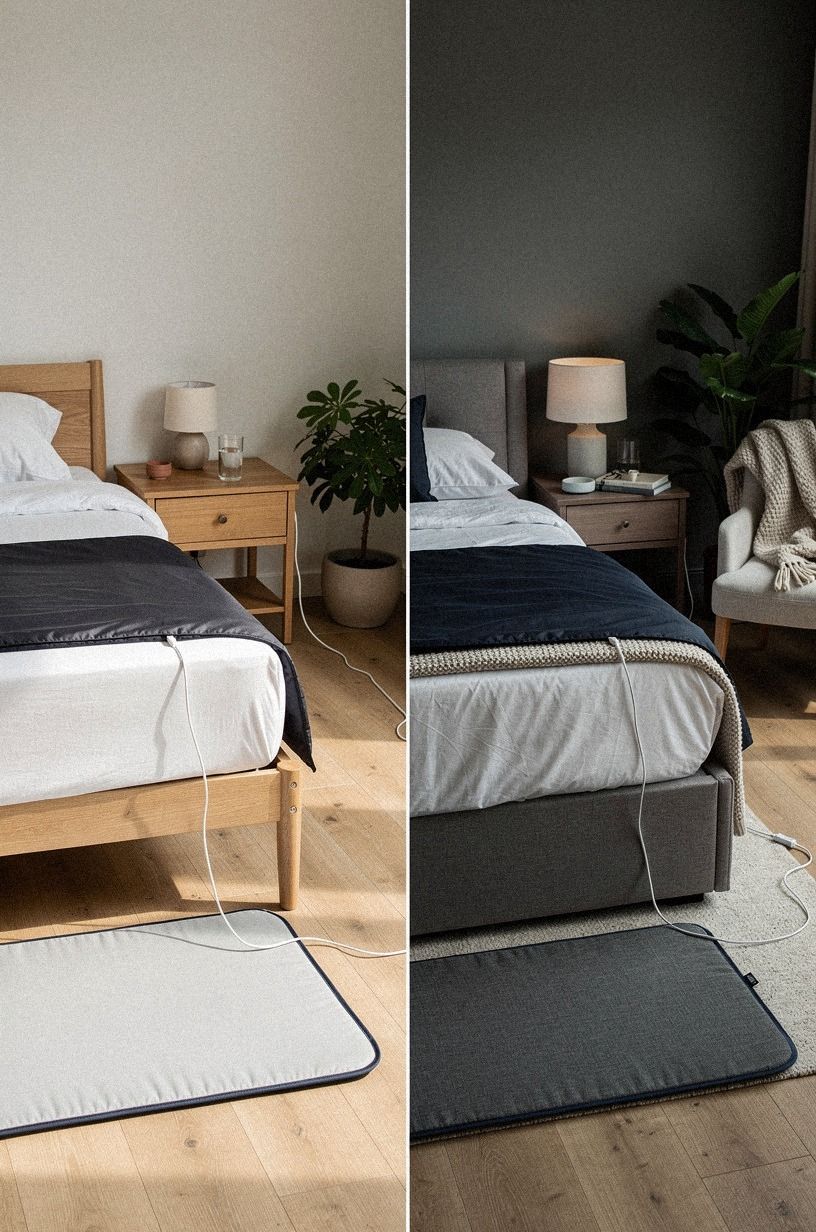
Choose a grounding sheet for broader overnight contact, or choose a grounding mat when a smaller contact area feels easier to manage. A sheet usually covers part of the mattress and works beneath the lower body or upper body, depending on its design. A mat stays in one defined spot, such as beneath the feet or beside the bed.
Check product dimensions before choosing. A mat can suit sleepers who change position often only when the feet or legs remain near its surface.
A sheet may offer steadier contact, but loose fabric, heavy blankets, or movement can shift the active area. Neither option should be chosen because of a health claim.
For a first setup, a mat is easier to inspect, clean, and disconnect. A sheet makes more sense when wider contact matters and the bed allows a flat installation.
Don’t assume a larger surface creates a better electrical connection. The outlet and cord still determine whether the system works.
2How Can a Grounding Mat or Sheet Connection Be Tested?

Test the wall outlet with a standard outlet tester before attaching either product. Plug the tester directly into the intended socket and follow its indicator pattern. A correct reading suggests that the outlet has a grounding path, but it doesn’t prove that every part of the home wiring is in good condition.
Use the grounding cord supplied by the manufacturer. Don’t connect it to a random pipe, radiator, exposed screw, or unverified metal object. If the tester shows reversed polarity, an open ground, or another warning, stop there and ask a qualified electrician to inspect the circuit.
A grounding sheet and a grounding mat depend on the same basic electrical path. The larger product doesn’t compensate for a faulty socket.
Check the outlet again after moving the bed or changing rooms, since another socket may have different wiring. Keep the cord away from sharp edges and pinch points.
For detailed testing steps, review the grounding sheet testing steps. A tester reading is a starting check, not a permanent confirmation.
3Where Should a Grounding Mat or Sheet Sit Under the Bed?
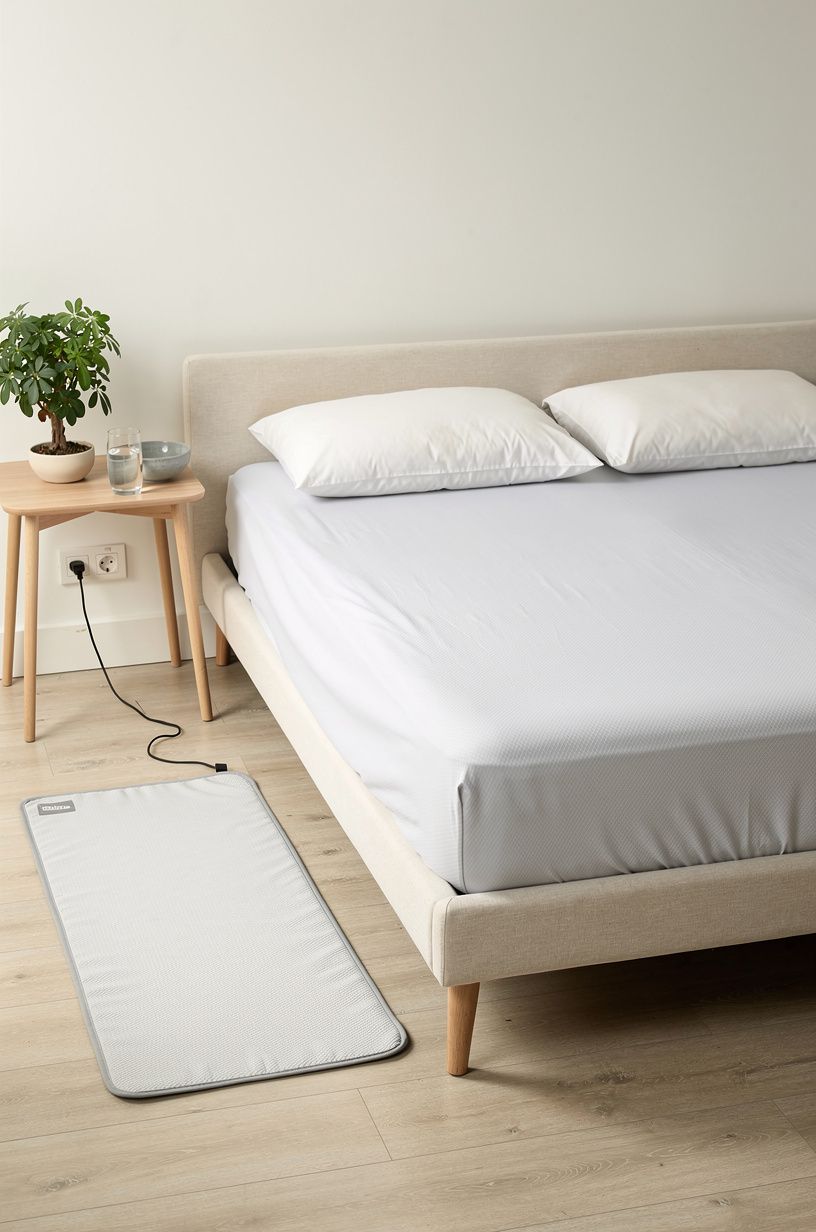
Position the active area where bare skin can touch it without an awkward sleeping posture. For a grounding mat, place the surface near the feet or beside the bed when that location matches the product instructions. For a grounding sheet, place the conductive section across the mattress rather than beneath the entire mattress.
Keep the cord outlet on the side with the shortest safe route. Avoid routing it under a mattress, across a walkway, or beneath a movable bed base.
The cord should have gentle slack, without a tight bend near the connector. If the bed moves, check that the connection hasn’t pulled loose.
A sheet may need fitted corners, elastic straps, or tuck points to stay flat. Don’t bury the conductive section beneath a thick protector unless the manufacturer says that arrangement still allows contact. A mat can slide on smooth bedding, so stable placement matters more than extra coverage.
The grounding sheet bed frame checks cover common placement issues around frames and mattress edges. Recheck the position after the first night and after changing bedding.
4What Is the Safest Way to Set Up the Grounding Connection?

Set up the connection with the cord unplugged from the wall. Attach the cord to the mat or sheet according to the product instructions.
Once the connector feels fully seated, plug the grounding end into the verified outlet. Don’t force a connector that feels loose, crooked, or unusually tight.
Keep the system on one dedicated outlet during the first checks. That makes it easier to identify whether a problem comes from the product, cord, or socket. If the connection includes a resistor or built-in safety component, don’t remove or bypass it.
A grounding mat may need one connection point, while a grounding sheet can have a snap, tab, or cord port near the mattress edge. Check that the connector isn’t pressing against a hard frame surface. A small bend can become a repeated stress point during nightly movement.
If the outlet is shared with a power strip, charger, or extension cable, simplify the setup first. Direct wall connection is easier to inspect. The system should be easy to disconnect during storms, electrical work, or long periods away from home.
5How Can Continuity Be Verified Before Regular Use?
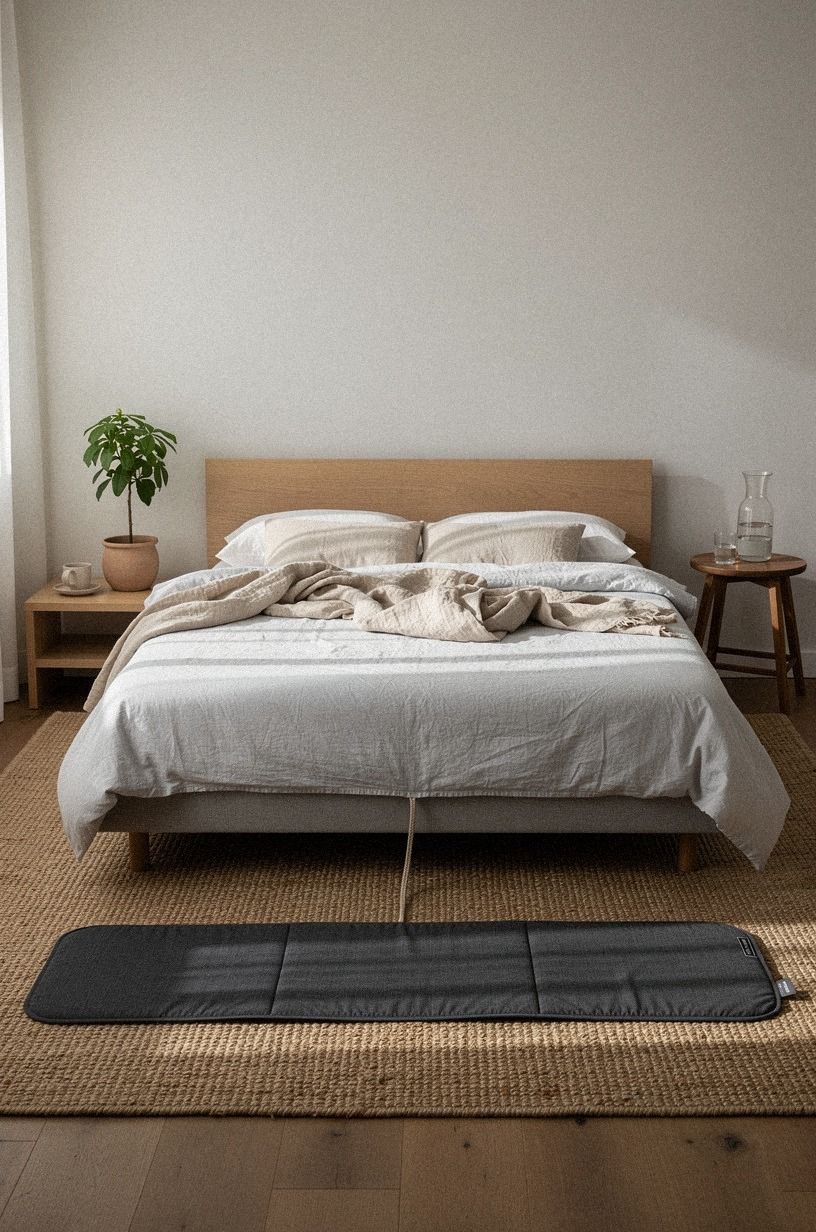
Verify continuity before regular use with the manufacturer’s recommended tester or a suitable electrical continuity meter. Follow the supplied instructions for probe placement, since products use different snap points and conductive zones. The reading should match the stated product range rather than a guessed number.
Test the cord separately when the instructions allow it. Then test the cord while attached to the mat or sheet.
This two-step check can show whether a problem comes from the cable or conductive surface. Don’t rely on one test performed months ago.
Inspect the snap, plug, and fabric edge at the same time. Fraying, discoloration, corrosion, or a loose connector deserves attention before the product returns to the bed. A clean-looking surface can still have a damaged internal pathway.
Continuity checks are useful after washing, storage, relocation, or a change of bed frame. A grounding sheet may fold during laundering, while a mat may develop a crease where the cord attaches.
Keep a short note of each test date when that routine helps maintain consistency. The grounding sheet lifespan details can help identify when replacement deserves consideration.

6When Does a Grounding Mat or Sheet Make Better Skin Contact?
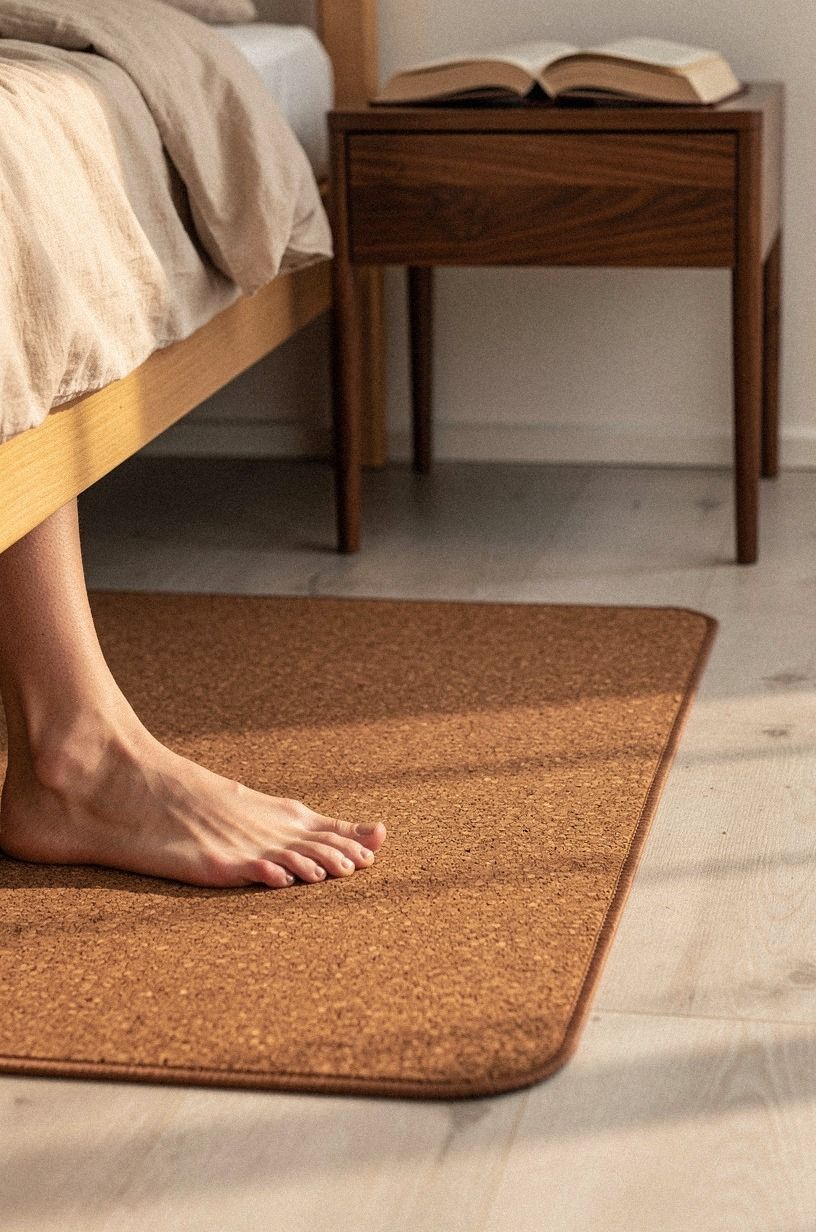
Compare contact by checking whether bare skin rests on the conductive area for a meaningful part of the night. A grounding sheet usually provides contact through the legs, feet, or torso, depending on placement. A grounding mat offers a smaller target, so contact can disappear when the body changes position.
Avoid judging contact through thick pajamas, socks, blankets, or a mattress protector unless the manufacturer approves those layers. Conductive fabric and conductive coating can behave differently. Ordinary cotton doesn’t automatically carry a connection through several layers.
A useful first check is practical: note whether the active surface stays exposed, flat, and reachable without changing sleeping posture. If contact requires constant adjustment, the setup may be too small or badly positioned. A sheet often suits restless sleepers, while a mat may suit someone who stays near one area.
Skin sensitivity also matters. Stop using the product if irritation, itching, or discomfort appears, and inspect the surface for detergent residue or wear. Grounding products aren’t medical devices, and personal responses can vary.
The goal is a stable connection that remains comfortable and easy to monitor.
Why We Recommend This Product
If the ideas in this article speak to you, here is why this one product belongs next to them.
- 1
Nothing to charge or switch on.It is a woven layer with a cord, with no screen and no battery, according to the seller.
- 2
Built to keep going.The seller lists woven 316L stainless-steel fibers and says there is no silver to tarnish.
- 3
Your own bedding stays on top.You keep the sheets, pillowcases and blankets you already like.
- 4
The cord is the only new part.You make the bed as usual and plug the cord into a grounded outlet.
What you get: a woven 316L stainless-steel sheet that goes under your fitted sheet, and the connection cord and plug.
Save 10% with code mattressnut
Through Nov 30: buy one sheet, get one free (per the brand)
7Use a Grounding Mat for Bed Without Losing Contact

Place a grounding mat for bed where bare feet or lower legs can rest naturally. Route the cord along the bed’s side with gentle slack.
Start with a location that doesn’t require stretching, twisting, or crossing the walking path. A mat beside the bed can work during reading or quiet rest, but overnight contact may be inconsistent.
Keep the mat’s conductive face oriented as directed. Some products have one active side, while others use a conductive surface that should remain visible. Don’t cover the mat with a thick floor covering, folded blanket, or unapproved pad.
Those layers can interrupt direct skin contact.
Check the mat after making the bed. A tucked corner or shifted edge may place the body outside the active area.
If the mat slides, use a manufacturer-approved stabilization method. Adhesive tape, pins, and staples can damage the material.
A grounding mat is often easier to remove for cleaning than a sheet. That makes it practical for short trials or shared beds.
Its limitation is coverage: changing position can move the body away from the connected surface. Run a continuity check after relocating it.
8Can Grounding Sheets Stay Flat Without Folds?

Install grounding sheets on a clean, dry mattress with the conductive section facing upward and the cord port positioned near the intended outlet. Smooth the sheet from the center toward the edges before tucking it. This reduces folds that can move the active area away from the body.
Use fitted corners, straps, or approved clips when provided. Don’t pull the fabric so tightly that the snap or cord port bears constant tension.
The sheet should stay flat without stretching the conductive material. If the mattress has an adjustable base, raise and lower it slowly while checking the cord path.
Wash the sheet only according to its care label. Fabric softener, bleach, high heat, and metal dryer components may affect some conductive materials. A gentle cycle and air drying are common instructions, but the product label takes priority.
After laundering, inspect the snap and run the recommended continuity check before placing the sheet back on the bed. A sheet can look unchanged while its conductive path has weakened. If wrinkles return every night, try a different tuck position instead of adding unapproved layers.
9What Makes the Best Grounding Sheets Easier to Use?
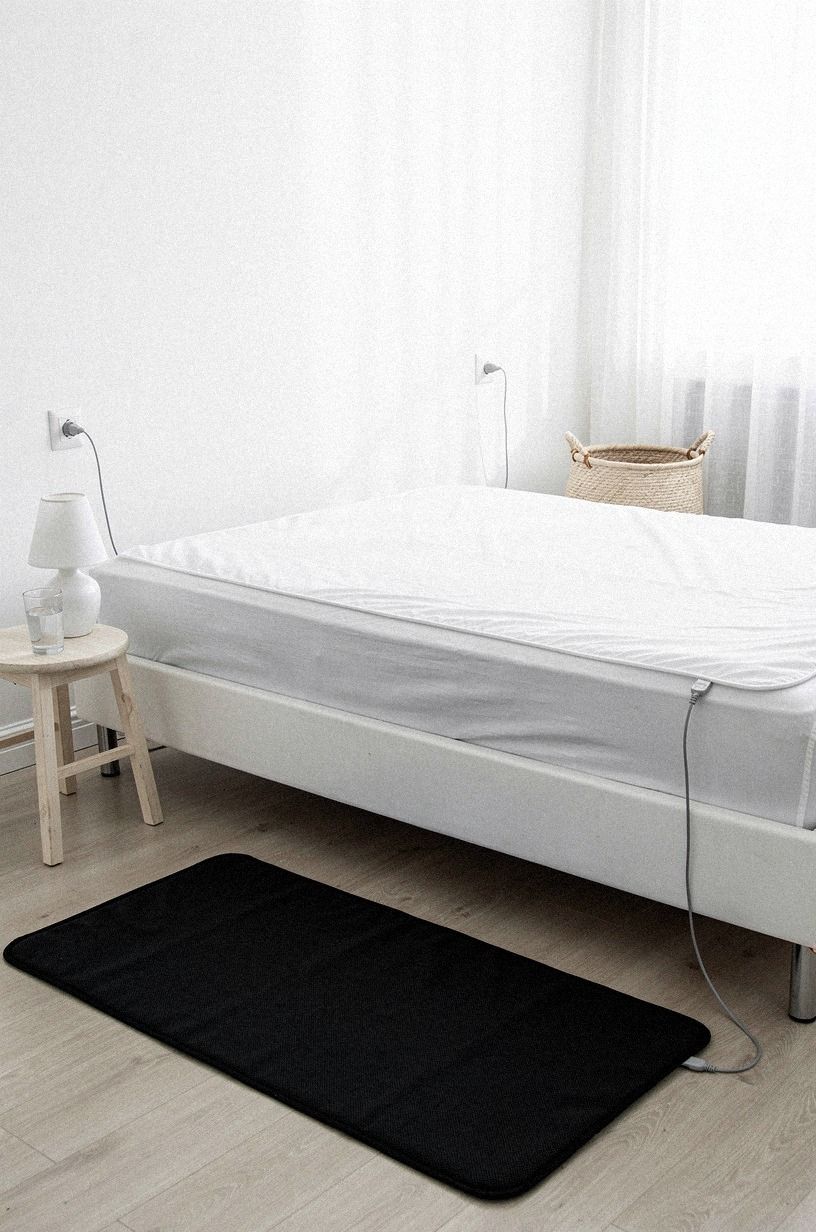
Choose among the best grounding sheets by comparing conductive coverage, connector design, washing instructions, cord length, and testing guidance. Marketing language should rank below clear specifications. A lower price or dramatic claim doesn’t automatically make one product the better choice.
Look for a stated fabric composition and a clear explanation of where the conductive section sits. Check whether the sheet covers the full mattress, half the mattress, or only a strip near the feet. Size matters because a full-size sheet won’t fit every mattress securely.
Review the care instructions before purchase. If the sheet requires special detergent or unusually delicate handling, that routine may become difficult to maintain. Also check whether replacement cords and compatible testers are available from the manufacturer.
A reliable return policy can matter when fit, texture, or contact proves unsuitable. Don’t buy a sheet that cannot be tested with ordinary household equipment or the supplier’s stated method.
The grounding sheet purchase options offer a useful checklist for comparing specifications. The best choice is the one that stays flat, remains comfortable, and can be checked without guesswork.
Premium Grounding Sheets: what you get
Specifications as stated by the manufacturer.
| Material | Woven 316L stainless-steel fibers |
|---|---|
| Fit | Beneath your existing fitted sheet |
| In the box | Connection cord and plug |
Save 10% with code mattressnut
Through Nov 30: buy one sheet, get one free (per the brand)
10How Can Contact Be Maintained Each Night?
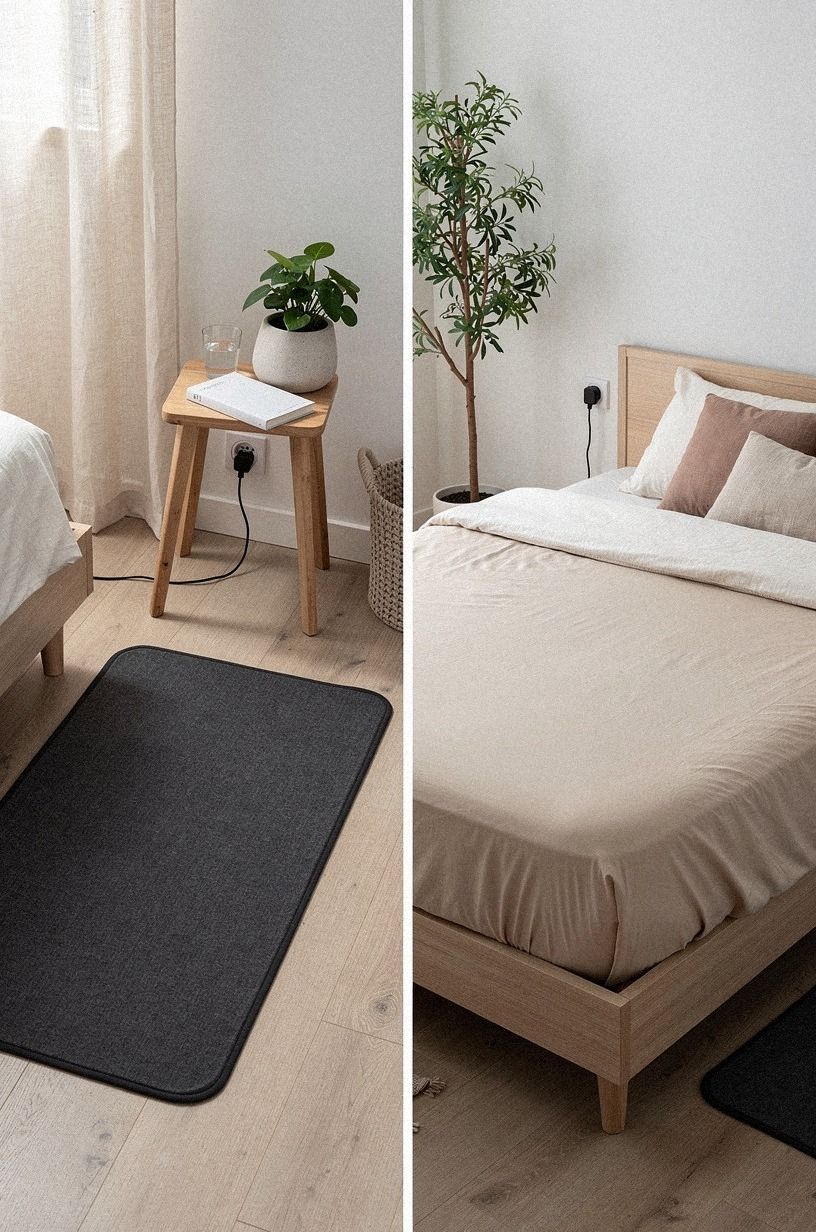
Maintain nightly contact by checking the active area during the normal bed-making routine. Smooth the sheet, keep the mat in its marked position, and confirm that the cord hasn’t pulled against the bed frame. This takes less than a minute and catches small shifts before they become repeated problems.
Avoid placing heavy objects on the cord or connector. Don’t tuck the connector beneath the mattress where pressure can bend it. If the bed has wheels, drawers, or an adjustable base, inspect those moving parts after each change in position.
A grounding sheet may shift when bedding is changed, especially on a slippery mattress cover. A mat may move when feet push against it. Simple visual checks are usually more useful than adding extra layers, pins, or homemade fasteners.
Contact can vary with sleeping position, clothing, and bedding. A consistent setup doesn’t prove a health effect, and an inconsistent setup doesn’t explain why someone feels different. Keep the routine focused on electrical condition, skin contact, comfort, and product care.
11How Should a Grounding Mat or Sheet Be Cleaned?
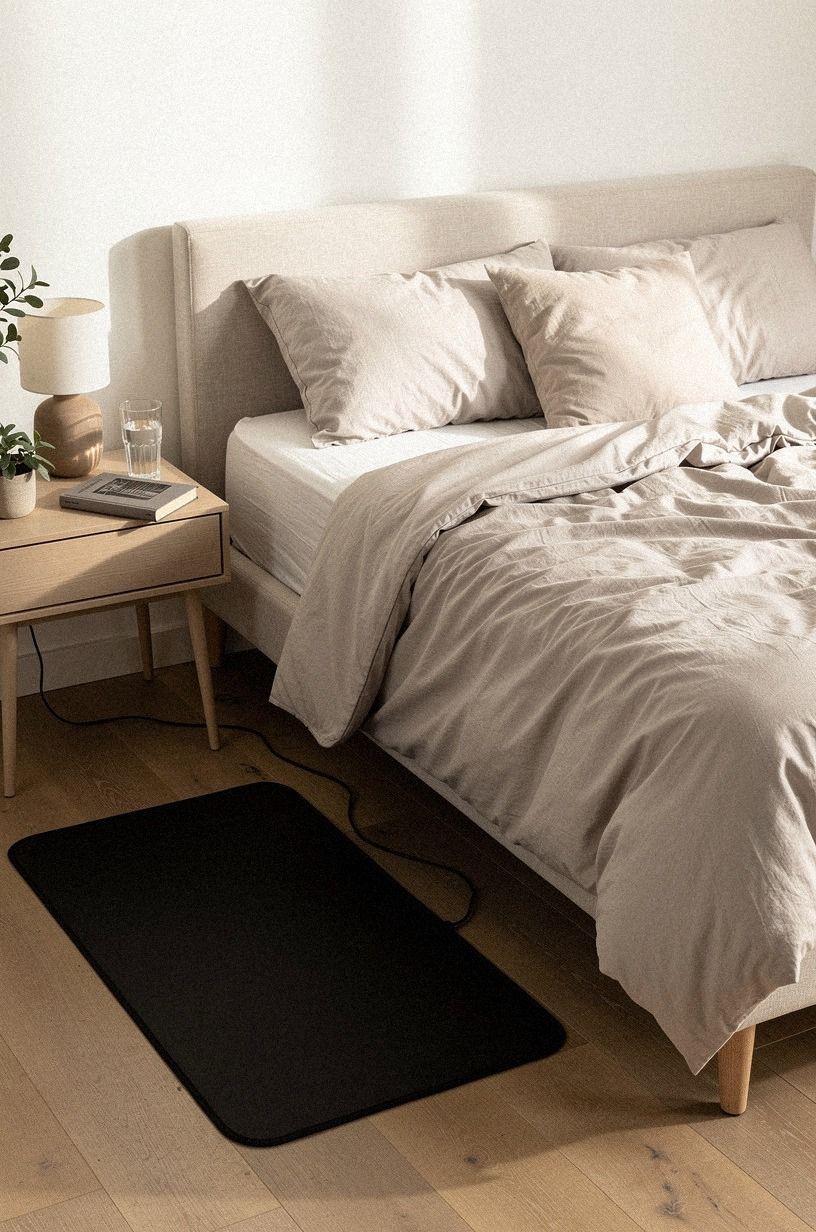
Clean the mat or sheet according to its care label, using the mildest approved process and avoiding unlisted products. Detergent residue can remain on fabric, while bleach and fabric softener may affect conductive fibers or coatings. Don’t scrub the snap, connector port, or printed conductive area.
Disconnect the cord before cleaning. For a mat, wipe the surface only when the manufacturer permits wiping, and let it dry fully before reconnection. For a sheet, wash it separately when possible and avoid mixing it with items that could snag the conductive section.
Never reconnect damp material. Moisture around a connector can create an avoidable electrical concern and may damage the product. Air drying is often gentler than high heat, but the manufacturer’s instructions still control.
After cleaning, inspect the edges, stitching, snap, and cord. Then perform the recommended continuity check.
If the reading changes substantially or the tester shows no connection, stop using the item until the cause is identified. A clean appearance isn’t enough to confirm conductivity.
Keep a replacement plan for products that show wear or repeated test failures.
12Which Option Stays More Stable During Sleep?

Compare overnight stability by checking whether the contact area remains in place after normal movement, bedding changes, and position shifts. A grounding sheet generally covers more of the mattress, so it may stay connected through more sleeping positions. A grounding mat has less coverage but can be easier to inspect and reposition.
Check the setup in the morning rather than judging it only before bed. Look for a shifted mat, folded sheet, pulled cord, or disconnected snap. If the product has moved every night, the issue is likely placement or size rather than a need for stronger attachment.
Avoid adding tape, pins, metal clips, or extra cords. These fixes can damage the product or create a new hazard. A flatter installation, a different cord route, or a better-sized product is the safer adjustment.
Stability also includes comfort. If the mat feels intrusive or the sheet bunches beneath the body, regular contact may become difficult to maintain.
A less ambitious setup that stays flat can be more practical than broad coverage that constantly needs correction. Recheck continuity after any major change.
Grounding Mat vs Grounding Sheet: Practical Summary
A grounding sheet offers broader contact, while a grounding mat offers simpler placement and inspection. The deciding factors are a verified grounded outlet, direct skin contact, stable positioning, careful cleaning, and repeat continuity checks. Neither product should replace medical care or professional electrical inspection.
Where to Start First
Start with the grounding mat when easy testing and controlled placement matter most. It has less coverage, but the smaller surface makes movement, cleaning, and connection checks easier to manage.
Affiliate link: this article contains affiliate links. The site may earn a commission if you purchase through them.