
The easiest route to enjoying your own party is placing food, drinks, coats, and cleanup supplies where guests naturally look for them. A self-serve layout keeps your hands free and your space warm. You won’t need a perfect setup, only clear stations, practical materials, and a few inviting details.
Don’t overthink: Place labeled snack bowls around the room.
- Stage drinks on a self-serve bar cart
- Place labeled snack bowls around the room
- Chill bottles inside an ice-filled planter
- Set a dessert table before guests arrive
- Use tiered stands to save serving space
- Create a coat station near the entrance
- Light battery candles for effortless ambiance
- Fill pitchers with make-ahead signature drinks
- Arrange extra glasses beside every beverage
- Hide cleanup supplies inside a lidded basket
- Serve finger foods on oversized boards
- Place trash bins beside high-traffic zones
- Prepare a garnish tray before the party
- Use table runners to disguise quick spills
- Set up a quiet corner with extra seating
- Group furniture into flexible conversation zones
1Stage drinks on a self-serve bar cart
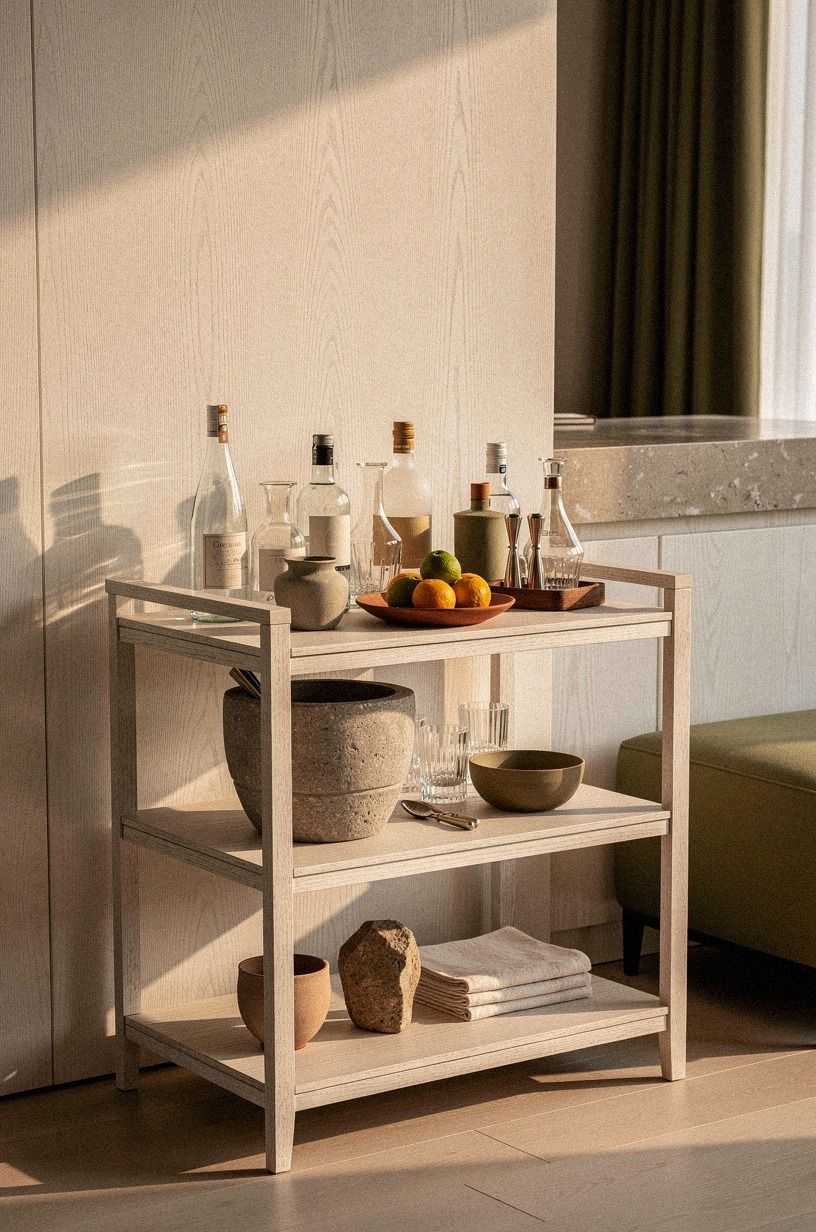
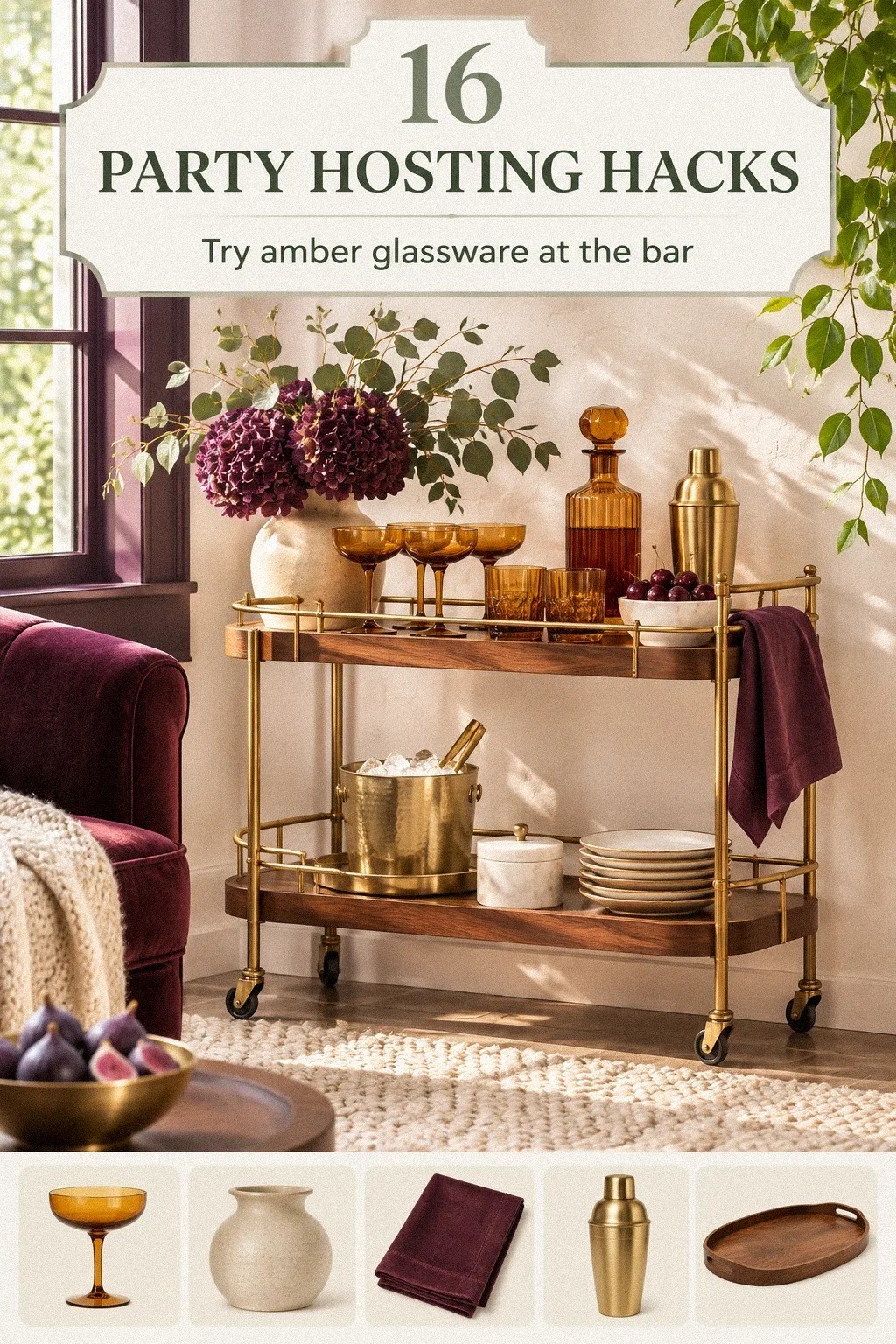
A self-serve bar cart gives your guests an obvious starting point, so you won’t spend the evening answering drink questions. Choose a cart with two levels, then keep glasses, chilled bottles, napkins, and a small bowl of citrus within reach. A cerused white oak cart suits a terracotta, stone, and olive palette, especially beside a warm wall painted in Benjamin Moore White Dove OC-17.
Keep the lower shelf for backup supplies and the upper shelf for anything guests use immediately. You can add a small menu card, but don’t crowd the surface with every bottle available. One sparkling option, one still option, and one nonalcoholic pitcher are enough.
And if your cart sits near a walkway, leave at least one clear path around it so guests won’t bump elbows.
2Place labeled snack bowls around the room
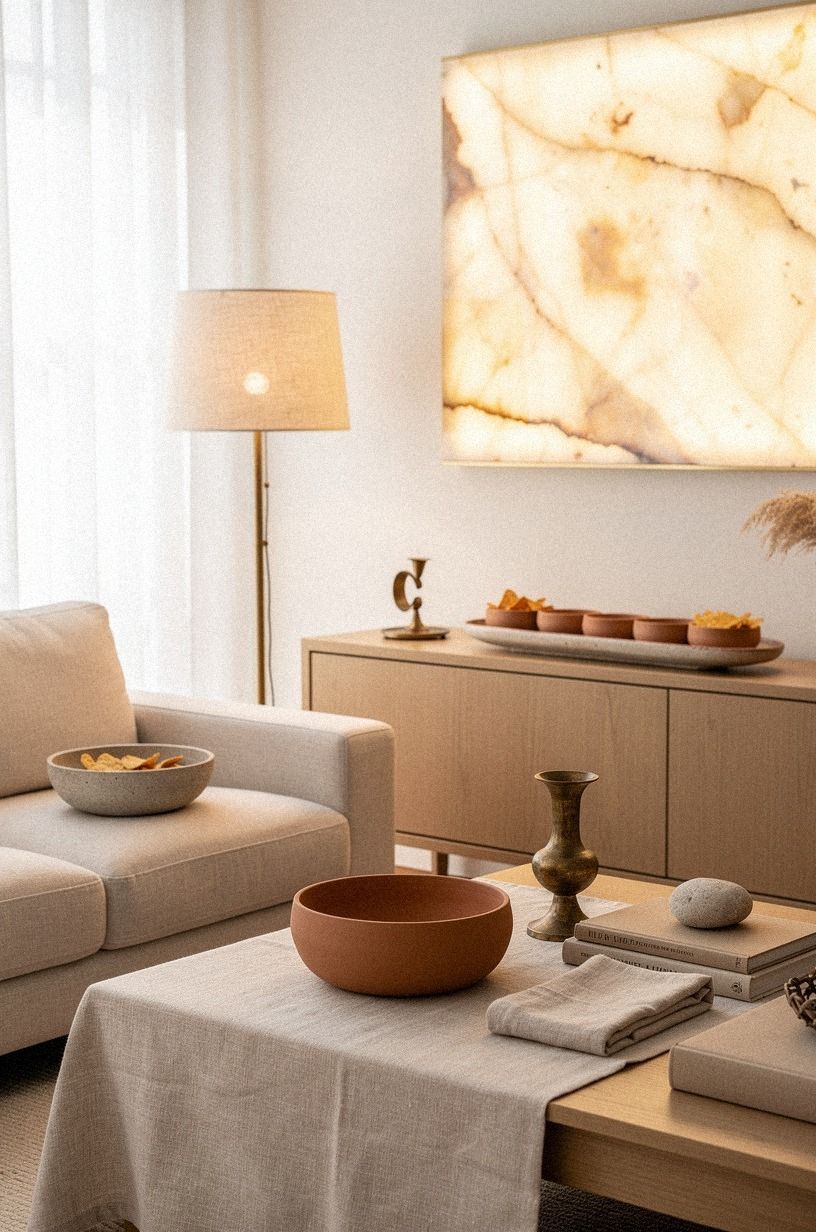
Small snack bowls prevent one crowded food table from becoming the only place people gather. Set salty snacks near seating, sweeter bites near drinks, and allergy-friendly choices in a clearly marked bowl. Linen cocktail napkins and aged brass labels bring a soft, refined look to a clay and warm neutral palette.
Use low bowls for anything guests can grab easily, then place taller dishes behind them for visual height. You don’t need matching pieces, but your colors should repeat across the room. A backlit translucent onyx tray can make the arrangement feel bright without adding another lamp.
If you’re hosting in a compact room, these party hosting tips will help you spread supplies without blocking conversation zones.
Labels also reduce awkward questions. Write “contains nuts,” “gluten-free,” or “no alcohol” in clear lettering.
Your guests can choose confidently, and you’ll have fewer interruptions. A bowl that’s easy to identify is more useful than a decorative container nobody understands.
3Chill bottles inside an ice-filled planter
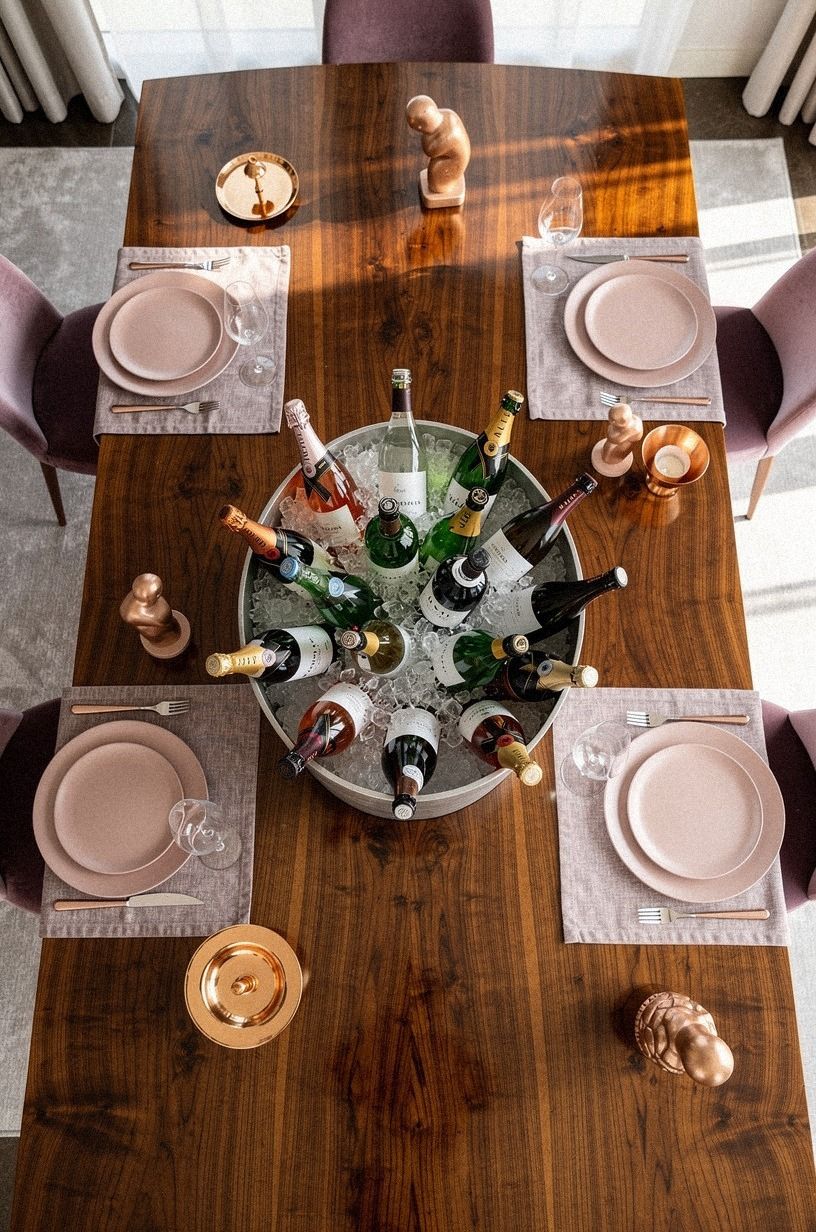
A large planter can become a practical bottle cooler when it’s lined with a waterproof insert and filled with ice. Choose plum, grey, and rose gold accents around the station, then add a book-matched walnut board for a polished landing surface.
4Set a dessert table before guests arrive
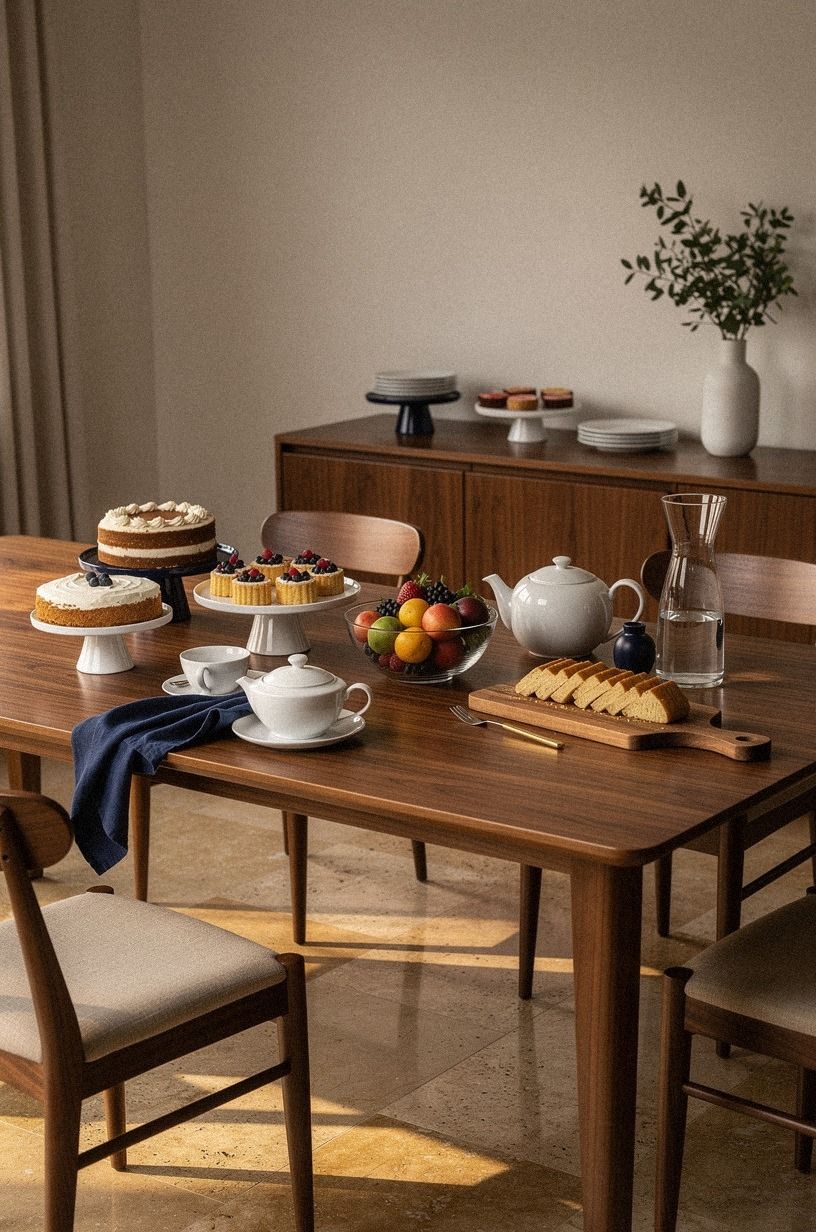
A dessert table keeps the final course ready while the main meal is still being served. Choose a stable table against a wall, cover it with a white runner, and use navy napkins with walnut boards for contrast. Warm travertine serving pieces create a classic foundation without making the display feel formal.
Keep cakes, cookies, fruit, and serving utensils at different heights. A low cake stand beside a taller bowl makes the spread easier to scan.
You can place coffee cups on one end and small plates on the other, so guests won’t reach across the food. But don’t put every dessert out at once if the room is warm.
Hold soft toppings and chilled items in the refrigerator until needed.
A dessert station should feel generous without becoming cluttered. Leave enough empty surface for guests to set down a plate. Your guests will linger longer when the table is simple to use, and you’ll avoid a late-night scramble through cabinets.
5Use tiered stands to save serving space
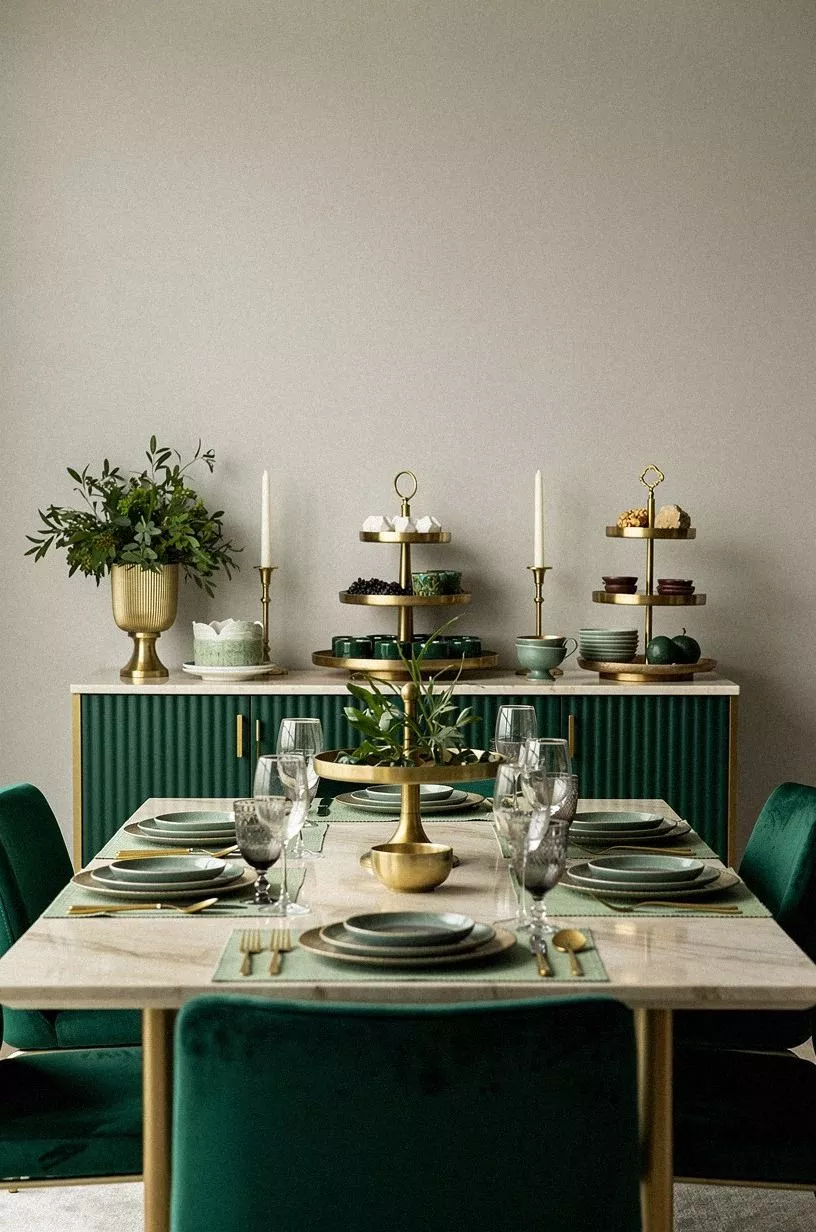
Tiered stands turn a narrow surface into a useful vertical display. Place sandwiches or pastries on the lower level, fruit in the middle, and small sweets at the top. Unlacquered brass developing patina supports an emerald, gold, and cream palette, while a matte ceramic stand keeps the arrangement from feeling too shiny.
Choose stands with a broad base and enough space between levels for serving tongs. You’ll want every item visible from standing height, especially if guests are serving themselves.
A three-level stand works well on a buffet, but a two-level version is easier to reach in a crowded room. That’s the better choice when children or seated guests will be serving themselves.
Keep sauces and messy foods on a lower tray instead of the highest level. Your display should look polished, but it still has to work. One unstable stand can undo the whole setup, so test each piece before guests arrive!
6Create a coat station near the entrance
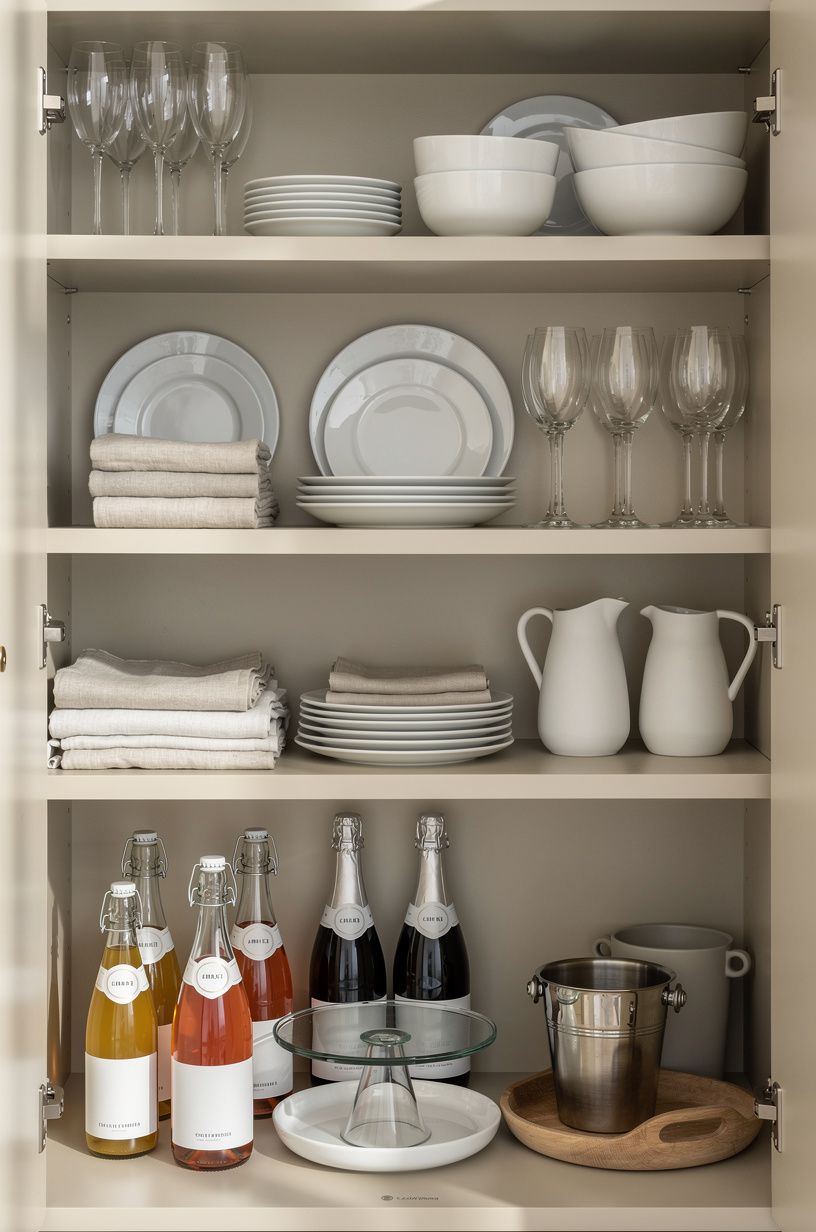
A dedicated coat station prevents jackets and bags from spreading across dining chairs. Use a sturdy rack, a row of hooks, or a tension-mounted rail near the entry. Natural oak works beautifully with forest green and rust, especially when the surrounding walls use Farrow & Ball Pigeon No.25.
Give guests one visible place for outerwear and one separate basket for smaller bags. You can add a small bench beneath the hooks, but keep the seat clear enough for someone to sit while removing boots.
An oversized-chip terrazzo tray can hold keys and small accessories, while a washable runner protects the floor and creates a welcoming entrance without permanent changes. Renters can use removable hooks rated for the expected load.
Avoid placing coats beside food or a heating vent. Your guests won’t enjoy carrying warm jackets through the room, and your entry will feel crowded if every bag lands on the floor. A little structure near the door protects the rest of your party layout.
7Light battery candles for effortless ambiance
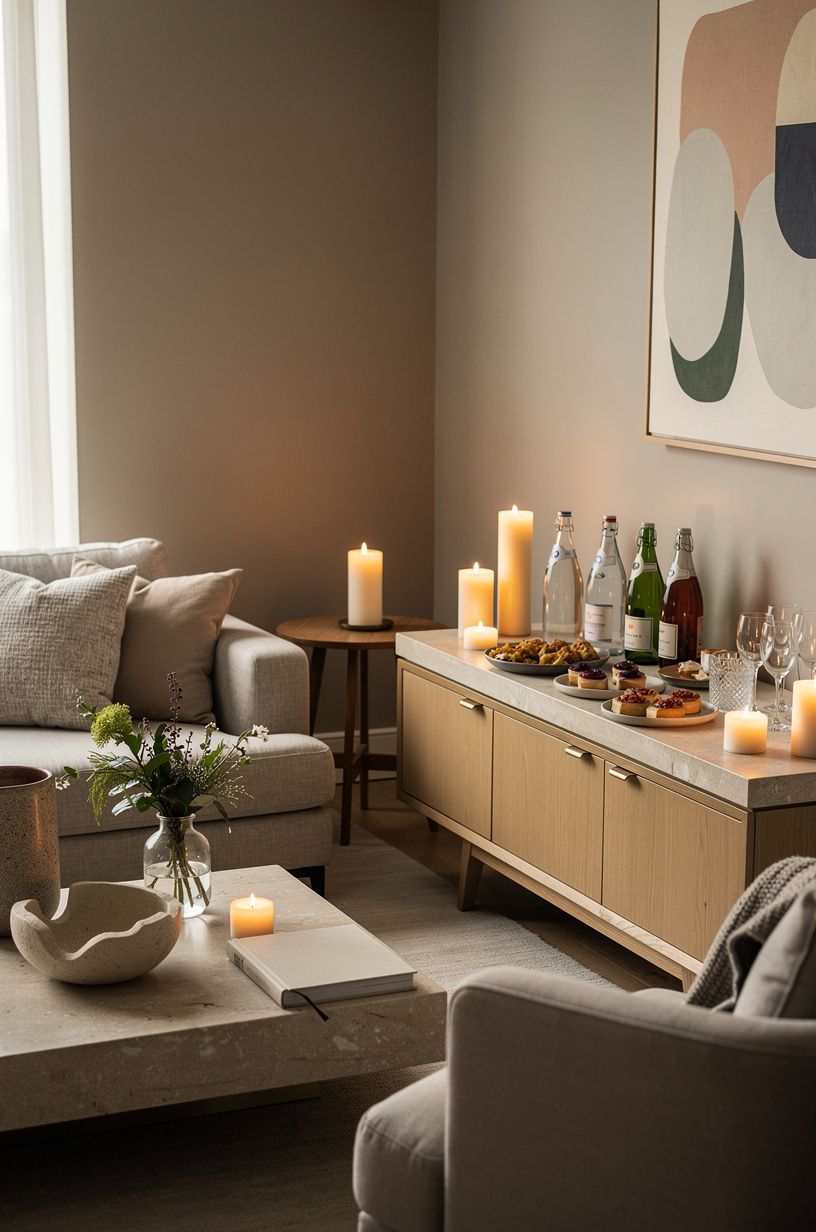
Battery candles create low, steady light without cords crossing the floor. Arrange them against hand-applied Venetian plaster in dusty rose, charcoal, and brass tones for a soft evening glow.
8Fill pitchers with make-ahead signature drinks
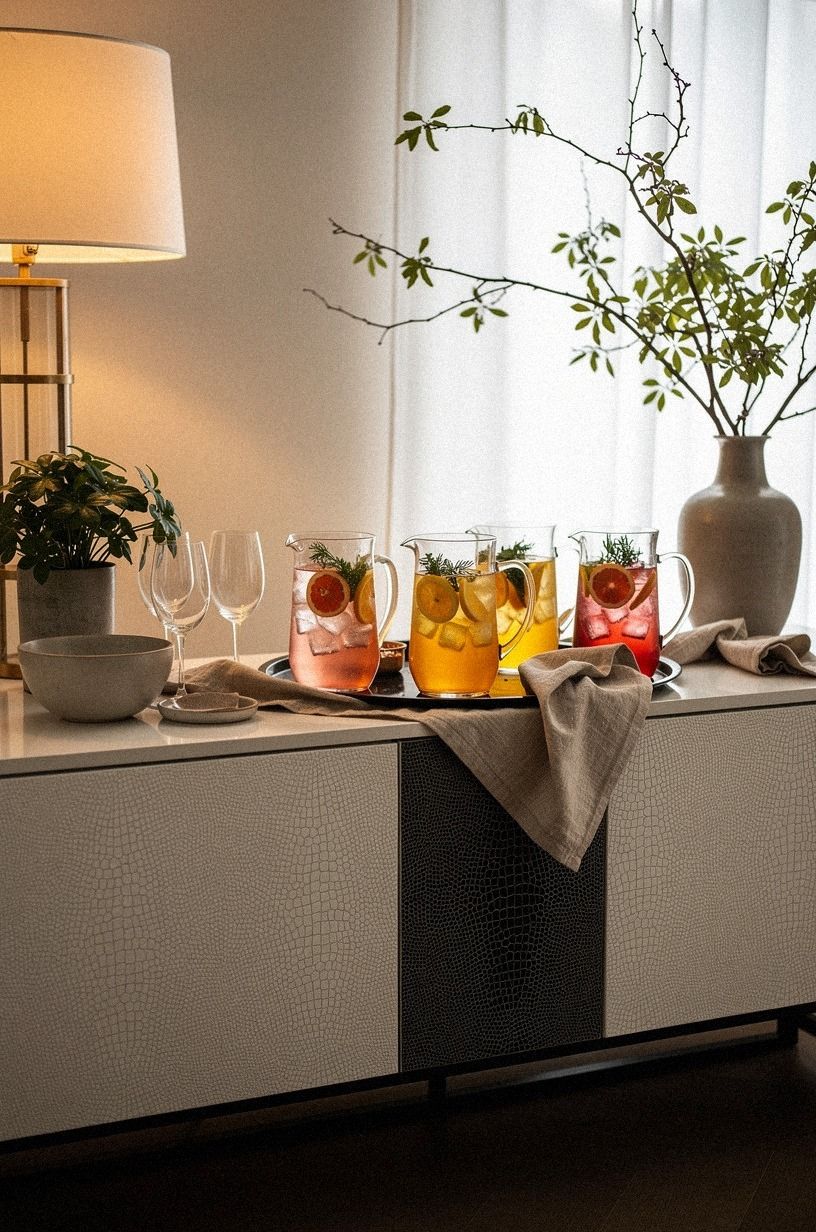
A pitcher of prepared drinks keeps you away from the kitchen and gives guests a clear self-serve option. Use warm white ceramics, camel textiles, and black accents for a relaxed arrangement. Shagreen-textured trays add quiet interest without competing with the drink itself.
Choose a recipe that holds well without losing its flavor. Keep ice in a separate bowl so the drink won’t become watery during a long evening. Add a small card listing ingredients, especially if the pitcher contains alcohol, dairy, or common allergens.
You can prepare garnishes separately and let guests add them as desired.
One pitcher can be a signature drink, while another holds sparkling water with citrus. That balance keeps your setup inclusive. If you need more entertaining tips, these winter hosting tips after 50 offer another practical approach to low-effort serving.
9Arrange extra glasses beside every beverage
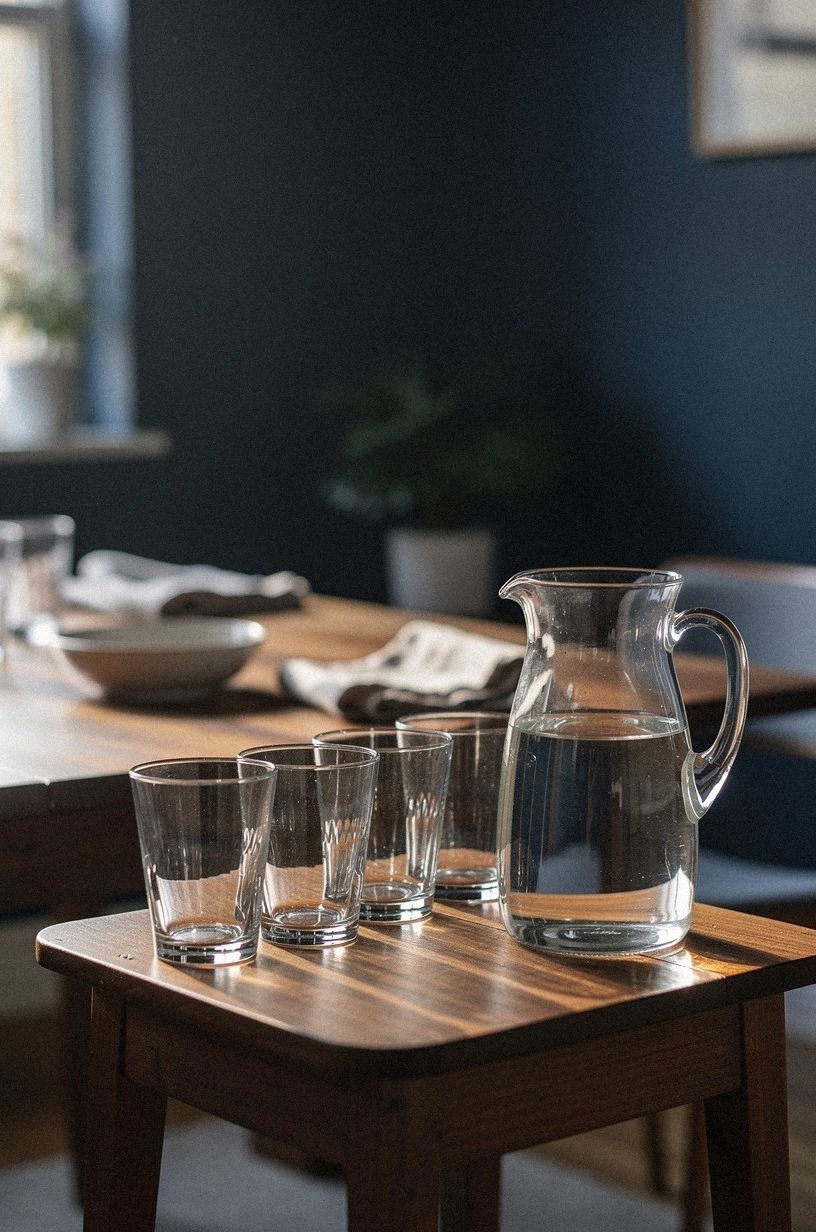
Extra glasses should sit beside each drink station, not in a distant cabinet. Place short tumblers near a pitcher, stemmed glasses near wine, and small cups beside coffee. Washed Belgian linen napkins soften a midnight blue, copper, and ivory palette while giving guests something useful for spills.
Plan for more glasses than the exact guest count, because people often set one down and forget where it went. A narrow tray keeps glassware together and makes refilling simple. You’ll want the tray close enough to reach but far enough from the edge that a passing sleeve won’t catch it.
Keep water visible and easy to access. Guests shouldn’t need to ask where it is, and you shouldn’t need to refill individual glasses all night. And if your room is small, use one shared beverage station with clear sections rather than several tiny stations that interrupt movement.
10Hide cleanup supplies inside a lidded basket
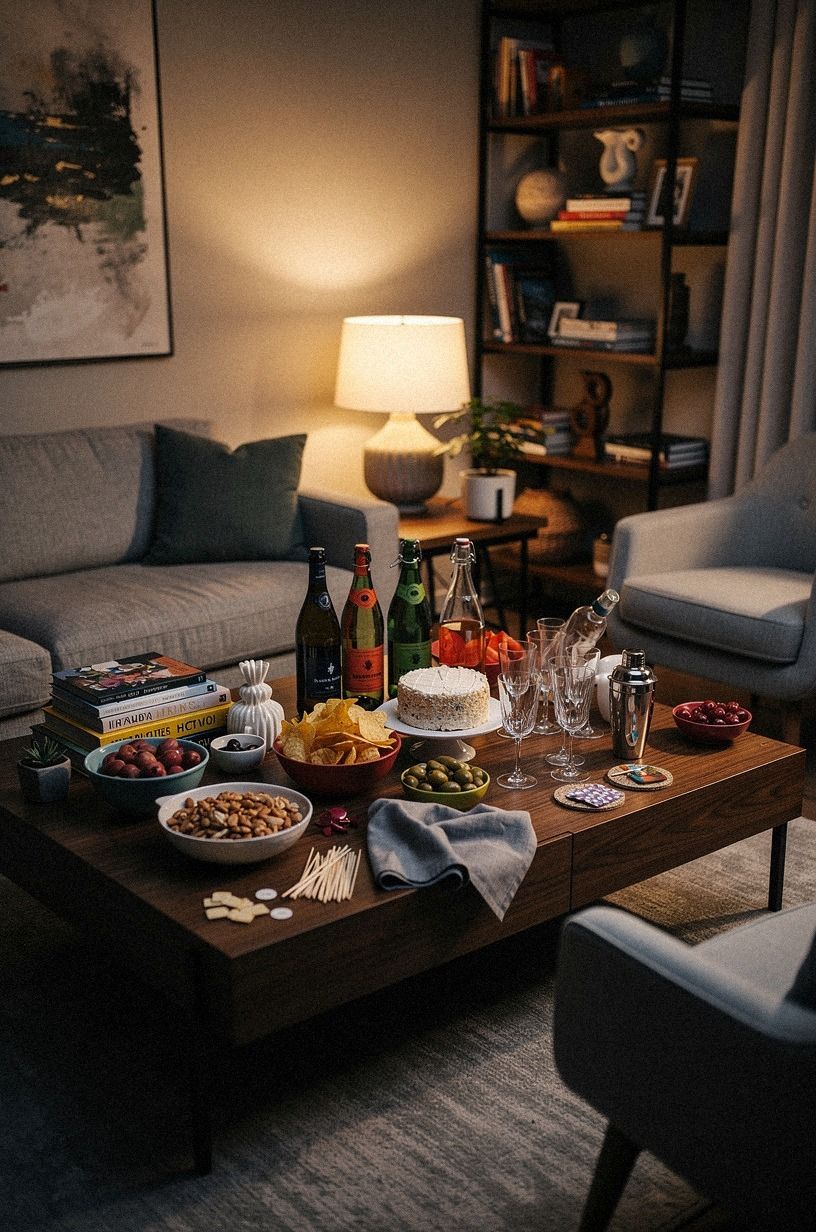
A lidded basket lets you keep cleanup supplies nearby without making the room look like a utility area. Choose a basket in sage green, warm cream, or natural wood, then place it beneath a console or beside the dining area. Organic bouclé adds texture and feels less formal than a plastic container.
Fill it with stain remover, cloths, disposable gloves, spare trash bags, and a small dustpan. You can also keep extra coasters and napkins inside, so one basket handles several small problems. A lid keeps everything visually quiet while allowing quick access when a drink spills.
Don’t hide the basket so far away that reaching it becomes a project. Your future self will appreciate a supply station within a few steps of the food. A clear lid or labeled tag can help guests find what they need without asking for assistance.
11Serve finger foods on oversized boards
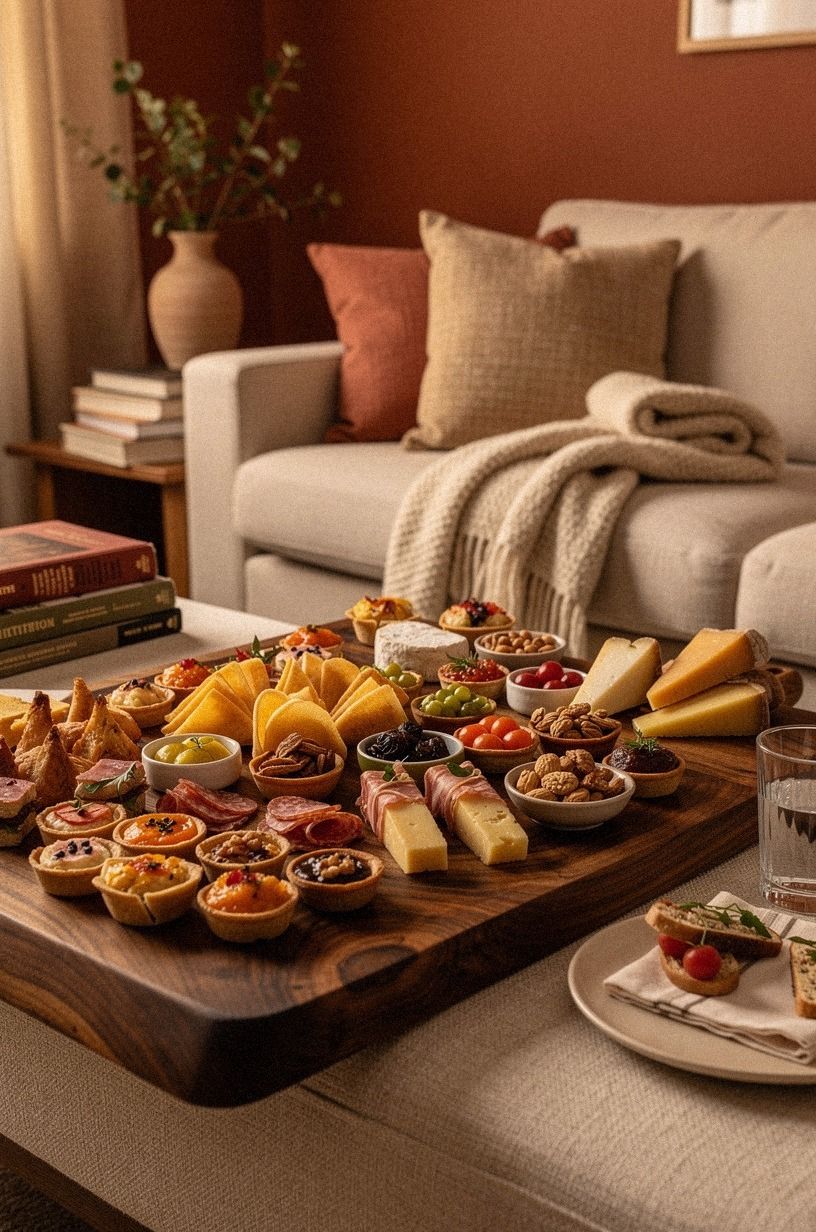
Oversized boards make finger foods easier to see and reduce the number of small dishes on the table. A Nero Marquina black marble board with white veins brings weight to a terracotta, stone, and olive palette while giving the spread a defined serving surface.
12Place trash bins beside high-traffic zones
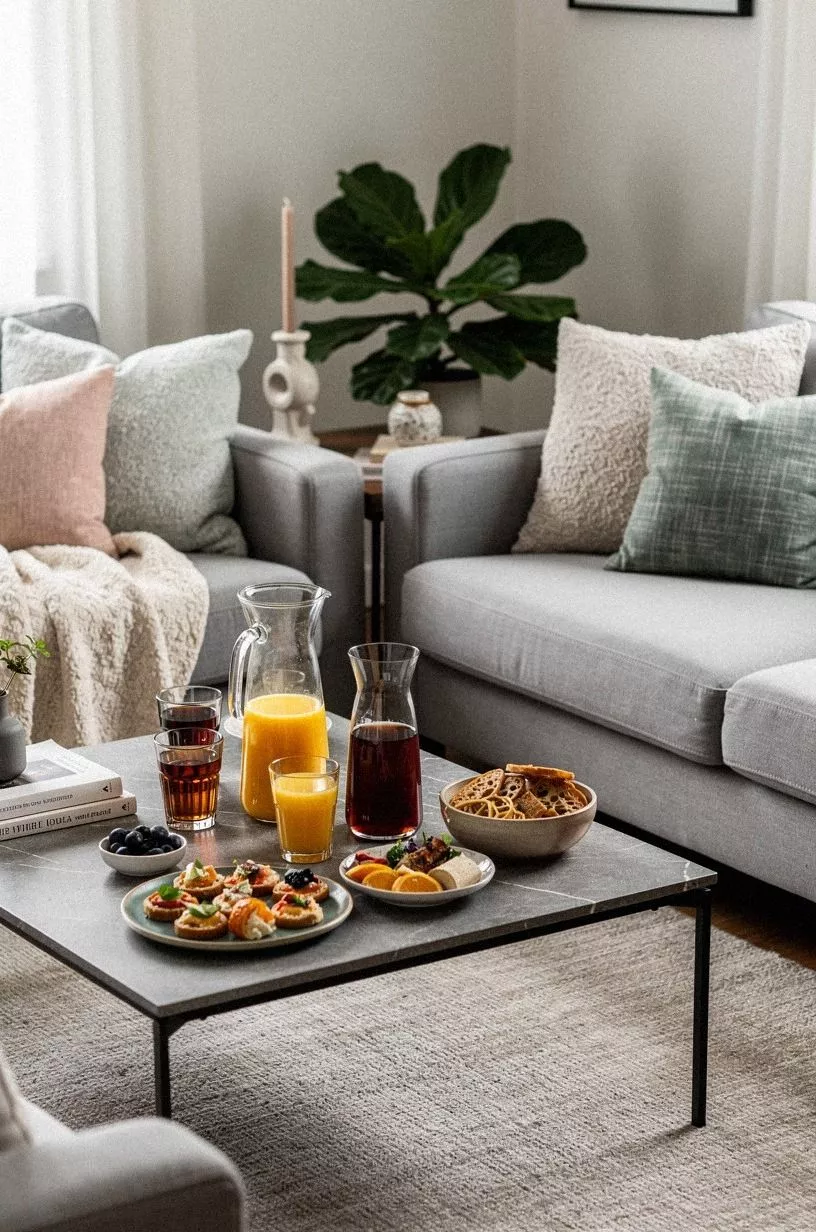
A visible trash bin prevents plates, napkins, and bottles from collecting on every available surface. Place one near the food station and another near the beverage area, using containers that suit the room. Deep-pile mohair velvet nearby can soften a clay, linen, and aged brass palette without making the bins feel hidden.
Choose bins with wide openings and sturdy bases. Guests are more likely to use them when they don’t need to lift a lid or search for a pedal.
You can add a separate recycling container if bottles and cans will be common. A simple label helps everyone sort items correctly.
Don’t place a bin directly beside a dining chair. Your guests deserve a clear path and enough room to sit comfortably. Position each container along the natural flow of traffic, where your eye can find it quickly but the main conversation area still feels calm.
13Prepare a garnish tray before the party
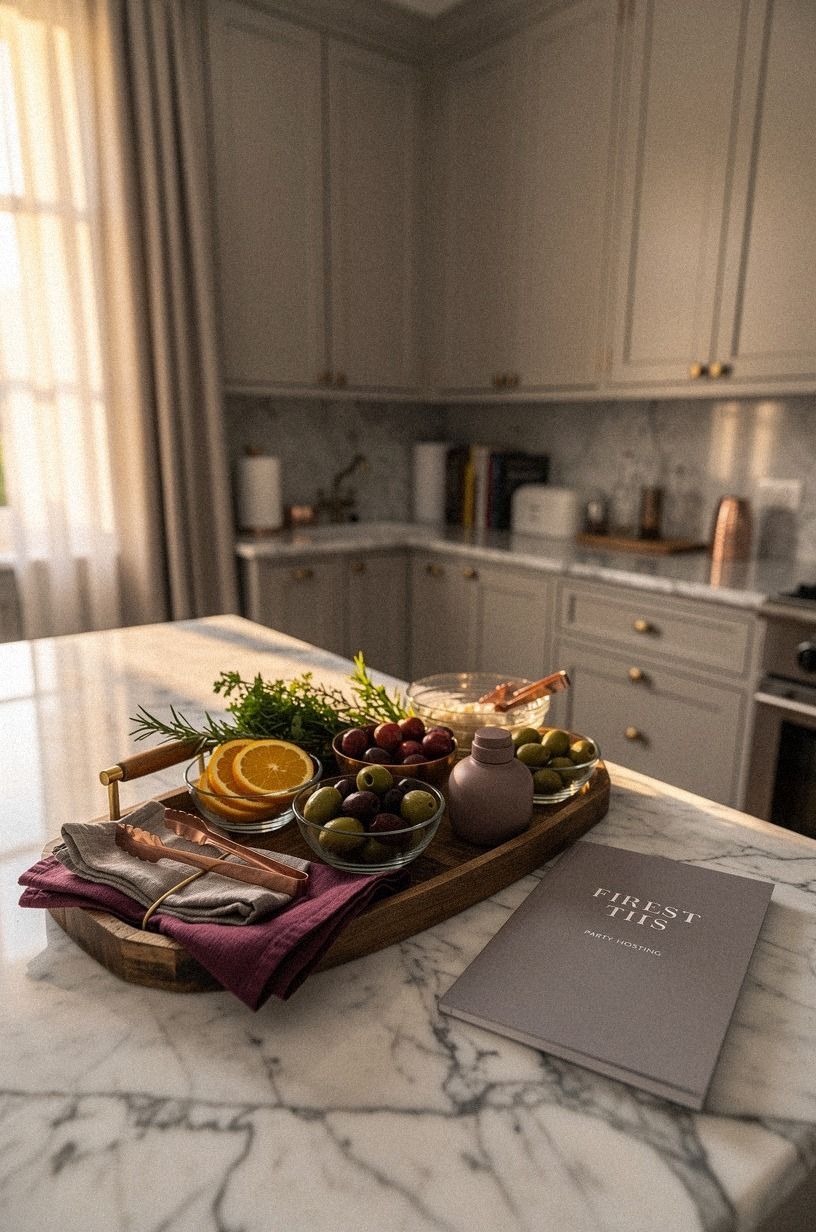
A garnish tray keeps citrus, herbs, cocktail picks, and small spoons together. A Carrara marble tray with subtle grey veining suits plum, grey, and rose gold accents while giving small ingredients a dedicated place.
14Use table runners to disguise quick spills
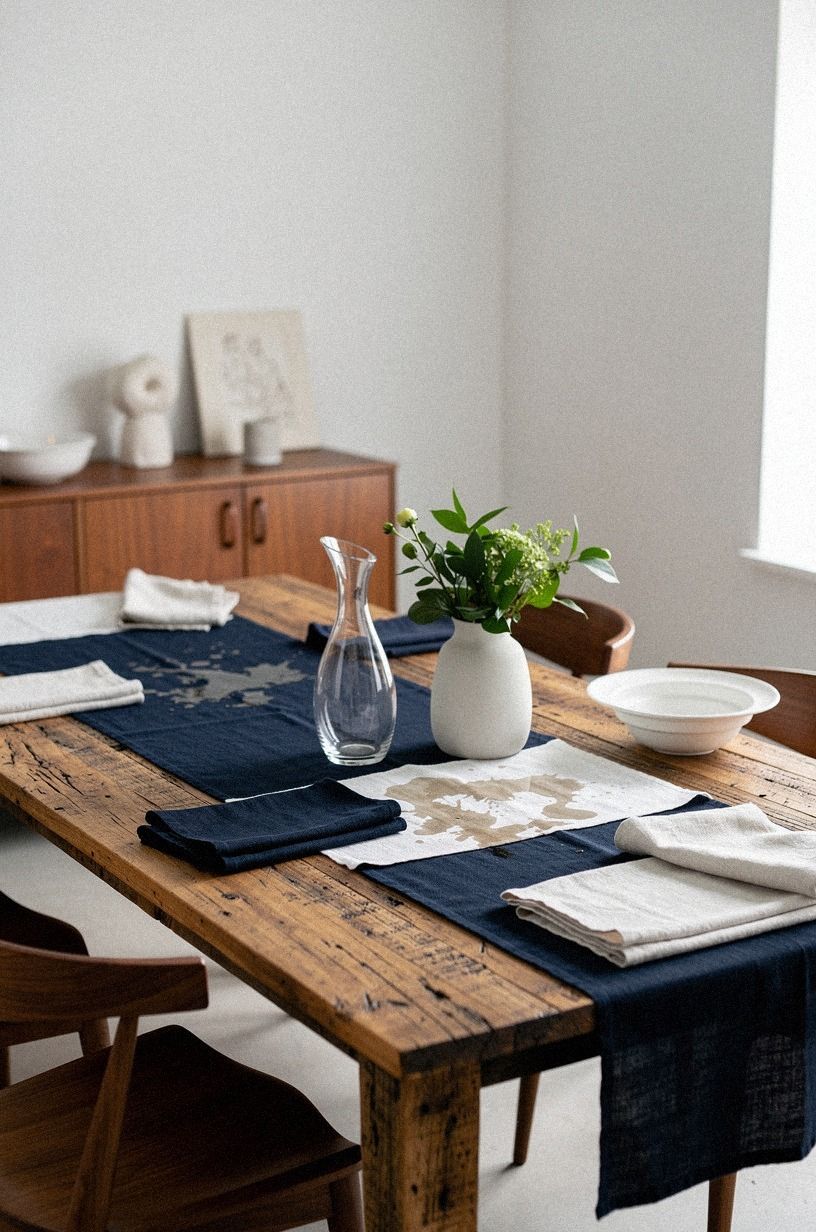
A table runner protects the center of a table while allowing the surrounding surface to stay visible. Choose navy, white, or walnut tones, then select a fabric that can handle washing. Reclaimed weathered teak pairs well with a textured runner and gives the table a relaxed, established feeling.
Place serving dishes along the runner rather than directly on bare wood. If a spill happens, you can lift one section without removing the entire meal.
You’ll want the runner wide enough to support dishes but narrow enough to leave space for plates and glasses. Linen and cotton are easier to wash than delicate decorative fabrics.
Avoid a runner that slides easily. A small piece of nonslip mesh beneath it can protect the arrangement without showing. Your table will feel layered and inviting, yet the setup remains practical when guests reach across for food.
15Set up a quiet corner with extra seating
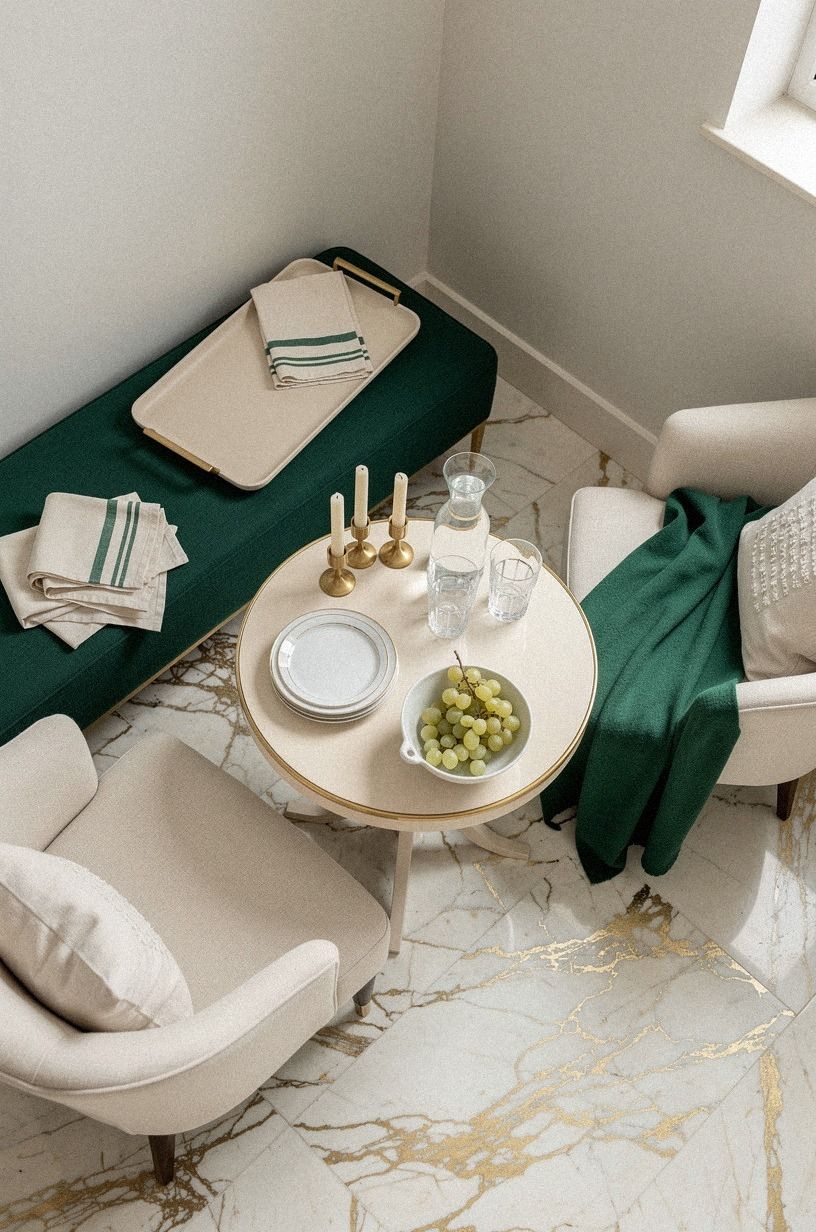
A quiet corner gives guests a place to rest, talk privately, or step away from the busiest part of the room. Pair a small chair, an upholstered bench, and a side table near a lamp. Calacatta marble with gold veining adds a refined note to an emerald, gold, and cream palette without taking over the space.
Keep the seating flexible rather than arranging it against every wall. A lightweight chair can move when a group needs more room, while a small ottoman offers an extra perch. You’ll want one soft textile, such as a 600gsm Turkish cotton throw, but avoid filling the corner with decorative objects that reduce usable space.
A quiet zone is especially helpful in a small home. These tiny apartment party layouts show how a compact area can support both conversation and movement. Your guests won’t all want the same energy level, and thoughtful seating respects that.
16Group furniture into flexible conversation zones
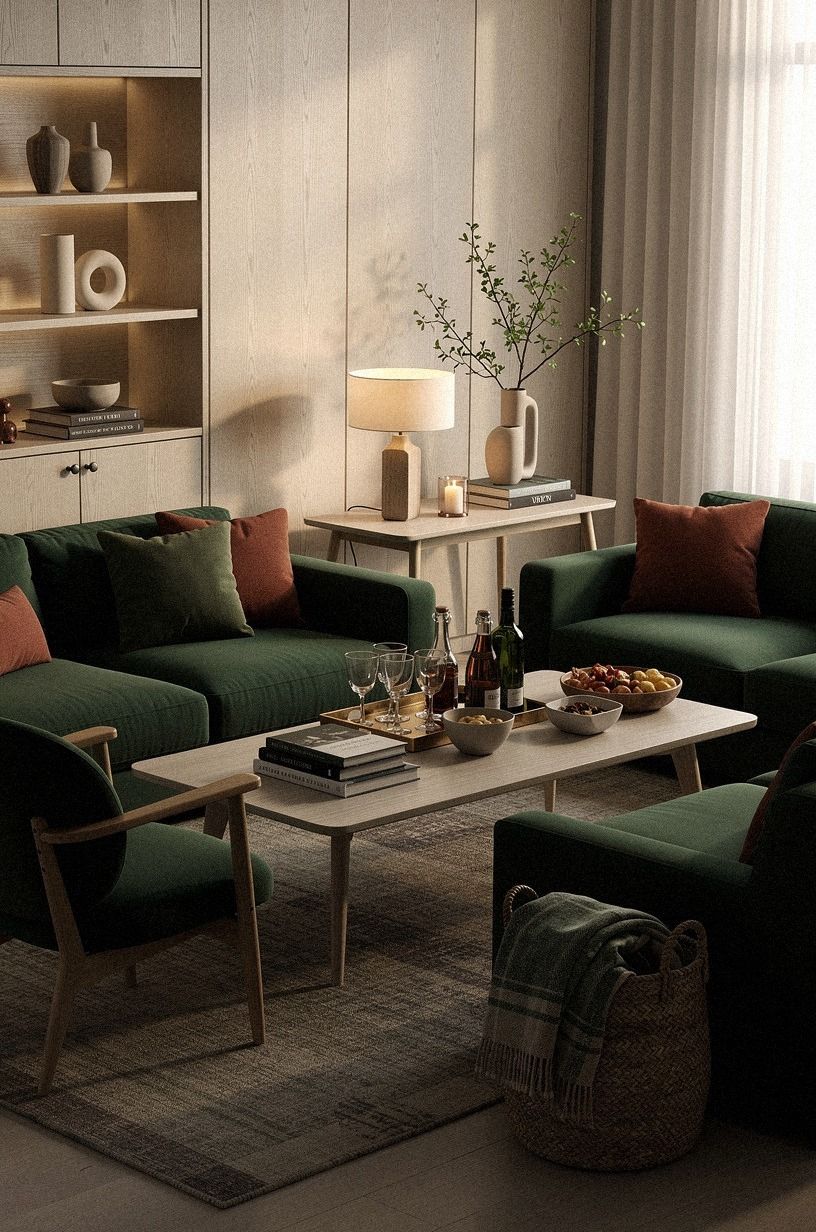
Furniture grouping determines whether guests can talk comfortably or drift awkwardly around the room. Arrange pieces in forest green, rust, and natural oak tones, with cerused white oak bringing continuity to the palette.
The Three-Zone Hosting Rule
A relaxed party usually depends on three working zones: arrival, refreshment, and conversation. When those zones overlap too much, guests form lines, coats land on chairs, and the host becomes the missing link between every station. Separating them by even a few steps can change the entire rhythm of the room.
The arrival zone needs hooks, a bench, or a basket. The refreshment zone needs glasses, napkins, drinks, and food arranged in a clear order.
The conversation zone needs seating that faces inward rather than toward a television or empty wall. You don’t need a large home to create this division.
You only need to protect the paths between each area.
A practical budget can vary widely depending on the room and the furniture already available.
These ranges describe a broader room refresh, not a requirement for one party. You can spend nothing by rearranging furniture, labeling existing bowls, and moving lamps into better positions. A few textiles or secondhand serving pieces may be enough to make your setup feel more inviting.
The Questions Worth Answering First
What is the best party hosting setup for a small space?
A self-serve bar cart and one compact snack station usually work best. IKEA KALLAX storage can hold backup supplies while keeping the main surface clear. Place drinks near the entry or seating area, then keep food on a narrow console.
Your guests won’t need to cross the room repeatedly.
Where can you buy party hosting pieces on a budget?
IKEA, Wayfair, and Target offer useful carts, baskets, trays, and serving pieces at different price points. Facebook Marketplace and thrift stores can provide solid wood boards and brass containers for less. You’ll find better value when you search by material and size rather than by a complete matching set.
How much does a party hosting makeover cost?
A small refresh can cost about $100 to $300 when the room already has basic furniture. Free changes include moving lamps, grouping chairs, labeling bowls, and creating a coat station from existing hooks. Your largest cost may be a rug, lighting, or storage piece rather than food service.
Can you create a party hosting setup on a budget?
Yes, and the best low-cost changes are usually organizational. Use existing bowls as snack stations, place a towel beneath a drink cooler, and move a side table beside the seating area. You can also use removable labels, thrifted trays, and washable runners for a warm result.
Is a party hosting layout worth it in a small space?
Yes, because a small room benefits from clear movement more than extra decoration. Keep one path open between the entrance and drinks, then place seating along the edges. Your space may feel more generous when every object has a practical position.
Is a party hosting setup a good idea for a rental?
Yes, especially when you choose no-damage solutions. Removable hooks, tension rods, peel-and-stick labels, folding tables, and freestanding lamps can create useful stations without permanent changes. You’ll want to protect walls and floors with washable textiles, felt pads, and lightweight furniture.
Where to Start First
If one change deserves priority, start with the self-serve drink station. It removes the most repeated interruption, keeps guests moving, and gives the room an obvious center without demanding a large table. Pin the bar cart layout for later, then build the food and seating zones around it.