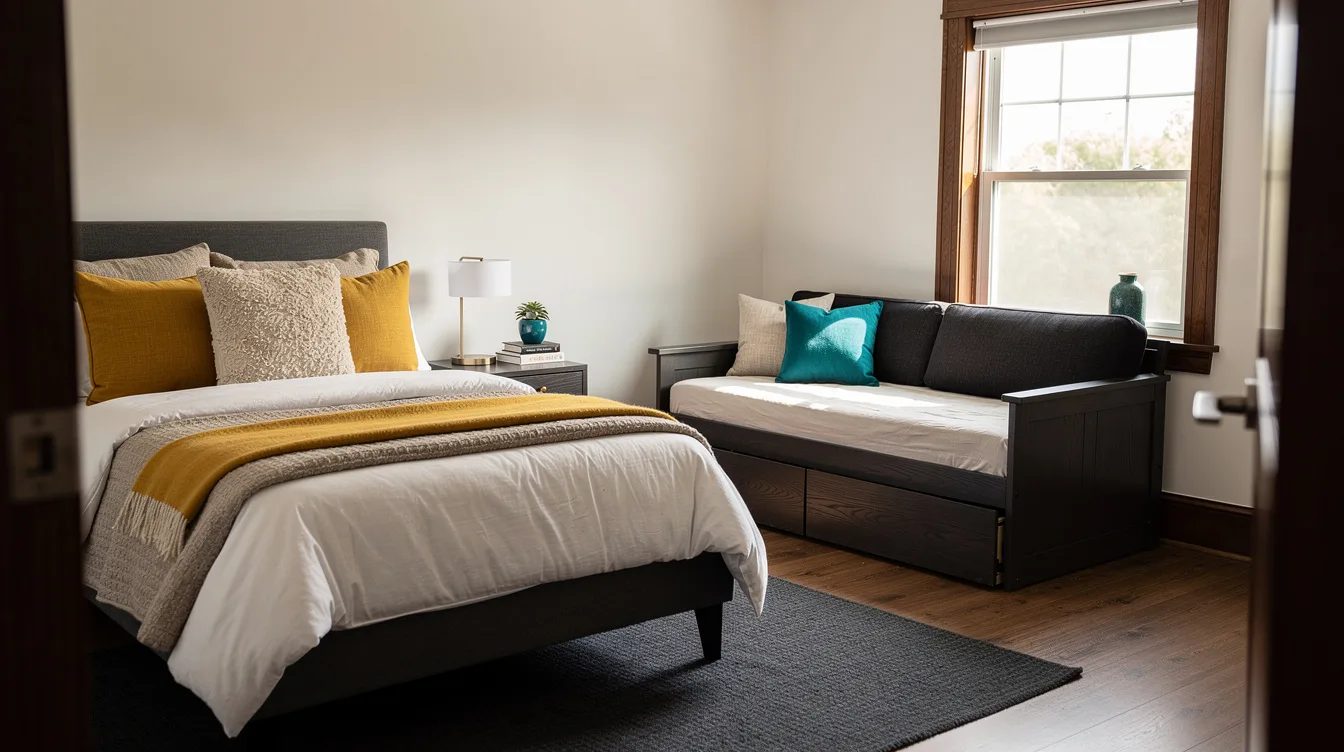
I began with an 11 x 10 ft guest room, a queen bed against the long wall, and a storage daybed near the window. The challenge was making room for a visiting couple while giving a solo guest a comfortable place to sit during the day.
The answer came from treating the daybed as furniture first and backup sleeping space second. With the right proportions, the room can feel intentional instead of crowded.
Map the Queen Bed Before Buying Anything
I started with an 11 x 10 ft guest room and placed the queen bed on the longest uninterrupted wall, leaving the window side open for a second piece.
A queen mattress is typically 60 x 80 inches, so the frame needs extra breathing room around its edges; I planned roughly 60 to 90 cm of walking space where the layout allowed it.
That first decision kept the room practical for a couple without making the sleeping area feel like the entire room.
Give the Daybed a Daytime Job
I treated the twin daybed as the room’s lounge seat, placing it beneath or beside the window so one guest could read, work, or set down a cup of coffee.
Most IKEA daybeds use a twin mattress, typically about 39 x 75 inches, which makes the footprint much easier to manage than a second queen.
The best version has a firm back cushion and a washable linen cover; otherwise, it can look like an extra bed waiting for a problem.
Choose Drawers That Earn Their Footprint
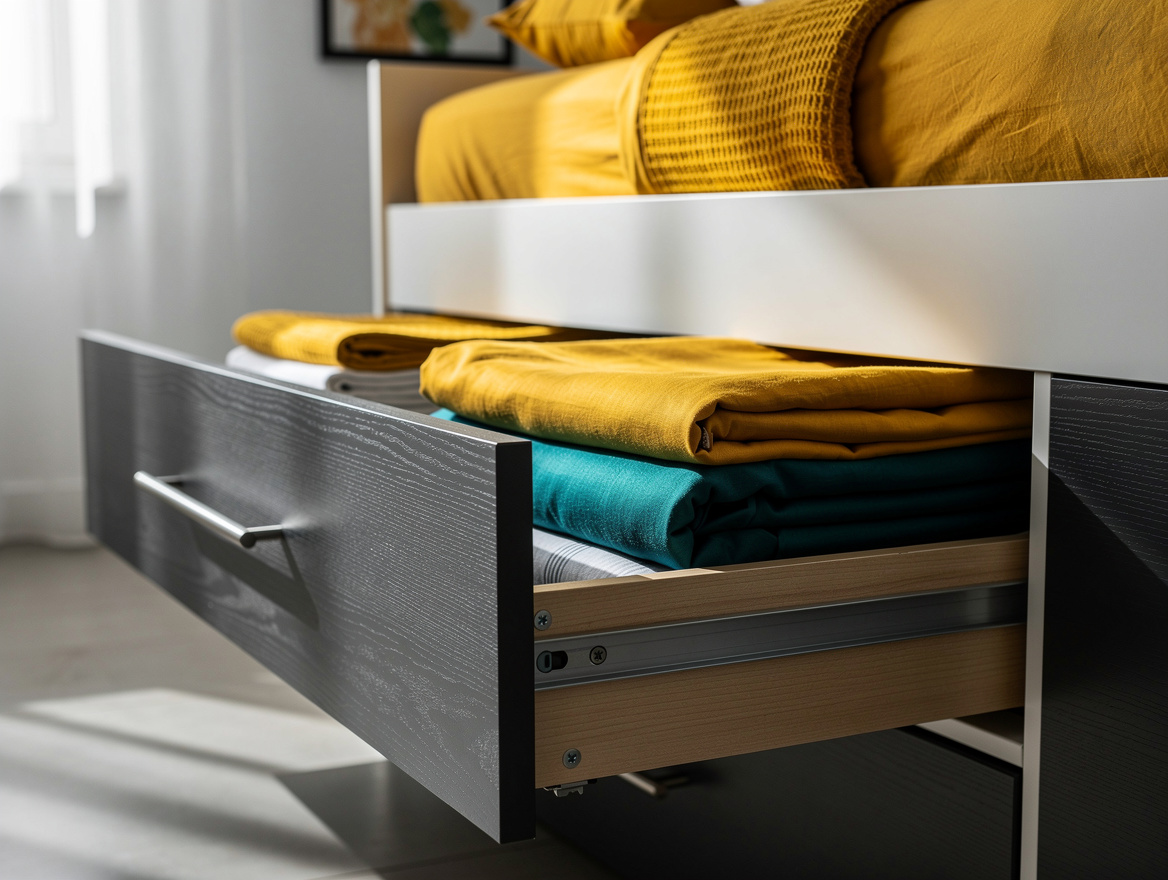
Storage is the reason this plan works, so I favored a daybed with real drawers instead of a shallow decorative base.
The IKEA VIHALS frame costs about $259, while the BRIMNES and HEMNES options run about $299 and $449, giving the room useful price steps without changing the basic idea.
I would use the drawers for spare sheets, towels, and folded blankets, keeping the closet available for guests’ clothing.
Keep the Tall Storage Vertical
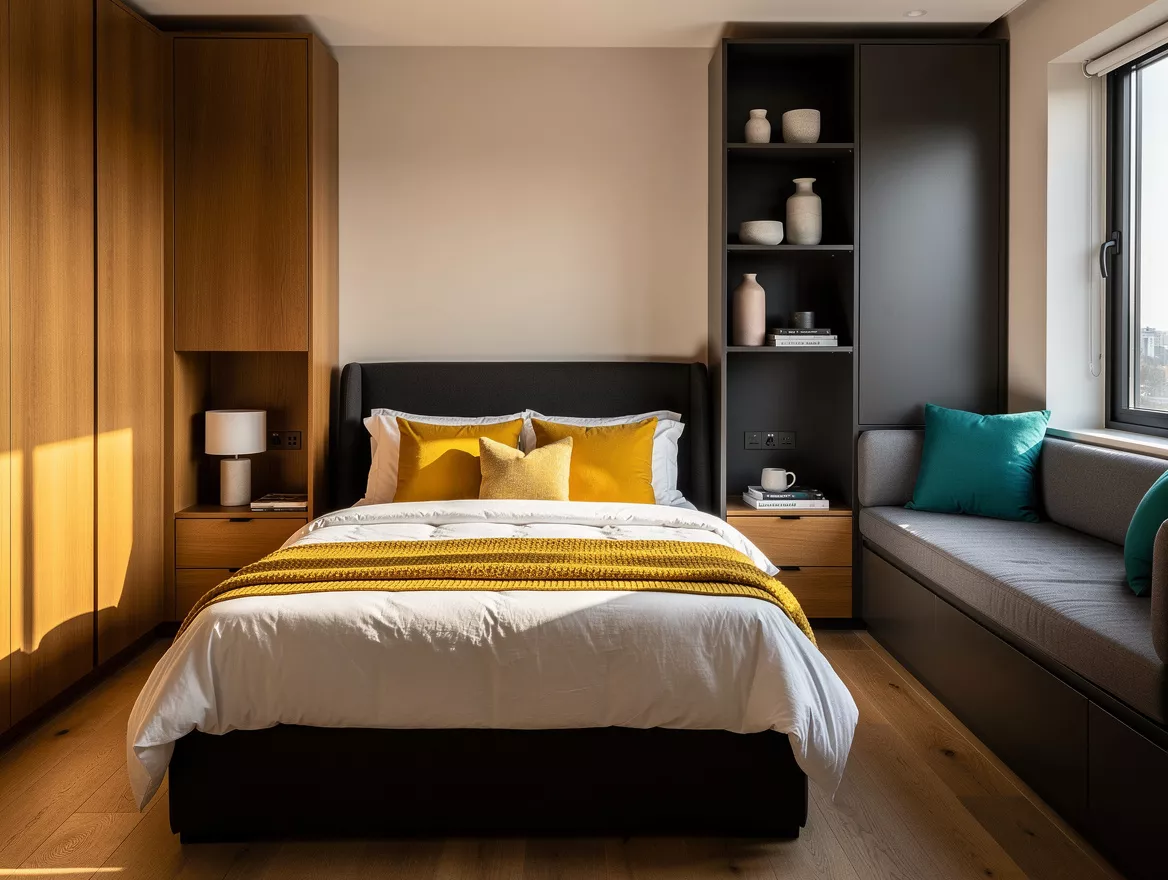
With a queen bed and a daybed sharing a compact room, I used the wall height for storage rather than adding another wide cabinet.
A narrow wood shelf above the daybed can hold books and a small lamp, while a tall wardrobe keeps bulky items off the floor.
White furniture can make the arrangement feel lighter, but I would add one dark wood surface so the room does not read like a showroom.
Control the Budget With One Hero Piece
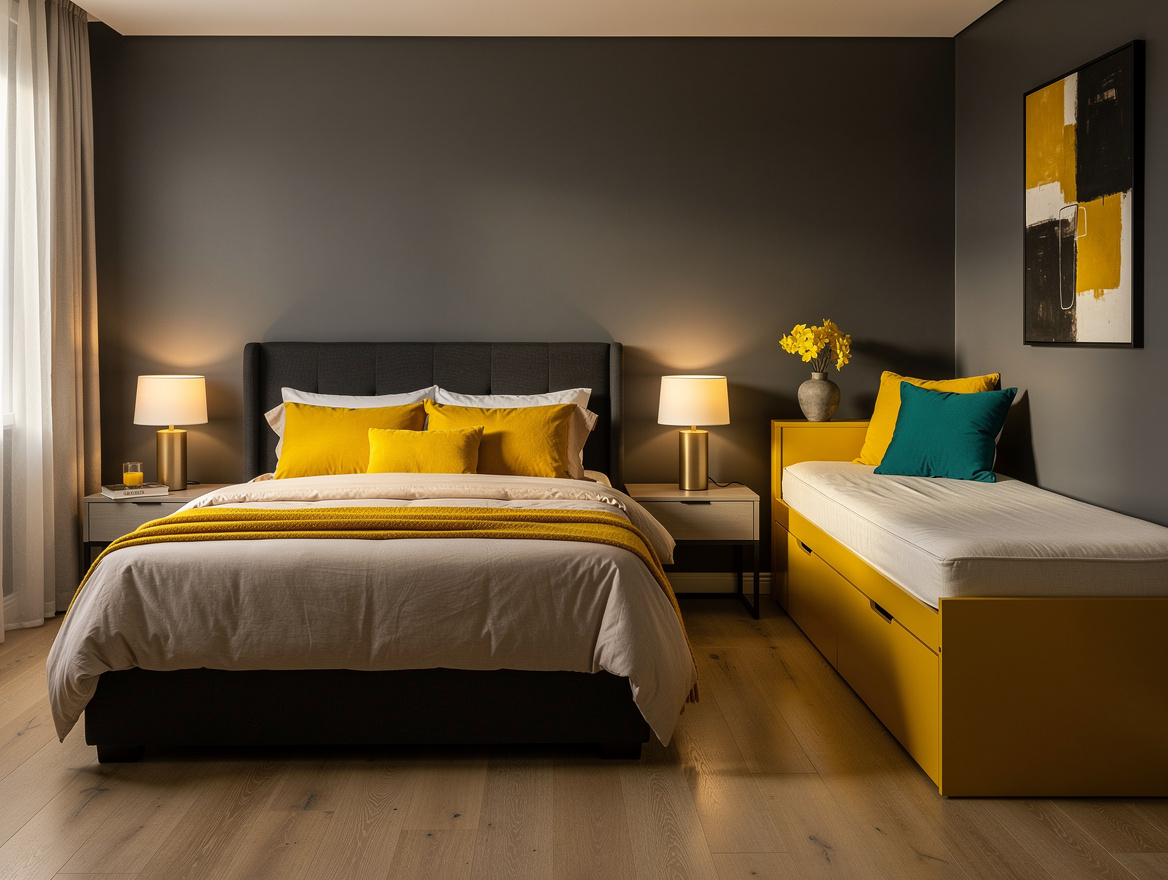
I kept the main bed simple and spent more attention on the piece that had to work hardest during the day.
A basic upholstered queen frame can cost around $295, while a Wayfair daybed with drawers, shelving, and built-in lighting may land around $280 to $380.
That puts a practical starting combination near $550 to $700 before mattresses and bedding, which feels sensible for a flexible guest room.
Finish the Room for Two Kinds of Guests
The queen bed needs hotel-level comfort for a couple, while the daybed needs enough support to become a credible overnight option.
I would choose a medium-firm foam mattress for the daybed, then repeat one color from the queen bedding in its cushion so the two beds feel related.
A small wall-mounted reading light, a clear charging spot, and one washable cotton throw matter more than extra decoration.
Start by measuring the queen frame, then mark the daybed footprint with painter’s tape before spending anything. That simple test will show whether your storage plan leaves enough room to move, open drawers, and welcome guests comfortably.
Mia Carter writes about small-space living and budget home makeovers. She has restyled three rentals and tests most ideas in her own 45 sqm flat.