
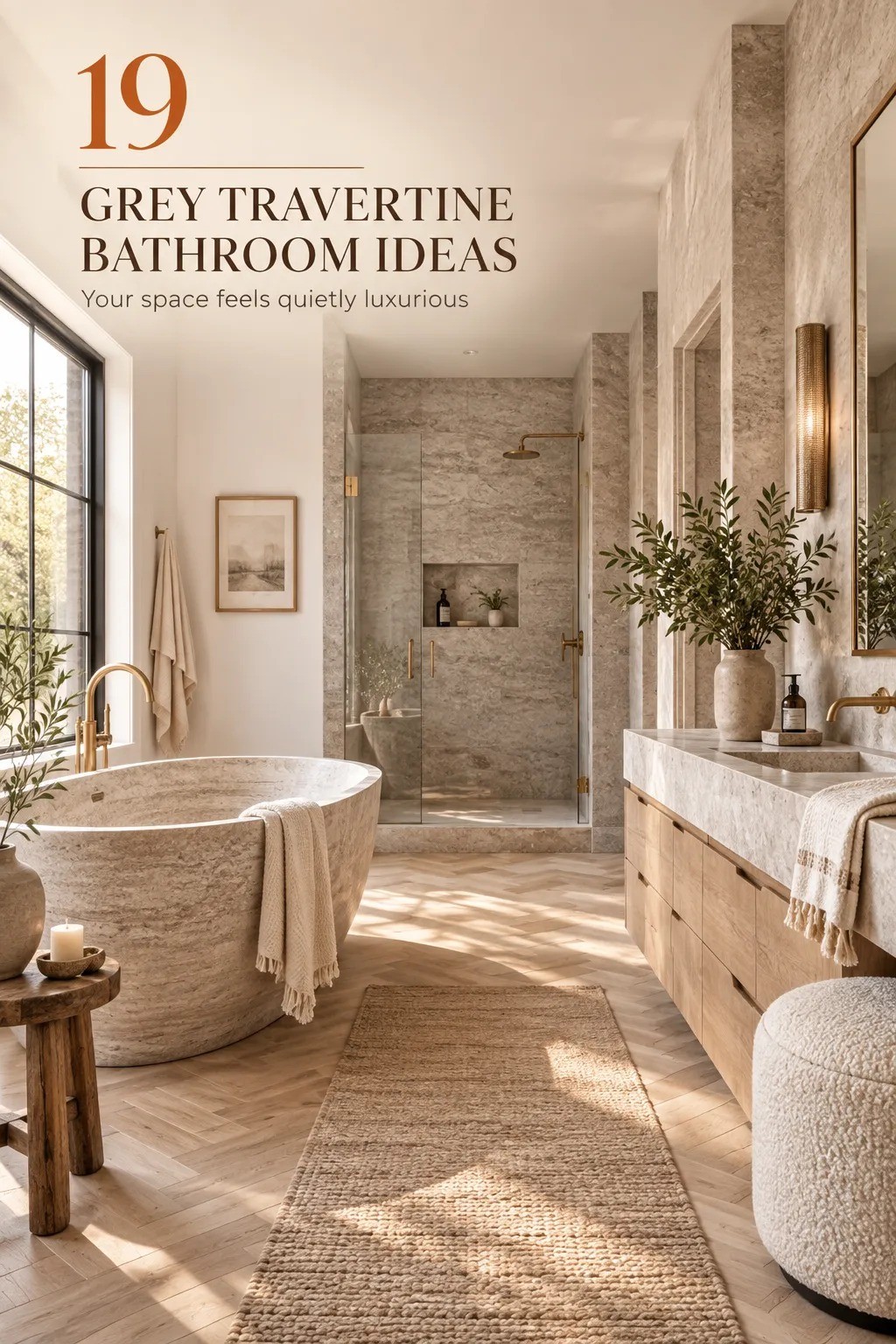
Grey travertine bathroom ideas usually work best when you balance the stone’s cool movement with warm wood, soft light, and quiet hardware. I’ve made the mistake of treating grey travertine like a blank backdrop, and the room felt flat by sunset. You’ll get a softer result by choosing the stone first, then building every finish around its veining.
- Start with the stone before choosing paint
- Anchor the room with a warm grey base
- Build the Two-Wood Rule
- Start with the stone before choosing paint
- Anchor the room with a warm grey base
- Build the Two-Wood Rule
- Measure the vanity around your daily routine
- Choose light grey travertine for the shower zone
- Frame the mirror with a three-height light stack
- Layer warm lighting instead of using one ceiling fixture
- Paint one unexpected surface a deeper blue
- Mix matte hardware with soft stone
- Float the vanity to reveal more floor
- Lay the floor in a quiet running pattern
- Soften the tub edge with natural textiles
- Add contrast with one sculptural basin
- Use the Four-Inch Splash Decision
- Bring in greenery with a practical plant
- Set the budget before ordering stone
- Protect the stone with the right maintenance plan
- Keep clearances comfortable around the toilet
- Finish with one edited styling moment
1Start with the stone before choosing paint
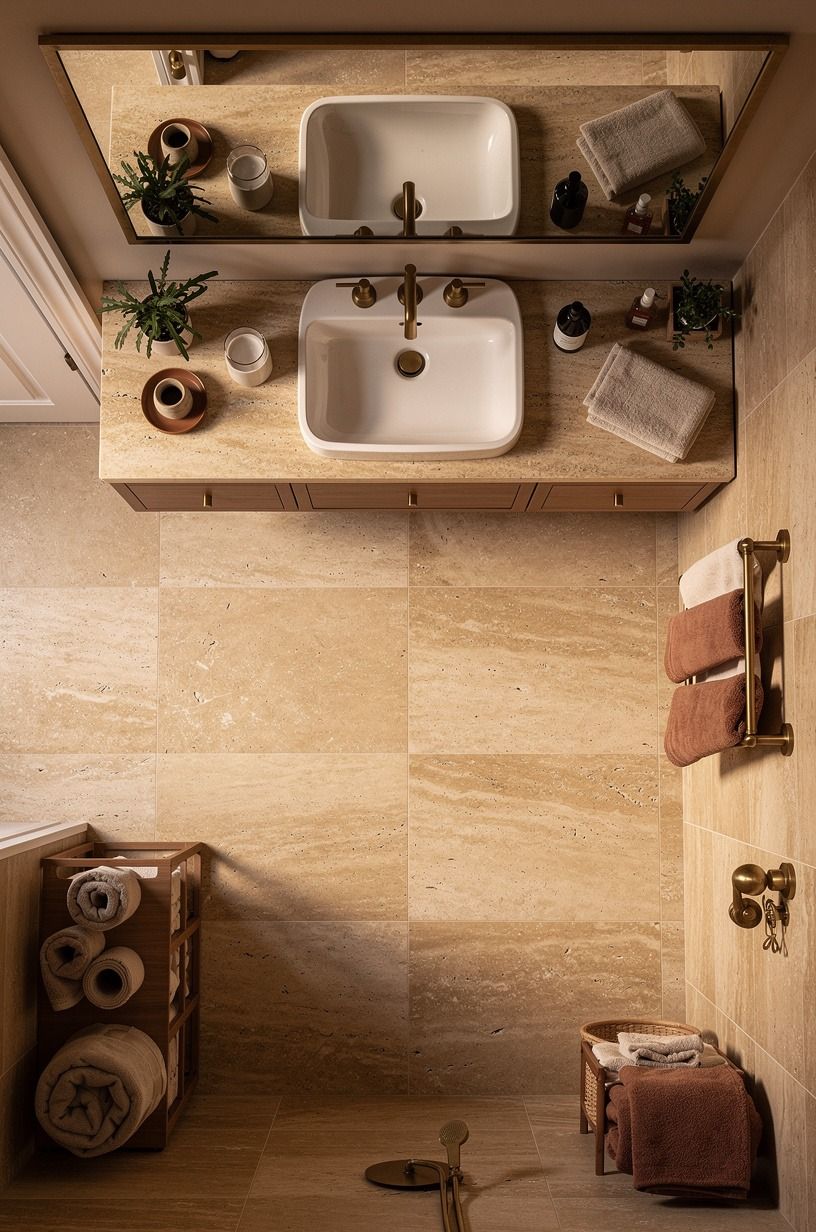
Begin with a real travertine sample, not a phone image. Warm travertine can lean taupe, blue, or olive depending on the cut and light, so hold your sample beside the vanity, floor, and shower wall. You don’t want a cold silver cast fighting with a blue-white paint at 7 a.m. when the room feels crisp and again at night when the lamps turn everything warmer.
I’d choose a honed warm travertine with visible natural pitting over a polished slab for your bathroom. Polished stone reflects every water mark, while a honed surface gives you a calmer, more organic finish.
If you’re comparing related surfaces, this silver travertine bathroom guide will help you see how cooler stone behaves. Bring your sample home before you commit!
2Anchor the room with a warm grey base
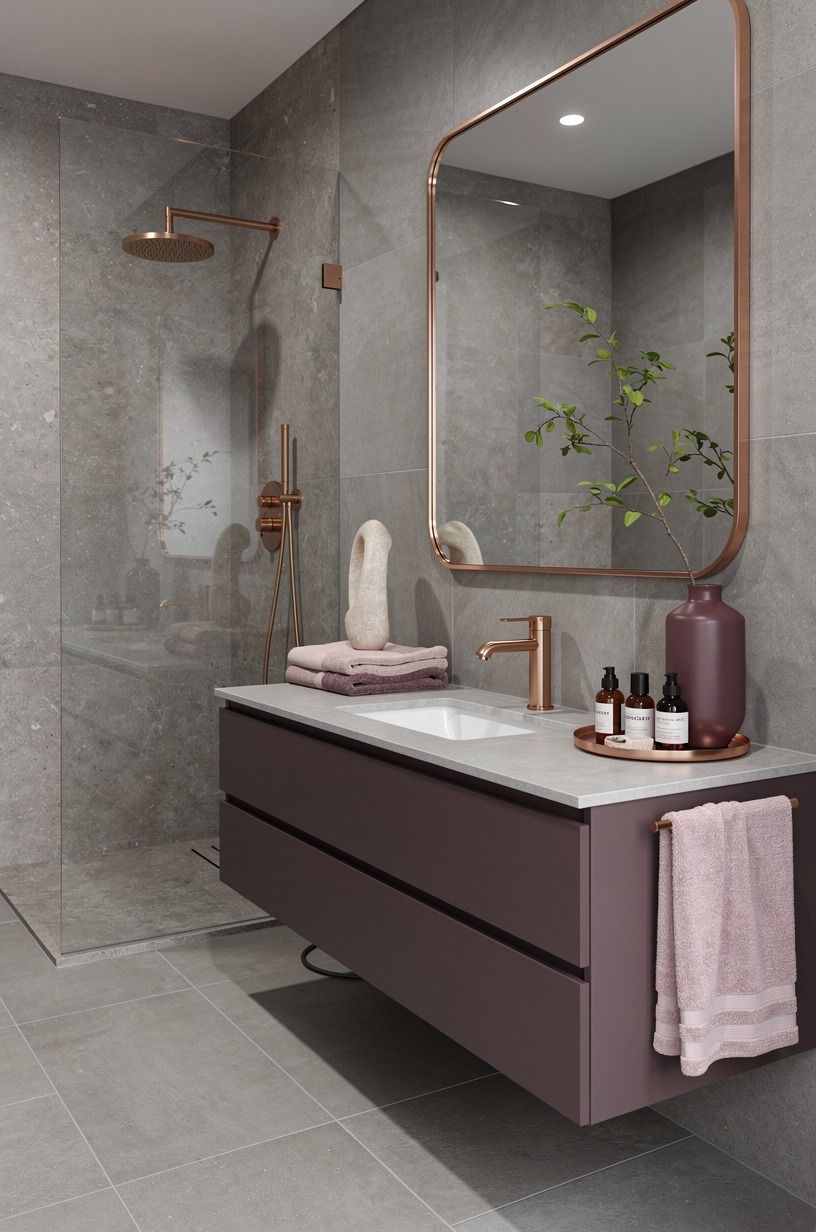
Once you’ve chosen the stone, anchor the room with one warm grey base color. Let unlacquered brass bring a quiet rose-gold note as it develops a natural patina.
3Build the Two-Wood Rule
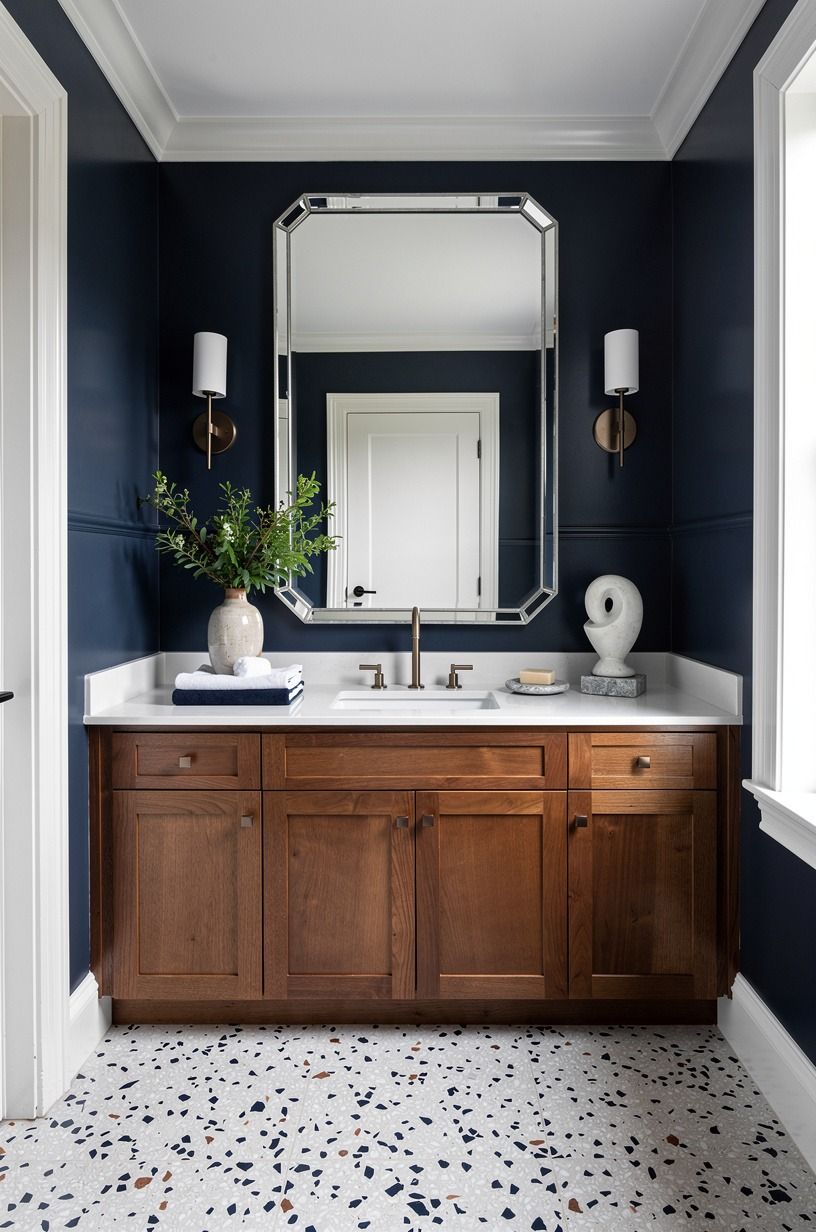
The Two-Wood Rule keeps a grey travertine bathroom from looking like a showroom. Choose one dominant wood and one smaller supporting wood, then repeat each at least twice.
Walnut works beautifully on a vanity, while oversized-chip terrazzo can ground the floor or counter. You don’t need a wood collection; you need two deliberate notes.
I’ve tried matching every wood tone before, and the result was fussier than it sounds. Let your vanity carry the warmer grain, then use a pale textile or white accessory to keep your space airy. An IKEA TONSTAD cabinet can give you a simple starting point, while a custom walnut drawer front brings more texture.
If you’re unsure, choose the lighter wood for larger surfaces and the darker one for small accents.
4Measure the vanity around your daily routine
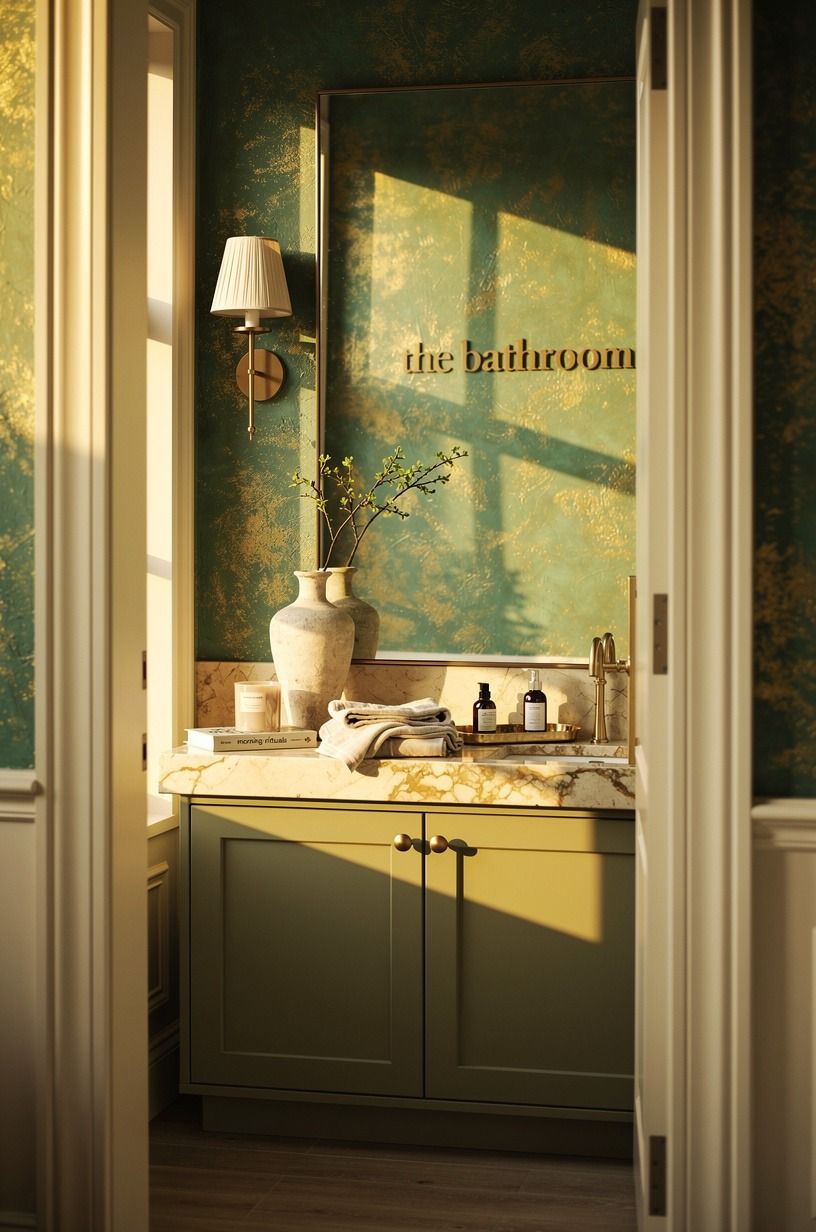
Measure your vanity wall before you fall for a beautiful cabinet.
5Choose light grey travertine for the shower zone
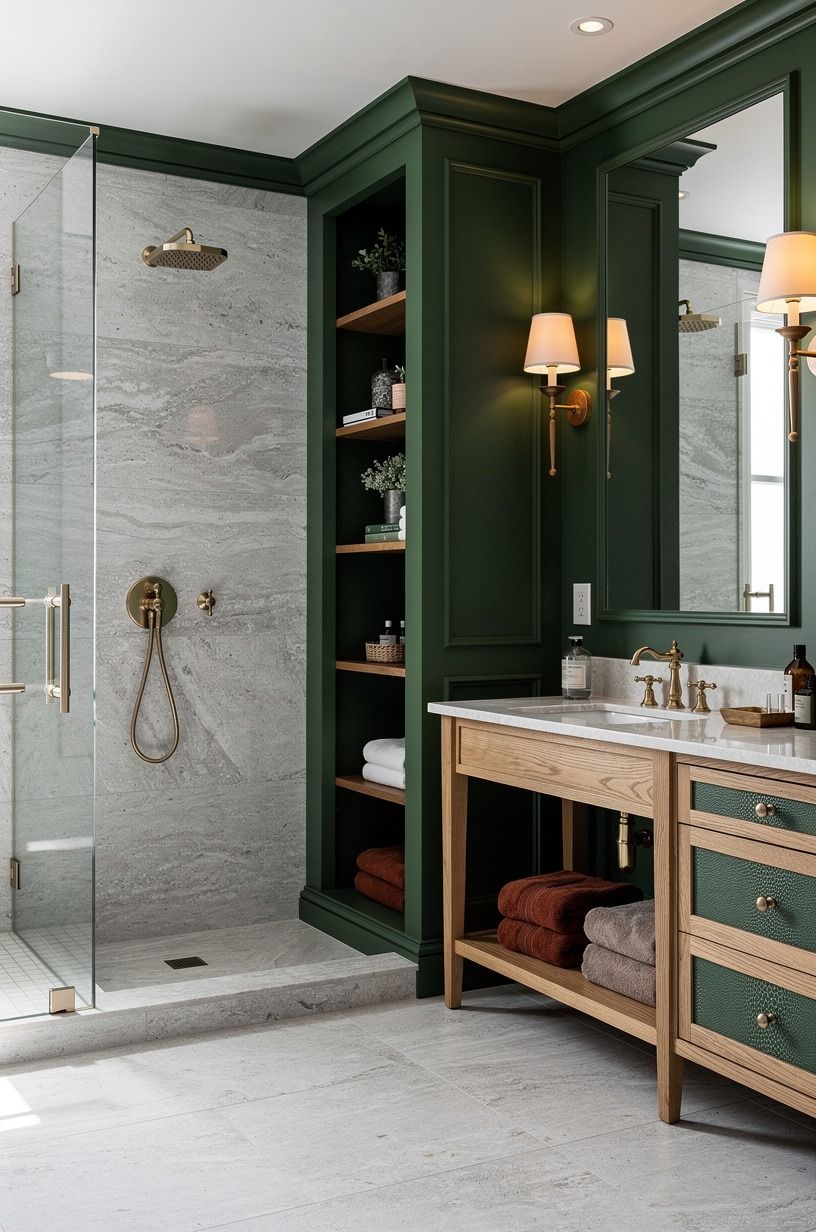
Use light grey travertine on the shower walls if you want the bathroom to feel open without going white. Add shagreen accents in forest green or rust for a richer contrast, and keep the grout close in value so the stone reads as one quiet plane.
Your shower still needs practical planning. A comfortable shower is at least 36 by 36 inches, or 91 by 91 centimeters, and you’ll notice every lost inch when you’re turning with a towel.
I’d skip high-contrast grout because it chops the wall into squares and makes the stone look busier. For another warm reference, compare this organic modern travertine bathroom look before you select your tile layout.
6Frame the mirror with a three-height light stack
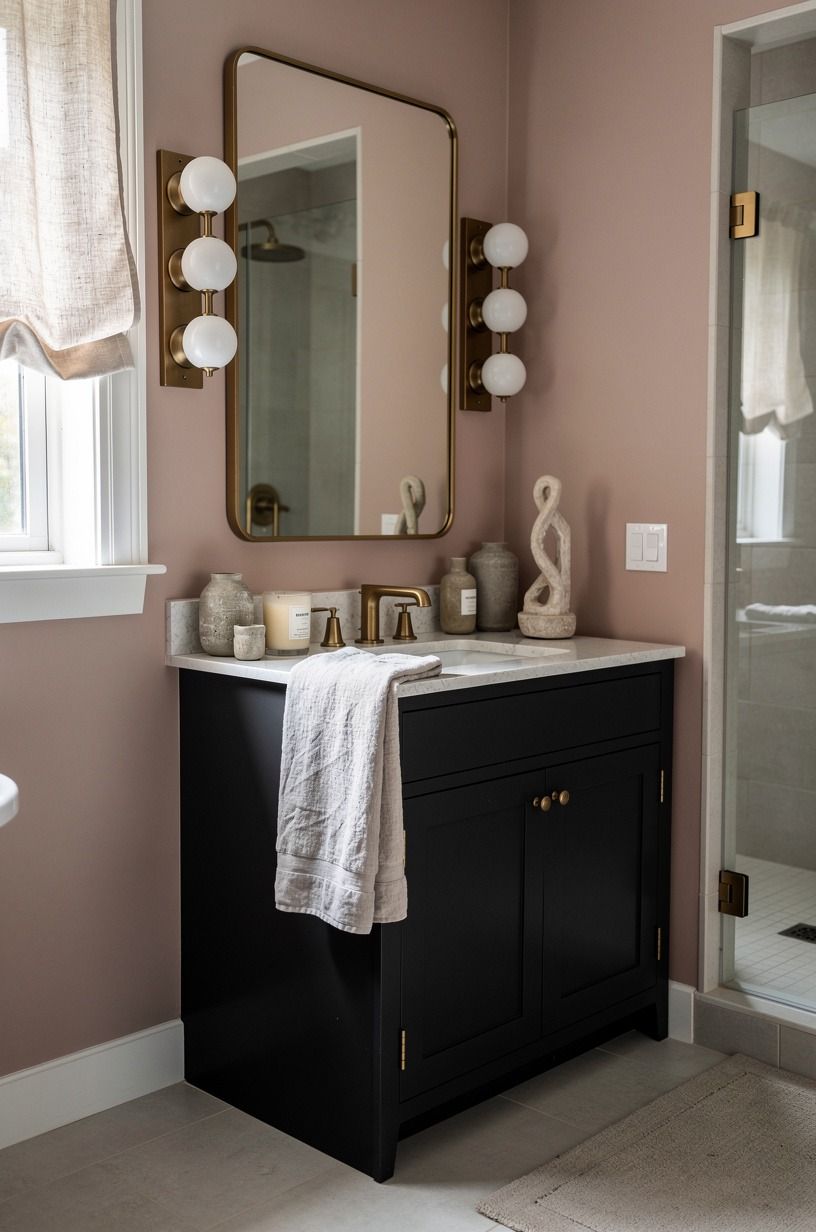
The Three-Height Light Stack gives your mirror wall more depth.
7Layer warm lighting instead of using one ceiling fixture
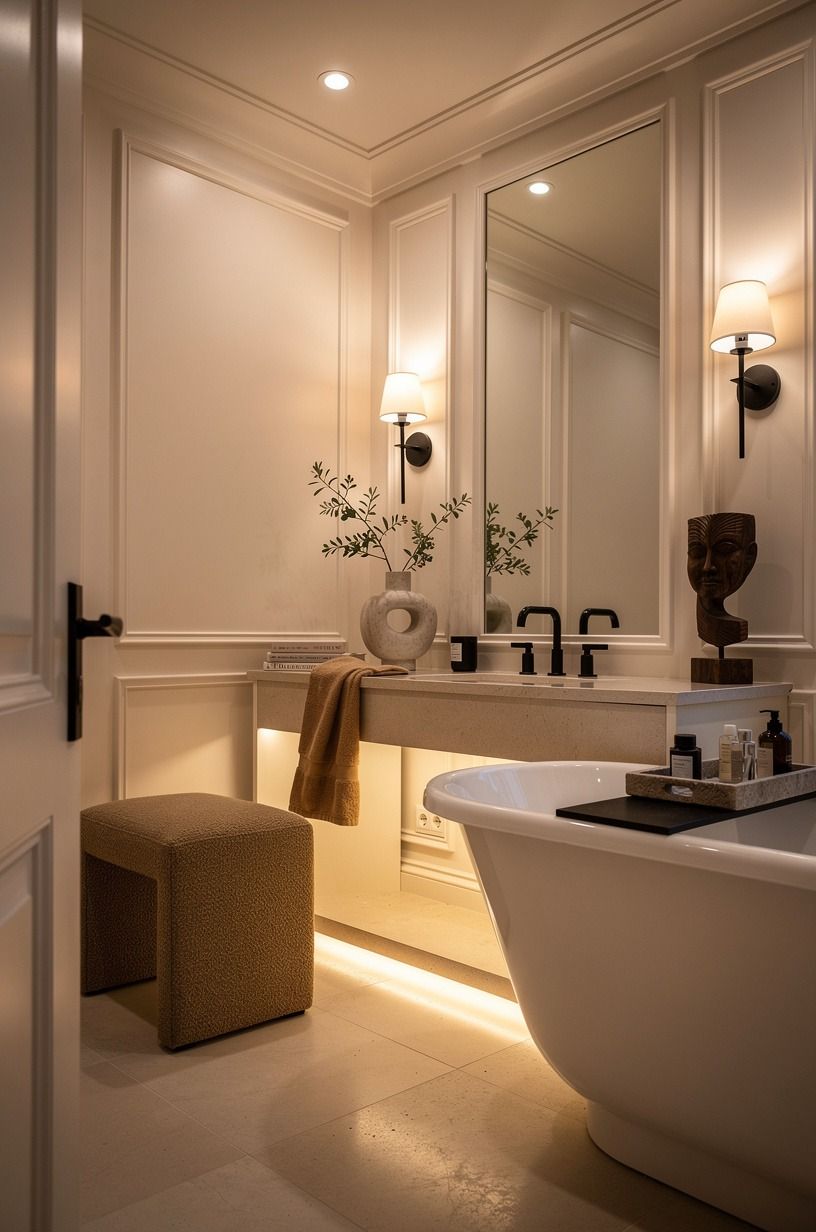
A single ceiling light makes grey travertine look harsher than it is. Layer a warm overhead fixture with a backlit mirror or a small wall lamp, and use bulbs in a warm range that won’t turn the stone orange. Your goal is a clean face at the mirror and a softer glow across the floor.
CB2’s Primitivo bouclé stool can sit beneath a vanity or beside the tub, but it needs enough clearance to avoid becoming a trip hazard. I’d avoid a bare exposed bulb here because it throws sharp shadows across pitted stone.
If you’re renovating your lighting, run the wiring before the tile goes in. If you’re renting, a plug-in sconce and a concealed cord channel can give you the same layered effect without opening a wall.
8Paint one unexpected surface a deeper blue
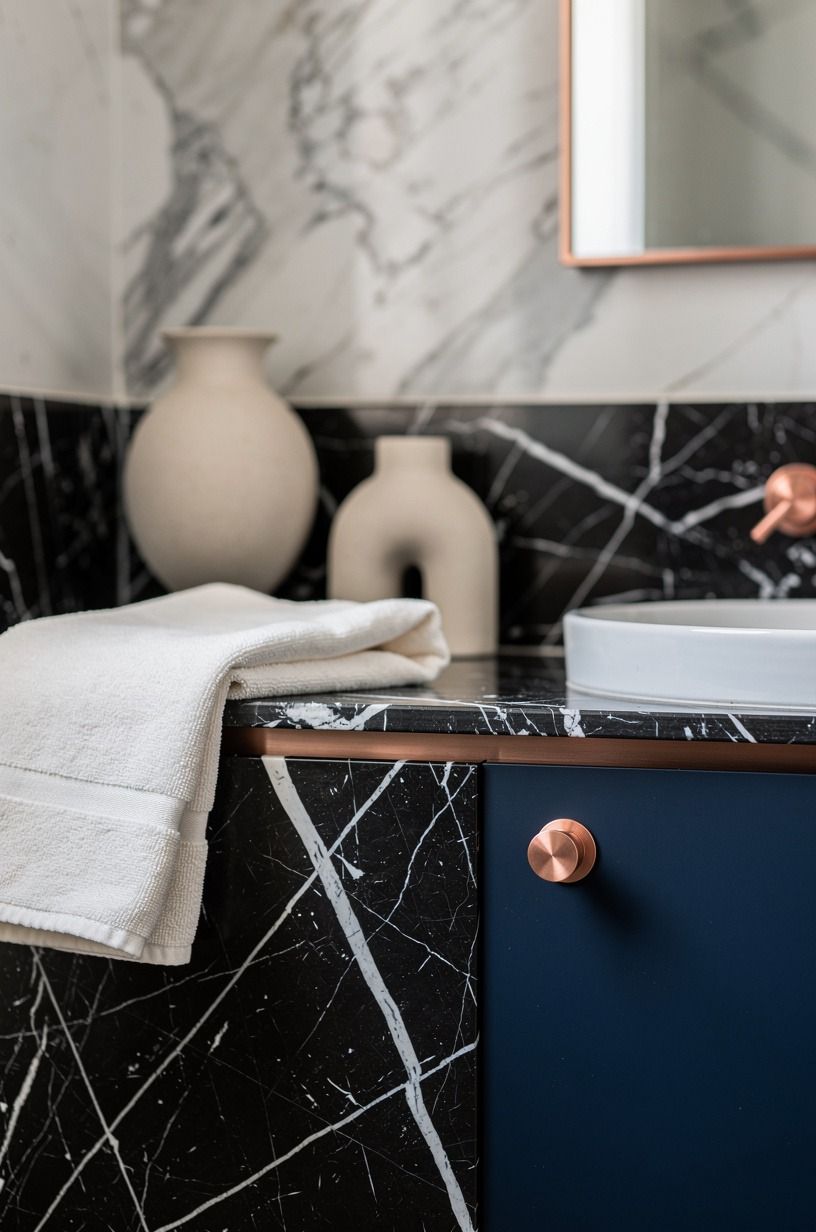
Use a deeper paint color on one small surface when your grey travertine needs contrast. Farrow & Ball Hague Blue No.30 works on a vanity wall, linen cabinet, or narrow door because it adds depth without asking the whole bathroom to become moody. The dark color should feel intentional, not like a leftover patch of drama.
You’ll want to keep the surrounding finishes simple. Pair the blue with pale towels, copper accents, and Nero Marquina marble with white veining.
I’d skip painting every wall dark in a small bathroom unless your lighting is generous, because the ceiling can feel lower by evening. A small blue zone gives your eye somewhere to land, and your bathroom still feels calm.
9Mix matte hardware with soft stone
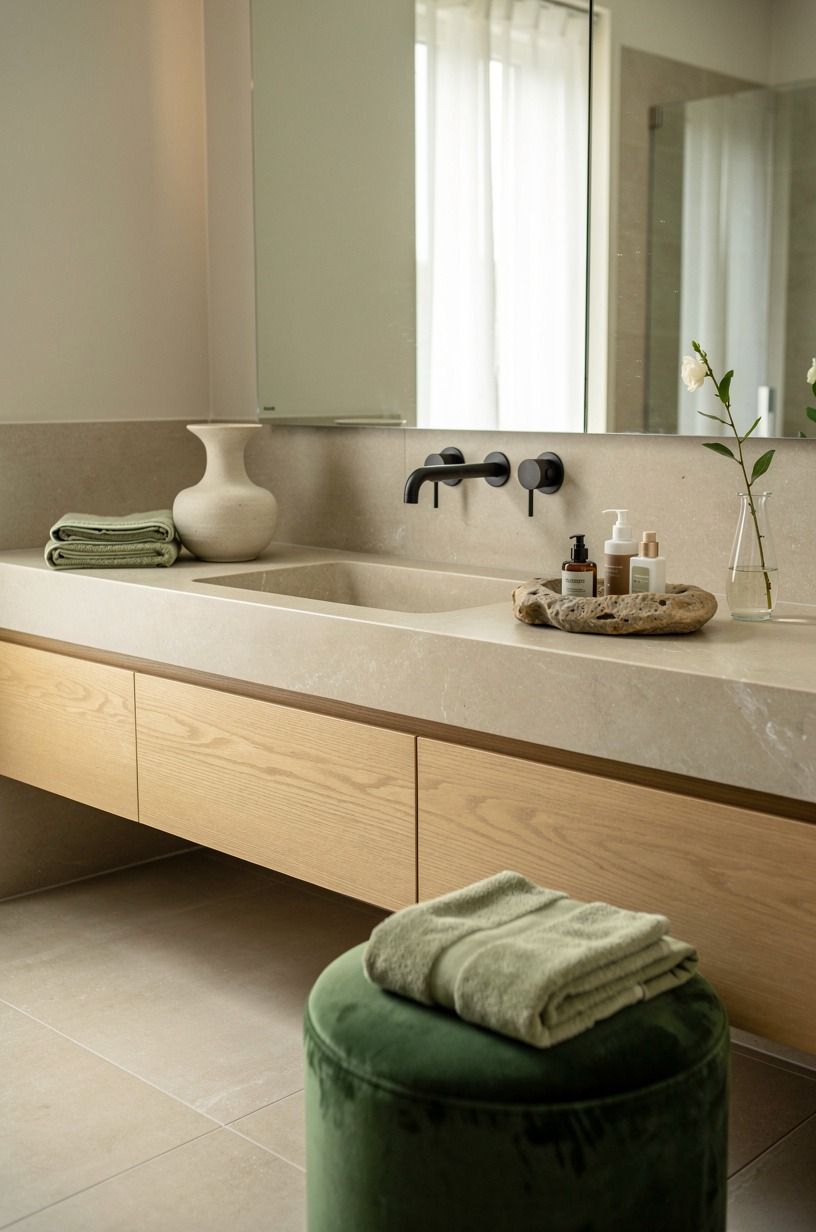
Mixing matte hardware with deep-pile mohair velvet keeps the room from feeling overly polished.
10Float the vanity to reveal more floor
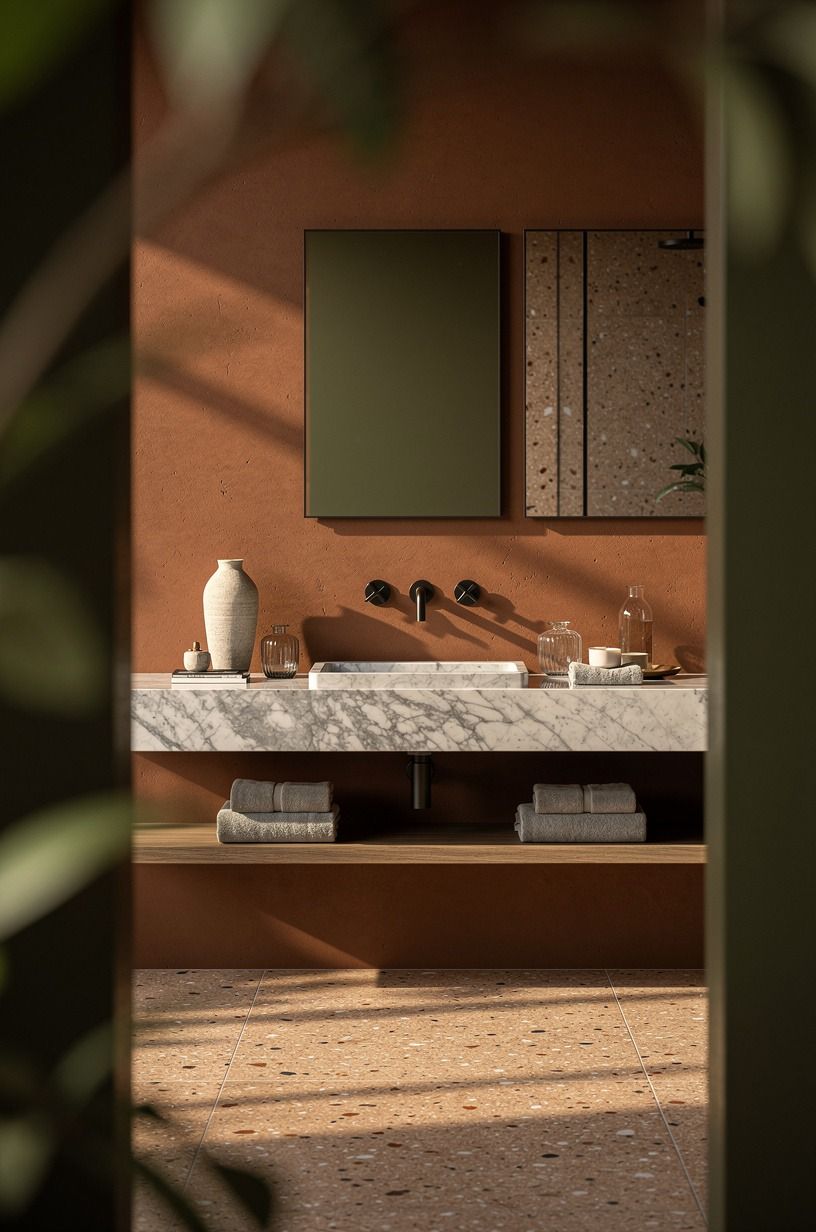
Float the vanity when you want your grey travertine bathroom to feel less crowded. Even a small gap beneath the cabinet exposes more floor and lets light travel underneath, which can make the room feel more open. Keep the plumbing plan in mind before you choose a wall-mounted cabinet, because the wall needs enough structure to carry the load.
IKEA KALLAX birch-effect storage can inspire the open, lifted look, but it isn’t a substitute for a bathroom-rated vanity. I’d choose a sealed wood veneer or painted cabinet designed for humidity.
You’ll also want your drawer fronts to clear the toilet and door swing. The floating line is worth it when your floor has Carrara marble with subtle grey veining that deserves to remain visible.
11Lay the floor in a quiet running pattern
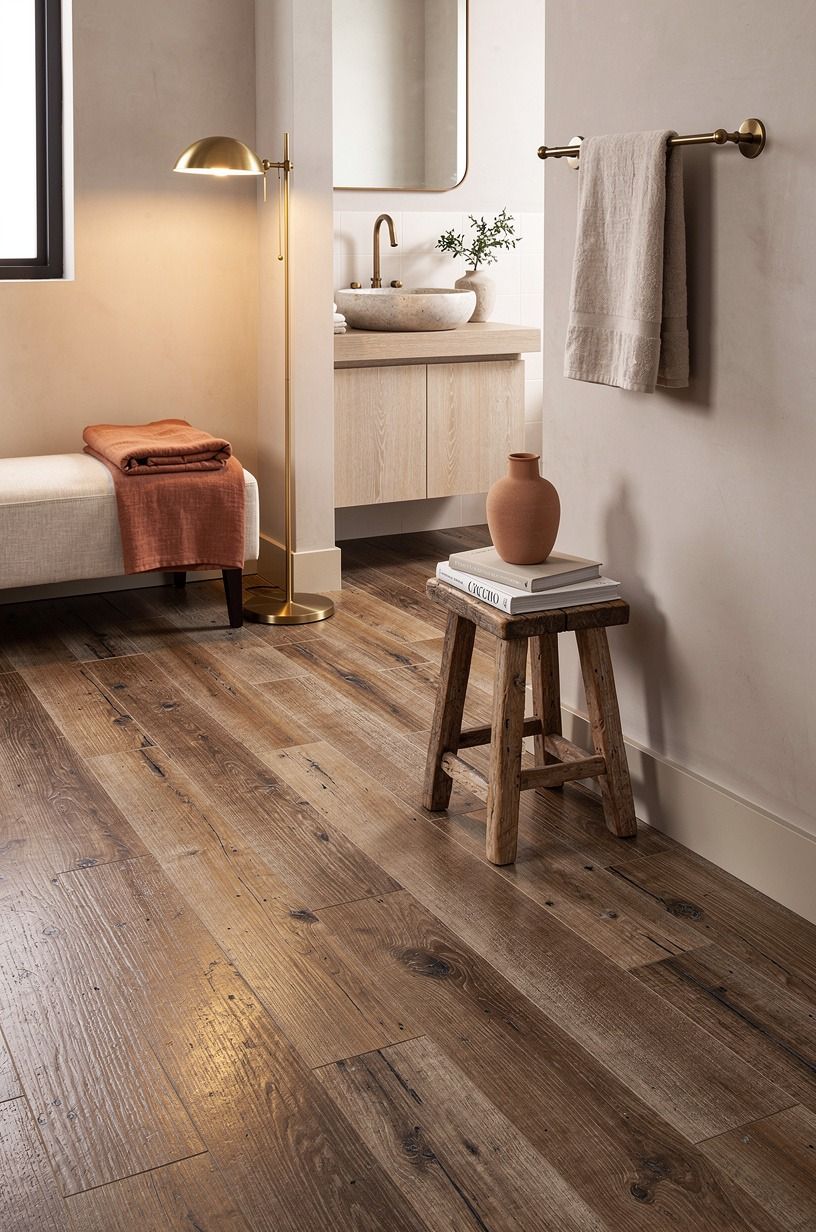
Lay reclaimed weathered teak in a simple running bond or large-format pattern so the material can breathe.
12Soften the tub edge with natural textiles
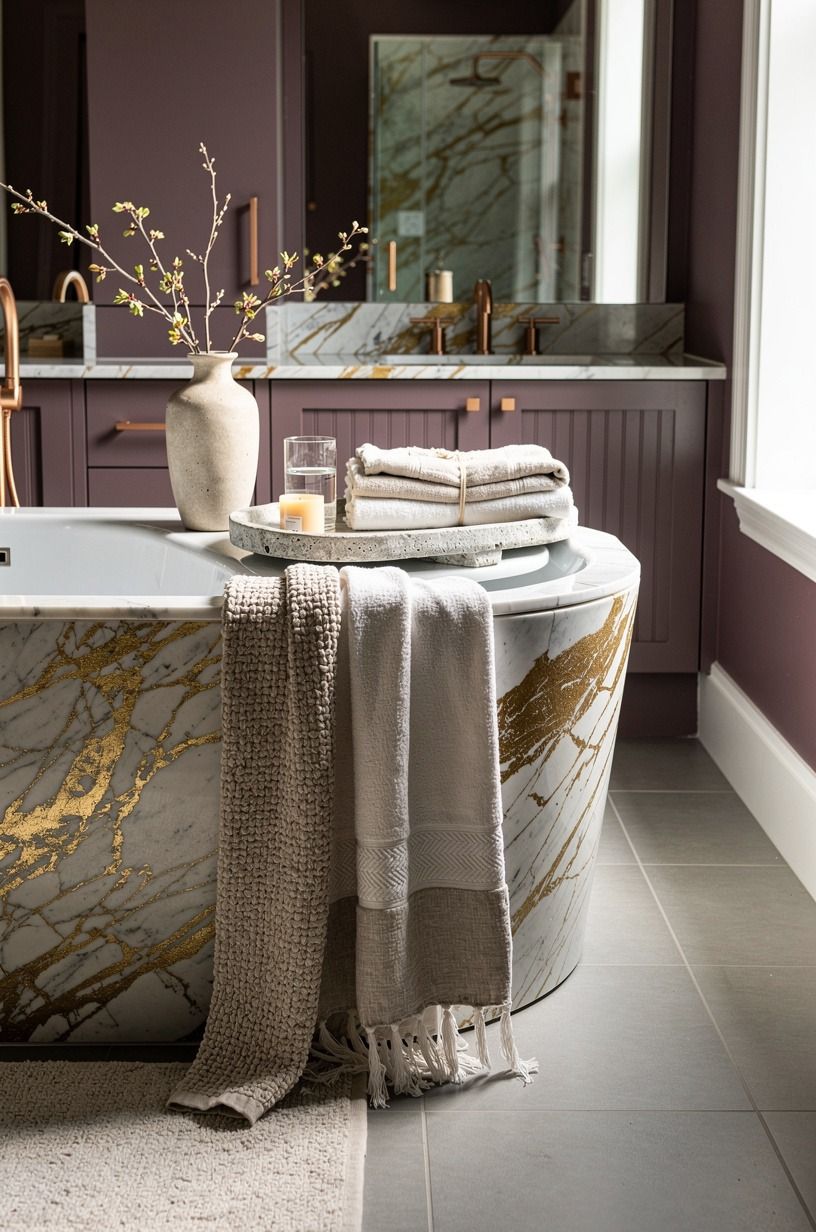
Soften the hard tub edge beside Calacatta marble with textiles that can handle regular washing. 600gsm Turkish cotton towels feel substantial without turning the room into a spa cliché, and a Belgian flax linen curtain can bring a dry, relaxed texture beside stone. Choose two or three related tones rather than a full rainbow of accents.
You’ll want your bath mat to dry quickly, so don’t choose a thick shag that stays damp against the floor. A flat cotton weave or washable wool blend is a better call for your routine.
I’d skip bright white if your Calacatta marble has gold veining, because the contrast can make the stone look dingy. Plum, grey, and muted rose will feel more forgiving in your bathroom.
13Add contrast with one sculptural basin
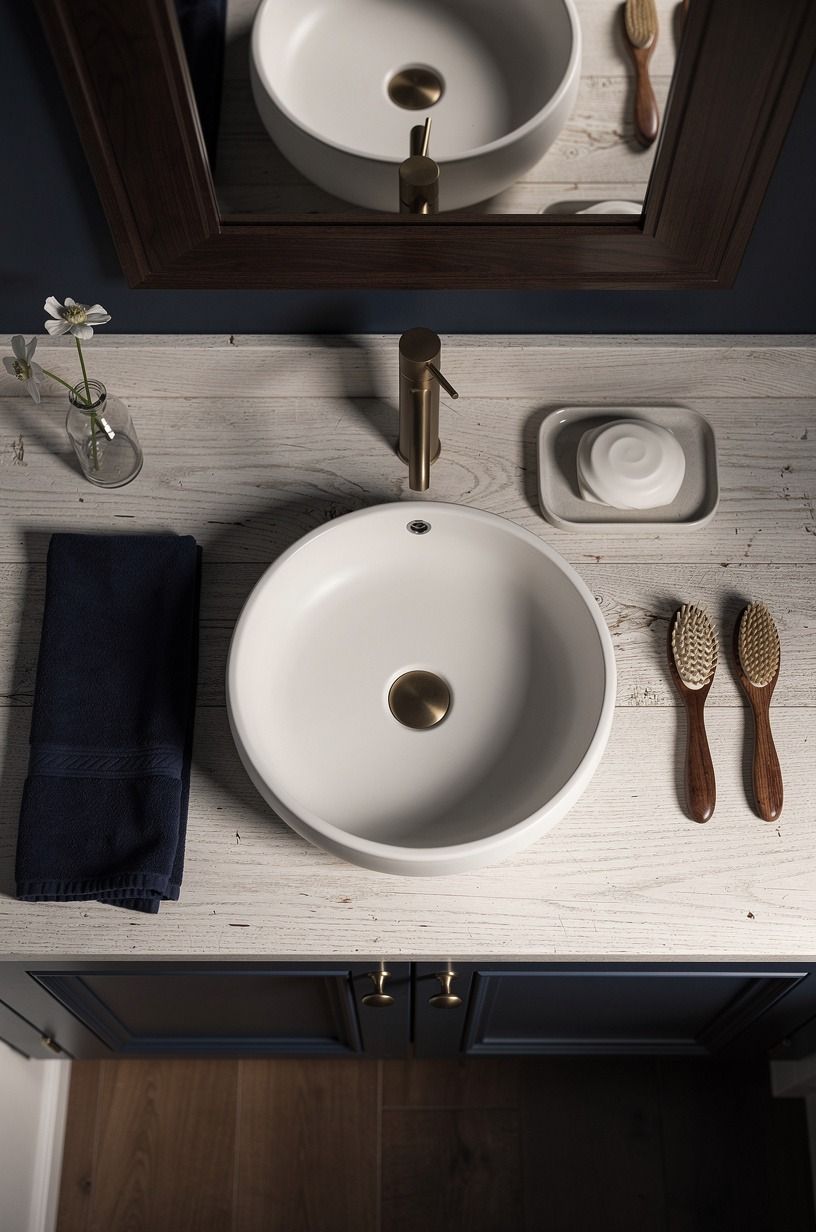
Add one sculptural basin if the rest of the bathroom is quiet.
14Use the Four-Inch Splash Decision
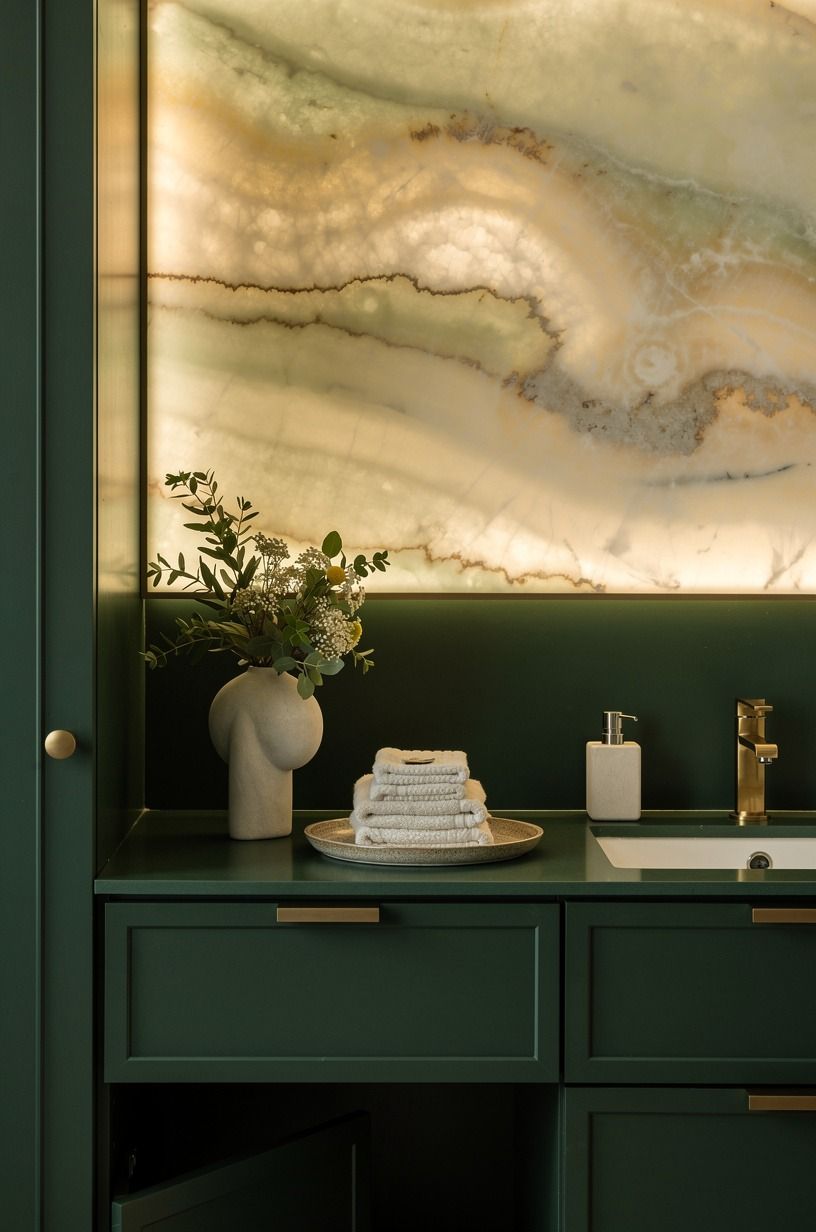
The Four-Inch Splash Decision helps you control cost and visual noise. Continue your counter material four inches up the wall when you want a crisp, economical finish, or take the stone to the ceiling when the wall itself should become the feature. Neither option is automatically better for your bathroom.
I’d take backlit translucent onyx higher behind a floating vanity and keep the side walls painted. That gives you one concentrated stone moment and keeps your budget from wandering. You can compare the effect with these travertine bathroom remodel examples before your installer starts cutting.
If you’re using an onyx top, typical material costs can range from $50 to $100 per square foot, so measure your splash carefully.
15Bring in greenery with a practical plant
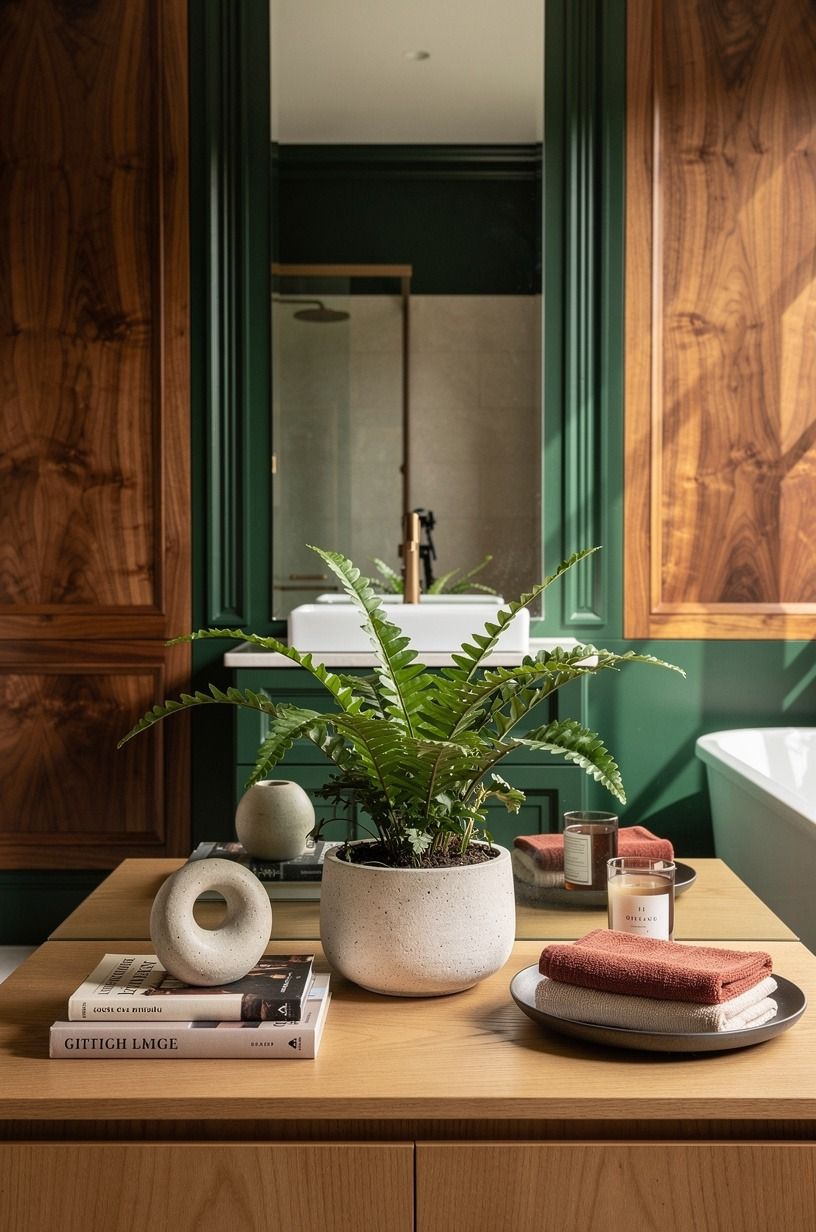
Bring in one plant that enjoys humidity and can handle your actual light. A trailing pothos, compact fern, or small eucalyptus branch can make grey travertine feel more organic, but your plant needs drainage and a place where water won’t sit on the stone. Keep the pot lifted on a saucer or small stand.
Rust looks lovely against grey stone because its earthy warmth wakes up the cooler surface. Natural oak and book-matched walnut can carry that warmth without turning the room orange.
You don’t need a jungle, and I’d skip delicate plants if your bathroom has no window. A single sturdy plant near the mirror is more convincing than six struggling stems on every shelf.
If your space is dark, use a dried branch or quality faux stem instead, and give your eye one gentle vertical line.
16Set the budget before ordering stone
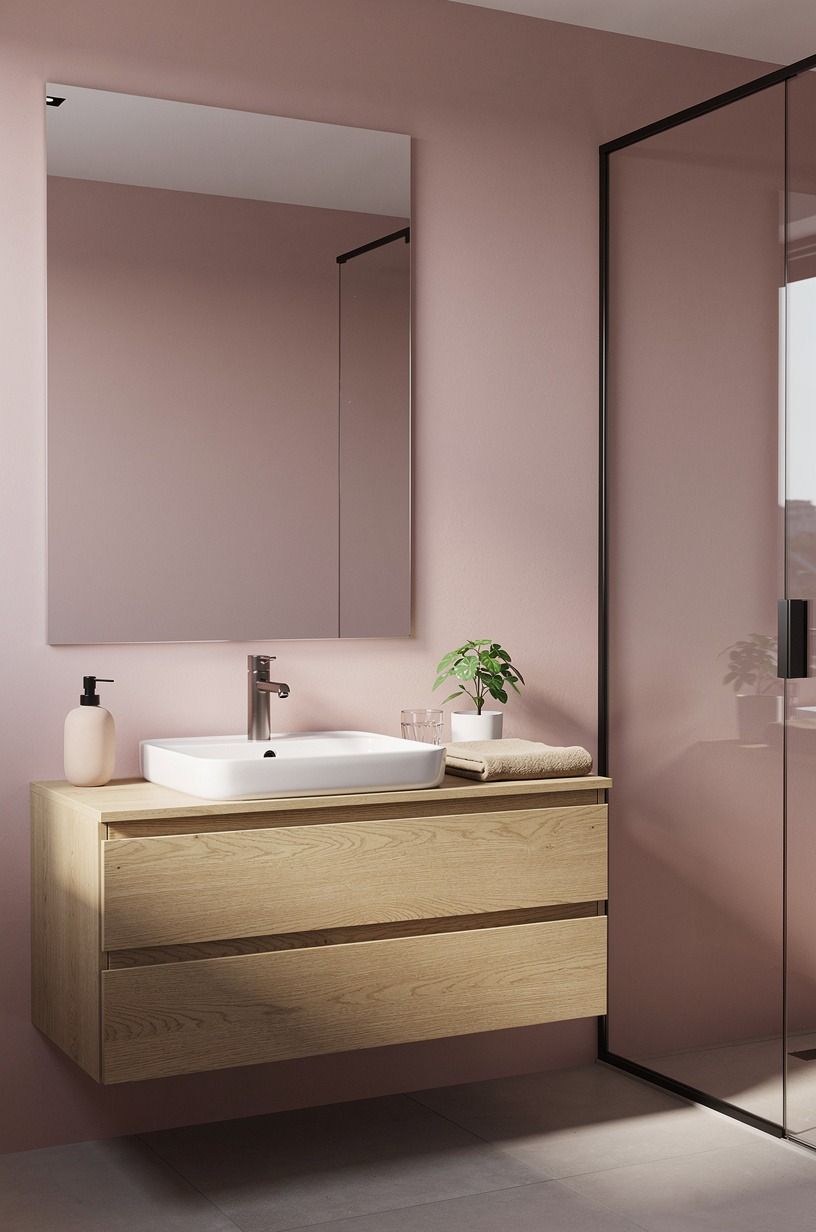
Set your budget before you order tile, because warm travertine can pull you toward upgrades quickly. The typical US ranges below cover broad bathroom work, not a promise for your exact room. Your labor, layout, plumbing, and local availability will change the final figure.
You’ll get the most visual return from paint, lighting, and a mirror when your budget is under $1,200. I’d delay a full re-tile rather than buy cheap stone for every surface, because poor installation will show at every grout line.
For comparison, zellige tile often lands around $15-$35 per square foot, while subway tile can sit around $2-$10. Your first decision should be the scope, not the faucet!
17Protect the stone with the right maintenance plan
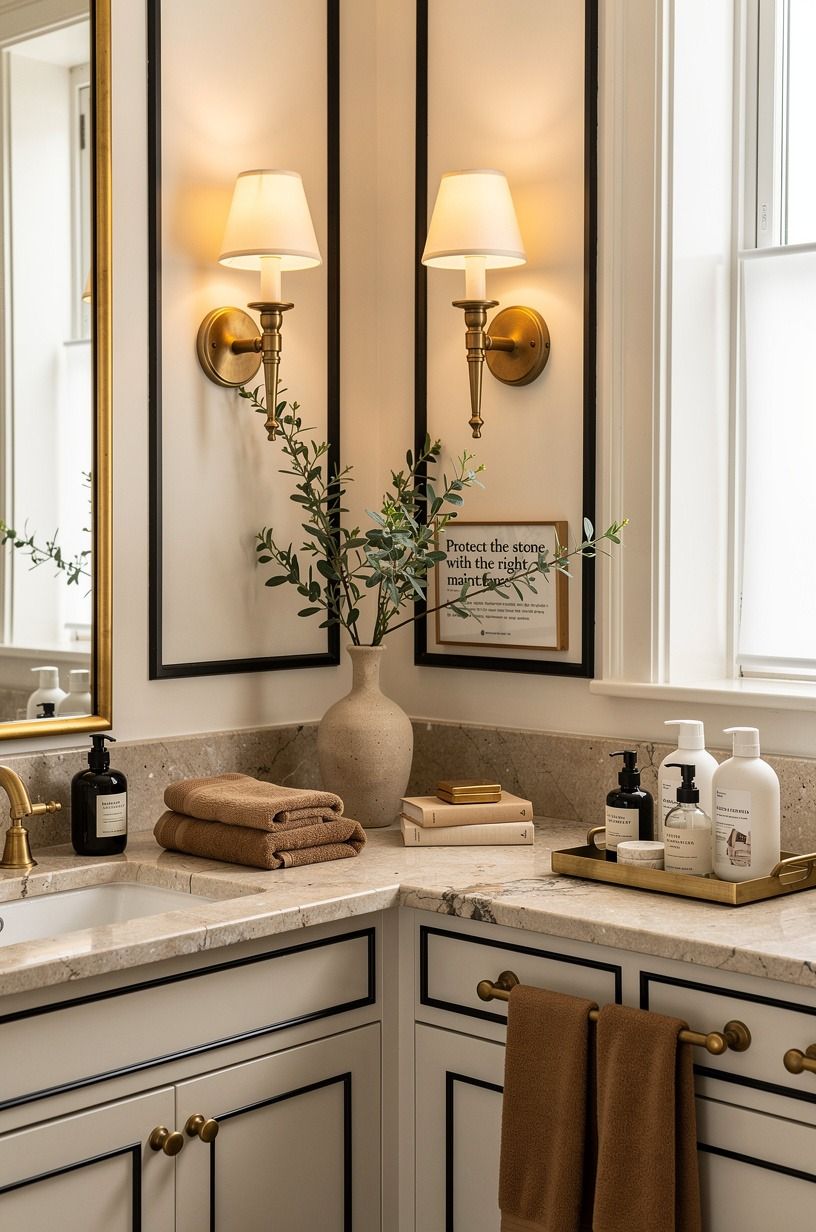
Protect the stone before the first bottle of shampoo lands on it. Grey travertine has natural pores and pits, while unlacquered brass will develop its own patina over time.
Your installer should use a sealer suited to the specific finish and follow the manufacturer’s cure time. Cleaners should be stone-safe and non-acidic, because harsh products can dull the surface.
I’d keep a small daily squeegee in the shower rather than relying on a heroic weekend scrub. You’ll prevent mineral buildup before it settles into the texture, and your stone will keep its soft variation longer.
Avoid lemon-based cleaners, vinegar, and abrasive powders. If you’re worried about maintenance, choose travertine for the vanity wall or floor and use porcelain in the shower, where constant water creates more work.
18Keep clearances comfortable around the toilet
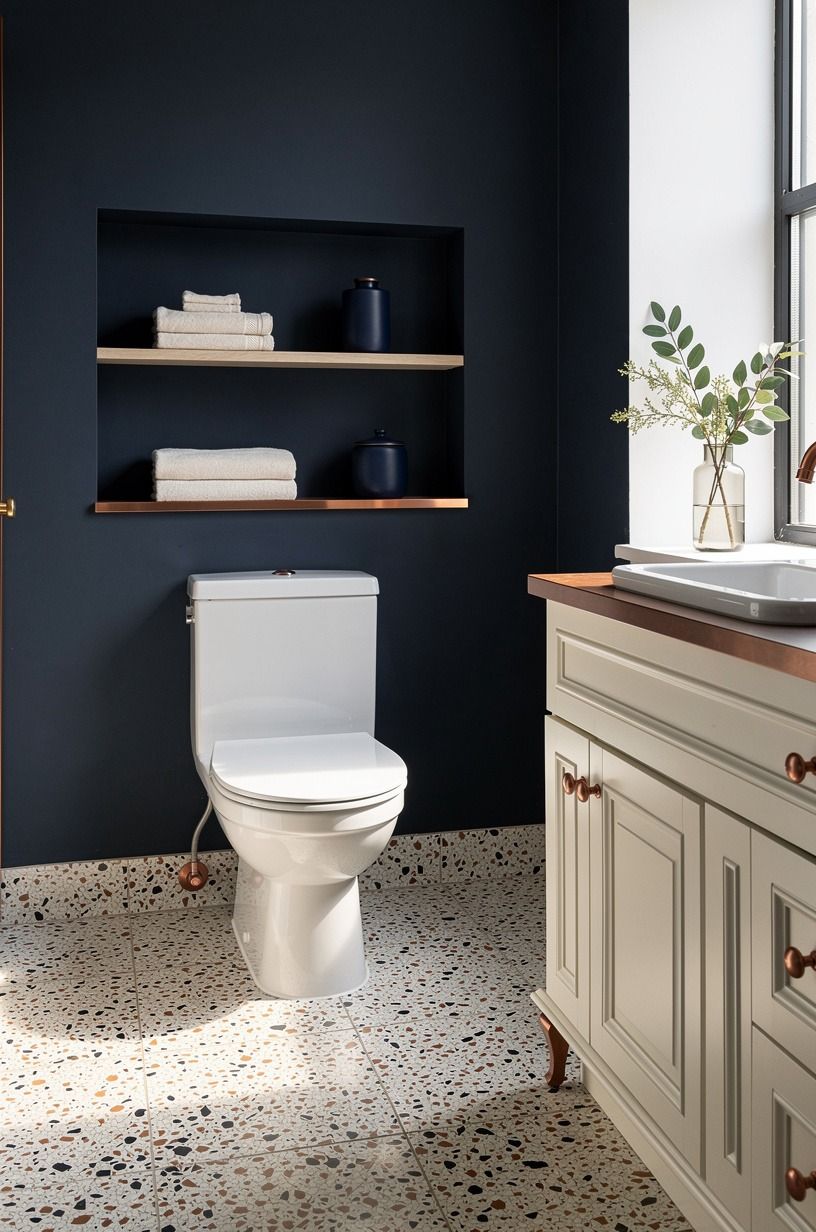
Keep your toilet clearance generous, even if that means choosing a narrower cabinet.
19Finish with one edited styling moment
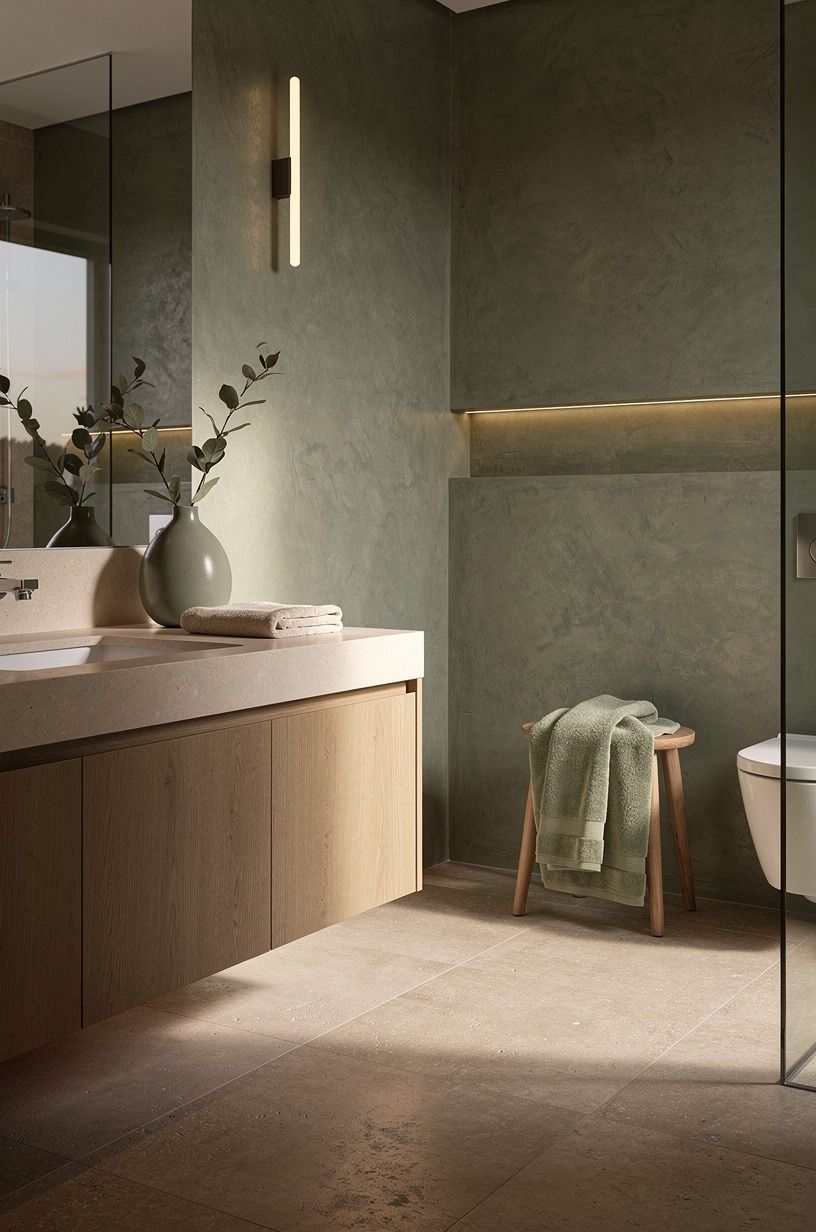
Finish with one edited styling moment, not a collection of small purchases. A stone tray, folded towel, ceramic cup, and one low branch are enough for the vanity. Hand-applied Venetian plaster can add a soft surface behind the vanity, but don’t force extra upholstery into a splash zone.
You’ll know the room is finished when you can remove one object and the composition improves. I’d choose a framed print or handmade ceramic over a matching accessory set, because slight irregularity keeps the room lived-in.
If you want a warmer color reference, browse these red travertine bathroom ideas and notice how much restraint makes the richer stone work. Stop before your bathroom starts explaining itself.
The Rule I’d Keep After Designing This Room
Grey travertine works because it carries several temperatures at once. It can look cool beside white, sandy beside oak, and almost lavender beside certain bulbs.
That shifting quality is why I wouldn’t force it into an all-grey scheme. Your room needs a warm counterpoint, even if that counterpoint is only a wood drawer front, a linen curtain, or a brass sconce.
I’ve made the common mistake of choosing the pretty surface first and solving the lighting later. The stone looked gentle in daylight, then every pore turned sharp under one overhead fixture.
I also once chose a dark grout because I thought it would make cleaning easier. It did, but the grid became the main event.
Your eye went straight to the lines instead of the stone.
My better order is simple: choose the travertine, test the paint beside it, map the lights, then select hardware and textiles. You’re building a sequence, not collecting finishes. A soft contemporary bathroom needs contrast, but the contrast should arrive in layers.
Warm wood first. Metal second. Color last.
Would I use grey travertine in a tiny bathroom? Yes, but I’d use it on one strong plane and keep the rest quiet.
A full stone wrap can feel luxurious, yet it can also make your small room feel visually dense. For a gentler alternative, compare the dusty blue bathroom look and notice how a single muted color can do the work of several accessories.
The most convincing rooms aren’t the ones with the most expensive materials. They’re the ones where every finish has a job.
Your vanity adds warmth, your lighting softens the pitting, your paint supports the undertone, and your storage keeps the counter clear. That’s why I’d spend first on the stone sample, the light plan, and the installation. Everything else can be edited later.
A Few Things Worth Answering
What is the best grey travertine bathroom idea for a small bathroom?
A floating vanity and light grey travertine shower wall are strong choices because they expose floor area and bounce soft light. IKEA TONSTAD can inspire the warm wood direction, but your cabinet must be bathroom-rated. Keep one wall painted and choose a mirror that reaches close to the vanity width.
Where can I buy grey travertine bathroom pieces on a budget?
Look at IKEA, Wayfair, and Target for vanities, mirrors, and towels, then check Facebook Marketplace or local thrift shops for solid wood stools. You don’t need every piece new. A used wood frame or ceramic tray can give your bathroom more character for less money.
How much does a grey travertine bathroom makeover cost?
A cosmetic update typically falls within the $200-$1,200 budget range for paint, a mirror, a faucet, and textiles. A mid-range project with a new vanity, partial wall tile, and lighting can reach $3,000-$9,000. Your existing plumbing and labor needs will decide the final cost.
Can I create a grey travertine bathroom on a budget?
Yes, and you can start with paint, lighting, and textiles before replacing tile. Test Sherwin-Williams Sea Salt SW 6204, change one light fixture, and use second-hand wood storage. If you’re staying below $1,200, keep the plumbing where it is and spend on the surfaces you see most.
Is a grey travertine bathroom worth it in a small space?
Yes, because a restrained stone palette can make a small bathroom feel calm instead of crowded. Use one large-format surface, a floating vanity, and a mirror with minimal framing. You’ll get more visual space when your grout lines, hardware, and accessories aren’t competing for attention.
Is grey travertine a good idea for a rental?
It can be, if you treat the stone look as a styling direction rather than a demolition project. Use removable wallpaper, a tension-mounted textile, renter-safe sconces, and a freestanding wood cabinet. Don’t attach heavy shelves without permission, and protect your existing counter from moisture.
Where I’d Start First
If I had to pick one step, I’d start with the stone sample. Grey travertine changes under every bulb, and your paint can’t rescue the wrong undertone.
Pin the sample plan for later, then test it beside your vanity before you buy anything else. Your whole room will make more sense.