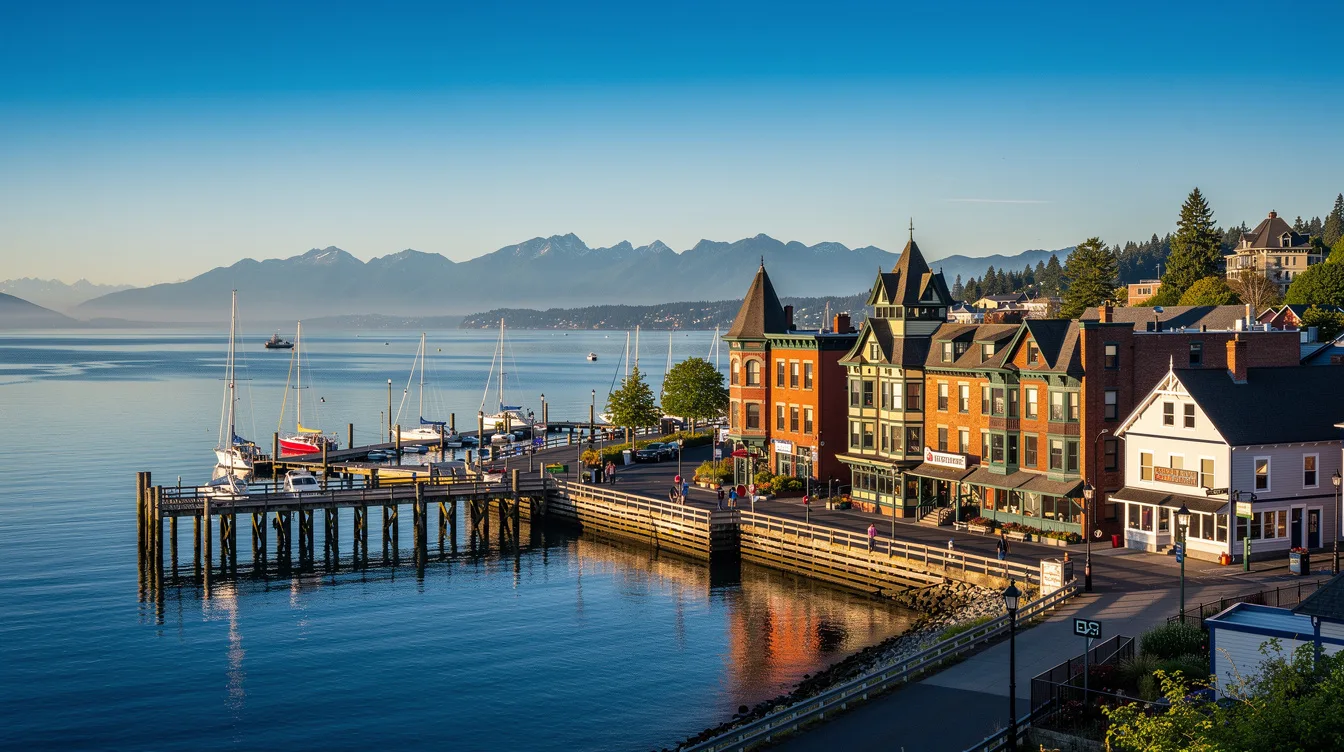
At 111.8 miles from Seattle, Port Townsend feels far enough away to have kept its own rhythm. Its historic district became a National Historic Landmark in 1977, preserving an exceptional collection of Victorian buildings from the late 19th century. The town was founded in 1851, and its old waterfront still looks ready for a busier future.
That stalled future is the reason Port Townsend remains so compelling. Railroad plans favored Seattle and cities farther south, slowing growth just as local builders were putting up ornate homes and commercial blocks. You can still see the result in a port town that’s polished, lived-in, and never quite swallowed by modern development.
How Port Townsend kept its Victorian character
But the historic district isn’t a single preserved street with a few decorative facades. Along Water Street, brick buildings hold independent shops, galleries, cafes, and restaurants, while larger Victorian homes rise above the harbor. The old port gives the district a working edge, so your walk feels more like a town outing than a museum visit.
And the town’s decline was unexpectedly protective. When investment and rail connections moved elsewhere, fewer historic buildings were demolished or built over. For anyone planning a Washington trip around architecture, this is my favorite kind of history: visible from the sidewalk and still useful to the people who live there.
Water Street is only half the story
But you should walk uphill into Uptown before deciding you’ve seen Port Townsend. The residential district sits on bluffs above the harbor, where large Victorian houses and quieter streets replace the shop windows below. The change takes minutes, yet the mood shifts completely.
Can you see Port Townsend in a weekend?
Yes, and two to three days gives you time to slow down. You can browse downtown, follow the waterfront, visit the maritime center, and leave room for galleries or a long cafe stop. I wouldn’t rush it into a day trip, because the town’s best quality appears after the first checklist is finished.
And the views keep pulling you back toward the water. Port Townsend faces the Strait of Juan de Fuca near Puget Sound, with a marina, ferry departures, and working maritime traditions close to downtown. The town is photogenic, but it isn’t only scenery, which makes the visit feel more substantial.
Fort Worden adds a different kind of history
Beyond downtown, Fort Worden gives the visit a broader scale. The former coastal military site covers more than 400 acres and includes bunkers, historic buildings, a lighthouse, beaches, trails, and cultural activities. You can spend a few hours there without repeating the same view.
And the park changes Port Townsend’s pace. After the close brick walls of Water Street, you get open shoreline, wooded paths, and the sound of wind moving across the water. Visit the state park when you want the town’s history to feel physical rather than decorative.
How should you reach Port Townsend from Seattle?
Port Townsend is about 111.8 miles from Seattle by road, at the northeastern end of the Olympic Peninsula in Jefferson County. But the mileage understates the trip, because traffic, weather, and ferry crossings can alter the timing. You can drive through the Kitsap Peninsula and along Hood Canal.
And you can choose a ferry route toward Whidbey Island, then continue to town through the Coupeville and Keystone connection. Check schedules before leaving, especially when your plans depend on a crossing. My advice is to treat the journey as part of the getaway, not as a quick commute from Seattle.
Summer brings the town outdoors
Summer is the easiest season to settle into Port Townsend. The weather is generally warm and dry, and cultural events fill the calendar with music, film, maritime traditions, and arts programming. You can move between the waterfront and Fort Worden’s open grounds without building the entire day around a single attraction.
But this isn’t a hot-water beach destination, and the town isn’t trying to be a city. It suits travelers who want Victorian architecture, coastal walks, independent businesses, and a creative community in a calmer setting. By evening, the harbor darkens below the old buildings, and the water takes back the last word.