
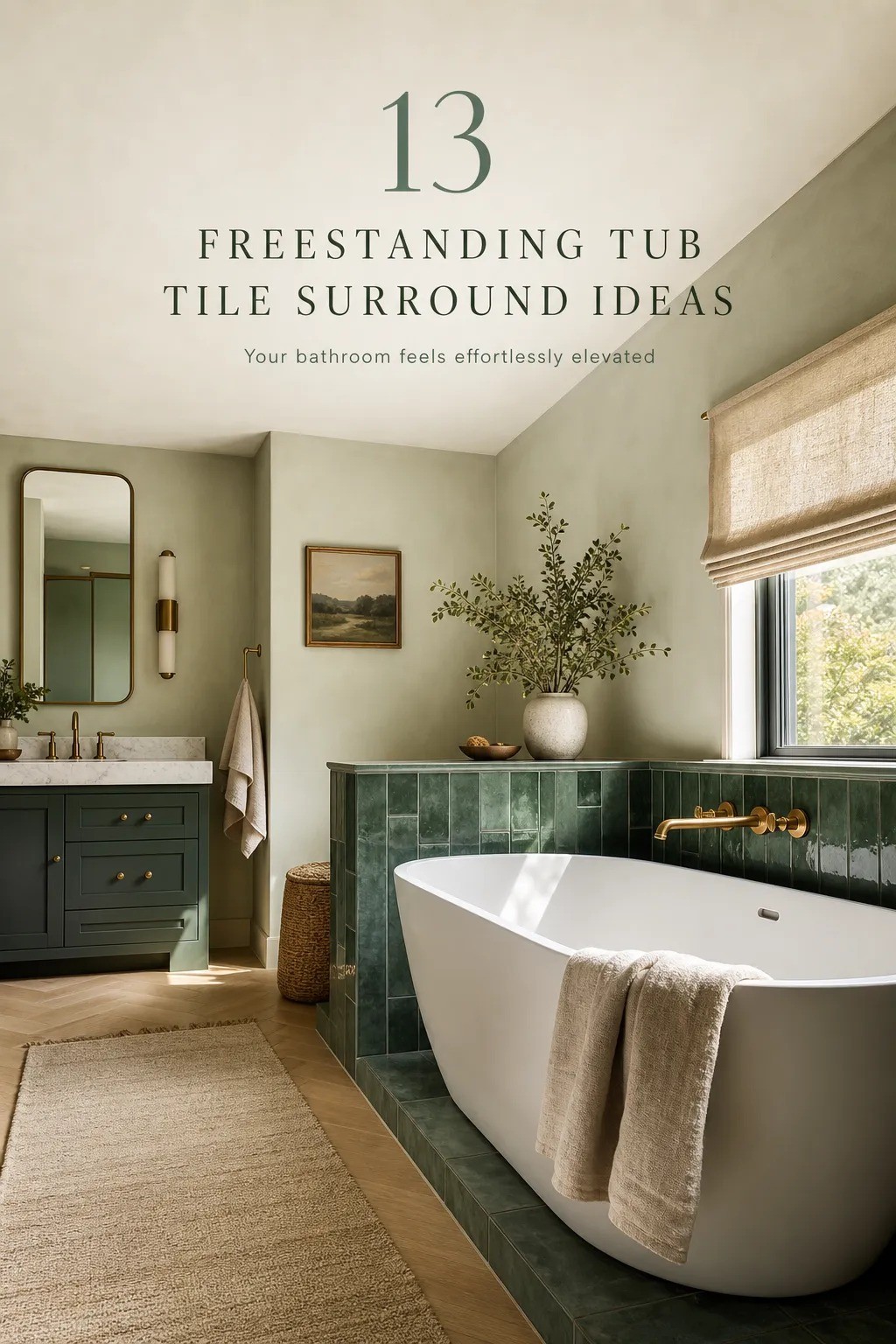
Freestanding tub tile surround ideas work best when you treat the tub zone like a small architectural room, not a bathtub parked against a wall. I learned that after living with a 60×30 in tub that looked oddly temporary for months. The right tile, clearance, and lighting fix it fast!
- Start by mapping your freestanding tub tile surround footprint
- Anchor the tile surround freestanding tub with one quiet wall
- Build the Two-Plane Rule around the tub
- Choose scale before choosing a color
- Let the grout frame your freestanding tub surround
- Use the Three-Height Light Stack near the tub
- Can a tiled ledge make the tub look more custom?
- Mix matte tile with one reflective detail
- Frame the tub with a warm paint color beyond the tile
- Float a rug zone outside the wet area
- Skip a full tile wrap and create a deliberate stop line
- Add a shower connection that doesn’t crowd the tub
- Finish with objects that earn their place
1Start by mapping your freestanding tub tile surround footprint
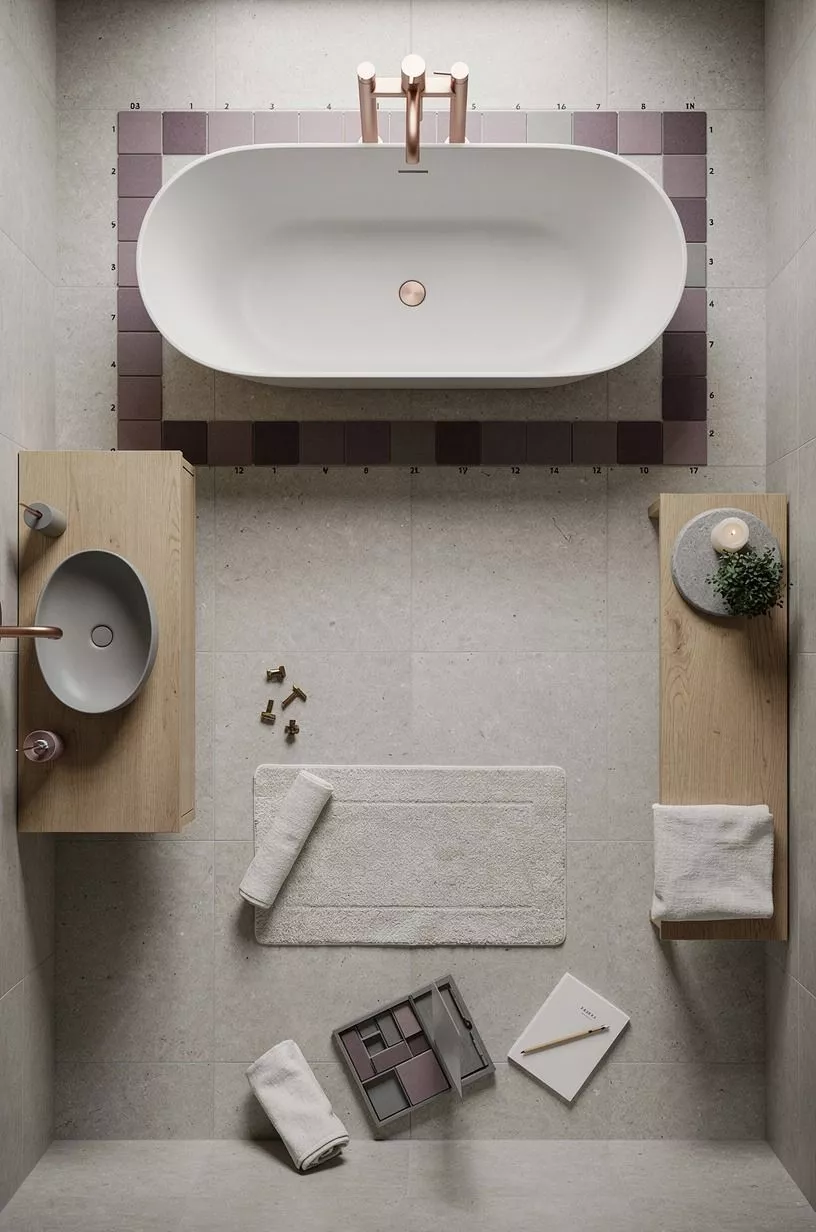
Measure your tub before you fall for a tile pattern. You need enough breathing room for the tub to read as intentional, while keeping the 21 in minimum clearance in front of the toilet clear. A standard 60×30 in tub can look generous in a compact bath if you let the floor around it stay visible.
I’d sketch the tub, vanity, and door swing on painter’s tape first. It isn’t glamorous, but you’ll spot the awkward squeeze before you buy plum and rose-gold tile. For more small-room planning, see this guide on fitting a freestanding tub in a small bathroom.
2Anchor the tile surround freestanding tub with one quiet wall
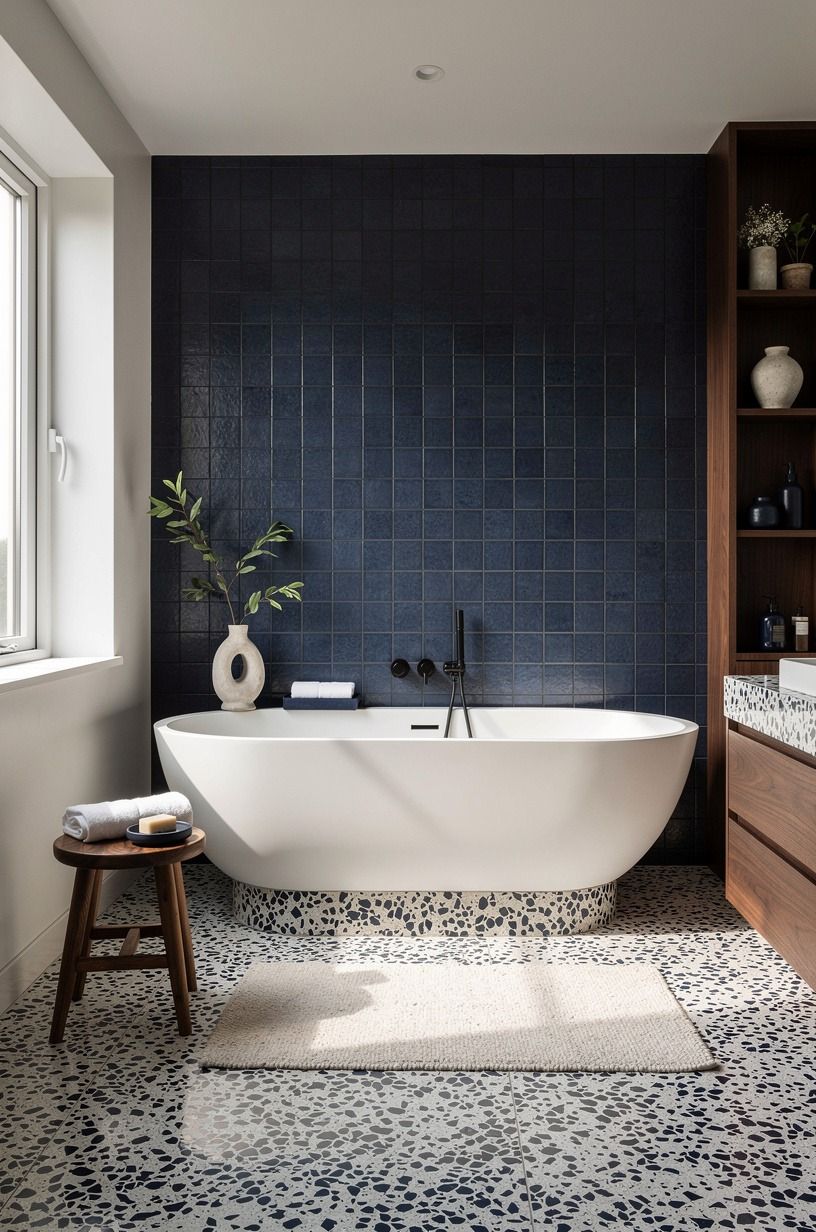
Choose one wall for your main tile field, then let it carry the visual weight.
3Build the Two-Plane Rule around the tub
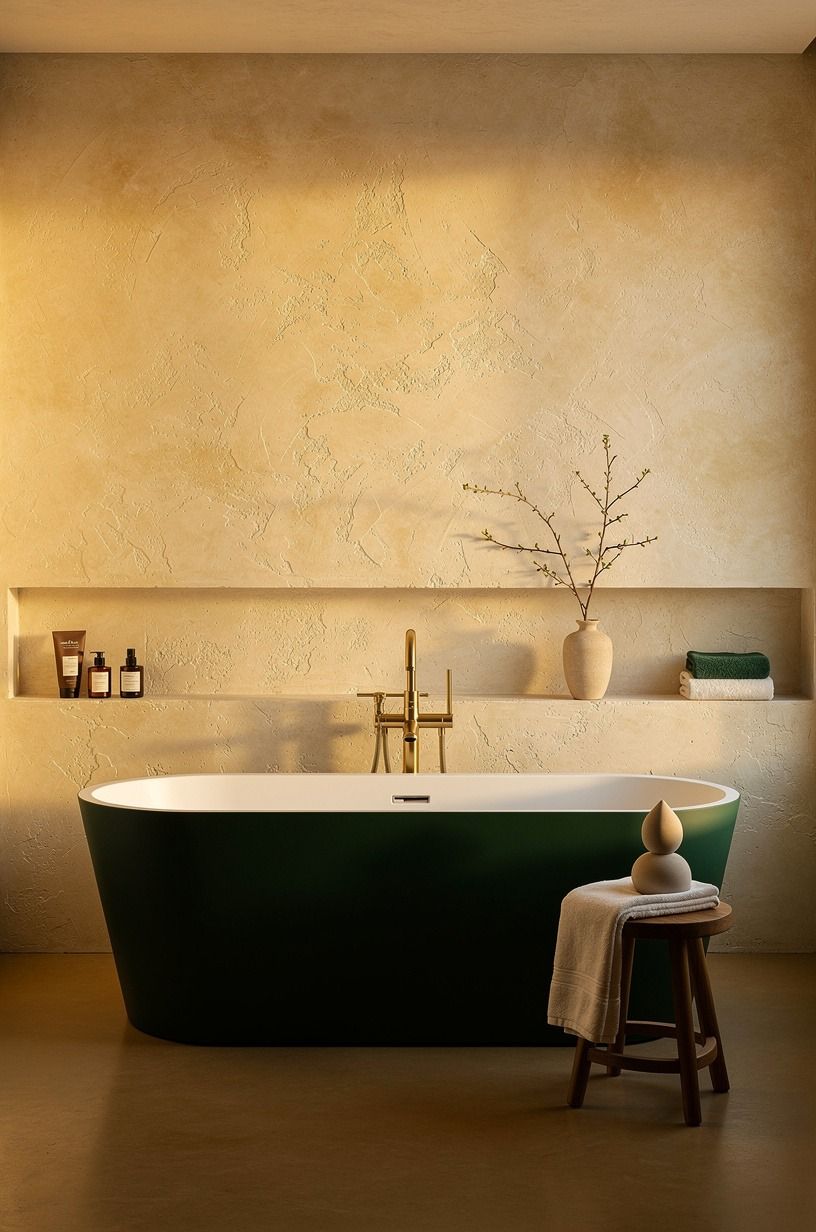
The Two-Plane Rule is simple: one tiled vertical surface and one grounded horizontal surface. Your wall tile can meet a tiled plinth, a tiled ledge, or the same floor tile beneath the tub. That repeated finish makes your freestanding tub with tile surround feel built in.
Use Venetian plaster in emerald and cream if you want a calm, elevated route. Typical material costs run $2-$10 per sq ft for basic tile, which leaves room in your budget for better lighting.
And please don’t run a tiny tile border around every edge. It reads like an afterthought.
4Choose scale before choosing a color
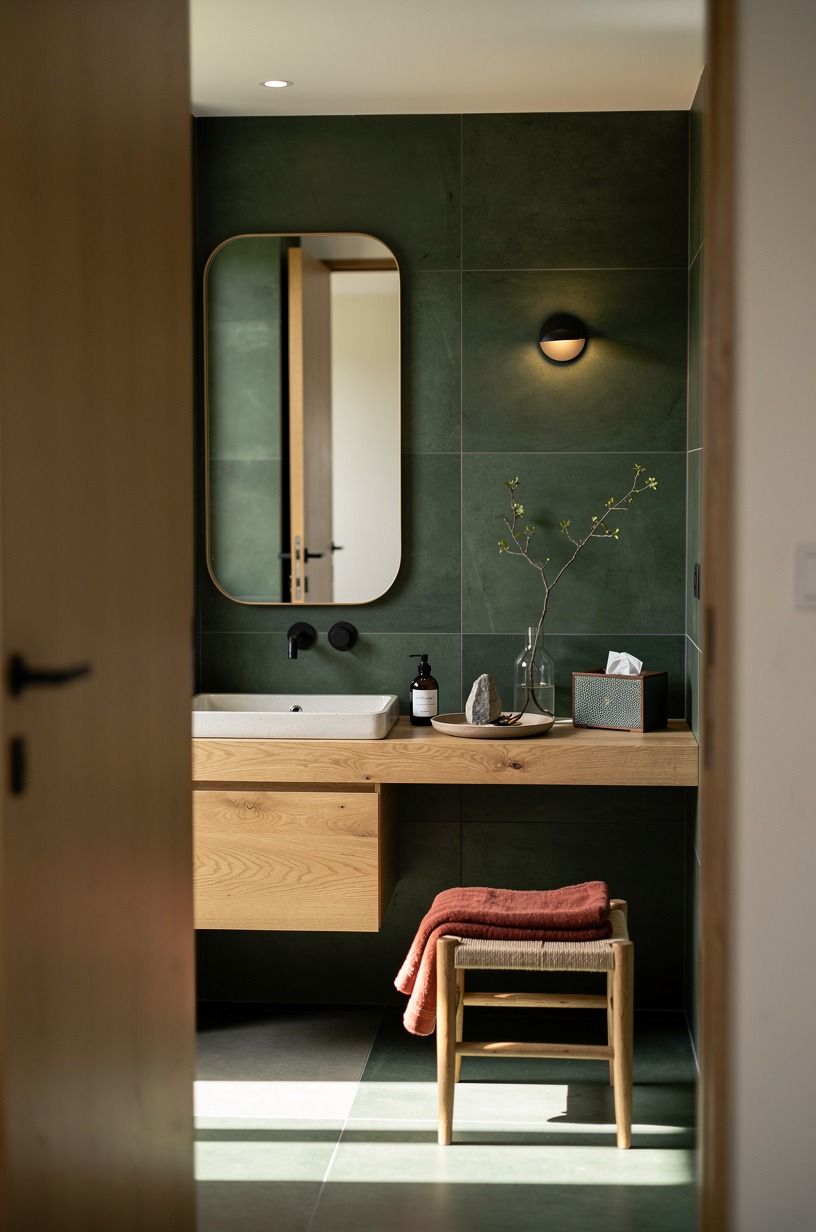
Large-format tile gives your tub surround fewer grout lines, which means your eye gets a cleaner, more peaceful view.
5Let the grout frame your freestanding tub surround
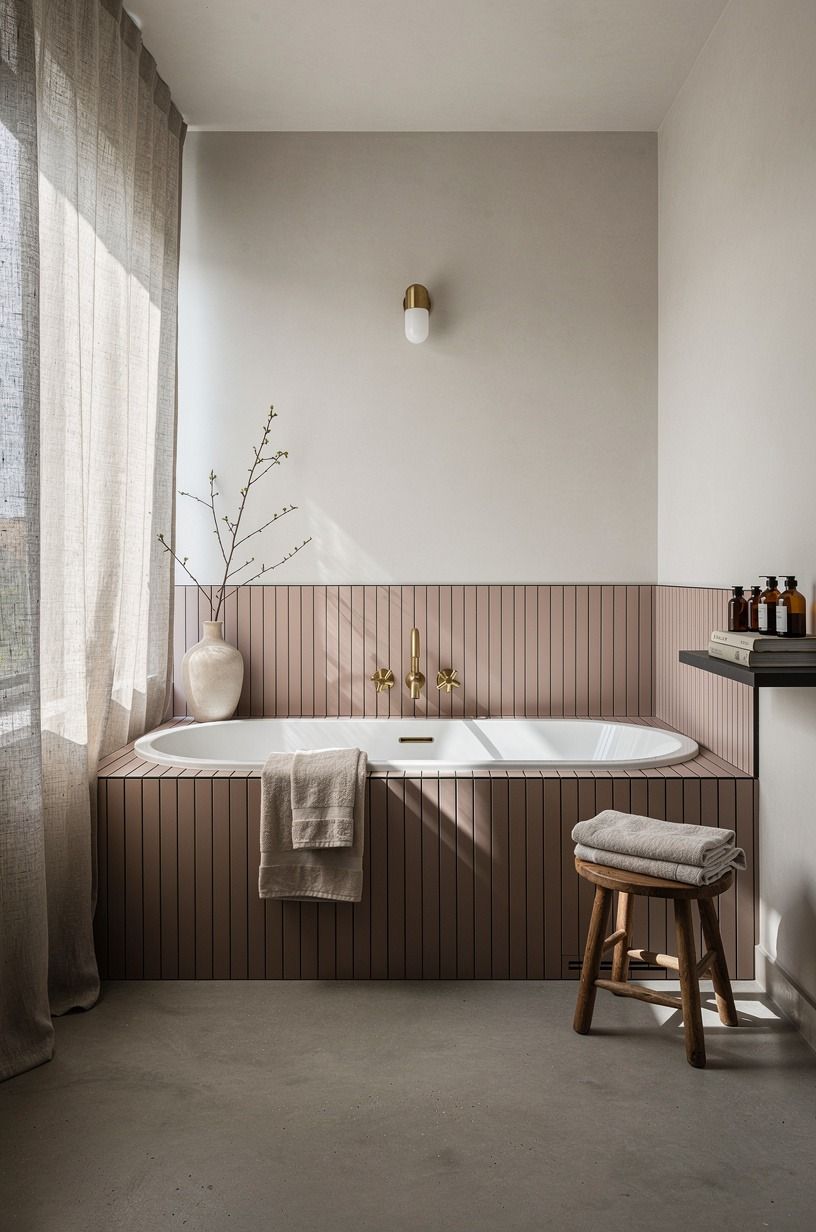
Grout can either disappear or draw the whole composition together. Match it closely to the tile when you want an airy, uninterrupted field. Choose a slightly darker grout when you want the shape of the tile to show, especially beside a white tub.
A soft charcoal grout beside dusty rose tile and brass feels elegant without looking sterile. You’ll want sample boards in the room, because bathroom light changes more than you think. Morning light can make warm white grout look yellow, while evening bulbs pull it back toward cream.
6Use the Three-Height Light Stack near the tub
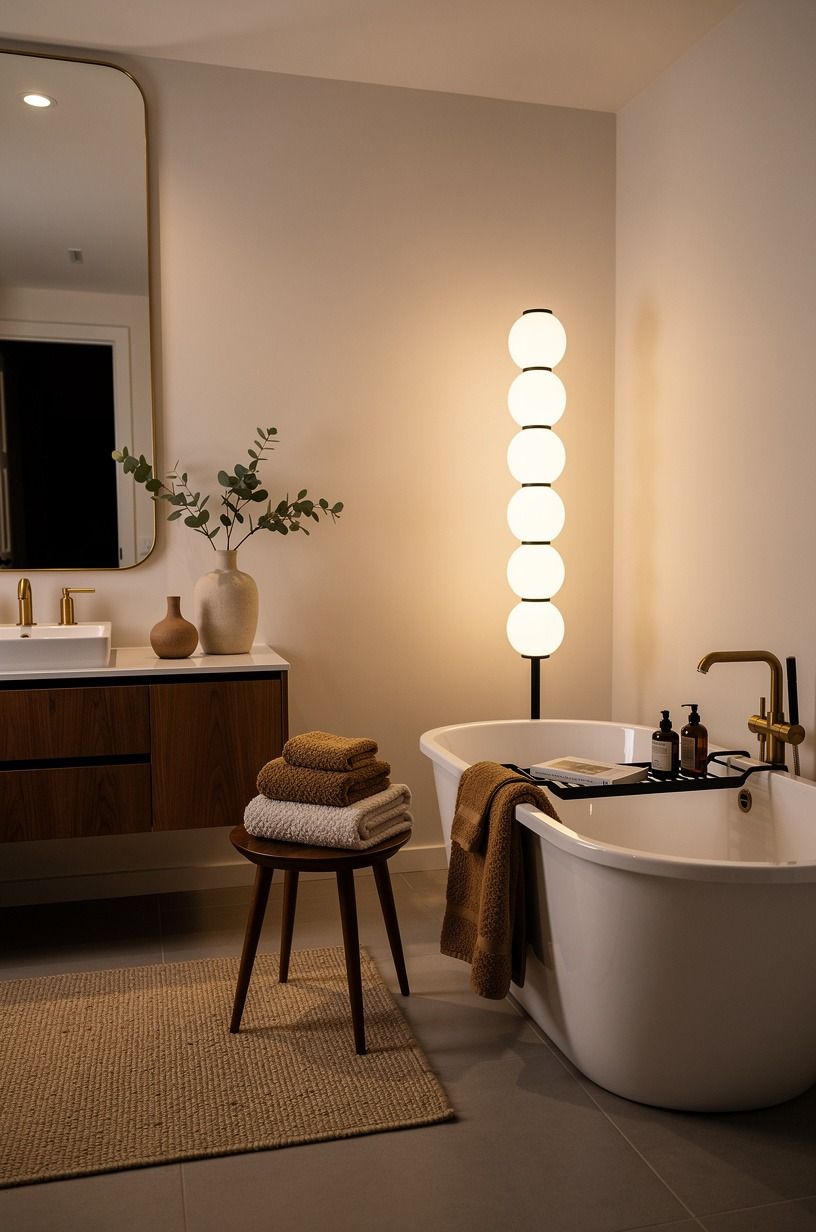
The Three-Height Light Stack gives your tub zone a ceiling light, eye-level wall light, and low glow near the floor or vanity. You don’t need all three blazing at once. You need options, because a bath at 7 a.m. and a bath at 10 p.m. shouldn’t feel the same.
Try a ceiling fixture, two black-accented sconces, and a small lamp on a nearby ledge. The lamp throws a soft pool of light that stops at the bath mat’s edge.
That tiny detail makes your tile surround feel intimate instead of showroom-bright. See how measured lighting changes a room in the 36-inch sconce rule.
7Can a tiled ledge make the tub look more custom?
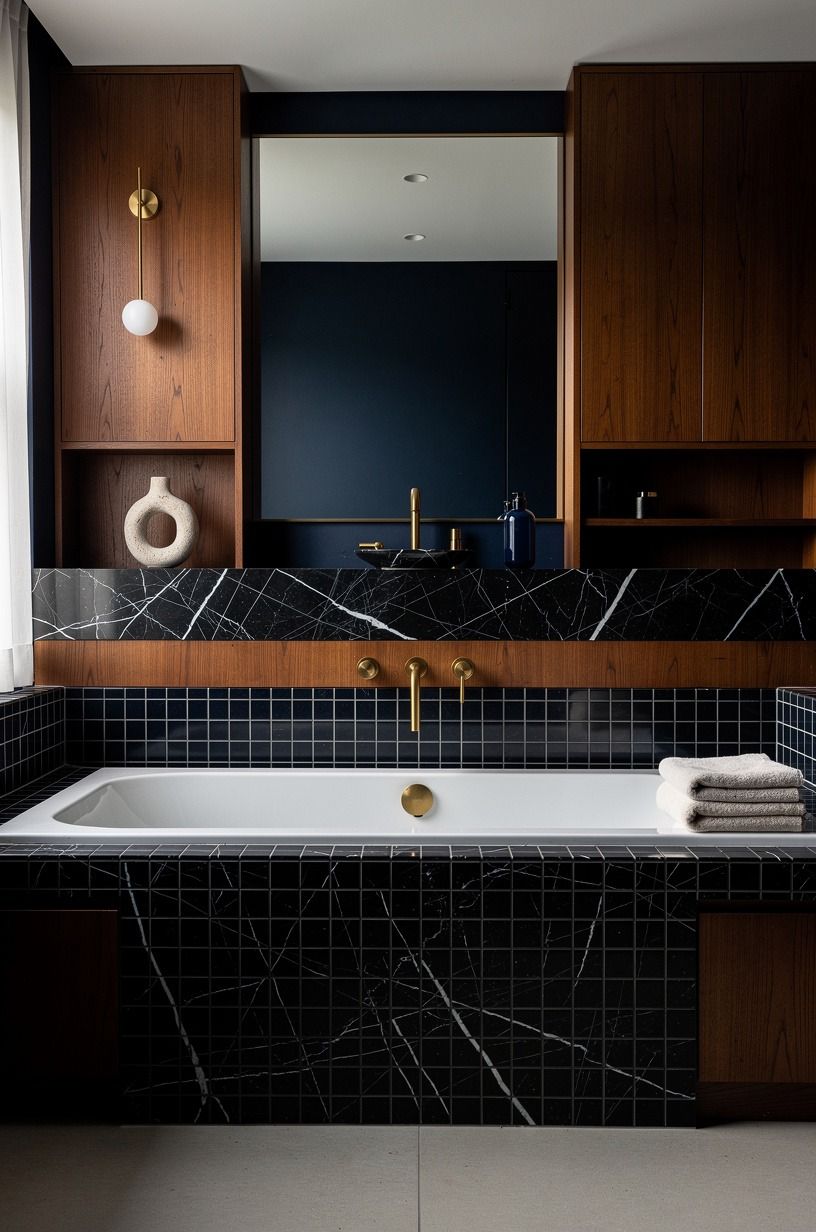
Yes, a tiled ledge is one of the cleanest ways to make a freestanding tub look planned from day one.
8Mix matte tile with one reflective detail
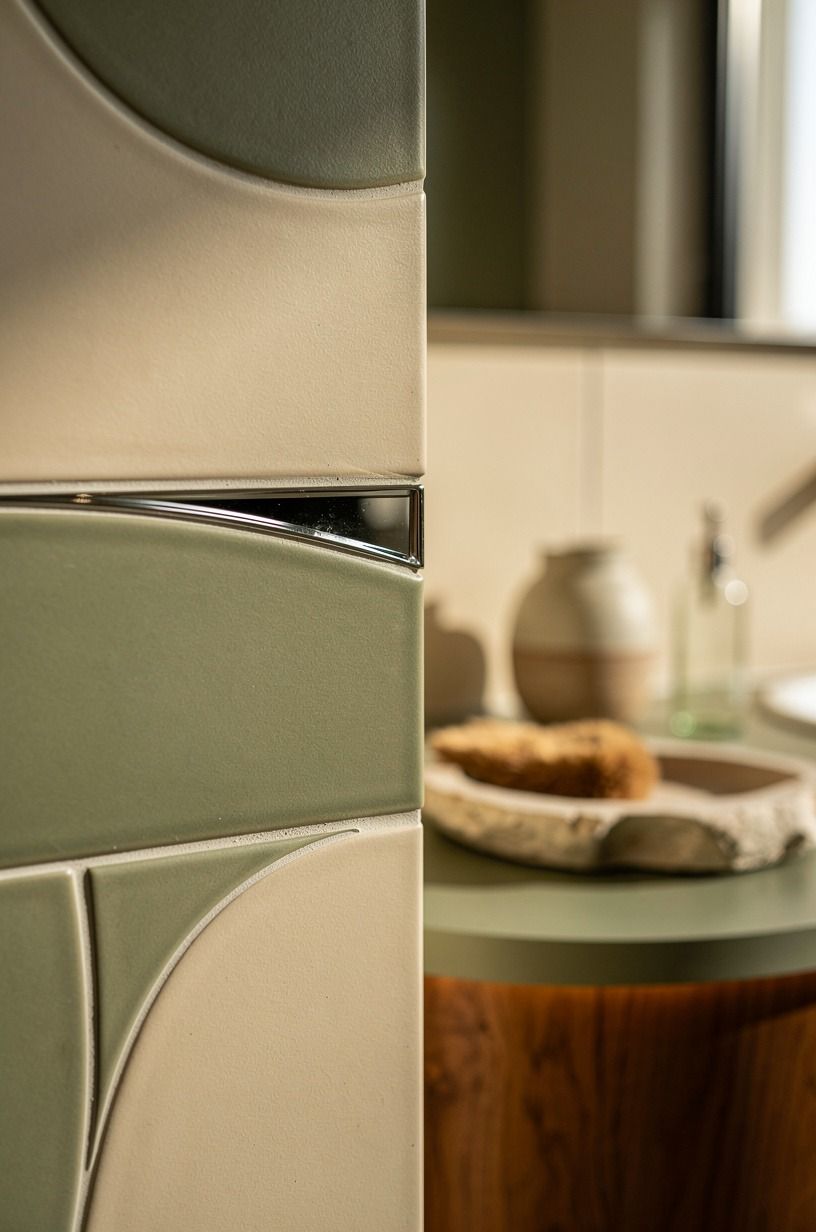
Matte tile absorbs light in a soft way, which is why it works so well around a soaking tub. Add one reflective counterpoint so the area doesn’t go flat. Your faucet, mirror edge, or sconce backplate can do the job.
Brushed brass faucet hardware costs about $120-$450, depending on the style and valve requirements. I’d avoid polished chrome beside sage tile, warm cream, and natural wood unless your whole bathroom is crisp and tailored. Brass catches candlelight with a gentle glow, while chrome can feel a little clinical.
9Frame the tub with a warm paint color beyond the tile
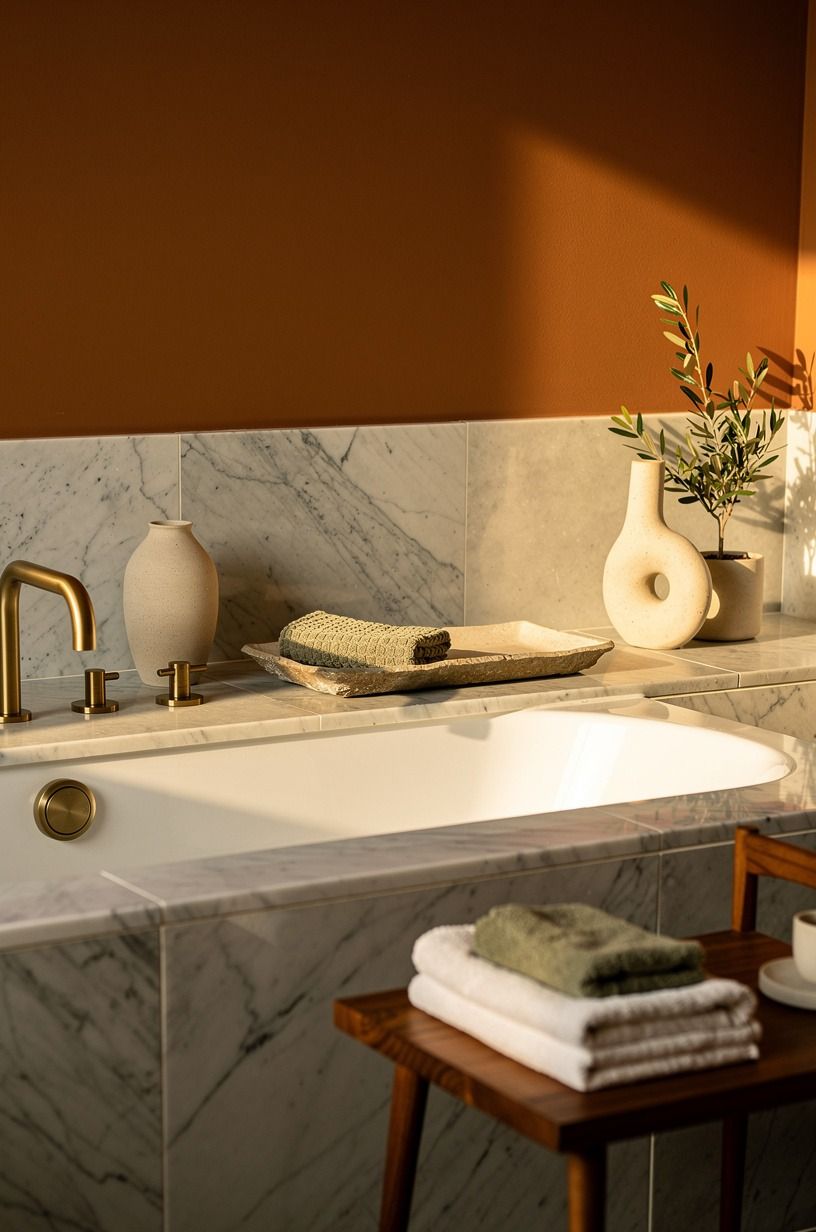
Tile doesn’t have to cover every inch of wall. Paint the upper wall or side walls to give the surround a more lived-in finish. Benjamin Moore Chestertown Buff HC-9 is a strong choice when your tile leans terracotta, stone, or olive.
You can keep your tile area bright while making the rest of the room feel grounded. But don’t choose a cool gray just because it’s safe.
Gray beside creamy tile often turns the whole bathroom dull by late afternoon. Warm buff makes the white tub look cleaner, oddly enough.
10Float a rug zone outside the wet area
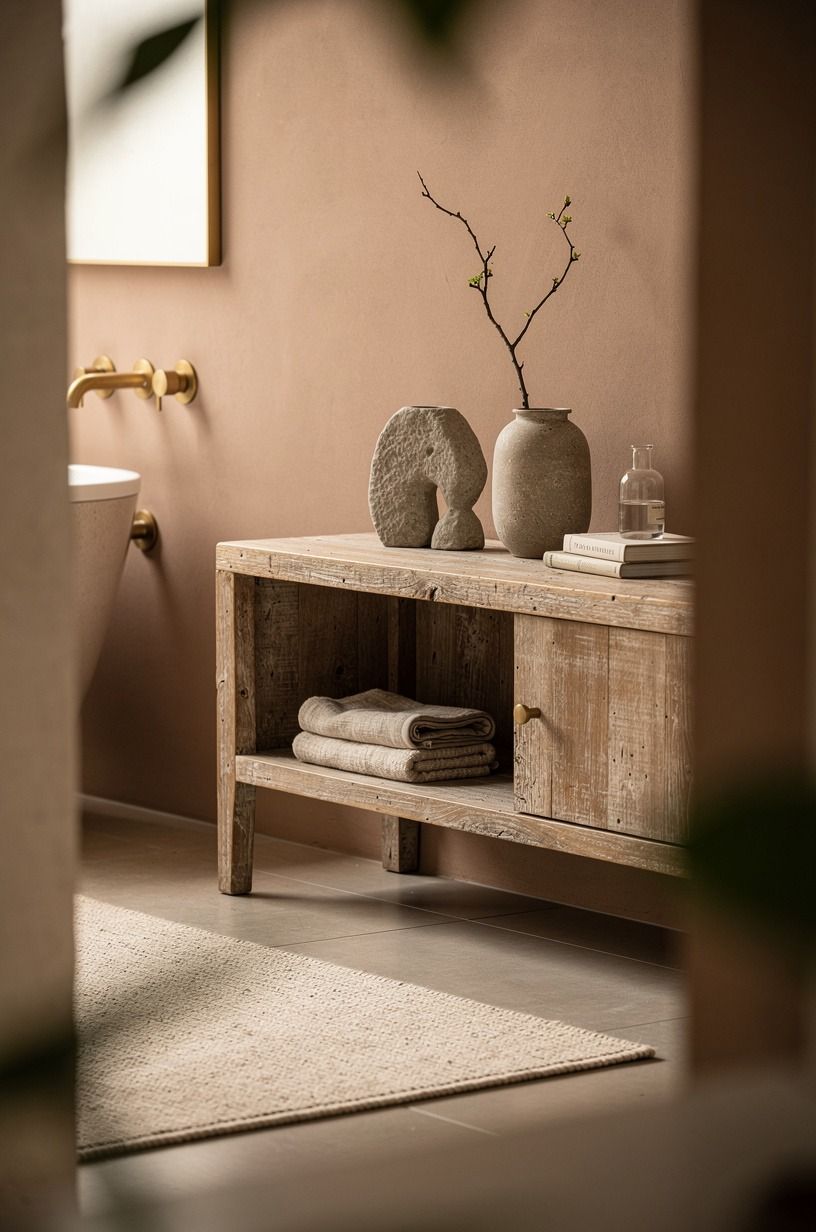
A bath rug should sit outside the splash path, not hug the tub like wall-to-wall carpet.
11Skip a full tile wrap and create a deliberate stop line
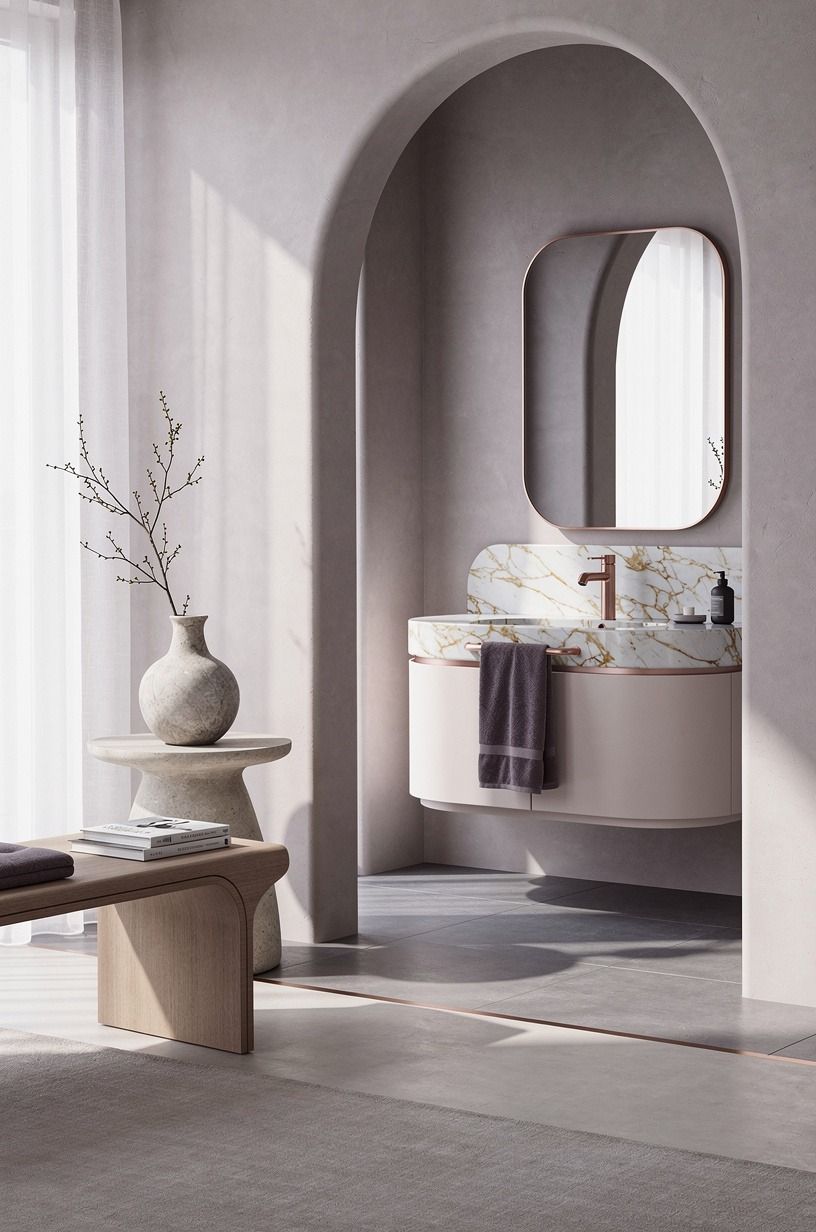
A tile surround doesn’t need to become a tile box. Stop the field at a window line, at the edge of a niche, or about two-thirds up the wall if your ceiling is tall. Your stop line should connect to something real, never float randomly above the faucet.
Use Sherwin-Williams Sea Salt SW 6204 above pale green or white tile for a calming finish. I made the mistake of ending tile at an arbitrary height once.
It looked like we ran out of material, because visually, we had. A clean architectural edge changes everything.
12Add a shower connection that doesn’t crowd the tub
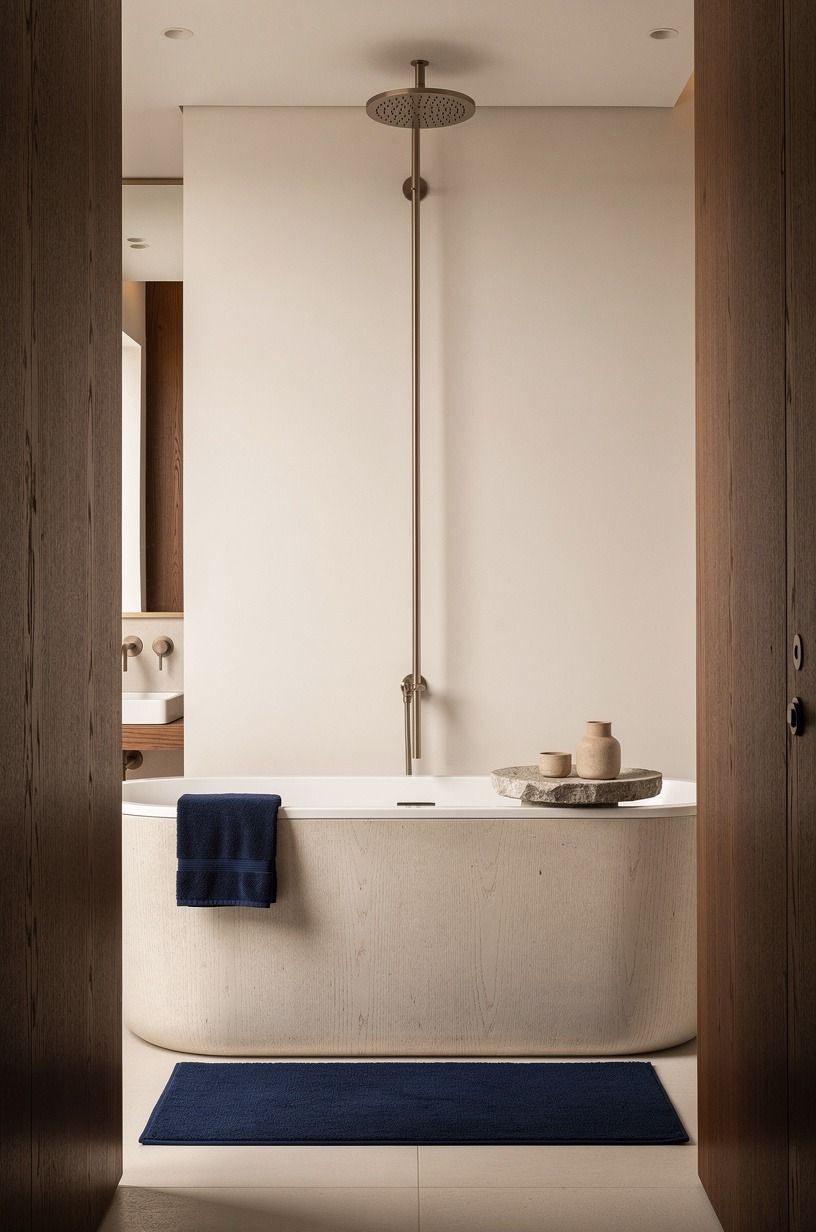
If your freestanding tub shares a room with a shower, make the tile story continuous without forcing the fixtures to match exactly.
13Finish with objects that earn their place
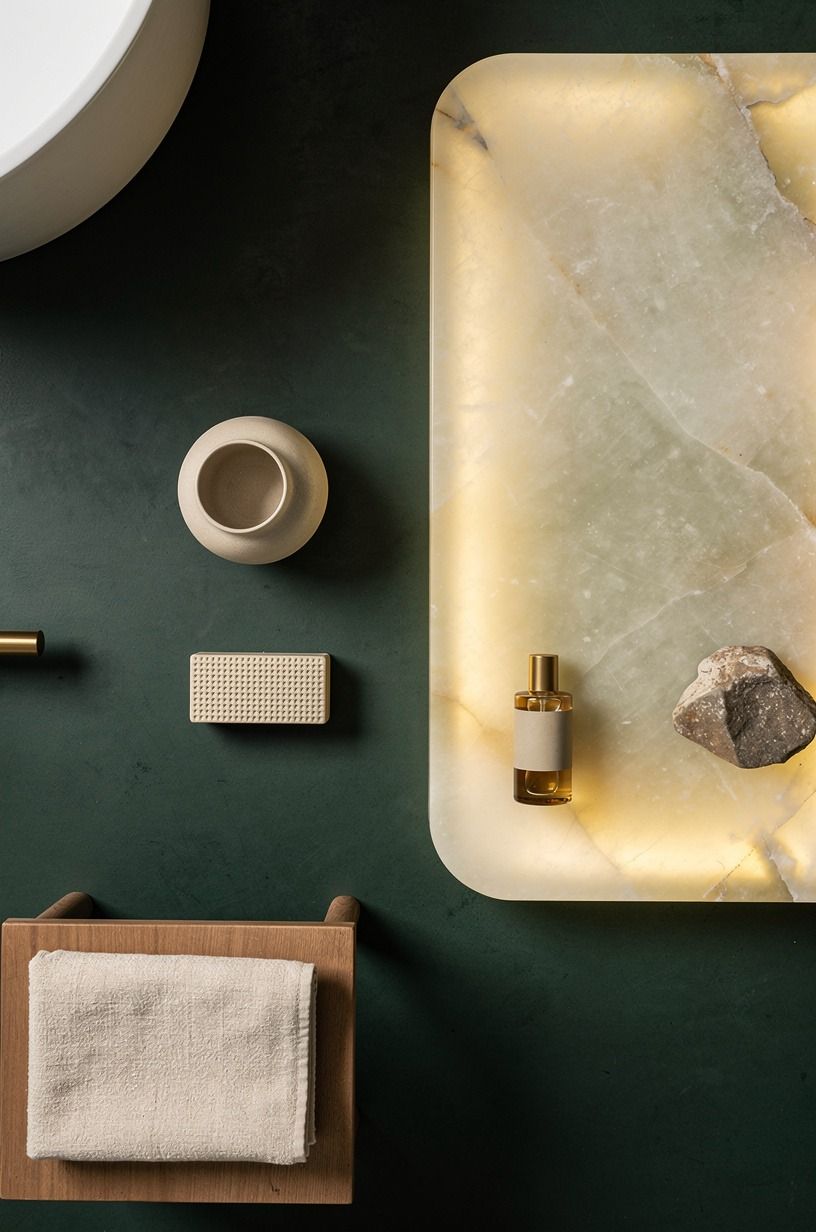
Your last layer should be useful, not staged within an inch of its life. One tray.
One towel stack. One vessel for bath salts.
The tub zone needs room to breathe, and you’ll enjoy it more when you aren’t moving seven objects before every bath.
A translucent onyx vessel in emerald, gold, and cream adds texture against glossy tile without introducing another hard surface. And keep the tray low and simple (a book can get damp, no matter how photogenic it looks).
I’d skip faux plants on the tub ledge. They collect dust and make a lovely room feel fake.
What the materials and bathroom tiers typically cost
Your budget should follow the work that affects permanence first: plumbing, waterproofing, tile installation, then decorative layers. A faucet can wait. Bad prep behind a tiled wall can’t.
For material planning, zellige tile typically runs $15-$35 per sq ft, while a marble top often lands around $50-$100 per sq ft. You can spend less on a plain tile and more on installation. That’s usually the smarter call.
Why I think the surround matters more than the tub itself
I’ve gone back and forth on this because freestanding tubs are easy to romanticize. You see one in a photo, framed by a wide window and a perfect little stool, and suddenly it seems like the whole bathroom should orbit that one object.
But a tub alone isn’t what makes the room feel special. A tub sitting on bare floor with no visual anchor can look expensive and still feel unfinished.
The surround gives the tub a reason to be there. It gives your eye a place to land while you’re brushing your teeth, folding towels, or standing in the doorway wondering whether the room feels done.
That matters more than people admit. I’d rather have a standard white tub against a thoughtful tile wall than a sculptural tub floating in a bland box.
My biggest mistake was assuming more tile meant more luxury. It doesn’t.
More tile can mean more grout, more competing edges, and more money spent on surfaces you barely notice. The part that worked was restraint: one material with real texture, one warm metal, and one paint color that looked good in the dim light.
Not every bathroom needs a dramatic surround. But every freestanding tub needs a relationship to the room around it.
Otherwise, it’s just furniture that happens to hold water.
The Questions Worth Answering First
What is the best freestanding tub tile surround for a small bathroom?
A single tiled wall behind the tub is usually the best choice for a small bathroom. Large-format porcelain tile keeps grout lines quiet, while a slim ledge gives your soap and towel somewhere useful to land. You’ll get definition without making your room feel crowded.
Where can I buy freestanding tub tile surround pieces on a budget?
Start with IKEA, Target, Wayfair, and local tile outlets for mirrors, storage, and basic finishes. You can also find solid stools or vintage trays through Facebook Marketplace. Your best secondhand score is often a small wood piece, not used plumbing hardware.
How much does a freestanding tub tile surround makeover cost?
A simple cosmetic update can cost about $200-$1,200, while partial wall tile and lighting commonly move into the $3,000-$9,000 range. Paint and textiles are the cheapest layers. You can do the styling yourself, then save professional labor for waterproofing and plumbing.
Can I create a freestanding tub surround on a budget?
Yes, and you don’t need a full renovation. Use paint, one tile accent wall, washable cotton towels, and a secondhand stool. Subway tile can cost $2-$10 per sq ft, so your money can go toward a faucet or better grout work.
Is a freestanding tub tile surround worth it in a small space?
Yes, it’s worth it because a small room benefits from a strong focal point. One defined tub wall makes the layout easier to read and keeps the room from feeling scattered. Let the floor stay open around the tub, and your bathroom will feel larger.
Is a freestanding tub tile surround a good idea for a rental?
Yes, if you use reversible layers. Peel-and-stick tile, removable hooks, a tension rod curtain, and a freestanding shelf can add warmth without permanent work. You should avoid changing plumbing or drilling into tile unless your lease and landlord allow it.
Where I’d Start First
If I had to pick one step, I’d start with the tile wall behind the tub. A tub can’t look custom while it’s floating against a blank, forgotten wall. Pin the surround idea for later and use these bathroom tile ideas when you’re ready to choose a finish.