I once spent about $120 on a glossy charcoal “silk-look” bedding set because the photos online looked luxurious. In person, it turned my whole bedroom into a budget motel scene, and the bed covers roughly 25 square feet of visual real estate, so there was no hiding it.
Ask designers what single everyday feature cheapens a bedroom fastest and the answer is remarkably consistent: low-quality, overly shiny bedding. Here is exactly why it fails, and what to put on your bed instead.
Spot the Shiny Polyester Problem
Walk into a bedroom and your eye goes straight to the bed. It is the single largest visual surface in the room, which means whatever is on it quietly sets the price tag of the whole space.
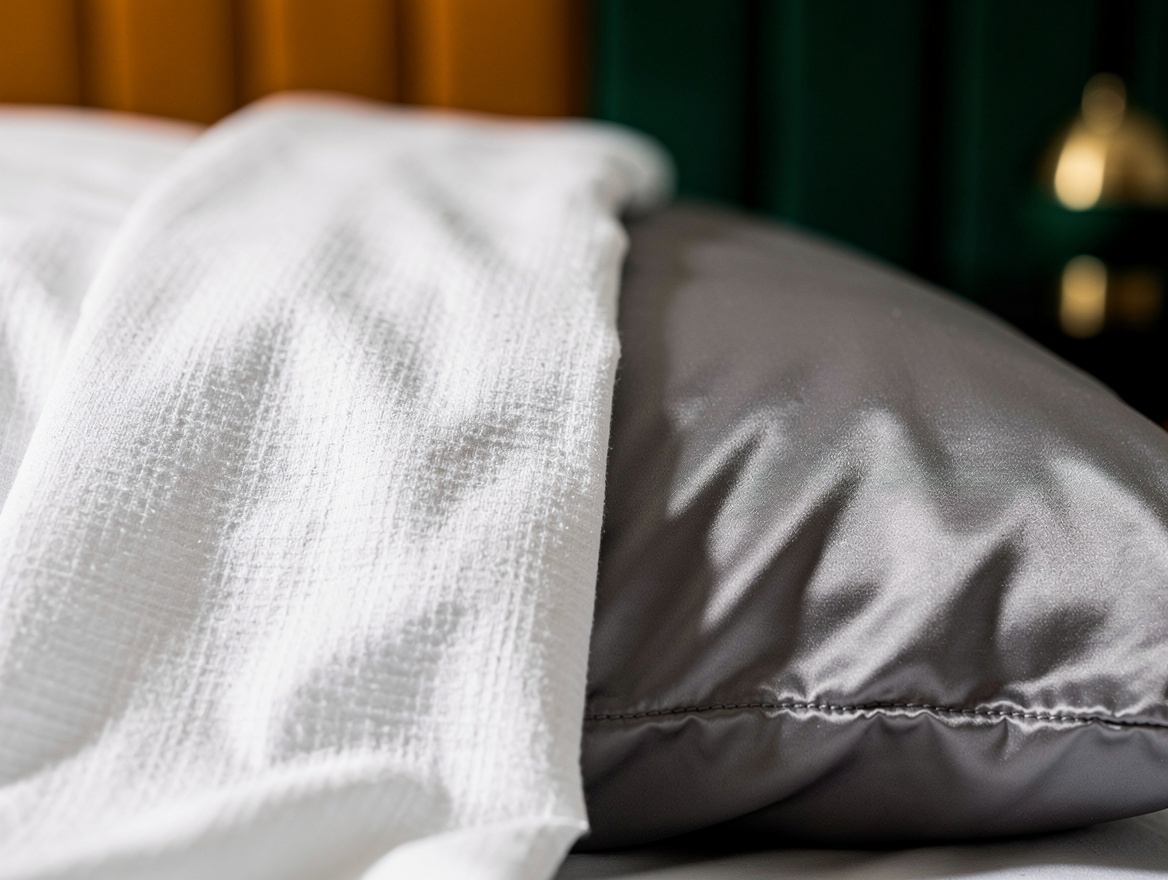
Designers keep naming the same culprit: glossy faux-silk and polyester “satin” sets. That plastic-y sheen catches the light like wrapping paper, holds static, and wrinkles in hard, sharp lines.
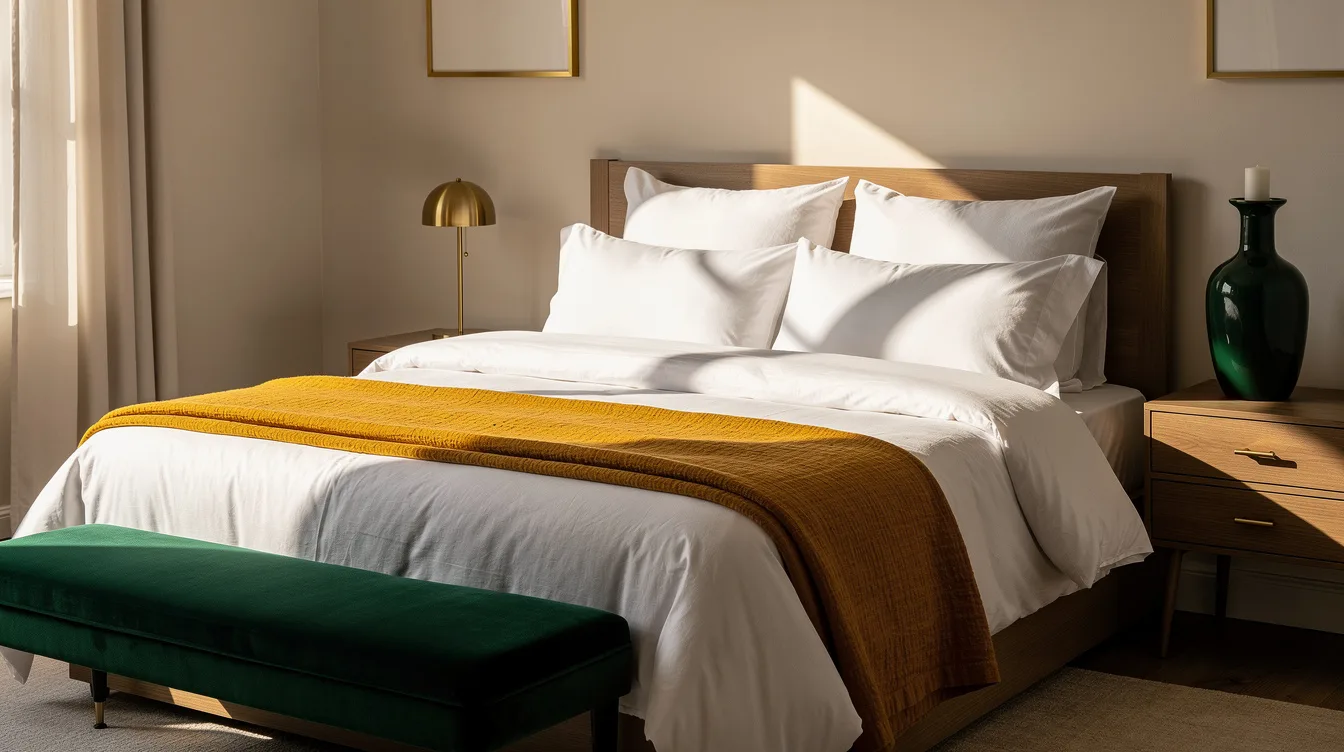
A shiny gray satin set with four matching pillows reads discount bundle, even in an otherwise nice room. A matte off-white duvet on the exact same bed reads boutique hotel. Same square footage, completely different perceived value.
Switch to Matte Natural Fibers
The fix is not more expensive bedding, it is better fiber. 100% cotton percale gives you that cool, crisp hotel feel, while stone-washed linen brings a relaxed, slightly rumpled texture that photographs beautifully.
Cotton sateen is the one weave allowed a soft sheen, and TENCEL or lyocell blends drape well if you sleep hot. What all four share is a matte or low-luster finish that absorbs light instead of bouncing it.
For a genuinely affordable entry point, the IKEA ÄNGSLILJA cotton duvet cover set runs roughly $35 to $50 for a queen, and it already looks ten times more considered than any satin bundle.
Ignore Thread Counts Above 500
Thread count is the most abused number in bedding. For percale, a typical sweet spot sits around 250 to 400; for sateen, roughly 300 to 500.
Anything marketed above that is mostly math tricks with multi-ply yarn, not extra comfort. A Target Casaluna percale set at around 300 thread count, typically about $70 to $90 for a queen, will outclass a “1,000 thread count” polyester set every single night.
My rule: if the packaging screams a giant number, put it back.
Layer Like a Hotel, Not a Dorm
The second-fastest cheap signal is a flat bed. One fitted sheet plus a limp duvet reads student rental, no matter how nice the furniture around it is.
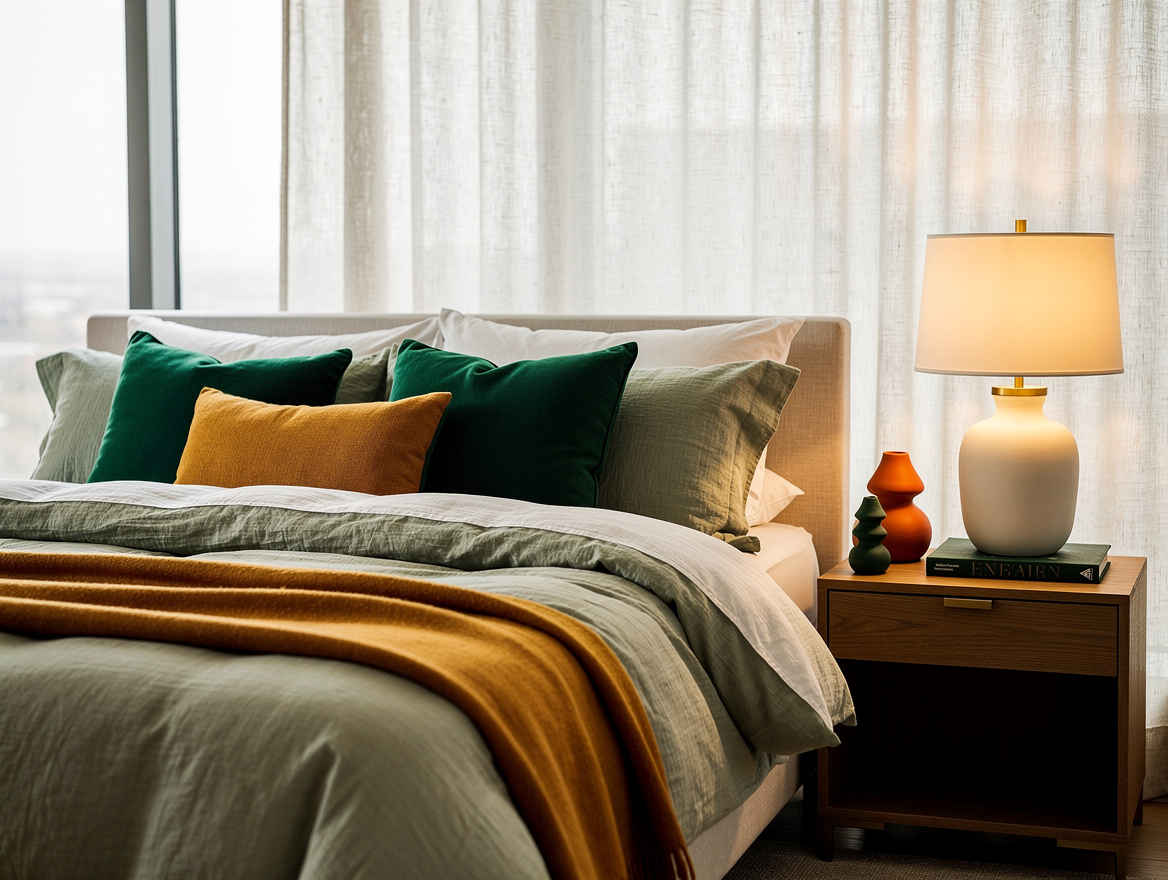
Hotels layer deliberately: fitted sheet, flat sheet, a medium-weight duvet, then a thin quilt or chunky knit throw folded across the foot. For a queen bed, that throw is typically around 50 by 70 inches.
A solid quilted coverlet from Wayfair runs about $40 to $80 and instantly adds the dimension a single layer never will.
Build Pillow Height at the Headboard
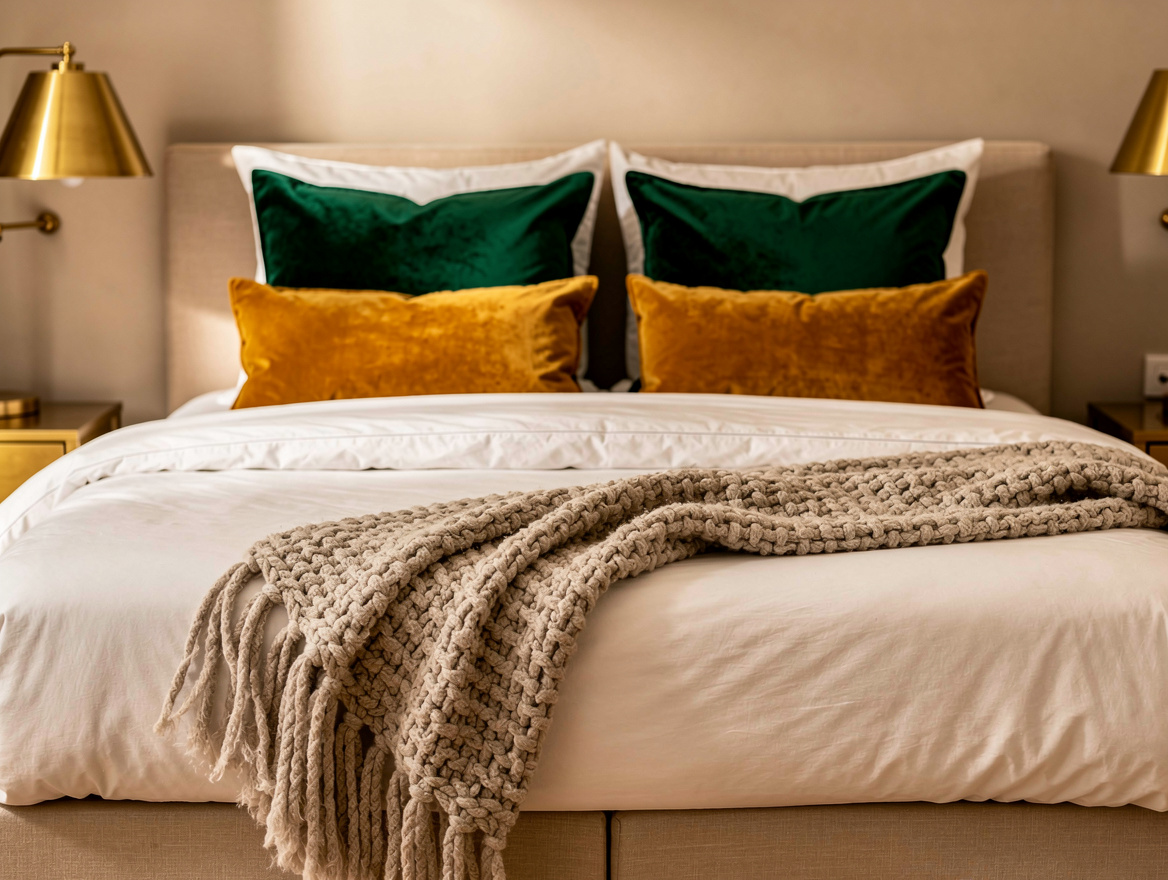
Two sleeping pillows lying flat make a bed look unfinished. Pros almost always add two larger Euro shams, roughly 26 by 26 inches, propped upright behind the standard pillows.
Keep the shams in the same fabric family as your duvet, then let one pair play with texture, say crisp percale in back and washed linen in front. Amazon Basics Euro inserts cost around $15 to $20 each, so this upgrade is genuinely cheap.
Four pillows total is plenty. Nine decorative cushions is a different crime.
Pick Quiet Colors Over Loud Prints
Bold graphics, slogan duvets, and mass-produced florals amplify the budget look even when the fabric is decent. The bed dominates the room, so a loud print dominates everything.
Stick to solids and subtle texture: off-white, stone, greige, muted sage, or a fine pinstripe. The Threshold line at Target does a washed cotton in exactly these tones, typically about $50 to $70 for a duvet set.
Calm color is what lets your nightstands and lamps look intentional instead of random.
Spend Smart: A Realistic Budget
Here is the honest math for a queen bed that looks expensive without a designer invoice. Percale duvet set around $40 to $80, fitted sheet about $20 to $35, two extra pillowcases roughly $15 to $25, and a throw around $30 to $70.
That lands near $100 to $210 total, less than one trendy accent chair. Step up to entry-level linen or a better sateen and a full hotel-style setup typically runs $240 to $500.
Given that textiles usually represent roughly 15 to 30 percent of a bedroom furnishing budget, this is the highest-return money you will spend in the room.
Start with the duvet cover, since it owns the most surface area, then add pillows and a throw as budget allows. Retire the satin set first; everything else is refinement.
Mia Carter writes about small-space living and budget home makeovers. She has restyled three rentals and tests most ideas in her own 45 sqm flat.