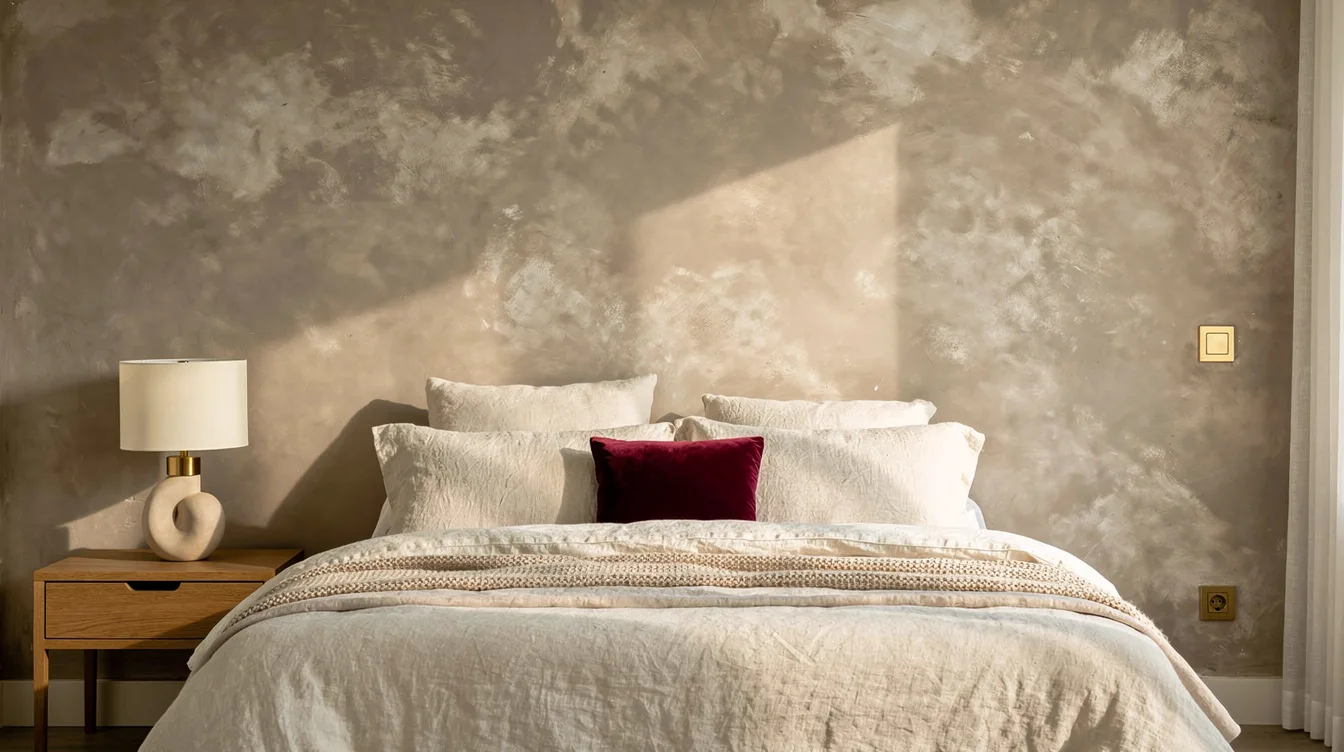
My bedroom had one flat, builder-beige wall that made the whole room feel like a waiting area. So I spent about $112 on a gallon of JH Wall Paints limewash and a weekend brushing it onto my 120 sq ft accent wall, and the cloudy, suede-like finish changed the entire room. Here’s what actually worked, plus a few things I’d do differently.
Sample the Color in a Small Size First
My first move was not buying the gallon. I ordered a 250 ml sample pot of Bauwerk Colour limewash for about $18.50 and brushed a two-foot test square behind the dresser.
Limewash shifts hard with light. The warm greige I picked looked creamy at 8 a.m., then went flat and gray by dinner, and I only caught that because of the sample patch.
My rule now: live with a test square for two full days before committing. When a typical gallon runs around $112, a roughly $20 sample is the cheapest insurance in the whole project.
Prime the Drywall Before You Touch the Brush
Raw drywall drinks limewash unevenly, and the finish will blotch and flash no matter how pretty your technique is. A mineral primer made for limewash gives the paint something consistent to grip.
The numbers back this up. JH Wall Paints lists typical coverage around 350 to 400 sq ft per gallon on primed drywall, but only about 150 to 175 sq ft on thirsty brick or concrete.
I rolled one coat of primer, let it dry overnight, and barely made a dent in my gallon. Skip the primer and you’ll burn through product while chasing a streaky mess.
Brush in Crosshatch Clouds, Never Straight Rows
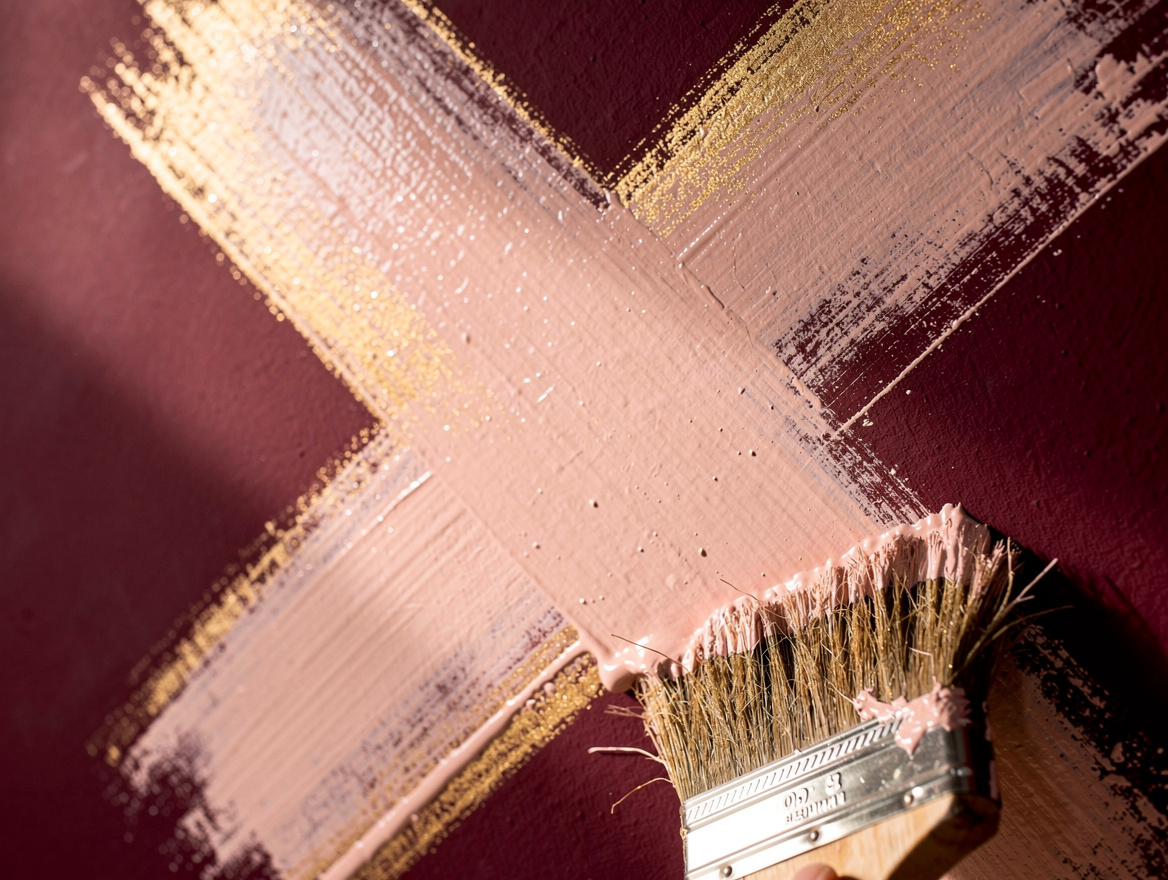
This is the step that makes or breaks the look. I used a large stiff-bristle block brush from Home Depot and worked in loose X-shaped strokes, roughly two feet at a time, keeping a wet edge.
Straight up-and-down rows leave visible lap lines that dry into stripes. Random, overlapping strokes are what create that cloudy, layered movement limewash is known for.
Don’t even think about using a roller. The second coat goes on in the same random pattern, and honestly, that second pass is where the depth really shows up.
Size the Order by Wall Area, Not Room Name
Here’s the math nobody does until they’re standing in a half-painted room. My 10 x 12 ft wall is 120 sq ft, and two coats meant budgeting for roughly 240 sq ft of coverage, so one gallon was comfortable.
A full room is a different story. Bauwerk Colour sells a 5 L size around $185 and a 10 L around $265, which is the scale you’re in once you pass a single feature wall.
My take: a gallon covers a feature wall with room to spare, but it will not cover a whole room. Multiply your square footage by two before you fall in love with a color.
Pick Pigments That Read Soft, Not Loud
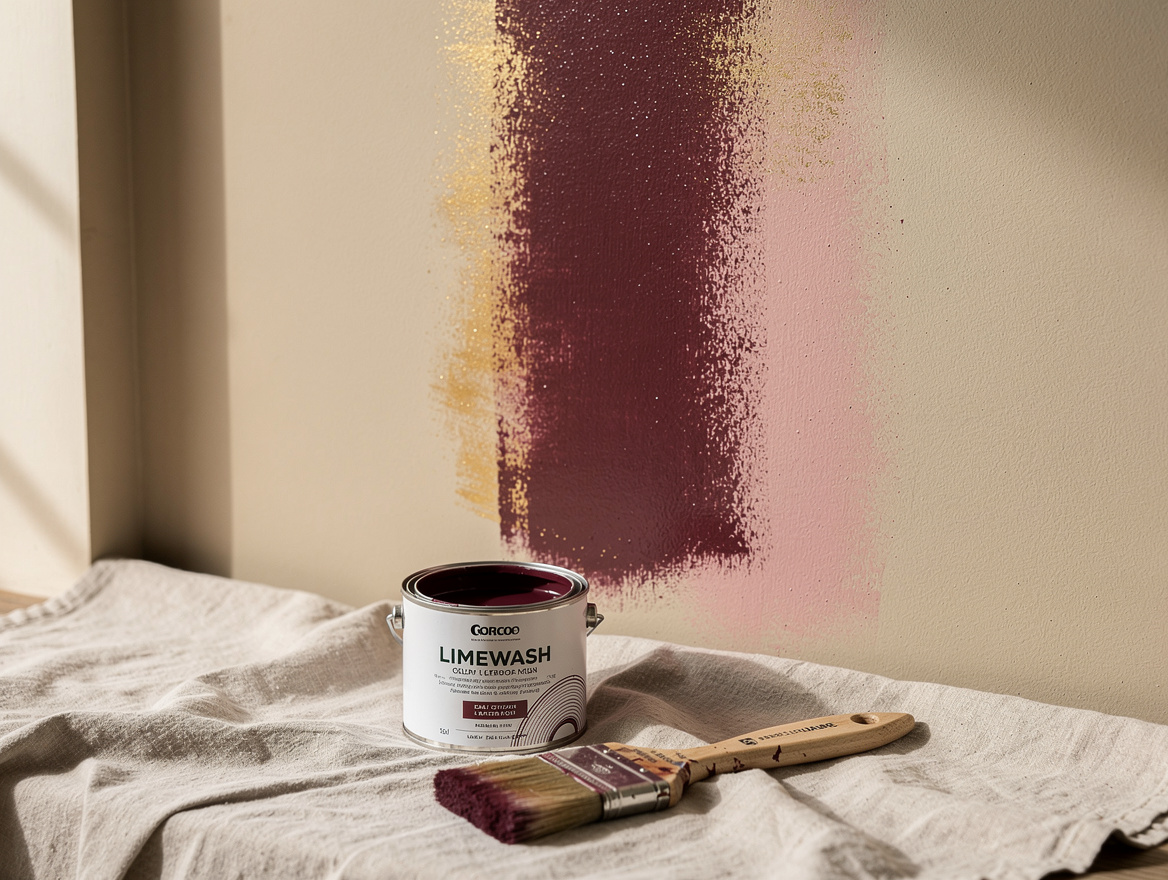
Limewash amplifies whatever pigment you choose because the texture adds shadows. Portola Paints makes its limewash to order in dozens of shades, and the muted ones are where the finish shines.
Warm white, beige, or greige gives a living room that Roman, old-world calm. In a bedroom, soft clay, muted green, or dusty blue with natural earth pigments reads cocooning instead of cold.
My honest opinion: pick one shade quieter than the chip you love. The texture darkens and deepens the color once it dries, and bold shades can tip into mural territory fast.
Know Where Limewash Earns Its Keep
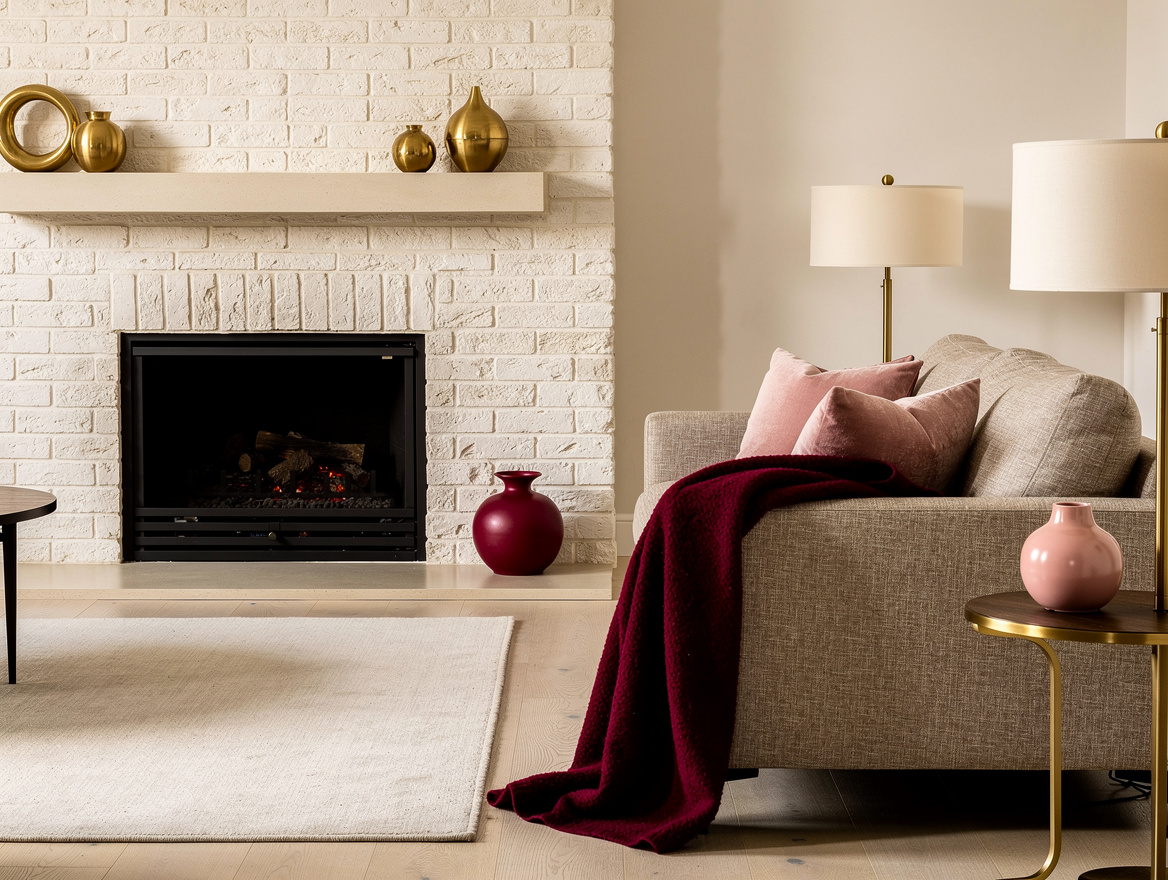
A brick fireplace surround might be the single best use of this finish. The mineral coat settles into the masonry and makes it feel crafted and architectural instead of dated.
Exterior brick is where costs climb. Installed limewash on a facade typically runs about $4 to $8 per sq ft, so that project is usually priced as a fixed job, not by the gallon.
Bathrooms can work with a breathable sealer, and brands like Sydney Harbour Paint Co. and Portola have systems for it. I’d still skip shower walls and kitchen backsplashes, because standing water and grease are where this finish gives up.
Do it in this order: sample pot first, primer second, gallon last, and only after you’ve done the square-footage math. My whole wall came in around $180 including primer and the brush, and it’s the one project guests ask about every single time.
Mia Carter writes about small-space living and budget home makeovers. She has restyled three rentals and tests most ideas in her own 45 sqm flat.