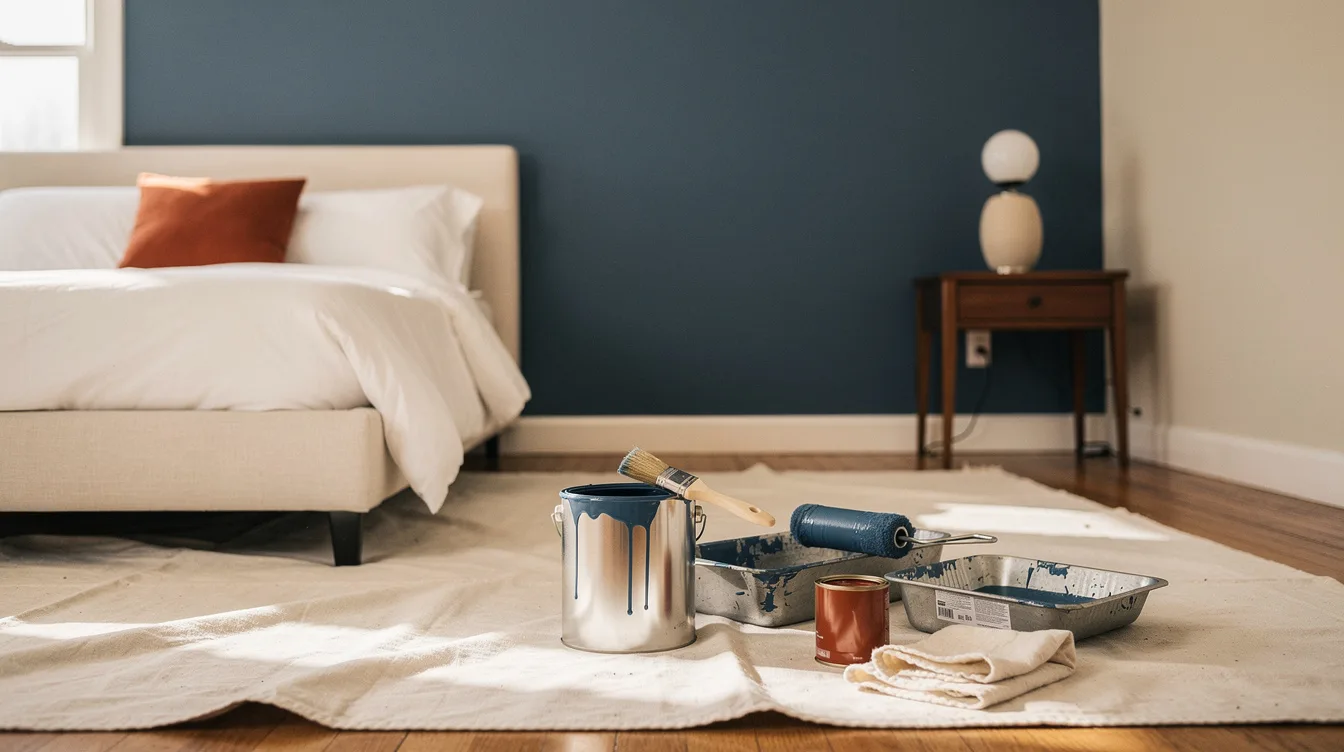
Painting a room looks easy until the late-afternoon light catches a rough patch beside the window. In a typical 120-to-180-square-foot bedroom, one rushed repair can show up from every angle after the second coat dries.
Most paint failures start before the lid comes off. A typical professional paint job for one room costs around $280 to $900, so the prep work is the place worth stealing from the pros.
These are the choices designers consistently avoid, plus the practical fix that makes a painted room feel deliberate instead of hurried.
Clear and Clean Every Surface
Don’t paint around a dresser, a lamp, and a pile of books. Move what you can, then cover the floor wall to wall with a canvas drop cloth; plastic shifts underfoot and invites splatters onto baseboards.
Wash fingerprints, cooking film, and dust from the walls with a mild cleaner and a damp sponge. Paint sticks to a clean surface, while grime can leave dull spots that look like a finish problem.
Give the room enough empty space to work without squeezing past furniture. A clear perimeter also lets you inspect every inch of wall before color makes flaws harder to ignore.
Repair the Wall Before Choosing Color
Designers don’t expect paint to disguise dents, nail holes, or peeling caulk. Fill small damage with lightweight spackling paste, let it dry completely, then sand until the patch disappears beneath your fingertips.
Use a pole sander with 120-grit sandpaper on rough areas and old roller ridges. The point is not to sand the entire room into dust, just to remove anything that will cast a shadow under fresh paint.
Run fresh caulk where trim meets wall, especially around window casing. That thin seam has an outsized effect on whether the final room looks crisp or vaguely unfinished.
Prime When the Surface Calls for It
Skipping primer can be sensible when sound walls are getting a similar color, but it is a poor gamble over stains, new drywall, glossy paint, or a dramatic color shift. Ask at Home Depot primer displays for the formula suited to the stain or surface instead of grabbing the first white can.
Primer is particularly useful when a dark wall is headed toward a pale shade. It creates an even base, so the finish coats cover consistently instead of looking cloudy beside the corners.
One primer coat may add time, but repainting a patchy room costs more energy and more paint. Let the surface, rather than impatience, make that decision.
Buy Tools That Hold Their Shape
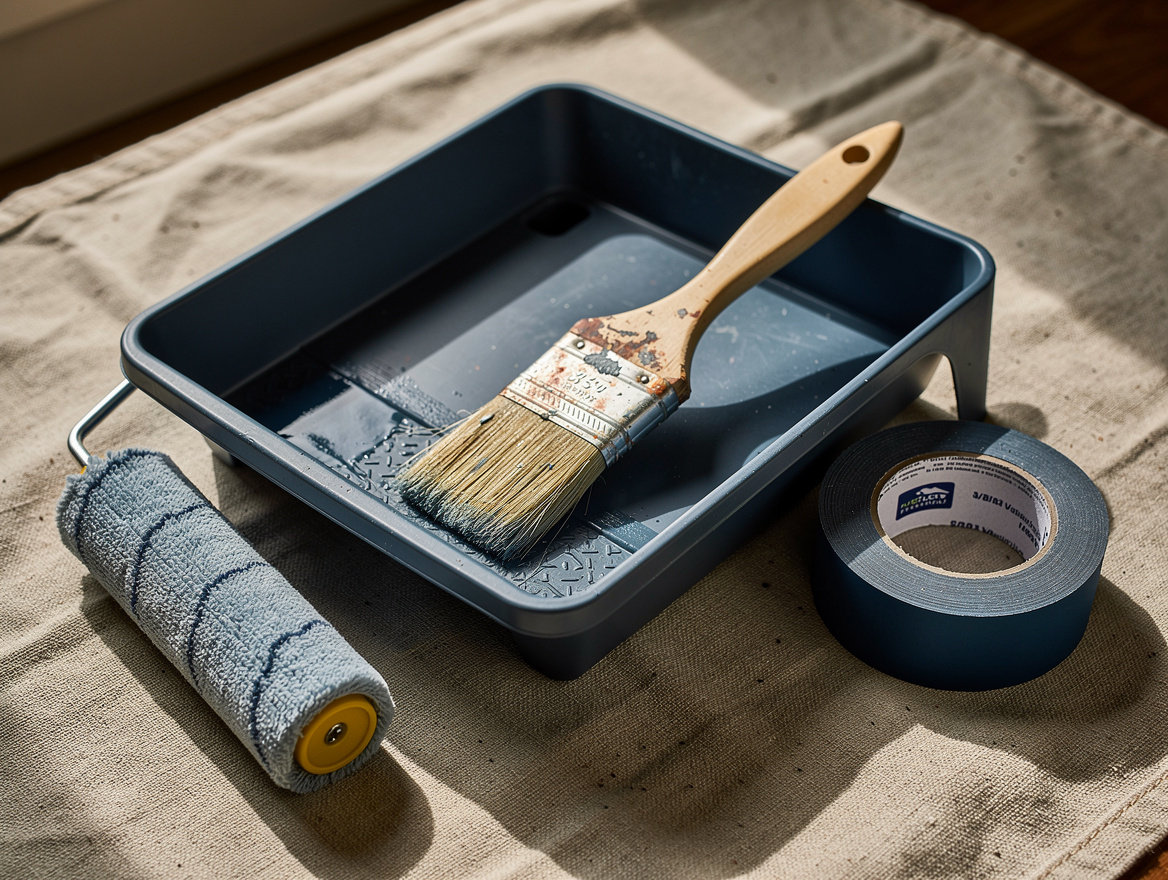
A frayed bargain brush makes careful cutting-in nearly impossible. Pick up a 2.5-inch angled brush from Lowe’s or Ace Hardware, and reserve it for edges, corners, and trim work.
For most smooth interior walls, a 3/8-inch roller cover gives a balanced finish without the heavy texture of a thick nap. Textured plaster and rough drywall may need more nap, but a plush roller on smooth walls leaves an unnecessary stipple.
Use a sturdy extension pole rather than climbing repeatedly with a loaded roller. It keeps your passes longer and steadier, which matters far more than trying to work fast.
Paint the Room in a Clean Order
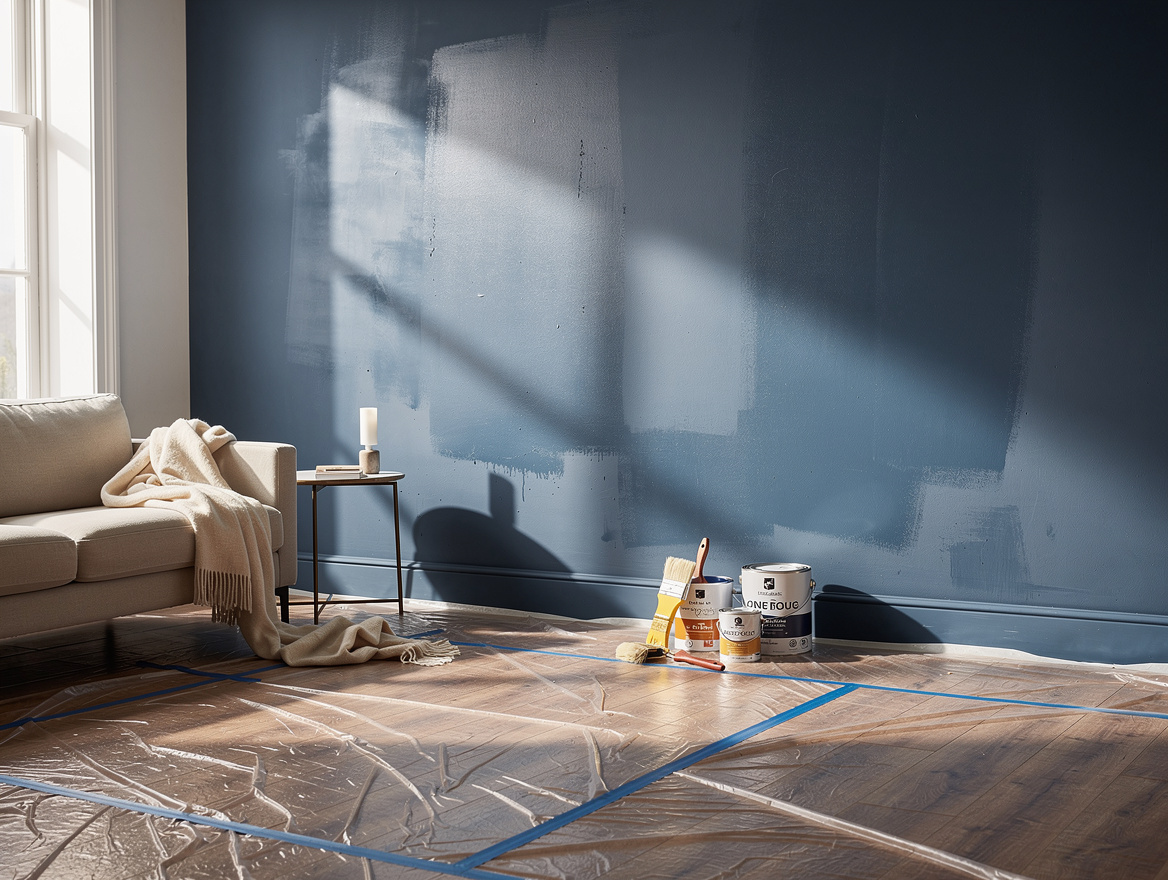
Start with the ceiling, then paint trim, walls, and baseboards. This order lets you correct drips before the surrounding surface is finished, and it saves the annoyance of protecting newly painted walls from overhead work.
Cut in one manageable section, then roll it while the edge is still wet. A paint tray liner from Walmart or Target makes refills cleaner, but keeping that wet edge is what prevents visible lap marks.
Roll from floor to ceiling in overlapping passes and finish each area in the same direction. Stop only at a natural break, such as a corner, because a pause in the middle of a wall often dries into a stripe.
Match the Finish to Daily Life
Flat paint belongs mainly on ceilings and very low-traffic walls because touch-ups can flash and scuffs show quickly. Choose eggshell interior paint for many bedrooms and living spaces when you want a soft look with more forgiveness.
Satin is a strong choice for halls, kids’ rooms, and busy walls that need regular wiping. Semi-gloss makes sense on trim and doors, where its sheen highlights the architectural edges rather than every uneven patch in drywall.
Plan on roughly 350 square feet of coverage per gallon on smooth walls, with porous or textured surfaces often landing closer to 250 to 300 square feet. Buy enough for two complete coats and keep a labeled jar for future touch-ups.

Begin with the wall closest to your best window, repair it, prime only if needed, and paint one full section before committing to the whole room. That small test reveals the color, sheen, and wall flaws when there is still time to change course.
Mia Carter writes about small-space living and budget home makeovers. She has restyled three rentals and tests most ideas in her own 45 sqm flat.