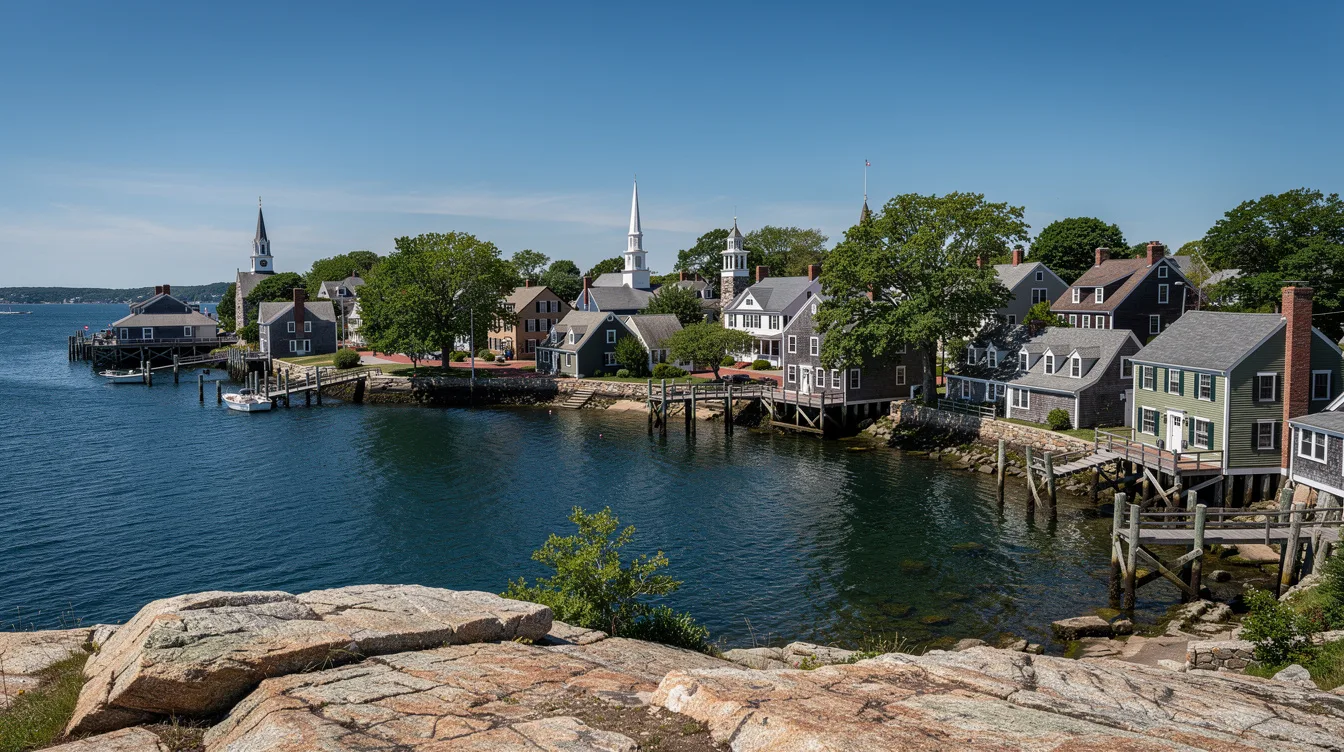
Marblehead is the Massachusetts port I’d choose when Boston feels too polished. Its historic district holds nearly 300 pre-Revolution buildings, so the past isn’t behind glass here; it lines the streets you walk.
The town sits on a rocky peninsula in Essex County, between Massachusetts Bay and Salem Harbor. Because water borders both sides, you can move from colonial lanes to an active harbor in one walk. That’s why Marblehead remains one of New England’s best-preserved old seaports.
And it’s about 18 miles from Boston, close enough for an easy escape via Boston. But about 20,000 residents live here, and the pace still feels unhurried once you start walking.
Nearly 300 old buildings change how you walk
Start in Old Town, where winding lanes and colonial architecture make a map less useful than instinct. You’ll find independent shops and restaurants near the water, but the best moments come when you turn down a lane without a plan.
And the town’s timeline is unusually clear: it was settled in 1629 and incorporated in 1649. Those dates matter because Marblehead feels inhabited rather than arranged for visitors, a place where history shares space with ordinary errands.
But you shouldn’t rush through it as if it were a checklist. The lanes are narrow, and this is New England at walking speed, where the pleasure comes from noticing how the town opens toward the harbor.
The harbor keeps the town from becoming a museum
Marblehead Harbor is still the town’s center of gravity. Sailing and commercial lobster fishing remain part of its identity, so the waterfront feels active even when you’re simply walking along it.
But the harbor rewards more than a quick glance. Walk toward Abbot Hall and Fort Sewall, then pause where the view opens; you’ll get a stronger sense of the town at the water’s edge than you will indoors.
And that’s my favorite part: Marblehead preserves its history without freezing daily life. You can sit near the waterfront and watch boats change the pace of the streets, a good reason to linger on the North Shore.
Marblehead Neck gives the day a coastal edge
At Marblehead Neck, the Marblehead Lighthouse gives you an open view of the Massachusetts coast beyond the old lanes. The setting feels exposed after Old Town, which is why I’d save it for later in the day.
And Devereux Beach makes the visit easy to pace. You can add a relaxed seaside stop, but don’t expect a long resort strip or a day built around constant activity.
But the coast deserves time, not a hurried photo between stops. Choose one waterfront park and stay long enough for salt air and open water to replace the close rhythm of the lanes.
Boston is close, but arrival still matters
By car, Marblehead is about 30 to 45 minutes from downtown Boston, depending on traffic. The distance is manageable, but you’ll enjoy this Boston day trip more if you park near the harbor or Front Street and continue on foot.
Can you reach it without a car?
Yes. Take the MBTA Newburyport/Rockport commuter rail to Salem, then use a short rideshare; the visitor site estimates about 45 minutes total from North Station.
And if you’re driving, free parking is available in several town areas, according to the local visitor guide. Park near the harbor or Front Street, walk the historic streets, pause at a waterfront park, and finish by the Neck or harbor around sunset.
But the most rewarding approach is unhurried. Give the historic district a full stretch of daylight, because its details appear slowly when you aren’t checking the clock.
Visit from late spring through early autumn
The best window is late spring through early autumn, when harbor walks and sailing views fit naturally into a day. Summer brings tourism, but the town’s residential character keeps the visit grounded.
But you can come outside summer if colonial streets and a stormy coastline sound better than a warm-weather outing. You’ll trade some seasonal energy for a quieter mood, a fair exchange on Massachusetts trips.
And I’d leave the schedule loose. After the harbor, you can let the streets decide the next turn; Marblehead’s appeal is the pause between planned stops.
By sunset, you’ll understand the bargain: Boston is near, yet the harbor can still make an afternoon feel unclaimed. The last light rests on the water while the narrow streets begin to quiet.