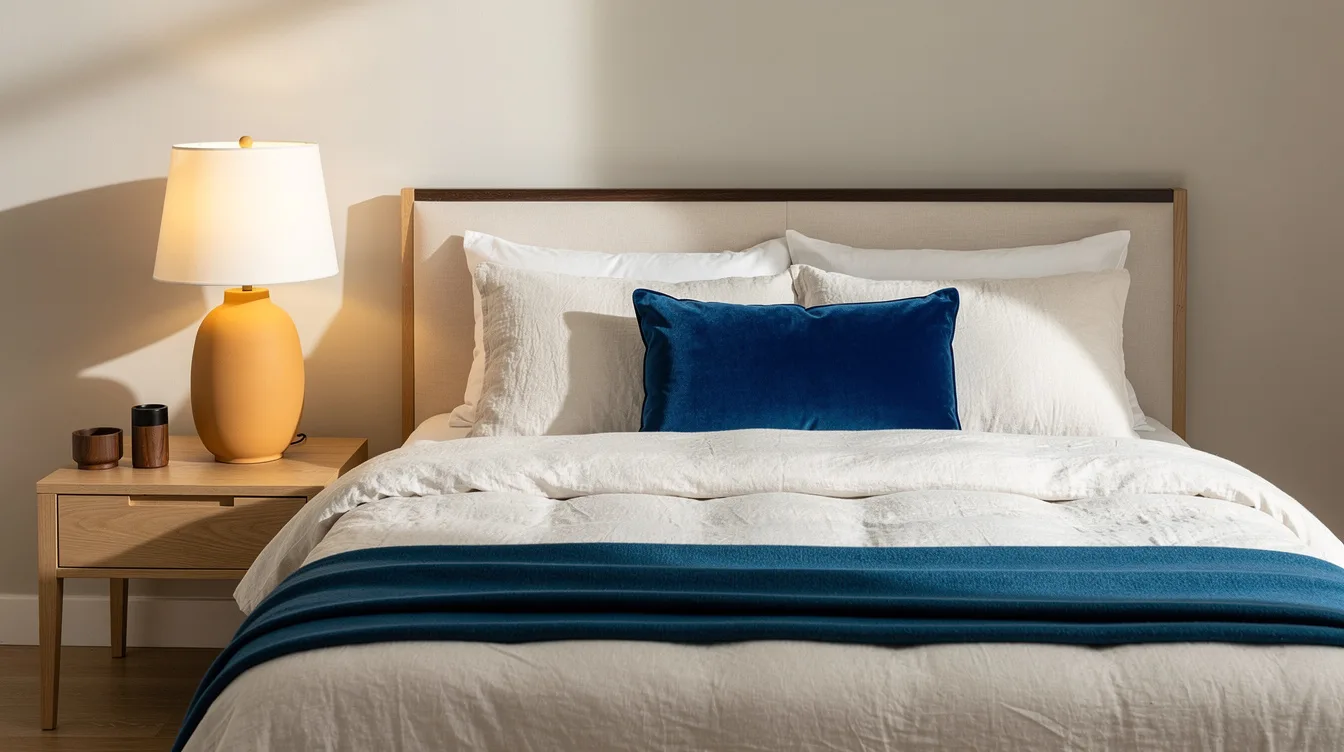
On a bed dressed in oatmeal linen, a cobalt velvet lumbar pillow measuring about 16 by 23 inches can change the room’s energy before a single wall gets painted.
For a 2026-ready bedroom, let one medium-to-large cobalt element lead and add two or three smaller echoes; warm white, greige, sand, soft gray-brown, pale oak, walnut, and textured bedding keep the saturated color restful, while brown, black, and warm earth tones give it a grounded counterpoint.
The best rooms treat cobalt as a deliberate punctuation mark with a clear job, then give it breathing room around the bed instead of building a second blue scheme from unrelated objects.
Build the Bed’s Focal Point With Velvet
Start at eye level with a cobalt cotton-velvet pillow cover, which gives a neutral bed a decisive focal point while leaving the headboard, walls, and major furniture in a calm base and making the change easy to reverse.
The IKEA SANELA cover is a budget-friendly test: the roughly 16-by-23-inch size is about $9.99, while the roughly 20-by-20-inch and 26-by-26-inch versions run around $9.99 and $14.99, so you can test the color before making a larger purchase.
Because cotton velvet absorbs light more softly than satin, it reads deep against white, flax, or mushroom bedding, and I would place one lumbar shape in front of neutral sleeping pillows so the eye has a quiet place to rest.
Fold a Textured Throw Across the Bed
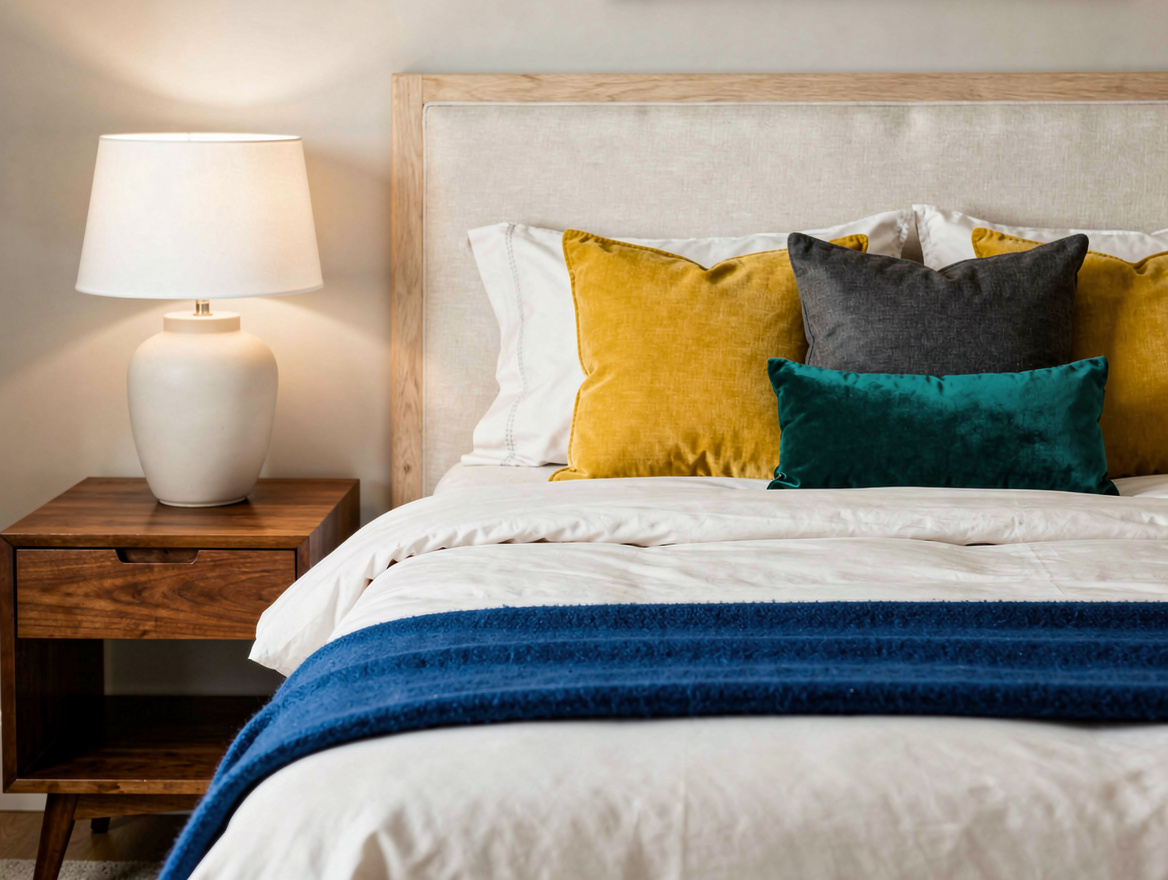
Use a cobalt cotton throw as the bedroom’s daytime energy switch, folding it across the lower third of a pale bed and removing it at night when you want the sleep zone to feel quieter and less visually active.
It works best when the top surface stays mostly uninterrupted, with the fabric supplying a clean horizontal note instead of competing with a busy stack of pillows.
The IKEA KLIPPOXEL blue throw measures about 51 by 67 inches and costs around $29.99, a typical entry price for testing the throw format before you commit to an upholstered bench or another large piece.
Choose a brushed cotton throw when you want a denser hand, or cotton waffle for a lighter layer, because texture gives blue depth while icy synthetic fabric can make a neutral room feel flat and overly bright; keep the surrounding layers warm white or soft gray-brown so the throw remains one intentional band.
Anchor the Foot of the Bed With Upholstery
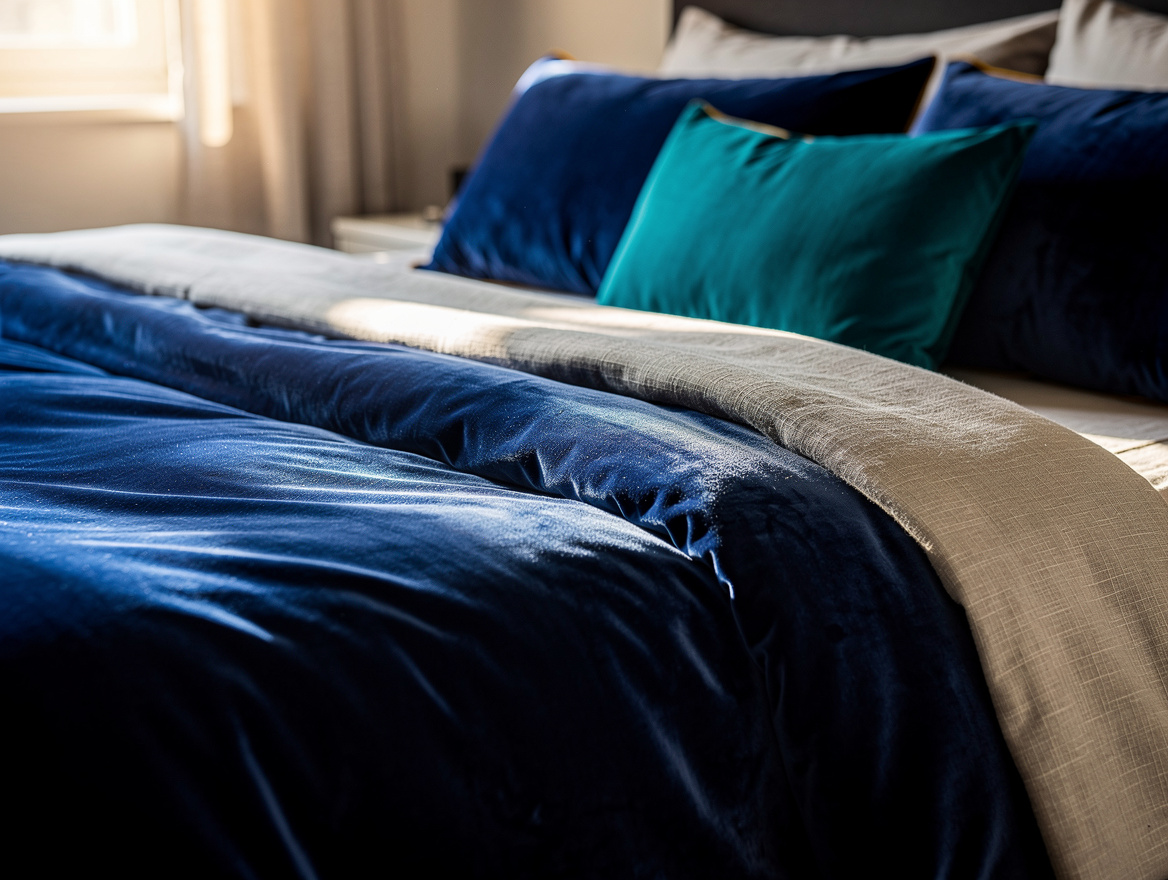
When a pillow feels too slight for the room, place a cobalt performance-velvet bench at the foot of the bed and let its clean silhouette supply the main blue anchor while the walls stay warm white or greige.
This is especially useful in a rental where paint and lighting are fixed, because furniture can bring in saturation without asking the room to absorb a major renovation.
A typical bench for a queen or king is roughly 42 to 54 inches wide, 16 to 20 inches deep, and 17 to 19 inches high, with a typical price around $250 to $1,200, so I would spend on durable upholstery and solid construction rather than ornate legs.
Protect the circulation path with roughly 30 to 36 inches of walking clearance, then pair the pale oak frame with a walnut nightstand or black metal nearby for contrast; a blue bench should feel grounded, never like a prop dropped at the footboard.
Warm the Nightstand With Ceramic Light
A cobalt crackle-glaze ceramic lamp brings the accent into the evening, when a white or ivory linen shade softens both the color and the glow and gives the nightstand a useful point of focus.
That functional role keeps the blue from feeling decorative for its own sake, especially in a room where the bed already carries a strong textile accent.
A typical lamp in this category stands about 20 to 26 inches high, uses a shade roughly 9 to 18 inches across, and costs around $54 to $450, with the lower end enough for a first test if the room already has strong blue elsewhere.
Set the linen shade beside a walnut nightstand and add one warm-brass detail nearby, keeping the bulb light warm so the bedding stays creamy and the cobalt reads crisp rather than electric.
Edit the Dresser With a Sculptural Vase
On a dresser or shelf, a cobalt earthenware vase delivers height and shape with a quieter visual effect, especially when the furniture has simple lines.
Its rounded or faceted profile also breaks up the straight lines of a dresser, giving the saturated color a sculptural role instead of another flat rectangle.
A small vase is typically about 4.7 by 6.3 inches, while a larger form is around 7 by 9.5 inches and often costs roughly $70 to $200 or more, so choose the scale that leaves open surface around it and keeps the dresser edge clear.
Let the handmade earthenware surface show slight variation, leave the vessel mostly empty or add a few dried stems, then repeat cobalt once in a pillow or book spine while brown wood, black accents, and warm earth tones handle the supporting work.
Frame Cobalt Art Against Warm Neutrals
Use a cobalt-and-umber abstract print above the dresser or behind the bedside tables when you want a wall accent without turning the bed into a themed set, and let the artwork carry the sharper edge.
A framed piece around 24 by 36 inches is a practical starting scale, while larger formats around 30 by 40 or 36 by 48 inches suit a wider wall and usually fall in the typical $80 to $800 range, depending on the frame and finish.
Choose a walnut frame, black frame, or warm-oak frame and echo one line or brushstroke elsewhere, because art should give the eye a destination while the textiles, wood, and warm metallic lighting keep the bedroom restful.
Leave enough wall around the work for its cobalt field to breathe, and keep the other blue echoes smaller so the composition feels edited and energetic through the day.
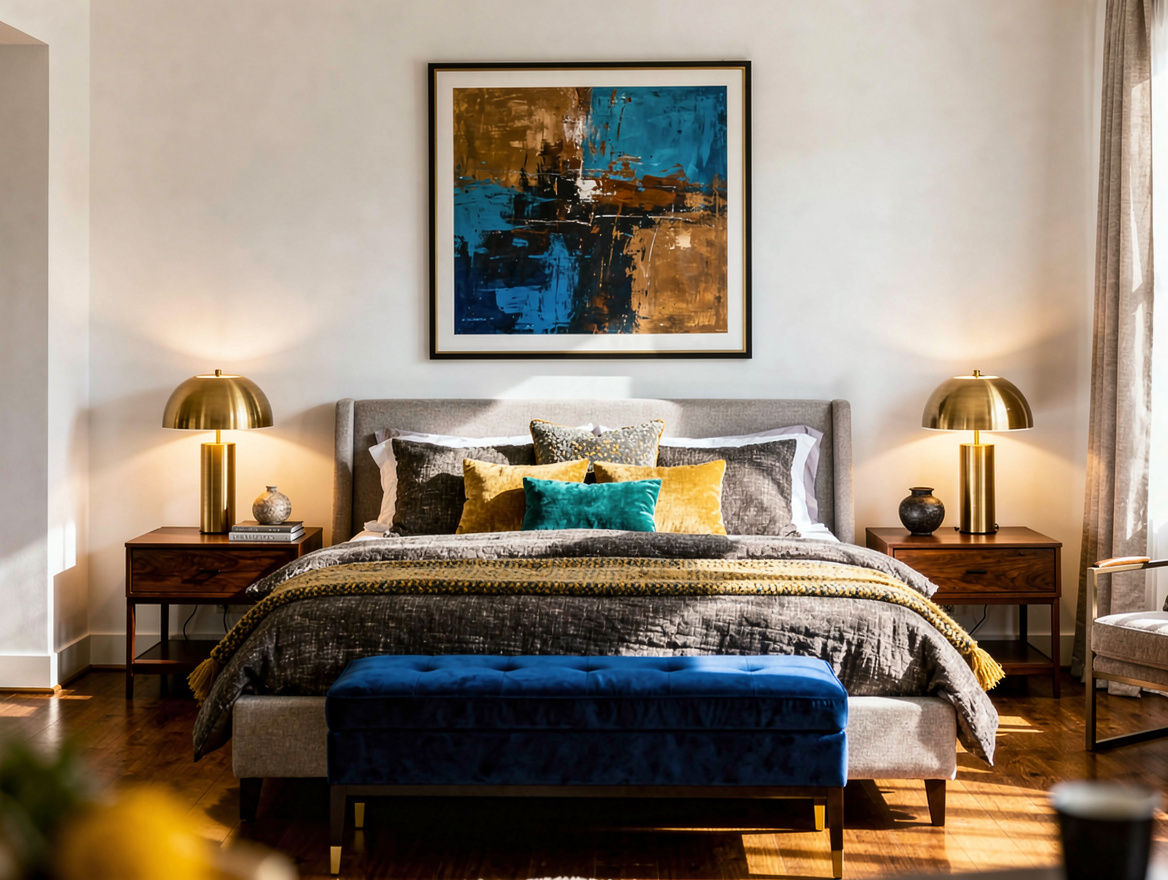
Begin with the cobalt pillow, then place the throw and only one second echo before buying anything upholstered; live with that arrangement for a few evenings and watch how the color behaves in daylight and lamplight.
Once the room feels awake but still easy to sleep in, stop shopping, because the quiet around the blue is doing half the design work.
Mia Carter writes about small-space living and budget home makeovers. She has restyled three rentals and tests most ideas in her own 45 sqm flat.