Dark green bathroom layouts can make a windowless space feel twice as big when light, scale, and reflective surfaces work together. The winning formula pairs deep color with warm metal, pale stone, open floor area, and layered lighting. You don’t need a full renovation. A sharper layout often does more than another white coat.
- Paint the walls in deep forest green
- Could an emerald shower niche brighten the room?
- Pair dark green walls with brushed brass
- Paint the walls in deep forest green
- Could an emerald shower niche brighten the room?
- Pair dark green walls with brushed brass
- Frame the mirror with green zellige tiles
- Let a floating vanity open the floor
- Layer moss green towels over dark tiles
- Choose botanical wallpaper above green half-tiling
- Give the tub a green marble surround
- Add a skylight above dark green tiles
- Why does green cabinetry work with a white basin?
- Use vertical green tiles to stretch walls
- Highlight green grout against charcoal bathroom tiles
- How can olive green make a tiny bathroom feel open?
- Hang globe sconces over a green vanity
- Contrast green cabinetry with a checkerboard floor
- Build a cosy corner with green panelling
- Echo green tiles through matching ceramic accessories
- Warm dark green walls with walnut accents
1Paint the walls in deep forest green
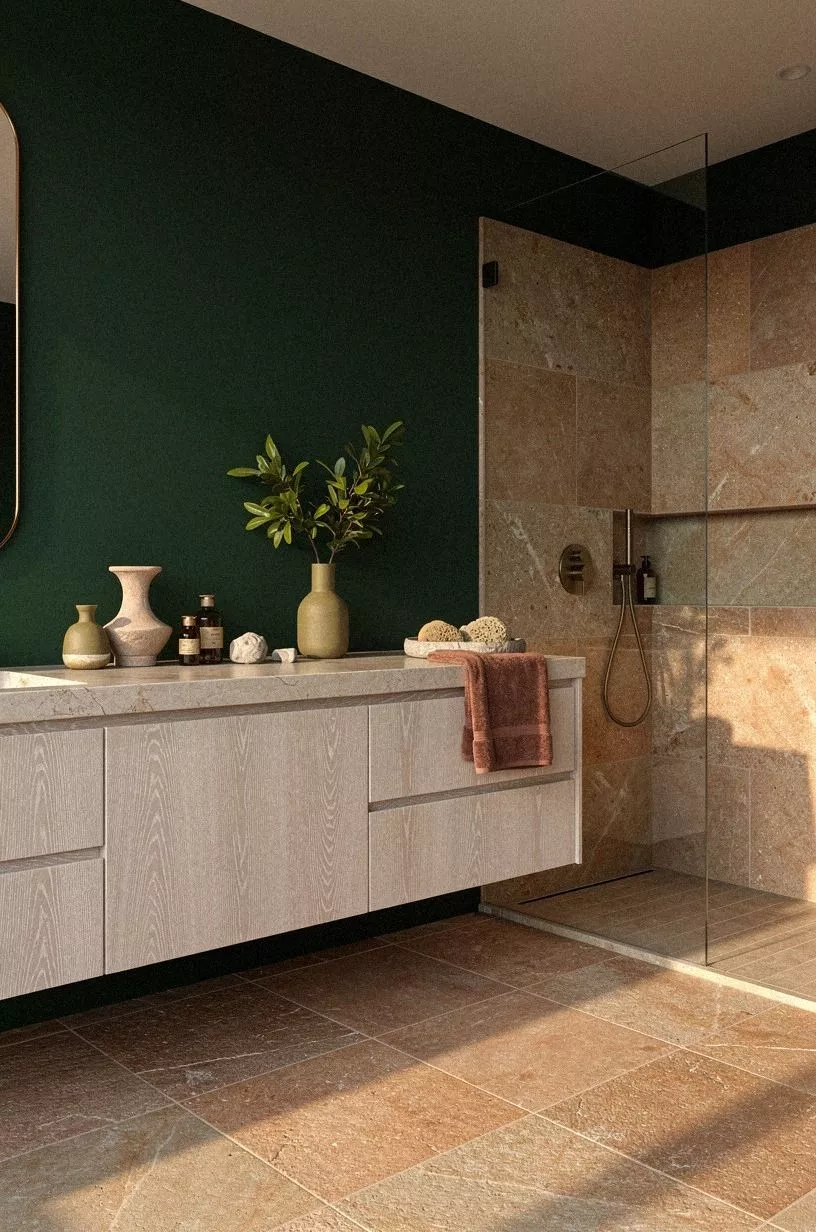
Deep forest green gives your bathroom a grounded envelope, especially when the palette includes terracotta, olive, and warm stone. Paint every wall, including the ceiling if the room is compact, so the corners don’t break into distracting patches. A cerused white oak vanity keeps the green from feeling heavy, while a large mirror sends light across the full space.
You’ll want a washable bathroom finish with a soft sheen because flat paint can mark easily near the basin. Farrow & Ball Hague Blue No. 30 offers a bluer alternative when your room needs cooler depth.
Don’t pair dark walls with a tiny mirror and one ceiling bulb. That combination isn’t dramatic; it’s simply dim.
For more color direction, browse these dark green bathroom paint colors. A second palette of forest green bathroom paint colors can help you compare warmer and cooler undertones!
2Could an emerald shower niche brighten the room?
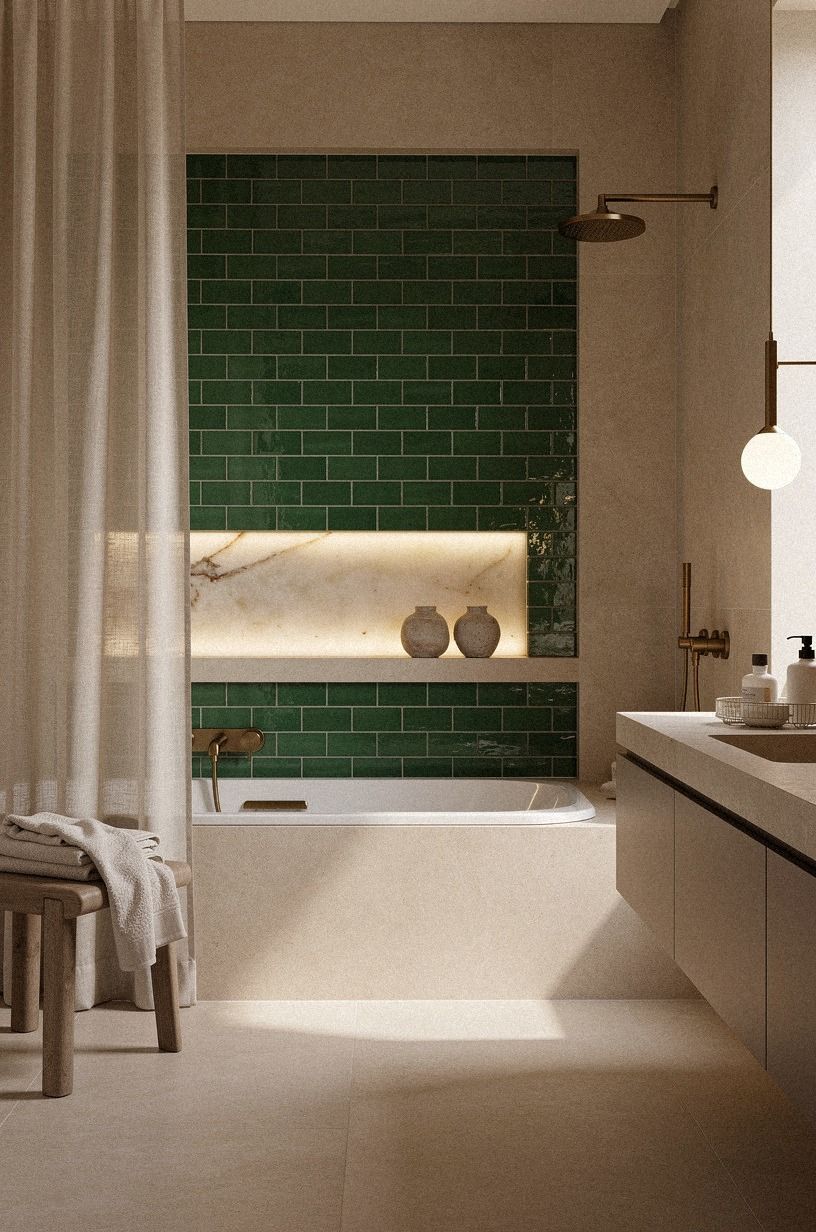
An emerald shower niche creates a bright focal point without covering every surface in saturated tile. Let clay, linen, and aged brass carry the rest of the room, then use backlit translucent onyx at the niche shelf or rear panel. The glow gives your eye a place to land when daylight is absent.
You’ll need enough depth for bottles without crowding the shower wall. A recessed niche works best when its grout lines align with nearby tile joints.
Choose a glossy or lightly undulated emerald tile because small highlights will bounce around the enclosure. Don’t use a dark niche with unlit storage. It’ll become a black rectangle where useful items disappear.
If you’re comparing layouts, these dark green tile bathroom layouts show how one concentrated color area can carry the room. These emerald tile bathroom layouts offer another way to study scale and placement.
3Pair dark green walls with brushed brass
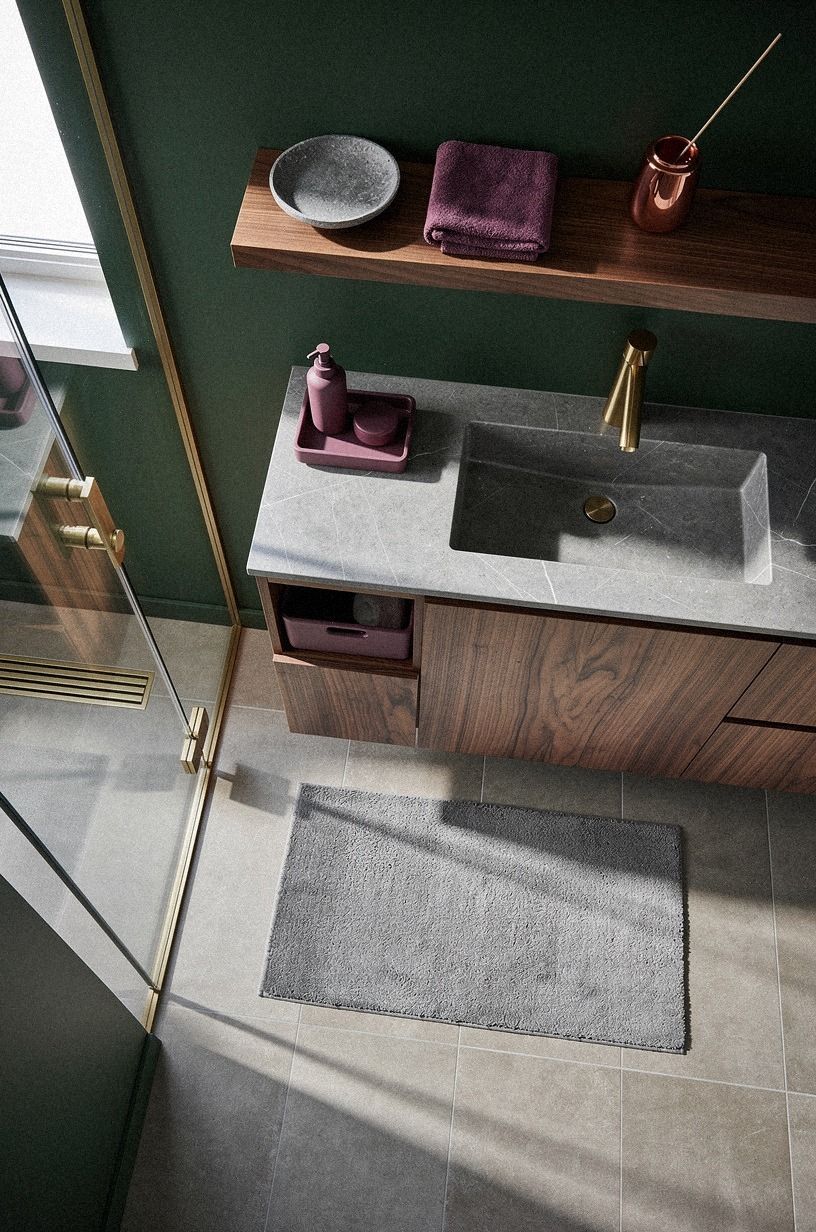
Dark green and brushed brass create a warm, refined bathroom when the metal appears in several small places rather than one oversized statement.
4Frame the mirror with green zellige tiles
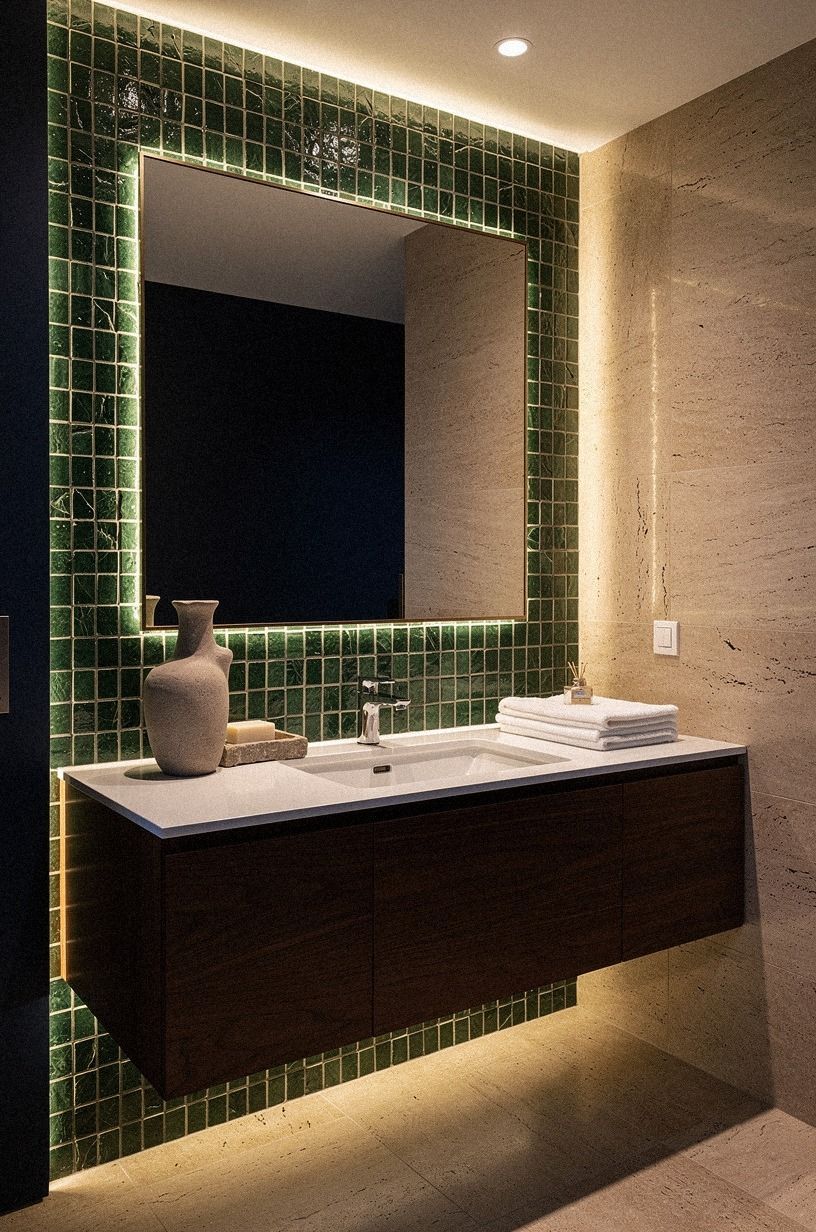
Green zellige tiles around a mirror add movement without requiring a full tiled wall. The slightly uneven surface catches warm light, while navy, white, walnut, and warm travertine keep the bathroom from feeling flat. A narrow border can make a basic mirror look architectural.
You’ll want to center the tile frame on the basin, not necessarily on the entire wall. That small adjustment matters when a door, toilet, or shower interrupts the room’s geometry.
Use a mirror wide enough to reflect the opposite wall, then keep the tile border restrained. Too much glossy green around a small mirror can make the vanity feel crowded.
For a more classic direction, compare these dark green subway tile patterns. You’ll see why shape and grout width often matter as much as color. These green subway tile patterns can also help you test a narrower border.
5Let a floating vanity open the floor
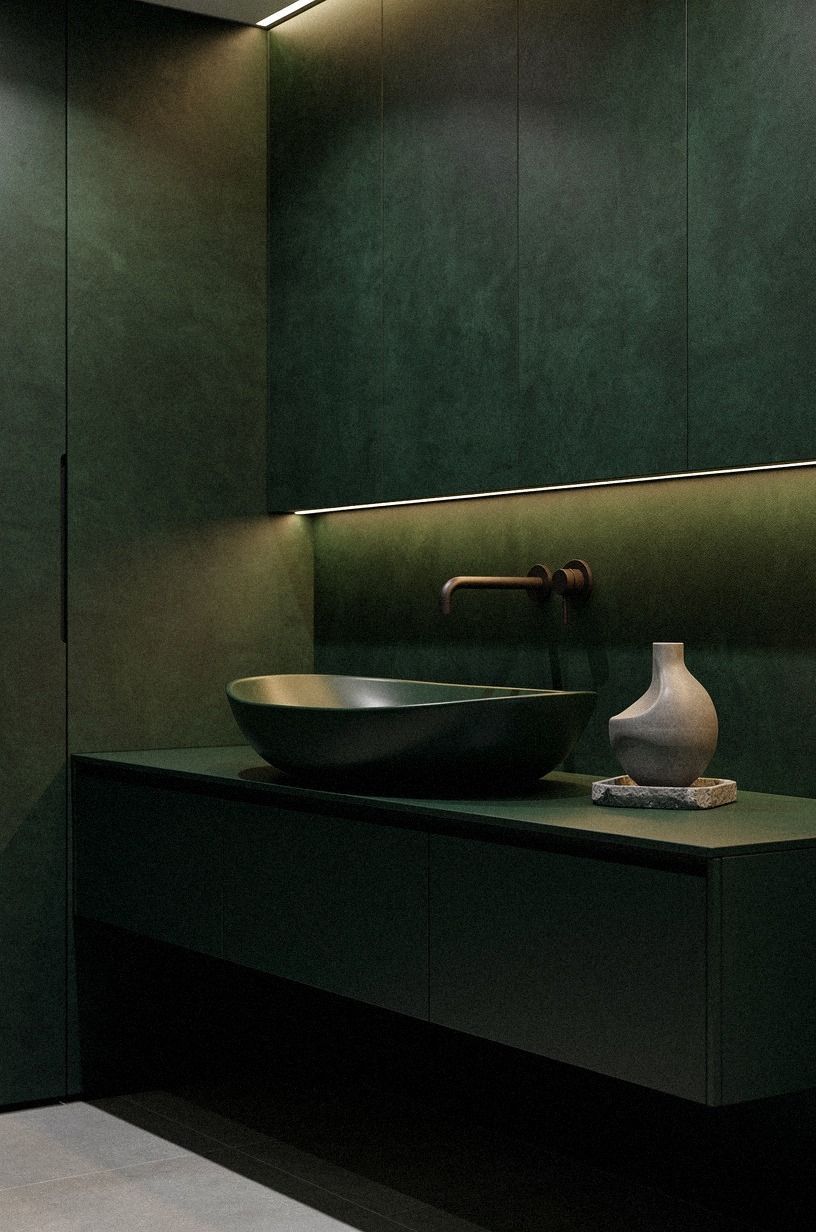
A floating vanity exposes more floor, which helps your windowless bathroom read as lighter and more open. Choose an emerald cabinet with a cream basin, gold hardware, and unlacquered brass developing soft patina. The visible floor line matters more than an extra drawer when the room is narrow.
Keep the vanity height between 32 and 36 inches, depending on basin style and household comfort. Wall-mounting also gives you room to run a soft LED strip beneath the cabinet. That low glow is useful at night, and it prevents the lower half of the room from becoming one dense dark block.
You can find more compact layouts among these dark green vanity cabinet ideas. These floating green vanity cabinets show how a smaller footprint can leave more visible flooring. Don’t choose a bulky furniture-style vanity if your door swing already steals clearance.
6Layer moss green towels over dark tiles
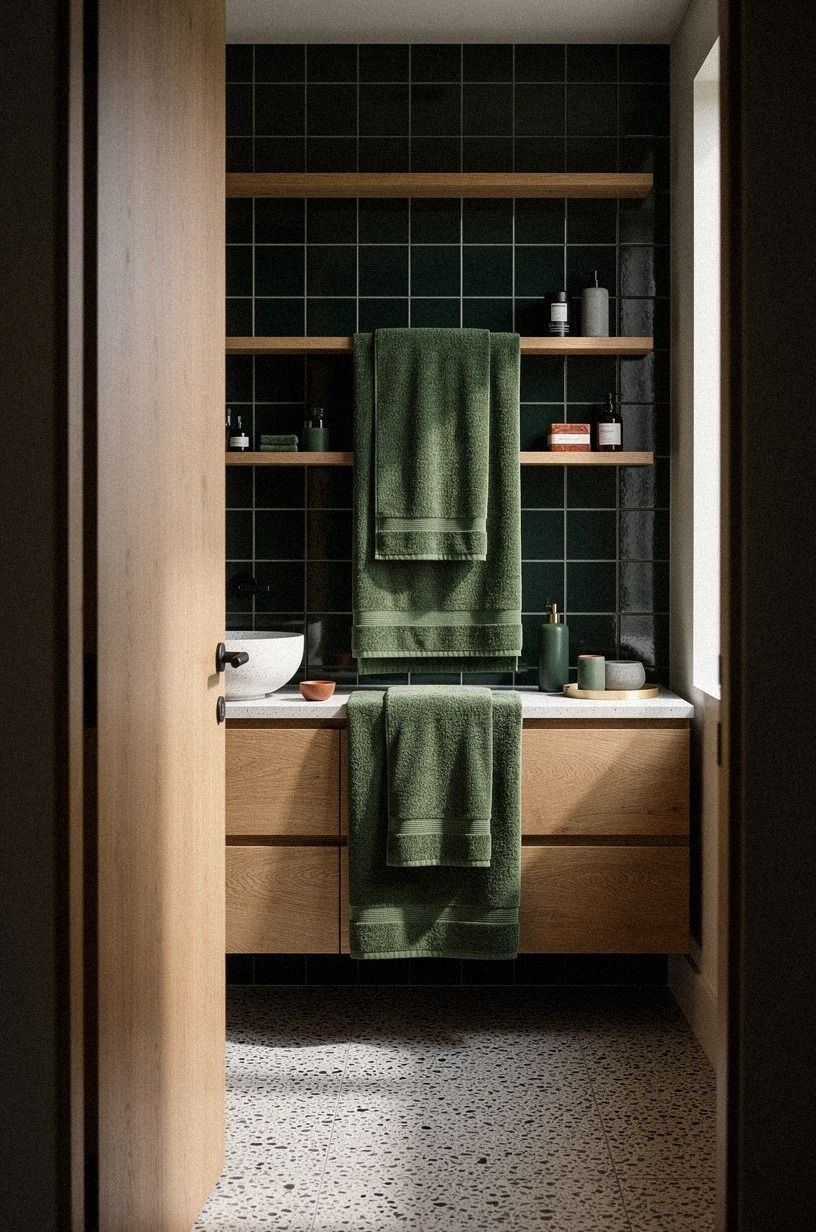
Moss green towels bring softness to dark tile while keeping the palette connected. Use forest green walls, rust accents, natural oak, and oversized-chip terrazzo for a bathroom that feels earthy rather than glossy. A thick 600 GSM Turkish cotton towel adds visible texture and absorbs hard reflections common in tiled rooms.
Your towel arrangement should create vertical rhythm. One long towel near the basin, a smaller hand towel below, and a folded spare on an open shelf are enough. You’ll get more impact from varied scale than from six matching pieces.
Don’t stack every textile on one hook because the wall will look crowded and the towels won’t dry well.
A warm terracotta bath mat can break up the green. If the room feels too dark, use ivory linen for one layer instead of adding more artificial brightness. Small changes can shift the balance quickly!
7Choose botanical wallpaper above green half-tiling
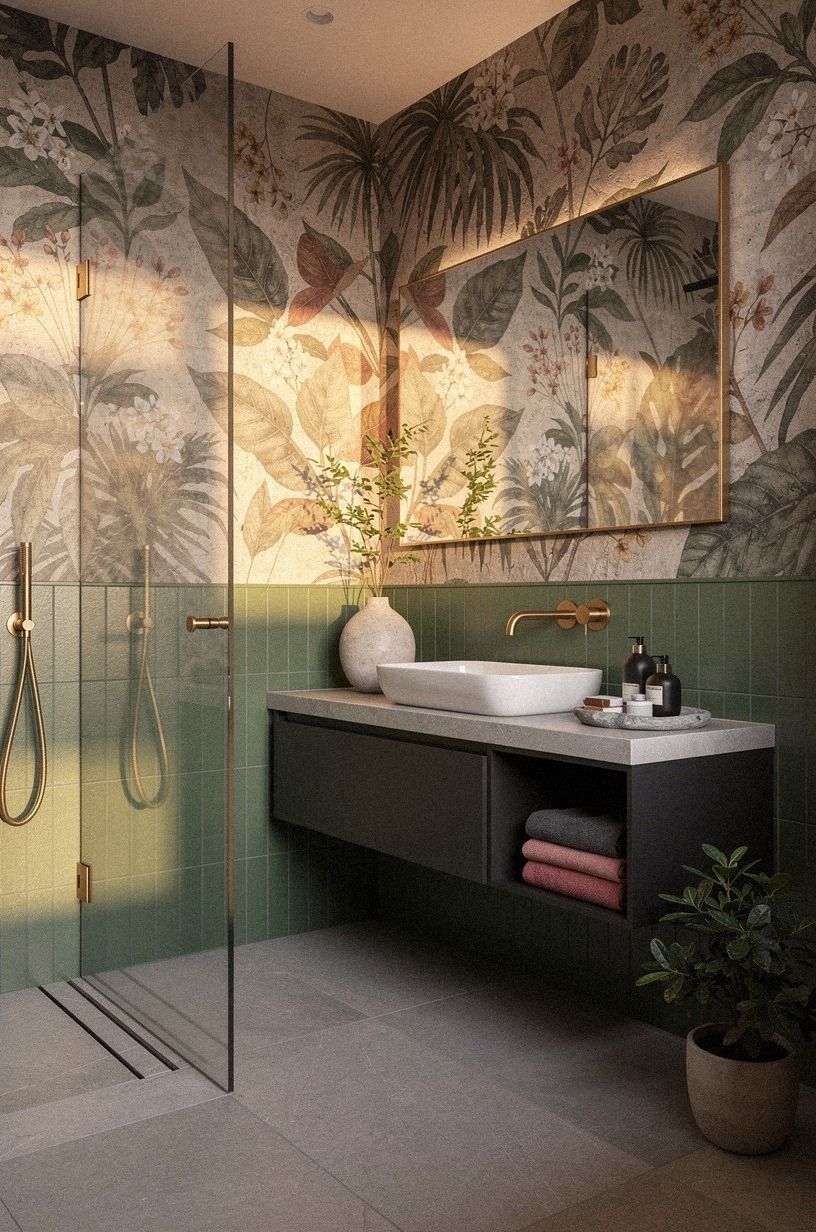
Botanical wallpaper above green half-tiling gives your bathroom pattern without making every wall visually busy. Keep the lower section in a deep green tile, then bring in dusty rose, charcoal, and brass through the paper and accessories. A hand-applied Venetian plaster ceiling or upper trim can add a soft mineral finish.
You’ll want moisture-rated wallpaper and strong ventilation, especially near a shower. Place the botanical pattern where your eye can enjoy it from the doorway, rather than hiding it behind a cabinet. A narrow chair rail or stone cap creates a clean transition between tile and paper.
Don’t choose a tiny floral print if the room already has small hardware and narrow grout lines. Larger leaves will read more clearly and make your walls feel taller. For calmer variations, explore these dark sage olive bathroom palettes and these olive green bathroom palettes.
8Give the tub a green marble surround
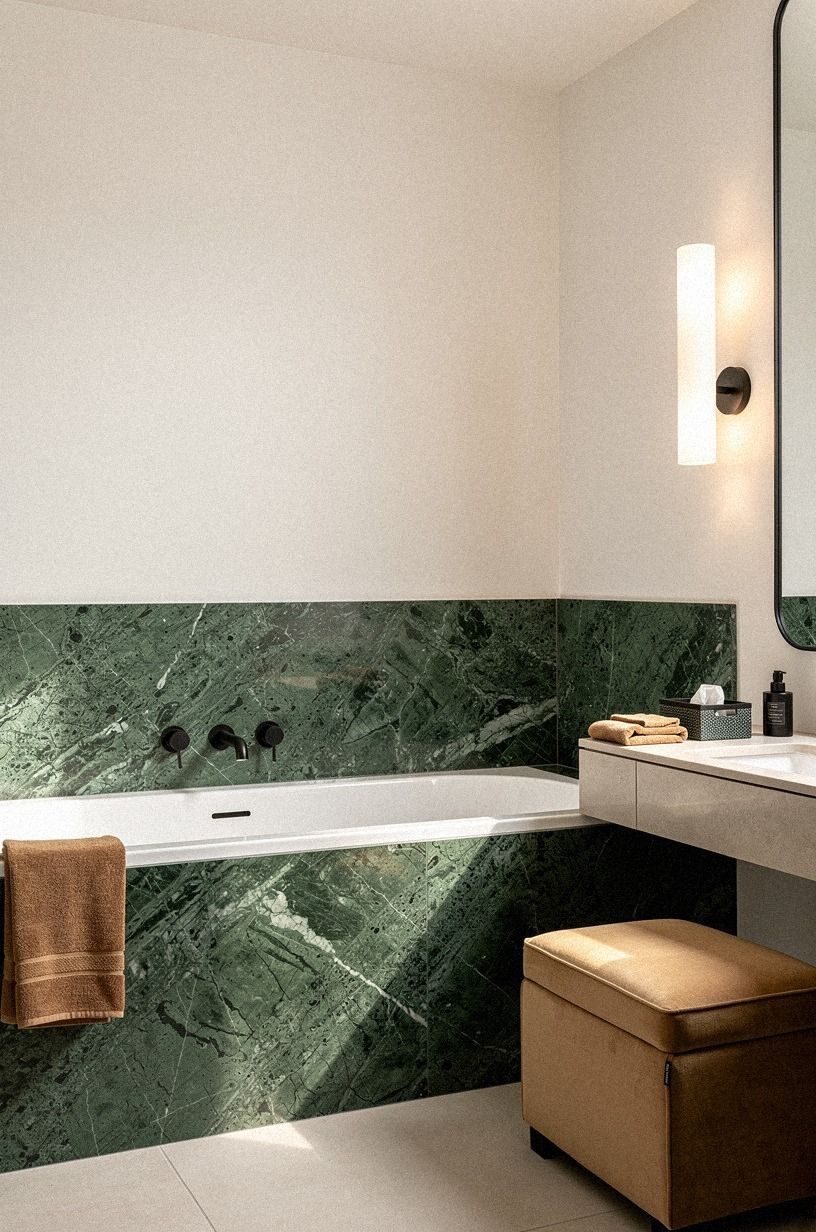
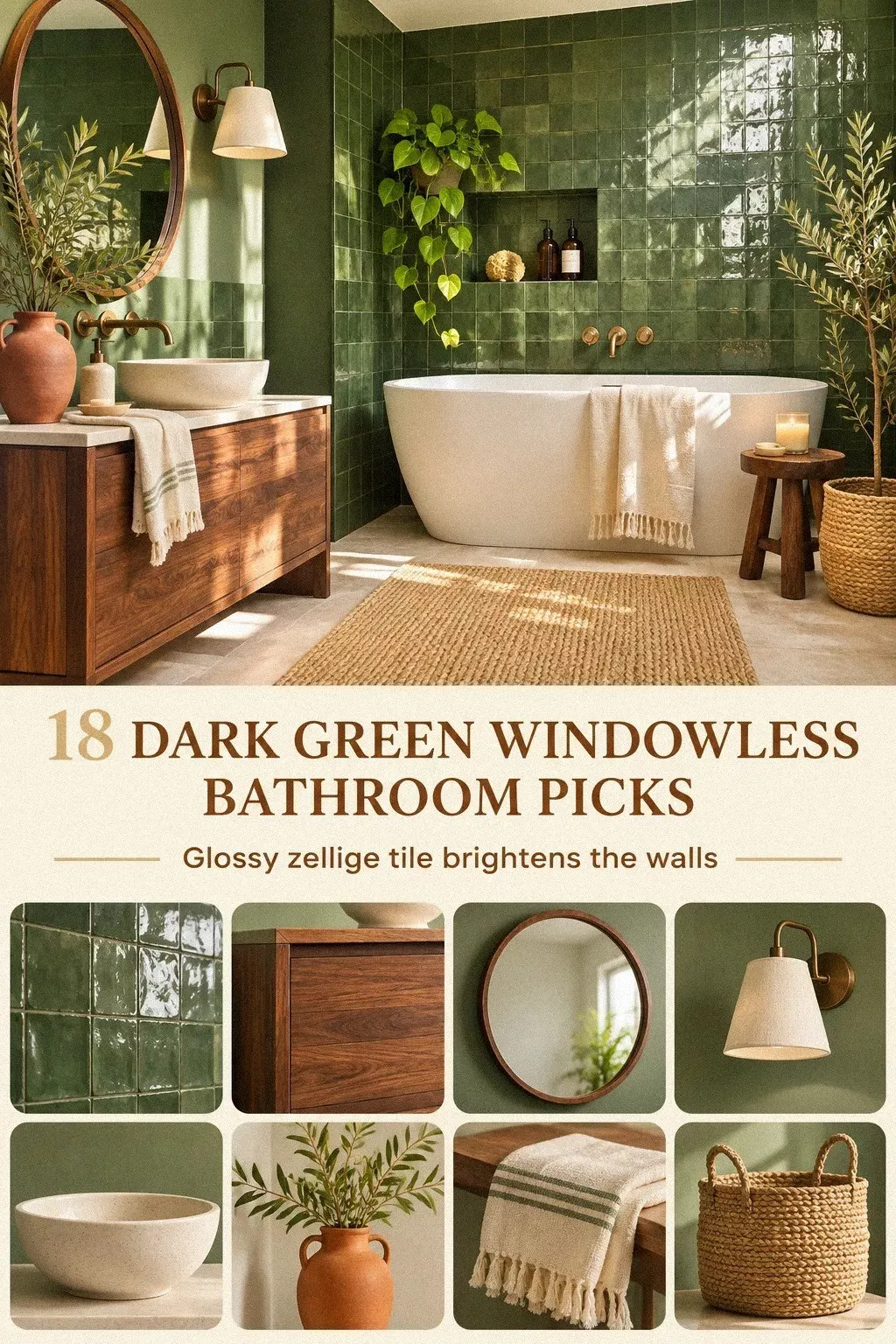
A green marble tub surround gives a windowless bathroom a strong horizontal anchor.
9Add a skylight above dark green tiles
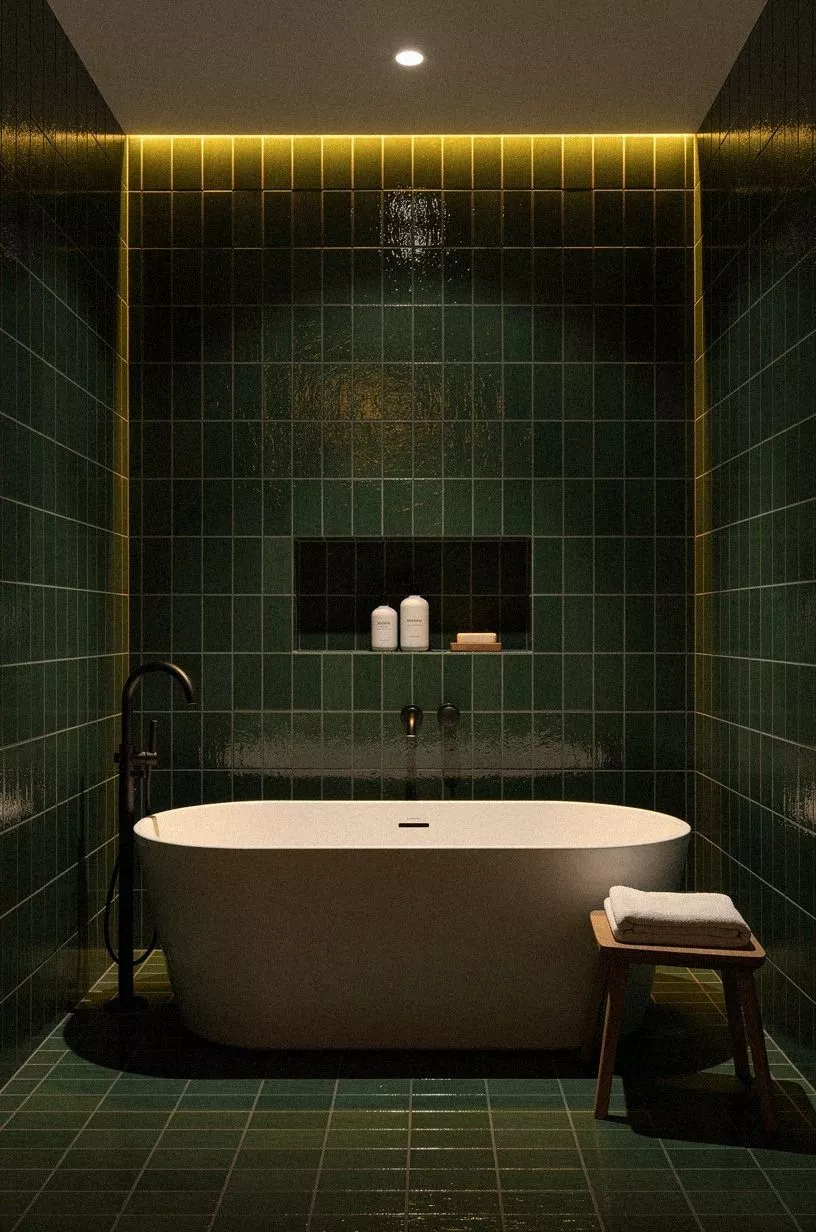
A skylight changes the entire reading of dark tile because light arrives from above and moves across the wall surface. Midnight blue, copper, ivory, and washed Belgian linen create a lived-in palette around the green. The result feels intimate and warm rather than basement-like.
If a skylight is already possible, keep the tile glossy enough to catch changing light, but not so reflective that every water mark shows. A slim copper-framed mirror can repeat the warm note without adding another large color block. You’ll still need an evening lighting plan because natural light disappears.
Use supplied bathroom dimensions as a planning check. A comfortable shower begins at 36 by 36 inches, and a toilet needs at least 21 inches of clearance in front. Don’t let skylight placement force an awkward fixture layout.
Good planning protects the visual effect!
10Why does green cabinetry work with a white basin?
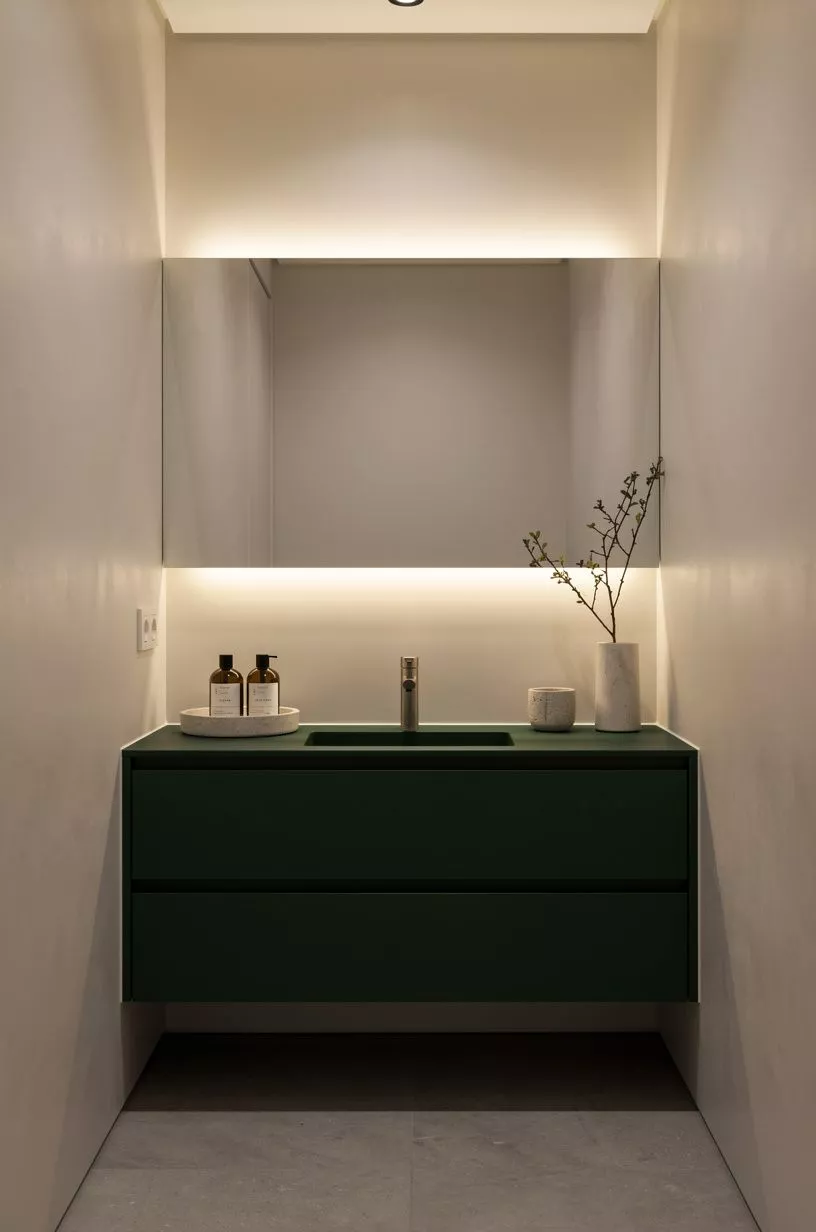
Green cabinetry with a white basin creates a clear focal point in a small bathroom. Sage green, warm cream, natural wood, and organic bouclé keep the composition gentle while the white basin stops the cabinet from visually swallowing the wall. This is one of the easiest ways to bring dark color into a rental-friendly layout.
You’ll want the basin edge to project just enough for comfortable use without blocking the door path. Choose a simple oval or softly rectangular shape so the cabinet remains the strongest form. A pale countertop can reflect light upward, especially when paired with a mirror that reaches close to the ceiling.
For contrast ideas, see these dark green white bathroom contrasts and these green and white bathroom contrasts. The better choice here is a quiet cabinet front, not ornate trim. Too many grooves collect shadow and dust.
11Use vertical green tiles to stretch walls
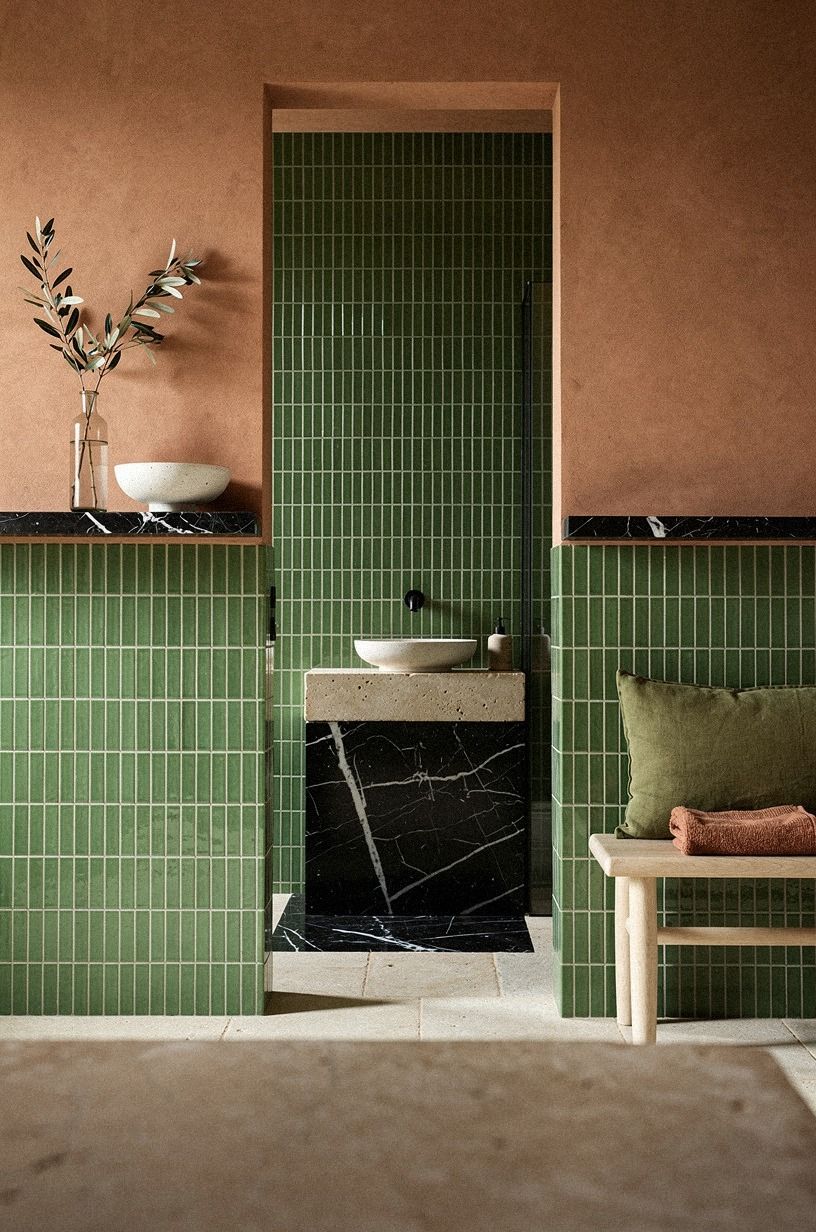
Vertical green tiles draw your eye upward and make a low ceiling feel taller. In a palette of terracotta, stone, and olive, Nero Marquina black marble with white veining can frame the basin or shower edge. The dark tile becomes a measured column rather than a heavy blanket across the room.
Choose a narrow rectangular tile with a vertical installation and a grout color close to the tile. That reduces visual interruption and lengthens the wall. You’ll want the vertical lines to meet a clean ceiling edge, so plan the top cuts before installation.
Don’t use vertical tile behind every fixture if your bathroom is already visually narrow. One feature wall often gives better proportion. A pale floor, open vanity base, or broad mirror can balance the taller tile and keep your sightline moving.
12Highlight green grout against charcoal bathroom tiles
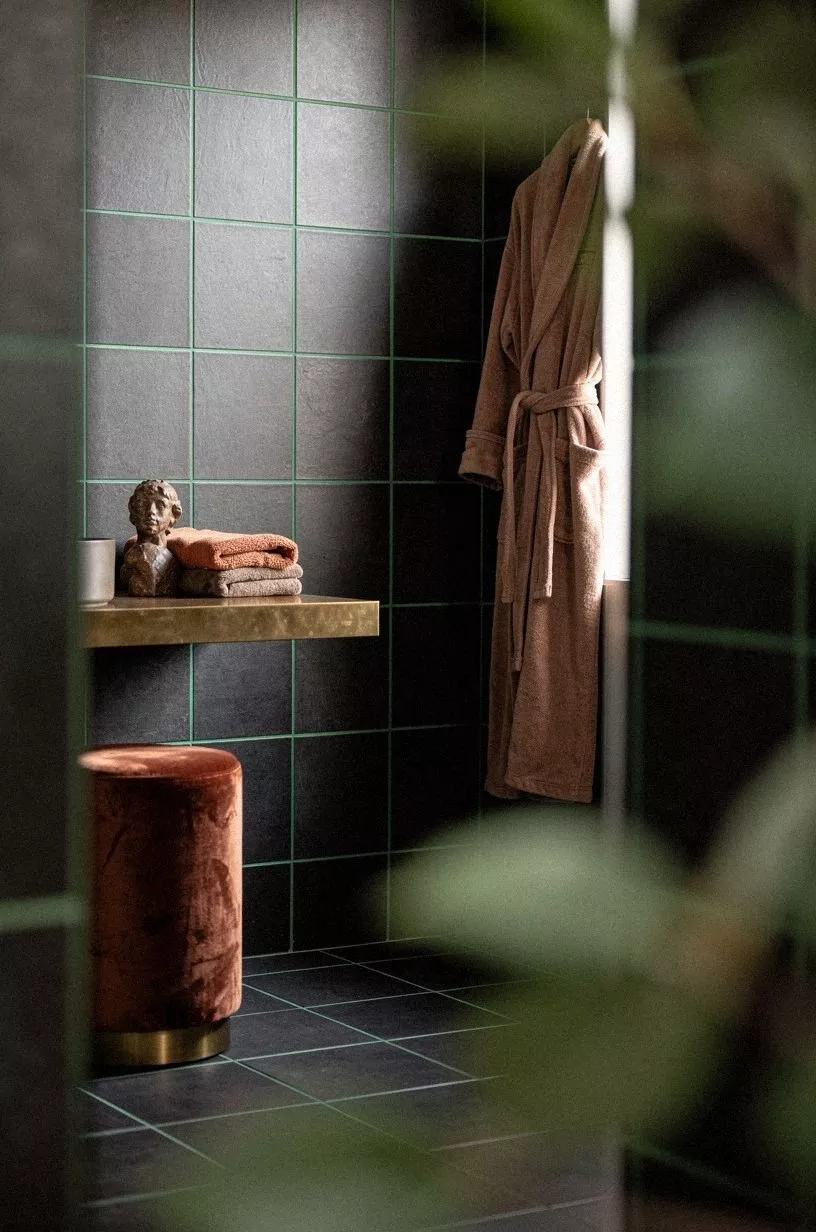
Green grout against charcoal tile creates a small detail that rewards attention.
13How can olive green make a tiny bathroom feel open?
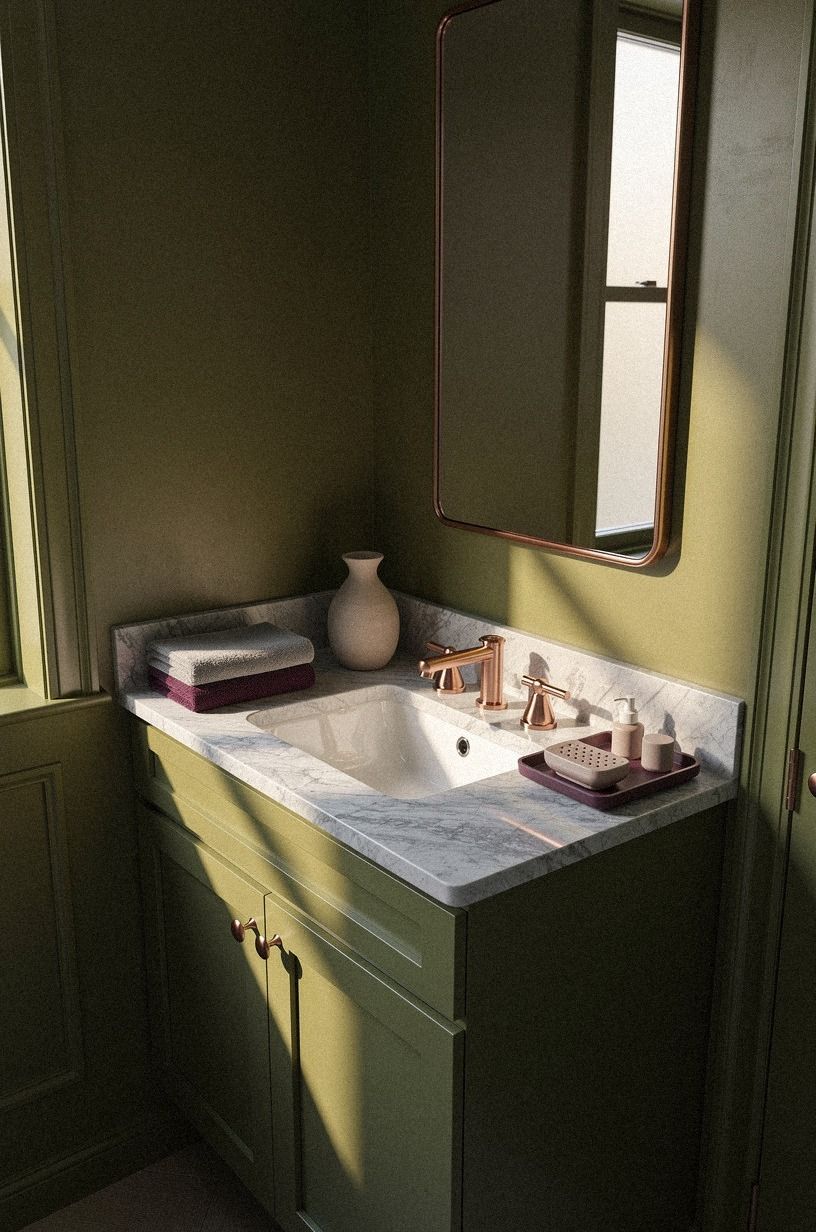
Olive green suits a tiny bathroom because it carries warmth without the visual weight of blue-black paint. Plum, grey, rose gold, and Carrara marble with subtle grey veining create a layered palette that still feels airy. Use olive on the vanity, lower wall, or ceiling instead of forcing it across every surface.
You’ll want to preserve a generous strip of pale wall around the mirror. That open area acts like visual breathing room and makes the fixture cluster feel less compressed. A compact wall-mounted basin can help preserve floor space, while a slim shelf keeps daily items off the counter.
A narrow mirror with integrated lighting is often more useful than a decorative frame. Don’t sacrifice circulation for a larger cabinet. Your bathroom needs at least 21 inches in front of the toilet, and that clearance should guide every storage decision.
Explore these small dark green bathroom layouts alongside these compact dark green bathroom layouts. The right scale can make a tiny room feel surprisingly generous.
14Hang globe sconces over a green vanity
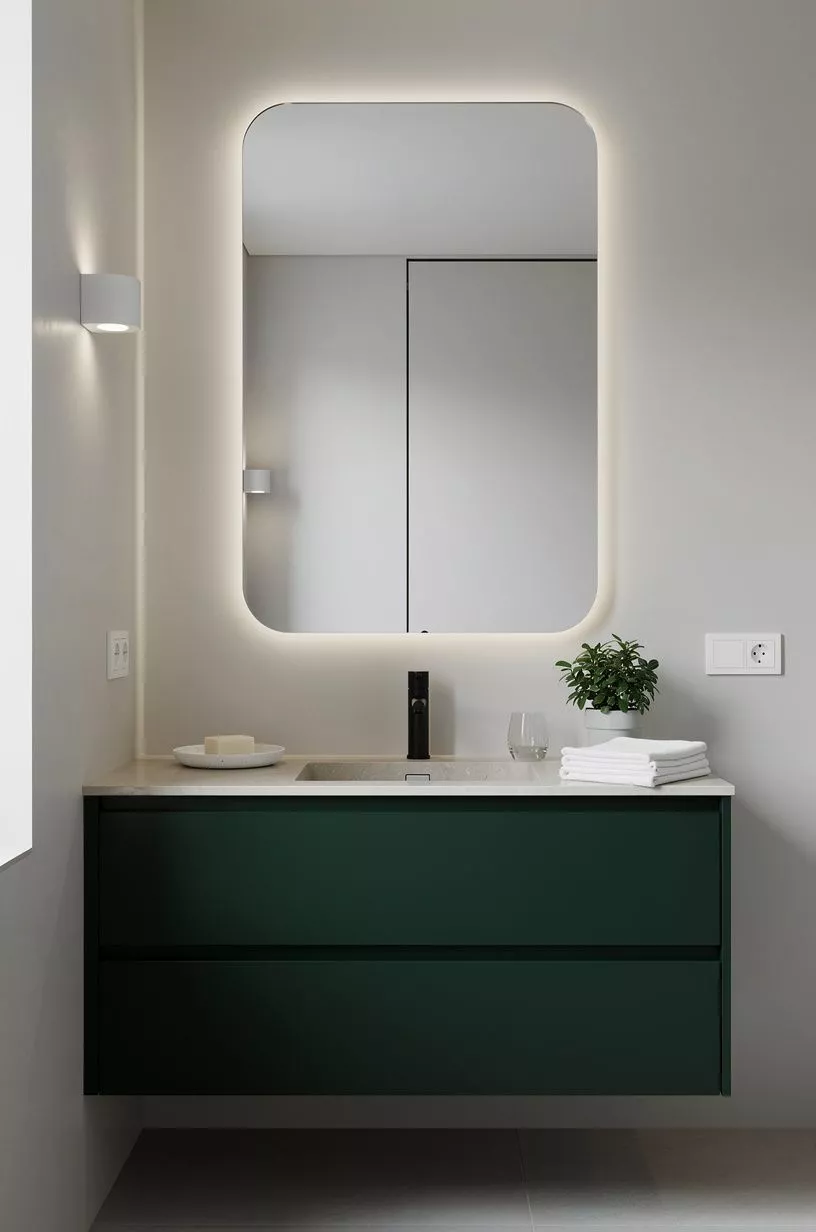
Globe sconces above a green vanity soften a windowless bathroom with broad, even light. Navy, white, walnut, and reclaimed weathered teak make the palette feel collected rather than showroom-perfect. Opal glass is especially useful because it diffuses brightness across the face.
You’ll want sconces placed at a comfortable viewing height and close enough to the mirror to reduce side shadows. If the mirror is wide, a centered overhead fixture can supplement the pair. A dimmer gives your room two moods: practical morning light and a calmer evening glow.
Don’t rely on one overhead fixture. It throws shadows beneath the brow and chin, which makes the vanity less pleasant to use.
If wiring is difficult, a professional assessment can identify a safe route before tile or wallpaper goes in. Better lighting changes the room immediately!
15Contrast green cabinetry with a checkerboard floor
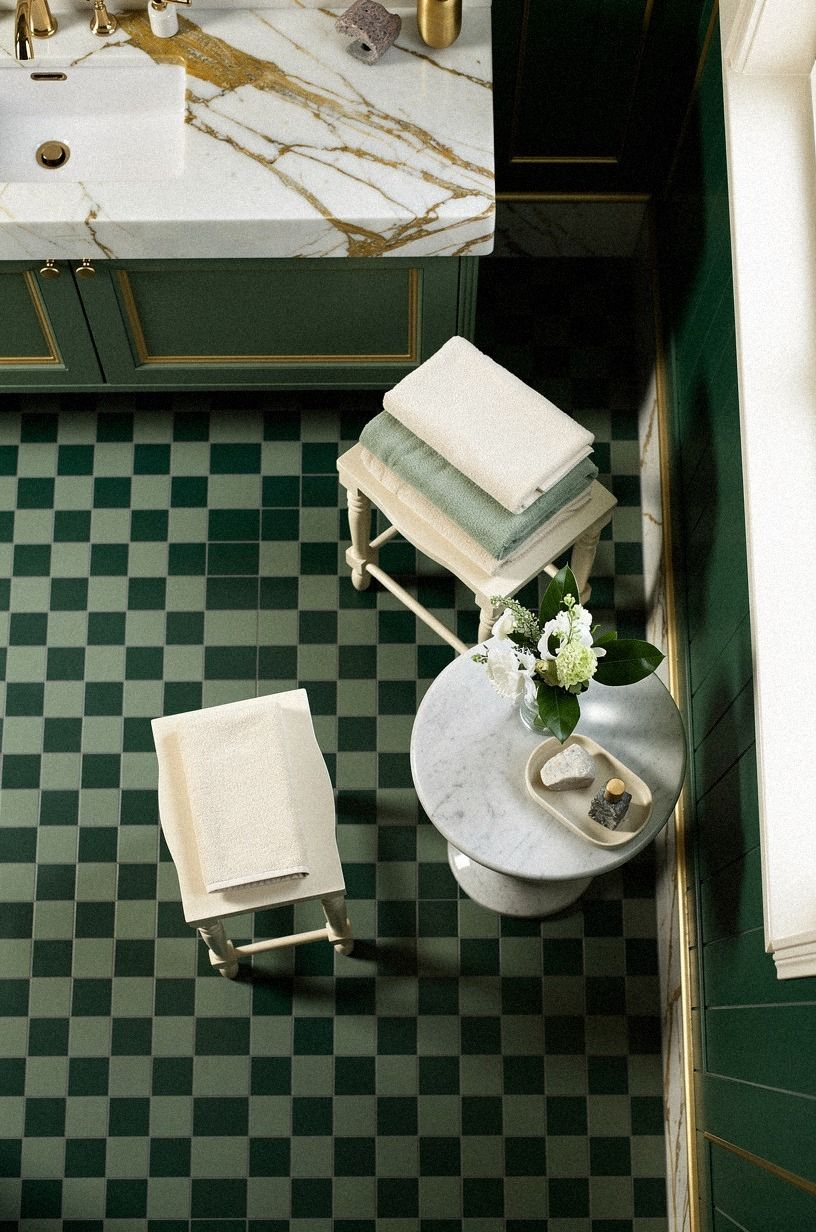
A checkerboard green floor brings pattern below eye level, leaving the walls calmer and more spacious.
16Build a cosy corner with green panelling
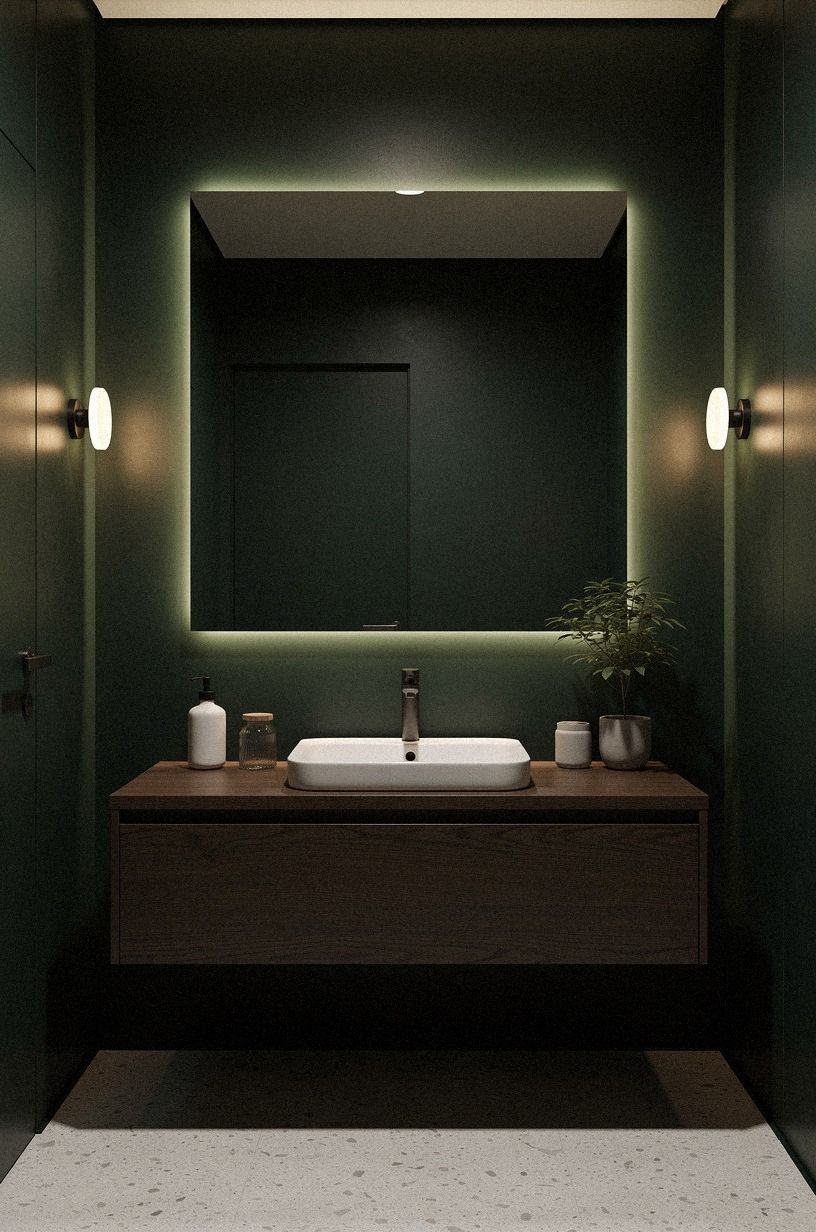
Green panelling creates a cosy corner around a vanity or freestanding tub, especially when the room includes forest green, rust, natural oak, and cerused white oak. Use narrow panels or applied moulding to add rhythm without stealing too much width. The texture gives flat paint something to catch.
You’ll want moisture-resistant materials and sealed joints near the basin. A warm wall light placed over the panelled area can reveal the shadows without making the corner gloomy. Keep the panel height consistent around the room if the space is small, because abrupt stops can make the walls feel shorter.
A plain painted wall often works better above the panelling than another decorative surface. Don’t add shelves to every panelled section. One useful ledge for folded towels or a small ceramic vessel is enough to keep your bathroom practical.
17Echo green tiles through matching ceramic accessories
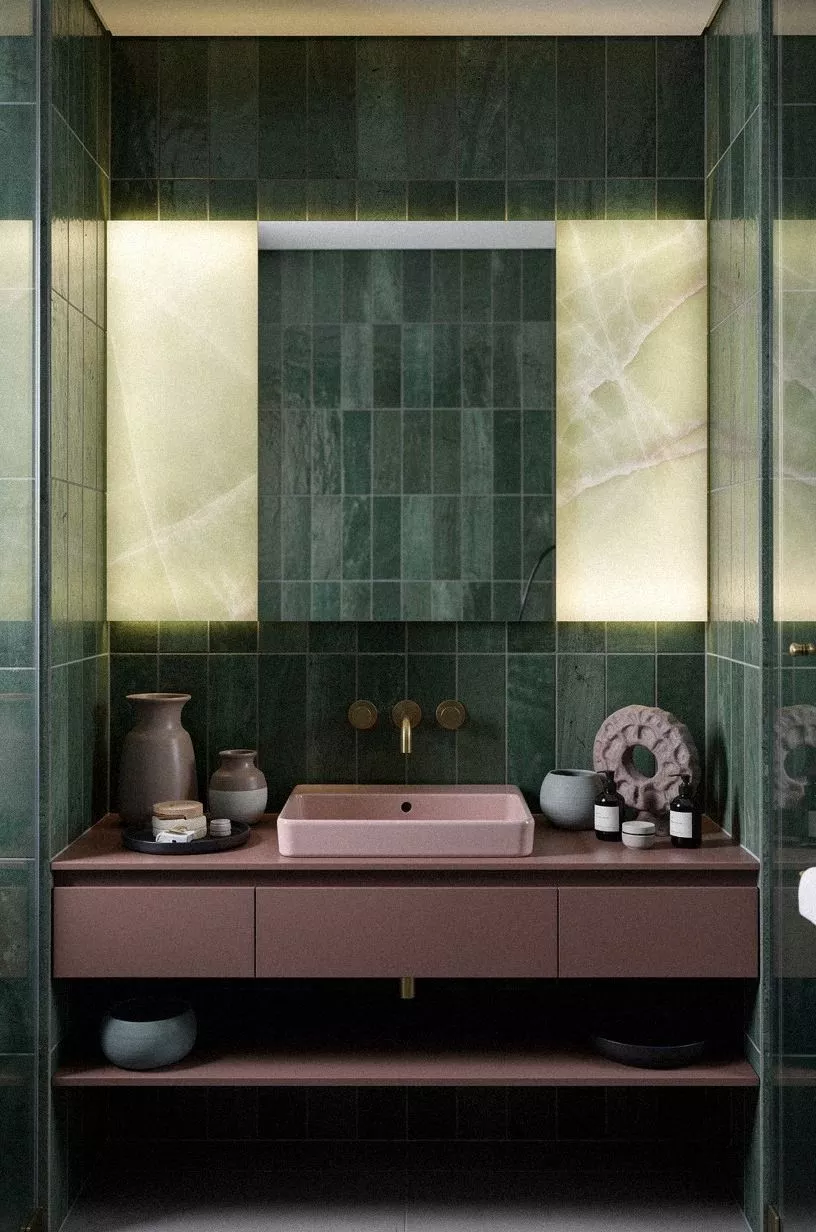
Matching ceramic accessories can repeat the tile color without adding more permanent work. Dusty rose, charcoal, brass, and backlit translucent onyx create a rich palette around a green soap dish, toothbrush cup, or small storage jar. Repetition helps the room feel considered, even when the fixtures are basic.
You’ll want three or four ceramic pieces at most. A soap dispenser near the basin, a shallow tray, and one lidded container provide enough color echo. Choose handmade surfaces with slight variation rather than identical glossy pieces, so the room keeps a relaxed quality.
Don’t place green objects on every shelf. Your eye needs neutral pauses, especially beside dark tile. A warm white towel and one charcoal accessory can keep the color connection from becoming a theme-park effect.
For more organic material combinations, browse these dark green wood bathroom details and these walnut bathroom details.
18Warm dark green walls with walnut accents
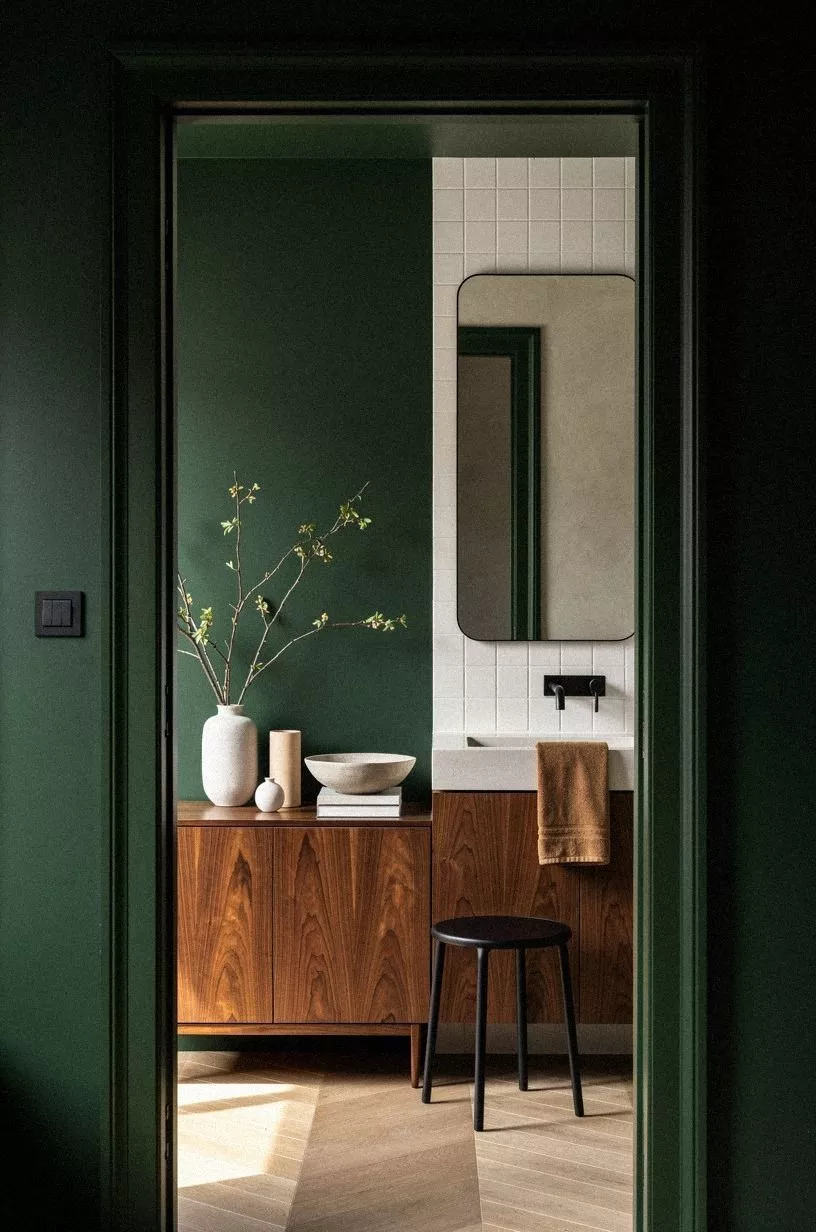
Walnut accents warm dark green walls because the wood has enough depth to stand beside saturated color.
Why the dark-green decision rule works
Dark green works in a windowless bathroom when the color has a job beyond decoration. It can frame the mirror, ground the vanity, connect tile to textiles, or make a ceiling feel intentional.
Problems begin when every surface carries equal visual weight. Your eye needs a dark anchor, a reflective surface, and one pale interruption.
A useful decision rule is to choose one dominant green, one warm material, and one light-reflective finish. That might mean olive cabinetry, walnut shelving, and a cream basin.
It could also mean forest green walls, aged brass, and a broad mirror. You’ll get more depth from this three-part relationship than from adding five unrelated colors.
The supplied cost ranges show why a focused change can be sensible. A budget bathroom refresh with paint, mirror, faucet, and textiles typically falls between $200 and $1,200. A mid-range project with a new vanity, partial wall tile, and lighting reaches $3,000-$9,000.
A high renovation with shower, floor, wall tile, and plumbing can reach $12,000-$30,000 or more.
You’ll usually get the best visual return from paint, lighting, mirror scale, and hardware before changing plumbing. Zellige tile commonly sits around $15-$35 per square foot, while subway tile sits around $2-$10 per square foot. That gap matters when a small bathroom still needs enough material for clean alignment and waste cuts.
The practical details deserve equal attention. A vanity between 32 and 36 inches supports comfortable daily use, a standard tub is 60 by 30 inches, and a comfortable shower begins at 36 by 36 inches.
These dimensions shape the design more than a color trend. But the right green can make those fixed boundaries feel far less restrictive.
The Questions Worth Answering First
What is the best dark green bathroom layout for a small windowless space?
The strongest choice is a floating olive or forest green vanity with a white basin and broad mirror. Visible floor space helps a small bathroom feel lighter, while open shelving keeps bulky cabinetry from dominating the room. You’ll gain more openness by protecting circulation than by adding extra storage.
Where can you buy dark green bathroom pieces on a budget?
Accessible vanities, mirrors, towels, and lighting are available through large home retailers and local resale channels. Facebook Marketplace and thrift shops can provide solid wood mirrors or brass hardware at lower prices. Second-hand wood adds warmth without requiring a full renovation, and you’ll often find more distinctive shapes.
How much does a dark green bathroom makeover cost?
A focused refresh typically costs about $200-$1,200 for paint, a mirror, a faucet, and textiles. Free layout changes include clearing the counter, moving storage upward, and improving bulb placement. Tile and plumbing push the project into higher cost ranges, so you’ll benefit from choosing the visual priority first.
Can you create a dark green bathroom on a budget?
Yes, and paint, textiles, and lighting create the quickest shift. Low-cost impact can come from a deep green vanity repaint, moss towels, and warmer bulbs.
A thrifted mirror or removable shelf can add character without changing plumbing or tile. You don’t need every finish to change at once.
Is a dark green bathroom worth it in a small space?
Yes, because a small room gives dark color a clear boundary. Controlled contrast keeps the space from feeling crowded: use one green anchor, one pale surface, and one reflective finish. A floating vanity can preserve the floor line, while a broad mirror can spread available light.
Is dark green a good idea for a rental?
Yes. No-damage updates include removable wallpaper above a painted temporary panel, a tension rod for textiles, peel-and-stick floor accents, and freestanding storage. Keep permanent fixtures neutral if the lease restricts paint or hardware changes.
You’ll still create a strong palette through accessories and lighting.
Where to Start First
Start with the wall color. A dark green backdrop gives every later choice a direction, while the wrong undertone can make brass, walnut, and tile fight each other. Choose the paint before buying accessories, then save these small dark green bathroom layouts for the next planning session.