Luxury Mediterranean spa bathroom ideas can create resort-level impact with a $200-$1,200 refresh, depending on the scope. Travertine, Roman arches, zellige, limewash, and warm metal create the feeling without a full rebuild. The strongest rooms stay edited, tactile, and practical. You won’t need every detail at once.
- Clad walls in honed travertine slabs (The Travertine Envelope Rule)
- Frame the tub with a Roman arch
- Install a carved stone basin
- Layer zellige tiles in sunbaked neutrals
- Float a teak vanity over limestone (The Floating Vanity Line)
- Sculpt a niche for folded hammam towels
- Surround the bath with fluted plaster (The Fluted Shadow Rule)
- Add an arched skylight above the shower (The Three-Height Light Stack)
- Pair antique brass fixtures with marble: Is the contrast worth it?
- Create a pebble mosaic underfoot (The Warm Footprint Method)
- Build a hammam bench into the wall
- Wash the ceiling in warm limewash
- Anchor the room with a limestone tub (The Monolithic Bath Principle)
- Hang woven lanterns above the soaking area
- Carve recessed shelving into the stone (Stone over Freestanding Storage)
- Extend terracotta tiles into the shower
- Use a freestanding bath beneath shutters
- Line the vanity wall with mosaic (The Mosaic Threshold)
- Soften stone surfaces with linen curtains
1Clad walls in honed travertine slabs (The Travertine Envelope Rule)
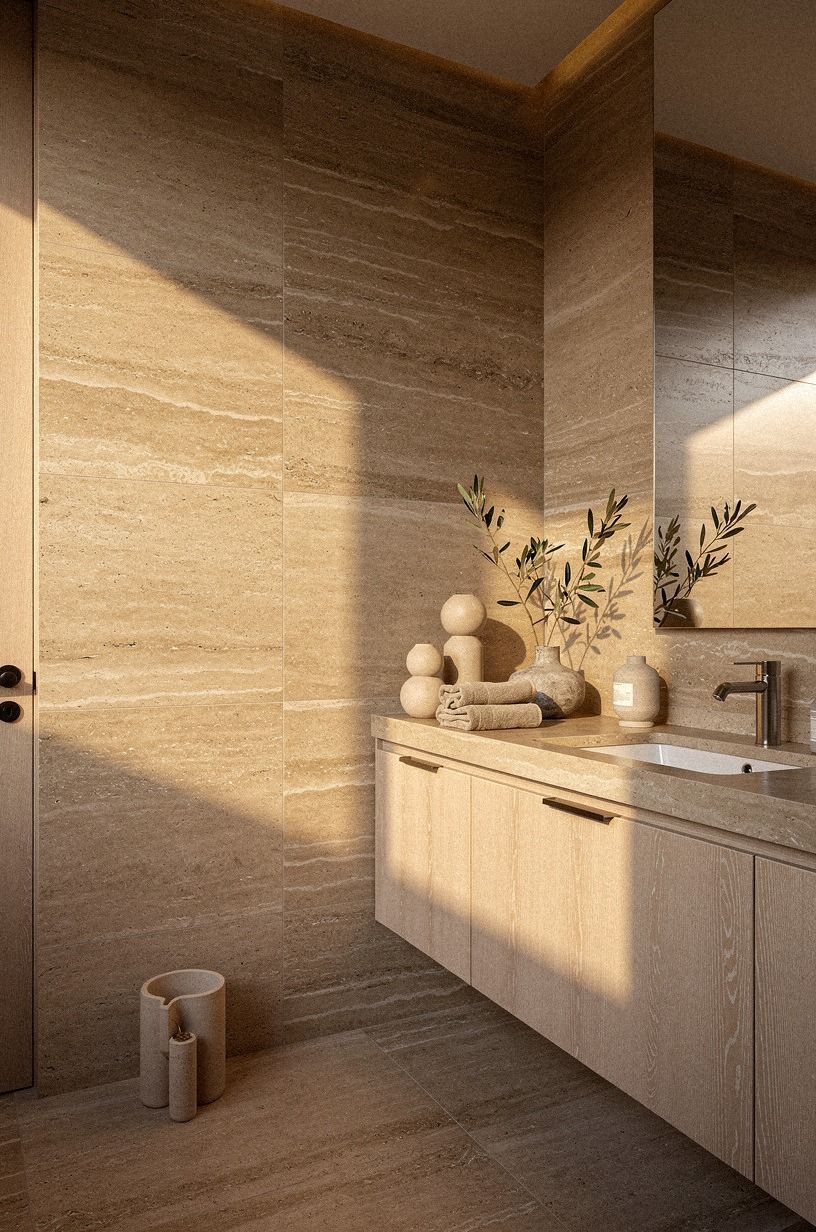
Cerused white oak brings quiet, earthy depth to a Mediterranean bathroom. Use the wood tone across the vanity or a dry wall so terracotta, olive, and stone feel connected. The grain catches light softly.
It won’t compete with carved stone or woven accents.
The Travertine Envelope Rule keeps one material moving across at least two planes. Carry the oak finish between the vanity and an adjacent dry surface, especially in a narrow room.
Skip glossy finishes here. Every water mark will show.
For a lower-cost direction, borrow the palette with warm paint and one substantial stone ledge. Browse these natural bathroom material ideas for related surfaces.
2Frame the tub with a Roman arch
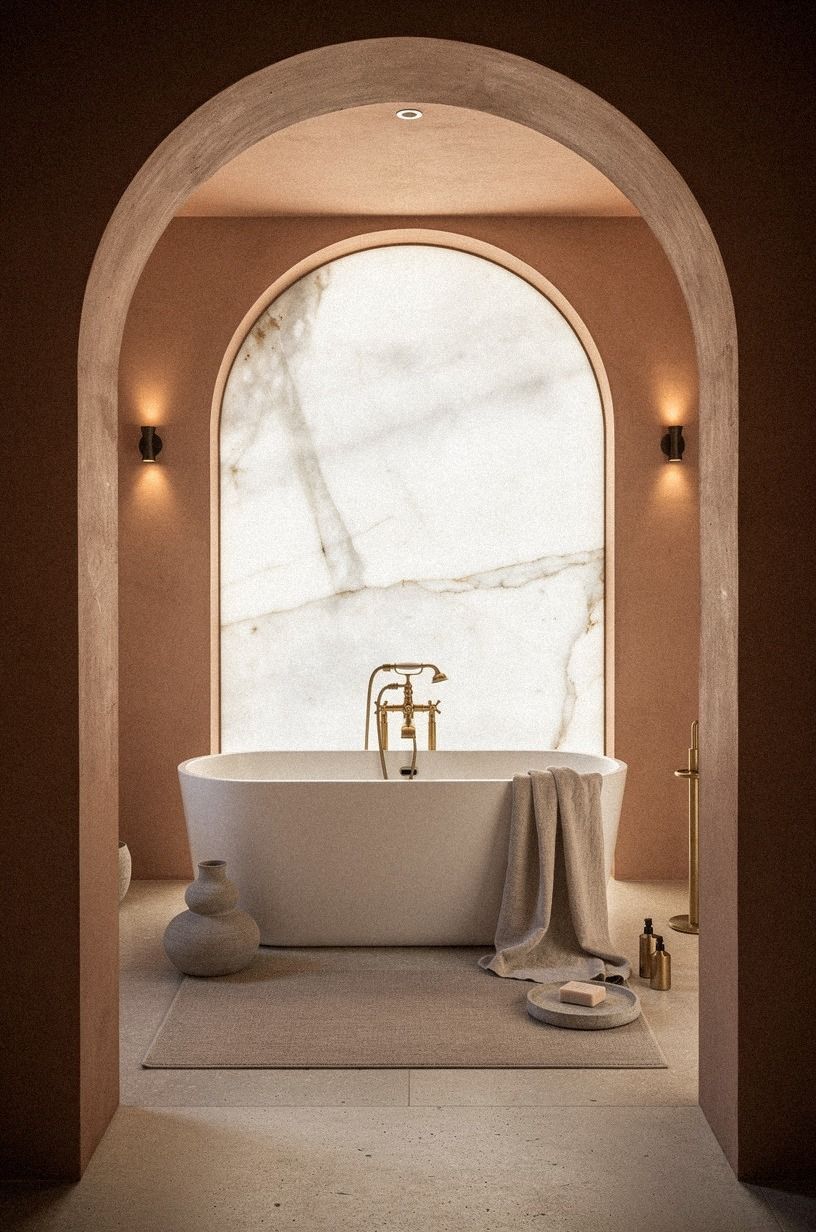
A Roman arch turns a standard tub wall into architecture. Shape the opening around a freestanding bath, then place backlit translucent onyx or soft plaster inside the recess. The clay, linen, and aged brass palette feels warm at dusk.
A Roman arch works best when the surrounding wall stays restrained. It doesn’t need heavy ornament. Add a linen stool, one brass hook, and a folded towel rather than a crowded ledge.
If the bathroom is compact, use a shallow painted arch instead of structural masonry. These spa retreat bathroom layouts show how open framing can preserve space.
3Install a carved stone basin
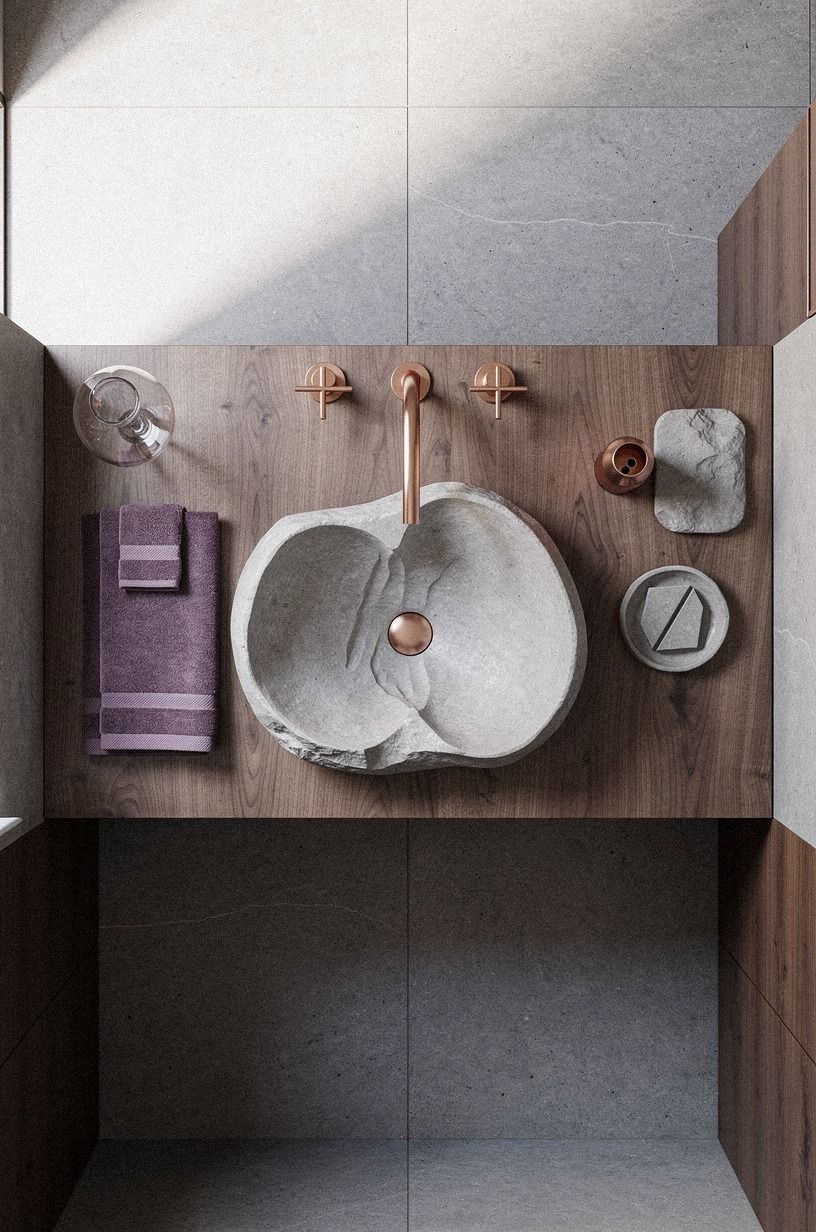
A carved basin gives the vanity a sculptural center without relying on decoration.
4Layer zellige tiles in sunbaked neutrals
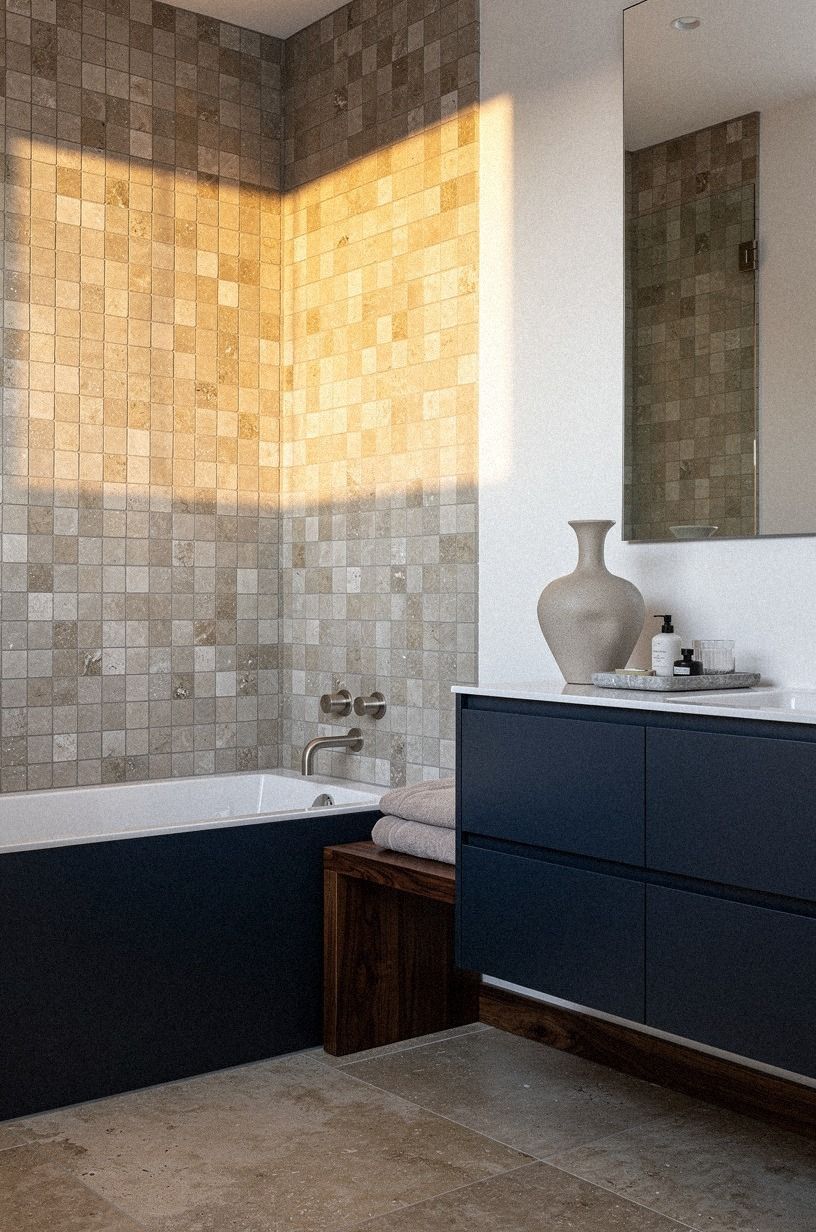
Hand-glazed zellige tile brings irregular edges and small shifts in color to a navy, white, walnut, and warm travertine scheme. Lay it across the shower wall or backsplash. The uneven glaze catches daylight in tiny flashes.
You don’t need a complicated pattern. A stacked layout gives handmade tile a cleaner frame, while a running bond feels more rustic.
Keep grout close to the tile color. Otherwise, the wall can look busier than expected.
Zellige tile typically costs around $15-$35 per square foot. Use it on one strong plane rather than every wall. See these green tile bathroom surfaces for restrained tile placement.
5Float a teak vanity over limestone (The Floating Vanity Line)
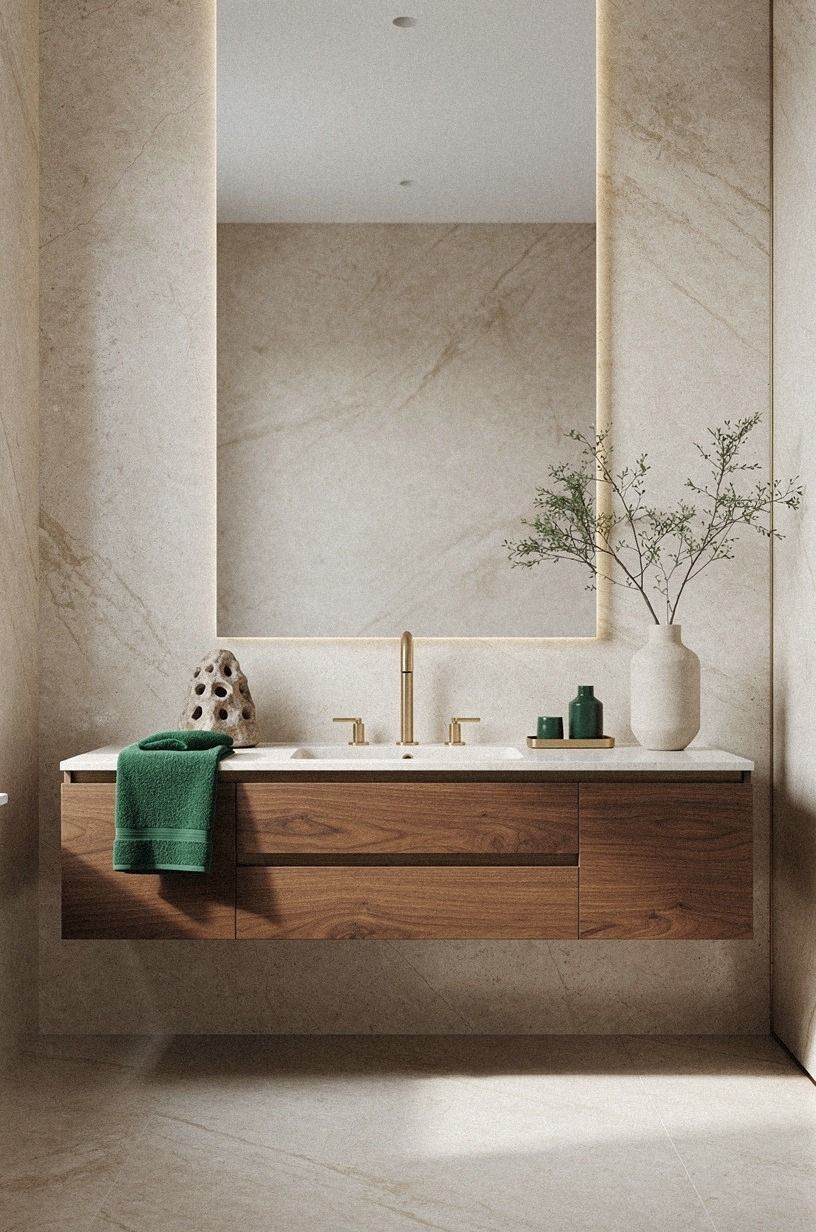
A floating vanity creates a visible strip of floor beneath the cabinet. That gap makes the room feel airier without removing storage. Pair the cabinet with unlacquered brass that can develop patina against emerald, gold, and cream.
The Floating Vanity Line works when the cabinet begins high enough to reveal a clean shadow beneath it. You’ll want the vanity between 32 and 36 inches high, with plumbing planned before the wall closes.
Don’t use a flimsy laminate imitation beside limestone. A substantial cabinet face, even on a simpler cabinet box, gives the room enough texture.
6Sculpt a niche for folded hammam towels
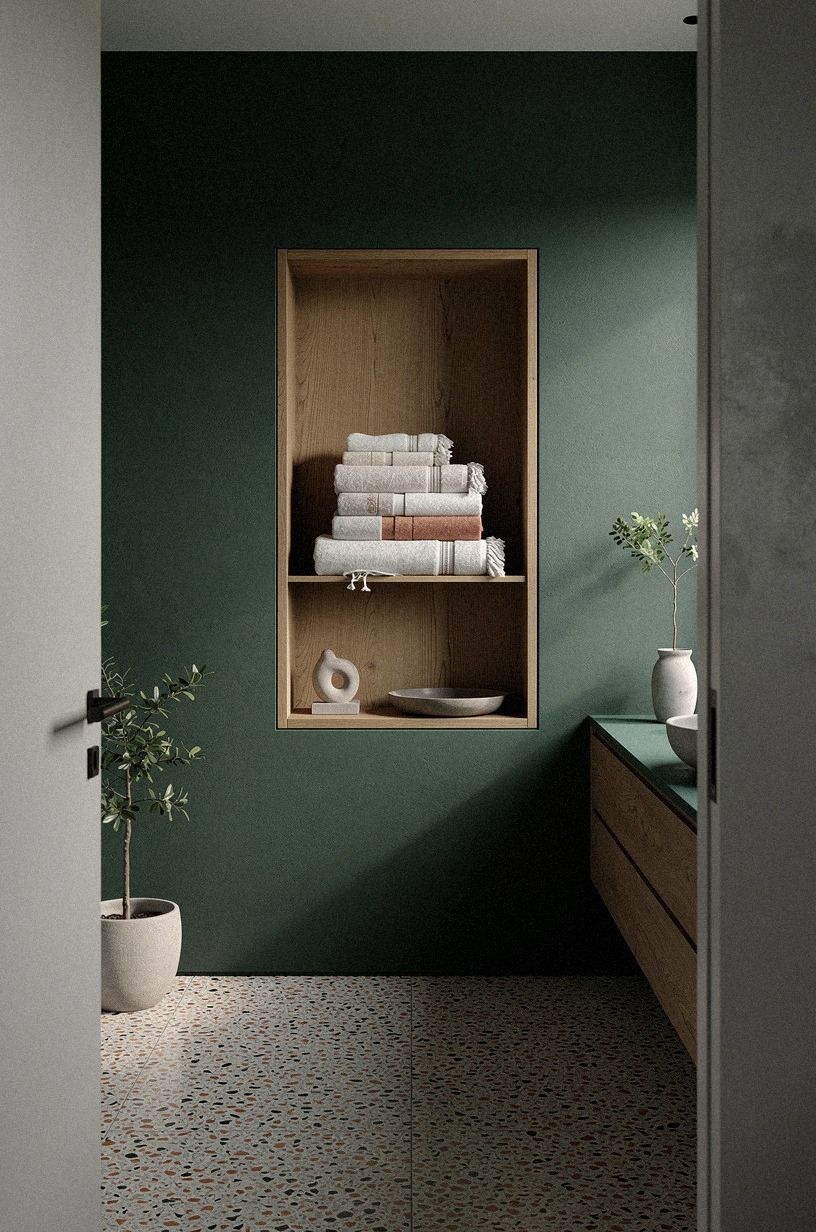
A recessed niche gives folded hammam towels a permanent home.
7Surround the bath with fluted plaster (The Fluted Shadow Rule)
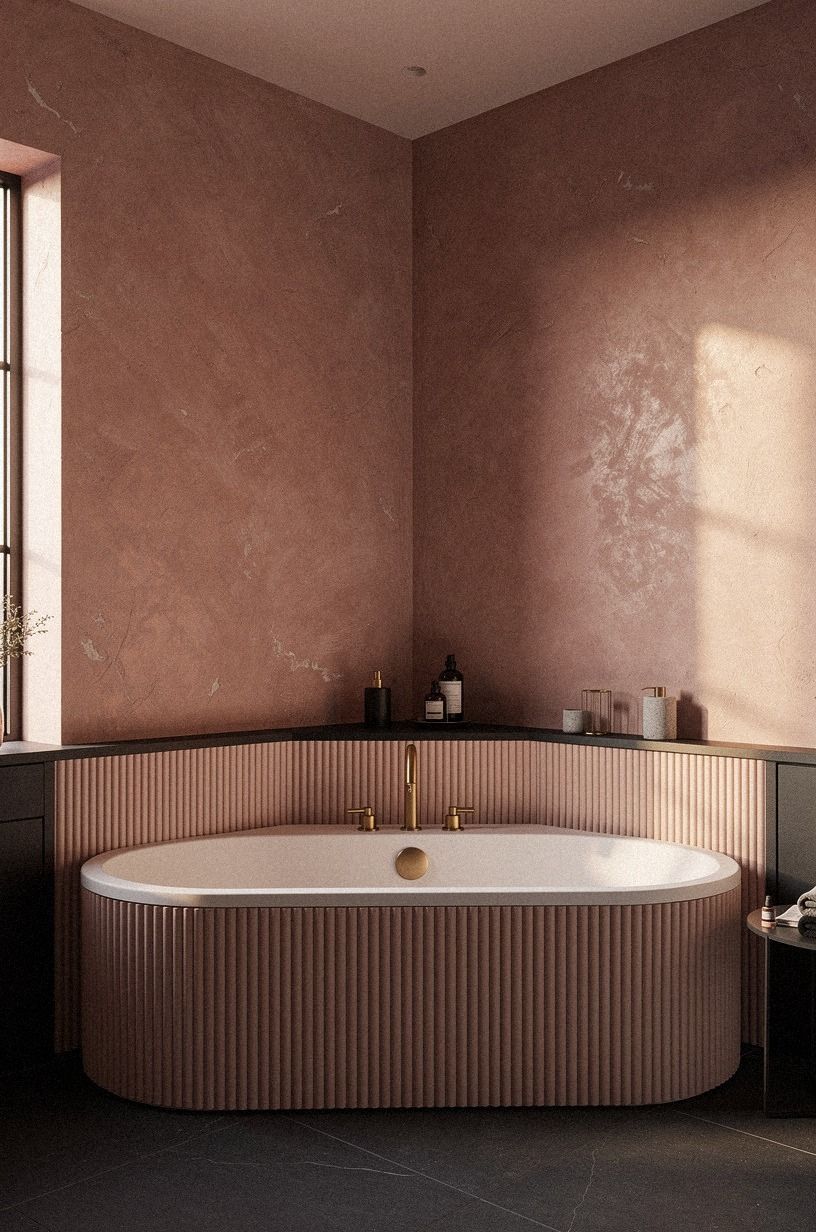
Fluted plaster adds vertical rhythm around a bath. It gives dusty rose, charcoal, and brass a softer setting. Hand-applied Venetian plaster catches light along each shallow ridge.
The Fluted Shadow Rule says the ridges should stay subtle enough to clean easily and strong enough to read from the doorway. You’ll need a properly sealed finish in splash zones.
Delicate plaster shouldn’t sit directly behind a shower without the right system. Use charcoal on the floor or hardware, not across every wall. These luxury spa bathroom details show how texture can carry a room without extra accessories.
8Add an arched skylight above the shower (The Three-Height Light Stack)
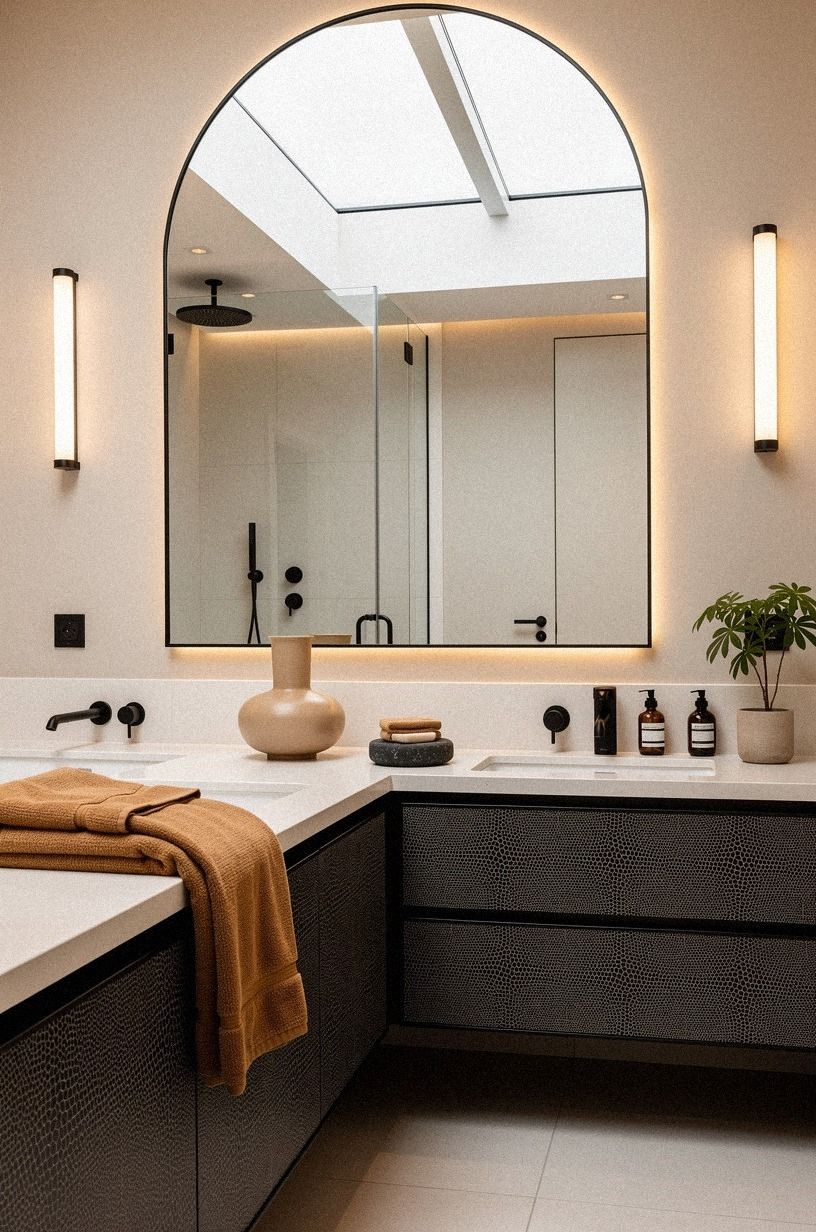
An arched skylight gives a shower the relaxed quality of an outdoor bathing space. The curve also echoes a Roman arch without adding another major construction project.
The Three-Height Light Stack combines the skylight, a wall sconce, and low-level candlelight or a dimmable strip. Keep the finishes warm. Shagreen accents, pale plaster, and soft metal will support the Mediterranean mood.
Check privacy, waterproofing, and local building requirements before cutting the roof. A smaller skylight can still change the room’s atmosphere. Start small!
9Pair antique brass fixtures with marble: Is the contrast worth it?
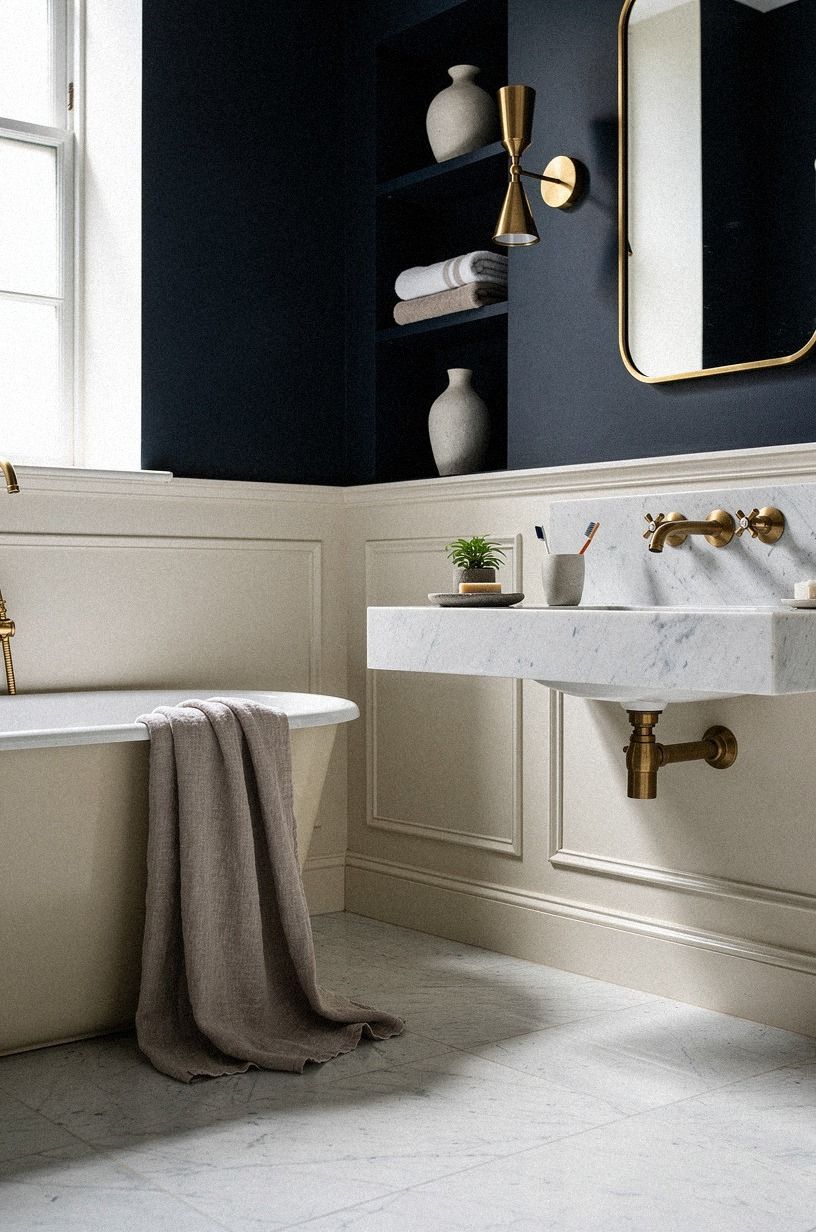
Yes, when the blue, copper, and ivory palette has enough softness around it. Antique brass adds a muted glow to marble, while washed Belgian linen prevents the room from looking too formal.
You’ll want the brass finish to repeat at least twice, perhaps at the faucet and mirror frame. A washed linen curtain can soften the hard edge of a marble shower without hiding the stone completely.
Don’t pair polished chrome with antique brass here. The cold shine breaks the midnight-blue atmosphere. The best contrast feels collected over time, even when every piece was selected together.
10Create a pebble mosaic underfoot (The Warm Footprint Method)
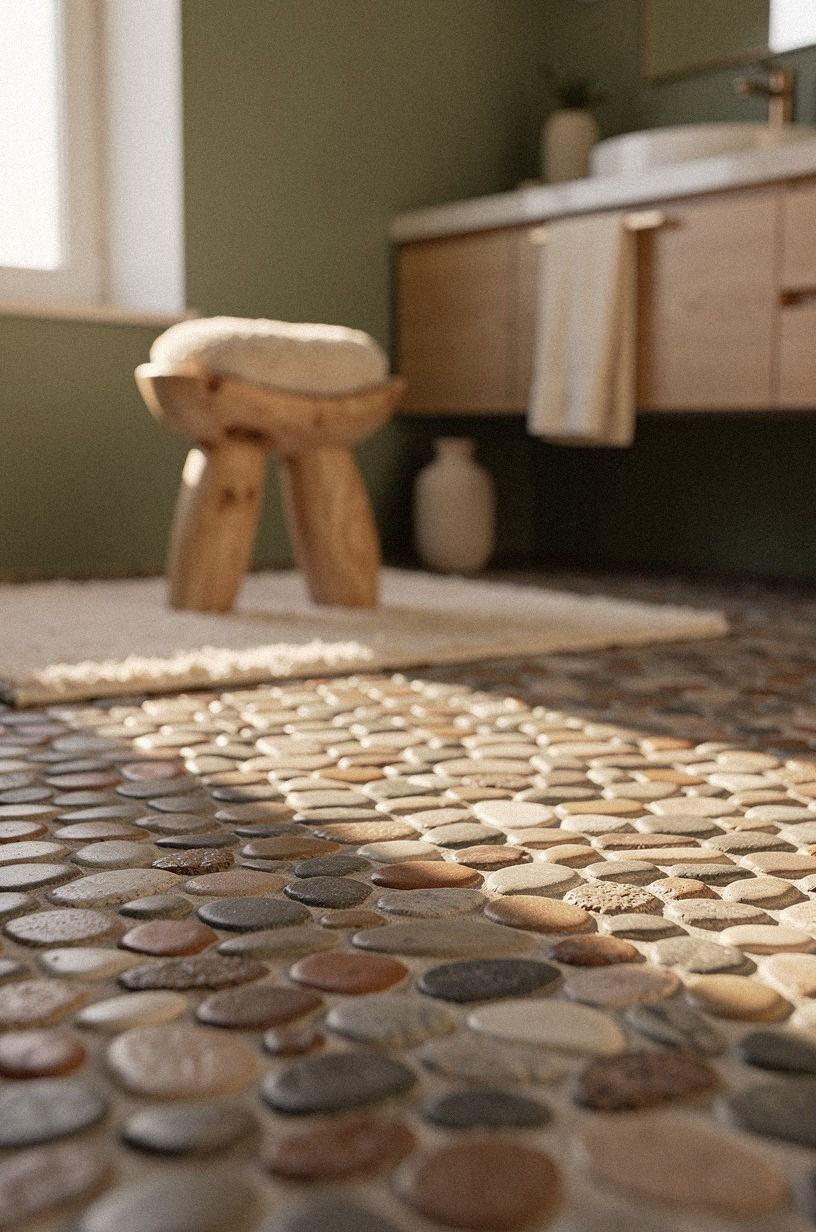
A pebble mosaic underfoot brings the sage green, warm cream, and natural wood palette closer to the body. Rounded stones create a tactile surface. Organic bouclé on a stool or bench adds softness above.
The Warm Footprint Method keeps the pebble surface in one defined zone, such as the shower floor or the area beneath a soaking tub. You’ll want flat, well-set stones with grout that supports drainage and cleaning.
Don’t cover the entire room if the pattern becomes visually noisy. A narrow strip beside the tub can provide the same earthy effect with less maintenance. These Japandi bathroom textures offer a similar approach to natural texture and restraint.
11Build a hammam bench into the wall
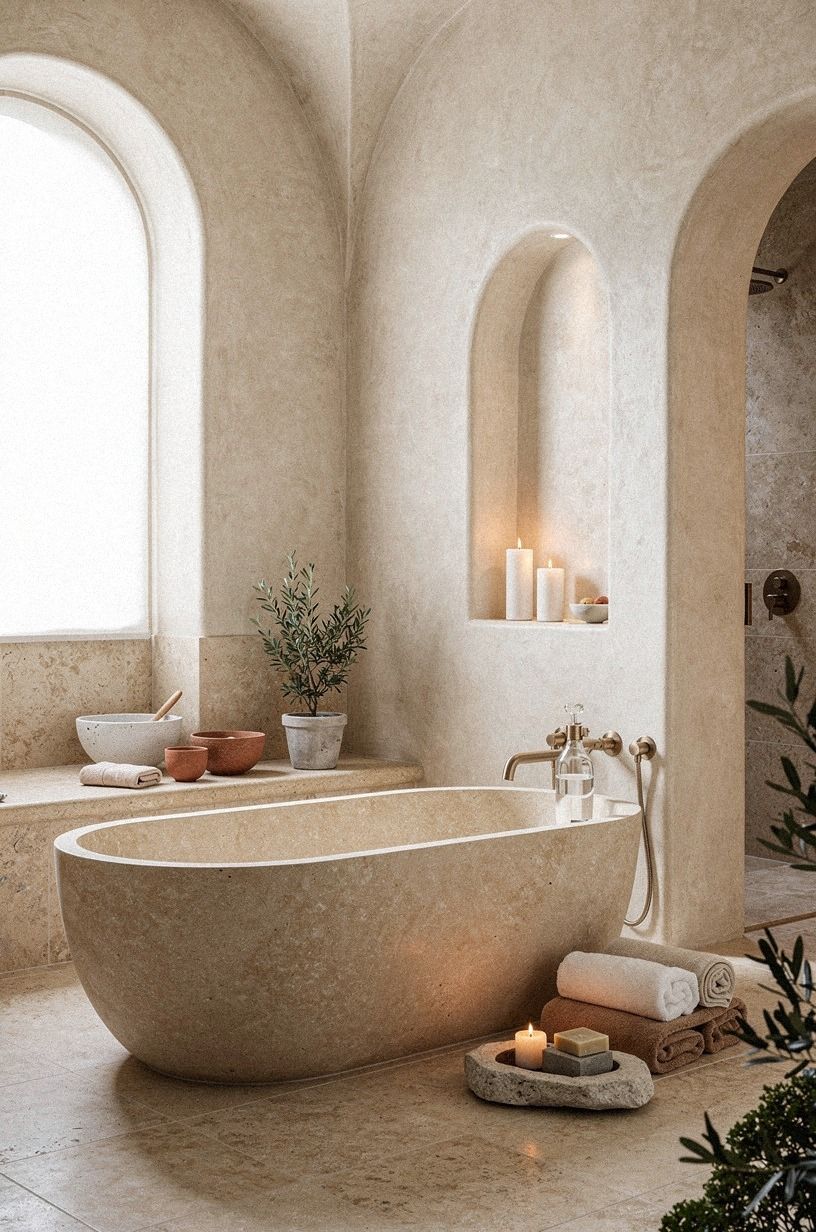
A built-in hammam bench gives the shower a useful resting place.
12Wash the ceiling in warm limewash
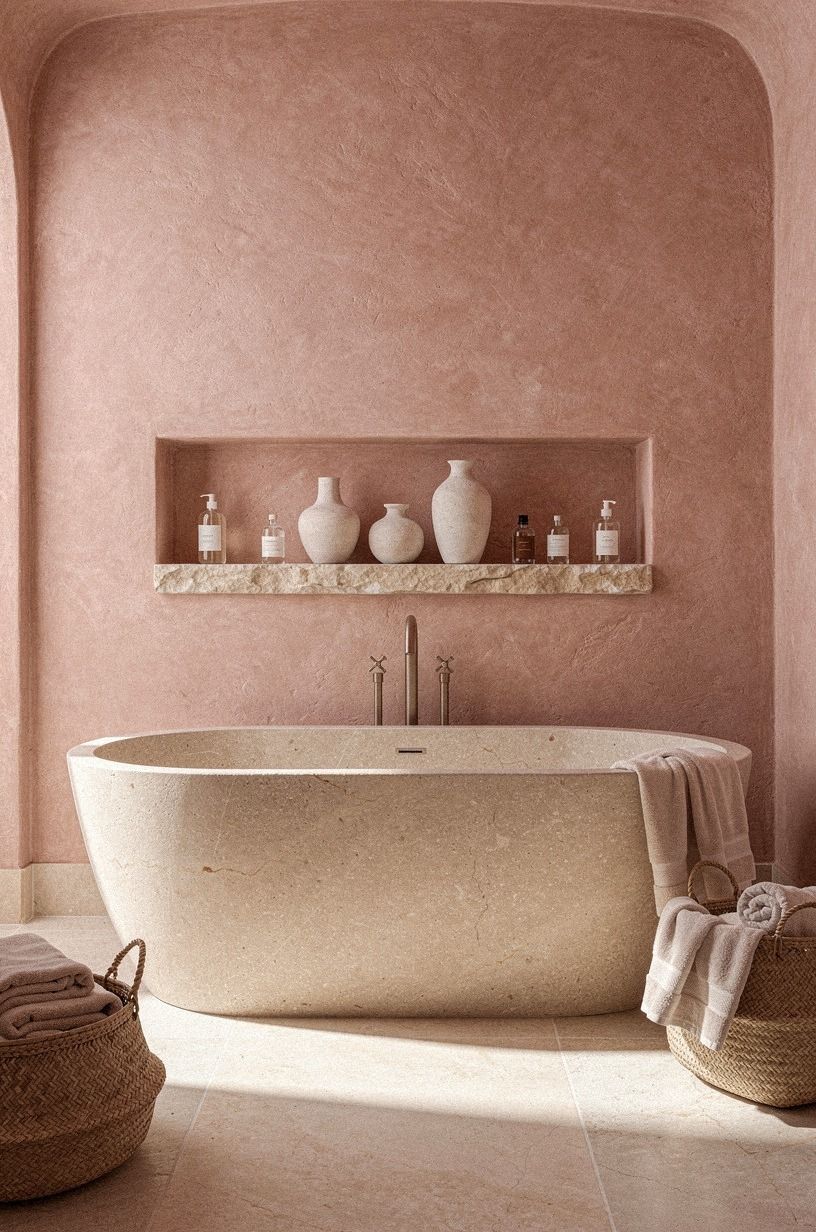
A warm limewashed ceiling shifts the clay, linen, and aged brass palette upward. The soft variation works especially well above a shower or freestanding tub, where a flat white ceiling can feel disconnected.
You’ll want a breathable finish with subtle movement rather than heavy brush marks. Deep-pile mohair velvet on a nearby stool or window seat adds a gentle tactile note, but it shouldn’t enter a splash zone.
Warm limewash works best when the wall color sits close to it. The transition will feel quiet.
Don’t use bright optic-white trim if the goal is a relaxed resort atmosphere. See these beige bathroom palettes for tonal color transitions.
13Anchor the room with a limestone tub (The Monolithic Bath Principle)
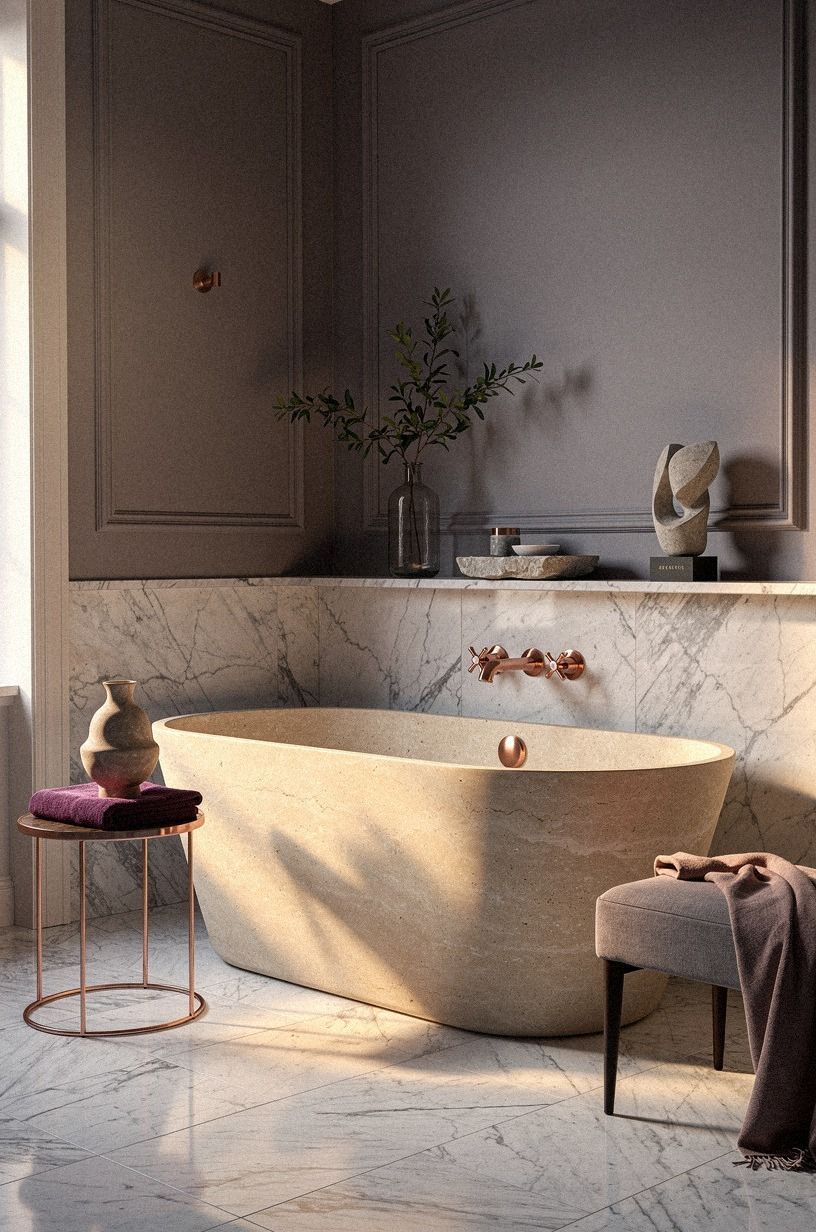
A tub in Carrara marble with subtle grey veining anchors a plum, grey, and rose-gold room with a strong horizontal form.
14Hang woven lanterns above the soaking area
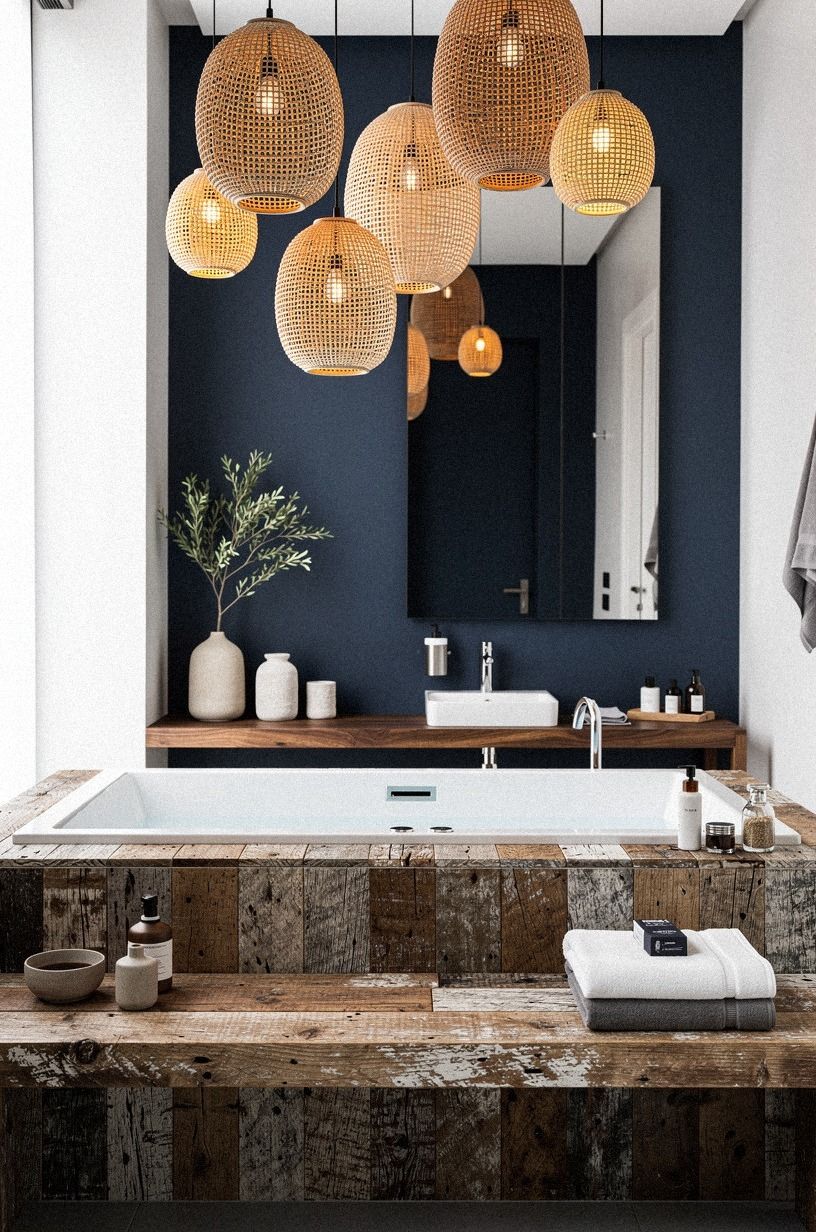
Woven lanterns bring a soft, filtered glow to a navy, white, and walnut bathroom. Hang them above the soaking area where light can fall across reclaimed weathered teak, rather than directly over a wet basin.
You’ll need fixtures rated for the bathroom zone and positioned according to local electrical requirements. Don’t use a row of identical lanterns if the ceiling is low. Repeated shapes can feel busy.
One larger pendant often looks more relaxed than three small fixtures. A dimmer makes the evening glow easier to control. A rental can still feel finished!
15Carve recessed shelving into the stone (Stone over Freestanding Storage)
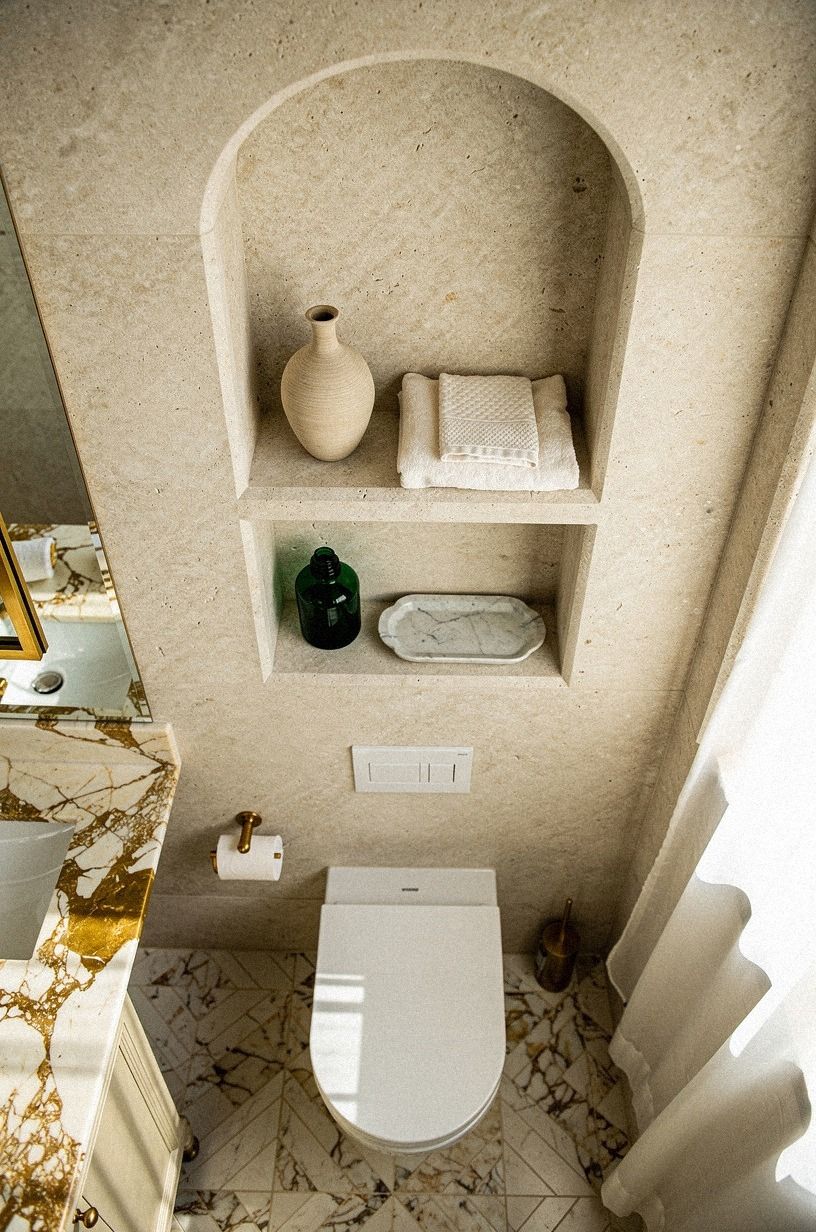
Recessed shelving keeps Calacatta marble with gold veining visible while giving toiletries a defined location.
16Extend terracotta tiles into the shower
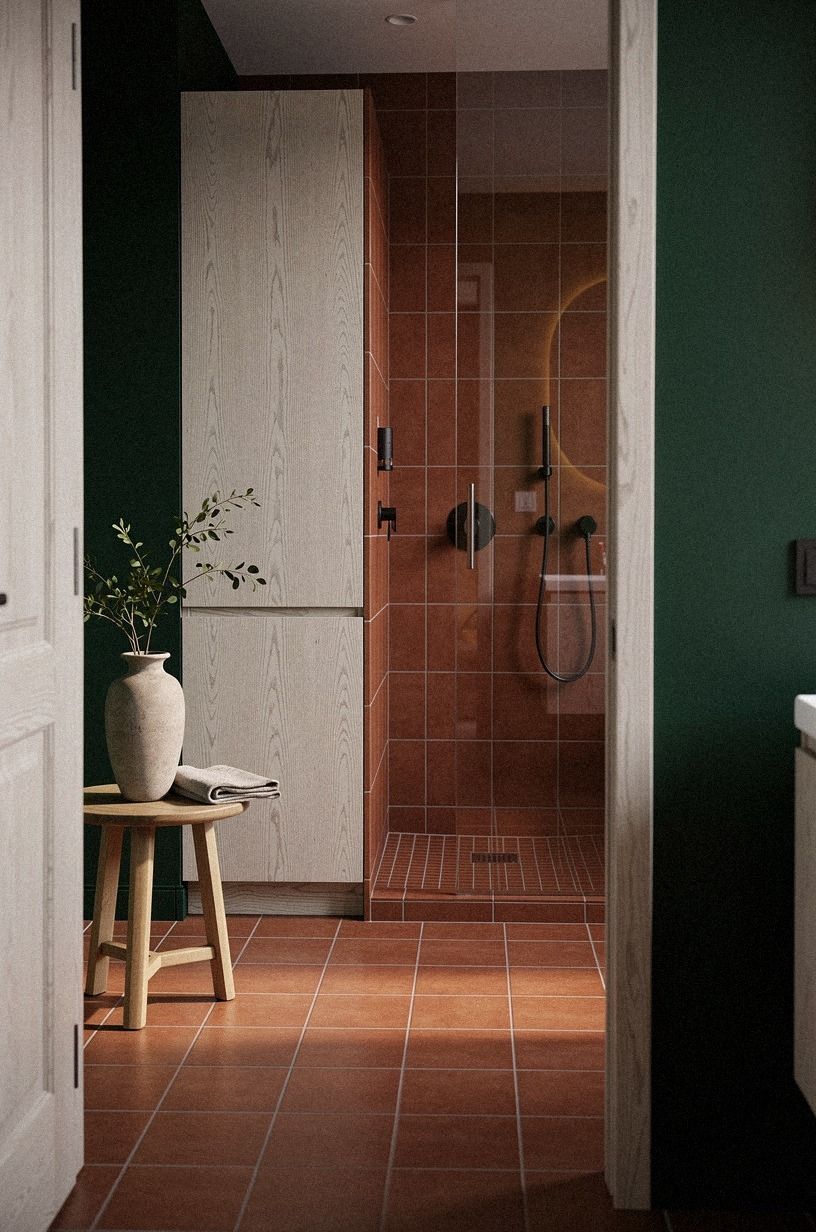
Extending a warm stone tone from the floor into the shower makes a forest green, rust, and cerused white oak room feel continuous. The color shift creates a warm base without adding another material.
Choose a matte tile with a sealed finish suited to wet areas. Smaller tiles can improve grip, while larger formats create fewer grout lines. Confirm slip ratings before ordering.
Let the wall tile stop at a clear architectural point. A clean corner or ceiling line will look more intentional than a random cutoff. These green tile bathroom ideas can help balance earthy color with simple geometry.
17Use a freestanding bath beneath shutters
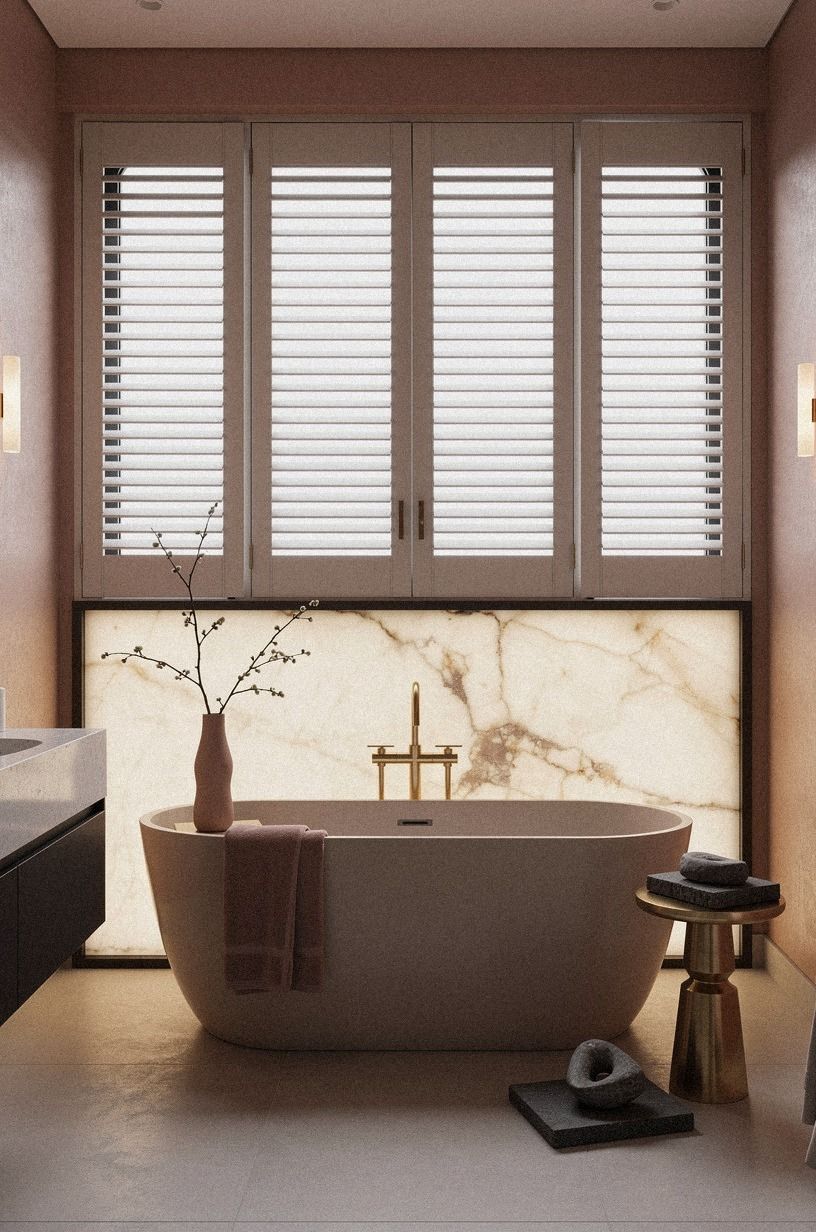
A freestanding bath beneath shutters creates a calm focal point in a dusty rose, charcoal, and brass bathroom. Backlit translucent onyx behind the tub adds depth without requiring a busy pattern.
You’ll want enough clearance for the shutters to open fully and for cleaning around the tub. Translucent onyx is dramatic, so pair it with quiet brass and a plain tub rather than another sculptural feature.
Don’t place the bath so close to the wall that the shutters become difficult to operate. A small stool in charcoal or natural wood gives towels a landing spot and keeps the floor from looking empty.
18Line the vanity wall with mosaic (The Mosaic Threshold)
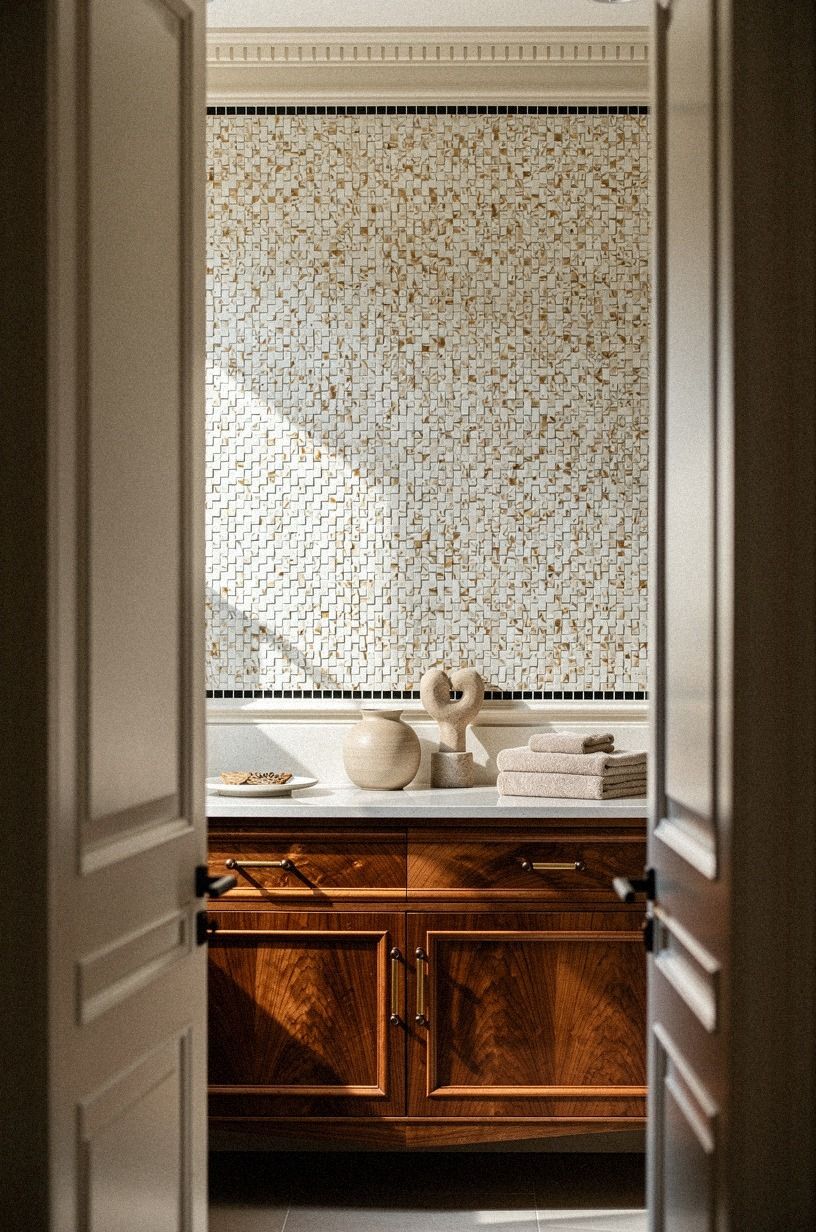
A mosaic vanity wall gives warm white, camel, and black accents a concentrated backdrop. Use book-matched walnut below the mosaic so the room has both pattern and grain. Keep the basin and mirror shapes uncomplicated.
The Mosaic Threshold works when the mosaic marks one important zone and stops cleanly at a corner or cabinet edge. You’ll want the pattern aligned with the vanity, not centered on an unrelated wall.
Don’t continue it across every surface. Repetition can erase the handcrafted feeling. These luxury bathroom proportions can help with focal-wall planning.
19Soften stone surfaces with linen curtains
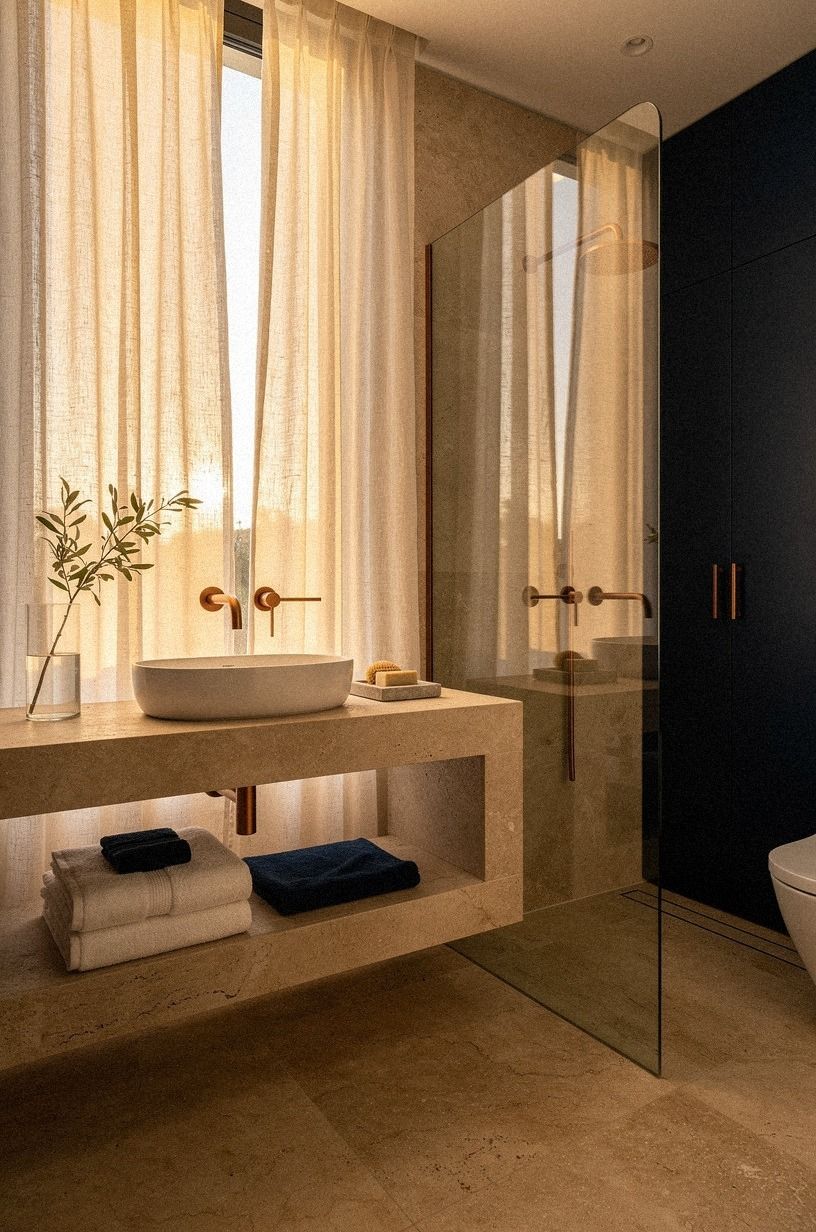
Linen curtains soften midnight blue, copper, and ivory without hiding the warm travertine beneath. Hang them outside the wet zone, where the fabric can move slightly with air and break up the hardness of stone.
You’ll want washed linen with enough weight to fall cleanly. Don’t let the hem pool near standing water. Warm travertine already has movement, so choose an ivory curtain with a restrained weave.
A tension rod can work for a rental, while a ceiling-mounted track gives a more permanent finish. These spa bathroom fabric ideas use textiles to make hard surfaces feel more welcoming. The room can feel softer without losing its stone character!
The Mediterranean Spa Decision Framework
A Mediterranean bathroom doesn’t need every familiar cue. Terracotta, arches, brass, linen, and stone can become heavy when each surface asks for attention. The strongest combination usually has one architectural gesture, one tactile material, and one warm light source.
If the walls already carry travertine, the vanity can stay quiet. If the ceiling has limewash, the floor doesn’t need another dramatic pattern. This approach keeps the room expressive without making the daily routine feel crowded.
Budget should follow visibility and touch. A $200-$1,200 refresh can cover paint, a mirror, a faucet, and textiles. A $3,000-$9,000 mid-range project may include a new vanity, partial wall tile, and lighting.
A high-scope project can reach $12,000-$30,000+ when the shower, floor, walls, and plumbing all change. You’ll get more value from correcting the focal wall than scattering small upgrades across the room.
Color also needs restraint. Farrow & Ball Hague Blue No.30 creates a deep backdrop for copper and ivory.
Benjamin Moore Chestertown Buff HC-9 suits clay, linen, and aged brass. Sherwin-Williams Sea Salt SW 6204 offers a quieter green for rooms with limited daylight.
Choose one dominant color, one supporting neutral, and one metal. That formula won’t feel restrictive. Stone grain, woven fabric, and plaster already provide variation.
The practical details matter just as much as the mood. Keep toilet clearance at least 21 inches in front. Confirm a shower at 36×36 inches minimum, and check the 60×30-inch standard tub footprint before committing to a large bath.
You’re designing a room for wet feet, towels, cleaning, and storage. Resort style works best when the daily path remains easy!
For more texture planning, compare these luxury spa bathroom details with these spa bathroom retreat ideas.
The Questions Worth Answering First
What works best for a small Mediterranean spa bathroom?
A floating vanity and a shallow Roman arch usually work best because they preserve visible floor and create one strong focal point. Choose Benjamin Moore Chestertown Buff HC-9 or a similar warm neutral, then add one stone basin and a linen curtain. You’ll get depth without crowding the room.
Where can you buy Mediterranean spa bathroom pieces on a budget?
Large retailers offer accessible mirrors, stools, faucets, and textiles. Facebook Marketplace and local thrift shops can provide wood furniture or brass frames for less. You’ll save more by buying one strong material, such as a limestone tray, instead of several small decorative pieces.
See these budget spa bathroom arrangements for compact layouts.
How much does a Mediterranean spa bathroom makeover cost?
A typical US budget refresh runs $200-$1,200 for paint, a mirror, a faucet, and textiles. Mid-range work runs $3,000-$9,000. A high-scope project can reach $12,000-$30,000+ when tile, plumbing, and the shower change.
You can keep costs lower by preserving the existing layout. Put the largest portion of the budget toward the surface that draws attention first.
Can you create a Mediterranean spa bathroom on a budget?
Yes, and the first changes can be free or inexpensive. Rehang towels by color, clear the vanity, soften the lighting, and test a warm paint sample before buying tile.
A secondhand wood stool, linen curtain, and aged-brass mirror frame can add texture without a full renovation. These natural spa bathroom materials offer useful direction.
Is a Mediterranean spa bathroom worth it in a small space?
Yes, because a small room can support a focused palette and fewer materials. Use a wall-mounted vanity, a 36×36-inch shower when possible, and one continuous tile surface.
You’ll create a calmer sightline when storage stays recessed and the floor remains visible around the fixtures. A single strong material can carry more impact than several small accents.
Is a Mediterranean spa bathroom a good idea for a rental?
Yes, when the changes stay removable. Try peel-and-stick tile behind the vanity, a tension rod with washed linen, a rechargeable wall light, and freestanding wood storage.
You shouldn’t alter plumbing or permanent tile without approval. A warm mirror and edited accessories can shift the mood quickly!
Where to Start First
If one upgrade deserves the first move, start with honed travertine walls. The continuous surface carries light around awkward corners, so later choices have a warmer backdrop.
Pin the travertine idea for later, then compare it with these relaxed bathroom palettes.