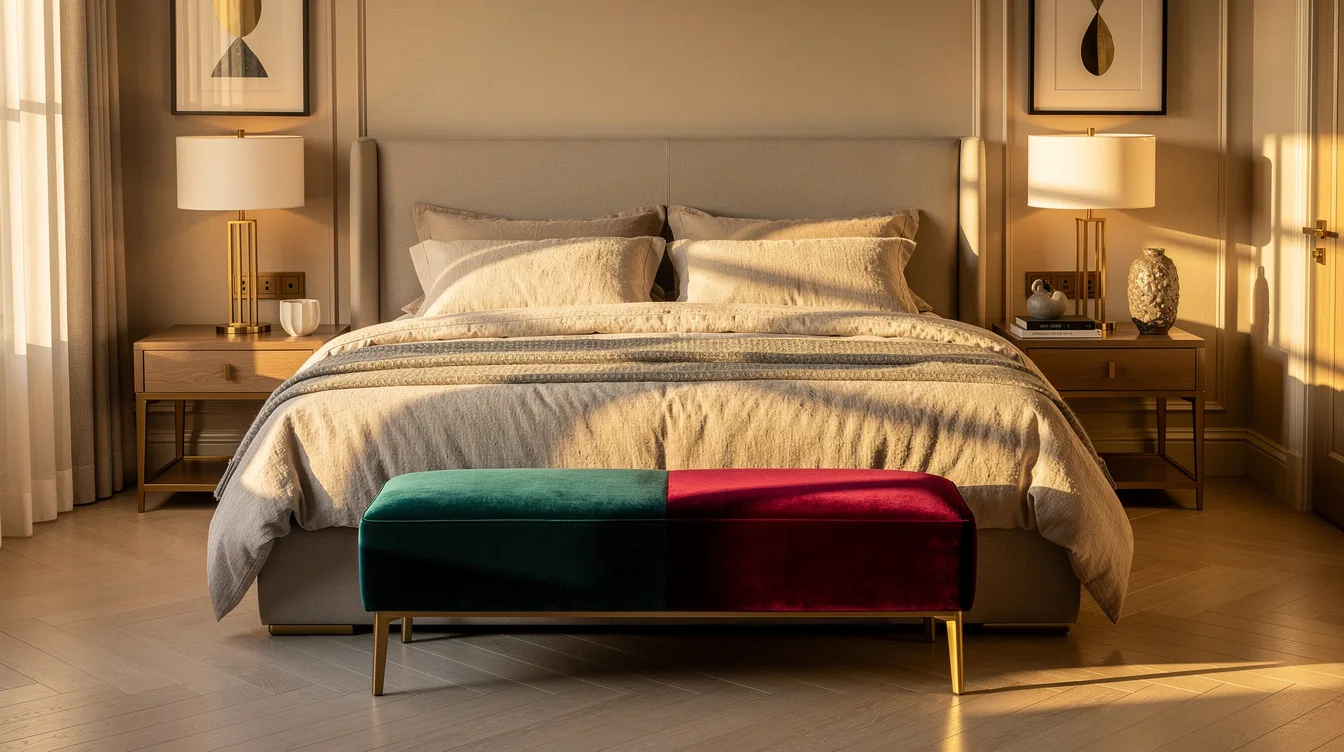
A king-size bed can swallow a small footstool whole. When the frame is around 76 inches wide, a lone stool can look incidental, while a low upholstered bench gives the foot of the bed a clear visual finish.
The strongest placement centers the bench at the foot of the bed, keeps its top below the mattress, and leaves room for the bedding to breathe. The result feels considered because the scale follows the frame.
A useful starting specification is roughly 140-150 x 40-45 x 43-47 cm. Measure the actual bed and the walking path before choosing the bench dimensions, then adjust the proportions to the room.
Measure the Frame Before Choosing the Bench
A king-size frame can measure around 76 to 79 inches wide, while smaller frames may sit closer to 59 or 71 inches. Measure the outside edges of the frame, because the mattress label does not tell you how much furniture the room can hold.
For a generous king bed, start with a bench around 140-150 x 40-45 x 43-47 cm. That range gives a wood bench enough presence to anchor the bed while keeping its profile visually lighter than the headboard.
The two-thirds-to-three-quarters proportion is the most reliable starting point. A 150 cm frame suits a bench around 100-113 cm wide, while a 193-200 cm frame can carry roughly 129-150 cm without looking undersized.
Keep the Seat Below the Mattress
The seat should sit below the mattress line, so the eye reads the bed as the main volume. A low upholstered bench around 43-47 cm high usually creates that grounded relationship on a generously sized bed.
A currently listed benchmark measures around 152 x 38 x 47 cm and costs about $999. Its shallow depth and long shape show why a linen-blend seat works better here than a bulky ottoman with a tall cushion.
Leave roughly 6-10 inches between the bedding and the bench. That small gap gives the foot of the bed breathing room and keeps blankets from hanging directly onto the upholstery.
Center the Bench on the Bed
Center the bench on the bed frame, even when the bed sits slightly off-center on the wall. A centered bench makes the furniture arrangement feel intentional, while aligning it to the wall can exaggerate an existing imbalance.
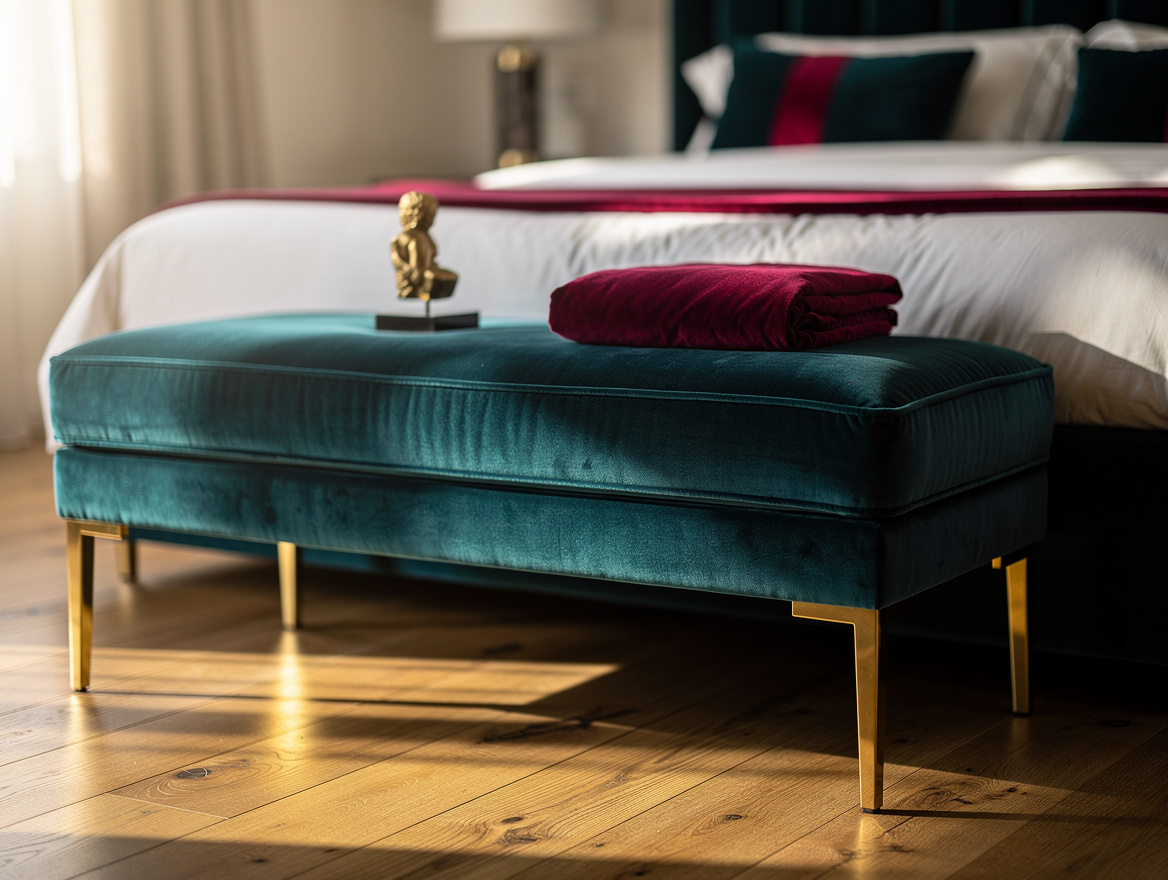
Use the headboard and frame as your visual guide, then step back from the doorway to check the full composition. A brass-legged bench can add a crisp accent, but its centerline still matters more than its finish.
A bench around 60 inches wide suits many king beds, and a piece around 64 inches can work when the frame is broad enough. I would choose the narrower option when the bed has heavy posts, thick bedding, or a crowded wall.
Protect the Walking Lane
Aim for roughly 30-36 inches of unobstructed walking space beyond the bench. A wool rug may soften the room, but it does not replace clear circulation around the foot of the bed.
Open the wardrobe doors, drawers, and bedroom door fully before you order. The best-looking oak floor layout fails when the bench blocks a drawer or forces you to turn sideways at night.
If the passage feels tight, reduce depth before reducing width. A shallow bench around 38-40 cm deep keeps the long proportion while preserving the room’s useful movement.
Choose Upholstery With Some Weight
Fabric gives the room a softer hotel feel, while leather adds definition against layered bedding. A leather bench around 152 cm long can bring enough contrast to a neutral room without adding another competing pattern.
Listed leather and cowhide references sit around $949 and $1,299, respectively. Those prices show the range for a substantial piece, but I would pay for a durable finish and sound construction before paying for decorative tufting.
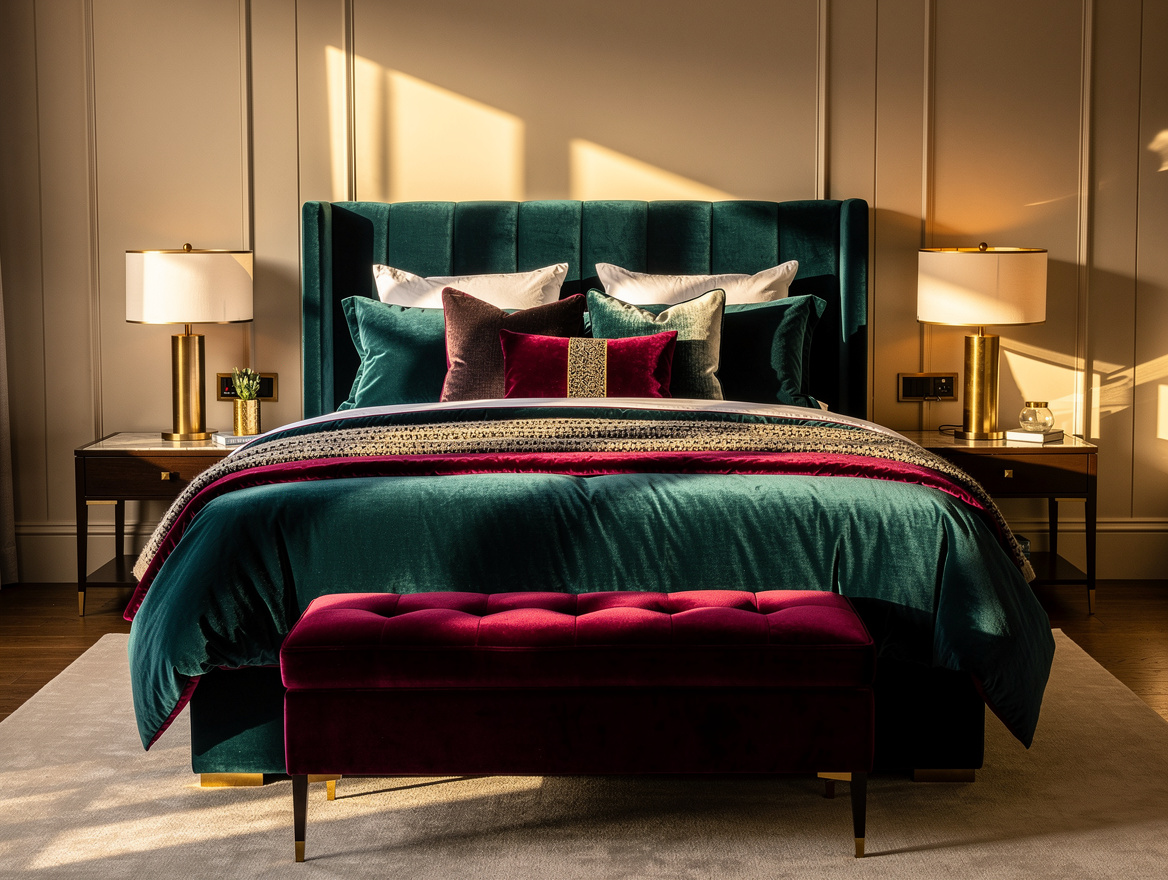
Cream channel-tufted fabric suits a restrained bedroom, especially when the headboard already has a strong silhouette. A cream fabric seat should repeat one existing tone in the room, rather than introduce a new shade that needs more accessories to make sense.
Replace the Floating Stool With Length
A small footstool floating several inches away from a king bed usually looks accidental. An elongated ottoman connects the bed to the floor plan and gives the foot of the room a clear horizontal line.
When the room cannot spare the walking space, move the small footstool to a reading chair or dressing corner. That placement gives it a job instead of leaving it stranded in the bed’s shadow.
Keep the final piece quiet enough for the bed to remain the focal point. A low profile, a useful seat, and a material such as leather, cotton-linen, or wood will carry the arrangement farther than extra ornament.

Mark the bed edge and a 6-10 inch gap with painter’s tape before shopping. If the taped outline preserves a 30-36 inch walking lane, you have the right footprint for a low bench that balances the room.
Start with proportion, then choose upholstery and finish. The right foot-of-bed bench should make the king bed feel anchored without asking the rest of the bedroom to compete.
Mia Carter writes about small-space living and budget home makeovers. She has restyled three rentals and tests most ideas in her own 45 sqm flat.