
Travertine shower designs work best when stone, light, and storage share one clear direction. A bathroom can feel cold when every surface is glossy, pale, and unrelated. Softly honed travertine, cerused white oak, and aged brass bring warmth without crowding the room. The fix isn’t more decoration. It’s better material rhythm.
- Clad the shower walls in softly honed travertine (The Quiet Stone Rule)
- Frame the niche with contrasting marble slabs (The Vein-Frame Method)
- Could a long recessed niche beneath the controls balance the enclosure?
- Clad the shower walls in softly honed travertine (The Quiet Stone Rule)
- Frame the niche with contrasting marble slabs (The Vein-Frame Method)
- Could a long recessed niche beneath the controls balance the enclosure?
- Stack travertine tiles vertically for added height (The Vertical Lift)
- Tumbled Floors Over Gloss: Pair Tactile Stone With Polished Walls
- Wrap the bench in bookmatched travertine veining (The Bench-Anchor Method)
- The Three-Height Light Stack: Rainfall Shower, Stone Ceiling, and Wall Glow
- Highlight the arch with mosaic travertine trim (The Soft-Edge Frame)
- When Marble Meets Travertine in a Quiet Corner
- Use oversized tiles to minimize grout lines (The Broad-Plane Approach)
- Anchor the shower with a sculptural stone ledge (The Ledge-and-Light Rule)
- Brass, Travertine, and Patina: Build a Warmer Enclosure
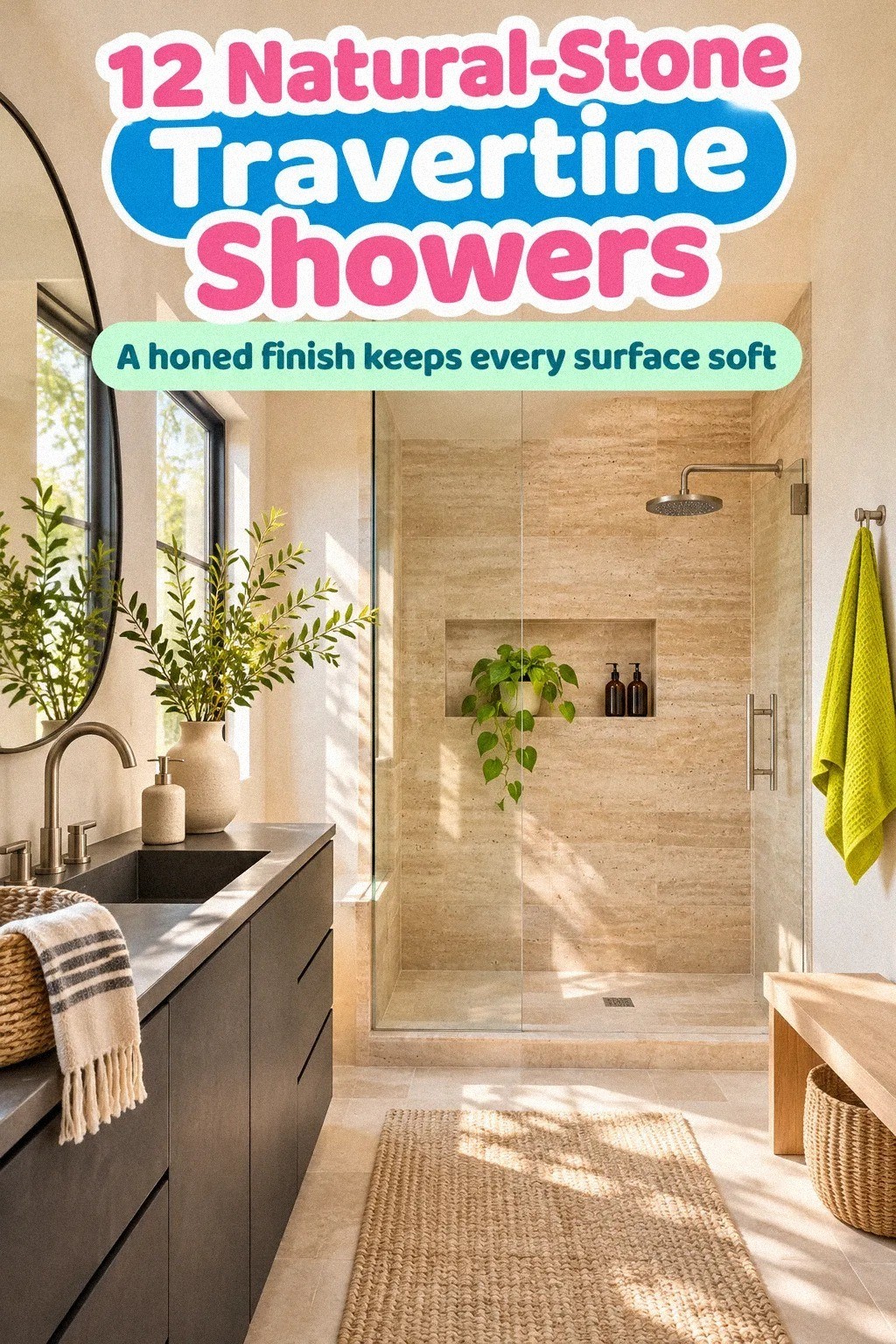
1Clad the shower walls in softly honed travertine (The Quiet Stone Rule)
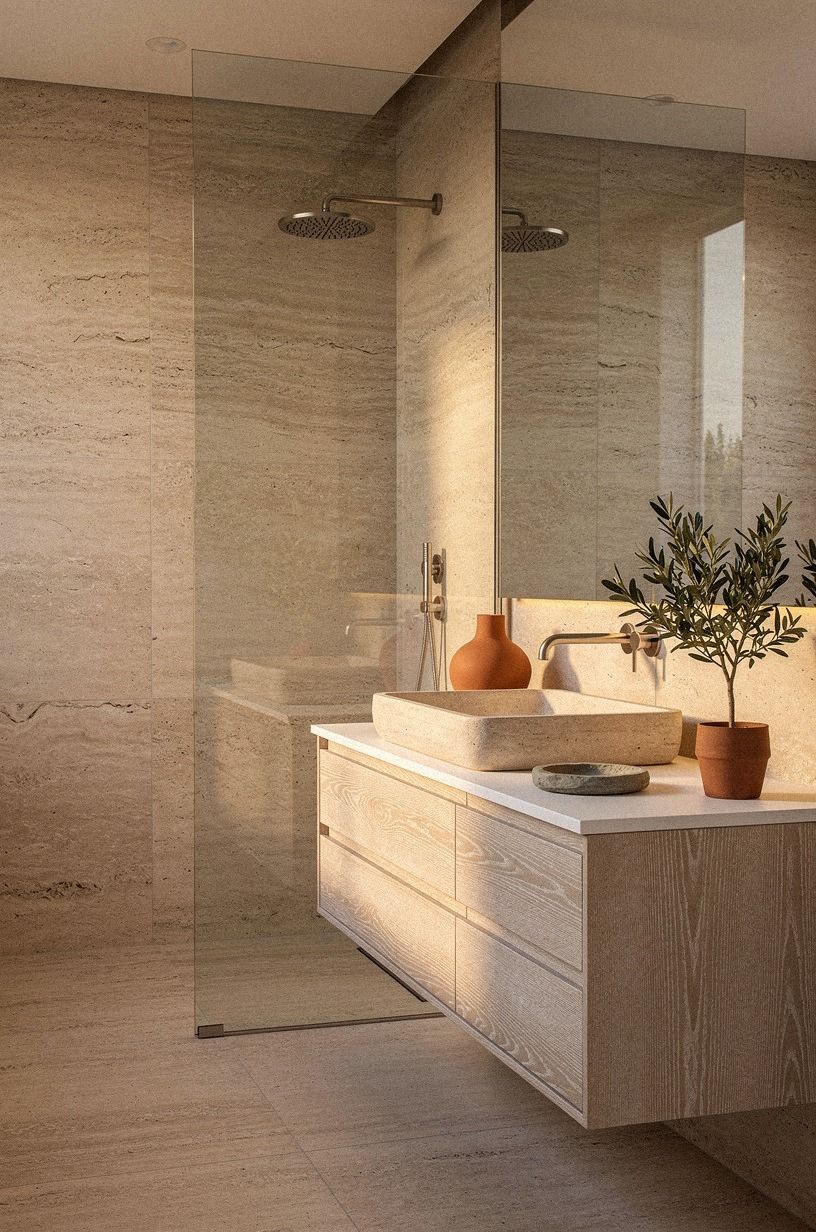
A softly honed travertine tile shower gives the full bathroom a calm, earthy background, especially when the stone shifts between cream, sand, and muted rust. Keep the joints quiet so your eye follows the natural pits and cloudy movement.
If you’re working with a compact enclosure, continue the same stone across the back wall and short return wall. That visual continuation can make your shower feel wider.
Pair the stone with cerused white oak, olive accents, and terracotta accessories so your palette feels grounded rather than themed. You’ll want a 36-by-36-inch shower at minimum for comfortable movement, but the same approach can work in a tighter footprint when the trim stays restrained.
Skip a high-contrast border. It’ll chop the wall into pieces and make your bathroom feel busier than it needs to be.
Your material checklist can stay short:
– Softly honed travertine tile with natural pitting. – Olive cotton towel. – Terracotta vessel. – Cerused white oak stool. – Aged brass shower hardware.
For more material direction, compare these organic modern travertine palette ideas. You’ll see why a warm wood note helps the stone read as intentional, not unfinished.
Travertine needs a practical maintenance plan, too. You’ll need a penetrating sealer suited to wet areas, and you shouldn’t rely on harsh acidic cleaners. The stone’s pores and natural voids are part of its appeal, but they also mean that regular care matters.
A low-sheen finish won’t hide poor installation, uneven waterproofing, or standing water.
2Frame the niche with contrasting marble slabs (The Vein-Frame Method)
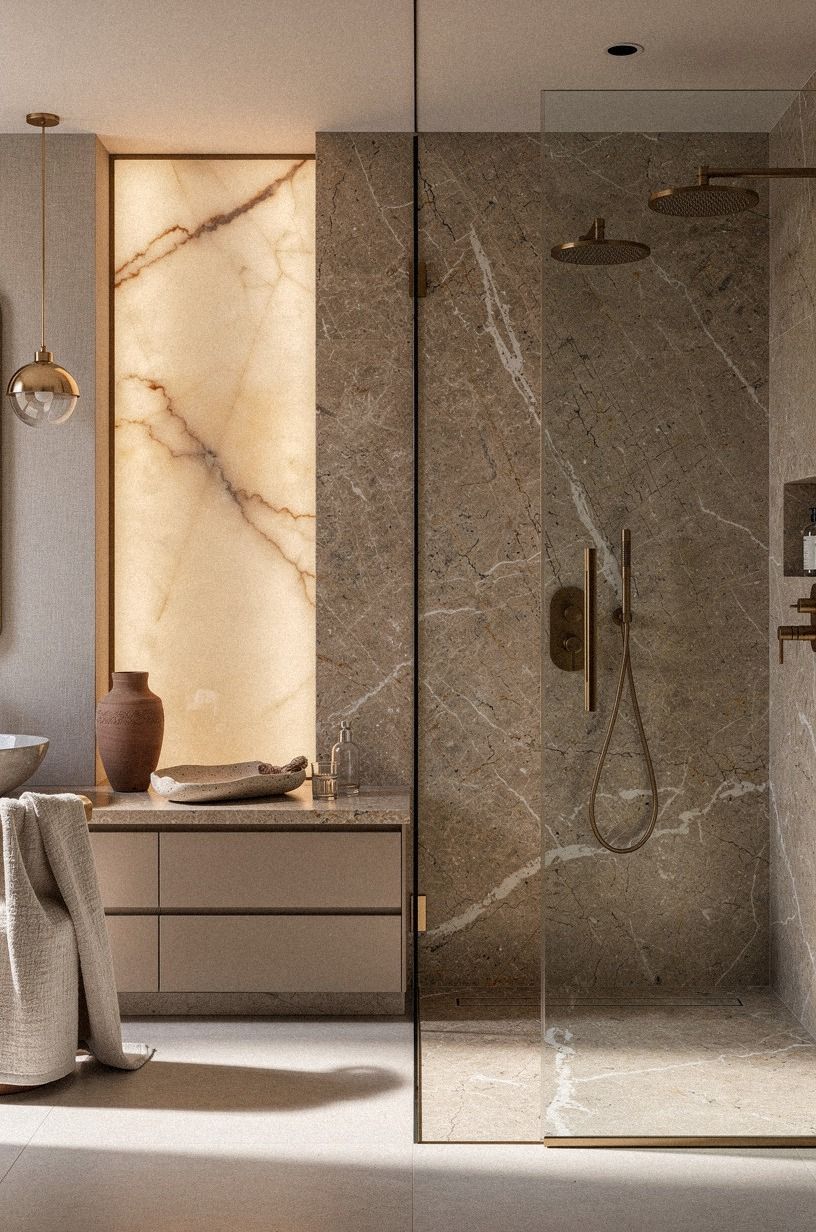
A shower niche can become the focal point when its interior uses a contrasting stone rather than leftover wall tile. Set a backlit translucent onyx panel inside the recess, then carry the same translucent onyx around the opening. The pale stone will catch the light, while clay, linen, and aged brass keep the effect intimate.
If you’re choosing between a thin mosaic frame and a full slab surround, choose the slab. It creates a cleaner edge and gives your toiletries a quiet architectural setting.
A small niche can still look refined when the shelf has a polished front edge and grout matches the warm stone. Don’t fill every inch with bottles.
Two amber glass containers and one folded linen cloth will give your eye room to rest.
Could a niche become the room’s art? Yes, but only if you let the material carry the scene.
You’ll want the fixtures to stay simple, so aged brass controls the warmth without competing with the onyx. For a related stone storage reference, browse these stone shower shelf dimensions.
The same restraint works in your own shower.
Before construction begins, check the niche height against the people using the bathroom. A low recess may suit children, while a higher shelf can be easier for adults to reach without bending.
You’ll also need enough wall depth for the waterproofing system, tile assembly, and shelf pitch. The finished niche should drain toward the shower, not toward the wall cavity.
3Could a long recessed niche beneath the controls balance the enclosure?
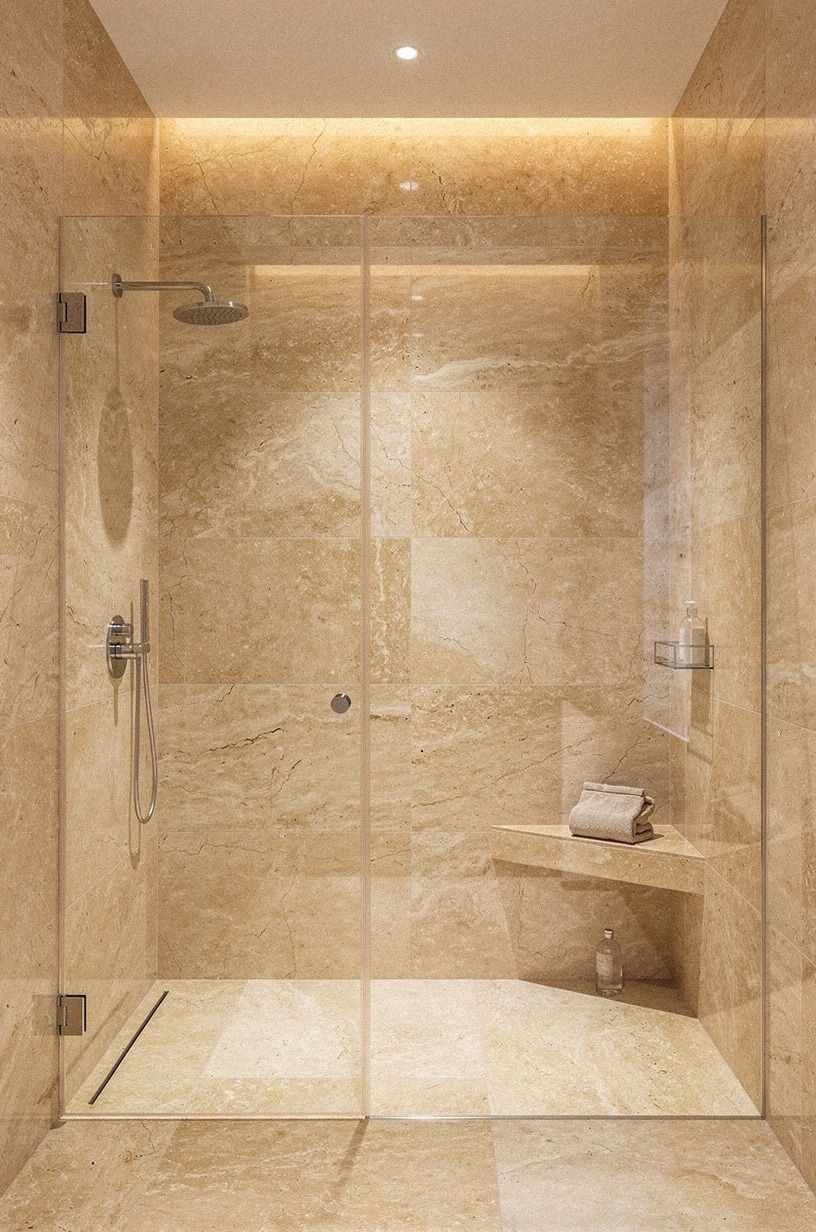
A long recessed niche beneath the controls gives a tiled shower bathroom a strong horizontal line, which can make a narrow enclosure feel more balanced. Use book-matched walnut as the visual counterpoint to plum, gray, and rose-gold accents. The walnut’s grain will soften harder stone surfaces, especially when a low side light skims across the shelf.
Place the niche where your hand naturally reaches, but keep shampoo bottles below the main sightline when possible. A continuous ledge can hold daily products without creating a crowded row of plastic.
If you’re planning a new wall, confirm the niche depth with the plumbing layout before tile work begins. A beautiful recess that collides with pipes isn’t a clever design choice.
The safest palette is book-matched walnut, warm gray grout, and rose-gold hardware used sparingly. You’ll want one repeated wood tone outside the shower too, such as a vanity drawer or framed mirror.
Don’t add a second accent metal. It’ll make your room feel less settled, while one finish keeps the composition calm and polished.
A long niche also gives you a useful opportunity to separate products by height. Place everyday bottles on the lower shelf, reserve a higher section for backup supplies, and leave a small open zone near the center. That negative space will keep the recess from looking like a store display.
You can add a slim stone divider if several users need clearly defined storage.
4Stack travertine tiles vertically for added height (The Vertical Lift)
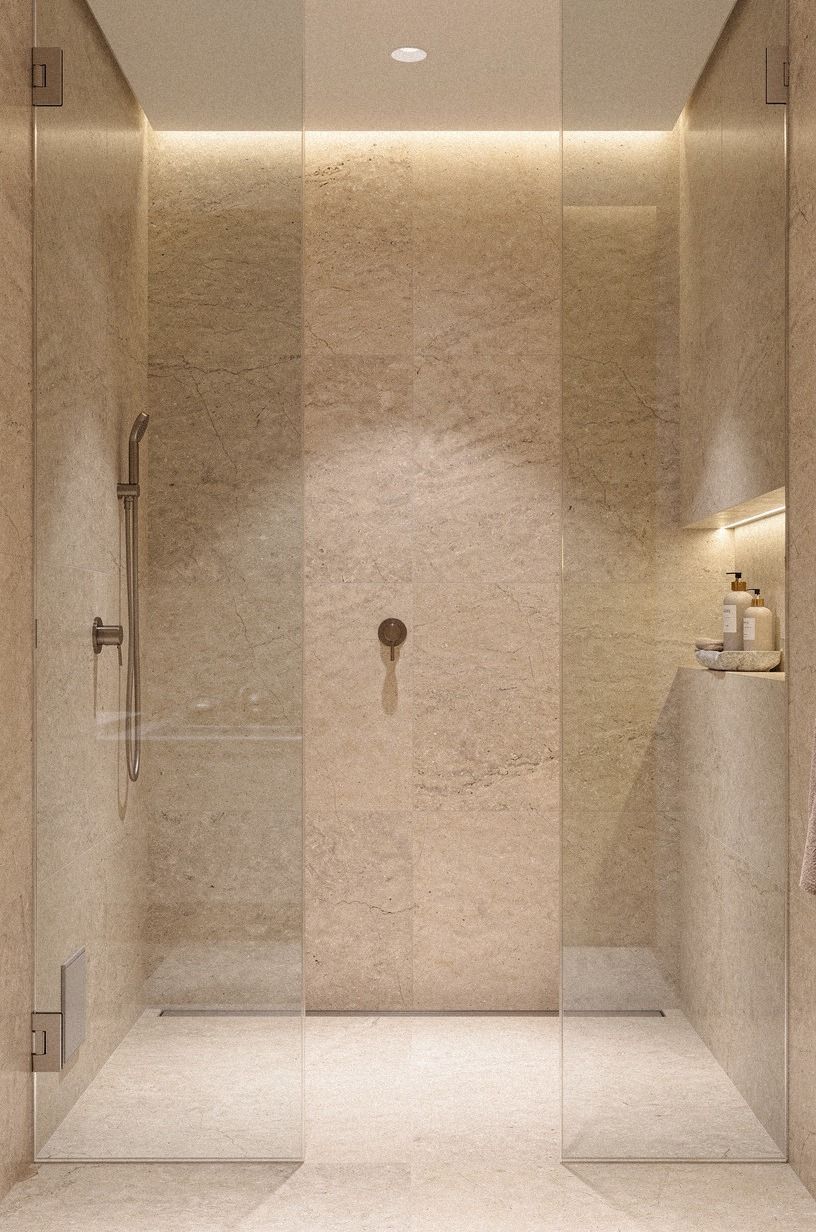
Vertical tile placement changes the apparent proportion of your enclosure without changing its footprint.
5Tumbled Floors Over Gloss: Pair Tactile Stone With Polished Walls
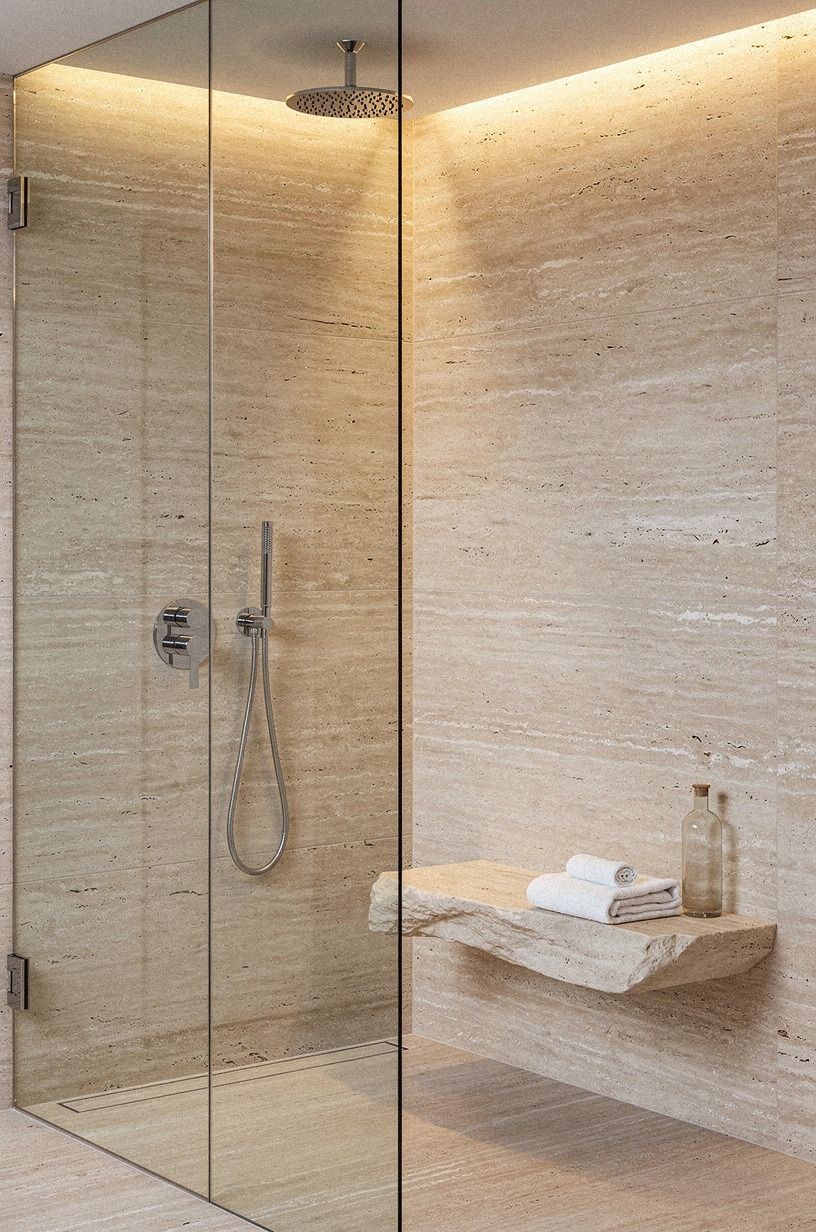
Tumbled stone floors bring texture underfoot, while polished shower walls reflect light across an emerald, gold, and cream palette. This contrast gives your bathroom more dimension than a single finish would. Use small, slip-conscious floor pieces with rounded edges, then let the walls carry the smoother polished travertine surface.
The floor should feel tactile, but it shouldn’t look rough or visually noisy. Choose stone with soft variation rather than a dozen competing colors.
Unlacquered brass developing soft patina will bridge the emerald and cream tones, and its changing finish will keep the room from looking too new. You’ll want the faucet, shower control, and towel hooks in the same metal family.
A polished wall can feel formal, so add one natural textile outside the enclosure, such as washed linen or a thick Turkish cotton towel. But avoid glossy accessories beside glossy walls. Your room needs a quiet matte note to absorb reflection, and a woven stool will do that more gracefully than another decorative tile.
For safety, ask your installer about the tile’s wet-area rating and finished slip resistance. Small-format flooring offers more grout lines, which can provide useful traction, but grout still needs proper sealing and cleaning. You’ll want the floor to feel comfortable underfoot without turning the shower into a high-maintenance surface.
6Wrap the bench in bookmatched travertine veining (The Bench-Anchor Method)
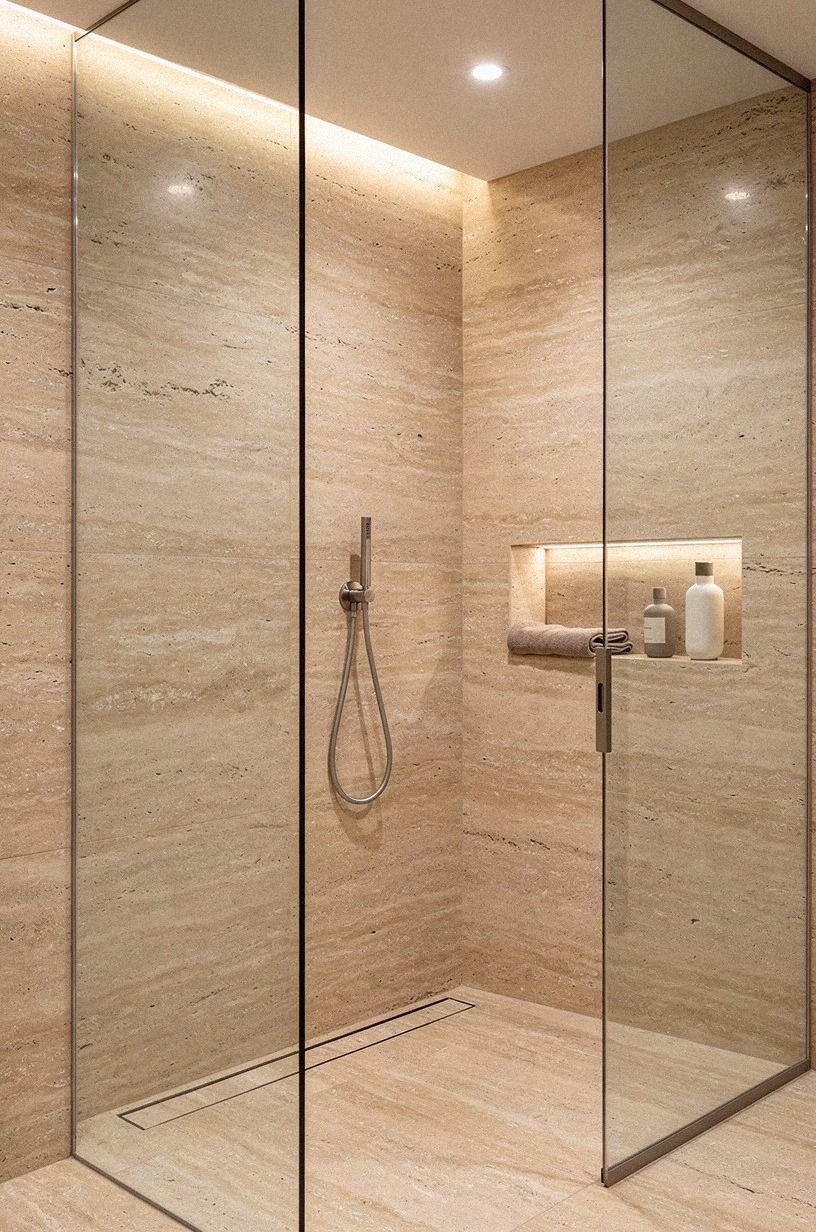
A built-in bench becomes more than a place to sit when its top and front face follow one continuous surface. Wrap the surface in oversized-chip terrazzo, then use forest green, rust, and natural oak for a grounded composition. The bench should look carved from the same material family as the surrounding surfaces.
Keep the seat edge slightly softened and grout lines aligned with the wall layout. If you’re planning a bench in a 36-by-36-inch shower, check the clear walking area before committing to a deep projection.
Your comfort depends on circulation as much as on the finish. A bench that steals elbow room won’t feel luxurious for long.
The natural oak outside the shower can repeat the bench’s golden undertone without copying it. Choose natural oak for a nearby stool or vanity, where the material will stay protected from constant spray. You’ll want the enclosure to stay practical, so keep vulnerable materials outside the wet zone and let the terrazzo do the heavy visual work.
A bench can also hide useful storage. A lift-up seat may offer access to supplies, although waterproofing and ventilation require careful detailing.
For a simpler approach, use a solid slab with a recessed wall niche nearby. The result will feel intentional, generous, and easier to clean.
Here are broad US bathroom renovation ranges for early planning:
These figures are planning markers, not promises. You’ll need to confirm local labor, waterproofing, demolition, and material costs before choosing your finish level.
7The Three-Height Light Stack: Rainfall Shower, Stone Ceiling, and Wall Glow
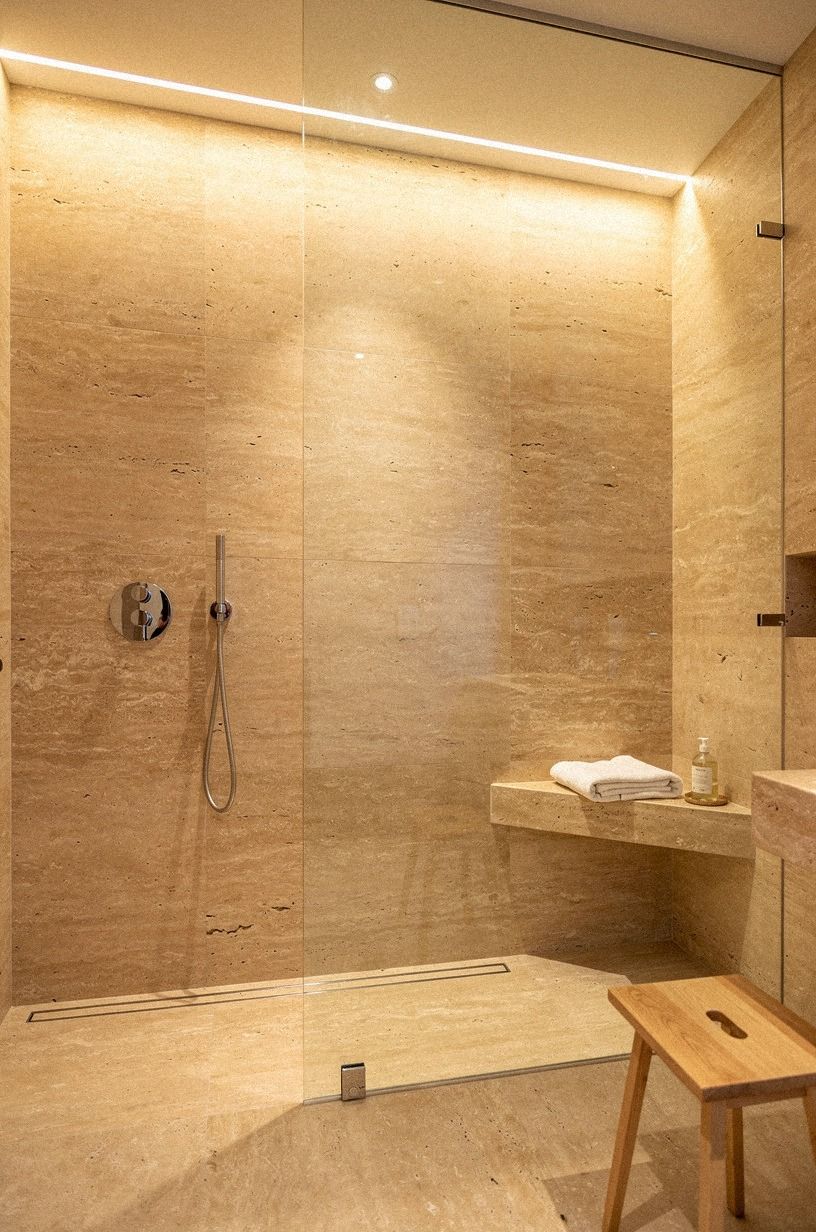
A rainfall shower above a hand-applied Venetian plaster ceiling gives the enclosure a more immersive feeling, especially with dusty rose, charcoal, and brass.
8Highlight the arch with mosaic travertine trim (The Soft-Edge Frame)
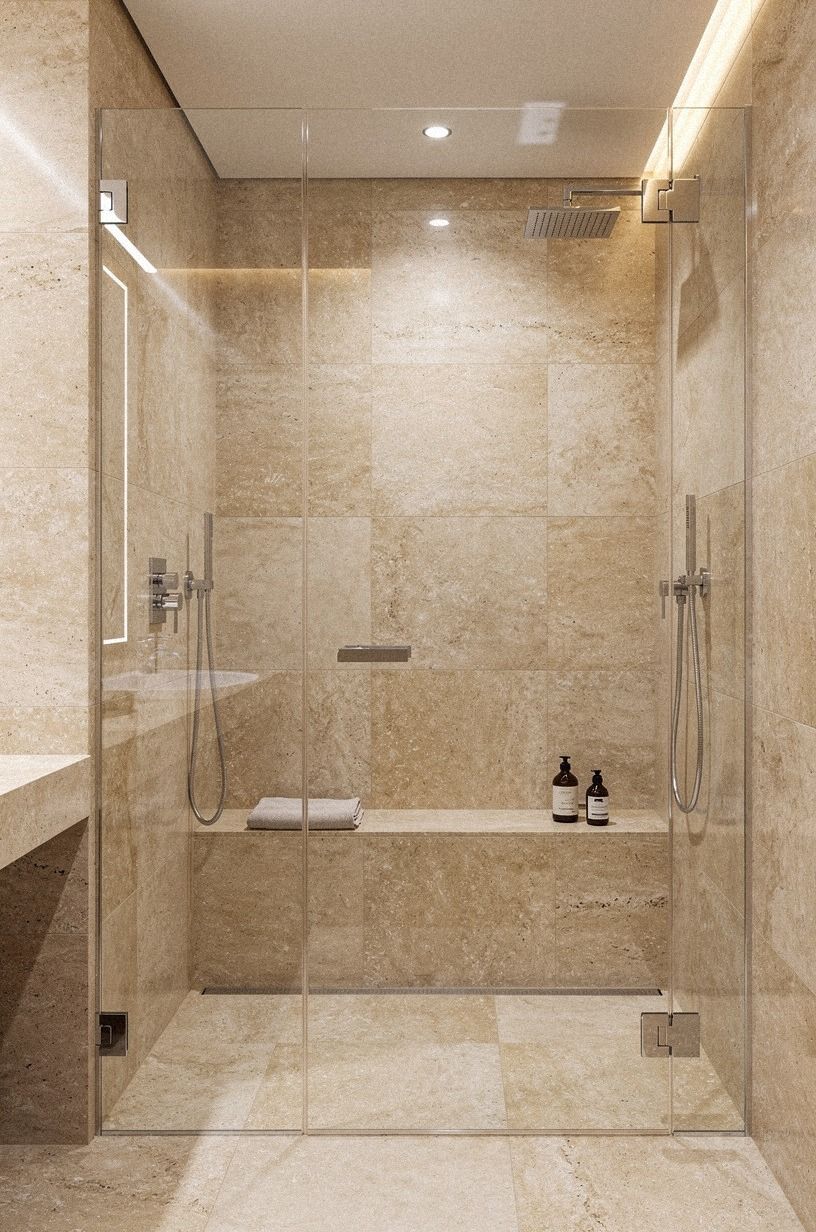
An arched enclosure can feel relaxed when the curve is outlined with small mosaic travertine pieces. Keep the bathroom slightly secondary in the composition, then let warm white, camel, and black accents support the opening. Shagreen accents can appear on a vanity drawer or framed tray nearby, but don’t repeat them inside the arch.
The trim needs enough contrast to explain the shape without becoming a decorative outline. Choose a mosaic with gentle tonal shifts, then match the grout to the warmer pieces. You’ll want the arch to read from the doorway, so avoid placing a tall cabinet directly beside it.
A little breathing room makes the curve more visible.
Camel linen can keep the room soft, while a small shagreen tray adds texture through a vanity drawer front or framed surface. If you’re styling the ledge, use restrained forms: folded towel, amber bottle, small stone dish.
Don’t add a row of ornaments. Your arch already supplies the memorable shape, and extra objects will blur it.
The curve should also be planned around the waterproofing system. A graceful arch is only successful when the membrane, substrate, tile cuts, and transition to the ceiling remain continuous. You’ll want a tile setter experienced with curved layouts, because small errors become obvious along a rounded edge.
9When Marble Meets Travertine in a Quiet Corner
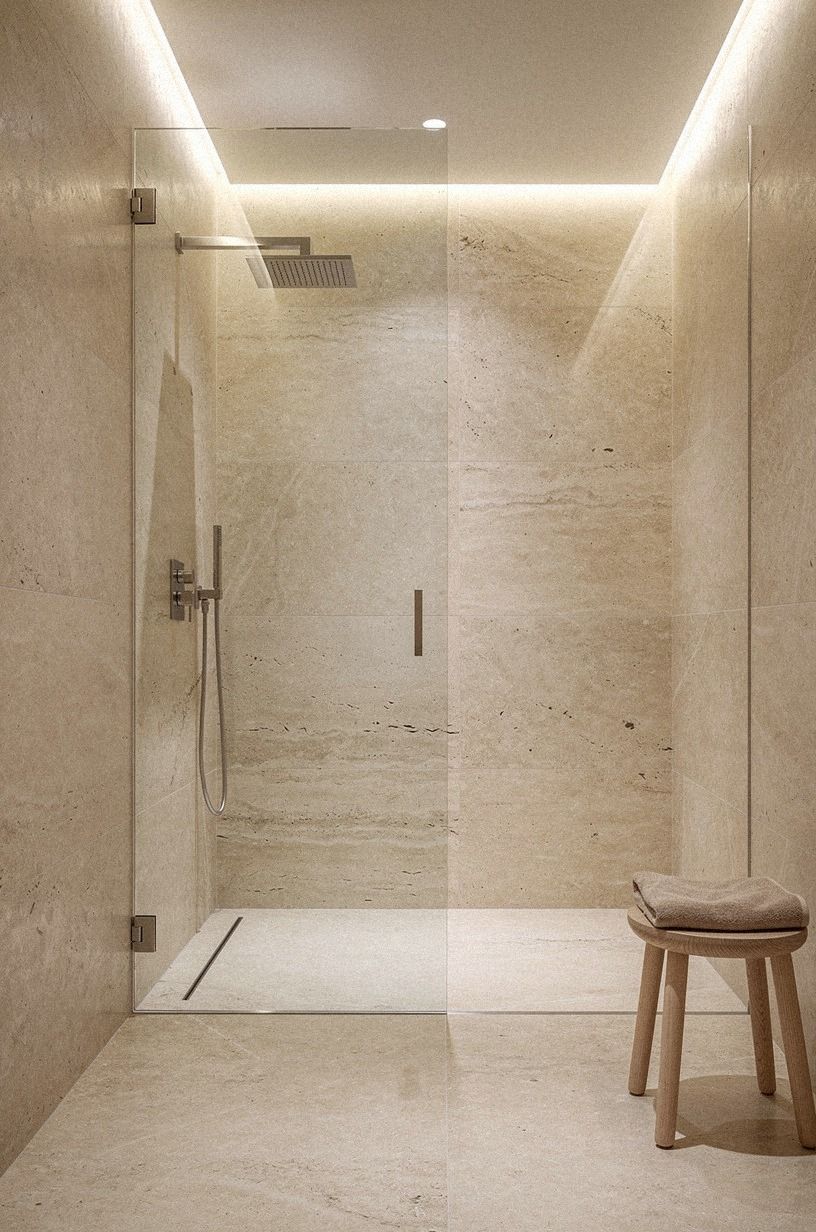
Marble shelving can disappear into a travertine corner when both materials share a warm undertone.
10Use oversized tiles to minimize grout lines (The Broad-Plane Approach)
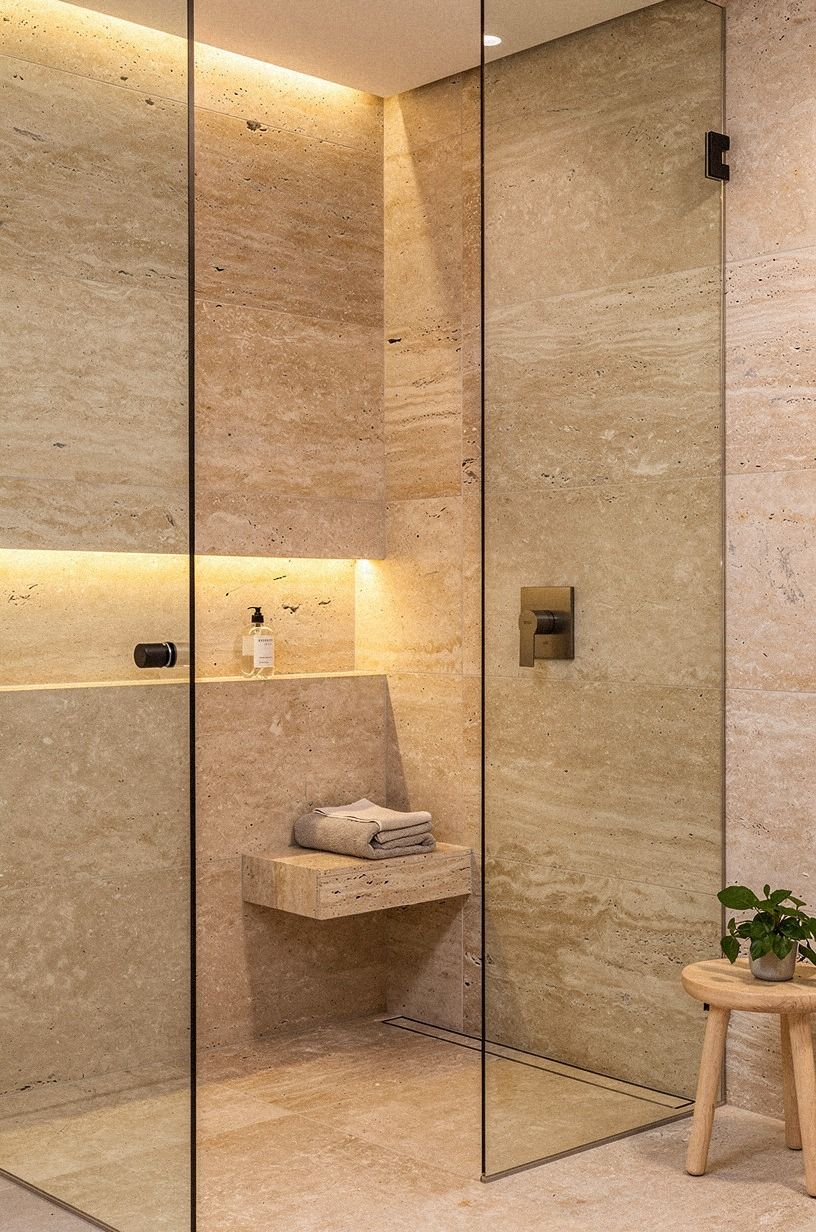
Oversized tiles create broad planes that let sage green, warm cream, and natural wood feel spacious. In a smaller bathroom, fewer grout interruptions can make the enclosure appear calmer and more continuous. Choose a large-format travertine with soft tonal movement, then keep the joint color close to the stone.
If you’re pairing the walls with organic bouclé outside the shower, repeat the creamy texture through a stool or bench cushion. Organic bouclé works best as a dry-zone accent, where its nubby surface stays protected from spray. You’ll want the wood to have a visible grain, such as cerused oak or pale walnut, so the room doesn’t become one flat field of beige.
A standard tub measures 60 by 30 inches, so the same broad-plane logic can work around a tub enclosure when a separate shower isn’t possible. But don’t force oversized tile into a tiny, complicated corner if it creates awkward cuts.
Your installer should map the layout first. Clean geometry matters more than tile size alone.
Large tiles require a particularly flat substrate. You’ll want the wall checked before installation, because lippage is more noticeable across broad surfaces. The tile layout should also account for valves, niches, benches, and door openings.
A centered composition will look more polished than simply using the largest available tile.
11Anchor the shower with a sculptural stone ledge (The Ledge-and-Light Rule)
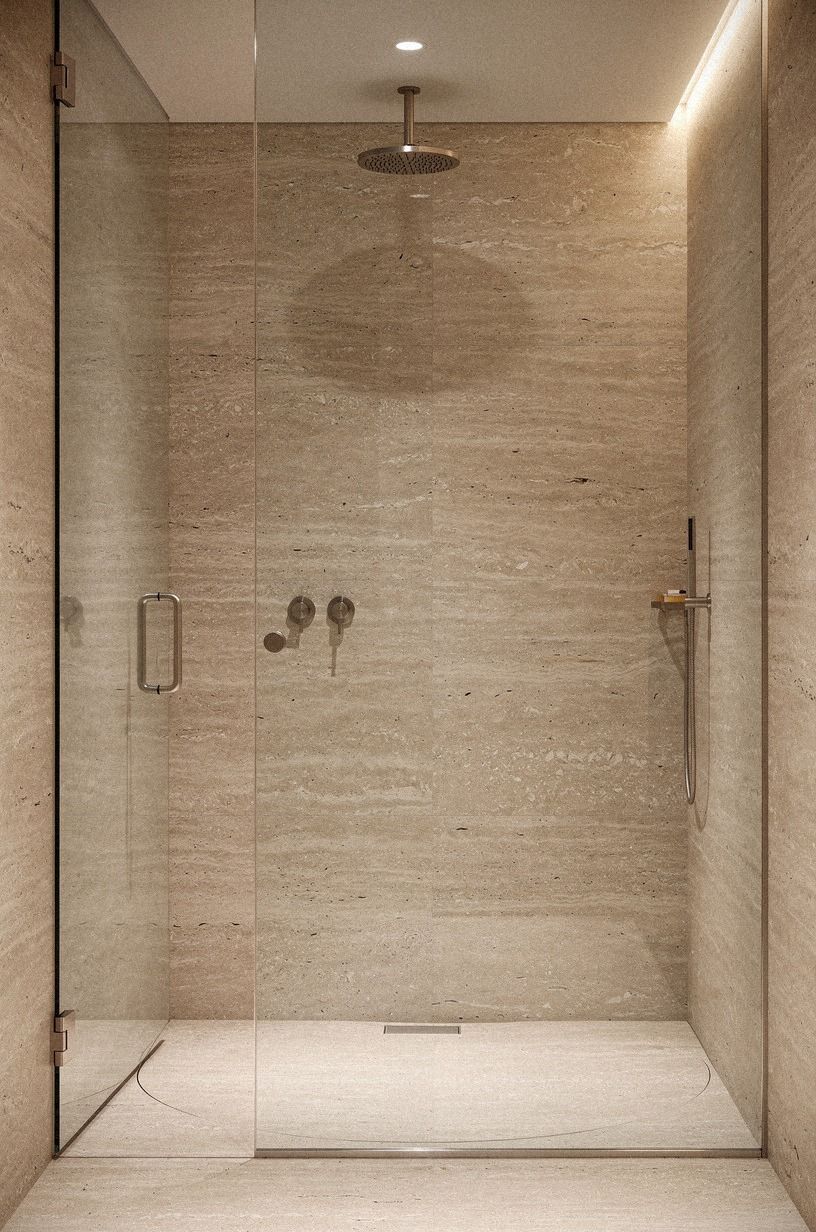
A sculptural stone ledge gives a terracotta, stone, and olive bathroom one strong horizontal anchor.
12Brass, Travertine, and Patina: Build a Warmer Enclosure
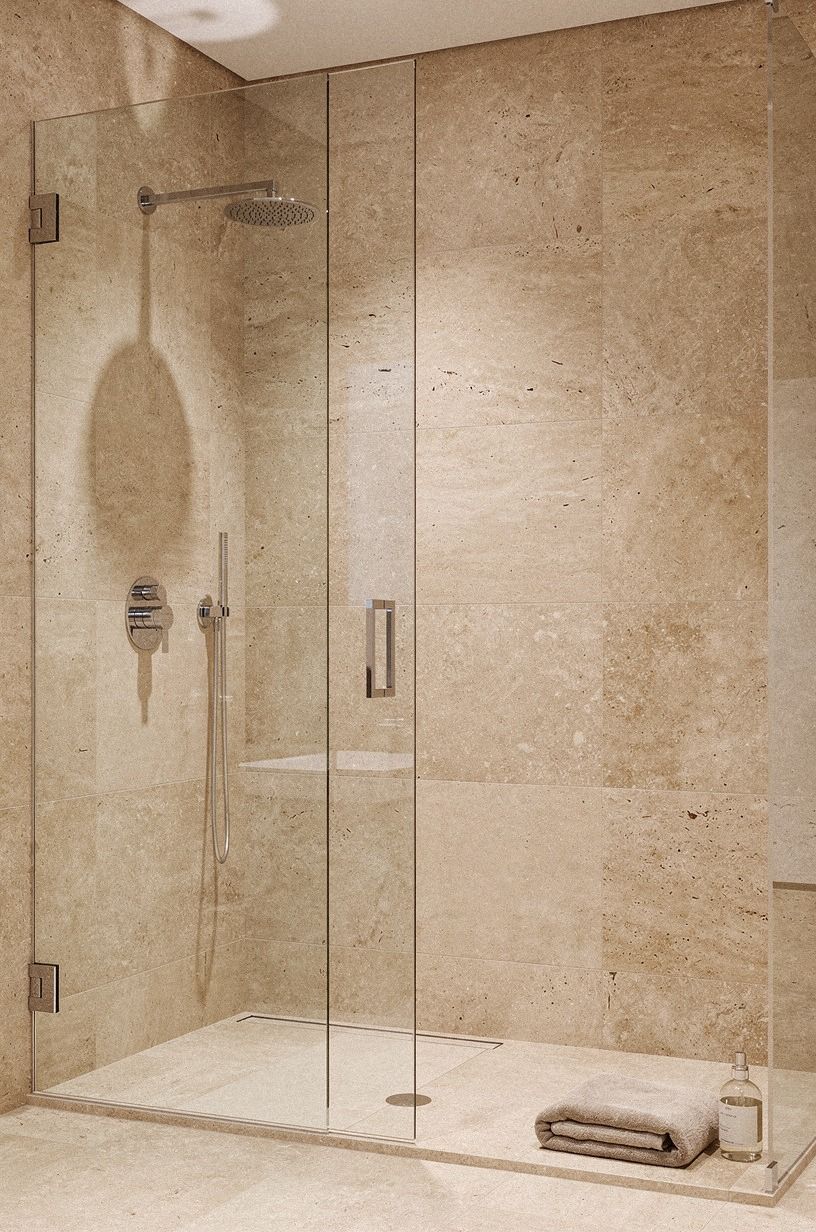
Brass fixtures and travertine create a warm enclosure when the metal has a softened finish instead of a mirror shine. Use aged brass with clay and linen tones, then bring in deep-pile mohair velvet through a nearby bench or window treatment. The material contrast makes the bathroom feel collected without adding visual clutter.
If you’re choosing between chrome and aged brass, aged brass is the stronger fit for this palette. Chrome would sharpen the room and make the stone appear cooler, while brass helps the travertine’s honey notes show through. You’ll want the shower control, hand shower, and towel hardware to match, but a single art frame can introduce a darker accent.
Keep the art outside the direct spray zone and choose a sealed frame. Your bathroom should feel lived-in, not staged, so one framed piece is enough.
Warm lighting will catch the brass after sunset, and the stone will hold the visual weight during daylight. That balance is what makes the enclosure feel inviting.
Aged brass doesn’t need every accessory to match perfectly. Slight variation between a faucet, mirror frame, and cabinet pull can add depth, provided the finishes remain within the same warm family.
You’ll want to avoid mixing polished gold, bright chrome, blackened steel, and copper in one small bathroom. Three metals can become visual noise quickly.
The final layer is maintenance. Brass will change gradually, and that patina can become part of the room’s character. Travertine will also develop subtle variation as it ages.
Neither material needs to look frozen in time, and that gentle evolution is precisely what gives the sanctuary its grounded, enduring quality.
The Editorial Case for Softer Stone
Travertine is having a strong design moment because it offers something polished porcelain often misses: visible variation. The pits, cloudy bands, and muted mineral colors give your bathroom a surface that changes gently through the day.
Morning light brings out cream and sand. Evening light pulls forward rust and honey tones.
That movement creates atmosphere without relying on a pile of accessories.
The best use of travertine isn’t necessarily the most expensive one. A full high-end renovation may include a re-tiled shower, floor and wall tile, plus plumbing work, with typical US costs listed at $12,000-$30,000+. A mid-level project with a new vanity, partial wall tile, and lighting sits around $3,000-$9,000.
If your room already has sound waterproofing, paint, a mirror, a faucet, and textiles may fit within the $200-$1,200 budget range.
Your choice should follow the condition of the room first. If the shower envelope is failing, surface styling can’t solve the underlying problem.
If the structure is sound, a honed stone panel, a better niche, or aged brass hardware may give you the strongest visual return. If you’re unsure whether the stone is too rustic, pair it with one refined element, such as a slim marble shelf or a clean walnut vanity.
That contrast keeps your bathroom from feeling themed.
There’s also a practical reason to avoid overmixing. Travertine already carries texture, variation, and warmth. Adding several tile patterns, three metals, and multiple dark colors will make your space feel restless.
You’ll get a more luxurious result by repeating one wood, one metal, and one supporting color. The room can still feel rich, but every decision will have somewhere to land.
Before ordering materials, request large samples of the travertine, grout, metal finish, and wood tone. Look at them under daylight, warm bulbs, and the bathroom’s existing lighting.
You’ll notice that the same cream stone can appear pink, gray, yellow, or honey depending on its surroundings. A sample board protects the design from expensive surprises.
Travertine can also support several design directions. In a Mediterranean room, terracotta and plaster emphasize its earthy character. In a quiet-luxury bathroom, walnut, linen, and marble make the stone feel more tailored.
In a modern space, oversized slabs, minimal grout, and frameless glass give it a crisp edge. The material stays flexible when the surrounding details remain disciplined.
The Questions Worth Answering First
What is the best travertine shower design for a small bathroom?
The strongest choice is softly honed travertine on the main wall with a long, shallow niche. Fewer visual breaks can make the enclosure feel broader, while a slim walnut shelf adds warmth. Open sightlines, clear glass, and a restrained grout color will keep the room from feeling crowded.
Where can you buy travertine shower pieces on a budget?
Look at large home retailers, Wayfair, and Target for towels, lighting, mirrors, and storage. Facebook Marketplace and thrift shops can provide older wood stools or brass frames. Secondhand wood adds character without requiring a full renovation or commission-based product link.
For stone, local tile showrooms may offer remnant slabs at a lower cost.
How much does a travertine shower makeover cost?
A budget bathroom refresh typically falls within $200-$1,200 for paint, a mirror, a faucet, and textiles. A mid-range update runs about $3,000-$9,000, while a high renovation can reach $12,000-$30,000+. Existing sound tile and waterproofing can reduce the scope, but labor and plumbing often determine the final total.
Can you create a travertine shower design on a budget?
Yes, and the most useful low-cost moves are repainting the vanity, changing the mirror, and adding warm textiles. Material repetition creates polish even when the shower tile stays.
Choose one brass finish, one wood tone, and one stone-inspired paint color. A carefully styled niche can also create a strong focal point without rebuilding the entire room.
Is travertine worth it in a small space?
Yes, because a small enclosure can benefit from fewer competing surfaces. Use large-format honed stone, a recessed niche, and a glass door to preserve sightlines.
A continuous wall finish feels calmer than several small patterns, especially when the shower measures close to 36 by 36 inches. Proper sealing and routine cleaning remain essential.
Is travertine a good idea for a rental?
Yes, when the changes remain removable. Try stone-look panels outside the wet zone, a tension rod, removable hooks, and linen shower curtains.
No-damage texture adds warmth without permanent tile work. Keep real stone, waterproofing changes, and plumbing alterations for a future owned space.
Where to Start First
If choosing one upgrade, start with softly honed travertine on the main shower wall. Its mineral variation does more visual work than extra décor, and it gives brass, wood, and linen a warmer surface to meet. Compare full-size samples, confirm the waterproofing condition, and plan the niche before ordering tile.