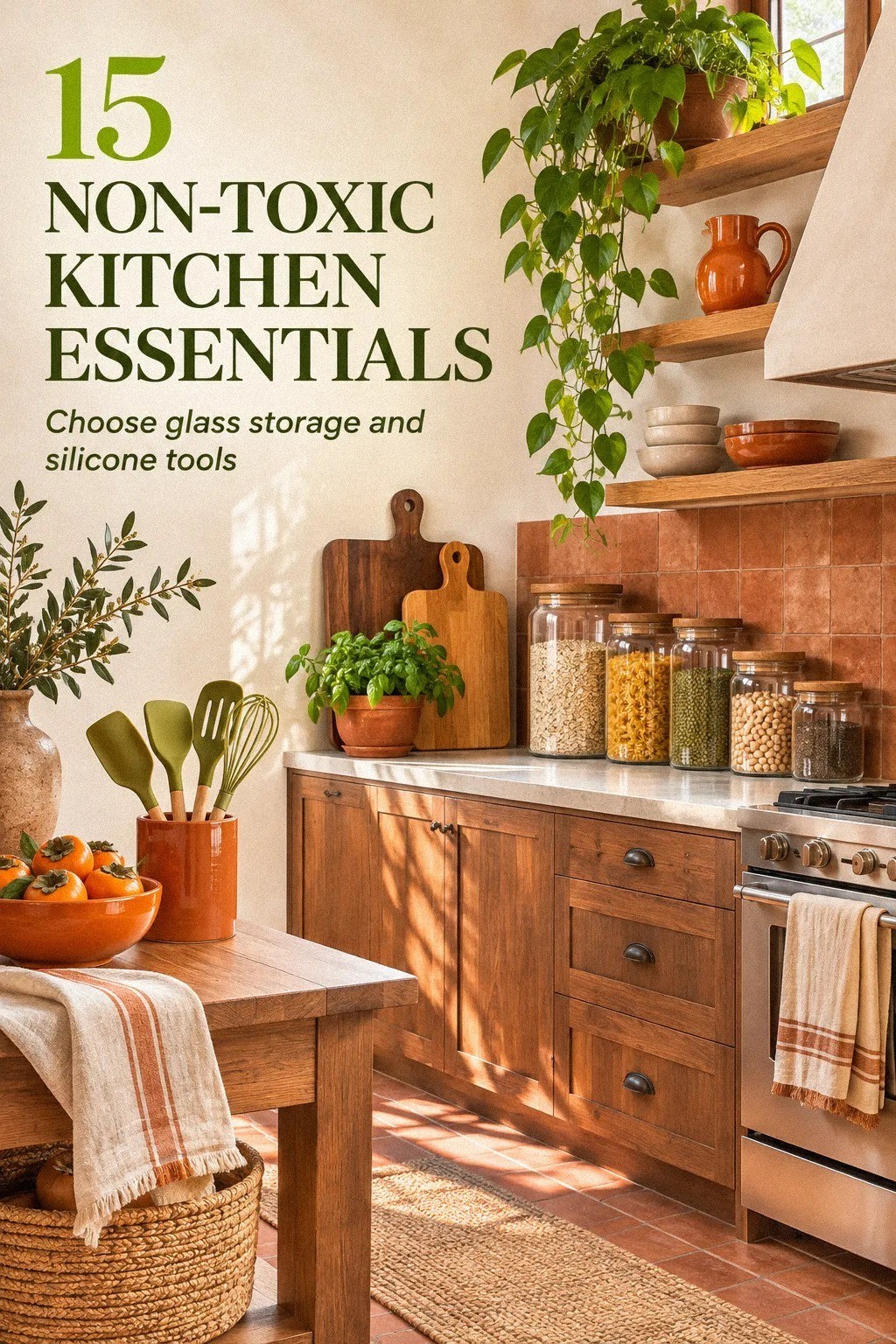
The short answer: 15 non-toxic kitchen essentials may lower everyday contact with questionable coatings, plastics, fragrances, and finishes without requiring a full remodel. Glass storage, stainless steel, ceramic cookware, natural cork, and simple ventilation choices can create a warm, practical kitchen that’s easier to maintain.
- Swap plastic food storage for glass canisters (The Glass Boundary Rule)
- Stage a countertop water filter beside the sink (What belongs beside the sink?)
- Install an induction hob with ceramic cookware (Can induction cooking simplify your setup?)
- Swap plastic food storage for glass canisters (The Glass Boundary Rule)
- Stage a countertop water filter beside the sink (What belongs beside the sink?)
- Install an induction hob with ceramic cookware (Can induction cooking simplify your setup?)
- Display wooden utensils in a clay crock (The Two-Wood Rule)
- Line drawers with washable natural cork (The Cork Liner Lift)
- Choose stainless steel pans for open shelving (The Open-Shelf Clarity Test)
- Create a tea station with loose-leaf jars (The Three-Container Rhythm)
- Hang linen towels from a wooden rail (The Drying-Air Upgrade)
- Grow culinary herbs in terracotta pots (The Windowsill Harvest Zone)
- Place beeswax wraps in a visible basket (The Reuse-First Basket)
- Decant pantry staples into labeled glass jars (Glass over plastic)
- Replace vinyl mats with woven jute runners (Natural fiber underfoot)
- Set a low-toxin cleaning caddy near the sink (The Two-Product Edit)
- Serve meals on lead-free ceramic dinnerware (The Everyday Plate Standard)
- Build a ventilated produce zone with wire baskets (The Airflow Shelf)
1Swap plastic food storage for glass canisters (The Glass Boundary Rule)

Glass canisters create a clear boundary between pantry food and flexible plastic. Choose borosilicate glass with silicone-sealed lids for flour, rice, oats, dried beans, and baking supplies. Transparent walls make low-stock ingredients obvious, so shopping decisions become faster.
A calm pantry depends on repetition. Matching jars look especially polished on cerused white oak shelves, while terracotta, olive, and natural stone keep the room warm.
Budget glass jars can suit a simple setup, while heavier containers add a substantial feel. Labels should name the ingredient and date.
Decorative tags shouldn’t hide the contents.
Hot food shouldn’t go directly into cold glass. Sudden temperature changes can cause damage.
Let dishes cool first, then transfer them. You’ll also want to check seals regularly, since loose lids won’t protect dry goods from humidity.
Choose square or rectangular containers when shelf space is tight. Round jars are attractive, but they’ll leave small gaps between pieces. A narrow shelf works better with stackable shapes, while open shelving benefits from matching heights.
If non-stick cookware is part of the current setup, compare materials through this non-toxic frying pan materials before replacing an entire collection.
Typical kitchen refresh costs:
2Stage a countertop water filter beside the sink (What belongs beside the sink?)
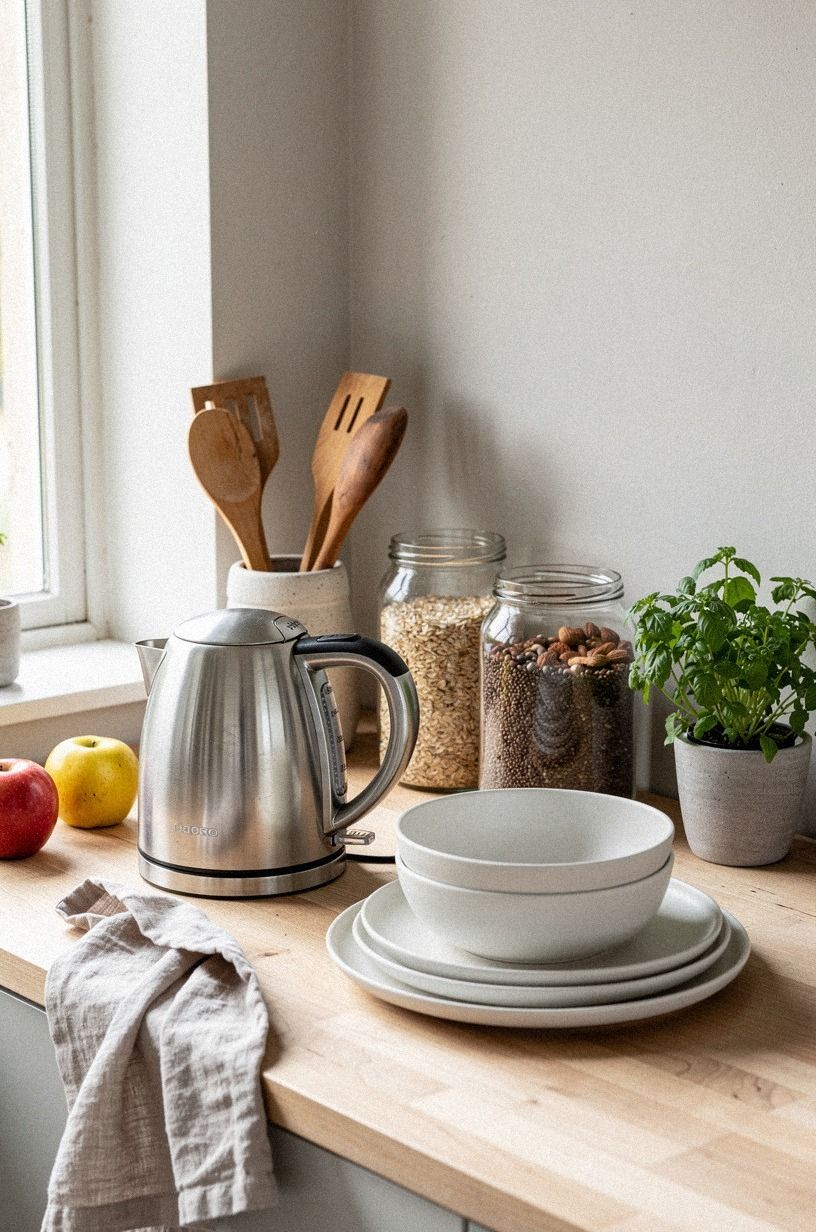
A countertop water filter works best when it’s visible, reachable, and positioned beside the sink. You’ll want a stable landing area with enough room for filling glasses, rinsing produce, and wiping spills.
Look for a filter with a simple housing, replaceable cartridges, and clear maintenance instructions. Stainless steel or glass components can feel more substantial than thin plastic. The filter doesn’t need to dominate the counter.
A narrow tray underneath can catch drips and protect backlit translucent onyx.
Keep the area uncluttered. One glass, one small plant, or a folded cotton cloth can make the station feel intentional. If the filter becomes difficult to refill, it won’t remain part of the daily routine.
Easy access matters!
3Install an induction hob with ceramic cookware (Can induction cooking simplify your setup?)
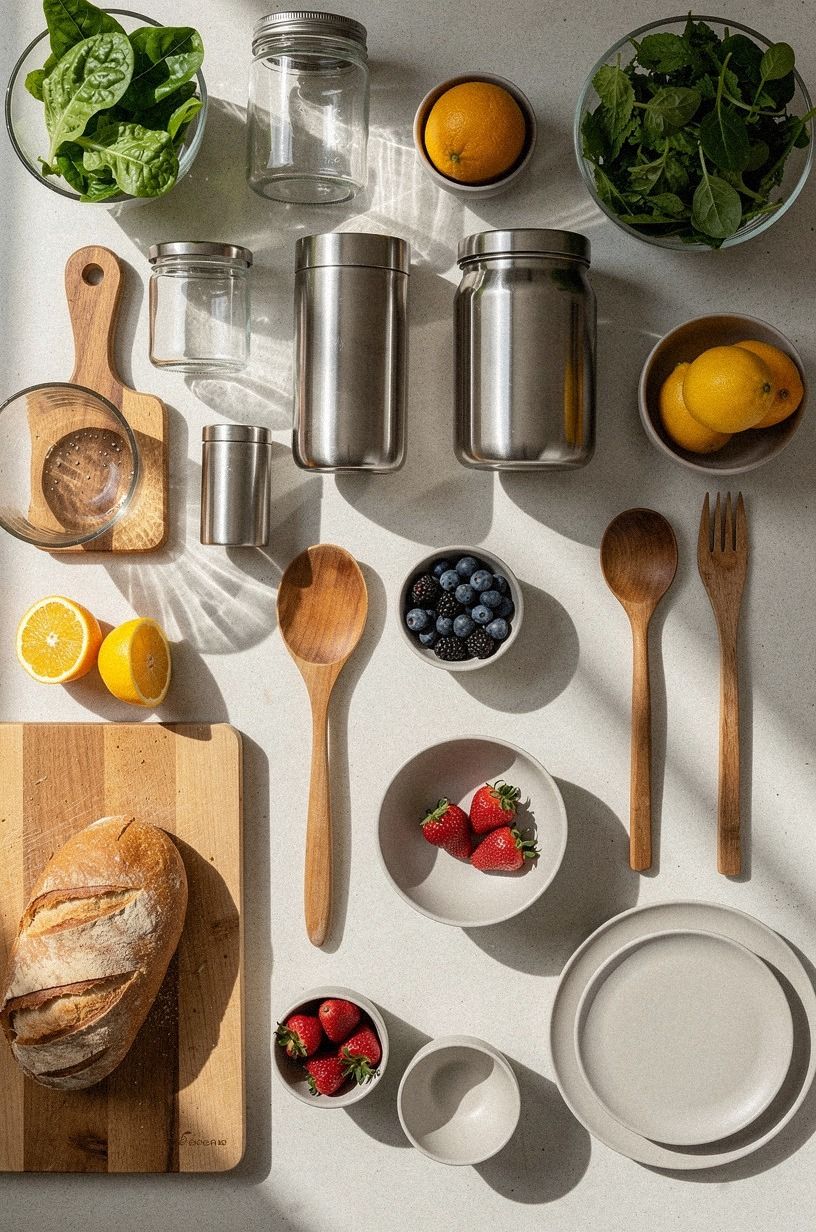
Induction cooking keeps heat focused at the pan base, so the cooking area may feel less smoky and more controlled during busy meals. Pair the hob with lead-free ceramic cookware designed for induction, and check the manufacturer’s compatibility symbol before purchasing.
You’ll want pan sizes that match the heating zones. A small pan on a large zone wastes energy and looks awkward. A deep saucepan, medium skillet, and low sauté pan can cover most daily cooking without crowding the cabinet.
Plum, grey, and rose-gold details suit book-matched walnut. A walnut utensil rest, a rose-gold timer, and one grey ceramic saucepan create a warm grouping without filling the surface. It’s a refined palette, but it doesn’t need to feel formal.
Skip chipped interiors, loose handles, and vague coating claims. A pan that’s difficult to inspect isn’t a strong choice for daily use. The cooking surface should stay smooth, stable, and easy to clean.
You’ll notice problems sooner when cookware remains visible instead of buried in a deep drawer.
Induction also rewards practical organization. Keep a heat-safe trivet near the hob, store lids vertically, and avoid stacking heavy pieces where they’ll be difficult to lift. You won’t need a large cookware collection when the most useful pieces are easy to reach.
4Display wooden utensils in a clay crock (The Two-Wood Rule)
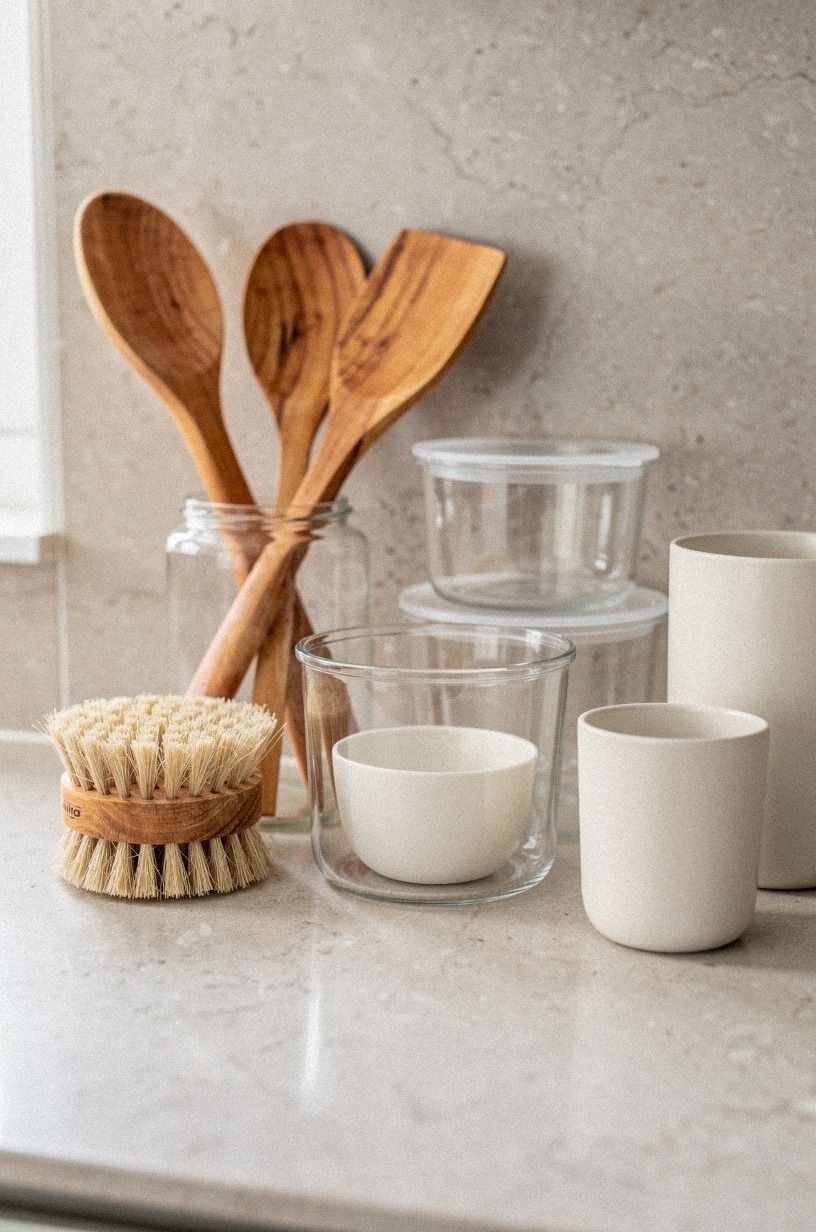
Wooden utensils bring warmth to a navy, white, and walnut kitchen, especially when the crock has a handmade surface with visible variation. Choose unfinished maple utensils or sealed olive wood, then place them in a wide clay vessel with enough room for each handle to dry.
The Two-Wood Rule keeps the display from looking scattered. Combine one pale wood with one deeper wood, but don’t collect five unrelated tones. A warm travertine counter, walnut cabinet fronts, and a pale maple spoon create peaceful contrast.
Wash wooden tools promptly and dry them upright. Don’t leave them submerged overnight.
Replace pieces with deep cracks, rough splinters, or persistent odors. A small 600gsm Turkish cotton towel nearby adds practical softness.
The best crock has weight at the base. A narrow vessel may tip when the largest spoon is pulled out. You’ll also want a wide opening, since tightly packed utensils stay damp and become harder to clean.
A clay crock can hold more than spoons. Silicone spatulas, wooden tongs, and a flat turner can share the arrangement, provided the handles remain visible. If the crock becomes crowded, remove the least-used tools.
Keep it useful!
5Line drawers with washable natural cork (The Cork Liner Lift)
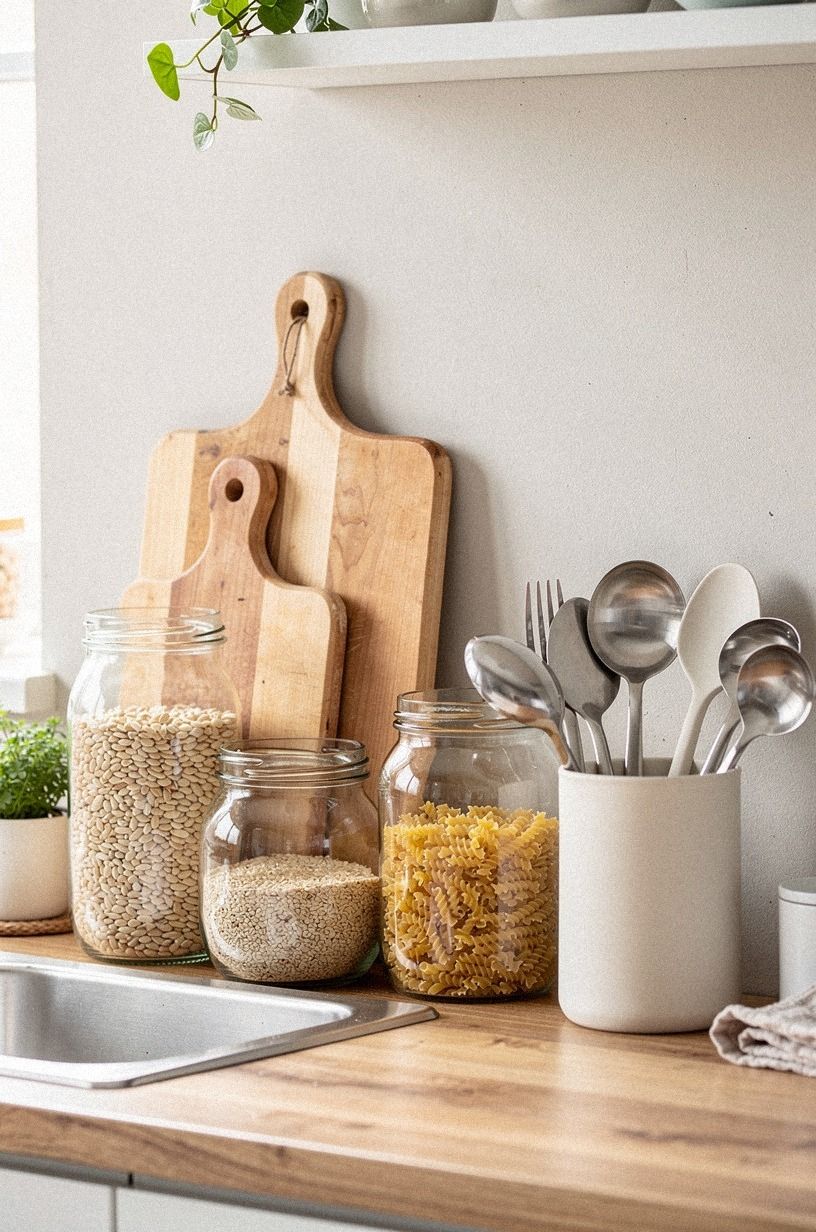
Natural cork gives drawers a softly textured surface that feels less harsh than thin vinyl liners. It can add a quiet, tactile finish beneath cutlery, wooden tools, or pantry accessories.
Measure each drawer before buying. You’ll want the liner to lie flat without curling at the corners. A removable natural cork sheet is practical for renters and easier to replace than a permanently bonded mat.
Wipe crumbs away regularly and allow the surface to dry fully after cleaning. Cork can feel warm and elegant, but standing water may damage it. Use a shallow tray beneath bottles or cleaning tools when leaks are possible.
6Choose stainless steel pans for open shelving (The Open-Shelf Clarity Test)
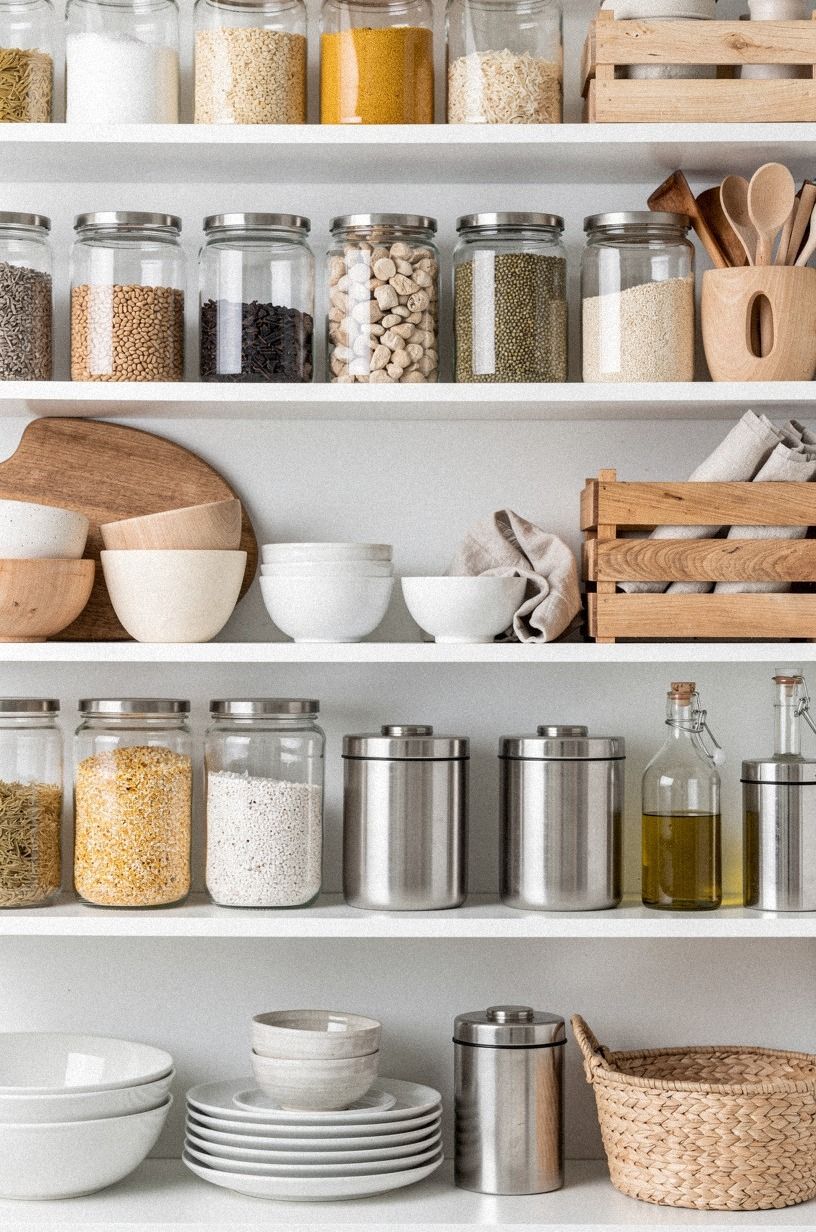
Stainless steel pans suit open shelving because their surfaces are durable, reflective, and easy to identify at a glance. Choose 18/10 stainless steel with solid rivets and a comfortable handle, then stack only two or three pieces per shelf.
Forest green, rust, and natural oak create an earthy backdrop for polished steel. Oversized-chip terrazzo adds visual weight below the shelves, while oak keeps the arrangement from becoming too industrial.
You’ll want the most frequently used skillet at hand height. A stockpot that rarely leaves the cabinet shouldn’t block it. Open shelving works when the display follows cooking habits instead of trying to show every possession.
Skip shelves directly above the sink if water spots are a constant problem. Dry pans before stacking, and keep a soft cotton cloth nearby. If a handle projects into the walking path, reposition the pan immediately.
Stainless steel can look cold when every surrounding surface is glossy. Add one matte material, such as unglazed stoneware, linen, or unfinished wood. The contrast gives the shelf more depth without adding clutter.
7Create a tea station with loose-leaf jars (The Three-Container Rhythm)
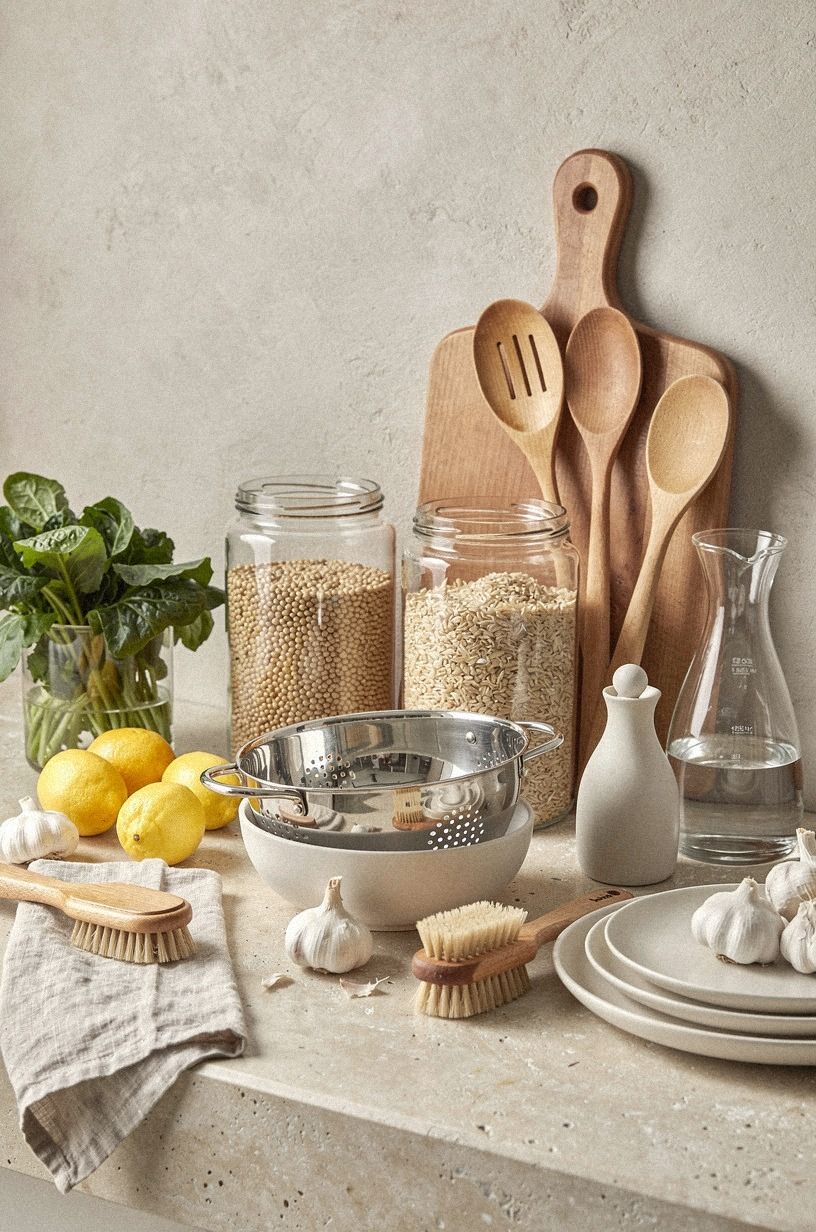
A tea station can turn an unused corner into a gentle morning zone. Use three clear jars for black tea, herbal blends, and a caffeine-free option. Add a small scoop in one hand-thrown stoneware cup.
Dusty rose, charcoal, and brass create a moody but welcoming combination against hand-applied Venetian plaster. Add one charcoal canister for filters and a brass spoon rest for warmth. You’re looking for a restrained grouping, not a full beverage bar.
The strongest arrangement has one tall jar, one medium jar, and one low dish. Matching containers will make the station feel intentional, while varied heights keep it from looking flat.
Store loose-leaf tea away from direct sun, steam, and strong pantry odors. A tight lid protects aroma, while a small date label helps rotate older blends. You’ll want to keep the station far enough from the hob to avoid excess heat.
If snacks share the same area, connect the tea station to a practical pantry system with these low-carb pantry staples. The result can feel serene without taking over the counter.
8Hang linen towels from a wooden rail (The Drying-Air Upgrade)
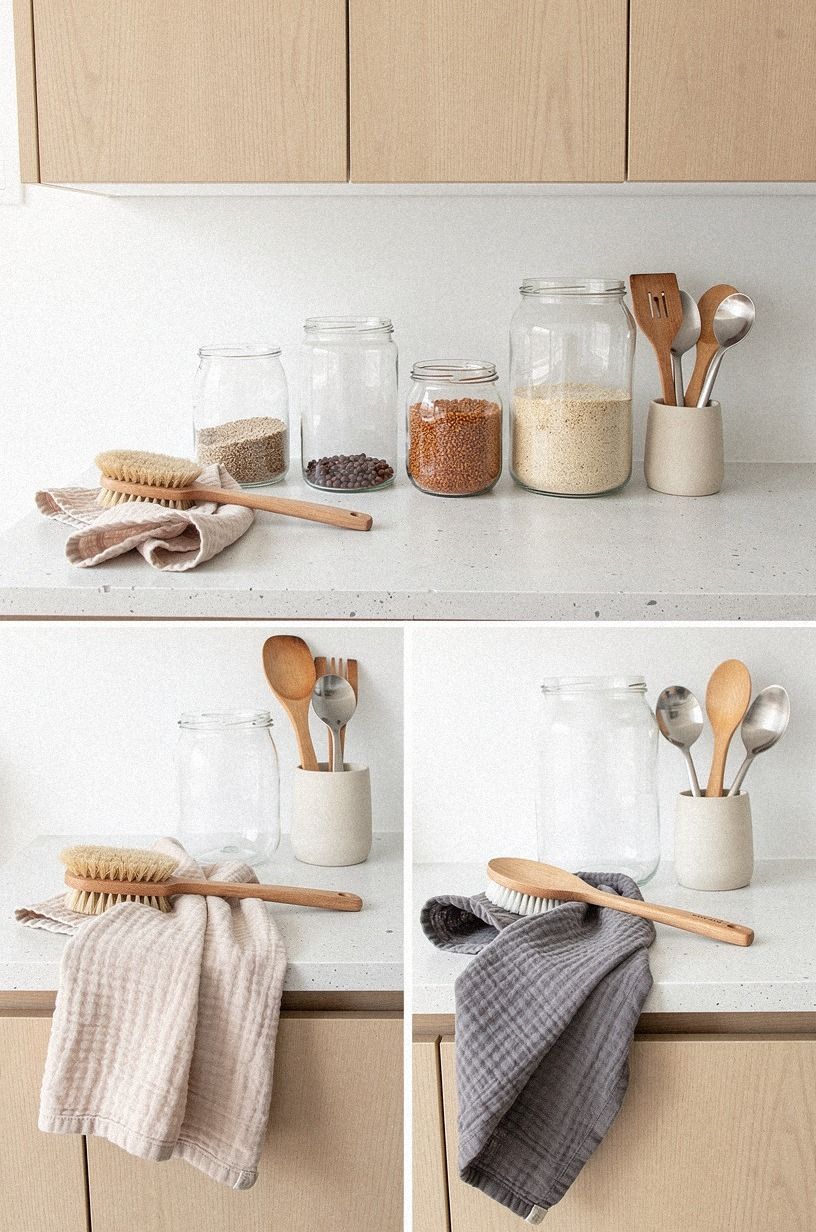
A wooden rail gives kitchen towels room to dry instead of trapping damp fabric against a cabinet handle. Choose unfinished hardwood or a water-resistant sealed rail with rounded edges. Small shagreen accents can add tactile contrast without changing the rail’s practical role.
Place it away from the hob but close enough to support quick hand washing and spill cleanup. You’ll want enough space between each towel for airflow. A crowded rail won’t dry fabric well.
A tension-mounted rail can suit a rental kitchen, while a screw-mounted version usually feels sturdier. Wash towels often, and replace any cloth that develops a persistent odor. Fresh, airy textiles make the whole room feel cleaner!
9Grow culinary herbs in terracotta pots (The Windowsill Harvest Zone)
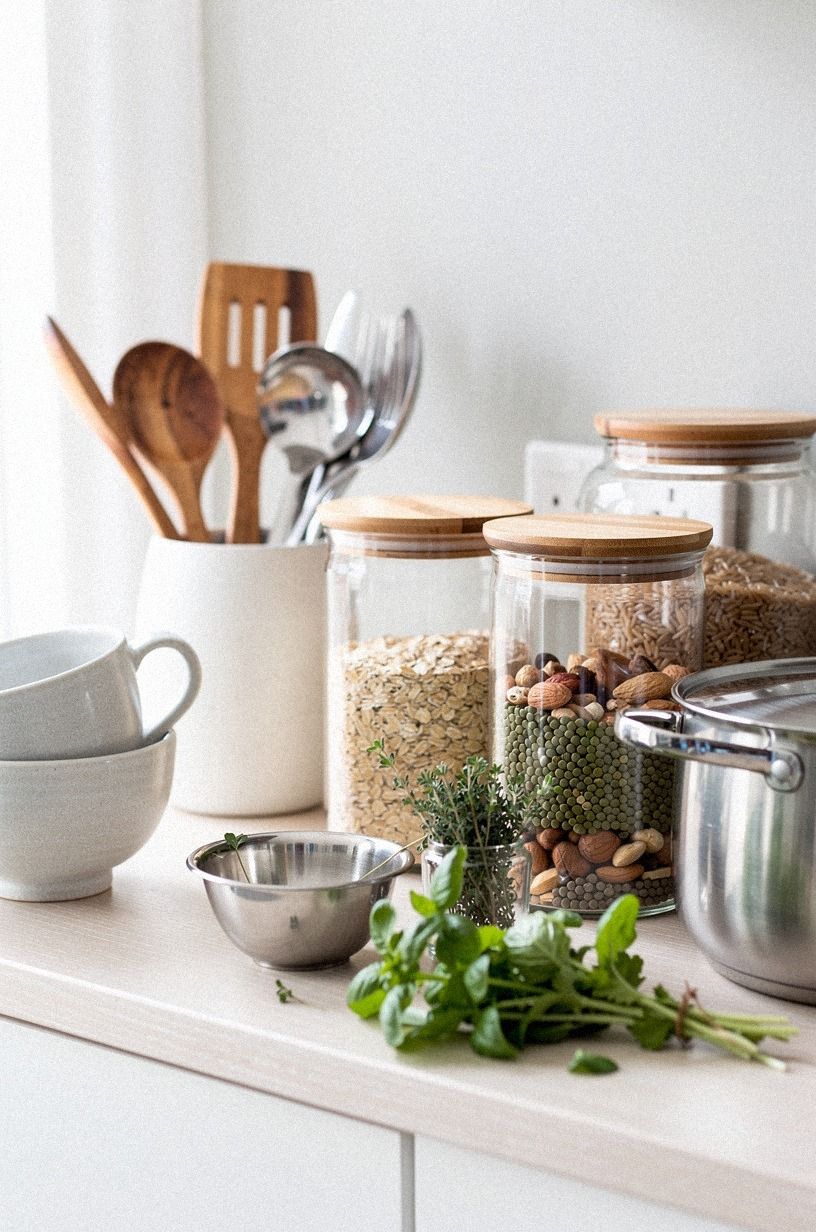
Terracotta pots bring an organic, lived-in quality to a kitchen window. Choose unglazed terracotta with drainage holes and matching saucers, then grow herbs that suit regular meals.
Basil, thyme, parsley, and chives create a practical group with different leaf shapes. Rosemary prefers drier soil, while basil needs more consistent moisture. You’ll want to group plants with similar care needs rather than arranging them only by color.
Midnight blue, copper, and ivory make clay tones feel richer. A washed Belgian linen cloth beneath the pots protects the sill and adds softness. Leave space between each pot for air circulation, since crowded foliage stays damp longer after watering.
Avoid placing pots where leaves touch a hot pane or where water can pool beneath the saucers. Check the soil before watering instead of following a rigid schedule. One healthy plant is more useful than six struggling pots.
A small copper plant marker can keep the arrangement orderly. Choose shallow pots for narrow sills and reserve larger varieties for a freestanding stand. You don’t need a full indoor garden to make fresh herbs convenient.
10Place beeswax wraps in a visible basket (The Reuse-First Basket)
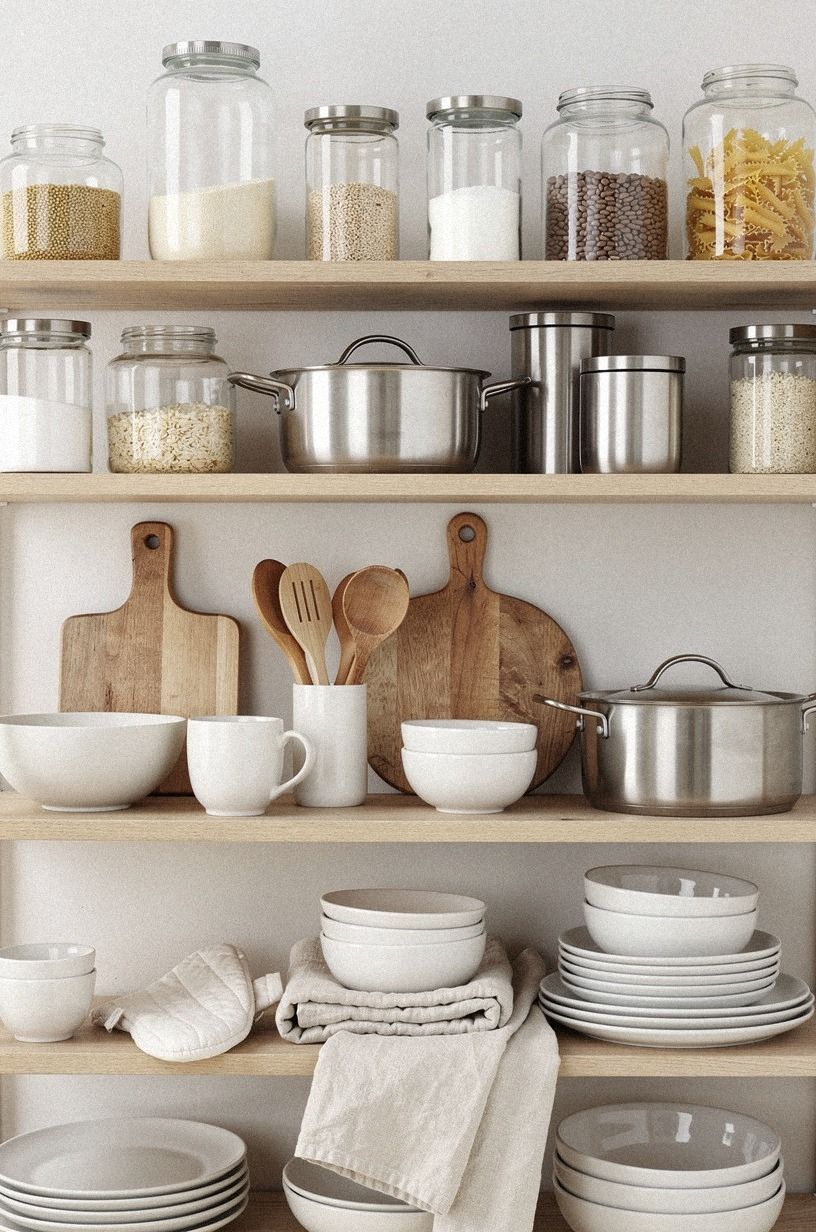
A visible basket makes reusable wraps easier to reach than a drawer full of forgotten alternatives. Choose a breathable organic bouclé basket or a shallow woven container that can be lifted with one hand.
Fold wraps loosely instead of compressing them into a tight stack. You’ll see the sizes faster, and the material won’t become a messy bundle. Keep the basket away from direct heat, since beeswax softens in warm conditions.
Wash wraps according to the maker’s directions and let them dry fully before storage. If a wrap becomes cracked or difficult to clean, replace it. A small, reliable collection works better than an overflowing basket.
11Decant pantry staples into labeled glass jars (Glass over plastic)
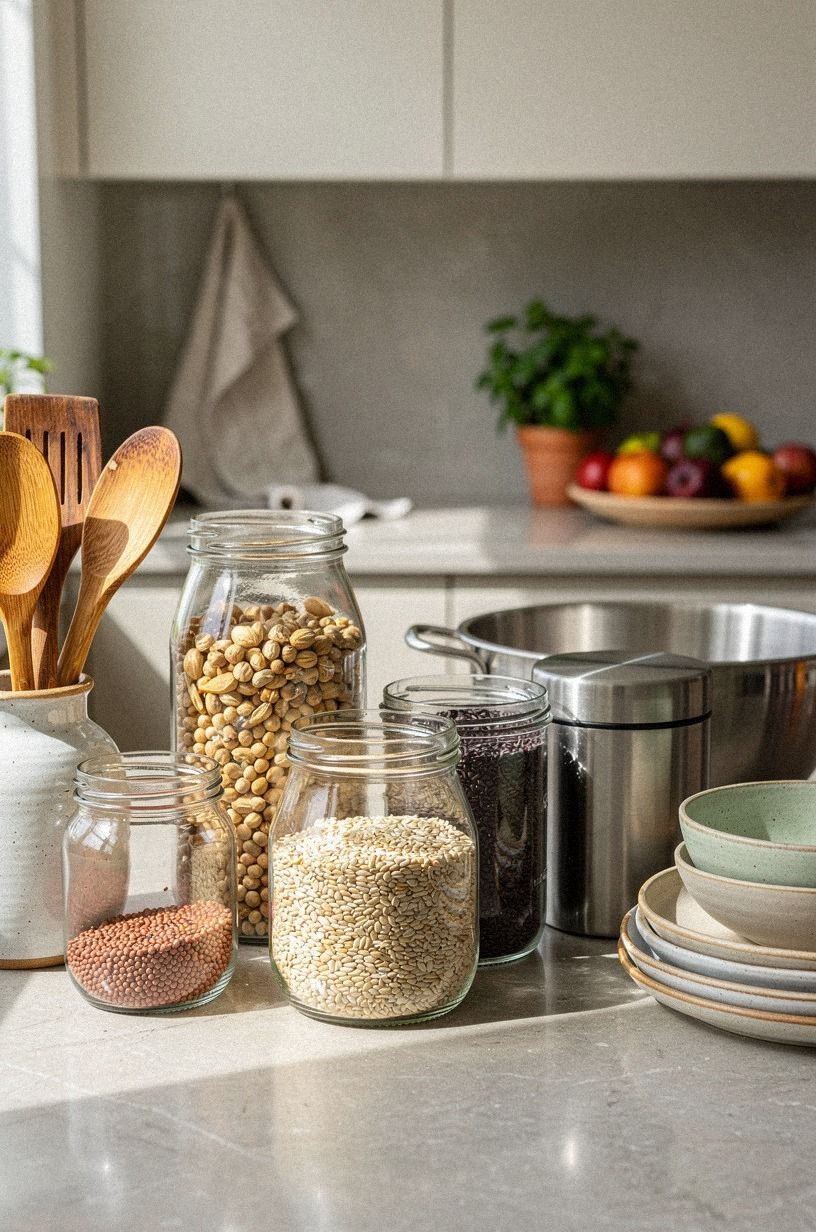
Decanting pantry staples works best when jars match the ingredient’s use and quantity. Tall glass jars suit flour and oats, while wide-mouth containers make lentils, sugar, and rice easier to scoop.
Your pantry becomes more readable when labels show the ingredient name, not only a decorative symbol. Add a purchase or rotation date when an ingredient may sit for several months. You’ll know what needs attention without opening every container.
Terracotta, stone, and olive tones pair beautifully with Nero Marquina black marble with white veining. Use black labels with cream lettering for contrast, then keep jar lids in one finish.
Avoid transferring food before checking the original expiration information. Keep that detail on a small rotation label or pantry list. If moisture-sensitive ingredients are stored in glass, choose a gasketed lid and keep the jar away from dishwasher steam.
A measured scoop inside each container helps prevent spills. For flour and sugar, a level scoop is more practical than a narrow spoon. For rice and lentils, a wider utensil will save time.
Don’t decant every ingredient at once. Start with the staples used most often. A smaller, consistent system will stay useful longer than an ambitious arrangement that becomes difficult to refill.
12Replace vinyl mats with woven jute runners (Natural fiber underfoot)
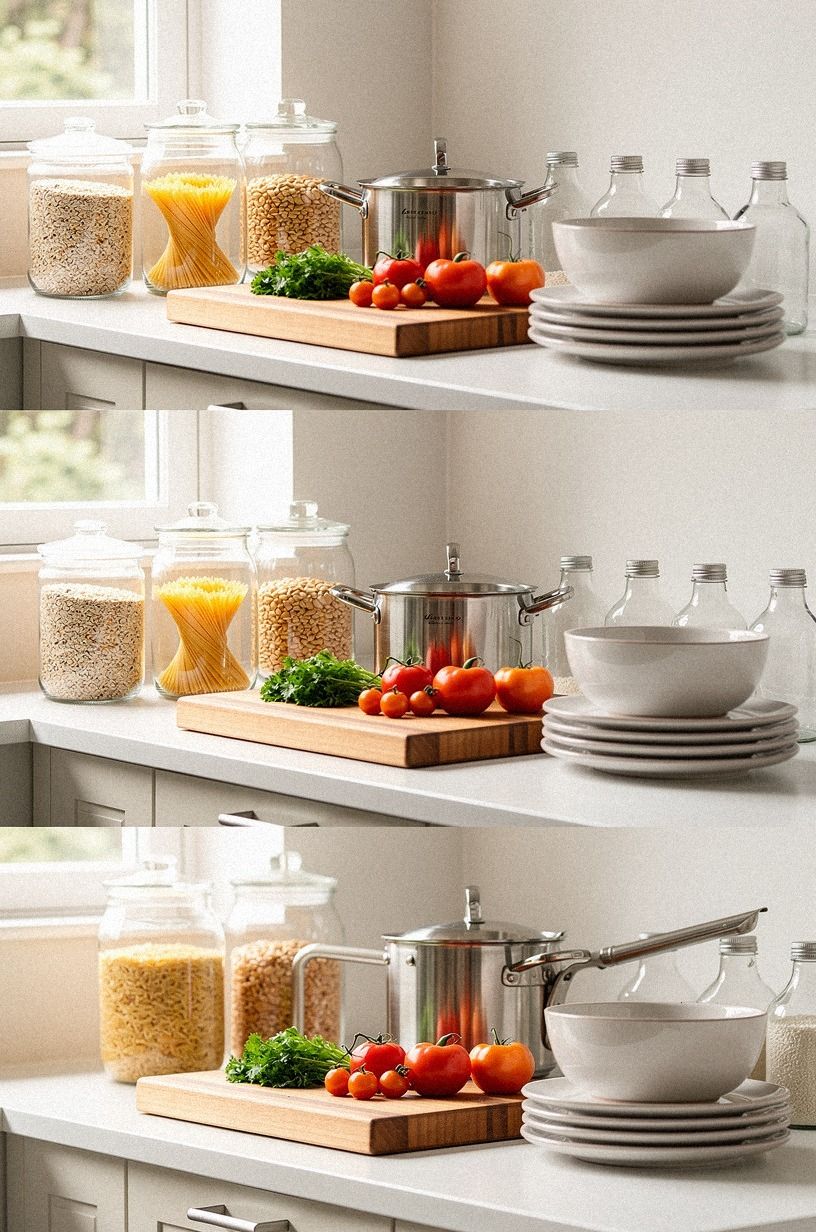
Woven jute runners add texture beneath a prep zone without the glossy surface associated with vinyl mats. A deep-pile mohair velvet accent nearby can soften the clay, linen, and aged-brass palette.
Choose a runner with a stable backing and low enough pile to avoid catching cabinet doors. Natural fibers can shed at first, so regular shaking and gentle vacuuming help maintain the surface.
Keep the runner flat near the sink, dishwasher, and cooking area. Moisture can linger beneath any textile, so lift it periodically and let the floor dry. A washable design is especially useful in a high-traffic kitchen.
13Set a low-toxin cleaning caddy near the sink (The Two-Product Edit)
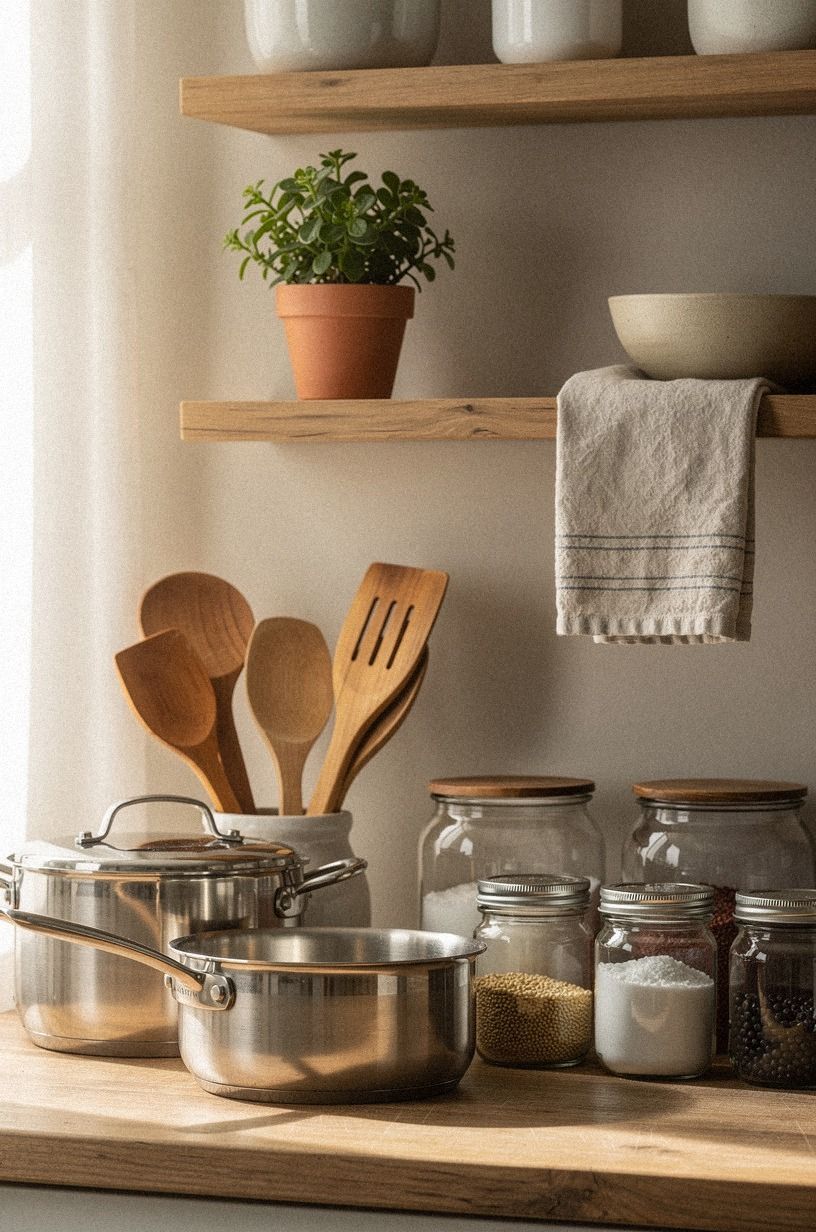
A small cleaning caddy keeps bottles contained and makes ingredient labels easier to read. Choose powder-coated steel or unfinished wood with a removable tray, then keep only the products used each day near the sink.
Plum, grey, and rose gold look polished beside Carrara marble with subtle grey veining. A neutral brush, a washable cloth, and one unscented surface cleaner create a calm arrangement.
You’re better served by two reliable products than a crowded collection that requires constant sorting. Read labels carefully, follow dilution instructions, and keep products in their original containers whenever possible.
Cleaning products should remain separate from food, tea, and cooking tools. Never mix formulas unless the label specifically permits it. A low shelf or closed cabinet is safer when young children or pets share the home.
If the caddy has a leak-resistant base, wiping the area becomes faster and the marble stays protected. You’ll also want to empty the tray regularly, since trapped moisture can damage wood or encourage residue buildup.
A small microfiber cloth can handle quick wipe-downs, while a washable cotton cloth suits larger spills. Keep cloths clean and allow them to dry fully between uses.
14Serve meals on lead-free ceramic dinnerware (The Everyday Plate Standard)
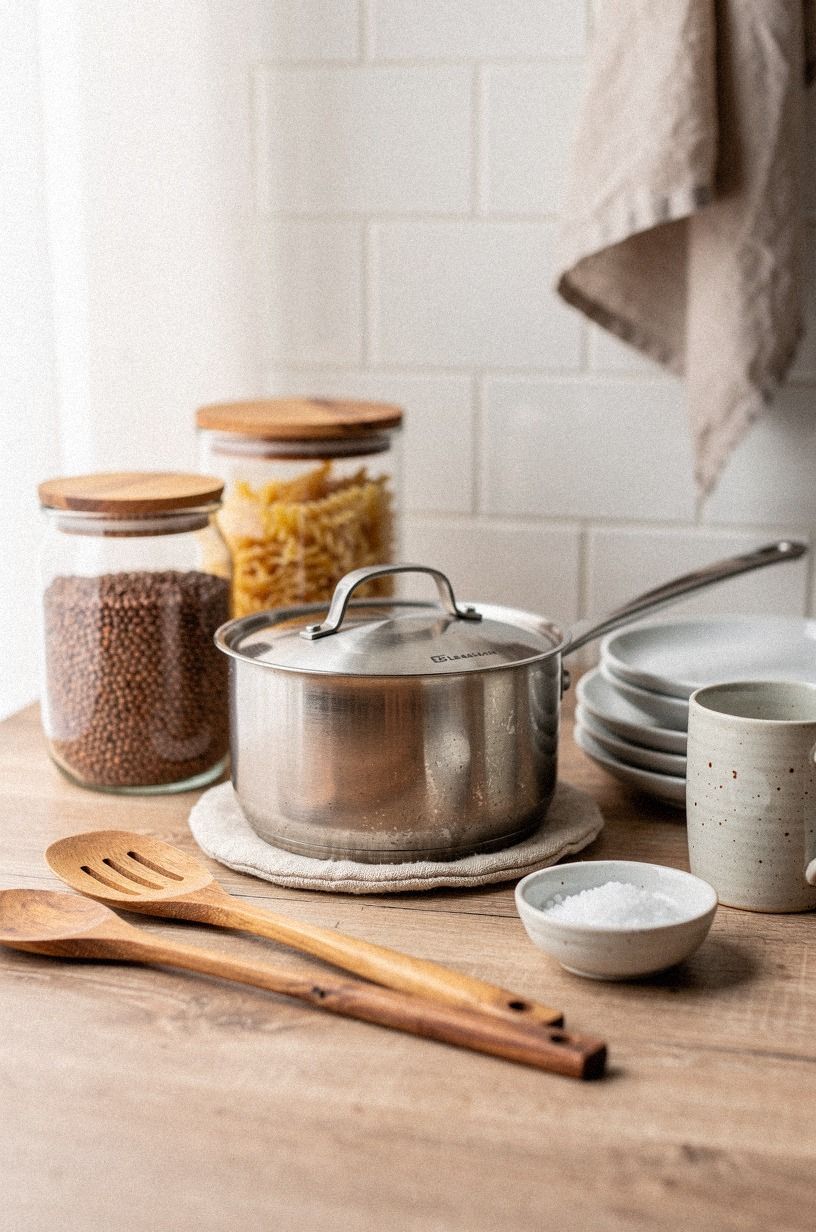
Lead-free ceramic dinnerware brings color and texture to daily meals without relying on disposable plates. Reclaimed weathered teak can add warmth through serving boards, trays, or a nearby dining surface.
Navy, white, and walnut tones keep the setting grounded while allowing handmade ceramic shapes to stand out. Choose pieces with clear care instructions, smooth food-contact surfaces, and no visible chips or crazing.
A small everyday collection is easier to wash and store than a crowded assortment. Keep plates within easy reach, stack bowls by size, and reserve decorative pieces for occasional use.
15Build a ventilated produce zone with wire baskets (The Airflow Shelf)
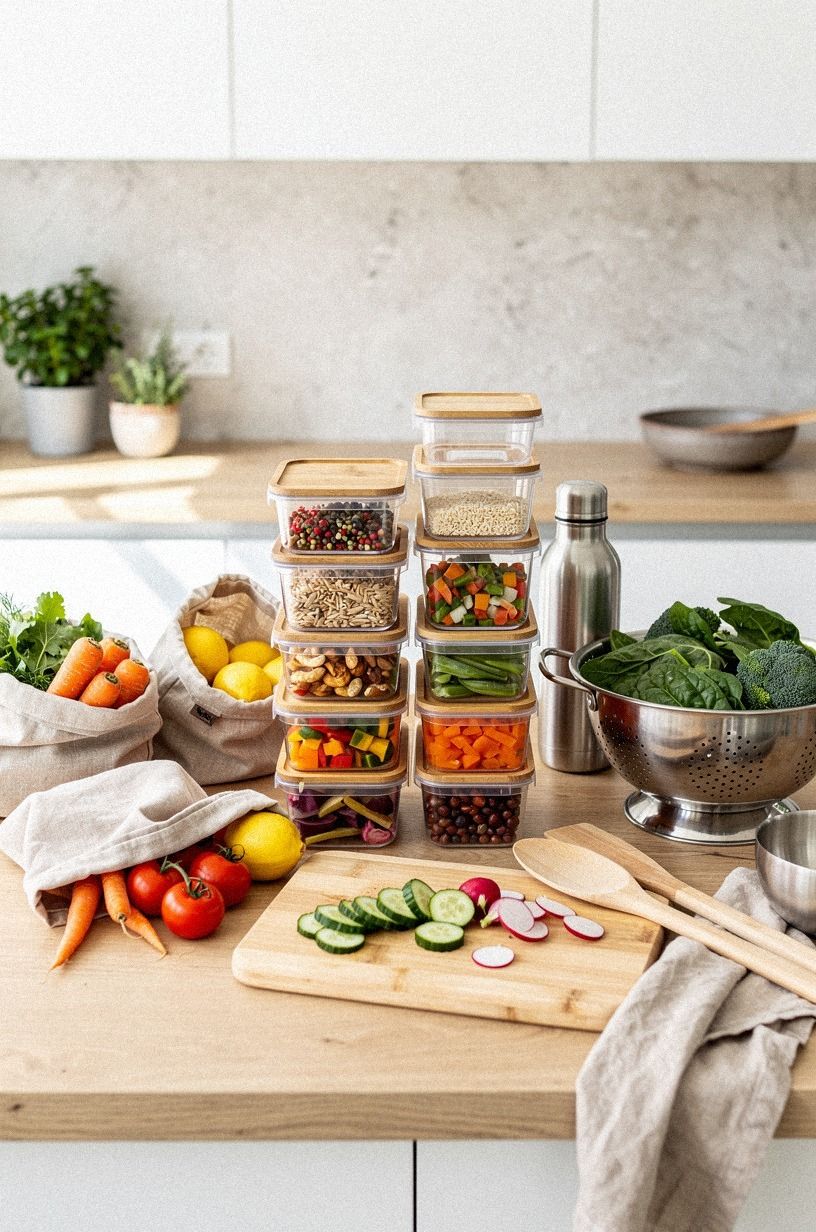
Wire baskets keep produce visible and allow air to move around onions, potatoes, garlic, and winter squash. Choose powder-coated steel wire with a stable base, then place baskets in a cool area away from direct sun and dishwasher steam.
Emerald, gold, and cream work beautifully with Calacatta marble with gold veining. Add a cream label card to each basket and repeat the gold in one small hook or tray.
Separate foods with different storage needs. Dense piles can trap moisture and speed spoilage. Potatoes and onions also benefit from separation, since their storage conditions aren’t identical.
Avoid placing ethylene-sensitive produce beside ripening fruit when possible. Check the baskets every few days and remove soft pieces promptly. A ventilated shelf should stay easy to reach, not become another forgotten storage zone.
If the kitchen includes an island, leave 42 to 48 inches of clearance so the basket area doesn’t narrow the main path. You’ll want to carry produce from storage to the prep counter without weaving around furniture.
Choose baskets with smooth edges and enough depth to prevent rolling. A shallow basket is easier to inspect, while a deeper one may hold more but hide damaged pieces. Visibility should guide the final choice.
The Healthier Kitchen Is a Systems Choice
A lower-exposure kitchen rarely comes from one dramatic purchase. It grows from repeated decisions about what touches food, what holds moisture, what releases fragrance, and what stays easy to clean.
Glass storage, stainless steel, ceramic dinnerware, natural cork, and cotton textiles work because each material has a clear role. The kitchen becomes calmer when every object earns its space.
The strongest choices also respect the room’s physical limits. A filter beside the sink needs a stable landing area. A runner needs safe clearance.
A produce basket needs ventilation. A ceramic pan needs a compatible hob.
These details matter more than a label promising purity, because daily use reveals whether a product belongs in the routine. A beautiful item that’s hard to wash won’t remain practical. A container that’s difficult to refill won’t support pantry organization.
Color can support the system without making the kitchen feel clinical. Farrow & Ball Studio Green No. 93 creates depth around pale wood, while Benjamin Moore White Dove OC-17 keeps a small room bright. Sherwin-Williams Evergreen Fog SW 9130 works between those extremes, especially with brass and natural fiber.
You’ll want one dominant tone, one grounding material, and one warm accent. That formula keeps the room coherent without forcing every object into an identical palette.
The best kitchen changes are modest enough to maintain. A labeled jar that’s difficult to refill won’t stay useful. A beautiful towel that never dries won’t earn its hook.
A cleaning product with an overpowering scent won’t feel comfortable near meals.
Choose materials that support daily habits, then let the visual style follow. The result can feel warm, personal, and orderly without depending on a complete remodel. Small changes count!
The Questions Worth Answering First
What are the best non-toxic kitchen essentials for a small kitchen?
Glass canisters and a compact countertop filter are strong starting points because they use vertical or narrow counter space. Clear storage keeps supplies visible, while a small filter can sit beside the sink. One slim wire basket and a few stackable jars can create order without crowding the work area.
Where can non-toxic kitchen essentials be bought on a budget?
Accessible storage, towels, baskets, and organizers are available from large retailers, local shops, and second-hand marketplaces. Second-hand value can come from wooden rails, ceramic crocks, and glass jars. Check for cracks, worn seals, unknown finishes, and damaged food-contact surfaces before purchase.
How much does a non-toxic kitchen refresh cost?
A focused collection can cost about $100 to $300, depending on how many storage pieces already exist. Free steps include reorganizing drawers, washing reusable textiles, grouping pantry staples, and removing damaged cookware. A full kitchen refresh is a different project, with cosmetic work often ranging from $300 to $1,500.
Can a non-toxic kitchen be created on a budget?
Yes, and the first steps can be free. Budget-friendly progress includes reusing suitable glass jars, sewing simple cloth bags, arranging existing wooden tools, and adding one cork liner. Prioritize food-contact materials first, then add a basket, towel rail, or terracotta herb pot as funds allow.
Are non-toxic kitchen essentials worth using in a small space?
Yes, because a small kitchen makes material choices and storage habits highly visible. Compact organization works best when each item has one job. Try a countertop filter beside the sink, vertical glass jars, and a narrow wire basket.
Keep the main walking path open and avoid filling every surface.
Are these kitchen changes suitable for a rental?
Yes. Removable swaps can create a calmer setup without permanent construction.
Rental-friendly choices include glass canisters, a tension-mounted wooden rail, peel-and-stick labels, freestanding wire baskets, and a washable cork liner. Avoid adhesive that could damage cabinetry, and keep original hardware stored safely.
Where to Start First
If one change deserves priority, choose glass storage. It creates a clear boundary around pantry food, makes supplies visible, and costs less than a full kitchen refresh.
Start with three jars, label them clearly, and let the rest of the system grow from that foundation. Review the non-toxic frying pan materials before replacing cookware.