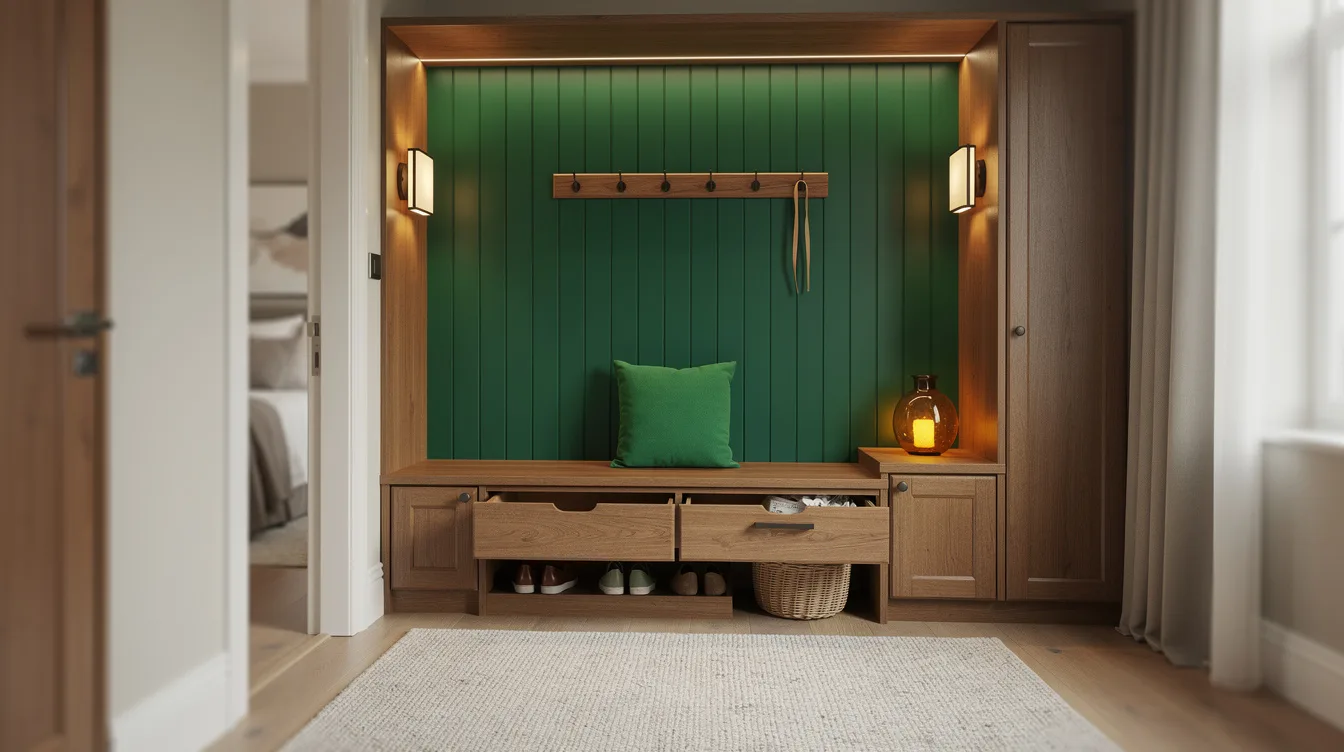
A bedroom-side bench has a harder job than the one by the garage: it must catch daily shoes without making the sleep zone feel like an entryway. A 48- to 60-inch-wide built-in, about 18 inches high and 16 to 18 inches deep, gives enough room to sit while fitting a recessed hall niche or small vestibule.
The strongest designs adapt documented mudroom ideas to this quieter location. A walnut seat, concealed drawers, and a controlled shoe drop can make the difference between useful storage and a cluttered bedroom approach.
Size the Bench to the Bedroom Route
Start with the walking path, then size the bench around it. For most bedroom-side locations, a maple plywood seat about 48 to 60 inches wide, 16 to 18 inches deep, and 18 inches high gives enough room to sit without crowding a recessed hall niche.
Keep at least a comfortable passing lane beside the bench, especially if the space connects a bedroom to a bathroom or closet. A 60-inch layout works well when the wall is long enough, while a 48-inch version feels more intentional in a compact vestibule.
Keep Shoe Storage Low and Honest
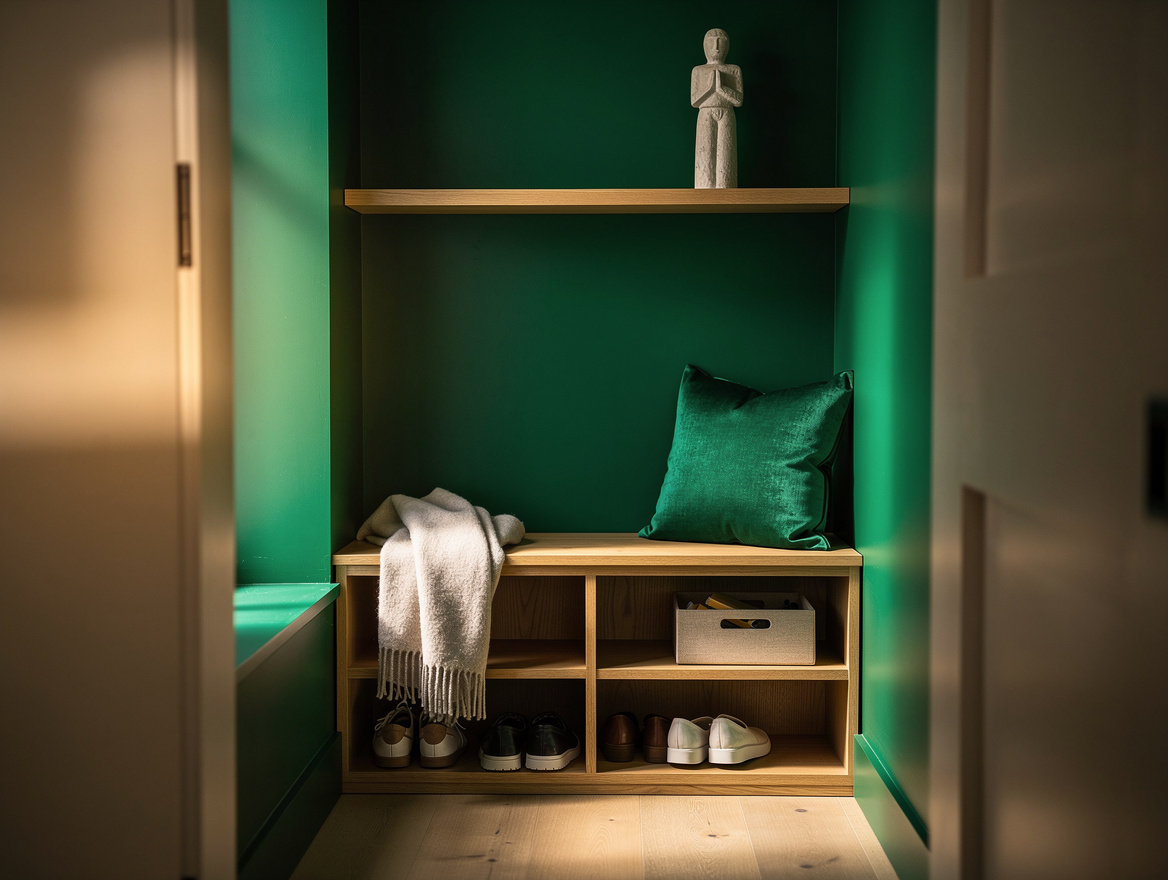
The storage below the seat should match how your household actually removes shoes. A low shelf with black rubber shoe trays is easier to use every night than a beautiful cabinet that requires opening several doors.
Use open cubbies for everyday sneakers and slippers, then reserve a closed section for boots or seasonal footwear. A bedroom-adjacent mudroom should feel calmer than a garage entry, so keep the visible collection small and move overflow elsewhere.
Choose Drawers for a Quieter Wall
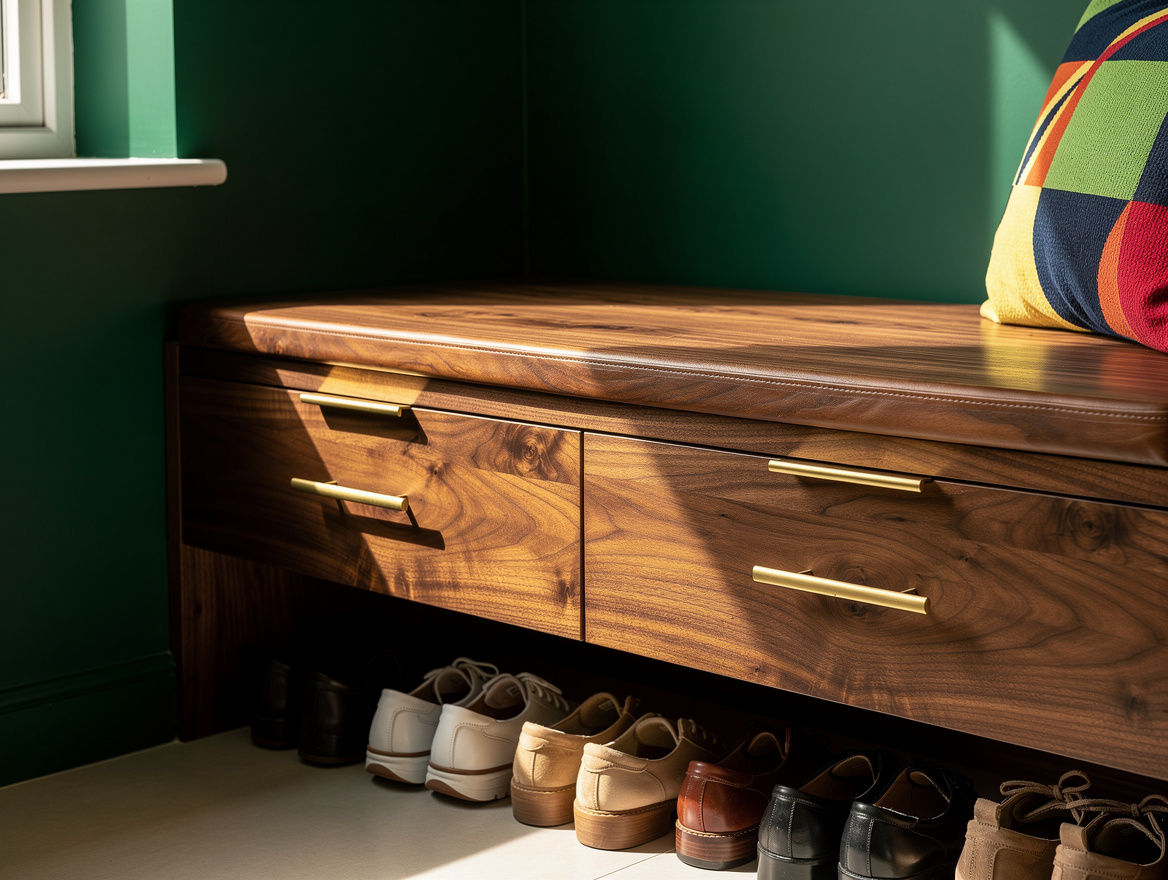
Drawers hide shoes, winter accessories, and the visual clutter that quickly makes a narrow corridor feel unfinished. A built-in with an oak veneer seat or drawer fronts can read more like bedroom furniture than utility cabinetry.
Two or three wide drawer fronts are usually more convincing here than a full wall of small compartments. This is the right choice when shoes need to disappear before bedtime, or when the bench sits directly in the sightline from the bedroom door.
Float the Seat to Open the Floor
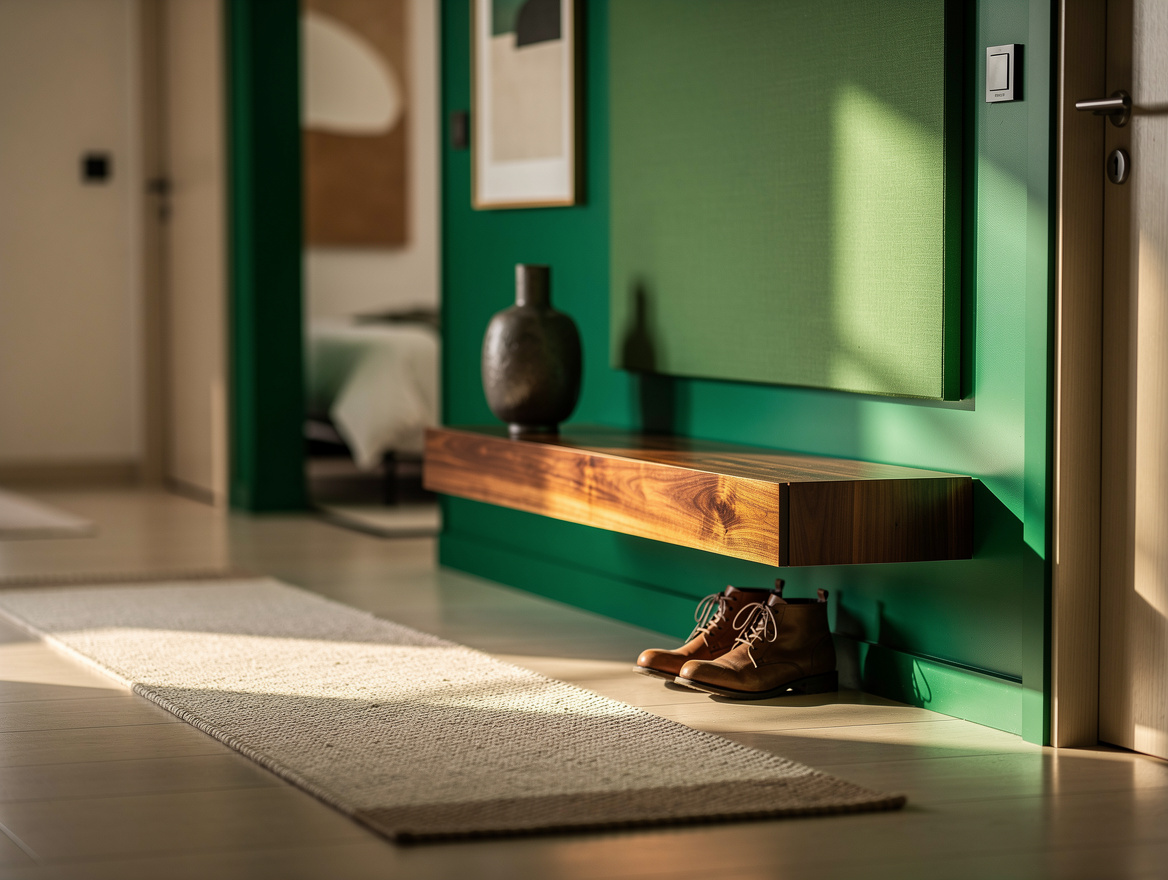
A floating bench keeps the lower wall visually light and leaves room for boots underneath. Maple plywood is a practical material for a simple DIY version, provided the supports are anchored securely into framing or approved wall hardware.
Published project guides place materials for a floating bench and shoe shelf at about $125 to $200 before room preparation, with roughly eight hours of work. That scope is completely different from a professionally installed built-in, so do not use the smaller figure as a substitute for a cabinetry quote.
Soften the Transition Into the Bedroom
The best bedroom-adjacent mudrooms borrow the function of an entryway while keeping the mood of a sleeping space. A wool runner, warm wood surface, and restrained hardware can connect the bench to nearby furniture without making the hall look themed.
Skip most coat hooks unless this route also leads directly outside. A clean wall above the seat gives the bedroom corridor breathing room, while one narrow shelf can hold a small basket for keys, glasses, or bedtime essentials.
Price the Cabinetry Before Picking Finishes
For 2026 US budgeting, allow roughly $2,000 to $7,500 for professionally installed built-in cabinetry. The final number depends on the drawer hardware, finish, bench size, and site work, so decide whether you need custom storage before choosing brass pulls or decorative trim.
A lower-cost plan can use a floating seat, simple supports, and a ready-made storage piece from IKEA, with the surrounding wall finished to match. Spend first on solid anchoring and a comfortable seat depth, then add the details that make the bench belong beside the bedroom.
Begin by taping out the bench footprint on the floor, then test the walking path with a pair of shoes and a shoe tray in place. That simple check will tell you whether the storage belongs open, closed, or somewhere else before the cabinetry budget is committed.
Mia Carter writes about small-space living and budget home makeovers. She has restyled three rentals and tests most ideas in her own 45 sqm flat.